
goeleffectivenessroadsafetyinterventions2024.md 1.2 MB
category: literaturenote citekey: goeleffectivenessroadsafetyinterventions2024 title: "Effectiveness of road safety interventions: An evidence and gap map" authors: "Goel, Rahul; Tiwari, Geetam; Varghese, Mathew; Bhalla, Kavi; Agrawal, Girish; Saini, Guneet; Jha, Abhaya; John, Denny; Saran, Ashrita; White, Howard; Mohan, Dinesh" year: 2024 date: 2024-00-00 2024 doi: 10.1002/cl2.1367 publication: Campbell Systematic Reviews url: "https://onlinelibrary.wiley.com/doi/abs/10.1002/cl2.1367" zotero_key: RG9L3YG4 zotero_storage: C7FELP6S collections: doktoritöö / HLO folder: 001_artiklid/Road Safety Indicators firstAuthor: "Goel, Rahul"
status: converted
EVIDENCE AND GAP MAP
Social welfare

Effectiveness of road safety interventions: An evidence and gap map
Rahul Goel1 | Geetam Tiwari1 | Mathew Varghese2 | Kavi Bhalla3 | Girish Agrawal1 | Guneet Saini4 | Abhaya Jha1 | Denny John5 | Ashrita Saran6 | Howard White6 | Dinesh Mohan1
Correspondence
Rahul Goel, Transportation Research and Injury Prevention Centre, Indian Institute of Technology Delhi, MS 815, Main Building, IIT Delhi, Hauz Khas, New Delhi 110016, India. Email: rgoel@iitd.ac.in
Abstract
Background: Road Traffic injuries (RTI) are among the top ten leading causes of death in the world resulting in 1.35 million deaths every year, about 93% of which occur in low‐ and middle‐income countries (LMICs). Despite several global resolutions to reduce traffic injuries, they have continued to grow in many countries. Many high‐income countries have successfully reduced RTI by using a public health approach and implementing evidence‐based interventions. As many LMICs develop their highway infrastructure, adopting a similar scientific approach towards road safety is crucial. The evidence also needs to be evaluated to assess external validity because measures that have worked in high‐income countries may not translate equally well to other contexts. An evidence gap map for RTI is the first step towards understanding what evidence is available, from where, and the key gaps in knowledge.
Objectives: The objective of this evidence gap map (EGM) is to identify existing evidence from all effectiveness studies and systematic reviews related to road safety interventions. In addition, the EGM identifies gaps in evidence where new primary studies and systematic reviews could add value. This will help direct future research and discussions based on systematic evidence towards the approaches and interventions which are most effective in the road safety sector. This could enable the generation of evidence for informing policy at global, regional or national levels. Search Methods: The EGM includes systematic reviews and impact evaluations assessing the effect of interventions for RTI reported in academic databases, organization websites, and grey literature sources. The studies were searched up to December 2019.
Selection Criteria: The interventions were divided into five broad categories: (a) human factors (e.g., enforcement or road user education), (b) road design, infrastructure and traffic control, (c) legal and institutional framework, (d) post‐ crash pre‐hospital care, and (e) vehicle factors (except car design for occupant
1 Transportation Research and Injury Prevention Centre, Indian Institute of Technology Delhi, New Delhi, India
2 St. Stephen's Hospital, Orthopaedic, Delhi, India
Department of Public Health Sciences, University of Chicago, Chicago, Illinois, USA
4 Texas A & M University, College Station, Texas, USA
5 Faculty of Life and Allied Health Sciences, M S Ramaiah University of Applied Sciences, Bangalore, Karnataka, India
6 Campbell Collaboration, New Delhi, India
This is an open access article under the terms of the Creative Commons Attribution License, which permits use, distribution and reproduction in any medium, provided the original work is properly cited.
© 2024 The Authors. Campbell Systematic Reviews published by John Wiley & Sons Ltd on behalf of The Campbell Collaboration.
protection) and protective devices. Included studies reported two primary outcomes: fatal crashes and non‐fatal injury crashes; and four intermediate outcomes: change in use of seat belts, change in use of helmets, change in speed, and change in alcohol/drug use. Studies were excluded if they did not report injury or fatality as one of the outcomes.
Data Collection and Analysis: The EGM is presented in the form of a matrix with two primary dimensions: interventions (rows) and outcomes (columns). Additional dimensions are country income groups, region, quality level for systematic reviews, type of study design used (e.g., case‐control), type of road user studied (e.g., pedestrian, cyclists), age groups, and road type. The EGM is available online where the matrix of interventions and outcomes can be filtered by one or more dimensions. The webpage includes a bibliography of the selected studies and titles and abstracts available for preview. Quality appraisal for systematic reviews was conducted using a critical appraisal tool for systematic reviews, AMSTAR 2. Main Results: The EGM identified 1859 studies of which 322 were systematic reviews, 7 were protocol studies and 1530 were impact evaluations. Some studies included more than one intervention, outcome, study method, or study region. The studies were distributed among intervention categories as: human factors (n = 771), road design, infrastructure and traffic control (n = 661), legal and institutional framework (n = 424), post‐crash pre‐hospital care (n = 118) and vehicle factors and protective devices (n = 111). Fatal crashes as outcomes were reported in 1414 records and non‐fatal injury crashes in 1252 records. Among the four intermediate outcomes, speed was most commonly reported (n = 298) followed by alcohol (n = 206), use of seatbelts (n = 167), and use of helmets (n = 66). Ninety‐six percent of the studies were reported from high‐income countries (HIC), 4.5% from upper‐ middle‐income countries, and only 1.4% from lower‐middle and low‐income countries. There were 25 systematic reviews of high quality, 4 of moderate quality, and 293 of low quality.
Authors' Conclusions: The EGM shows that the distribution of available road safety evidence is skewed across the world. A vast majority of the literature is from HICs. In contrast, only a small fraction of the literature reports on the many LMICs that are fast expanding their road infrastructure, experiencing rapid changes in traffic patterns, and witnessing growth in road injuries. This bias in literature explains why many interventions that are of high importance in the context of LMICs remain poorly studied. Besides, many interventions that have been tested only in HICs may not work equally effectively in LMICs. Another important finding was that a large majority of systematic reviews are of low quality. The scarcity of evidence on many important interventions and lack of good quality evidence‐synthesis have significant implications for future road safety research and practice in LMICs. The EGM presented here will help identify priority areas for researchers, while directing practitioners and policy makers towards proven interventions.
GOEL ET AL. | 3 of 261
1 | PLAIN LANGUAGE SUMMARY
1.1 | Mapping the gaps in research evidence on the effectiveness of road safety interventions
Reducing road traffic injuries (RTI) is an important goal for all countries. Progress towards this goal requires evidence‐based evaluation of the effectiveness of various road safety measures – interventions – in improving road safety. Mapping the availability of evidence on the effectiveness of road safety measures is the first step in evaluating the 'shape and size' of the evidence, including its gaps.
1.2 | What is this evidence and gap map (EGM) about?
A large majority of RTI happen in low‐ and middle‐income countries (LMICs). As many LMICs continue their development of highway infrastructure, it is important for them to be able to evaluate the effectiveness of various interventions in enhancing road safety. This can help with efficient resource allocation.
Such an evaluation requires knowing what evidence is available and where there are gaps in evidence. This EGM is the first step towards understanding what evidence is available and from where.
1.3 | What is the aim of this EGM?
This EGM is a visual resource presenting a comprehensive overview of existing knowledge about road safety and helps identify gaps in research evidence.
1.4 | What studies are included?
The EGM includes systematic reviews and other literature that reports impact evaluations assessing the effectiveness of road safety interventions. The studies were classified based on the target of the road safety interventions: human behaviour, road infrastructure, vehicle design, post‐crash care and institutional frameworks.
1.5 | What is the distribution of evidence?
Human factors such as enforcement and road user education (n = 771), and road design, infrastructure and traffic control (n = 661), were the two most evaluated categories of interventions. These were followed closely by the intervention category of legal and institutional framework (n = 424).
The least reported interventions were in the categories of post‐ crash pre‐hospital care (n = 118) and vehicle factors and protective devices (n = 111).
Among the primary outcomes, fatal crashes were reported in 1414 records and non‐fatal injury crashes in 1252 records.
Among the four behavioural or intermediate outcomes, speed (n = 298) and alcohol use (n = 206) were most frequently reported followed by the use of seatbelts (n = 167) and use of helmets (n = 66).
In terms of income groups, 96% of the studies were from high‐ income countries, 4.5% from upper‐middle‐income countries, and only 1.4% from lower‐middle and low‐income countries.
There were 25 systematic reviews of high quality, four of moderate quality and 293 of low quality.
1.6 | What do the findings of the EGM mean?
The evidence map suggests that LMICs are highly underrepresented across the studies. This has two main implications. First, the effectiveness of a safety measure in a setting dominated by cars may not translate to a setting with a mix of traffic that includes a large proportion of pedestrians and motorised two‐wheelers.
Secondly, due to this bias in regional representation, the interventions that are of greater importance in LMICs – such as those aimed at increasing helmet use and designing safer buses and cars for pedestrian safety – also remain poorly studied.
1.7 | How up‐to‐date is this map?
The authors searched for studies up to December 2019.
2 | BACKGROUND
2.1 | Introduction
The World Health Organization (WHO) released its World Report on Road Traffic Injury Prevention in 2004 (Peden et al., 2004). This report focused on RTI and fatalities as a worldwide health problem and included a summary of the known risk factors associated with road traffic crashes and possible countermeasures that should be put in place to control the problem. It also pointed out that without new or improved interventions, RTI will be the third leading cause of death by the year 2020. The publication of this report spurred some national and international agencies and civil society groups to give more attention to the problem of road safety and a number of resolutions were passed by the United Nations General Assembly, World Health Assembly and the Executive Board of the WHO (WHO, 2004, 2009, 2011, 2016).
As a follow‐up, three Global Ministerial Conferences on Road Safety have been held in Moscow, Russia (19‐20 November 2009), Brasilia, Brazil (18‐19 November 2015), and in Stockholm, Sweden (19‐20 February 2020). At the close of the conference in Brasilia, the 2200 delegates adopted the Brasilia Declaration on Road Safety through which they agreed on ways to halve road traffic deaths by the end of this decade – a key milestone within the new Sustainable Development Goal (SDG) target 3.6 (Brasilia Declaration 2015). The SDGtarget for 2020 was not achieved and the total number of RTI and fatalities are still increasing in most countries of the world. The ministers and heads of delegations at the third Global Ministerial Conference in Stockholm in 2020 called for a first High‐Level Meeting of the United Nations General Assembly on Road Safety at the level of Heads of State and government to mobilize adequate national leadership and advance international and multi‐sectoral collaboration in all the areas covered by the Stockholm Declaration to deliver a 50% reduction in deaths and injuries over the next decade (i.e., by 2030) and Vision Zero by 2050. The Declaration also calls upon the WHO to prepare an inventory of proven strategies and initiatives from a wide variety of member countries that have successfully reduced fatalities in member countries and have a report readied for publication in 2024.
The WHO has also released four Global Status Reports on Road Safety in 2009, 2013, 2015 and 2018. The final one being the Global Status Report on Road Safety 2018 (GSRR18; WHO, 2018). These reports give a broad assessment of the status of road safety in ~180 countries. The data were obtained from national governments using a standardized survey form. The GSRRS18 shows that the overall global road traffic fatality rate is 17.4 per 100,000, but there is a great disparity by income and regions. Low‐ and middle‐income countries (LMICs) are reported to have the highest annual road traffic fatality rates, at 24.1 per 100 000, while the rate in high‐income countries (HICs) is lowest at 9.2 per 100,000. Over half of those who die in road traffic crashes are pedestrians, bicyclists and users of motorized two‐wheelers (MTW).
Traffic injuries have been steadily rising in LMICs, and now rank in the top 10 causes of death (WHO, 2018). RTIs have become the leading cause of death for young adults in most of these countries. While most HIC have well‐established road safety policies, many LMICs are in the process of establishing national regulatory agencies and sustainable funding streams to support large‐scale interventions that systematically address risky behaviours, trauma care, and the safety characteristics of vehicle and road infrastructure.
LMIC are also growing their rural road and highway infrastructure. National governments and international development agencies consider the expansion of road infrastructure a key strategy for economic and social development. In the last two decades, China has built a highway system that rivals that of the United States, with plans for substantial expansion (Xu & Nakajima, 2015; Yan, 2011). In India, the rapid growth of the highway infrastructure is currently underway because insufficient road transport is viewed as a key impediment to industrial growth (Ghani & Goswami, 2013). Africa, where most people do not have access to all‐weather roads, plans to expand its road network by 6–10 times by 2040 (Programme for Infrastructure Development in Africa, 2013). This increase in road infrastructure and the number of vehicles is likely to result in an increase in RTIs unless accompanied by appropriate evidence‐based road safety interventions.
The historical experience of many HICs shows that traffic injuries can be reduced despite an increase in exposure (vehicle kilometres travelled or greater network of highways). Until the 1960s, most high‐income countries witnessed an increase in their traffic injury burden. However, many of these countries successfully reduced their road death toll through road safety legislation, setting up regulatory authorities, and implementing evidence‐based interventions related to road design, vehicle safety, trauma care, and traffic enforcement (Bhalla et al., 2020). Consequently, the Decade of Action for Road Safety 2011–2020, officially proclaimed by the UN General Assembly in March 2010, and SDG 3.6, sought to save millions of lives by building road safety management capacity; improving the safety of road infrastructure; further developing the safety of vehicles; enhancing the behaviour of road users; and improving post‐crash response. Several national and international initiatives have been taken over the past decade to promote and fund road safety initiatives around the world. While there is reasonable agreement internationally on safer designs of cars for occupant safety (except locally produced vehicles like three‐wheeled scooter taxis, tuk‐tuks, jeepneys, etc.), there is a lack of evidence‐based interventions in road and infrastructure design, police enforcement and post‐crash care (Davey & Freeman, 2011; Hauer, 2019; Wilson & Gangathimmaiah, 2017).
Since the proclaimed targets of 2011–2020 Decade of Action remain far from being achieved, in October 2021, WHO kicked off the Second Decade of Action for Road Safety 2021–2030, which targets to achieve at least 50% reduction in road traffic deaths and injuries by 2030. This was declared unanimously by governments around the world through a UN General Assembly resolution. WHO and the UN regional commissions, in cooperation with other partners in the UN Road Safety Collaboration, have developed a Global Plan for the Decade of Action that aligns with Stockholm Declaration. Besides recommending actions that draw from proven and effective interventions, this plan also highlights the importance of generating evidence when it's lacking:
'Academic and research institutions play an important role in generating evidence to help government and other actors understand (through epidemiological and risk analyses) the nature of the problem as well as to identify effective solutions and strategies (through intervention trials and implementation studies)' (WHO, 2021).
2.2 | Impact of RTI on society
Several high‐income countries have estimated the costs of road traffic crashes over the past three decades. The methods used and costs allocated have generated a great deal of discussion and debate, in particular, because of the difficulty of putting monetary values on pain and suffering. A study undertaken by the European Federation of Road Traffic Victims, in collaboration with the Commission for European Union, on the impact of road death and injury gives the following qualitative conclusions regarding the effect of road traffic crashes on victims (European Federation of Road Traffic Victims, 1997).
• Physical and mental impairment through road traffic injury can have long‐term effects which deny victims the ability to maintain their standard of living.
- A large proportion of the relatives of dead and disabled victims, as well as the disabled themselves, suffer psychological disorders. The worst situation is that of the relatives of the dead.
- The bereaved are the worst affected 70% by relationship problems, communication difficulties and sexual problems. The figure for relatives of disabled victims is 40%, and for the disabled themselves 50%. After 3 years these problems do not decrease as one would expect but worsen for each category by about 5 points.
- About 50% of the relatives of victims, and the victims themselves, state that for extended periods they consume more psychotropic products like tranquilizers, sleeping tablets, tobacco, alcohol and drugs than before the incident.
- It is sometimes reported that due to the tragedy, the relationship of the respondents with their normal social partners deteriorates.
- The capacity to enjoy life as before the crash tragically disappears for 91% of the relatives of dead victims for the first 3 years. After this period, the loss persists for long periods for 84% of them. For many, this loss will be permanent.
We have quoted from this report extensively because it is important to note that the economic costing of human tragedies can only be used as an inefficient tool to understand the overall costs of the problem.
2.3 | Why it is important to develop the EGM
In a recent paper Hauer (2019) states:
'Over the past two decades or so progress has been made towards evidence‐based practice. Research and researchers provided valuable tools for practitioners to use. But much of practice is still opinion‐based and the role of research remains ambiguous. The first step towards reform is to rethink and then to revamp the research‐practice relationship. The reformed relationship should be endowed with a purposeful structure, one that cures what dysfunction there is and promotes the generation of trustworthy evidence'.
Evidence‐based policy requires: (1) knowing what works, and (2) implementing what has been established to work. This EGM focuses attention on the former. Unfortunately, in the absence of local research on road‐related safety interventions, roads and highways in LMIC are being designed to safety standards of HIC without an adequate understanding of the evidence base of existing standards. For example, it is generally accepted that traffic calming measures like chicanes, road narrowing, and roundabouts are effective in reducing RTI (Bunn et al., 2003, Ewing & Dumbaugh, 2009; Rothman et al., 2014). However, the effectiveness of some of these measures in LMICs is not known. Vehicles like MTWs, which are common in LMICs, wll likely not be affected by traffic calming measures in the same way as cars. Many systematic reviews also point out the fact that evidence for road safety interventions may be available for HICs, but the same is lacking from LMICs (Mulvaney et al., 2015; Roberts & Kwan, 2003). Here, it should be emphasized that just knowing what works is not sufficient. There is an implementation gap, such that even in HICs, many standards for vehicles, roads, and policing activities are being promoted without the availability of adequate scientific evidence regarding their effectiveness (Elvik, 2017; Hauer, 2019).
SDG Target 3.6 for road safety aimed to halve the number of global deaths and injuries from road traffic accidents by 2020 (United Nations, 2017). However, considering the example of the WHO European region, despite a decrease of 8.1% in road traffic deaths between 2010 and 2013, the region may not be able to fulfil this SDG 2020 target to halve the road traffic deaths and injuries (Jackisch et al., 2015; WHO, 2018). The SDG target 11.2 seeks to provide access to safe, affordable, accessible and sustainable transport systems for all, improving road safety, notably by expanding public transport, with special attention to the needs of those in vulnerable situations, women, children, people with disabilities and older people. In order to come closer to accomplishing these targets, it is important to allocate resources to promote interventions that are effective in achieving outcomes in the context of road safety. A mapping such as that provided in the present report will provide a comprehensive overview of existing knowledge in the area of road safety and its effectiveness across the world. The map will guide programme managers to high‐quality evidence and inform targeted commissioning of future research.
2.4 | Existing EGMs and/or relevant systematic reviews
A map of evidence maps conducted in LMICs identified no EGM conducted around transportation or related adaptive measures (Phillips et al., 2017). This EGM keeps a global focus, and includes studies on the effectiveness of road safety interventions from countries on all continents. The EGM strives to capture relevant studies conducted, and broaden the included interventions and outcomes to better reflect the state of evidence in road safety in 2019. The following systematic reviews and synthesis studies will be incorporated in the EGM after being subjected to inclusion/exclusion criteria.
2.5 | Cochrane reviews
The Cochrane Injuries Group (https://injuries.cochrane.org/) is one of the 53 Cochrane Review Groups which are part of Cochrane, an international not‐for‐profit and independent organisation, dedicated to making up‐to‐date, accurate information about the effects of healthcare readily available worldwide. The Cochrane Injuries editorial base is located at the London School of Hygiene & Tropical Medicine and its international members include researchers, health care professionals and people using health services. The group has conducted systematic reviews on the following subtopics (numbers in parentheses represent the number of reviews):
- Injury prevention (37)
- Prevention of RTI (28)
- Pre‐hospital care of trauma (5)
- Emergency medicine (32)
- Head injury (53)
- Spinal cord injury (15)
- Chest trauma (4)
- Abdominal trauma (12)
All reviews satisfying the inclusion/exclusion criteria of this EGM have been included in this study.
2.6 | Non‐Cochrane reviews
The following sources of systematic reviews have been reviewed and those satisfying the inclusion/exclusion criteria of the present EGM included.
a. Articles published in journals and grey literature. Some examples are given below:
- 1. Brieger, F., Hagen, R., Vetter, D., Dormann, C.F., & Storch, I. (2016). Effectiveness of light‐reflecting devices: A systematic reanalysis of animal‐vehicle collision data. Accident & Prevention, 97, 242–260.
- 2. Decker, J. S., Stannard, S. J., McManus, B., Wittig, S. M. O., Sisiopiku, V. P., & Stavrinos, D. (2015). The impact of billboards on driver visual behaviour: A systematic literature review. Traffic Injury Prevention, 16 (3).
- 3. Desapriya, E. Subzwari, S., Sasges, D., Basic, A., Alidina, A., Turcotte, K., & Pike, I. (2010). Do light truck vehicles (LTV) impose greater risk of pedestrian injury than passenger cars? A meta‐ analysis and systematic review. Traffic Injury Prevention, 11 (1).
- 4. Elvik, R., & Greibe, P. (2005). Road safety effects of porous asphalt: A systematic review of evaluation studies. Accident Analysis & Prevention, 37, 515–522.
- 5. Fu, C., Zhang, Y., Qi, W., & Cheng, S. (2016). Effects of digital countdown timer on intersection safety & efficiency: A systematic review. Traffic Injury Prevention, 17 (1).
- 6. Kim, C.‐Y., Wiznia, D. H., Averbukh, L., Dai, F., & Leslie, M.P. (2015). The economic impact of helmet use on motorcycle accidents: A systematic review and meta‐analysis of the literature from the past 20 years. Traffic Injury Prevention, 16 (7).
- Napolitano, L. M. (2017). Prehospital tranexamic acid: What is the current evidence? Trauma Surgery & Acute Care Open, 2,
e000056. https://doi.org/10.1136/tsaco-2016-000056
- Napolitano, L. M. (2017). Prehospital tranexamic acid: What is the current evidence? Trauma Surgery & Acute Care Open, 2,
- Roshandel, S., Zheng, Z, & Washington, S. (2015). Impact of realtime traffic characteristics on freeway crash occurrence: Systematic review and meta‐analysis. Accident Analysis & Prevention, 79, 198–211.
- Unsworth, C.A., & Baker, A. (2014). Driver rehabilitation: A systematic review of the types and effectiveness of interventions used by occupational therapists to improve on‐road fitness‐to‐drive. Accident Analysis & Prevention, 71, 106–114.
b. The Handbook of Road Safety Measures (Elvik et al., 2009). This handbook gives state of the art summaries of current knowledge regarding the effects of 128 road safety measures. It covers all areas of road safety including traffic control, driver training, publicity campaigns, police enforcement, and general policy instruments.
2.7 | Synthesis of studies
The SafetyCube project (https://www.roadsafety-dss.eu/#/) synthesized existing knowledge on road safety risk factors and countermeasures in comprehensive synopses. These are listed as per risk factor/measure, colour code (assigned to reflect the strength of evidence on the effect of the risk factor or measure), and the road safety area concerned (behaviour, infrastructure, vehicle).
3 | OBJECTIVES
The aim of the EGM is to identify, map, and describe the existing evidence on the effectiveness of interventions to improve road safety across all countries. The EGM aims to direct future research and discussions based on systematic evidence towards the approaches and interventions which are most effective in the road safety sector. This could enable the generation of evidence for informing policy at global, regional or national levels.
The objectives of this EGM are:
- 1. To identify existing evidence from all effectiveness studies and systematic reviews related to road safety interventions
- 2. To identify existing gaps in evidence where new primary studies and systematic reviews could add value.
3.1 | Evidence and gap maps: Definition and purpose
This EGM aims to gather, present and describe the existing evidence on the effectiveness of interventions to improve road safety globally. Unlike a systematic review, an EGM only identifies what evidence exists and does not summarise or analyze the evidence itself.
4 | EGM FRAMEWORK
4.1 | Scope
Road safety interventions are described as the interaction of three components in light of Haddon's matrix (Haddon, 1968): human, vehicle and environment separated into pre‐crash, crash and post‐ crash phases. This has been strengthened further over the past two decades by focussing on the Safe Systems approach which also includes strengthening of institutions and other road safety policy measures (Bliss & Breen, 2009). The interventions included in the EGM here focus mainly on the impact of safety interventions on road traffic‐related injuries and deaths as the primary outcome and selected safe road‐user practices as the intermediate outcome.
There are several modes of transport that are widely used in LMICs such as motorcycles and three‐wheelers, resulting in a much more heterogenous traffic mix. However, only a limited literature is available on the effectiveness of various interventions on road safety in such heterogeneous traffic. This EGM covers all aspects of road safety interventions except car‐design affecting car occupant safety. Safety standards for car design including crash worthiness standards have been evolving since 1970s. The UNECE WP.29 (United Nations Economic Commission for Europe, 2012) vehicle safety standards and New Car Assessment Programme (Global NCAP, 2017; Hobbs & McDonough, 1998) are also attempting to harmonize vehicle standards internationally. There is a general consensus on car technologies that work and don't work internationally, and car designs around the world are converging to similar international standards. Safer car designs for occupant safety are also influenced by the market because of car safety ratings announced by agencies like NCAP. However, infrastructure design, safety policies and enforcement are not subject to market mechanisms in the same way. Hence, car design interventions that only benefit car occupants have been excluded from this EGM.
The scope of this EGM is to look at studies in the road safety sector from all countries, and classify relevant studies which talk of the effectiveness of interventions primarily in terms of traffic crash injuries and deaths.
The interventions adopted in this EGM are classified into five broad categories: human factors; vehicle factors and protective devices; road design; infrastructure and traffic control; post‐crash pre‐hospital care; and legal and institutional framework. They are described as follows:
- Human factors: These cover all interventions including any human factor or road user behaviour that leads to the occurrence or consequence of RTI.
- Vehicle factors and protective devices: These are mainly focused on the design of different vehicle modes except cars (for occupant protection) and protective equipment which may lead to a reduction in injuries.
Road design, infrastructure and traffic control: These interventions cover various types of infrastructure (geometry, traffic control, etc.) present on different categories of roads (urban and rural roads) and are critical factors affecting road traffic injury.
Post‐crash pre‐hospital care: These pre‐hospital interventions (e.g., at the roadside, in an ambulance etc.) aims to reduce the severity of injury consequences once a road traffic crash has occurred.
Legal and institutional framework: These mainly focus on insurance policies, vehicle taxes, fuel and road pricing, central government, research institutions and laws addressing road traffic injury.
The protocol for this EGM was preregistered with Campbell: Mohan, D, Tiwari, G, Varghese, M, et al. (2020). PROTOCOL: Effectiveness of road safety interventions: An evidence and gap map. Campbell Systematic Reviews, 16, e1077. https://doi.org/10. 1002/cl2.1077.
4.2 | Conceptual framework
The conceptual framework links road safety interventions with the outcomes and impacts along the causal chain (Figure 1). The conceptual framework shows the causal chain through which the inputs are turned into final societal impacts, through activities, outputs and outcomes.
It is to be noted that the links in the causal chain may include other supporting factors. For example, a reduction in injuries and deaths due to police enforcement results from a legal and institutional framework that lays down laws and develops the capacity for enforcement and enforcement resulting in safer road user behaviour.
A scientific approach to control RTIs evolved in high‐income countries over the last 50 years or so. The main concept behind the evolving strategies rested on the understanding that we must move away from finding fault with victims and instituting retribution systems to a more reasoned approach that deals with systemic improvements and finding solutions that by and large do not put an extra burden on road users. It was understood that RTIs result from a complex interaction of sociological, psychological, physical and technological phenomena, but, since injuries result from an exchange of energy between the environment and the human body, it is possible to develop safety policies and strategies in a scientific and comprehensive manner. This will require a shift to an approach with a result focus that aims to eliminate road deaths and serious injuries by adopting interventions that are more likely to succeed in aiming for Vision Zero (Svensson, 2018).
The intervention categories in this EGM are adapted from the Haddon's Matrix which presents the typologies of road traffic crashes in time and space (Haddon, 1972). The time category is divided into three mutually exclusive categories comprising interventions that (i) prevent the occurrence of a crash, (ii) prevent or reduce the severity of injuries during a crash, and (iii) reduce the possibility of a negative outcome after the crash. The space categories include those interventions that are associated with human beings, vehicles and the rest of the environment. The last category includes road infrastructure, legislation, policing and the role of institutions. The
FIGURE 1 Conceptual framework for the EGM. Source: Authors based on White and Gunnarson (2008).
systems approach as detailed by Bliss and Breen (2009) further elaborates the role of different institutions and inputs included in the environment category in Haddon's Matrix.
One of the reasons that road safety interventions were not particularly successful in the first 60 years of motorization (1910–1970) in any part of the world was because policy makers and researchers could not measure the effectiveness of various interventions in terms of fatalities, injuries or crashes prevented (O'Neill & Mohan, 2020). Subsequent research indicated that some interventions may have been based on theoretical beliefs of their effectiveness but were not so in real use and others may produce behaviour change but not found to be effective in the real world of traffic. For example, recent systematic reviews indicate that the following interventions do not result in fewer RTI and outcomes:
GOEL ET AL. | 9 of 261
- Advanced training in trauma life support for ambulance crews (Jayaraman et al., 2014)
- Interventions in the alcohol server setting for preventing injuries (Ker & Chinnock, 2008)
- Spinal immobilization for trauma patients (Kwan et al., 2004).
- Motorcycle rider training for the prevention of road traffic crashes (Kardamanidis et al., 2010).
- Post‐licence driver education for the prevention of road traffic crashes (Ker et al., 2005).
- Safety education of pedestrians for injury prevention (Duperrex et al., 2003).
- School‐based driver education for the prevention of traffic crashes (Roberts & Kwan, 2003).
Researchers in the field of traffic safety have been aware of the existence of counterintuitive results in their area of work for more than four decades. The fact that many interventions do not result in reductions in RTIs is mainly because most studies only measure intermediate outcomes like change in behaviour or knowledge and not the actual results in the field. For example, a systematic review on safety education by Duperrex et al. (2002) concludes that 'Pedestrian safety education can result in improvement in children's knowledge and can change observed road crossing behaviour, but whether this reduces the risk of pedestrian motor vehicle collision and injury occurrence is unknown'. Hauer (2019) goes further and states that 'Issues of concern are the lightness with which decisions affecting road‐user safety can be based on opinion that is unsupported by evidence…that questionable results can be given a ring of consensual truth, and that the questions which research asks and what findings get published are at times influenced by external interest'.
In this EGM, importance has been given to primary outcomes as there is little agreement among researchers on the relationship between behavioural/knowledge changes and reductions in traffic crashes. Therefore, studies are included only if the outcome is measured in changes in RTI (fatal, injury only) or use of protective devices (helmets and setabelts), changes in vehicle speeds, or drinking and driving.
5 | METHODS
5.1 | Criteria for including and excluding in this EGM
5.1.1 | Search sources
To conduct a comprehensive search of impact evaluation studies and systematic reviews, we developed a search strategy to cover all relevant academic databases and grey literature from organizational websites (listed in Supporting Information: Appendix 1), in consultation with our advisory team which includes several experts from this field. The final search string created is used in searching multiple sources. The complete search strategy was validated by an

for screening. We searched for impact evaluations published in SafetyLit (https://www.safetylit.org/), PubMed (https://www.ncbi.nlm.nih. gov/pubmed/), TRID (https://trid.trb.org/), Web of Science database, EMBASE, Cochrane Injuries Group's Specialised Register, and Cochrane Central Register of Controlled Trials (CENTRAL). We searched for systematic reviews in Epistemonikos (https://www. epistemonikos.org/), Cochrane Library, Campbell Library, 3IE, and EPPI centre. We searched for literature using online repositories of organizations that are known to produce or keep depositories. These included SafetyCube, IIHS, SWOV Institute For Road Safety Research, World Health Organization websites (WHO), Asian Development Bank (ADB), UK Department for International Development (DFID), Centre for Global Development (CGD), International Development Research Centre (IDRC), Australian Road Research Board (ARRB), UN Road Safety Collaboration (UNRSC), Information and Technology Centres for Transport and Infrastructure – CROW (Netherlands), Danish Council for Road Safety Research, US National Highway Traffic Safety Administration (NHTSA), Swedish National Roads Administration, Institute of Transport Economics (TOI), Transportation Research Board (TRB), Transport Research Laboratory (TRL), VTI Swedish National Road and Transport Research Institute, VTT Finland, the Organisation, OECD Joint Transport Research Centre's International Transport Research Documentation (ITRD) database), European Transport Safety Council (ETSC), World Conference on Transport Research Society (WCTR), International Research Council On Biomechanics Of Injury (IRCOBI), and East Asian Science, Technology and Society: An International Journal (EASTS). Finally, we backreferenced the relevant systematic reviews and impact evaluation studies.
We used the EPPI‐Reviewer 4 software (Thomas et al., 2010) for screening and coding, and the EPPI‐Mapper (Digital Solution Foundary and EPPI‐Centre, 2020) for generating the map. EPPI‐ Reviewer and EPPI‐Mapper are developed by the EPPI‐Centre at the Social Science Research Unit of the UCL Institute of Education, University of London, UK (http://eppi.ioe.ac.uk/cms/Default.aspx? alias=eppi.ioe.ac.uk/cms/er4). The results of the searches were uploaded in EPPI Reviewer 4. The grey literature and additional references were added manually to the software and the duplicates were managed using the built‐in functionality of EPPI Reviewer 4.
5.2 | Types of evidence
The EGM included impact evaluations and systematic reviews of the effectiveness of road traffic injury interventions. Impact evaluations were defined as evaluations of intervention or field experiments that used quantitative approaches applied to experimental or observational data to measure the effect of an intervention relative to a counterfactual representing what would have happened to the same group in the absence of that intervention. Impact evaluations may also test different intervention designs. We included both completed and on‐going impact evaluations and systematic reviews. To capture the latter, we included prospective study records in trial registries or protocols when available.
Our categorization of study design is based on Elvik (2008) who reviewed the strengths and weaknesses of the various study designs that have been used for impact evaluations of road traffic injury interventions. We used the following classification:
- 1. Randomised control trials
- 2. Before‐and‐after studies
- 3. Case‐control
- 4. Time series
- 5. Cross‐sectional studies
- 6. Systematic reviews
Within case‐control, as suggested by Elvik (2008), we also included studies that used the double‐pair comparison method developed by Evans (1986) to evaluate the effects of seat belts and helmets. In these studies, both case and control individuals are involved in the same accident. Within cross‐sectional studies, we only included comparative studies controlling for confounding by stratification and studies comparing between units with and without intervention. We exclude cross‐sectional studies using multivariate regression methods. We exclude all theoretical, modelling, simulation or laboratory studies. Additionally, we excluded all studies using self‐ reported crash outcomes. We excluded qualitative studies.
5.3 | Inclusion decisions
State how inclusion decisions will be made (i.e., from search results to included studies), clarifying how many people will be involved and whether they will work independently (ER33).
5.4 | Types of interventions/problem
The main intervention categories are based on the 5 pillars of road safety (WHO, 2011) and these five categories are then subdivided into multiple subcategories. These different intervention categories are shown in Table 1.
For the Post‐Crash and Pre‐Hospital care, the approach that was taken was slightly different from the rest of the studies mapped in the EGM. It should be mentioned that some of the interventions observed in these studies can in theory be performed in a pre‐ hospital setting, but owing to limitations in ambulance infrastructure, cost limitations, or non‐viability of specialists to execute the interventions, these interventions to our knowledge have not been implemented anywhere in the world. A prime example of this is FAST (Focused Assessment with Sonography for Trauma), which is an important triaging tool used in trauma centers and emergency departments across the world.
5.5 | Type of population
This EGM covers all road users, i.e., both motorised and non‐ motorised (including pedestrians and cyclists), with the exception of car occupants affected by car safety technologies as this has been extensively covered in literature in the past.
5.6 | Types of location/situation
We did not have a specific criteria related to these categories.
5.7 | Types of outcome measures
The evidence is plotted on the map based on the following outcome categories‐
- Fatal crashes
- Non‐fatal injury crashes
- Change in the use of seat belts
- Change in the use of helmets
- Change in speed
- Change in alcohol/drug use
5.8 | Types of settings (as applicable)
Where applicable, briefly describe the types of settings that will be included and excluded.
5.9 | Screening and study selection
Studies were screened in two phases, first from the SafetyLit database, and then from the remaining databases listed in Supporting Information: Appendix 1. SafetyLit is the largest database for such literature and indexes around 70% of road safety journals. The screening choices of the SafetyLit database were also used to train a machine learning classifier (MLC) to speed up the screening for the other databases. This process is discussed later.
All the studies were screened in 2 stages, first by title and abstract, and then by downloading and screening the full text. In both stages of screening the studies were assigned independently to two reviewers who entered their screening decisions individually. Next the two screening decisions were reconciled by a senior researcher in the team. An exception was made for the senior members of the team wherein the studies assigned to them were not simultaneously reviewed by another member of the team, and their decision was taken as final. For the second
| Intervention categories of the EGM with example. |
|---|
| TABLE 1 |
| Intervention category | Subcategory | Examples |
|---|---|---|
| Human factors | Enforcement | Speed cameras: Cameras that are positioned at a specific location to take pictures of vehicles exceeding speed 7. Vehicle inspection: Procedure mandated by national or subnational governments, in which a vehicle is inspected to 3. Seat‐belt enforcement: Enforcement of legislation requiring the fitting of seat belts to motor vehicles and the Red light Camera: Cameras that automatically detect and record red light running vehicles at intersections 4. Helmet enforcement: A helmet is a form of protective gear worn to protect the head during an impact. The 6. Other offence enforcement: Enforcement of laws preventing offensive driving, for example, reckless driving 2. Drink‐driving/drug enforcement: Driving with alcohol or drugs in the blood stream intervention includes enforcement of laws for wearing helmets while driving wearing of seat belts by motor vehicle occupants to be mandatory ensure that it conforms to regulations governing safety 5. Cell phone use: Mobile phone use while driving 1. Speed and red‐light enforcement‐ Manual policing limits • • • |
| Sanctions and penalties | 2. Imprisonment: It is a stringent form of sanction for disobedience with the driving laws or with rules and regulations 3. License demerit points: The system in which a driver's licensing authority, police force, or other organization issues 5. Re‐education/Retraining programme: The programme in which drivers found committing any driving offence are cumulative demerits, or points to drivers on conviction for road traffic offenses. Points may either be added or 1. Fines: A fine imposed for disobedience with the driving law or with rules and regulations aimed to reduce RTI required to take a retraining programme which may also be an alternative to prosecution 4. License suspension: Temporary withdrawal of the right to drive a motor vehicle subtracted, depending on the particular system in use. |
|
| Driver training and licensing |
1. Driver education and training: Training drivers for skill acquisition, decision making whiledriving or risk mitigation in 2. Driver license age: The age at which a person may obtain a driver's license to lawfully drive a motor vehicle on public 4. Graduated driving licenses: The systemdesigned to provide to provide novice drivers of motor vehicles with driving 3. Driving test: The tests to evaluate person'sknowledge on driving related rules and laws and to assess the person's ability to drive (hazard perception, Vision tests, health requirements) experience and skills gradually over time in low‐riskenvironments. 5. Screening by employer (driving record, health, star rating) context of reducing incidence of RTI. roads. |
|
| awareness building Road user education, and public campaigns |
1. General, road use (children, adults, all) 4. Helmet use, Seatbelt use 2. Alcohol use 3. Road signs |
|
| Pedestrian | 1. Reflective clothing for improved visibility of pedestrians 2. Pedestrian detection systems |
|
| protective devices Vehicle factors and (other than car |
Motorised two‐wheeler Bicycle |
1. ABS (Anti‐lock braking system) and combined brakes, Emergency braking, speed limiters: The systems designed to prevent the problems occurring when wheels lock |
(Continues)
| Intervention category | Subcategory | Examples |
|---|---|---|
| occupant protection technologies) |
Cars (non‐occupant) Other vehicles Truck Bus |
3. Reflective material: clothing worn that has highly reflective properties or a colour that is easily discernible from any 8. Pedestrian protection: The use of vehicle design concepts that reduce the likelihood of injuries to pedestrians in the 4. Protective clothing: Clothing designed to mitigate risk of injury when rider is exposed to injury through contact with 2. Daytime running lights: Automotive lighting and bicycle lighting device on the front of a motor vehicle or bicycle, 5. Helmets: Devices that reduces injuries by providing additional impact and abrasion protection to the head of a 6. Under‐run guards: The Under‐run protection bar enables small and large vehicles to make bumper‐to‐bumper contact thus preventing the smaller and lower vehicles to 'ride under' the large vehicles especially trucks 7. Active protection: Autonomous Emergency Braking AEB, Electronic Stability Control (ESC) 9. Vehicle Design other than occupant protection technologies automatically switched on when the vehicle is in drive. event of a car‐pedestrian crash. wearer in the event of a crash other objects background |
| infrastructure and traffic control Road design, |
Road design and urban form |
4. Road lighting: The application of illumination systems along roadways, primarily for the purpose of improving safety 6. Urban form: The physical patterns, layouts, and structures that make up an urban centre are collectively called the by increasing visibility of roadside hazards and by reducing the effects of glare from other light sources in the visual 5. Black spot treatment: A systematic and scientific identification of abnormally high accident sites or hazardous road locations and a remedial process that aims to develop appropriate and cost‐effective treatments for such sites. 2. Shoulder: Designing the surface immediately beyond the carriageway edge line 3. Median: Design of the physical separation between opposing traffic streams environment, such as vehicle headlamps. 1. Lane width, number of lanes urban form |
| Infrastructure Protective |
2. Crash cushions: A device intended to reduce the damage to structures, vehicles, and motorists resulting from a motor 3. Roadside safety treatment: This aims to remove particularly dangerous and sight reducing obstacles from the roadside and give drivers greater opportunity to regain control in the event of run‐off the road, for example, 1. Guard rails: Design of longitudinal highway barriers designed to reduce the impact of Run‐off‐road collisions flattening side slopes, increasing distance between edge and fixed obstacles and removal of such obstacles vehicle collision. These are designed to absorb the colliding vehicle's kinetic energy. |
|
| infrastructure Speed control |
2. Traffic calming: Measures taken to reduce traffic volume and/or speed (e.g., bumps, humps, other raised pavement 1. Speed limits: Road speed limits are maximum speed permitted by legislation on a given stretch of road. They are 3. Speed reducing devices: Physical obstructions meant to slow down vehicles areas, street closures, traffic diversion etc.) indicated on a traffic sign |
|
| pedestrian paths Bicycle, MTW and |
5. Pedestrian tunnels 1. Bicycle lanes 4. Footbridges 2. MTW lanes 3. Footpaths |
| Examples | 1. Road markings and signs (variable signs, zebra crossings, edge line rumble strips, chevrons) 3. Non‐signalized junctions 2. Signalized junctions 4. Roundabouts |
1. Work zones: A work zone is an area where roadwork takes place and may involve lane closures, detours and moving 3. Road maintenance: The maintenance of roads to keep them in good condition by carrying out scheduled repairs and 2. Toll roads: The roads for which fee or toll is assessed for passage. The toll is collected by toll booths, plazas etc. reinforcement work equipment. |
3. Basic life support and pre‐hospital trauma life support training given to passer byes, first responders etc. 2. Advance life support and advance trauma life support systems in ambulances 5. Stabilization of crash victims before reaching primary trauma care 1. Road and helicopter ambulances including medical equipment 4. Time to primary trauma care |
2. Road pricing: The charges levied on road users to discourage use of certain vehicles, fuel sources or use of busy roads 3. Congestion Pricing: A system of surcharging road users that are subject to congestion through excess demand during 1. Vehicle taxes: Taxes imposed on vehicles based on engine capacity, sitting capacity, cost price, etc. 4. Fuel pricing: Change in fuel prices at certain times. peak hours |
2. Research institutions 1. Central agencies |
2. Financial incentives in insurance for no crash history of the driver. 1. No fault incentive for automobile drivers a. Helmet law |
2. Vehicle protective technologies such as antilock braking systems, daylight running lights etc. Regulations and policy mandates like 1. Seatbelt law |
|||||
|---|---|---|---|---|---|---|---|---|---|---|---|---|
| Subcategory | Traffic control and junctions |
Work zones and tollbooths |
Ambulances (Road and equipment) helicopter) (including Extrication |
Level of medical personnel |
First aid training of bystanders |
Stay and play vs. Scoop and run |
Time to hospital | Drugs and medications | Pricing | Safety institutions | Motor vehicle insurance | Laws and policy |
| Intervention category | Hospital Care Post‐Crash Pre‐ |
Legal and institutional framework |
stage, i.e., screening on full text, the PDF versions of the different studies were downloaded and uploaded to EPPI Reviewer. Full‐text screening was done in a similar manner as title and abstract screening.
For the second phase the results of the manual screening done for the SafetyLit database studies were used to train the MLC functionality in EPPI Reviewer 4.0. The MLC was used only for the title abstract level screening and the true criterion was set as exclusion at a relatively low classification threshold of 70%. Out of the studies excluded by the classifier 200 randomly selected studies manually checked for any false positive results. The studies included by the classifier were then manually screened similar to how the phase 1 studies were screened for title and abstract. A total of 54,276 studies were screened by the classifier, out of which 44,209 studies were excluded and the remaining 1067 studies were manually screened
5.10 | Data collection and analysis
5.10.1 | Data collection process
The coding form (Supporting Information: Appendix 2), based on the framework and PICOS, has been used for data extraction. Data extracted from each study includes bibliographic details, intervention types and descriptions, outcome types and descriptions, study design, context/geographical information and details on the comparison group.
The coding of systematic reviews is based on the characteristics of the included studies in the review which meet the PICOS for this map.
This tool was piloted to ensure consistency in coding and resolve any issues or ambiguities. A single researcher has conducted the data extraction for each study; however, all coders were trained on the tool before starting and a sample was double‐coded to check for consistency.
We used EPPI Reviewer software to extract descriptive data from all studies meeting our inclusion criteria.
5.10.2 | Tools for assessing risk of bias/study quality of included reviews
Since systematic reviews are often used for decision making, we appraised the methodological quality of systematic reviews using the AMSTAR‐2 (Assessing the Methodological Quality of Systematic Reviews) checklist (Shea et al., 2017) in duplicate by two reviewers
The 16 items in AMSTAR2 cover:
- 1. PICOS in inclusion criteria,
- 2. Ex‐ante protocol,
- 3. Rationale for included study designs,
- 4. Comprehensive literature search,
- 5. Duplicate screening,
- 6. Duplicate data extraction,
- 7. List of excluded studies with justification,
- 8. Adequate description of included studies,
- Adequate risk of bias assessment,
- Report sources of funding,
- Appropriate use of meta‐analysis,
- Risk of bias assessment for meta‐analysis,
- Allowance for risk of bias in discussing findings,
- Discussion and analysis of heterogeneity,
- Assessment of publication bias,
- Report and potential source of conflicts of interest.
Seven domains can critically affect the validity of a review and its conclusions (critical items 2, 4, 7, 9, 11, 13, and 15). The study's overall confidence ratings of the quality are high if there is no more than one noncritical weakness, medium if there is no critical weakness but more than one noncritical weakness, and low if there are one or more critical weaknesses.
Here it should be noted that the quality appraisal tool AMSTAR 2 is an extension of AMSTAR, which only appraised RCTs. However, AMSTAR 2 includes non‐randomized studies, that are common in transportation safety research.
We did not critically appraise the quality of the included impact evaluations but extracted and documented data on study design.
5.10.3 | Stakeholder engagement
The EGM framework was developed through consultation with an Advisory Group nominated for this project, and discussions with the council members of the Independent Council for Road Safety International (ICoRSI). We hosted a mid‐project workshop at Karolinska Institutet (Stockholm, Sweden) as a pre‐event of the 3rd Global Ministerial Conference on Road Safety on 18 Feb 2020, where we presented emerging findings and sought feedback. This public meeting was attended by senior researchers and practitioners from across the world and a variety of international institutions. The final EGM results were presented at a public workshop held at IIT Delhi on 7 September 2022.
5.11 | Analysis and presentation
5.11.1 | Report structure
Describe the outline and framework for the report and map respectively, specifying the dimensions of the map and sections, tables and figures to be included in the report.
5.11.2 | Presentation
The EGM has two primary dimensions: interventions (rows) and outcomes (columns). Additional dimensions are:
- Income: Low‐income countries, lower‐middle income countries, upper‐middle income countries, and high‐income countries (according to World Bank 2020 fiscal year classification).
GOEL ET AL. | 15 of 261
- 2. Region: South Asia, Sub‐Saharan Africa, East Asia and Pacific, Europe and Central Asia, Latin America and Caribbean, Middle East and North Africa, North America (based on the World Bank classification).
- 3. Systematic review quality: low, moderate, high, using the AMSTAR 2 appraisal
- 4. Type of primary study: Before‐After with control, Case‐Control, Cross‐Section analysis, Experiments, Time Series with control.
- 5. Population: Pedestrian, driver, passenger, all types of motorized and non‐motorized vehicles.
- 6. Age: The age group of the target population including 0–5 years; 6 years ‐Licensing Age; Licensing Age – 65 years; >65 years.
- 7. Road type: Urban open and restricted access roads, rural open and restricted access roads.
In the hard copy of the EGM, multiple 2 × 2 representations of the EGM are reported. In the online version, selected additional dimensions are possible to use as a filter and include references to included studies.
6 | RESULTS
6.1 | Search results
6.1.1 | Search hits
The search yielded 217,801 results from all sources from which 117,894 duplicates were eliminated by a built‐in tool in EPPI Reviewer to manage duplicates. Due to this large number of search hits obtained, text mining was used on title and abstract to narrow down the list.
6.1.2 | PRISMA
The PRISMA for the EGM is shown in Figure 2 below.
6.2 | Excluded studies
We excluded studies through full‐text review if they did not report the following as mentioned in the inclusion criteria: (a) outcome, (b) intervention, and (c) evidence. For example, based on outcome, we excluded Wahl et al. (2010) as the authors did not report outcome in terms of fatalities or injuries. Based on intervention, we excluded Ackery et al. (2012) as the authors did not report any of the intervention type shown in Figure 1. We excluded Bambach et al. (2013) as the study did not use any of the study designs listed in the inclusion criteria.
6.3 | Synthesis of studies included
The EGM includes both completed and ongoing systematic reviews, completed impact evaluations and grey literature systematically searched from academic databases and organization websites. We did not limit the search by language, date and status of publication. We identified 1859 studies of which 322 are systematic reviews, 7 are protocol studies and 1530 are impact evaluations (Table 2, Figures 3 and 4). The two categories of interventions – human factors (n = 771) and road design, infrastructure, and traffic control (n = 661) were most commonly reported, followed by legal and institutional framework (n = 424), and the least reported were post‐crash pre‐hospital car (n = 118) and vehicle factors and protective devices (n = 111). Fatal crashes as outcomes were reported in 1414 records and non‐fatal injury crashes in 1252 records. Among the four intermediate outcomes, speed was most reported (n = 298) followed by alcohol (n = 206) and use of seatbelts (n = 167), and use of helmets (n = 66) was least reported. Ninety‐six percent of the studies were reported from high‐income countries, 4.5% from upper middle‐income countries, and only 1.4% from lower middle and low‐income countries (Figures 4 and 5). Among the geographies, North America has the maximum number of records (n = 1269). The next highest is Europe and Central Asia (n = 504) followed by East Asia and Pacific (n = 396). The least number of records are from the regions of South Asia, Sub‐Saharan Africa, Latin America, Caribbean, Middle East and North Africa, with a combined total of 106 records. There were 17 systematic reviews with high quality, 4 with moderate quality, and 293 with low quality (Figure 6).
6.4 | Human factors
We identified a total of 771 records that focused on interventions related to human factors (Figure 7). Of these, 651 were impact evaluations and 120 were systematic reviews or protocols. In terms of types of interventions, about half of the studies reported interventions of enforcement (n = 401), about one‐third reported evaluation of road user education (232), one‐fifth reported driver training and licensing (146), and the rest included sanctions and penalties (99) or pedestrian (2). Note that some studies are categorized under more than one intervention.
The map further classified these studies based on the four behavioral or intermediate outcomes. Studies with alcohol use as an outcome were most common (207), followed by an equal share of seatbelt use (138) and speed (142), and the studies for helmet use were least common (33). Next we look at the types of interventions under which different outcomes were studied. Helmet use as an outcome has been studied mostly with the interventions of road user education (70%) and the rest with enforcement. In the case of speed as an outcome measure, it is the reverse. It has been studied mostly with enforcement (76%) and the rest with sanctions (10%) and road user education (11%). Seat‐belt use has been studied about equally with enforcement (40%) and road user education (51%). Alcohol use has been studied most often with enforcement (47%), followed by road user education (29%).
Among the systematic reviews, those for road user education were the most common (35%), followed by an almost equal share of driver training and license (25%) and enforcement (29%). Sanction

FIGURE 2 PRISMA of the road safety EGM.
TABLE 2 Number of evaluation studies by study design.
| Study design | Human factors | Vehicle factors | Road design | Pre‐hospital care | Legal framework |
|---|---|---|---|---|---|
| Before and after | 380 | 16 | 401 | 5 | 178 |
| Case‐control | 45 | 31 | 52 | 28 | 15 |
| Cross‐section | 11 | 12 | 45 | 15 | 20 |
| Experiments | 45 | 2 | 8 | 33 | 5 |
| Time‐series | 170 | 8 | 32 | 5 | 171 |
| Systematic review | 120 | 42 | 123 | 32 | 35 |

FIGURE 3 Number of studies for different types of interventions.

FIGURE 4 Number of impact evaluations by income category.
and penalties (10%) and pedestrians (1%) had the least number of systematic reviews.
Ninety‐nine percent of these studies were conducted in either high‐income countries (95%) or upper‐middle income countries (4%). Among the world regions, 96% of the studies were conducted in North America (59%), East Asia and Pacific (19%) and Europe and Central Asia (18%). The distributions of studies into different world regions did not vary significantly across different interventions. More

FIGURE 5 Number of studies by World Bank region.
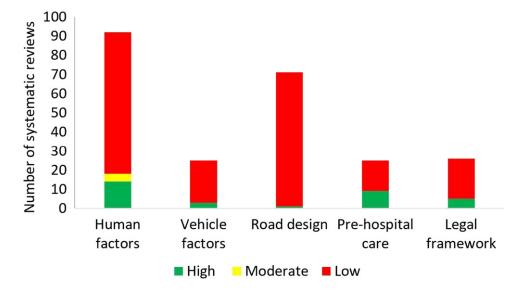
FIGURE 6 Number of systematic reviews by quality.
than three‐fourths of all driver training studies were conducted in North America, highest across all interventions, while only 6% of those were from Europe and Central Asia. Europe and Central Asia had their greatest share in studies of sanctions and penalties (26%).
Among the impact evaluations, about 60% of the studies used a before‐after approach, another quarter used time‐series analysis and the rest used case‐control or experimental studies. This distribution of study design varied over different types of interventions. Among road user education and enforcement studies, before‐after studies were most common, with a share of 67% and 62%, respectively. Among sanctions and penalties, the most common method was time‐ series (42%) followed by before‐after (38%). Experiments were most commonly used in road user education evaluations (15%), while in other interventions, these study methods were highly uncommon (2%–6%). Case‐control studies were twice as common in sanctions and driver training (10%–12%) than in enforcement and road user education (5%–6%)
6.5 | Vehicle factors & protective devices
The map identified 106 studies (65 impact evaluations and 41 systematic reviews) that focused on interventions related to Vehicle Factors and Protective Devices (Figure 8). Among these, motorcycles were the focus of most studies (46), followed by bicycles (33), Car: non‐occupants (21), and trucks (18). There were very few studies that focused on buses (7) and none that focused on the non‐specific category of Other Vehicles. In most vehicle domains, studies were relatively equally split between evaluating fatal and non‐fatal outcomes, with many studies that included both. Almost all studies

FIGURE 7 Human Factors Interventions: Number of studies by type of outcome.

FIGURE 8 Vehicle Design Interventions: Number of studies by type of outcome.
(85%) were from high‐income countries. There was only one impact evaluation from a low‐income country, and only one from a lower‐ middle income country (Cambodia). Most studies were primarily from the regions of North America, Europe and Central Asia, and East Asia and Pacific (which includes Australia, New Zealand, and Japan). There were no impact evaluations from Latin America, the Caribbean, the Middle East or North Africa. Case‐control studies were the most common study design and were used often for the evaluation of motorcycle and bicycle helmet effectiveness. None of the studies used an experimental study design.
Among the 33 impact evaluations and 13 systematic reviews that were related to motorcycles, more than two‐thirds (32 studies) focused on the effectiveness of helmets in preventing motorcyclist injuries. In addition, 4 studies assessed the effects of improved braking systems (including anti‐lock brakes), 3 assessed the use of daytime running lights, 2 were on the effects of motorcycle engine capacity, and 3 were on protective clothing, use of reflectors and other means to improve conspicuity.
Among the 23 impact evaluations and 10 systematic reviews that were related to bicycles, almost all studies (28) were related to the effectiveness of helmets in preventing injuries to bicyclists. Of the remaining 5 studies, most (4) focused on interventions to enhance the visibility of bicyclists through reflectors or clothing.
Out of the 24 studies on how car design factors affect non‐ occupants, only 10 were impact evaluations. The technologies evaluated included daytime running lights, antilock brakes, front‐ end shape, intelligent speed adaption, speed limiters, and a package of safety regulations. The remaining 14 were systematic reviews and included evaluations of braking systems (including antilock brakes, electronic stability control, automated braking and brake assist technologies), blind spot detection, bull bars, improved headlights (including daytime running lights), vehicle shape and front‐end design, and vehicle reversing cameras.
Out of the 18 studies related to trucks, only 7 were impact evaluations. The technologies and interventions evaluated included crash attenuators mounted on the back of trucks, speed limiters, ISO‐ 9000 certification, conspicuity treatments, daytime running lights, and motor carrier safety audits. The remaining 11 systematic reviews focused on braking systems (including antilock brakes and automatic emergency braking), blind spot detection, bull bars, vehicle inspections, safety equipment on vehicles, safety standards for trailers, and under‐run guards.
Out of the 7 studies related to buses, there were 3 impact evaluations (one each on speed limiters, daytime running lights and motor carrier safety audits. The 4 systematic reviews focused on periodic inspection, safety equipment, and bull bars.
6.6 | Road design infrastructure and traffic control
There are 7 intervention categories under road design infrastructure and traffic control. The largest number of studies are available for traffic control and junctions with 192 impact evaluations and 47 systematic reviews (Figure 9). This is followed by the two intervention categories of road design and urban form (159 impact evaluations and 58 systematic reviews) and speed control infrastructure (171 impact evaluations and 16 systematic reviews). The other three categories that have much lower number of studies are bicycle, MTW and pedestrian paths and plazas, work zones and toll booths, and protective infrastructure. The intervention category of parking policies has only one impact evaluation and systematic review each.
Most of the systematic reviews were of low quality. Only one high‐quality systematic review is available for road design and urban form and one for speed control measures. Most impact evaluation studies have followed before‐after study design, with 75% of impact 20 of 261 | GOEL ET AL.

FIGURE 9 Road Design and Infrastructure Interventions: Number of studies by type of outcome.
evaluations using this method. Case‐control and time‐series were used for 10% and 6% of studies, respectively. Case‐control was most used for studies related to bicycle, MTW and pedestrian paths with one‐fifth of these studies using this method. Time‐series was most used for speed control infrastructure with one‐tenth of the studies using this method.
Overall, there were twice as many studies reporting outcomes for motorised modes than for non‐motorised modes. This ratio was most divergent in the case of protective features where motorised modes were more than five times more likely than non‐motorised modes. In bicycle, MTW, and pedestrian paths, as expected, the ratio was reversed, and non‐motorised modes were about three times as likely as motorised modes.
Almost all the studies (96%) have been carried out in high‐income countries. Among different geographies, North America contributed 54% of the studies, Europe and Central Asia, another 26%, and East Asia and Pacific, 16%. There were almost no studies from South Asia, Sub‐Saharan Africa, orLatin America and the Caribbean.
There were more than twice as many studies that reported outcomes in urban areas than in rural areas. Within each of the interventions, there were variations in the urban‐rural distribution. Road design and speed control were equally reported in urban and rural areas. Almost all the studies for bicycle, MTW and pedestrian paths have been conducted in urban areas. Traffic control and junctions were twice as likely to be reported from urban areas than rural areas.
6.7 | Post‐crash pre‐hospital care
We identified a total of 118 studies (27 systematic reviews, 86 impact evaluations and 5 protocols) (Figure 10). Nearly two‐thirds of the studies focused on ambulances (10 systematic reviews and 47 impact evaluations) or drugs and medications (14 systematic reviews, 40 impact evaluations and 5 protocols). The two intervention categories of level of medical personnel (27) and time to hospital (24) comprised 29% of the studies. Finally, the remaining intervention categories such as first aid training (5), stay and play vs scoop and run (4) and extraction/extrication (1) were few in number.
In all the studies the outcomes were a reduction in post‐crash fatalities and some of them also indicated reduction in non‐fatal injuries.
Nearly 80% of the studies were from the USA, Australia, Japan and major European countries. Higher middle‐income countries such as China, Brazil, etc. accounted for 12% of the studies. Low and lower middle‐income countries including those from South Asia and the African continent comprised of the remainder 8% of the studies. A large proportion (42%) of the studies were reported from the USA and Canada. This was followed by the European and Central Asian countries (28%) like the UK, France, and Iran. Next, the East Asian and Pacific countries like Australia, Japan and China contributed 16% of the studies. Among the regions with the lowest shares, the African countries contributed 7% and South Asian and Latin American countries contributed 6% of the studies.
Nearly all the studies evaluated the effect of trauma which involved victims from all types travel modes (cars, MTW, pedestrians and bicyclists). Amongst these 78% of the studies focused on the treatment of adult population. Unless specifically mentioned, patient groups such as pregnant women and patients with co‐morbidities were excluded. There were 22% of the studies that focused on post‐ crash trauma care of children and teenagers.
Among the methodologies used, 74% of the studies were randomised control trials, case control or systematic reviews. Most of these study designs have been quite common in medical and public GOEL ET AL. | 21 of 261

F I G U R E 10 Post‐crash Care Interventions: Number of studies by type of outcome.
health research, but this is quite different from what we see in general road safety literature where before‐after and time‐series based studies are more common. RCTs were most commonly used in the interventions of drugs and medication, while in the evaluations of ambulances, case‐control was the most common and RCTs were second most common.
6.8 | Legal and institutional framework
We identified a total of 424 studies that focused on interventions related to legislation (Figure 11). Within these, there are 35 systematic reviews and 389 impact evaluations. Almost all the studies were on laws and policy (406), and only a few on pricing (20), safety institutions (4), and motor vehicle insurance (4). All the interventions reported fatal or injury crashes as the outcomes. However, only the studies on law and policy and those on pricing reported one of the four intermediate outcomes of change in speed, change in alcohol use, seat‐belt and helmet use.
Among the studies on laws and policy, change in alcohol use was most commonly reported (n = 71), followed by seatbelt use (n = 51), helmet use (36), and change in speed (28). Many of these studies included evaluation of interventions such as a new legislation decreasing permissible blood alcohol level (Nagata et al. 2008), implementation of speed limits (e.g., Bornioli et al., 2018), law mandating compulsory use of seat belts (e.g., Foldvary & Jane, 1974) or law mandating use of motorcycle helmets (Olsen et al., 2016).
Almost all the studies (95%) were based in high‐income countries. There were only 4 impact evaluations and 2 systematic reviews from low‐and‐middle and low‐income countries, all with a focus on laws and policy. The overrepresentation of high‐income countries is reflected in the regional distribution of the studies. North America alone comprises two‐thirds of all the studies, and Europe and Central Asia, and East Asia and Pacific, comprising 14% each. Before‐after and time series are the two most common study designs, each comprising 45% of the studies.
7 | DISCUSSION
7.1 | Summary of main results
As indicated by the distribution of studies across world regions, among all the impact evaluations and systematic reviews included in this EGM, less than 10% were conducted in LMICs. As a result, the types of interventions that have been studied more frequently are biased towards road safety needs of high‐income countries with high levels of car use. Much of the historical reduction in road deaths in these countries starting in the 1970s was achieved through interventions focused on car occupants such as car design or seatbelts. Indeed, it is the accumulation of this research over past 50 years that dominates road safety literature today. However, in LMICs, for example in many countries of Latin America, sub‐Saharan Africa and Asia, there is a lot more heterogeneity in traffic. Road users outside the cars such as pedestrians, cyclists, and motorcyclists are often in the majority, and they share road space with cars, buses, and trucks. Due to the underrepresentation of LMICs in scientific literature, there is a general lack of evidence for interventions that may have greater applicability in these countries.
For example, even though motorcyclists form a significant share of road deaths in many LMICs, there are only a few studies that have 22 of 261 | GOEL ET AL.

F I G U R E 11 Legal and Institutional Interventions: Number of studies by type of outcome.
focused on interventions related to the safety of motorcyclists. These include studies evaluating new technologies in motorcycles (e.g., ABS), the design of helmet to suit tropical climates, or interventions to improve the prevalence of helmet use. In the same manner, even though trucks and buses contribute to a large share of pedestrian deaths in LMICs, studies that evaluated the effectiveness of improved front‐end design for buses and trucks to reduce injury severity of impacting pedestrians are lacking. In some instances, while a particular intervention may have been evaluated in a high‐income country context, it may not be directly applicable in other contexts. For example, traffic calming techniques (e.g., roundabouts) have been implemented extensively in many urban areas of high‐income countries and have been shown to be highly effective. However, the effectiveness of traffic calming in reducing the speed of motorcycles is not known and therefore more evidence may be needed from LMICs with high levels of motorcycle use. The EGM also points to lack of good‐quality systematic reviews. In other words, the available evidence of the interventions that have been studied also needs greater scrutiny or more research.
7.2 | Areas of major gaps in the evidence
7.2.1 | Human factors
Among the interventions categorized under human factors, there was a paucity in the studies that evaluated helmet use as an outcome. This is a direct implication of the regional representation in the studies. Since, almost 95% of these studies were conducted in high‐ income countries, where motorcycle usage is low or rare, helmet studies have not been of priority. More than 90% of all road deaths are contributed by LMICs and in many of these countries, motorcyclists contribute up to 40% of all road deaths (WHO, 2018). In South Asia, for example, the region with one of the highest levels of motorcycle use, the map reported only 3 impact evaluation studies related to helmet use. Future research agenda in LMICs should urgently address this gap.
The map also shows that helmet prevalence was more than twice as likely to be studied in interventions of road user education than in interventions of enforcement. Further, there is only one systematic review of the impact of enforcement on helmet use, while there are 7 systematic reviews of the impact of road user education on helmet use. This shows a likely bias towards safety education efforts both in practice as well as in research. Seat belt use is another outcome measure where road user education was the intervention for half of all studies. However, this large bias towards road user education is not seen in speed and alcohol as outcomes. For example, for speed, only 10% of the studies were based on educational interventions, and in alcohol use, 30%.
Given that almost all studies were conducted in high‐income countries, it is important to assess the evidence for its transferability to LMIC settings. The vehicular mix in high‐income countries is dominated by cars, while in LMICs, it is a heterogenous mix of cars, motorcycles, cycles, buses, and various types of para‐transit modes. Thus a 'driver' is not just a car occupant but represents users of a variety of transport modes. With such variety, measures like enforcement, road user education, and driver training, will have to be calibrated according to different road users.
7.2.2 | Vehicle factors and protective devices
Among the interventions categorized as Vehicle Factors and Protective Devices, we excluded car technologies that improve
occupant safety from this EGM because there is a large existing literature that has systematically reviewed this topic. Nevertheless, it is important to note here that improvement in car safety technologies have had a particularly profound impact on improving occupant safety in high‐income countries. In fact, a review by the US National Highway Traffic Safety Administration concluded that vehicle design improvements and increasing belt use in the US between 1960 and 2012 reduced traffic mortality by as much as all other factors combined (Kahane, 2015), and the widespread use of these proven technologies in LMICs will provide large safety gains (Bhalla and Gleason 2020). This success with car‐related technologies is in sharp contrast to the large gaps in evidence for technologies focused on other types of vehicles and on protecting other types of road users (i.e., non car occupants).
There are many car technologies that can reduce risk to pedestrians, bicyclists, and motorcyclists. Among these, there are multiple evaluations, including high‐quality systematic reviews focused on the effects of electronic stability control (Elvik, 2009; Hoye, 2011). However, there is a dearth of evaluations on other potentially important technologies, such as vehicle front‐end design, automatic braking, and improved headlights. Although, European directives started requiring improvement of the front‐end design of cars for pedestrian protection starting in 2005, only one evaluation of the resulting changes in car design met the EGM's inclusion criteria. This is important because improved front‐end design is one of the 8 priority regulations promoted by the UN World Forum for Harmonization of Vehicle Regulations for adoption by LMICs. Notably these regulations only apply to cars and exclude buses and trucks, which are responsible for most of the pedestrian impacts in some countries (Bhalla & Gleason, 2020). While there have been several studies focused on developing bus‐ and truck‐front designs (Kajzer et al., 1992; Chawla et al., 1999; Feist et al., 2008), we found no real‐world evaluations of such interventions.
The literature evaluating motorcycle‐related technologies is not commensurate with the scale of the problem. Motorcyclists are the most common road users killed in traffic crashes in many LMICs specially in South Asia, East Asia and Pacific, and Latin America and Caribbean (James et al., 2020). Studies evaluating the design of motorcycle helmets are a notable exception with many evaluations and systematic reviews. However, almost all of these studies evaluate the ability of helmets to attenuate crash forces. Although these studies have primarily been conducted in high‐ income countries, helmet designs are essentially the same worldwide (polystyrene foam inside a polycarbonate shell) and the biomechanical tolerance to head injury doesn't vary substantially across populations in different countries. Therefore, further similar evaluations in more countries are unlikely to yield new insights. However, there is a pressing need for evaluations of helmet designs that encourage helmet use, such as by providing better ventilation (Patel & Mohan, 2003) and encouraging correct use, such as by proper fixation (Ramli & Oxley, 2016). As with motorcycles, the bulk of the bicycle‐related studies identified were focused on helmets, particularly on the ability of helmets to reduce injuries when worn correctly. There is a need for further studies that focus on helmet characteristics that can increase proper use in diverse environments.
Beyond helmets, there were few studies on other motorcycle‐ related technologies. We identified three evaluations of motorcycle anti‐lock brakes that report relatively large reductions in RTI. However, even a decade after the first of these studies, there are no evaluations that assess ABS effectiveness in small‐engine capacity (<125cc) motorcycles that comprise the majority MTWs in most LMICs. There are also significant gaps in the evaluation of other motorcycle‐related technologies (such as leg‐guards, improved head lamps, protective clothing, and daytime running lights).
Most of the studies come from high‐income countries in North America, Europe, and Central Asia, and East Asia and Pacific. The implication is that there are no evaluations of issues that are uncommon in high‐income countries but are important across many LMIC settings. For instance, there is a wide range of indigenous vehicles, such as autorickshaws, tuk‐tuks, tempos, and jeepneys, that are used extensively in LMICs. Some of these vehicles have been the focus of engineering design studies to develop countermeasures including removal of sharp objects, use of padded surfaces, improvements in rollover characteristics, modifications to reduce intrusion and improve structural crashworthiness, and means to restrict passenger ejection (Mohan et al., 1997; Chawla et al., 2001; Mukherjee et al., 2007; Gawade et al., 2004). Nevertheless, we found no studies that have evaluated the effects of such interventions in real‐world crashes. There is a pressing need for studies that assess interventions that address the most important vehicle‐design issues in LMICs, where the bulk of RTI and deaths happen.
7.2.3 | Road design infrastructure and traffic control
There are two major limitations in the evidence available for road design interventions. First, almost all the studies have been carried out in HICs, with the majority originating from North America. The traffic mix where these studies have been carried out is different from the traffic existing in LMICs, especially in South Asia and Sub‐ Saharan Africa. Thus the available evidence may not translate to LMICs. Second, most systematic reviews are of poor quality. This means that the available evidence synthesis may either need greater scrutiny or more empirical research.
Traffic crash patterns in LMICs can be substantially different from those in North America and Western Europe. In the US, for example, pedestrians, cyclists and motorcyclists comprise 30% of all road deaths (WHO, 2018). In comparison, in sub‐Saharan Africa, this share is more than 50% (Damsere‐Derry et al., 2017; Adeloye et al., 2016; Solagberu et al., 2015) and in India, this is more than 70%. In India, even on rural highways, pedestrian and motorcyclists have a greater share among road deaths than other road users (Mohan et al., 2017). These crash patterns are somewhat similar to those observed in urban areas. On the other hand, the
18911803, 2024, 1, Downloaded from https://onlinelibrary.wiley.com/doi/10.1002/cl2.1367 by Tallin Technical University, Wiley Online Library on [07/09/2025]. See the Terms and Conditions (https://onlinelibrary.wiley.com/terms-and-conditions) on Wiley Online Library for rules of use; OA articles are governed by the applicable Creative Commons License
involvement of pedestrians, cyclists and MTW users on rural highways in a high‐income country would be a rare occurrence.
Given this contrast, the evidence from a high‐income country context may or may not be applicable to LMICs depending on the intervention. For example, the results involving the effectiveness of crash barriers for cars and heavy vehicles may be broadly valid for all geographical regions. However the use and safety performance of design features such as wide shoulders may be different in LMICs due to the presence of slow‐moving vehicles on high‐speed roads that may use shoulder space as a travel lane. Upgradation of highways involving improved pavement surface, wider lanes, and wider shoulders may lead to higher speeds and more frequent lane changing and conflicts. Pedestrians and slow vehicles on the curb‐ side lane or shoulders will be exposed to motorised vehicles moving at much higher speeds. Therefore, highway design standards applicable to highways in high‐income countries may not have the same level of effectiveness in ensuring the safe movement of traffic in LMICs, and the safety benefits of road upgradation using present design standards remains unclear for LMICs.
Similarly, in urban areas, traffic calming techniques that use road design changes to reduce the speed of vehicles often include narrowing road widths, adding curvature to a straight road section, replacing intersections with roundabouts, or using smaller radii of curvature at the turns. Many of these interventions may work for cars but may not be equally effective for motorcycles that may negotiate through these design changes without much deflection.
Most studies have focussed on motorised traffic. This is understandable given the importance of motorised traffic in high‐ income countries. However, in view of the current focus on SDGs, non‐motorised traffic and active transport modes have acquired importance in both HICs as well as other countries (Costanza et al., 2016). Therefore future efforts are required for evaluating the impacts on these road users.
New research is required to make cities safer for pedestrians in all countries, such as revisiting current speed limits, lowering speed limits, and also active measures (such as speed bumps) to control speeds. There is consensus on urban design principles that can lead to safer cities (higher mixed land‐use density) – the conditions that are already present in less‐motorised countries. There is a need to relook at city planning paradigms moving from a car‐friendly to a people‐friendly city. New research is required to get insights from these settings and an understanding of barriers to the implementation of these principles.
LMICs and low‐income countries have to make stronger efforts to understand the requirement of pedestrians along high‐speed roads and develop new standards for ensuring pedestrian safety along these facilities.
7.2.4 | Post‐crash pre‐hospital care
There are two major paradigms of post‐crash pre‐hospital patient care: (1) Stay and Play, which focuses on extrication, onsite stabilization of the patient, and transportation of the patient (with enroute interventions to continue stabilisation) to a definitive care facility; and (2) Scoop and Run, which aims to extricate and transport the patient to a medical facility for further care as soon as possible. Extrication is not considered significantly important by many clinicians; however, it can influence the outcome. Therefore, the lack of significant literature on this issue is a matter of concern. The intervention categories in this section show high overlap with each other.
A large proportion of the studies have focused on ambulances, and many of these were conducted in HICs. However, in LMICs, ambulances are not commonly used for the transport of crash victims to the hospital (Bhalla et al., 2019). Instead, most victims are transported by passing vehicles or, in some settings, by traffic police. Studies evaluating what improves outcomes after layperson transport are urgently needed. Only 18 out of 130 impact evaluations looked at time to hospital and the effect of delayed care, and most of those were conducted in HICs. Existing evidence suggests that a survival benefit exists in patients arriving earlier at hospital after severe head injury, but the benefit may extend beyond the golden hour (Dinh et al., 2013). However, the extent to which such findings apply to LMICs is unclear because of vast differences in the ability of hospitals to provide life‐saving care. Similarly, consider that available evidence suggests that first‐aid training improves first‐aid knowledge, skills, and self‐confidence immediately after training and for 3 months or longer after training. However, research on the possible effects of first‐aid training on traffic mortality is scarce (Martensen et al., 2019). Therefore, merely improving prehospital care without improving definitive care capacity in the hospital may only shift the mortality statistics from the roadside to the hospital. These issues can only be properly addressed by conducting evaluations of interventions in LMIC settings.
Regarding the level of training of EMS personnel, the EGM found few impact evaluations. In a systematic review Jayaraman et al. (2014) concluded that accounting for the trauma score of the patient, providing specialised training to EMS personnel did not result in significant improvements in outcomes. But in each of these cases, the type of trauma is a significant variable in deciding the survival rate of the patient. As an example, in the case of penetrating injuries, basic life support (BLS) seems to be the proper care treatment, whereas in blunt head injuries, advanced life support systems show better patient recovery (Ryynänen, 2010). This is an intervention that can be replicated in other LMICs and LICs in theory and is something that is being attempted. Although one also has to consider the economic impact of upgrading not only the staff but also the equipment used in the ambulances. And unless the number of such specialized ambulance units grow substantially benefits might not be significantly visible. Furthermore, the review found, based on the limited data, that there is at present no evidence to recommend ALS training of ambulance crews to care for injury victims. Also, definitive care capacity at the receiving hospital will affect the outcome of trauma (Jayaraman et al., 2014).
GOEL ET AL. | 25 of 261
Notably, the EGM shows that medicinal interventions in the form of drugs and medicines administered to patients in transit have been studied in many studies. Bleeding control and management of the patient is the most important part of this, for which the use of tranexamic acid showed the best results in multiple studies including the CRASH 2 trials in 2011 conducted in multiple countries. Intravenous fluid replacement to offset volume of blood loss is an intervention frequently recommended in all emergency and prehospital care of trauma victims. In the case of intravenous fluid replacement either by colloidal or crystalloid solutions, Lewis (2018) noted no significant difference between the two. Kwan et al. (2014) in a Cochrane review found no evidence to either support or not support the use of early or larger volume intravenous fluid in uncontrolled bleeding.
Even though the speed of transport (within the 'golden hour') is discussed extensively in road safety policy documents, there are relatively few robust studies that have evaluated the effect of transfer time on outcomes. Sirens and flashing lights and faster‐ moving ambulances have been emphasised for this and they have become the norm to define the identity of ambulance movement. Although only 75% of the ambulances are run with warning lights and sirens (WLS), a disproportionate 91% of response mode collisions were during a WLS response (Custalow et al., 2004). To further emphasise the speed of transportation there has been much discussion on the effectiveness of helicopter or air patient transport versus conventional road transport. Despite the high expense of such transport, there are few robust evaluations of their outcomes. And, the results of the studies are mixed, with only some reporting benefits. Studies by Zigmond (2008) and Snooks et al. (1996) noted that helicopter EMS (HEMS) did not result in any appreciable change in outcome. Most importantly, helicopter‐ based studies are concentrated mostly in HICs. This is expected due to the higher cost of maintaining a HEMS fleet because of which majority of these studies are conducted in countries in North America and Europe. The replicability of HEMS in LICs and LMICs therefore remains uncertain.
No systematic review or controlled studies were found for the following: scoop stretchers, spinal immobilization boards, head stabilizers, cervical collars, intubation equipment, artificial breathing apparatus, and mechanical CPR machine.
7.2.5 | Legal and institutional framework
Legislations form the foundation needed for the successful implementation of traffic enforcement programs. As many LMICs continue to witness growth in traffic and RTI, an important intervention will be the passing of legislation that addresses road safety issues of the country. However, we found few studies from LMICs that evaluated the impact of legislative interventions. This is expected partly due to the paucity of road safety legislation in many parts of the world. WHO conducted a worldwide review of legislation for the five risk factors – speeding, drink‐driving, use of motorcycle helmets, use of seatbelts, and use of child restraints.

Among the 175 countries reviewed, only 25 of those had laws meeting best practices for 4 or 5 of those risk factors. Many without legislation tend to be LMICs. For example, a large proportion of the countries with no legislation for 50 km/h speed limit on urban roads are LMICs (WHO, 2018).
The transferability of the evidence of legislative measures from HICs to LMICs is particularly problematic because the effectiveness of a law to achieve on‐road compliance is highly dependent on enforcement and policing. In other words, the relationship between legislation and its impact on traffic safety is mediated by enforcement. Studies evaluating legislation often do not report the level of enforcement. This is because many of these interventions involve a new legislation, which may simply be enforced by the police as an additional traffic offense without changing the intensity or coverage of enforcement. Consequently, evaluations of legislation may not have external validity.
The literature on road safety institutions is scarce. This is noteworthy given the importance of such institutions to improve safety in countries. According to international experience, it is almost impossible to promote safety in a comprehensive and scientific manner without an independent road traffic safety agency (Mohan et al., 2017). However, the scarcity is expected because interventions of setting up new institutions cannot be frequent. An institution once established in a country continue to function for a long time. National Highway Traffic Safety Administration (NHTSA) in USA was established in 1970 under the U.S. Department of Transportation, was established by the Highway Safety Act of 1970, as the successor to the National Highway Safety Bureau, to carry out safety programs under the National Traffic and Motor Vehicle Safety Act of 1966 and the Highway Safety Act of 1966. NHTSA continues to improve traffic safety by setting and enforcing safety performance standards for motor vehicles and motor vehicle equipment, and through grants to state and local governments to enable them to conduct effective local highway safety programs. There are also methodological challenges in evaluating the impact of institutions. Just as legislation works through its enforcement, institutions do not have a direct impact on safety. They improve road safety through the formulation of multiple interventions, and it's the latter that are evaluated in road safety studies. The interventions of pricing are often based on natural experiments unrelated to traffic safety or not solely related to it. These include changes in fuel prices, taxation on alcohol, and congestion pricing. Interestingly, even with widespread use of motor vehicle insurance across the world, there are only three impact evaluations.
7.3 | Limitations
The EGM focuses on the availability of evidence for interventions but does not provide a synthesis on the effect of these interventions on outcomes, as is typically done in systematic reviews. In fact, beyond effectiveness, the interventions reviewed
18911803, 2024, 1, Downloaded from https://onlinelibrary.wiley.com/doi/10.1002/cl2.1367 by Tallin Technical University, Wiley Online Library on [07/09/2025]. See the Terms and Conditions (https://onlinelibrary.wiley.com/terms-and-conditions) on Wiley Online Library for rules of use; OA articles are governed by the applicable Creative Commons License
in the EGM are disparate representing the range of opportunities available to policymakers to improve road safety. These interventions differ on a range of dimensions, including their cost, their targets (humans, infrastructure, vehicles, etc.), and the timeline over which interventions are conducted and benefits accrue. Consider for instance that the effects of most enforcement and social marketing campaigns are transient while the effects of infrastructure are long‐lasting, such that small short‐term benefits can accrue over time (Bjornskau & Elvik, 1992). Such distinctions are important considerations in policy debates but are beyond the scope of an EGM. Similarly, safety projects typically involve multiple interventions. While the EGM database is coded to include all interventions that were included in the study (the map allows studies to be filtered [with AND/OR operators] to any combination of interventions), the analysis presented here focuses on the individual interventions. Assessing the relative role of multiple interventions is beyond the scope of the EGM and requires systematic reviews. Finally, note that the lack of evidence is not the only reason why proven interventions are not implemented in road safety – that is, there is an implementation gap. Although the purpose of this EGM is to focus on the research gap (i.e., do we know what works and what doesn't?), we also need to understand how to get what is known to work implemented.
Understanding issues of diversity and equity are important considerations in understanding the impacts of road safety interventions and policies on different populations. The EGM allows exploring some of these issues directly (e.g., by assessing evidence gaps in LMICs relative to HICs) and others indirectly (e.g., assessing evidence for safety of pedestrians, who are often poorer than occupants). However, a proper exploration of equity impacts would require a systematic effort to define variables that characterize equity and extract the availability of this information from the road safety literature. Although such analysis was beyond the scope of this EGM, such studies should be undertaken using this EGM as a starting point.
8 | AUTHORS' CONCLUSIONS
8.1 | Implications of findings
This EGM illustrates that while there is a large literature that empirically evaluates what interventions work (and what don't work) in road safety, these studies are very unevenly distributed globally. The vast majority of the studies have been conducted in the high‐ income countries in North America, Western Europe and East Asia and Pacific. This is an issue because the external validity of a study (i.e., the extent to which research findings in a population can be generalized to other settings) depends on the type of intervention. For instance, studies that assess the effectiveness of crashworthiness technologies (e.g., effectiveness of helmets, seatbelts, airbags, etc.) have high external validity because the injury tolerance of the human body is reasonably similar across countries. Primarily for this reason, we excluded vehicle design technologies for occupant protection from this EGM (there is a large literature evaluating these technologies; and the findings of these studies are valid in other settings as well).
However, in other domains (e.g., road design, human factors, legal and institutional factors), contextual factors can dominate. For instance, consider that the traffic environment on rural roads and highways in India is substantively different from that in the US. While rural roads are primarily used by cars in the US (and most crash victims are car occupants), in India, rural roads will often have much more heterogenous traffic, with a significant presence of pedestrians, bicyclists, motorcyclists, and autorickshaws. Consequently, interventions that are protective in the US (e.g., paving of shoulders, which reduces crashes by providing straying vehicles room to recover) could lead to an increase in crashes in India (e.g., paved shoulders lead to increased speeds that are lethal to pedestrians and other vulnerable road users). Nevertheless, nearly all of the research on the design of safer roads has been conducted in the US, Australia, New Zealand, and Western Europe. In the absence of local research, LMICs (many of which are rapidly expanding their road infrastructure) are adopting design standards and guidelines developed based on research conducted in HICs. This situation can only be remedied by increasing the amount of research undertaken in LMICs.
Beyond the problem of external validity of interventions that have been evaluated, the EGM illustrates that there are many important road safety problems that have not received attention, primarily because they do not occur in HICs. For example, this includes addressing motorcycle‐pedestrian crashes, which are common in countries where motorcycles are common. Similarly, although vehicle technologies for occupant protection have been extensively evaluated, there are no evaluations that focus on autorickshaws, tuk‐tuks, and other vehicles that are primarily produced and used in LMICs. Likewise, we found no evaluations that addressed the safety of unrestrained occupants in the backs of trucks and agricultural tractors, which is a common occurrence in many LMICs. And, as a final example, the EGM shows that the post‐crash care literature focuses almost exclusively on evaluating ambulances. However, most victims of traffic crashes in LMICs are transported by taxis and other passing vehicles. We found few interventions that aimed to improve the outcomes of layperson transport. Again, there is an urgent need to fill these gaps in evidence through well‐designed research studies.
Simultaneous with the need to increase research in LMICs, is the need to increase the use of high‐quality research methods. In recent years, the research output from many LMICs has dramatically increased. Our initial search for evaluations identified many papers from China, India, Iran, Brazil, and other LMICs on road safety applications, especially those related to transportation engineering. In fact, many of these countries have a large pool of well‐trained transportation engineers. However, most of these GOEL ET AL. | 27 of 261
studies did not meet our inclusion criteria, most often because they used cross‐sectional study designs with multivariate regression, which is often poorly suited for causal inference. In biomedical research, randomized experiments are considered the highest form of evidence, but such studies are usually not logistically feasible for most road safety interventions. This is reflected in the small number of experiments that were identified in this EGM. Nevertheless, the EGM shows that in high‐income countries, the use of observational epidemiological approaches (e.g., the case‐control method) has been deployed extensively to control for many of the sources of variation in cross‐sectional data. Similarly, well‐designed observational before‐after studies can have high validity but are rarely used in LMICs. Therefore, it is important to build the capacity of road safety researchers, especially transportation engineers, in LMICs in the use of high‐ quality epidemiological study designs.
There has been a strong tendency in global advocacy efforts to claim that we already know what works in road safety but that LMICs are failing to implement proven interventions. This EGM highlights that this is largely not true. In fact, as we highlight above, the main issues in road safety that are specific to LMICs have received little systematic attention. While there is strong evidence that protective equipment (e.g., helmets and seatbelts) reduce injuries, even for these there is little evidence on what interventions result in large‐scale increases in their use in LMICs. Therefore, it is important that international development agencies and philanthropic organizations that are engaged in global road safety advocacy efforts emphasize the need for new knowledge on road safety in LMICs. Likewise, it is critical for national and international agencies that fund research and development activities to prioritize road safety research, and use this EGM in setting their research agendas.
8.2 | Recommendations
The main recommendations from the findings of this EGM are:
- International actors engaged in global road safety advocacy should emphasize the need for new research on road safety interventions especially those that target issues specific to LMICs.
- National and international agencies that fund research and development in LMICs should prioritize road safety and use this EGM to guide their research agendas.
- This EGM finds that investments need to be made in developing the capacity of LMIC engineers and researchers to use epidemiological study designs for evaluating road safety interventions. Relatedly, there is a need to develop capacity to conduct high quality systematic reviews, which includes enabling access of LMIC researchers to online abstract and citation databases.

- Researchers should use this EGM for conducting systematic reviews of interventions for which there are many impact evaluations. Using the EGM database as a starting point can substantially reduce the effort required in searching and screening the literature.
- This EGM should be made a living review so that it functions as a perpetual resource for researchers and policy makers for finding accessible summaries of the road safety literature.
CONTRIBUTIONS OF AUTHORS
EGM authors
Dr Rahul Goel – Primary author; subject matter expert human factors and legal and institutional framework; Study screening; Study inclusion criterion.
Prof Geetam Tiwari – Primary author; subject matter expert Road design, infrastructure and traffic control; Study screening.
Dr. Mathew Varghese – Primary author; subject matter expert Pre‐crash and pre‐hospital care.
Prof Kavi Bhalla – Primary author; subject matter expert Vehicle factors and protective devices; Study screening; Study inclusion criterion.
Prof Girish Agrawal – Tertiary author; subject matter expert human factors and legal and institutional framework.
Ms. Guneet Saini – Secondary author; Study data collection; Study screening; Study coding.
Mr. Abhaya Jha – Secondary author; Study data collection; Study screening; Study coding.
Mr. Denny John – Tertiary author; Study inclusion criterion.
Dr. Ashrita Saran – Tertiary author; Quality appraisal of studies. Dr. Howard White – Tertiary author; Study screening; Study
Prof Dinesh Mohan – Primary author; subject matter expert human factors and Legal and institutional framework; Study screening.
ROLES AND RESPONSIBILITIES
inclusion criterion.
Content: DM, GT, KB, MV, GA and RG are members of Independent Council for Road Safety International (ICoRSI) and have been working on transport research and road safety interventions for many years.
EGM methods: HW as CEO provides technical and strategic support for the development of EGM in Campbell library. Previously, he has initiated and led the development of EGM during his association with 3ie. DJ is currently co‐author of 3 ongoing EGM registered with Campbell library. AS was lead author of a review of evidence maps, and is leading several on‐going maps, as well as conducting many training workshops on constructing evidence maps.
Information retrieval: DJ and AS, in consultation with HW, and other authors will provide information retrieval expertise for the EGM. AJ and GS conducted information retrieval with support from DM, GT, KB, RG and MV.
Report: DM, RG, KB, GT, MV, AJ, GA and AS wrote the report.
ACKNOWLEDGEMENTS
We thank all the members of Independent Council for Road Safety International (ICoRSI) for their feedback during the EGM process.
DECLARATIONS OF INTEREST
RG, GT, MV, KB, and DM have conducted primary studies on the topic of road safety.
PLANS FOR UPDATING THE EGM
RG, GT, MV and KB will be responsible for updating EGM every 2 years.
DIFFERENCES BETWEEN PROTOCOL AND REVIEW
Intervention criterion
In the intervention category of human factors, we added an additional sub‐category called pedestrian, which includes pedestrian‐related interventions not included in any other intervention categories (e.g., protective clothing).
Study design
In the protocol, study design categories were based on the commonly used methods in public health literature. In the EGM, we used a different set of categories based on the methods that are prevalent in traffic injury literature. Coding tool also was updated this is reflected in Supporting Information: Appendix B
Search strategy
In addition to Safety Cube and Road safety handbook, we added Cochrane Injury reviews. Grey literature studies were not searched through string but through a google search.
SOURCES OF SUPPORT
Internal sources
- Independent Council for Road Safety International (ICORSI), India External sources
- National Institutes of Health, USA grant R21 TW010823‐01A1
REFERENCES
INCLUDED STUDIES
Abboud 2001
Abboud, N. K., & Bowman Bradley, L. (2001). Evaluation of two‐ and four‐foot shoulders on two‐lane state routes. ITE Journal, 71(6), 34–39.
Abe 2014
Abe, T., Takahashi, O., Saitoh, D., & Tokuda, Y. (2014). Association between helicopter with physician versus ground emergency medical services and survival of adults with major trauma in Japan. Critical Care, 18(4), 1–8.
Abularrage 1997
Abularrage, J. J., Deluca, A. J., & Abularrage, C. J. (1997). Effect of education and legislation on bicycle helmet use in a multiracial population. Archives of Pediatrics and Adolescent Medicine, 151(1), 41–44.
Abuzwidah 2015
Abuzwidah, M., & Abdel‐Aty, M. A. (2015). Safety assessment of the conversion of toll plazas to all‐electronic toll collection system. Accident; Analysis and Prevention, 80, 153–161.
Adams 2017
Adams, N. S., Newbury, P. A., Eichhorn, M. G., Davis, A. T., Mann, R. J., Polley, J. W., & Girotto, J. A. (2017). The effects of motorcycle helmet legislation on craniomaxillofacial injuries. Plastic and Reconstructive Surgery, 139(6), 1453–1457.
Adelson 2005
Adelson, P. D., Ragheb, J., Muizelaar, J. P., Kanev, P., Brockmeyer, D., Beers, S. R., Brown, S. D., Cassidy, L. D., Chang, Y., & Levin, H. (2005). Phase II clinical trial of moderate hypothermia after severe traumatic brain injury in children. Neurosurgery, 56(4), 740–753.
Adelson 2013
Adelson, P. D., Wisniewski, S. R., Beca, J., Brown, S. D., Bell, M., Muizelaar, J. P., Okada, P., Beers, S. R., Balasubramani, G. K., & Hirtz, D. (2013). Comparison of hypothermia and normothermia after severe traumatic brain injury in children (Cool Kids): A phase 3, randomised controlled trial. The Lancet Neurology, 12(6), 546–553.
Aeron‐Thomas 2005
Aeron‐Thomas, A. S., & Hess, S. (2005). Red‐light cameras for the prevention of road traffic crashes. Cochrane Database of Systematic Reviews, 2005(2), CD003862.
Agency 1997
Agency, H. (1997). West London speed camera demonstration project: Analysis of accident data 36 months before and after implementation. London Accident Analysis Unit Londres.
Agent 2001
Agent, K. R., Steenbergen, L., Pigman, J. G., Kidd, P. S., McCoy, C., & Pollack, S. H. (2001). Impact of partial graduated driver's license program on teen motor vehicle crashes in Kentucky. Transportation Research Record, 1779, 54–61.
Agerholm 2008
Agerholm, N., Caspersen, S., & Lahrmann, H. (2008). Traffic safety on bicycle paths: Results from a new large scale Danish study.
Agerholm 2017
Agerholm, N., Knudsen, D., & Variyeswaran, K. (2017). Speed‐calming measures and their effect on driving speed – test of a new technique GOEL ET AL. | 29 of 261
measuring speeds based on GNSS data. Transportation Research Part F: Traffic Psychology and Behaviour, 46, 263–270.
Agran 1987
Agran, P. F., Dunkle, D. E., & Winn, D. G. (1987). Effects of legislation on motor vehicle injuries to children. American Journal of Diseases of Children, 141(9), 959–964.
Aigner‐Breuss 2017
Aigner‐Breuss, E., & Eichhorn, A. (2017). Awareness raising and campaigns – Seatbelts.
Aigner‐Breuss 2017a
Aigner‐Breuss, E., & Pilgerstorfer, M. (2017). Awareness raising and campaigns – Child restraint.
Albalate 2008
Albalate, D. (2008). Lowering blood alcohol content levels to save lives: The European experience. Journal of Policy Analysis and Management, 27(1), 20–39.
Albuquerque 2013
Albuquerque Francisco Daniel, B., & Sicking Dean, L. (2013). In‐service safety performance evaluation of roadside concrete barriers. Journal of Transportation Safety and Security, 5(2), 148–164.
Alderson 2005
Alderson, P., & Roberts, I. (2005). Corticosteroids for acute traumatic brain injury (Review). The Cochrane Library, 2005(1), CD000196.
Aldred 2018
Aldred, R., Goodman, A., Gulliver, J., & Woodcock, J. (2018). Cycling injury risk in London: A case‐control study exploring the impact of cycle volumes, motor vehicle volumes, and road characteristics including speed limits. Accident; Analysis and Prevention, 117, 75–84.
Alena 2015
Alena, H. (2015). Safety effects of fixed speed cameras: An empirical Bayes evaluation. Accident; Analysis and Prevention, 82, 263–269.
Allpress 2010
Allpress, J. A., & Leland Jr., L. S., (2010). Reducing traffic speed within roadwork sites using obtrusive perceptual countermeasures. Accident; Analysis and Prevention, 42(2), 377–383.
Alluri 2015
Alluri, P., Gan, A., Haleem, K., & Mauthner, J. (2015). Safety performance of g4 (1 s) w‐beam guardrails versus cable median barriers on Florida's freeways. Journal of Transportation Safety and Security, 7(3), 208–227.
Al‐Masaeid 1994
Al‐Masaeid, H. R., & Sinha, K. C. (1994). Analysis of accident reduction potentials of pavement markings. Journal of Transportation Engineering, 120(5), 723–736.
Alpar 2004
Alpar, E. K., & Killampalli, V. V. (2004). Effects of hypertonic dextran in hypovolaemic shock: A prospective clinical trial. Injury, 35(5), 500–506.
Ammari 2017
Ammari, A. (2017). Increase median width.
Ammari 2017a
Ammari, A., & Usami, D. S. (2017). Shoulder implementation (shoulder type).
Amoros 2012
Amoros, E., Chiron, M., Martin, J. L., Thelot, B., & Laumon, B. (2012). Bicycle helmet wearing and the risk of head, face, and neck injury: A French case control study based on a road trauma registry. Injury Prevention, 18(1), 27–32.
Amundsen 2004
Amundsen, A. H., & Elvik, R. (2004). Effects on road safety of new urban arterial roads. Accident; Analysis and Prevention, 36(1), 115–123.
Anderson 2017
Anderson, J. R., Ogden, J. D., & Cunningham, W. A. (2017). Schubert‐ Kabban Christine. An exploratory study of hours of service and its safety impact on motorists. Transport Policy, 53, 161–174.
Andersson 1982
Andersson, K. (1982). Trafiksäkerhetseffekten av stopplikt: EMMA‐ rapport 4. Statens Väg‐och Trafikinstitut. Rapport nr 236.
Andersson 1989
Andersson, G. (1989). Hastigheter som funktion av toleransgräns, p\aaföljd och övervakningsintensitet. Statens Väg‐och Trafikinstitut., VTI rapport 337.
Andreassen 1995
Andreassen, D. (1995). A long term study of red light cameras and accidents. Australian Road Research Board Melbourne, Australia.
Andreuccetti 2011
Andreuccetti, G., Carvalho, H., Cherpitel, C., Yu, Y., Ponce, J., Kahn, T., & Leyton, V. (2011). Reducing the legal blood alcohol concentration limit for driving in developing countries: A time for change? Results and implications derived from a time series analysis (2001–2010) conducted in Brazil. Addiction, 106(12), 2124–2131.
Andruszkow 2013
Andruszkow, H., Lefering, R., Frink, M., Mommsen, P., Zeckey, C., Rahe, K., Krettek, C., & Hildebrand, F. (2013). Survival benefit of helicopter emergency medical services compared to ground emergency medical services in traumatized patients. Critical Care, 17(3), R124.
Antić 2013
Antić, B., Pešić, D., Vujanić, M., & Lipovac, K. (2013). The influence of speed bumps heights to the decrease of the vehicle speed – Belgrade experience. Safety Science, 57, 303–312.
Appiah 2011
Appiah, J., Naik, B., Wojtal, R., & Rilett, L. R. (2011). Safety effectiveness of actuated advance warning systems. Transportation Research Record, 2250, 19–24.
Apsler 1999
Apsler, R., Klein, T. M., Harding, W. M., & Char, A. R. (1999). The effects of 0.08 BAC laws. National Highway Traffic Safety Administration.
Ardeshiri 2014
Ardeshiri, A., & Jeihani, M. (2014). A speed limit compliance model for dynamic speed display sign. Journal of Safety Research, 51, 33–40.
Armour 1984
Armour, M. (1984). Effect of police presence on urban driving speeds. Australian Road Research, 14(3), 142–148.
Armour 1986
Armour, M. (1986). The effect of police presence on urban driving speeds. ITE Journal, 56(2), 40–45.
Arreola‐risa 2004
Arreola‐risa, C., Mock, C., Herrera‐escamilla, A. J., Contreras, I., & Vargas, J. (2004). Cost‐effectiveness and benefit of alternatives to improve training for prehospital trauma care in Mexico. Prehospital and Disaster Medicine, 19(4), 318–325.
Asbridge 2004
Asbridge, M., Mann, R. E., Flam‐Zalcman, R., & Stoduto, G. (2004). The criminalization of impaired driving in Canada: Assessing the deterrent impact of Canada's first per se law. Journal of Studies on Alcohol, 65(4), 450–459.
Auman 2002
Auman, K. M., Kufera, J. A., Ballesteros, M. F., & Smialek, J. E. (2002). Dischinger Patricia C. Autopsy study of motorcyclist fatalities: The effect of the 1992 Maryland motorcycle helmet use law. American Journal of Public Health, 92(8), 1352–1355.
Avery 1960
Avery, E. V. (1960). Effect of raising speed limits on urban arterial streets. Highway Research Board Bulletin, 244, 88–97.
Avrenli 2012
Avrenli, K. A., Benekohal, R. F., & Ramezani, H. (2012). Four‐regime speed‐flow relationships for work zones with police patrol and automated speed enforcement. Transportation Research Record, 2272, 35–43.
Aydelotte 2017
Aydelotte, J. D., Brown, L. H., Luftman, K. H., Mardock, A. L., Teixeira, P. G. R., Coopwood, B., & Brown, C. V. R. (2017). Crash fatality rates after recreational marijuana legalization in Washington and Colorado. American Journal of Public Health, 107(8), 1329–1331.
Azeredo 2003
Azeredo, R., & Stephens‐Stidham, S. (2003). Design and implementation of injury prevention curricula for elementary schools: Lessons learned. Injury Prevention, 9(3), 274–278.
Babiceanu 2018
Babiceanu, S. E., & Fontaine, M. D. (2018). Examining the safety effect of centerline rumble strips on curves on rural two‐lane roads (p. 19).
Bacchieri 2010
Bacchieri, G., Barros, A. J. D., dos, S., Janaina, V., Gonçalves, H., & Gigante, D. P. (2010). A community intervention to prevent traffic accidents among bicycle commuters. Revista de saude publica, 44, 867–875.
Bae 2011
Bae, Y.‐K., & Benitez‐Silva, H. (2011). Do vehicle recalls reduce the number of accidents? The case of the U.S. car market. Journal of Policy Analysis and Management, 30(4), 821–862.
Bailey 2018
Bailey, S., Soole, D., Cattermole‐Terzic, V., & Osmond, S. (2018). Toward a performance‐based approach to the Queensland Alcohol Ignition Interlock Program: The impact of performance record on risk of recidivism (p. 2).
Baker 2006
Baker, S. P., Chen, L.‐H., & Li, G. (2006). National evaluation of graduated driver licensing programs (p. 23). Johns Hopkins University, Baltimore, National Highway Traffic Safety Administration.
Baker 2009
Baker, A. J., Rhind, S. G., Morrison, L. J., Black, S., Crnko, N. T., Shek, P. N., & Rizoli, S. B. (2009). Resuscitation with hypertonic saline – dextran reduces serum biomarker levels and correlates with outcome in severe traumatic brain injury patients. Journal of Neurotrauma, 1240, 1227–1240.
Balke 1995
Balke, K. N., & Fitzpatrick, K. (1995). An evaluation of flush medians and two‐way, left‐turn lanes on four‐lane rural highways.
Ball 2010
Ball, K., Edwards, J. D., Ross, L. A., & McGwin, G. (2010). Cognitive training decreases motor vehicle collision involvement of older drivers. Journal of the American Geriatrics Society, 58(11), 2107–2113.
Bambach 2013
Bambach, M. R., Mitchell, R. J., Grzebieta, R. H., & Olivier, J. (2013). The effectiveness of helmets in bicycle collisions with motor vehicles: A case‐control study. Accident; Analysis and Prevention, 53, 78–88.
GOEL ET AL. | 31 of 261
Bamzai 2011
Bamzai, R., Lee, Y., & Li, Z. (2011). Safety impacts of highway shoulder attributes in Illinois.
Barancik 1988
Barancik, J. I., Kramer, C. F., Thode, H. C., Harris, D. K., & New York Academy of Medicine. (1988). Efficacy of the New York state seat belt law: Preliminary assessment of occurrence and severity. Symposium on Motor Vehicle Injuries: Proceedings. December 7, 1987, New York. Bulletin New York Academy of Medicine, 64(7), 742–749.
Bared 2010
Bared, J., & Zhang, W. (2010). Crash impact of smooth lane narrowing with rumble strips at two‐lane stop control intersections (p. 15). Institute of Transportation Engineers (ITE).
Bar‐Gera 2017
Bar‐Gera, H., Schechtman, E., & Musicant, O. (2017). Evaluating the effect of enforcement on speed distributions using probe vehicle data. Transportation Research Part F: Traffic Psychology and Behaviour, 46, 271–283.
Barnett 2004
Barnett, N. P., Tevyaw, T. O. 'L., Fromme, K., Borsari, B., Carey, K. B., Corbin, W. R., Colby, S. M., & Monti, P. M. (2004). Brief alcohol interventions with mandated or adjudicated college students. Alcoholism: Clinical and Experimental Research, 28(6), 966–975.
Barrette 2014
Barrette, T. P., Kirsch, T. J., Savolainen, P. T., Russo, B. J., & Gates, T. J. (2014). Disaggregate‐level assessment of changes to Michigan's motorcycle helmet use law: Effects on motorcyclist injury outcomes. Transportation Research Record: Journal of the Transportation Research Board, 2468, 131–137.
Bartle 2003
Bartle, S. T., Baldwin, S. T., Johnston, C., & King, W. (2003). 70‐mph speed limit and motor vehicular fatalities on interstate highways. American Journal of Emergency Medicine, 21(5), 429–434.
Bartolacci 1998
Bartolacci, R. A., Munford, B. J., Lee, A., & McDougall, P. A. (1998). Air medical scene response to blunt trauma: Effect on early survival. Medical Journal of Australia, 169(11‐12), 612–616.
Basile 1962
Basile, A. J. (1962). Effect of pavement edge markings on traffic accidents in Kansas. Highway Research Board Bulletin, 308, 80–86.
Batini 2004
Batini, C. (2004). Evaluation of the trial period for double demerits legislation in Western Australia. In Proceedings of the Australasian road safety research, policing and education conference (Vol. 8, 2).
Baum 1990
Baum, H. M., Wells, J. K., & Lund, A. K. (1990). Motor vehicle crash fatalities in the second year of 65 MPH speed limits. Journal of Safety Research, 21(1), 1–8.
Baum 1991
Baum, H. M., Wells, J. K., & Lund, A. K. (1991). The fatality consequences of the 65 mph speed limits, 1989. Journal of Safety Research, 22(4), 171–177.
Baumgarten 2015
Baumgarten, P., & Middelkamp, J. (2015). On interurban road pricing schemes and the impacts of traffic diversion on road safety in Germany: Empirical findings and implications. European Journal of Transport and Infrastructure Research, 15(2), 147–162.
Bavon 2010
Bavon, A., & Standerfer, C. (2010). The effect of the 1997 Texas motorcycle helmet law on motorcycle crash fatalities. Southern Medical Journal, 103(1), 11–17.
Baxt 1983
Baxt, W. G., & Moody, P. (1983). The impact of a rotorcraft aeromedical emergency care service on trauma mortality. JAMA: The Journal of the American Medical Association, 249(22), 3047–3051.
Baxt 1987
Baxt, W. G., & Moody, P. (1987). The impact of advanced prehospital emergency care on the mortality of severely brain injured patients. The Journal of Trauma, 27(4), 365–369.
Beadnell 2015
Beadnell, B., Crisafulli, M. A., Stafford, P. A., Rosengren, D. B., & DiClemente, C. C. (2015). Operating under the influence: Three year recidivism rates for motivation‐enhancing versus standard care programs. Accident; Analysis & Prevention, 80, 48–56.
Beau 2013
Beau, K., Nancy, N., Paul, H., & Greg, M. (2013). Efficacy of frequent monitoring with swift, certain, and modest sanctions for violations: Insights from South Dakota's 24/7 sobriety project. American Journal of Public Health, 103(1), e37–43.
Beca 2015
Beca, J., Mcsharry, B., Erickson, S., Yung, M., Schibler, A., Slater, A., Wilkins, B., Singhal, A., Williams, G., Sherring, C., & Butt, W. (2015). Hypothermia for traumatic brain injury in children – A Phase II randomized controlled trial. Critical Care Medicine, 43(7), 1458–1466.
Beck 1997
Beck, K. H., Rauch, W. J., & Baker, E. A. (1997). The effects of alcohol ignition interlock license restrictions on multiple alcohol offenders: A randomized trial in Maryland. Proceedings International Council on Alcohol, Drugs and Traffic Safety Conference, 1997, 177–183.
Beck 2009
Beck, K. H. (2009). Lessons learned from evaluating Maryland's anti‐drunk driving campaign: Assessing the evidence for cognitive, behavioral, and public health impact. Health Promotion Practice, 10(3), 370–377.
Becker 2012
Becker, S. J., Spirito, A., Hernandez, L., Barnett, N. P., Eaton, C. A., Lewander, W., Rohsenow, D. J., & Monti, P. M. (2012). Trajectories of adolescent alcohol use after brief treatment in an emergency department. Drug and Alcohol Dependence, 125(1‐2), 103–109.
Begg 2000
Begg, D. J., Alsop, J., & Langley, J. D. (2000). The impact of graduated driver licensing restrictions on young driver crashes in New Zealand. Proceedings International Council on Alcohol, Drugs and Traffic Safety Conference.
Begg 2001
Begg, D. J., Stephenson, S., Alsop, J., & Langley, J. D. (2001). Impact of graduated driver licensing restrictions on crashes involving young drivers in New Zealand. Injury Prevention, 7(4), 292–296.
Beirness 2014
Beirness, D. J., & Beasley, E. E. (2014). An evaluation of immediate roadside prohibitions for drinking drivers in British Columbia: Findings from roadside surveys. Traffic Injury Prevention, 15(3), 228–233.
Belinda 2019
Belinda, C., Laurie, B., Luke, T., Max, C., & Stuart, N. (2019). Evaluation of the ACT road safety camera program (Vol. 106).
Belmont 1956
Belmont, D. M. (1956). Accidents versus width of paved shoulders on California two‐lane tangents‐1951 and 1952. Highway Research Board Bulletin, 117, 1–16.
Benedettini 2009
Benedettini, S., & Nicita, A. (2009). Quaderni Del Dipartimento Di Economia Politica.
Benekohal 1993
Benekohal, R. F., Resende, P. T. V., & Zhao, W. (1993). Temporal speed reduction effects of drone radar in work zones. Transportation Research Record, 1409, 32–41.
Benekohal 2008
Benekohal, R. F., Chitturi, M. V., Hajbabaie, A., Wang, M.‐H., & Medina, J. C. (2008). Automated speed photo enforcement effects on speeds in work zones. Transportation Research Record: Journal of the Transportation Research Board, 2055(1), 11–20.
Benekohal 2009
Benekohal, R., Wang, M.‐H., Chitturi, M., Hajbabaie, A., & Medina, J. (2009). Speed photo‐radar enforcement and its effects on speed in work zones. Transportation Research Record, 2096, 89–97.
Benten 2019
Benten, A., Balkenhol, N., Vor, T., & Ammer, C. (2019). Wildlife warning reflectors do not alter the behavior of ungulates to reduce the risk of wildlife‐vehicle collisions. European Journal of Wildlife Research, 65(5), 76.
Berg 2007
Berg, P., & Westerling, R. (2007). A decrease in both mild and severe bicycle‐related head injuries in helmet wearing ages‐‐trend analyses in Sweden. Health Promotion International, 22(3), 191–197.
Bergan 1980
Bergan, A. T., Watson, L. G., & Rivett, D. E. (1980). Mandatory safety‐belt law: The Saskatchewan experience. Transportation Research Record, 782, 16–21.
Bergen 2012
Bergen, G., Pitan, A., Shults, R. S., Qu, S., & Sleet, D. A. (2012). Current evidence on publicised sobriety checkpoint programmes: Are they still effective? Injury Prevention, 18(Suppl. 1), A45–A46.
Bergen 2014
Bergen, G., Pitan, A., Qu, S., Shults, R. A., Chattopadhyay, S. K., Elder, R. W., Sleet, D. A., Coleman, H. L., Compton, R. P., Nichols, J. L., Clymer, J. M., & Calvert, W. B. (2014). Publicized Sobriety checkpoint programs: A community guide systematic review. American Journal of Preventive Medicine, 46(5), 529–539.
Bergenstal 2012
Bergenstal, J., Davis, S. M., Sikora, R., Paulson, D., & Whiteman, C. (2012). Pediatric bicycle injury prevention and the effect of helmet use: The West Virginia experience. The West Virginia Medical Journal, 108(3), 78–81.
Berkowitz 1982
Berkowitz, A. (1982). Evaluation of state motorcycle helmet laws using the national electronic injury surveillance system. Traffic Safety Newsletter (pp. 15–19).
Berlot 2009
Berlot, G., La Fata, C., Bacer, B., Biancardi, B., Viviani, M., Lucangelo, U., Gobbato, P., Torelli, L., Carchietti, E., Trillò, G., Daniele, M., & Rinaldi, A. (2009). Influence of prehospital treatment on the outcome of patients with severe blunt traumatic brain injury: A single‐centre study. European Journal of Emergency Medicine, 16(6), 312–317.
Berman 2000
Berman, M., Hull, T., & May, P. (2000). Alcohol control and injury death in Alaska native communities: Wet, damp and dry under Alaska's local option law. Journal of Studies on Alcohol, 61(2), 311–319.
Bernat 2004
Bernat, D. H., Dunsmuir, W. T. M., & Wagenaar, A. C. (2004). Effects of lowering the legal BAC to 0.08 on single‐vehicle‐nighttime fatal traffic crashes in 19 jurisdictions. Accident; Analysis and Prevention, 36(6), 1089–1097.
Bertoli 2017
Bertoli, P., & Grembi, V. (2017). The life‐saving effect of hospital proximity. Health Economics, 26(Suppl. 2), 78–91.
Berube 1995
Berube, E. (1995). Evaluation of mature driver improvement program home‐study courses.
GOEL ET AL. | 33 of 261
Beyer 2009
Beyer, F. R., & Ker, K. (2009). Street lighting for preventing road traffic injuries. Cochrane Database of Systematic Reviews, 1(1), CD004728.
Bhagavathula 2015
Bhagavathula, R., Gibbons, R. B., & Edwards, C. J. (2015). Relationship between roadway illuminance level and nighttime rural intersection safety. Transportation Research Record, 2485, 8–15.
Bhalla 2015
Bhalla, K. S., Paichadze, N., Gupta, S., Kliavin, V., Gritsenko, E., Bishai, D. M., & Hyder, A. A. (2015). Rapid assessment of road safety policy change: Relaxation of the national speed enforcement law in Russia leads to large increases in the prevalence of speeding. Injury Prevention, 21(1), 53–56.
Bhatia 2016
Bhatia, D., Richmond, S. A., Loo, C. K. J., Rothman, L., Macarthur, C., & Howard, A. (2016). Examining the impact of cycle lanes on cyclist‐ motor vehicle collisions in the city of Toronto. Journal of Transport & Health, 3(4), 523–528.
Bhattacharyya 1979
Bhattacharyya, M. N., & Layton, A. P. (1979). Effectiveness of seat‐belt legislation on the Queensland road toll – Australian case‐study in intervention analysis. Journal of the American Statistical Association, 74(367), 596–603.
Bhatti 2011
Bhatti, J. A., Ejaz, K., Razzak, J. A., Tunio, I. A., & Sodhar, I. (2011). Influence of an enforcement campaign on seat‐belt and helmet wearing, Karachi‐Hala Highway, Pakistan. Annals of Advances in Automotive Medicine, 55‐70, 65.
Biewener 2004
Biewener, A., Aschenbrenner, U., Stefan, R., René, G., & Hans, Z. (2004). Impact of helicopter transport and hospital level on mortality of polytrauma patients. Journal of Trauma – Injury, Infection and Critical Care, 56(1), 94–98.
Billheimer 1998
Billheimer, J. (1998). Evaluation of California motorcyclist safety program. Transportation Research Record, 1640, 100–109.
Billion 1962
Billion, C. E., & Parsons, N. C. (1962). Median accident study‐Long Island, New York. Highway Research Board Bulletin, 308, 64–79.
Bingham 2010
Bingham, C. R., Barretto, A. I., Walton, M. A., Bryant, C. M., Shope, J. T., & Raghunathan, T. E. (2010). Efficacy of a web‐based, tailored, alcohol prevention/intervention program for college students: Initial findings. Journal of American College Health, 58(4), 349–356.
Bingham 2011
Bingham, C. R., Barretto, A. I., Walton, M. A., Bryant, C. M., Shope, J. T., & Raghunathan, T. E. (2011). Efficacy of a web‐based, tailored, alcohol prevention/intervention program for college students: 3‐month follow‐up. Journal of Drug Education, 41(4), 405–430.
Binkowski 1998
Binkowski, S., Thomas, M., William, T., & Tamara, C. (1998). Evaluation of Michigan 70‐mph speed limit. Transportation Research Record, 1640, 37–46.
Bishai 2008
Bishai, D., Asiimwe, B., Abbas, S., Hyder, A. A., & Bazeyo, W. (2008). Cost‐ effectiveness of traffic enforcement: Case study from Uganda. Injury Prevention, 14(4), 223–227.
Bjerre 2005
Bjerre, B. (2005). Primary and secondary prevention of drink driving by the use of alcolock device and program: Swedish experiences. Accident; Analysis & Prevention, 37(6), 1145–1152.
Blais 2005
Blais, E., & Dupont, B. (2005). Assessing the capability of intensive police programmes to prevent severe road accidents: A systematic review. British Journal of Criminology, 45(6), 914–937.
Blais 2010
Blais, E., & Gagné, M.‐P. (2010). The effect on collisions with injuries of a reduction in traffic citations issued by police officers. Injury Prevention, 16(6), 393–397.
Blais 2015
Blais, E., & Carnis, L. (2015). Improving the Safety Effect of Speed Camera Programs through Innovations: Evidence from the French Experience. Journal of Safety Research, 55, 135–145.
Blanchard 2017
Blanchard, I. E., Ahmad, A., Tnag, K. L., Ronksley, P. E., Lorenzetti, D., Lazarenko, G., Lang, E. S., Doig, C. J., & T Stelfox, H. (2017). The effectiveness of prehospital hypertonic saline for hypotensive trauma patient: A systematic review and meta‐analysis. BMC Emergency Medicine, 17(1), 35.
Bledsoe 2002
Bledsoe, G. H., Schexnayder, S. M., Carey, M. J., Dobbins, W. N., Gibson, W. D., Hindman, J. W., Collins, T., Wallace, B. H., Cone, J. B., Ferrer, T. J., Esposito, T. J., & Franklin, G. (2002). The negative impact of the repeal of the Arkansas motorcycle helmet law. Journal of Trauma – Injury, Infection and Critical Care, 53(6), 1078–1087.
Bledsoe 2005
Bledsoe, G. H., Li, G., & Bledsoe, G. H. (2005). Trends in Arkansas motorcycle trauma after helmet law repeal. Southern Medical Journal, 98(4), 436–440.
Bloch 2002
Bloch, S. A, Shin, H. C., & Labin, S. N. (2002). Does graduated driver licensing reduce drinking and driving?: An examination of California's teen driving restrictions. Proceedings International Council on Alcohol, Drugs and Traffic Safety Conference, 2002, 221–227.

Blomberg 1987
Blomberg, R. D., Preusser, D. F., & Ulmer, R. G. (1987). Deterrent effects of mandatory license suspension for DWI conviction. Final report (p. 186). Dunlap, Associates, Incorporated, National Highway Traffic Safety Administration.
Blomberg 1992
Blomberg, R. D. (1992). Lower BAC limits for youth: Evaluation of the Maryland. 02 law.
Blomberg 2008
Blomberg, R. D., Cleven, A. M., Thomas, F. D., & Peck, R. C. 2008. Evaluation of the safety benefits of legacy Safe Routes to School programs. 65.
Blomberg 2013
Blomberg, H., Svennblad, B., Michaelsson, K., Byberg, L., Johansson, J., & Gedeborg, R. (2013). Prehospital trauma life support training of ambulance caregivers and the outcomes of traffic‐injury victims in Sweden. Journal of the American Academy of Surgeons, 217(6), 1010 –1019.e1.
Boateng 2018
Boateng, R. A., Kwigizile, V., & Oh, J.‐S. (2018). A comparison of safety benefits of pedestrian countdown signals with and without pushbuttons in Michigan. Traffic Injury Prevention, 19(6), 588–593.
Bonander 2014
Bonander, C., Nilson, F., & Andersson, R. (2014). The effect of the Swedish bicycle helmet law for children: An interrupted time series study. Journal of Safety Research, 51, 15–22.
Bonander 2015
Bonander, C., Ragnar, A., & Finn, N. (2015). The effect of stricter licensing on road traffic injury events involving 15 to 17‐year‐old moped drivers in Sweden: A time series intervention study. Accident; Analysis and Prevention, 83, 154–161.
Bonneson 2007
Bonneson, J., & Zimmerman, K. (2007). Safety effect of officer enforcement programs that target red light violations. Transportation Research Record, 2009, 55–64.
Bornioli 2018
Bornioli, A., Bray, I., Pilkington, P., & Bird, E. L. (2018). The effectiveness of a 20 mph speed limit intervention on vehicle speeds in Bristol, UK: A non‐randomised stepped wedge design. Journal of transport and health. 11, 47–55.
Bornioli 2018a
Bornioli, A., Bray, I., Pilkington, P., & Bird, E. (2018). The 20mph speed limit policy in Bristol: Analysis of speed and collisions variations.
Bornioli 2019
Bornioli, A., Bray, I., Pilkington, P., & Parkin, J. (2019). Effects of city‐wide 20 mph (30 km/hour) speed limits on road injuries in Bristol, UK. Injury Prevention, 26, 85–88.
Borschos 2000
Borschos, B. (2000). An evaluation of the Swedish drunken driving legislation implemented on February 1, 1994. Proceedings International Council on Alcohol, Drugs and Traffic Safety Conference.
Botteghi 2017
Botteghi, G., Ziakopoulos, A., Papadimitriou, E., Diamandouros, K., & Arampidou, K. (2017). Safety barriers installation – change type of safety barriers.
Botteghi 2017a
Botteghi, G., Ziakopoulos, A., Papadimitriou, E., Diamandouros, K., & Arampidou, K. (2017). Installation of chevron signs.
Botteghi 2017b
Botteghi, G., Ziakopoulos, A., & Papadimitriou, E. (2017). Convert at‐grade junction to interchange, European Road Safety Decision Support System, developed by the H2020 project SafetyCube.
Botteghi 2017c
Botteghi, G., Ziakopoulos, A., Papadimitriou, E., Diamandouros, K., & Arampidou, K. (2017). Implementation of edgeline rumble strips, European Road Safety Decision Support System, developed by the H2020 project SafetyCube.
Botteghi 2017d
Botteghi, G., Ziakopoulos, A., Papadimitriou, E., Diamandouros, K., & Arampidou, K. (2017). Traffic sign installation; traffic sign maintenance, European Road Safety Decision Support System, developed by the H2020 project SafetyCube.
Bouchard 2000
Bouchard, J., Dussault, C., Simard, R., Gendreau, M., & Lemire, A. M (2000). The Quebec graduated licensing system for novice drivers: A two‐ year evaluation of the 1997 reform. Proceedings International Council on Alcohol, Drugs and Traffic Safety Conference.
Bourne 1993
Bourne, M., & Cooke, R. (1993). Victoria's speed camera program. Crime Prevention Studies, 1, 177–192.
Bowman 1994
Bowman, B. L., & Vecellio, R. L. (1994). Effect of urban and suburban median types on both vehicular and pedestrian safety. Transportation Research Record, 1445, 169–179.
Bracken 1984
Bracken, M. B., Collins, W. F., Freeman, D. F., Shepard, M. J., Wagner, F. W., Silten, R. M., Hellenbrand, K. G., Ransohoff, J., Hunt, W. E., Perot, P. L., Grossman, R. G., Green, B. A., Eisenberg, H. M., Rifkinson, N., Goodman, J. H., Meagher, J. N., Fischer, B., Clifton, G. L., Flamm, E. S., & Rawe, S. E. (1984). Efficacy of methylprednisolone in acute spinal cord injury. The Journal of the American Medical Association, 251, 45–52.
Bracken 2012
Bracken, M. B. (2012). Steroids for acute spinal cord injury (Review). The Cochrane Database of Systematic Reviews, 6(2), e03414.
GOEL ET AL. | 35 of 261
Brassøe 2011
Brassøe, B., Wibert, J., Madsen, J. C. O., & Lahrmann, H. (2011). Sikkerhedsmæssig effekt af strækningshastighedskontrol i Storbritannien (Vol. 1).
Brathwaite 1998
Brathwaite, C. E. M., Rosko, M., McDowell, R., Gallagher, J., Proenca, J., & Spott, M. A. (1998). A critical analysis of on‐scene helicopter transport on survival in a statewide trauma system. Journal of Trauma – Injury, Infection and Critical Care, 45(1), 140–146.
Brewer 2006
Brewer, M. A., Pesti, G., & Schneider, W. (2006). Improving compliance with work zone speed limits: Effectiveness of selected devices. Transportation Research Record, 1948(1), 67–76.
Brieger 2016
Brieger, F., Hagen, R., Vetter, D., Dormann, C. F., & Storch, I. (2016). Effectiveness of light‐reflecting devices: A systematic reanalysis of animal‐vehicle collision data. Accident; Analysis and Prevention, 97, 242–260.
Brilon 1993
Brilon, W., & Blanke, H. (1993). Extensive traffic calming: Results of the accident analyses in 6 model towns. Compendium of Technical Papers 1993 (pp. 119‐123).
Brooks 1993
Brooks, C., & Zaal, D. (1993). Effects of a reduced alcohol limit for driving. Proceedings International Council on Alcohol, Drugs and Traffic Safety Conference, 1993, 1277–1288.
Brooks 2010
Brooks, E., Naud, S., & Shapiro, S. (2010). Are youth‐only motorcycle helmet laws better than none at all? The American Journal of Forensic Medicine and Pathology: Official Publication of the National Association of Medical Examiners, 31(2), 125–129.
Brown 1990
Brown, D. B., Maghsoodloo, S., & McArdle, M. E. (1990). The safety impact of the 65 mph speed limit: A case study using Alabama accident records. Journal of Safety Research, 21(4), 125–139.
Brown 2010
Brown, J. B., Stassen, N. A., Bankey, P. E., Sangosanya, A. T., Cheng, J. D., & Gestring, M. L. (2010). Helicopters and the civilian trauma system: National utilization patterns demonstrate improved outcomes after traumatic injury. Journal of Trauma – Injury, Infection and Critical Care, 69(5), 1030–1034.
Brubacher 2016
Brubacher, J. R., Desapriya, E., Erdelyi, S., & Chan, H. (2016). The impact of child safety restraint legislation on child injuries in police‐reported motor vehicle collisions in British Columbia: An interrupted time series analysis. Paediatrics and Child Health (1996), 21(4), e27–e31.
Brüde 1987
Brüde, U., & Larsson, J. (1987). Före‐efter‐studier avseende olyckor i landsbygdskorsningar ing\aaende i "Korsningsinventering 1983". Statens Väg‐och Trafikinstitut., VTI meddelande 545.
Brüde 1987a
Brüde, U., & Larsson, J. (1987a). Förskjutna 3‐vägskorsningar p\aa landsbygden: Effekt p\aa trafiksäkerhet. Statens Väg‐och Trafikinstitut., VTI meddelande 544.
Brüde 1990
Brüde, U., & Larsson, J. (1990). Ändring fr\aan stopplikt till väjningsplikt i korsningar p\aa statliga huvudvägnätet. Statens Väg‐och Trafikinstitut., VTI meddelande 640.
Bryant 2018
Bryant, A., Chimba, D., & Ruhazwe, E. (2018). Crash modification factors for median cable barriers in Tennessee (p. 13).
Buckley 2016
Buckley, L., Bingham, C. R., Flannagan, C. A., Carter, P. M., Farideh, A., & Cicchino, J. B. (2016). Observation of motorcycle helmet use rates in Michigan after partial repeal of the universal motorcycle helmet law. Accident; Analysis and Prevention, 95, 178–186.
Budd 2011
Budd, L., Scully, J., & Newstead, S. (2011). Evaluation of the crash effects of Victoria's fixed digital speed and red‐light cameras (Vol. 307). Monash University Accident Research Centre Report.
Bulger 2008
Bulger, E. M., Jurkovich, G. J., Nathens, A. B., Copass, M. K., Hanson, S., Cooper, C., Liu, P.‐Y., Neff, M., Awan, A. B., Warner, K., & Maier, R. V. (2008). Hypertonic resuscitation of hypovolemic shock after blunt trauma. Archives of Surgery, 143(2), 139–148.
Bunn 2003
Bunn, F., Collier, T., Frost, C., Ker, K., Roberts, I., & Wentz, R. (2003). Traffic calming for the prevention of road traffic injuries: Systematic review and meta‐analysis. Injury Prevention, 9(3), 200–204.
Bunn 2004
Bunn, F., Ig, R., Tasker, R., & Trivedi, D. (2004). Hypertonic versus near isotonic crystalloid for fluid resuscitation in critically ill patients (Review). Cochrane Database of Systematic Reviews, 2004(3), CD002045.
Buntman 2002
Buntman, A. J., & Yeomans, K. A. (2002). The effect of air medical transport on survival after trauma in Johannesburg, South Africa. South African Medical Journal, 92(10), 807–811.
Burger 2014
Burger, N. E., Kaffine, D. T., & Yu, B. (2014). Did California's hand‐held cell phone ban reduce accidents? Transportation Research Part A: Policy and Practice, 66, 162–172.
Burkey 2004
Burkey, M. L., & Obeng, K. (2004). A detailed investigation of crash risk reduction resulting from red light cameras in small urban areas.
Burns 2016
Burns, K., & Bell, K. (2016). Performance evaluation of a cable median barrier system on an Oregon highway with a narrow median. Transportation Research Record, 2588, 137–144.
Burritt 1976
Burritt, B. E., Moghrabi, A., & Matthias, J. S. (1976). Analysis of the relation of accidents and the 88‐km/h (55‐mph) speed limit on Arizona highways. Transportation Research Record, 609, 34–35.
Burry 2017
Burry, L., Dryden, L., Rose, L., Nkj, A., Af, T., Golan, E., Dewhurst, N., Da, F., Hutton, B., & Mehta, S. (2017). Sedation for moderate‐to‐ severe traumatic brain injury in adults: A network meta‐analysis (Protocol). Cochrane Database of Systematic Reviews, 2017(4), CD012639.
Butler 2010
Butler, D. P., Imran, A., & Willett, K. (2010). Is it the H or the EMS in HEMS that has an impact on trauma patient mortality? A systematic review of the evidence. Emergency Medicine Journal, 27(9), 692–701.
Byrne 1975
Byrne, B. F., & Roberts, R. R. (1975). Effect of 55‐mph speed limit on average speeds of free‐flowing automobiles of an interstate bridge in West Virginia. Transportation Research Record, 538, 69–74.
Byrne 2016
Byrne, P. A., Ma, T., Mann, R. E., & Elzohairy, Y. (2016). Evaluation of the general deterrence capacity of recently implemented (2009‐2010) low and Zero BAC requirements for drivers in Ontario. Accident; Analysis and Prevention, 88, 56–67.
Byrne 2016
Byrne, P. A., Ma, T., & Elzohairy, Y. (2016). Vehicle impoundments improve drinking and driving licence suspension outcomes: Large‐ scale evidence from Ontario. Accident; Analysis and Prevention, 95(Pt A), 125–131.
Cafiso 2017
Cafiso, S., D'Agostino, C., & Persaud, B. (2017). Investigating the influence on safety of retrofitting Italian motorways with barriers meeting a new EU standard. Traffic Injury Prevention, 18(3), 324–329.
Callaghan 2013
Callaghan, R. C., Sanches, M., & Gatley, J. M. (2013). Impacts of the minimum legal drinking age legislation on in‐patient morbidity in Canada, 1997–2007: A regression‐discontinuity approach. Addiction, 108(9), 1590–1600.
Callaghan 2014
Callaghan, R. C., Gatley, J. M., Sanches, M., & Asbridge, M. (2014). Impacts of the minimum legal drinking age on motor vehicle collisions in Québec, 2000–2012. American Journal of Preventive Medicine, 47(6), 788–795.
Callaghan 2016
Callaghan, R. C., Gatley, J. M., Sanches, M., Benny, C., & Asbridge, M. (2016). Release from drinking‐age restrictions is associated with increases in alcohol‐related motor vehicle collisions among young drivers in Canada. Preventive Medicine, 91, 356–363.
Camden 2012
Camden, A., Buliung, R., Rothman, L., Macarthur, C., & Howard, A. (2012). The impact of pedestrian countdown signals on pedestrian motor vehicle collisions: A quasi‐experimental study. Injury Prevention, 18(4), 210–215.
Cameron 1981
Cameron Maxwell, H., Strang, P. M, & Vulcan, A. P. (1981). Evaluation of random breath testing in Victoria, Australia. Proceedings International Council on Alcohol, Drugs and Traffic Safety Conference, 1981, 1364–1381.
Cameron 1992
Cameron, M. H., Cavallo, A., & Gilbert, A. (1992). Crash‐based evaluation of the speed camera program in Victoria 1900–1991; Phase 1: General effects; Phase 2: Effects of program mechanisms (No. 42, pp. 63). Monash University.
Cameron 1994
Cameron, M. H., Vulcan, A. P., Finch, C. F., & Newstead, S. V. (1994). Mandatory bicycle helmet use following a decade of helmet promotion in Victoria, Australia—An evaluation. Accident; Analysis and Prevention, 26(3), 325–337.
Cameron 1995
Cameron, M., Newstead, S., Vulcan, P., & Finch, C. (1995). Effects of the compulsory bicycle helmet wearing law in Victoria during its first three years (pp. 165–176).
Cameron 2003
Cameron, M. H., Newstead, S. V., Diamantopoulou, K., & Oxley, P. (2003). The interaction between speed camera enforcement and speed‐related mass media publicity in Victoria, Australia. Annual proceedings of the Association for the Advancement of Automotive Medicine, 47, 267–282.
Camp 2013
Camp, B. J. (2013). The overall program effects of California's 3‐Tier Assessment System pilot on crashes and mobility among senior drivers. Journal of Safety Research, 47, 1–8.
Campbell 1984
Campbell, B. J., Hunter, W. W., & Stutts, J. C. (1984). The use of economic incentives and education to modify safety belt use behavior of high school students. Health Education, 15(5), 30–33.
Campbell 1984a
Campbell, B. J., Hunter, W. W., Gemming, M. G., & Stewart, J. R. (1984). The use of economic incentives and public education to increase seat belt use in a community. University of North Carolina.
GOEL ET AL. | 37 of 261
Campbell 1991
Campbell, B. J., Stewart, J. R., & Reinfurt, D. W. (1991). Change in injuries associated with safety belt laws. Accident; Analysis and Prevention, 23(1), 87–93.
Candappa 2011
Candappa, N., D'Elia, A., Corben, B. F., & Newstead, S. V. (2011). Wire rope barrier effectiveness on Victorian roads. In Proceedings of the Australasian road safety research, policing and education conference (pp. 6–9).
Carey 2017
Carey, R. N., & Sarma, K. M. (2017). Impact of daylight saving time on road traffic collision risk: A systematic review. BMJ Open, 7(6), e014319.
Carlson 2010
Carlson, P., Park, E., & Porter, R. (2010). Safety of wider edge lines in The USA. Proceedings of the Road Safety on Four Continents Conference, 15, 1217–1228.
Carlsson 2009
Carlsson, A. (2009). Evaluation of 2+1 road with cable barriers: Final report (636A, p. 22). Swedish National Road, Transport Research Institute (VTI).
Carlsson 2009a
Carlsson, A. (2009). Uppföljning av mötesfria vägar: slutrapport. Statens väg‐och transportforskningsinstitut.
Carnis 2013
Carnis, L., & Blais, E. (2013). An assessment of the safety effects of the French speed camera program. Accident; Analysis and Prevention, 51, 301–309.
Carpenter 2006
Carpenter, C. (2006). Did Ontario's zero tolerance and graduated licensing low reduce youth drunk driving? Journal of Policy Analysis and Management, 25(1), 183–195.
Carpenter 2008
Carpenter, C. S., & Stehr, M. (2008). The effects of mandatory seatbelt laws on seatbelt use, motor vehicle fatalities, and crash‐related injuries among youths. Journal of Health Economics, 27(3), 642–662.
Carr 1995
Carr, D. J., Cameron, M. H., & Skalova, M. (1995). Evaluation of the bicycle helmet wearing law in Victoria during its first four years. Monash University, Accident Research Centre.
Carson 2001
Carson, J., & Mannering, F. L. (2001). The effect of ice warning signs on ice‐accident frequencies and severities. Accident; Analysis and Prevention, 33(1), 99–109.
Casey 1993
Casey, S. M., & Lund, A. K. (1993). The effects of mobile roadside speedometers on traffic speeds. Accident; Analysis and Prevention, 25(5), 627–634.
Cashman 2009
Cashman, C. M., Ruotsalainen, J. H., Greiner, B. A., Beirne, P. V., & Verbeek, J. H. (2009). Alcohol and drug screening of occupational drivers for preventing injury. The Cochrane Database of Systematic Reviews, 2009(2), CD006566.
Castillo‐Manzano 2010
Castillo‐Manzano, J. I., Castro‐Nuno, M., & Pedregal, D. J. (2010). An econometric analysis of the effects of the penalty points system driver's license in Spain. Accident; Analysis & Prevention, 42(4), 1310–1319.
Castillo‐Manzano 2012
Castillo‐Manzano, J. I., & Castro‐Nuño, M. (2012). Driving licenses based on points systems: Efficient road safety strategy or latest fashion in global transport policy? A worldwide meta‐analysis. Transport Policy, 21, 191–201.
Castillo‐Manzano 2012
Castillo‐Manzano, J. I., Castro‐Nuño, M., & Pedregal, D. J. (2012). How many lives can bloody and shocking road safety advertising save? The case of Spain. Transportation Research Part F: Traffic Psychology and Behaviour, 15(2), 174–187.
Castillo‐Manzano 2019
Castillo‐Manzano, J. I., Castro‐Nuño, M., Lopez‐Valpuesta, L., & Vassallo, F. V. (2019). The complex relationship between increases to speed limits and traffic fatalities: Evidence from a meta‐analysis. Safety Science, 111, 287–297.
Cedersund 2008
Cedersund, H.‐A. A. (2008). Hur p\aaverkades hastigheterna av höjda böter? Statens väg‐och transportforskningsinstitut.
Cena 2011
Cena, L. G., Keren, N., Li, W., Carriquiry, A. L., Pawlovich, M. D., & Freeman, S. A. (2011). A Bayesian assessment of the effect of highway bypasses in Iowa on crashes and crash rate. Journal of Safety Research, 42(4), 241–252.
Centers for Disease Control and Prevention (CDC) 2012
Centers for Disease Control and Prevention (CDC). (2012). Helmet use among motorcyclists who died in crashes and economic cost savings associated with state motorcycle helmet laws—United States, 2008–2010. Morbidity and Mortality Weekly Report, 61(23), 425–430.
Cesar 2001
Cesar, M. A., & Carlos, T. J. (2001). The influence of prehospital trauma care on motor vehicle crash mortality. Journal of Trauma – Injury, Infection and Critical Care, 50(5), 917–920.
Chaloupka 1993
Chaloupka, F. J., Saffer, H., & Grossman, M. (1993). Alcohol‐control policies and motor‐vehicle fatalities. The Journal of Legal Studies, 22(1), 161–186.
Chambers 1974
Chambers, L. W., Roberts, R. S., & Voelker, C. A. (1974). The epidemiology of traffic accidents and the effect of the 1969 breathalyser law in Canada. Proceedings International Council on Alcohol, Drugs and Traffic Safety Conference, 1974, 689–698.
Chang 1985
Chang, A., Dillman, A. S., Leonard, E., & English, P. (1985). Teaching car passenger safety to preschool children. Pediatrics, 76(3), 425–428.
Chang 1987
Chang, A., Magwene, K., & Frand, E. (1987). Increased safety belt use following education in childbirth classes. Birth, 14(3), 148–152.
Chang 1989
Chang, A., Hearey, C. D., Gallagher, K. D., English, P., & Chang, P. C. (1989). Promoting child passenger safety in children served by a health maintenance organization. Patient Education and Counseling, 13(3), 297–307.
Chang 1990
Chang, G.‐C., & Paniati, J. F. (1990). Effects of 65‐mph speed limit on traffic safety. Journal of Transportation Engineering, 116(2), 213–226.
Chang 1993
Chang, G.‐L., Chen, C.‐H., & Carter, E. C. (1993). Intervention analysis for the impacts of the 65 mph speed limit on rural interstate highway fatalities. Journal of Safety Research, 24(1), 33–53.
Chang 1995
Chang, F. C., Harrison, P. B., Beech, R. R., & Helmer, S. D. (1995). PASG does it help in the management of traumatic shock? Journal of Trauma and Acute Care Surgery, 39(3), 453–456.
Chang 2004
Chang, H.‐L., & Yeh, C. C. (2004). The life cycle of the policy for preventing road accidents: An empirical example of the policy for reducing drunk driving crashes in Taipei. Accident; Analysis and Prevention, 36(5), 809–818.
Chang 2005
Chang, L.‐Y. (2005). Empirical analysis of the effectiveness of mandated motorcycle helmet use in Taiwan. Journal of the Eastern Asia Society for Transportation Studies, 6, 3629–3644.
Charlesworth 2008
Charlesworth, K. (2008). The effect of average speed enforcement on driver behaviour. In IET (pp. 1–5).
Charlton 2003
Charlton, S. G. (2003). Restricting intersection visibility to reduce approach speeds. Accident; Analysis and Prevention, 35(5), 817–823.
Charlton 2010
Charlton, S. G., Mackie, H. W., Baas, P. H., Hay, K., Menezes, M., & Dixon, C. (2010). Using endemic road features to create self‐explaining roads and reduce vehicle speeds. Accident; Analysis and Prevention, 42(6), 1989–1998.
Chaudery 2015
Chaudery, M., Clark, J., Wilson, M. H., Bew, D., Yang, G.‐Z., & Darzi, A. (2015). Traumatic intra‐abdominal hemorrhage control: Has current technology tipped the balance toward a role for prehospital intervention? Journal of Trauma and Acute Care Surgery, 78(1), 153–163.
Chaudhary 2005
Chaudhary, N. K., Alonge, M., & Preusser, D. F. (2005). Evaluation of the Reading, PA nighttime safety belt enforcement campaign: September 2004. Journal of Safety Research, 36(4), 321–326.
Chaudhary 2007
Chaudhary, N. K., Williams, A., & Nissen, W. J. (2007). Evaluation and compliance of passenger restrictions in a graduated driver licensing program. Group Preusser Research.
Chaudhary 2010
Chaudhary, N. K., Tison, J., & Casanova, T. (2010). The effects of Maine's change to primary seat belt law on seat belt use and public perception and awareness. Traffic Injury Prevention, 11(2), 165–172.
Chaudhary 2018
Chaudhary, N. K., Williams, A. F., & Preusser, D. (2018). Evaluation of Connecticut's 2008 graduated driver licensing upgrades (p. 10).
Chaurand 2015
Chaurand, N., Bossart, F., & Delhomme, P. (2015). A naturalistic study of the impact of message framing on highway speeding. Transportation Research Part F: Traffic Psychology and Behaviour, 35, 37–44.
Chen 2000
Chen, G., Wilson, J., Meckle, W., & Cooper, P. (2000). Evaluation of photo radar program in British Columbia. Accident; Aanalysis and Prevention, 32(4), 517–526.
Chen 2002
Chen, G., Meckle, W., & Wilson, J. (2002). Speed and safety effect of photo radar enforcement on a highway corridor in British Columbia. Accident; Analysis and Prevention, 34(2), 129–138.
Chen 2003
Chen, C., Darko, E. O., & Richardson, T. N. (2003). Optimal continuous shoulder rumble strips and the effects on highway safety and the economy. ITE Journal, 73(5), 30–41.
Chen 2007
Chen, Y., Qin, X., & Noyce, D. A. (2007). Evaluation of Strategies to Manage Speed in Highway Work Zones (p. 17). Transportation Research Board.
GOEL ET AL. | 39 of 261
Chen 2011
Chen, L., Chen, C., Srinivasan, R., McKnight, C. E., Ewing, R., & Roe, M. (2011). Evaluating the safety effects of bicycle lanes in New York City. American Journal of Public Health, 102(6), 1120–1127.
Chen 2012
Chen, L., Chen, C., & Ewing, R. (2012). The relative effectiveness of pedestrian safety countermeasures at urban intersections—Lessons from a New York City experience.
Chen 2013
Chen, L., Chen, C., Ewing, R., McKnight, C. E., Srinivasan, R., & Roe, M. (2013). Safety countermeasures and crash reduction in New York City—Experience and lessons learned. Accident; Analysis and Prevention, 50, 312–322.
Chen 2014
Chen, X., Yang, J., Peek‐Asa, C., Chen, K., Liu, X., & Li, L. (2014). Hospital‐ based program to increase child safety restraint use among birthing mothers in China. PLoS One, 9(8), e105100.
Chen 2014a
Chen, Y., Berrocal, V. J., Raymond, B. C., & Song, P. X. K. (2014). Analysis of spatial variations in the effectiveness of graduated driver's licensing (GDL) program in the state of Michigan. Spatial and Spatio‐ temporal Epidemiology, 8, 11–22.
Chen 2015
Chen, L., Chen, C., & Ewing, R. (2015). Left‐turn phase: Permissive, protected, or both? A quasi‐experimental design in New York City. Accident; Analysis and Prevention, 76, 102–109.
Cheng 1994
Cheng, E. Y.‐C., Gonzalez, E., & Christensen, M. O. (1994). Application and evaluation of rumble strips on highways (pp. 499–503). Institute of Transportation Engineers (ITE).
Chenier 1987
Chenier, T. C., & Evans, L. (1987). Motorcyclist fatalities and the repeal of mandatory helmet wearing laws. Accident; Analysis & Prevention, 19(2), 133–139.
Chimba 2014
Chimba, D., Emaasit, D., Allen, S., Hurst, B., & Nelson, M. (2014). Factors affecting median cable barrier crash frequency: New insights. Journal of Transportation Safety and Security, 6(1), 62–77.
Chitturi 2010
Chitturi, M., Benekohal, R., Hajbabaie, A., Wang, M.‐H., & Medina, J. (2010). Effectiveness of automated speed enforcement in work zones. ITE Journal, 80(6), 26–28
Chiu 2000
Chiu, W. T., Kuo, C. Y., Hung, C. C., & Chen, M. (2000). The effect of the Taiwan motorcycle helmet use law on head injuries. American Journal of Public Health, 90(5), 793–796.
Chiu 2011
Chiu, W. T., Chu, S. F., Chang, C. K., Lui, T. N., & Chiang, Y. H. (2011). Implementation of a motorcycle helmet law in Taiwan and traffic deaths over 18 years. JAMA – Journal of the American Medical Association, 306(3), 267–268.
Choi 2018
Choi, Y., Yoon, H., & Jung, E. (2018). Do Silver Zones reduce auto‐related elderly pedestrian collisions? Based on a case in Seoul, South Korea. Accident; Analysis and Prevention, 119, 104–113.
Choi 2019
Choi, Y.‐Y., Kho, S.‐Y., Kim, D.‐K., & Park, B.‐J. (2019). Analysis of the duration of compliance between recidivism of drunk driving and reinstatement of license after suspension or revocation. Accident Analysis & Prevention, 124, 120–126.
Chorba 1988
Chorba, T. L., Reinfurt, D., & Hulka, B. S. (1988). Efficacy of mandatory seat‐belt use legislation. the north carolina experience from 1983 through 1987. JAMA Journal of the American Medical Association, 260(24), 3593–3597.
Christensen 2007
Christensen, P., & Elvik, R. (2007). Effects on accidents of periodic motor vehicle inspection in Norway. Accident; Analysis and Prevention, 39(1), 47–52.
Christie 2003
Christie, S. M., Lyons, R. A., Dunstan, F. D., & Jones, S. J. (2003). Are mobile speed cameras effective? A controlled before and after study. Injury Prevention, 9(4), 302–306.
Christophersen 1982
Christophersen, E. R., & Sullivan, M. A. (1982). Increasing the protection of newborn infants in cars. Pediatrics, 70(1), 21–25.
Clark 2002
Clark, D. E., & Cushing, B. M. (2002). Predicted effect of automatic crash notification on traffic mortality. Accident; Analysis and Prevention, 34(4), 507–513.
Claros 2017
Claros, B., Sun, C., & Edara, P. (2017). Safety effectiveness and crash cost benefit of red light cameras in Missouri. Traffic Injury Prevention, 18(1), 70–76.
Claros 2017a
Claros, B., Edara, P., & Sun, C. (2017). When driving on the left side is safe: Safety of the diverging diamond interchange ramp terminals. Accident; Analysis and Prevention, 100, 133–142.
Claros 2017b
Claros, B., Edara, P., & Sun, C. (2017). Safety effect of diverging diamond interchanges on adjacent roadway facilities. Transportation Research Record: Journal of the Transportation Research Board, 2618, 78–90.
Clifton 1993
Clifton, G. L., Allen, S., Barrodale, P., Plenger, P., Berry, J., Koch, S., Fletcher, J., Hayes, R. L., & Choi, S. C. (1993). A phase II study of moderate hypothermia in severe brain injury. Journal of Neurotrauma, 10(3), 263–271.
Clifton 2011
Clifton, G. L., Valadka, A., Zygun, D., Coff, C. S., Drever, P., Fourwinds, S., Janis, L. S., Wilde, E., Taylor, P., Harshman, K., Conley, A., Puccio, A., Levin, H. S., Mccauley, S. R., Bucholz, R. D., Smith, K. R., Schmidt, J. H., Scott, J. N., Yonas, H., & Okonkwo, D. O. (2011). Very early hypothermia induction in patients with severe brain injury (the National Acute Brain Injury Study: Hypothermia II): A randomised trial. The Lancet Neural, 10, 131–139.
Coate 1987
Coate, D., & Grossman, M.(1987). Change in alcoholic beverage prices and legal drinking ages: Effects on youth alcohol use and motor vehicle mortality. Alcohol Health and Research World, 12(1), 22–25.
Coate 2004
Coate, D., & Markowitz, S. (2004). The effects of daylight and daylight saving time on US pedestrian fatalities and motor vehicle occupant fatalities. Accident; Analysis and Prevention, 36(3), 351–357.
Coben 1999
Coben, J. H., & Larkin, G. L. (1999). Effectiveness of ignition interlock devices in reducing drunk driving recidivism. American Journal of Preventive Medicine, 16(1), 81–87.
Cohen 2004
Cohen, A., & Dehejia, R. (2004). The effect of automobile insurance and accident liability laws on traffic fatalities. Journal of Law and Economics, 47(2), 357–393.
Collaborators CRASH‐2 Trial 2010
Collaborators CRASH‐2 Trial. (2010). Effects of tranexamic acid on death, vascular occlusive events, and blood transfusion in trauma patients with significant haemorrage (CRASH‐2): A randomised, placebo‐ controlled trial. The Lancet, 376, 23–32.
Connell 2009
Connell, P. M. M. (2009). An evaluation of the Virginia 2002 Child Passenger Safety Law: Determining if the law reduced motor vehicle crash injuries and fatalities (Vol. xi, p. 147).
Conner 2017
Conner, K. A., & Smith, G. A. (2017). An evaluation of the effect of Ohio's graduated driver licensing law on motor vehicle crashes and crash outcomes involving drivers 16 to 20 years of age. Traffic Injury Prevention, 18(4), 344–350.
Constant 2012
Constant, A., Messiah, A., Félonneau, M.‐L., & Lagarde, E. (2012). Investigating helmet promotion for cyclists: Results from a randomised study with observation of behaviour, using a semi‐automatic video system. PLoS One, 7(2), e31651.
Cooner 2006
Cooner, S. A., & Ranft, S. E. (2006). Safety evaluation of buffer‐separated high‐occupancy vehicle lanes in Texas. Transportation Research Record, 1959, 168–177.
Cooper 2004
Cooper, D. J., Myles, P. S., Mcdermott, F. T., Murray, L. J., Laidlaw, J., Gregory, C., Tremayne, A. B., Bernard, S. S., & Ponsford, J. (2004). Prehospital hypertonic saline resuscitation of patients with hypotension and severe traumatic brain injury. Jounal of American Medical Association, 291(11), 1350–1357.
Cooper 2005
Cooper, D., Atkins, F., & Gillen, D. (2005). Measuring the impact of passenger restrictions on new teenage drivers. Accident; Analysis and Prevention, 37(1), 19–23.
Cooper 2005a
Cooper, D., Gillen, D., & Atkins, F. (2005). Long term impacts of California's Graduated Licensing Law of 1998. California PATH Program, Institute of Transportation Studies, University of California.
Cope 1986
Cope, J. G., Grossnickle, W. F., & Geller, E. S. (1986). An evaluation of three corporate strategies for safety belt use promotion. Accident; Analysis and Prevention, 18(3), 243–251.
Cope 1986a
Cope, J. G., Smith, G. A., & Grossnickle, W. F. (1986). The effect of variable‐rate cash incentives on safety belt use. Journal of Safety Research, 17(3), 95–99.
Cope 1988
Cope, J. G., Moy, S. S., & Grossnickle, W. F. (1988). The behavioral impact of an advertising campaign to promote safety belt use. Journal of Applied Behavior Analysis, 21(3), 277–280.
Cope 1990
Cope, J. G., Johnson, A. W., & Grossnickle, W. F. (1990). Behavior engineering proposals: 3. Effects on drivers and passengers of a mandatory use law for safety belts. Perceptual and Motor Skills, 71(1), 291–298.
Costich 2015
Costich, J. F., & Slavova, S. S. (2015). Using enforcement and adjudication data to assess the impact of a primary safety belt law. Traffic Injury Prevention, 16(7), 664–668.
Cote 1992
Cote, T. R., Sacks, J. J., Lambert‐Huber, D. A., Dannenberg, A. L., Kresnow, M., Lipsitz, C. M., & Schmidt, E. R. (1992). Bicycle helmet use among maryland children: effect of legislation and education. Pediatrics, 89(6), 1216–1220.
Cottrell 1988
Cottrell, Jr., B. H. (1988). Evaluation of wide edgelines on two‐lane rural roads (with discussions and closure). Transportation Research Record, 1160, 35–44.
GOEL ET AL. | 41 of 261
Cottrell 2006
Cottrell, W. D., Kim, N., Martin, P. T., & Perrin, H. J. J. (2006). Effectiveness of traffic management in Salt Lake City, Utah. Journal of Safety Research, 37(1), 27–41.
Council Forrest 1981
Council Forrest. (1981). Evaluation of the effect of DUI conviction rate on alcohol related crashes. Proceedings: American Association for Automotive Medicine Annual Conference, 25, 145–159.
Crew 2011
Crew, B. K., & Johnson, S. E. (2011). Do victim impact programs reduce recidivism for operating a motor vehicle while intoxicated? Findings from an outcomes evaluation. Criminal Justice Studies, 24(2), 153–163.
Crinion 1975
Crinion, J. D., Foldvary, L. A., & Lane, J. C. (1975). The effect on casualties of a compulsory seat belt wearing law in South Australia. Accident; Analysis and Prevention, 7(2), 81–89.
Croce 2009
Croce, M. A., Zarzaur, B. L., Magnotti, L. J., & Fabian, T. C. (2009). Impact of motorcycle helmets and state laws on society's burden: A national study. Annals of Surgery, 250(3), 390–394.
Cruzado 2009
Cruzado, I., & Donnell, E. T. (2009). Evaluating effectiveness of dynamic speed display signs in transition zones of two‐lane, rural highways in Pennsylvania. Transportation Research Record, 2122, 1–8.
Cummins 2001
Cummins, J. D., Phillips, R. D., & Weiss, M. A. (2001). The incentive effects of no‐fault automobile insurance. Journal of Law and Economics, 44(2), 427–464.
Cunningham 2005
Cunningham, C. M., & Moon, J.‐P. (2005). An evaluation of the safety affects of speed enforcement cameras in Charlotte, NC.
Cunningham 2008
Cunningham, C. M., Hummer, J. E., & Moon, J.‐P. (2008). Analysis of automated speed enforcement cameras in Charlotte, North Carolina. Transportation Research Record: Journal of the Transportation Research Board, 2078, 127–134.
Cunningham 2010
Cunningham, C. M., & Hummer, J. E. (2010). Evaluating the effectiveness of red‐light running camera enforcement in Raleigh, North Carolina. Journal of Transportation Safety and Security, 2(4), 312–324.
Curry 2013
Curry, A. E., Pfeiffer, M. R., Localio, R., & Durbin, D. R. (2013). Graduated driver licensing decal law: Effect on young probationary drivers. American Journal of Preventive Medicine, 44(1), 1–7.
Curry 2014
Curry, A. E., Elliott, M. R., Pfeiffer, M. R., Kim, K. H., & Durbin, D. R. (2014). Long‐term changes in crash rates after introduction of a graduated driver licensing decal provision. American Journal of Preventive Medicine, 48(2), 121–127.
Curry 2015
Curry, A. E., Pfeiffer, M. R., Elliott, M. R., & Durbin, D. R. (2015). Association between New Jersey's graduated driver licensing decal provision and crash rates of young drivers with learners' permits. Injury Prevention, 21(6), 421–423.
Curry 2015a
Curry, A. E., Pfeiffer, M. R., Durbin, D. R., & Elliott, M. R. (2015). Young driver crash rates by licensing age, driving experience, and license phase. Accident; Analysis and Prevention, 80, 243–250.
D'Elia 2007
D'Elia, A., Newstead, S. V., & Cameron, M. (2007). Overall impact during 2001–2004 of Victorian speed‐related package (p. 56).
Dahnke 2008
Dahnke, R. A., Stevenson, B. C., Stein, R. M., & Lomax, T. (2008). Evaluation of the city of Houston digital automated red light camera program.
Daltrey 1980
Daltrey, R. A., & Healy, D. (1980). Change in Victorian accident frequency with the introduction of the 100 km/h absolute speed limit in 1974 (10).
Daniels 2007
Daniels, S., Brijs, T., Nuyts, E., & Wets, G. (2007). The effects of roundabouts on accidents with bicyclists: Influence of the design type of cycle facilities.
Daniels 2008
Daniels, S., Nuyts, E., & Wets, G. (2008). The effects of roundabouts on traffic safety for bicyclists: An observational study. Accident; Analysis and Prevention, 40(2), 518–526.
Daniels 2009
Daniels, S., Brijs, T., Nuyts, E., & Wets, G. (2009). Injury crashes with bicyclists at roundabouts: Influence of some location characteristics and the design of cycle facilities. Journal of Safety Research, 40(2), 141–148.
Daniels 2010
Daniels, S., Brijs, T., Nuyts, E., & Wets, G. (2010). Vulnerable road user safety at roundabouts: Empirical results (Vol. 06, pp. 86–99).
Daniels 2017
Daniels, S., & Focant, N. (2017). Dynamic speed limits.
Daniels 2017a
Daniels, S., & Focant, N. (2017). Dynamic speed display signs.
Dart 1976
Dart, O. K., & Hunter, W. W. (1976). Evaluation of the halo effect in speed detection and enforcement. Transportation Research Record, 609, 31–33.
Datta 1997
Datta, S., & Datta, T. K. (1997). Humps – A speed reduction strategy in local street systems (pp. 91–95). Institute of Transportation Engineers (ITE).
Davis 2005
Davis, D. P., Peay, J., Serrano, J. A., Buono, C., Vilke, G. M., Sise, M. J., Kennedy, F., Eastman, A. B., Velky, T., & Hoyt, D. B. (2005). The impact of aeromedical response to patients with moderate to severe traumatic brain injury. Annals of Emergency Medicine, 46(2), 115–122.
Davis 2006
Davis, J. W., Bennink, L. D., Pepper, D. R., Parks, S. N., Lemaster, D. M., & Townsend, R. N. (2006). Aggressive traffic enforcement: A simple and effective injury prevention program. Journal of Trauma – Injury, Infection and Critical Care, 60(5), 972–976.
Davis 2012
Davis, H. T., Beaton, S. J., Von Worley, A., Parsons, W., & Gunter, M. J. (2012). The effectiveness of screening and brief intervention on reducing driving while intoxicated citations. Population Health Management, 15(1), 52–57.
De Brabander, 2005
De Brabander, B., Nuyts, E., & Vereeck, L. (2005). Road safety effects of roundabouts in Flanders. Journal of Safety Research, 36(3), 289–296.
De Brabander, 2007
De Brabander, B., & Vereeck, L. (2007). Safety effects of roundabouts in Flanders: Signal type, speed limits and vulnerable road users. Accident; Analysis and prevention, 39(3), 591–599.
De Ceunynck, 2017
De Ceunynck, T. (2017). Installation of section control & speed cameras.
De Ceunynck 2017
De Ceunynck, T., & Focant, N. (2017). Installation of lighting & improvements to existing lighting.
De Ceunynck 2017a
De Ceunynck, T., & Focant, N. (2017). Implementation of marked crosswalks, European Road Safety Decision Support System, developed by the H2020 project SafetyCube.
De Ceunynck 2018
De Ceunynck, T., & Focant, N. (2018). Variable Message Signs, European Road Safety Decision Support System, developed by the H2020 project SafetyCube.
Decina 1994
Decina, L. E., Temple, M. G., & Dorer, H. S. (1994). Increasing child safety‐ seat use and proper use among toddlers. evaluation of an enforcement and education program. Accident; Analysis & Prevention, 26(5), 667–673.
Dee 1999
Dee, T. S. (1999). State alcohol policies, teen drinking and traffic fatalities. Journal of Public Economics, 72(2), 289–315.
Dee 2005
Dee, T. S., Grabowski, D. C., & Morrisey, M. A. (2005). Graduated driver licensing and teen traffic fatalities. Journal of Health Economics, 24(3), 571–589.
Dee 2008
Dee, T. S. (2008). Motorcycle helmets and traffic safety. Journal of Health Economics, 28(2), 398–412.
Delaney 2003
Delaney, A. K., Newstead, S. V., & Corben, B. F. (2003). Outcome evaluation of the safe routes to schools program. Proceedings of the Australasian road safety research, policing and education conference, 7(1), 62–69.
Delbosc 2017
Delbosc, A., Shafi, R., Wanninayake, D., & Mascaro, J. (2017). Understanding safety and driver behaviour impacts of mini‐roundabouts on local roads (p. 16).
Dell'Acqua 2011
Dell'Acqua, G. (2011). Reducing traffic injuries resulting from excess speed: Low‐cost gateway treatments in Italy. Transportation Research Record, 2203, 94–99.
Dennis 2013
Dennis, J., Ramsay, T., Turgeon, A. F., & Zarychanski, R. (2013). Helmet legislation and admissions to hospital for cycling related head injuries in Canadian provinces and territories: Interrupted time series analysis. BMJ, 346, f2674.
De Paola 2010
De Paola, M., Scoppa, V., & Falcone, M. (2010). The deterrent effects of penalty point system in driving licenses: A regression discontinuity approach. Empirical Economics, 1–18.
De Pauw, 2014
De Pauw, E., Daniels, S., Brijs, T., Hermans, E., & Wets, G. (2014). Safety effects of an extensive black spot treatment programme in Flanders‐ Belgium. Accident; Analysis and Prevention, 66, 72–79.
De Pauw, 2014
De Pauw, E., Daniels, S., Brijs, T., Hermans, E., & Wets, G. (2014). To brake or to accelerate? Safety effects of combined speed and red light cameras. Journal of Safety Research, 50, 59–65.
De Pauw, 2014a
De Pauw, E., Daniels, S., Thierie, M., & Brijs, T. (2014). Safety effects of reducing the speed limit from 90 km/h to 70 km/h. Accident; Analysis and Prevention, 62, 426–431.
GOEL ET AL. | 43 of 261
De Pauw, 2014b
De Pauw, E., Daniels, S., Brijs, T., Hermans, E., & Wets, G. (2014). An evaluation of the traffic safety effect of fixed speed cameras. Safety Science, 62, 168–174.
De Pauw, 2014c
De Pauw, E., Daniels, S., Brijs, T., Hermans, E., & Wets, G. (2014). Behavioural effects of fixed speed cameras on motorways: Overall improved speed compliance or kangaroo jumps? Accident; Analysis & Prevention, 73, 132–140.
De Pauw, 2018
De Pauw, E., Daniels, S., Franckx, L., & Mayeres, I. (2018). Safety effects of dynamic speed limits on motorways. Accident; Analysis and Prevention, 114, 83–89.
Desai 1992
Desai, A., & You, M.‐B. (1992). Policy implications from an evaluation of seat belt use regulation. Evaluation Review, 16(3), 247–265.
Desapriya 2002
Desapriya, E. B. R., & Iwase, N. (2002). Impact of alcohol deregulation policy on traffic crashes in japan: A natural experiment using classical time‐series analysis. Proceedings International Council on Alcohol, Drugs and Traffic Safety Conference, 2002, 735–739.
Desapriya 2004
Desapriya, E. B. R., Iwase, N., Pike, I., Brussoni, M. J., & Papsdorf, M. (2004). Child motor vehicle occupant and pedestrian casualties before and after enactment of child restraint seats legislation in Japan. Injury Control and Safety Promotion, 11(4), 225–230.
Desapriya 2007
Desapriya, E. B. R., Shimizu, S., Pike, I., Subzwari, S., & Scime, G. (2007). Impact of lowering the legal blood alcohol concentration limit to 0.03 on male, female and teenage drivers involved alcohol‐related crashes in Japan. International Journal of Injury Control and Safety Promotion, 14(3), 181–187.
Desapriya 2008
Desapriya, E. B. R., Fujiwara, T., Scime, G., Babul, S., & Pike, I. (2008). Compulsory child restraint seat law and motor vehicle child occupant deaths and injuries in Japan 1994–2005. International Journal of Injury Control and Safety Promotion, 15(2), 93–97.
Desapriya 2011
Desapriya, E. B. R., Wijeratne, H., Subzwari, S., Babul‐Wellar, S., Turcotte, K., Rajabali, F., Kinney, J., & Pike, I. (2011). Vision screening of older drivers for preventing road traffic injuries and fatalities. The Cochrane Database of Systematic Reviews, 3(online), CD006252.
Desapriya 2012
Desapriya, E., Kerr, J. M., Hewapathirane, D. S., Peiris, D., Mann, B., Gomes, N., Peiris, K., Scime, G., & Jones, J. (2012). Bull bars and vulnerable road users. Traffic Injury Prevention, 13(1), 86–92.
Deshapriya 1996
Deshapriya, E. B., & Iwase, N. (1996). Are lower legal blood alcohol limits and a combination of sanctions desirable in reducing drunken driver‐ involved traffic fatalities and traffic accidents? Accident; Analysis and Prevention, 28(6), 721–731.
Deutermann 2004
Deutermann, W. (2004). Motorcycle helmet effectiveness revisited.
de Waard, 1994
de Waard, D., & Rooijers, T. (1994). An experimental study to evaluate the effectiveness of different methods and intensities of law enforcement on driving speed on motorways. Accident; Analysis and Prevention, 26(6), 751–765.
DeYoung 1999
DeYoung, D. J. (1999). An evaluation of the specific deterrent effects of vehicle impoundment on suspended, revoked, and unlicensed drivers in California. Accident; Analysis and Prevention, 31(1‐2), 45–53.
DeYoung 2000
DeYoung, D. J. (2000). An evaluation of the general deterrent effect of vehicle impoundment on suspended and revoked drivers in California. Journal of Safety Research, 31(2), 51–59.
Diamantopoulou 1997
Diamantopoulou, K., Cameron, M., Dyte, D., & Harrison, W. (1997). The relationship between demerit points accrual and crash involvement (116, p. 88). Monash University Accident Research Centre (MUARC).
Diamantopoulou 1998
Diamantopoulou, K., Cameron, M. H., & Shtifelman, M. (1998). Evaluation of moving mode radar for speed enforcement in Victoria, 1995–1997. Monash University Accident Research Centre.
Diamantopoulou 2000
Diamantopoulou, K., & Cameron, M. H. (2000). The effects of random breath testing operations and drink‐driving publicity on alcohol‐ related crashes in rural areas. Proceedings International Council on Alcohol, Drugs and Traffic Safety Conference.
Diamantopoulou 2001
Diamantopoulou, K., & Cameron, M. H. (2001). Development of an index to measure police traffic enforcement effectiveness. In Proceedings of the Australasian road safety research, policing and education conference (p. 5).
Diamantopoulou 2002
Diamantopoulou, K., & Cameron, M. (2002). An evaluation of the effectiveness of overt and covert speed enforcement achieved through mobile radar operations (p. 42). Monash University.
DiGuiseppi 1989
DiGuiseppi, C. G., Rivara, F. P., Koepsell, T. D., & Polissar, L. (1989). Bicycle helmet use by children. Evaluation of a community‐wide helmet campaign. Journal of the American Medical Association, 262(16), 2256–2261.
DiMaggio 2015
DiMaggio, C., Brady, J., & Li, G. (2015). Association of the safe routes to school program with school‐age pedestrian and bicyclist injury risk in Texas. Injury Epidemiology, 2(1), e15.
Dinh 2013
Dinh, M. M., Bein, K., Roncal, S., Byrne, C. M., Petchell, J., & Brennan, J. (2013). Redefining the golden hour for severe head injury in an urban setting: The effect of prehospital arrival times on patient outcomes. Injury, 44(5), 606–610.
Dinh‐Zarr 2004
Dinh‐Zarr, T. B., Goss, C. W., Heitman, E., Roberts, I. G., & DiGuiseppi, C. (2004). Interventions for preventing injuries in problem drinkers. The Cochrane Database of Systematic Reviews, 2000(2), CD001857.
Distefano 2019
Distefano, N., & Leonardi, S. (2019). Evaluation of the benefits of traffic calming on vehicle speed reduction. Civil Engineering and Architecture, 7(4), 200–214.
Ditter 2005
Ditter, S. M., Elder, R. W., Shults, R. A., Sleet, D. A., Compton, R., Nichols, J. L., & Task Force on Community Preventive Services. (2005). Effectiveness of designated driver programs for reducing alcohol‐impaired driving: A systematic review. American Journal of Preventive Medicine, 28(5 Suppl.), 280–287.
Dixon 2016
Dixon, K., Fitzpatrick, K., & Avelar, R. (2016). Operational and safety trade‐offs reducing freeway lane and shoulder width to permit an additional lane. Transportation Research Record, 2588, 89–97.
Dodd 2010
Dodd, N. L., Gagnon, J. W., & Schweinsburg, R. E. (2010). Evaluation of an animal‐activated highway crosswalk integrated with retrofit fencing applications (pp. 603–612). North Carolina State University, Raleigh.
Dodson 1988
Dodson, T. B., & Kaban, L. B. (1988). California mandatory seat belt law: The effect of recent legislation on motor vehicle accident related maxillofacial injuries. Journal of Oral and Maxillofacial Surgery, 46(10), 875–880.
Doege 1976
Doege, T. C., & Levy, P. S. (1976). Changes in fatal and nonfatal crash rates on a toll highway. American Journal of Epidemiology, 103(2), 236–241.
Dugan 2013
Dugan, E., Barton, K. N., Coyle, C., & Lee, C. M. (2013). U.S. policies to enhance older driver safety: A systematic review of the literature. Journal of Aging and Social Policy, 25(4), 335–352.
Duperrex 2002
Duperrex, O., Roberts, I., & Bunn, F. (2002). Safety education of pedestrians for injury prevention. The Cochrane Database of Systematic Reviews, 2002(2), CD001531.
Durkin 1999
Durkin, M. S., Laraque, D., Lubman, I., & Barlow, B. A. (1999). Epidemiology and prevention of traffic injuries to urban children and adolescents. Pediatrics, 103(6), e74.
D'Amico 2002
D'Amico, E. J., & Fromme, K. (2002). Brief prevention for adolescent risk‐ taking behavior. Addiction, 97(5), 563–574.
Ebel 2003
Ebel, B. E., Koepsell, T. D., Bennett, E. E., & Rivara, F. P. (2003). Use of child booster seats in motor vehicles following a community campaign: A controlled trial. JAMA, 289(7), 879–884.
Eby 2001
Eby, D. W. (2001). Standard enforcement in Michigan: A one‐year follow‐ up and review.
Eccles 2004
Eccles, K., Tao, R. H., & Mangum, B. C. (2004). Evaluation of pedestrian countdown signals in Montgomery County, Maryland. Transportation Research Record, 1878, 36–41.
Eck 1988
Eck, R. W., & Biega, J. A. (1988). Field evaluation of two‐way versus four‐ way stop sign control at low‐volume intersections in residential areas. Transportation Research Record, 1160, 7–13.
Edara 2015
Edara, P., Breslow, S., Sun, C., & Claros, B. R. (2015). Empirical evaluation of J‐turn intersection performance: Analysis of conflict measures and crashes. Transportation Research Record, 2486, 11–18.
Edara 2017
Edara, P., Sun, C., & Hou, Y. (2017). Evaluation of variable advisory speed limits in congested work zones. Journal of Transportation Safety and Security, 9(2), 123–145.
Eddy 1997
Eddy, J. M., Fitzhugh, E. C., Wojtowicz, G. G., & Wang, M. Q. (1997). The impact of worksite‐based safety belt programs: A review of the literature. American Journal of Health Promotion: AJHP, 11(4), 281–289.
Ederer 2016
Ederer, D. J., Bui, T. V., Parker, E. M., Roehler, D. R., Sidik, M., Florian, M. J., Kim, P., Sim, S., & Ballesteros, M. F. (2016). Helmets for kids: Evaluation of a school‐based helmet intervention in Cambodia. Injury Prevention, 22(1), 52–58.
Edgar 2011
Edgar, N. A., & Tripathi, S. (2011). Queensland's experience with speed limit reductions on "Black Links". Proceedings of the Australasian Road Safety Research, Policing and Education Conference (Vol. 15).
GOEL ET AL. | 45 of 261
Edwards 1976
Edwards, M. L., & Ellis, N. C. (1976). An evaluation of the Texas driver improvement training program. Human Factors, 18(4), 327–333.
Eensoo 2011
Eensoo, D., Paaver, M., & Harro, J. (2011). Drunk driving among novice drivers, possible prevention with additional psychological module in driving school curriculum. Annals of Advances in Automotive Medicine, 55, 283–291.
Effie 2007
Effie, H., V, N. S., Penny, O., & Mark, C. (2007). An evaluation of 50 km/h speed limits in South East Queensland (p. 47).
Ehiri 2006
Ehiri, J. E., Ejere, H. O. D., Magnussen, L., Emusu, D., King, W., & Osberg, S. J. (2006). Interventions for promoting booster seat use in four to eight year olds travelling in motor vehicles. The Cochrane Database of Systematic Reviews, 2006(1), CD004334.
Ehsani 2013
Ehsani, J. P., Raymond Bingham, C., & Shope, J. T. (2013). Graduated driver licensing for new drivers: Effects of three states' policies on crash rates among teenagers. American Journal of Preventive Medicine, 45(1), 9–18.
Ehsani 2013a
Ehsani, J. P., Raymond Bingham, C., & Shope, J. T. (2013). The effect of the learner license Graduated Driver Licensing components on teen drivers' crashes. Accident; Analysis and Prevention, 59, 327–336.
Eichhorn 2017
Eichhorn, A., & Kaiser, S. (2017). Awareness raising and campaigns – Driving under the influence.
Eichhorn 2017a
Eichhorn, A., & Kaiser, S. (2017). Awareness raising and campaigns – Aggressive and inconsiderate behaviour.
Eisele 2012
Eisele William, L., Frawley William, E., Park, E. S., & Robertson, J. (2012). Safety and economic impacts of converting two‐way frontage roads to one‐way operation. Transportation Research Record, 2301, 66–75.
Eisenberg 2003
Eisenberg, D. (2003). Evaluating the effectiveness of policies related to drunk driving. Journal of Policy Analysis and Management, 22(2), 249–274.
Ekeh 2008
Ekeh, A. P., Hamilton, S. B., Demko, D., & McCarthy, M. C. (2008). The effect of a trauma center‐based intervention program on recidivism among adolescent driving offenders. Journal of Trauma, 65(5), 1117–1120.
Ekeh 2011
Ekeh, A. P., Hamilton, S. B., D'souza, C., Everrett, E., & McCarthy, M. C. (2011). Long‐term evaluation of a trauma center‐based juvenile driving intervention program. Journal of Trauma, 71(1), 223–227.
El 2019
El, E., Mohamed, W. S., Sowers, C., & Sengupta, J. (2019). Safety assessment of the integration of road weather information systems and variable message signs in British Columbia. Transportation Research Record, 2673(4), 305–313.
El 2019a
El, E., Mohamed, S. C., Sengupta, J., & Jain, R. (2019). Safety evaluation of cable barriers installation on rural highways in British Columbia. Traffic Injury Prevention, 20(2), 220–225.
El‐Basyouny 2010
El‐Basyouny, K., & Sayed, T. (2010). Full Bayes approach to before‐and‐ after safety evaluation with matched comparisons: Case study of stop‐sign in‐fill program. Transportation Research Record, 2148(1), 1–8.
El‐Basyouny 2011
El‐Basyouny, K., & Sayed, T. (2011). A full Bayes multivariate intervention model with random parameters among matched pairs for before‐ after safety evaluation. Accident; Analysis and Prevention, 43(1), 87–94.
El‐Basyouny 2012
El‐Basyouny, K., & Sayed, T. (2012). Measuring direct and indirect treatment effects using safety performance intervention functions. Safety Science, 50(4), 1125–1132.
El‐Basyouny 2013
El‐Basyouny, K., & Sayed, T. (2013). Evaluating the signal head upgrade program in the city of Surrey. Accident; Analysis and Prevention, 50, 1236–1243.
Elder
Elder, R. W., Nichols, J. L., Shults, R. A., Sleet, D. A., Barrios, L. C., & Compton, R. (2005) Effectiveness of school‐based programs for reducing drinking and driving and riding with drinking drivers: A systematic review. American Journal of Preventive Medicine, 28(5), 288–304.
Elder 2004
Elder, R. W., Shults, R. A., Sleet, D. A., Nichols, J. L., Thompson, R. S., & Rajab, W. (2004). Effectiveness of mass media campaigns for reducing drinking and driving and alcohol‐involved crashes: A systematic review. American Journal of Preventive Medicine, 27(1), 57–65.
Elder 2010
Elder, R. W., Lawrence, B. A., Ferguson, A., Naimi, T. S., Brewer, R. D., Chattopadhyay, S. K., Toomey, T. L., & Fielding, J. E. (2010). The effectiveness of tax policy interventions for reducing excessive alcohol consumption and related harms. American Journal of Preventive Medicine, 38(2), 217–229.
Elder 2011
Elder, R. W., Voas, R. B., Beirness, D. J., Shults, R. A., Sleet, D. A., Nichols, J. L., & Compton, R. P. (2011). Effectiveness of ignition interlocks for preventing alcohol‐impaired driving and alcohol‐ related crashes: A community guide systematic review. American Journal of Preventive Medicine, 40(3), 362–376.
Elias 2011
Elias, W., & Shiftan, Y. (2011). The safety impact of land use changes resulting from bypass road constructions. Journal of Transport Geography, 19(6), 1120–1129.
Elliott 2003
Elliott, M. R., & Shope, J. T. (2003). Use of a Bayesian changepoint model to estimate effects of a graduated driver's licensing program. Journal of Data Science, 1(1), 43–63.
Elliott 2014
Elliott, K. R., Solomon, M. G., & Preusser, D. F. (2014). Evaluation of a high‐visibility enforcement seat belt program on the Blue Ridge Parkway (p. 44). Preusser Research Group, Incorporated, National Highway Traffic Safety Administration.
Ellis 2009
Ellis, R., & Van Houten, R. (2009). Reduction of pedestrian fatalities, injuries, conflicts, and other surrogate measures in Miami‐Dade, Florida. Transportation Research Record, 2140, 55–62.
Elman 1978
Elman, D., & Kelebrew, T. J. (1978). Incentives and seat belts: Changing a resistant behavior through extrinsic motivation. Journal of Applied Social Psychology, 8(1), 72–83.
Elmberg 1961
Elmberg, C. M., & Michael, H. L. (1961). Effect of speed limit signs on speed on suburban arterial streets. Highway Research Board Bulletin, 303, 1–9.
Elvik 1993
Elvik, R. (1993). The effects on accidents of compulsory use of daytime running lights for cars in Norway. Accident; Analysis and Prevention, 25(4), 383–398.
Elvik 1993a
Elvik, R. (1993). Quantified road safety targets: A useful tool for policy making? Accident; Analysis and Prevention, 25(5), 569–583.
Elvik 1997
Elvik, R. (1997). Effects on accidents of automatic speed enforcement in Norway. Transportation Research Record, 1595, 14–19.
Elvik 2000
Elvik, R. (2000). Evaluating the effectiveness of Norway's "Speak Out!" road safety campaign: The logic of causal inference in road safety evaluation studies. Transportation Research Record, 1717(1), 66–75.
Elvik 2001
Elvik, R. (2001). Area‐wide urban traffic calming schemes: A meta‐ analysis of safety effects. Accident; Analysis and Prevention, 33(3), 327–336.
Elvik 2001
Elvik, R. (2001). Quantified road safety targets—An assessment of evaluation methodology.
Elvik 2001a
Elvik, R., Amundsen, F. H., & Hofset, F. (2001). Road safety effects of bypasses. Transportation Research Record, 1758(1), 13–20.
Elvik 2003
Elvik, R. (2003). Effects on road safety of converting intersections to roundabouts: Review of evidence from non‐US studies. Transportation Research Record, 1847, 1–10.
Elvik 2003a
Elvik, R., Christensen, S. F., & Olsen, S. F. (2003). Daytime running lights. A systematic review of effects on road safety.
Elvik 2004
Elvik, R., & Christensen, P. (2004). Virkninger av økte satser for gebyr og forenklet forelegg på lovlydighet i trafikken.
Elvik 2006
Elvik, R. (2006). Deterrent effect of increasing fixed penalties for traffic offenses: Norwegian experience (p. 15). Transportation Research Board.
Elvik 2007
Elvik, R., & Christensen, P. (2007). The deterrent effect of increasing fixed penalties for traffic offences: The Norwegian experience. Journal of Safety Research, 38(6), 689–695.
Elvik 2009
Elvik, R., Høye, A., Vaa, T., & Sørensen, M. (2009). Cycle lanes and tracks. In The handbook of road safety measures (pp. 155–163).
Elvik 2009
Elvik, R., Hoye, A., Vaa, T., & Sorensen, M. (2009). Regulating engine capacity (Motor power) of mopeds and motorcycles. In The handbook of road safety measures (2nd ed., pp. 656–660).
Elvik 2009a
Elvik, R., Høye, A., Vaa, T., & Sørensen, M. (2009a). Changes in the modal split of travel. In The handbook of road safety measures (2nd ed., pp. 1061–1068).
Elvik 20091
Elvik, R., Høye, A., Vaa, T., & Sørensen, M. (2009). Reconstruction and rehabilitation of roads. In The handbook of road safety measures (pp. 248–250).
Elvik 200910
Elvik, R., Høye, A., Vaa, T., & Sørensen, M. (2009). Channelisation of junctions. In The handbook of road safety measures (pp. 178–184). GOEL ET AL. | 47 of 261
Elvik 200911
Elvik, R., Høye, A., Vaa, T., & Sørensen, M. (2009). Urban arterial roads. In The handbook of road safety measures (pp. 172–177).
Elvik 200912
Elvik, R., Høye, A., Vaa, T., & Sørensen, M. (2009). Bypasses. In The handbook of road safety measures (pp. 169–171).
Elvik 200913
Elvik, R., Høye, A., Vaa, T., & Sørensen, M. (2009). Road pricing. In The handbook of road safety measures (pp. 1053–1060).
Elvik 200914
Elvik, R., Høye, A., Vaa, T., & Sørensen, M. (2009). Road safety audits and inspections. In The handbook of road safety measures (pp. 1043–1047).
Elvik 200915
Elvik, R., Høye, A., Vaa, T., & Sørensen, M. (2009). Road plans and road construction. In The handbook of road safety measures (pp. 1039–1042).
Elvik 200916
Elvik, R., Høye, A., Vaa, T., & Sørensen, M. (2009). Land use plans (urban and regional planning). In The handbook of road safety measures (pp. 1031–1038).
Elvik 200917
Elvik, R., Høye, A., Vaa, T., & Sørensen, M. (2009). Safe community programmes. In The handbook of road safety measures (pp. 1023–1025).
Elvik 200918
Elvik, R., Høye, A., Vaa, T., & Sørensen, M. (2009). Quantified road safety targets and road safety programmes. In The handbook of road safety measures (pp. 1020–1022).
Elvik 200919
Elvik, R., Høye, A., Vaa, T., & Sørensen, M. (2009). Organisational measures. In The handbook of road safety measures (pp. 1012–1016).
Elvik 20092
Elvik, R., Høye, A., Vaa, T., & Sørensen, M. (2009). Improving road alignment and sight distance. In The handbook of road safety measures (pp. 233–247).
Elvik 200920
Elvik, R., Høye, A., Vaa, T., & Sørensen, M. (2009). Motor vehicle insurance. In The handbook of road safety measures (pp. 949–954).
Elvik 200921
Elvik, R., Høye, A., Vaa, T., & Sørensen, M. (2009). Fines and imprisonment. In The handbook of road safety measures (pp. 945–948).
Elvik 200922
Elvik, R., Høye, A., Vaa, T., & Sørensen, M. (2009). Treatment of DUI‐ convicted drivers. In The handbook of road safety measures (pp. 941–944).
Elvik 200923
Elvik, R., Høye, A., Vaa, T., & Sørensen, M. (2009). Restrictions for DUI‐ convicted drivers. In The handbook of road safety measures (pp. 935–940).
Elvik 200924
Elvik, R., Høye, A., Vaa, T., & Sørensen, M. (2009). DUI enforcement. In The handbook of road safety measures (pp. 930–934).
Elvik 200925
Elvik, R., Høye, A., Vaa, T., & Sørensen, M. (2009). DUI legislation. In The handbook of road safety measures (pp. 916–929).
Elvik 200926
Elvik, R., Høye, A., Vaa, T., & Sørensen, M. (2009). Fixed penalties. In The handbook of road safety measures (pp. 913–915).
Elvik 200927
Elvik, R., Høye, A., Vaa, T., & Sørensen, M. (2009). Demerit point systems and licence suspension. In The handbook of road safety measures (pp. 907–912).
Elvik 200928
Elvik, R., Høye, A., Vaa, T., & Sørensen, M. (2009). Red‐light cameras. In The handbook of road safety measures (pp. 902–906).
Elvik 200929
Elvik, R., Høye, A., Vaa, T., & Sørensen, M. (2009). Patrolling. In The handbook of road safety measures(pp. 899–901).
Elvik 20093
Elvik, R., Høye, A., Vaa, T., & Sørensen, M. (2009). Cross‐section improvements. In The handbook of road safety measures (pp. 212–229).
Elvik 200930
Elvik, R., Høye, A., Vaa, T., & Sørensen, M. (2009). Seat belt enforcement. In The handbook of road safety measures (pp. 893–898).
Elvik 200931
Elvik, R., Høye, A., Vaa, T., & Sørensen, M. (2009). Automatic speed enforcement: Speed cameras. In The handbook of road safety measures (pp. 889–892).
Elvik 200932
Elvik, R., Høye, A., Vaa, T., & Sørensen, M. (2009). Stationary and manual speed enforcement. In The handbook of road safety measures (pp. 885–888).
Elvik 200933
Elvik, R., Høye, A., Vaa, T., & Sørensen, M. (2009). Safety standards for school transport. In The handbook of road safety measures (pp. 833–838).
Elvik 200934
Elvik, R., Høye, A., Vaa, T., & Sørensen, M. (2009). Motivation and incentive systems in the work place. In The handbook of road safety measures (pp. 815–816).
Elvik 200935
Elvik, R., Høye, A., Vaa, T., & Sørensen, M. (2009). Graduated driving licences (GDLs). In The handbook of road safety measures (pp. 806–814).
Elvik 200936
Elvik, R., Høye, A., Vaa, T., & Sørensen, M. (2009). Training and testing of professional drivers. In The handbook of road safety measures (pp. 802–805).
Elvik 200937
Elvik, R., Høye, A., Vaa, T., & Sørensen, M. (2009). Training and testing of moped and motorcycle riders. In The handbook of road safety measures (pp. 797–801).
Elvik 200938
Elvik, R., Høye, A., Vaa, T., & Sørensen, M. (2009). The driving test. In The handbook of road safety measures (pp. 793–796).
Elvik 200939
Elvik, R., Høye, A., Vaa, T., & Sørensen, M. (2009). Basic driver training. In The handbook of road safety measures (pp. 785–792).
Elvik 20094
Elvik, R., Høye, A., Vaa, T., & Sørensen, M. (2009). Roadside safety treatment. In The handbook of road safety measures (pp. 230–232).
Elvik 200940
Elvik, R., Høye, A., Vaa, T., & Sørensen, M. (2009). Driver performance standards. In The handbook of road safety measures (pp. 779–784).
Elvik 200941
Elvik, R., Høye, A., Vaa, T., & Sørensen, M. (2009). Health requirements for drivers. In The handbook of road safety measures (pp. 771–778).
Elvik 200942
Elvik, R., Høye, A., Vaa, T., & Sørensen, M. (2009). Driving licence age limits. In The handbook of road safety measures (pp. 763–770).
Elvik 200943
Elvik, R., Høye, A., Vaa, T., & Sørensen, M. (2009). Electronic stability control. In The handbook of road safety measures (pp. 687–689).
Elvik 200944
Elvik, R., Høye, A., Vaa, T., & Sørensen, M. (2009). Safety standards for trailers and caravans. In The handbook of road safety measures (pp. 676–679).
Elvik 200945
Elvik, R., Høye, A., Vaa, T., & Sørensen, M. (2009). Bicycle safety equipment. In The handbook of road safety measures (pp. 671–675).
Elvik 200946
Elvik, R., Høye, A., Vaa, T., & Sørensen, M. (2009). Moped and motorcycle equipment. In The handbook of road safety measures (pp. 668–670).
Elvik 200947
Elvik, R., Høye, A., Vaa, T., & Sørensen, M. (2009). Safety equipment on heavy vehicles. In The handbook of road safety measures (pp. 663–667).
Elvik 200948
Elvik, R., Høye, A., Vaa, T., & Sørensen, M. (2009). Under‐run guards on heavy vehicles. In The handbook of road safety measures (pp. 661–662).
Elvik 200949
Elvik, R., Høye, A., Vaa, T., & Sørensen, M. (2009). Motorcycle helmets. In The handbook of road safety measures (pp. 596–599).
Elvik 20095
Elvik, R., Høye, A., Vaa, T., & Sørensen, M. (2009). Black spot treatment. In The handbook of road safety measures (pp. 206–211).
Elvik 200950
Elvik, R., Høye, A., Vaa, T., & Sørensen, M. (2009). Bicycle helmets. In The handbook of road safety measures (pp. 591–595).
Elvik 200951
Elvik, R., Høye, A., Vaa, T., & Sørensen, M. (2009). Reflective materials and protective clothing. In The handbook of road safety measures (pp. 582–585).
Elvik 200952
Elvik, R., Høye, A., Vaa, T., & Sørensen, M. (2009). Improving vehicle headlights. In The handbook of road safety measures (pp. 574–581).
Elvik 200953
Elvik, R., Høye, A., Vaa, T., & Sørensen, M. (2009). Daytime running lights for mopeds and motorcycles. In The handbook of road safety measures (pp. 571–573).
Elvik 200954
Elvik, R., Høye, A., Vaa, T., & Sørensen, M. (2009). Daytime running lights for cars. In The handbook of road safety measures (pp. 567–570).
GOEL ET AL. | 49 of 261
Elvik 200955
Elvik, R., Høye, A., Vaa, T., & Sørensen, M. (2009). Antilock braking systems and disc brakes. In The handbook of road safety measures (pp. 560–563).
Elvik 200956
Elvik, R., Høye, A., Vaa, T., & Sørensen, M. (2009). Variable message signs. In The handbook of road safety measures (pp. 495–498).
Elvik 200957
Elvik, R., Høye, A., Vaa, T., & Sørensen, M. (2009). Bus lanes and bus stop design. In The handbook of road safety measures (pp. 487–491).
Elvik 200958
Elvik, R., Høye, A., Vaa, T., & Sørensen, M. (2009). Reversible traffic lanes. In The handbook of road safety measures (pp. 481–486).
Elvik 200959
Elvik, R., Høye, A., Vaa, T., & Sørensen, M. (2009). One‐way streets. In The handbook of road safety measures (pp. 479–480).
Elvik 20096
Elvik, R., Høye, A., Vaa, T., & Sørensen, M. (2009). Grade‐separated junctions. In The handbook of road safety measures (pp. 199–205).
Elvik 200960
Elvik, R., Høye, A., Vaa, T., & Sørensen, M. (2009). Stopping and parking control. In The handbook of road safety measures (pp. 474–478).
Elvik 200961
Elvik, R., Høye, A., Vaa, T., & Sørensen, M. (2009). Traffic control for pedestrians. In The handbook of road safety measures (pp. 467–473).
Elvik 200962
Elvik, R., Høye, A., Vaa, T., & Sørensen, M. (2009). Road markings. In The handbook of road safety measures (pp. 458–466).
Elvik 200963
Elvik, R., Høye, A., Vaa, T., & Sørensen, M. (2009). Speed‐reducing devices. In The handbook of road safety measures (pp. 452–457).
Elvik 200964
Elvik, R., Høye, A., Vaa, T., & Sørensen, M. (2009). Speed limits. In The handbook of road safety measures (pp. 445–451).
Elvik 200965
Elvik, R., Høye, A., Vaa, T., & Sørensen, M. (2009). Signalised pedestrian crossings. In The handbook of road safety measures (pp. 440–444).
Elvik 200966
Elvik, R., Høye, A., Vaa, T., & Sørensen, M. (2009). Traffic signal control at junctions. In The handbook of road safety measures (pp. 433–439).
Elvik 200967
Elvik, R., Høye, A., Vaa, T., & Sørensen, M. (2009). Stop signs at junctions. In The handbook of road safety measures (pp. 430–432).
Elvik 200968
Elvik, R., Høye, A., Vaa, T., & Sørensen, M. (2009). Yield signs at junctions. In The handbook of road safety measures (pp. 427–429).
Elvik 200969
Elvik, R., Høye, A., Vaa, T., & Sørensen, M. (2009). Priority control. In The handbook of road safety measures (pp. 423–426).
Elvik 20097
Elvik, R., Høye, A., Vaa, T., & Sørensen, M. (2009). Staggered junctions (reconfiguring crossroads to two T‐junctions). In The handbook of road safety measures (pp. 195–198).
Elvik 200970
Elvik, R., Høye, A., Vaa, T., & Sørensen, M. (2009). Access control. In The handbook of road safety measures (pp. 419–421).
Elvik 200971
Elvik, R., Høye, A., Vaa, T., & Sørensen, M. (2009). Urban play streets. In The handbook of road safety measures (pp. 415–418).
Elvik 200972
Elvik, R., Høye, A., Vaa, T., & Sørensen, M. (2009). Pedestrian streets. In The handbook of road safety measures (pp. 412–414).
Elvik 200973
Elvik, R., Høye, A., Vaa, T., & Sørensen, M. (2009). Environmental streets. In The handbook of road safety measures (pp. 408–411).
Elvik 200974
Elvik, R., Høye, A., Vaa, T., & Sørensen, M. (2009). Area‐wide traffic calming. In The handbook of road safety measures (pp. 403–407).
Elvik 20098
Elvik, R., Høye, A., Vaa, T., & Sørensen, M. (2009). Redesigning junctions. In The handbook of road safety measures (pp. 192–194).
Elvik 20099
Elvik, R., Høye, A., Vaa, T., & Sørensen, M. (2009). Roundabouts. In The handbook of road safety measures (pp. 185–189).
Elvik 2009a
Elvik, R., Høye, A., Vaa, T., & Sørensen, M. (2009). Motorways. In The handbook of road safety measures (pp. 164–168).
Elvik 2009b
Elvik, R., Høye, A., Vaa, T., & Sørensen, M. (2009). Regulating commercial transport. In The handbook of road safety measures (pp. 1075–1078).
Elvik 2009c
Elvik, R., Høye, A., Vaa, T., & Sørensen, M. (2009). Road traffic legislation. In The handbook of road safety measures (pp. 1069–1074).
Elvik 2009d
Elvik, R., Høye, A., Vaa, T., & Sørensen, M. (2009). Rescue helicopters. In The handbook of road safety measures (pp. 990–993).
Elvik 2009e
Elvik, R., Høye, A., Vaa, T., & Sørensen, M. (2009). Emergency medical services. In The handbook of road safety measures (pp. 983–989).
Elvik 2009f
Elvik, R., Høye, A., Vaa, T., & Sørensen, M. (2009). Road user information and campaigns. In The handbook of road safety measures (pp. 867–872).
Elvik 2009g
Elvik, R., Høye, A., Vaa, T., & Sørensen, M. (2009). Education in schools (6–18 years old). In The handbook of road safety measures (pp. 865–866).
Elvik 2009h
Elvik, R., Høye, A., Vaa, T., & Sørensen, M. (2009). Education of pre‐school children (0–6 years). In The handbook of road safety measures (pp. 862–864).
Elvik 2009i
Elvik, R., Høye, A., Vaa, T., & Sørensen, M. (2009). Roadside vehicle inspections. In The handbook of road safety measures (pp. 749–752).
Elvik 2009j
Elvik, R., Høye, A., Vaa, T., & Sørensen, M. (2009). Periodic motor vehicle inspections. In The handbook of road safety measures (pp. 742–748).
Elvik 2009k
Elvik, R., Høye, A., Vaa, T., & Sørensen, M. (2009). Vehicle safety standards. In The handbook of road safety measures (pp. 737–741).
Elvik 2009l
Elvik, R., Høye, A., Vaa, T., & Sørensen, M. (2009). Traffic control at roadwork sites. In: The handbook of road safety measures (pp. 382–384).
Elvik 2009m
Elvik, R., Høye, A., Vaa, T., & Sørensen, M. (2009). Correcting erroneous traffic signs. In The handbook of road safety measures (pp. 376–379).
Elvik 2009n
Elvik, R., Høye, A., Vaa, T., & Sørensen, M. (2009). Winter maintenance of pavements, footpaths, cycle paths and other public areas. In The handbook of road safety measures (pp. 373–375).
Elvik 2009o
Elvik, R., Høye, A., Vaa, T., & Sørensen, M. (2009). Winter maintenance of roads. In The handbook of road safety measures (pp. 363–372).
Elvik 2009p
Elvik, R., Høye, A., Vaa, T., & Sørensen, M. (2009). Bright road surfaces. In The handbook of road safety measures (pp. 358–359).
Elvik 2009q
Elvik, R., Høye, A., Vaa, T., & Sørensen, M. (2009). Landslide protection measures. In The handbook of road safety measures (pp. 360–362).
Elvik 2009r
Elvik, R., Høye, A., Vaa, T., & Sørensen, M. (2009). Improving road surface friction. In The handbook of road safety measures (pp. 348–357).
Elvik 2009s
Elvik, R., Høye, A., Vaa, T., & Sørensen, M. (2009). Treatment of unevenness and rut depth of the road surface. In The handbook of road safety measures (pp. 344–347).
Elvik 2009t
Elvik, R., Høye, A., Vaa, T., & Sørensen, M. (2009). Resurfacing of roads. In The handbook of road safety measures (pp. 339–343).
Elvik 2009u
Elvik, R., Høye, A., Vaa, T., & Sørensen, M. (2009). Rest stops and service areas. In The handbook of road safety measures (pp. 287–288).
Elvik 2009v
Elvik, R., Høye, A., Vaa, T., & Sørensen, M. (2009). Improving tunnel safety. In The handbook of road safety measures (pp. 281–286).
Elvik 2009w
Elvik, R., Høye, A., Vaa, T., & Sørensen, M. (2009). Road lighting. In The handbook of road safety measures (pp. 272–280).
Elvik 2009x
Elvik, R., Høye, A., Vaa, T., & Sørensen, M. (2009). Game accident measures. In The handbook of road safety measures (pp.258–267).
Elvik 2009y
Elvik, R., Høye, A., Vaa, T., & Sørensen, M. (2009). Horizontal curve treatments. In The handbook of road safety measures (pp. 268–271).
Elvik 2009z
Elvik, R., Høye, A., Vaa, T., & Sørensen, M. (2009). Guardrails and crash cushions. In The handbook of road safety measures (pp. 251–257).
Elvik 2011
Elvik, R. (2011). Developing an accident modification function for speed enforcement. Safety Science, 49(6), 920–925.
GOEL ET AL. | 51 of 261
Elvik 2013
Elvik, R. (2013). A before‐after study of the effects on safety of environmental speed limits in the city of Oslo, Norway. Safety Science, 55, 10–16.
Elvik 2016
Elvik, R. (2016). Association between increase in fixed penalties and road safety outcomes: A meta‐analysis. Accident; Analysis and Prevention, 92, 202–210.
Elvik 2017
Elvik, R. (2017). Road safety effects of roundabouts: A meta‐analysis. Accident; Analysis and Prevention, 99, 364–371.
Elvik 2017a
Elvik, R., Ulstein, H., Wifstad, K., Syrstad, R. S., Seeberg, A. R., Gulbrandsen, M. U., & Welde, M. (2017). An Empirical Bayes before‐after evaluation of road safety effects of a new motorway in Norway. Accident; Analysis and Prevention, 108, 285–296.
Engel 1992
Engel, U., & Thomsen, L. K. (1992). Safety effects of speed reducing measures in Danish residential areas. Accident; Analysis and Prevention, 24(1), 17–28.
Epperlein 1987
Epperlein, T. (1987). Initial deterrent effects of the crackdown on drinking drivers in the state of Arizona. Accident; Analysis and Prevention, 19(4), 285–303.
Erke 2009
Erke, A. (2009). Red light for red‐light cameras? A meta‐analysis of the effects of red‐light cameras on crashes. Accident; Analysis and Prevention, 41(5), 897–905.
Erke 2009
Erke, A., Goldenbeld, C., & Vaa, T. (2009). The effects of drink‐driving checkpoints on crashes—A meta‐analysis. Accident; Analysis and Prevention, 41(5), 914–923.
Escott 2017
Escott, B. G., Richmond, S. A., Willan, A. R., Ravi, B., & Howard, A. W. (2017). The impact of pedestrian countdown signals on single and two vehicle motor vehicle collisions: A quasi‐experimental study. International Journal of Injury Control and Safety Promotion, 24(4), 429–434.
Eustace 2010
Eustace, D., Griffin, V., & Hovey, P. (2010). Analyzing the effects of LED traffic signals on urban intersection safety. ITE Journal, 80(4), 22–27.
Evans 1988
Evans, L., & Frick, M. C. (1988). Helmet effectiveness in preventing motorcycle driver and passenger fatalities. Accident; Analysis and Prevention, 20(6), 447–458.
Evans 1990
Evans, W. N., & Graham, J. D. (1990). An estimate of the lifesaving benefit of child restraint use legislation. Journal of Health Economics, 9(2), 121–142.
Evans 1991
Evans, W. N., & Graham, J. D. (1991). Risk reduction or risk compensation? The case of mandatory safety‐belt use laws. Journal of Risk and Uncertainty, 4(1), 61–73.
Evans 1991a
Evans, W. N., Neville, D., & Graham, J. D. (1991). General deterrence of drunk driving: Evaluation of recent American policies. Risk Analysis, 11(2), 279–289.
Evans 1996
Evans, P. A., Garnett, M., Boffard, K., Kirkman, E., & Jacobson, B. F. (1996). Evaluation of the effect of colloid (Haemaccel) on the bleeding time in the trauma patient. Journal of the Royal Society of Medicine, 89(2), 101–104.
Evans 2001
Evans, Jr., C. A., Fielding, J. E., Brownson, R. C., England, M. J., Fullilove, M. T., Guerra, F. A., Hinman, A. R., Isham, G. J., Land, G. H., Mahan, C. S., Mullen, P. D., Nolan, P. A., Scrimshaw, S. C., Teutsch, S. M., & Thompson, R. S. (2001). Motor‐vehicle occupant injury: Strategies for increasing use of child safety seats, increasing use of safety belts, and reducing alcohol‐impaired driving. MMWR: Recommendations and reports: Morbidity and mortality weekly report. Recommendations and Reports/Centers for Disease Control, 50(RR‐7), 1–14.
Ewing 2013
Ewing, R., Chen, L., & Chen, C. (2013). Quasi‐experimental study of traffic calming measures in New York City. Transportation Research Record, 2364, 29–35.
Factor 2018
Factor, R. (2018). Reducing traffic violations in minority localities: Designing a traffic enforcement program through a public participation process. Accident; Analysis and Prevention, 121, 71–81.
Faezi 2010
Faezi, S. F., Hamid, H., & Davoodi, S. R. (2010). The effect of pavement marking on speed reduction in exclusive motorcycle lane in Malaysia. Contemporary Engineering Sciences, 3(3), 149–155.
Falkowski 1986
Falkowski, C. L. (1986). The impact of 2‐day jail sentences for drunk drivers in Hennepin County, Minnesota. Journal of Safety Research, 17(1), 33–42.
Fang 2009
Fang, F. C., Rimiller, J. H., & Habesch, N. O. (2009). A simplified Empirical Bayesian method to safety evaluation of traffic calming treatment for urban road systems. International Journal of Intelligent Systems Technologies and Applications, 6(3), 349–363.
Farchi 2007
Farchi, S., Chini, F., Giorgi Rossi, P., Camilloni, L., Borgia, P., & Guasticchi, G. (2007). Evaluation of the health effects of the new driving penalty point system in the Lazio Region, Italy, 2001‐4. Injury Prevention, 13(1), 60–64.
Farley 1996
Farley, C., Haddad, S., & Brown, B. (1996). The effects of a 4‐year program promoting bicycle helmet use among children in Quebec. American Journal of Public Health, 86, 46–51.
Farmer 1999
Farmer, C. M., Retting, R. A., & Lund, A. K. (1999). Changes in motor vehicle occupant fatalities after repeal of the national maximum speed limit. Accident; Analysis and Prevention, 31(5), 537–543.
Farmer 2000
Farmer, J., Gibler, M., Kavanaugh, R., & Johnson, J. (2000). Preventing traumatic brain injury: An innovative approach to outcomes assessment. Brain Injury, 14(2), 109–115.
Farmer 2005
Farmer, M. C., Lipscomb, C. A., & McCarthy, P. S. (2005). How alcohol‐ related crashes of different severity interrelate and respond to local spatial characteristics:An evaluation of a common site sales ban on alcohol and gasoline. Annals of Regional Science, 39(1), 185–201.
Farmer 2005a
Farmer, C. M., & Williams, A. F. (2005). Effect on fatality risk of changing from secondary to primary seat belt enforcement. Journal of Safety Research, 36(2), 189–194.
Farrell 2007
Farrell, L. V., Cox, M. G., & Geller, E. S. (2007). Prompting safety‐belt use in the context of a belt‐use law: The flash‐for life revisited. Journal of Safety Research, 38(4), 407–411.
Faupel 1982
Faupel, G. (1982). The influence of dexamethasone on the midbrain syndrome after severe head injury. In Treatment of cerebral edema (pp. 107–114).
Federal 2004
Federal Highway Administration, USA. (2004). The safety impacts of differential speed limits on rural interstate highways. TechBrief [FHWA‐HRT‐04‐156].
Feldman 2010
Feldman, M., Manzi, J. G., & Mitman, M. F. (2010). Empirical Bayesian evaluation of safety effects of high‐visibility school (yellow) crosswalks in San Francisco, California. Transportation Research Record, 2198(1), 8–14.
Fell 2008
Fell, J. C., Tippetts, A. S., & Levy, M. (2008). Evaluation of seven publicized enforcement demonstration programs to reduce impaired driving: Georgia, Louisiana, Pennsylvania, Tennessee, Texas, Indiana, and Michigan. Annals of Advances in Automotive Medicine, 52, 23–38.
Fell 2008a
Fell, J. C., Fisher, D. A., Voas, R. B., Blackman, K., & Tippetts, A. S. (2008). The relationship of underage drinking laws to reductions in drinking drivers in fatal crashes in the United States. Accident; Analysis and Prevention, 40(4), 1430–1440.
Fell 2009
Fell, J. C., Voas, R. B., Romano, E. O., & Blackman, K. (2009). Single‐vehicle fatal crashes involving youth: Trends and a preliminary analysis of the role of graduated driver licensing laws. Transportation Research Circular, E‐C132, 103–113.
Fell 2009a
Fell, J. C., Fisher, D. A., Voas, R. B., Blackman, K., & Tippetts, A. S. (2009). The impact of underage drinking laws on alcohol‐related fatal crashes of young drivers. Alcoholism: Clinical and Experimental Research, 33(7), 1208–1219.
Fell 2011
Fell, J. C., Todd, M., & Voas, R. B. (2011). A national evaluation of the nighttime and passenger restriction components of graduated driver licensing. Journal of Safety Research, 42(4), 283–290.
Fell 2011a
Fell, J. C., Jones, K., Romano, E. O., & Voas, R. B. (2011). An evaluation of graduated driver licensing effects on fatal crash involvements of young drivers in the United States. Traffic Injury Prevention, 12(5), 423–431.
Fell 2013
Fell, J. C., Auld‐Owens, A., & Snowden, C. (2013). Evaluation of impaired driving assessments and special management reviews in reducing impaired driving fatal crashes in the United States. Annals of Advances in Automotive Medicine, 57, 33–44.
Fell 2013
Fell, J. C., Romano, E., & Voas, R. B. (2013). A national evaluation of graduated driver licensing laws in the United States (pp. 238–243).
Fell 2015
Fell, J. C., Scherer, M., & Voas, R. B. (2015). The utility of including the strengths of underage drinking laws in determining their effect on outcomes. Alcoholism: Clinical and Experimental Research, 39(8), 1528–1537.
Fell 2015
Fell, J. C., Waehrer, G., Voas, R. B., Auld‐Owens, A., Carr, K., & Pell, K. (2015). Relationship of impaired‐driving enforcement intensity to drinking and driving on the roads. Alcoholism: Clinical and Experimental Research, 39(1), 84–92.
Fell 2016
Fell, J. C., Scherer, M., Thomas, S., & Voas, R. B. (2016). Assessing the impact of twenty underage drinking laws. Journal of Studies on Alcohol and Drugs, 77(2), 249–260.
Fell 2017
Fell, J. C., & Scherer, M. (2017). Administrative license suspension: Does length of suspension matter? Traffic Injury Prevention, 18(6), 577–584.
GOEL ET AL. | 53 of 261
Fell 2017
Fell, J. C., Ramirez, A., McKnight, A. S., Yao, J., & Auld‐Owens, A. (2017). Changes to Puerto Rico's motorcycle rider law (p. 54). Pacific Institute for Research and Evaluation, National Highway Traffic Safety Administration.
Ferdinand 2014
Ferdinand, A. O., Menachemi, N., Sen, B., Blackburn, J. L., Morrisey, M., & Nelson, L. (2014). Impact of texting laws on motor vehicular fatalities in the United States. American Journal of Public Health, 104(8), 1370–1377.
Ferdinand 2019
Ferdinand, A. O., Aftab, A., & Akinlotan, M. A. (2019). Texting‐while‐ driving bans and motor vehicle crash‐related emergency department visits in 16 US states: 2007‐2014. American Journal of Public Health, 109(5), 748–754.
Ferrando 2000
Ferrando, J., Plasencia, A., Oros, M., Borrell, C., & Kraus, J. F. (2000). Impact of a helmet law on two wheel motor vehicle crash mortality in a southern European urban area. Injury Prevention, 6(3), 184–188.
Ferrara 2001
Ferrara, I., & Missios, P. C. (2001). Effective speed enforcement and photo radar: Evidence from Australia. International Journal of Transport Economics – Rivista Internazionale de Economia dei Trasporti, 28(3), 373–385.
Ferris 2013
Ferris, J., Mazerolle, L., King, M., Bates, L., Bennett, S., & Devaney, M. (2013). Random breath testing in Queensland and Western Australia: Examination of how the random breath testing rate influences alcohol related traffic crash rates. Accident; Analysis & Prevention, 60, 181–188.
Ferris 2015
Ferris, J. A., Devaney, M., Sparkes‐Carroll, M., & Davis, G. (2015). A national examination of random breath testing and alcohol‐related traffic crash rates (2000–2012) (Vol. 92).
Fildes 2005
Fildes, B. N., Corben, B. F., Newstead, S. V., Macaulay, J., Gunatillake, T., & Tziotis, M. (2005). Perceptual countermeasures to speeding. Annual proceedings of the Association for the Advancement of Automotive Medicine, 49, 1–18.
Finley 2019
Finley, M. D., Avelar, R. E., & Hawkins, H. G. (2019). Traffic control devices for deterring wrong‐way movements at unsignalized intersections on divided highways. Transportation Research Record, 2673(5), 670–681.
Finvers 1996
Finvers, K. A., Strother, R. T., & Mohtadi, N. (1996). The effect of bicycling helmets in preventing significant bicycle‐related injuries in children. Clinical Journal of Sport Medicine, 6(2), 102–107.
Fishman 2016
Elliot, F., & Paul, S. (2016). Global bike share: What the data tells us about road safety. Journal of Safety Research, 56, 41–45.
Fitzpatrick 2009
Fitzpatrick, K., & Park, E. (2009). Safety effectiveness of HAWK pedestrian treatment. Transportation Research Record, 2140, 214–223.
Flannery 1996
Flannery, A., & Datta, T. (1996). Modern roundabouts and traffic crash experience in United States. Transportation Research Record, 1553, 103–109.
Flannery 1998
Flannery, A., Elefteriadou, L., Koza, P., & McFadden, J. (1998). Safety, delay, and capacity of single‐lane roundabouts in the United States. Transportation Research Record, 1646(1), 63–70.
Fleming 1992
Fleming, N. S., & Becker, E. R. (1992). The impact of the Texas 1989 motorcycle helmet law on total and head‐related fatalities, severe injuries, and overall injuries. Medical Care, 30(9), 832–845.
Flemming 1982
Flemming, R. R. (1982). Wisconsin motorcycle helmet law: A before and after study of the helmet law repeal. Traffic Safety Newsletter, 10(6), 20–27.
Floerchinger‐Franks 2000
Floerchinger‐Franks, G., Machala, M., Goodale, K., & Gerberding, S. (2000). Evaluation of a pilot program in rural schools to increase bicycle and motor vehicle safety. Journal of Community Health, 25(2), 113–124.
Fohr 2005
Fohr, S. A., Layde, P. M., & Guse, C. E. (2005). Graduated driver licensing in Wisconsin: Does it create safer drivers? Wisconsin Medical Journal, 104(7), 31–36.
Foldvary 1974
Foldvary, L. A., & Lane, J. C. (1974). The effectiveness of compulsory wearing of seat‐belts in casualty reduction (with an appendix on chi‐square partitioning‐tests of complex contingency tables). Accident; Analysis and Prevention, 6(1), 59–81.
Fontaine 2007
Fontaine, M. D., & Read, S. (2007). Evaluation of highway safety corridors. Transportation Research Record, 2009, 46–54.
Fontaine 2009
Fontaine, M. D., Bhamidipati, C. S., & Dougald, L. E. (2009). Safety impact of truck lane restrictions on multilane freeways. Transportation Research Record, 2096(1), 25–32.
Fontaine 2009a
Fontaine, M. D., Dougald, L. E., & Bhamidipati, C. S. (2009). Evaluation of truck lane restrictions in Virginia: Phase II.
Forward 2009
Forward, S., Kazemi, A., Adamos, G., Ausserer, K., Brijs, K., Brijs, T., Daniels, S., Divjak, M., Haupt, J., & Krol, B. (2009). A theoretical approach to assess road safety campaigns: Evidence from seven European countries. Belgian Road Safety Institute, BIVV‐IBSR.
Foss 1999
Foss, R. D., & Evenson, K. R. (1999). Effectiveness of graduated driver licensing in reducing motor vehicle crashes. American Journal of Preventive Medicine, 16(Suppl. 1), 47–56.
Foss 2000
Foss, R. D., Stewart, J. R., & Reinfurt, D. W. (2000). Effects of North Carolina's 0.08% BAC limit. In Proceedings International Council on Alcohol, Drugs and Traffic Safety Conference.
Foss 2001
Foss, R. D., Stewart, J. R., & Reinfurt, D. W. (2001). Evaluation of the effects of North Carolina's 0.08% BAC law. Accident; Analysis and Prevention, 33(4), 507–517.
Foss 2001a
Foss, R. D., Feaganes, J. R., & Rodgman, E. A. (2001). Initial effects of graduated driver licensing on 16‐year‐old driver crashes in North Carolina. JAMA Journal of the American Medical Association, 286(13), 1588–1592.
Foss 2012
Foss, R. D., Masten, S. V., Goodwin, A. H., & O'Brien, N. P. (2012). The role of supervised driving requirements in graduated driver licensing programs (DOT HS 811 550).
Foss 2019
Foss, R. D., Smith, R. L., & O'Brien, N. P. (2019). School start times and teenage driver motor vehicle crashes. Accident; Analysis and Prevention, 126, 54–63.
Fox 1996
Fox, H. (1996). Accidents at signal controlled junctions in Glasgow. Scottish Office.
Frank 2002
Frank, J. F., Raub, R., Lucke, R. E., & Wark, R. I. (2002). Illinois ignition interlock evaluation. Société de l'assurance automobile du Québec, Quebec City (pp. 105–109).
French 2009
French, M. T., Gumus, G., & Homer, J. F. (2009). Public policies and motorcycle safety. Journal of Health Economics, 28(4), 831–838.
Friar 1999
Friar, S., & Decker, R. (1999). Evaluation of a fixed anti‐icing spray system. Transportation Research Record, 1672, 34–41.
Friedman 2007
Friedman, L. S., Barach, P., & Richter, E. D. (2007). Raised speed limits, case fatality and road deaths: A six year follow‐up using ARIMA models. Injury prevention, 13(3), 156–161.
Friedman 2009
Friedman, L. S., Hedeker, D., & Richter, E. D. (2009). Long‐term effects of repealing the national maximum speed limit in the United States. American Journal of Public Health, 99(9), 1626–1631.
Frink 2007
Frink, M., Probst, C., Hildebrand, F., Richter, M., Hausmanninger, C., Wiese, B., Krettek, C., & Pape, H. C. (2007). Einfluss des Transportmittels auf die Letalität bei polytraumatisierten Patienten. Der Unfallchirurg, 110(4), 334–340.
Frith 1982
Frith, W. J., & Toomath, J. B. (1982). The New Zealand open road speed limit. Accident; Analysis and Prevention, 14(3), 209–218.
Frith 1986
Frith, W. J., & Harte, D. S. (1986). The safety implications of some control changes at urban intersections. Accident; Analysis & Prevention, 18(3), 183–192.
Fuchs 1980
Fuchs, C. (1980). Wisconsin Driver Improvement Program: A treatment‐ control evaluation. Journal of Safety Research, 12(3), 107–114.
Fulde 2015
Fulde, G. W., Smith, M., & Forster, S. L. (2015). Presentations with alcohol‐ related serious injury to a major Sydney trauma hospital after 2014 changes to liquor laws. Medical Journal of Australia, 203(9), 366.
Gaca 2010
Gaca, S., & Kiec, M. (2010). Effectiveness of a system of automatic speed control on national roads in Poland. Proceedings of the Road Safety on Four Continents Conference, 15, 890–900.
Galgamuwa 2017
Galgamuwa, U., & Dissanayake, S. (2017). Estimating crash modification factors using cross‐sectional and case‐control methods for rumble strips and paved shoulders (p. 19). Transportation Research Board.
Galgamuwa 2018
Galgamuwa, U., & Dissanayake, S. (2018). An alternative regression‐based approach to estimate the crash modification factors of multiple treatments using before‐and‐after data. Journal of Transportation Technologies, 8(4), 273–290.
Galgamuwa 2019
Galgamuwa, U., & Dissanayake, S. (2019). Evaluation of the safety effectiveness of lane‐departure countermeasures on two‐lane undivided roadways using crash modification factors. Journal of Transportation Safety and Security, 11(4), 377–397.
GOEL ET AL. | 55 of 261
Gallaher 1989
Gallaher, M. M., Sewell, C. M., Flint, S., Herndon, J. L., Graff, H., Fenner, J., & Hull, H. F. (1989). Effects of the 65‐mph speed limit on rural interstate fatalities in New Mexico. JAMA Journal of the American Medical Association, 262(16), 2243–2245.
Galvagno 2013
Galvagno, S. M., Thomas, S., Stephens, C., Haut, E. R., Hirshon, J. M., Floccare, D., & Pronovost, P. (2013). Helicopter emergency medical services for adults with major trauma. The Cochrane Database of Systematic Reviews, 3, CD009228.
Garber 1990
Garber, S., & Grahman, J. D. (1990). The effects of the new 65 mile‐per‐ hour speed limit on rural highway fatalities: A state‐by‐state analysis. Accident; Analysis and Prevention, 22(2), 137–149.
Garber 1992
Garber, N. J., & Gadiraju, R. (1992). Impact of differential speed limits on the speed of traffic and the rate of accidents. Transportation Research Record, 1375, 44–52.
Garber 1998
Garber, N., & Srinivasan, S. (1998). Influence of exposure duration on the effectiveness of changeable‐message signs in controlling vehicle speeds at work zones. Transportation Research Record, 1650, 62–70.
Garber 2003
Garber, N., Miller, J. S., Yuan, B., & Sun, X. (2003). Safety effects of differential speed limits on rural interstate highways. Transportation Research Record, 1830, 56–62.
Garber 2006
Garber, N., Miller, J. S., Sun, X., & Yuan, B. (2006). Safety impacts of differential speed limits for trucks and passenger cars on rural interstate highways: A modified empirical Bayes approach. Journal of Transportation Engineering, 132(1), 19–29.
Garber 2007
Garber, N. J., Miller, J. S., Abel, R. E., Eslambolchi, S., & Korukonda, S. K. (2007). The impact of red light cameras (photo‐red enforcement) on crashes in Virginia (p. 147). Virginia Transportation Research Council, Virginia Department of Transportation, Federal Highway Administration.
Garder
Garder, P. E. Traffic conflict studies before and after introduction of red‐ light running photo enforcement in Maine (p. 59). University of Maine, Orono, New England University Transportation Center.
Gårder 1994
Gårder, P. E., Leden, L., & Thedeen, T. (1994). Safety implications of bicycle paths at signalized intersections. Accident; Analysis and Prevention, 26(4), 429–439.
Gårder 1998
Gårder, P., Leden, L., & Pulkkinen, U. (1998). Measuring the safety effect of raised bicycle crossings using a new research methodology. Transportation Research Record, 1636, 64–70.
Gårder 2006
Gårder, P. E., & Davies, M. (2006). Safety effect of continuous shoulder rumble strips on rural interstates in Maine. Transportation Research Record, 1953, 156–162.
Gargoum 2016
Gargoum, S. A., & El‐Basyounya, K. (2016). Canadian legislation on excessive speeding: Successful intervention through penalty increases. Journal of the Australasian College of Road Safety, 27(3), 21–29.
Gargoum 2016a
Gargoum, S., & El‐Basyouny, K. (2016). Intervention analysis of the safety effects of excessive speeding legislation in Canada. In World Conference on Transport Research – WCTR 2016.
Gargoum 2018
Gargoum, S. A., & El‐Basyouny, K. (2018). Intervention analysis of the safety effects of a legislation targeting excessive speeding in Canada. International Journal of Injury Control and Safety Promotion, 25(2), 212–221.
Garner 2001
Garner, A., Crooks, J., Lee, A., & Bishop, R. (2001). Efficacy of prehospital critical care teams for severe blunt head injury in the Australian setting. Injury, 32(6), 455–460.
Garnett 2016
Garnett, M., Charyk, S., Tanya, Miller, M. R., Lim, R., Van Aarsen, K., & Millard, W. (2016). Did amendments to the Ontario Highway Traffic Act in 2009–2010 affect the proportion of alcohol‐related motor vehicle collisions seen at a Level I trauma centre over a 10‐year period? Canadian Journal of Emergency Medicine, 19(02), 106–111.
Garwe 2011
Garwe, T., Cowan, L. D., Neas, B. R., Sacra, J. C., & Albrecht, R. M. (2011). Directness of transport of major trauma patients to a level I trauma center: A propensity‐adjusted survival analysis of the impact on short‐ term mortality. Journal of Trauma and Acute Care Surgery, 70(5), 1118–1127.
Gašparović 2012
Gašparović, V., & Babel, J. (2012). The use of hypertonic‐hyperoncotic solution for hypovolemic shock in trauma patients in prehospital setting. Neurologia Croatica, 61, 1–174.
Gates 2004
Gates, T. J., Carlson, P., & Hawkins, H. (2004). Field evaluations of warning and regulatory signs with enhanced conspicuity properties. Transportation Research Record, 1862, 64–76.
Gausche 2000
Gausche, M., Lewis, R. J., Stratton, S. J., Haynes, B. E., GUnter, C. S., Goodrich, S. M., Poore, P. D., D, M. C. M., Henderson, D. P., Pratt, F. D., & Seidel, J. S. (2000). Effect of out‐of‐hospital pediatric endotracheal intubation on survival and neurological outcome: A controlled trial. Jounal of American Medical Association, 283(6), 783–791.
Gayah 2018
Gayah, V. V., Donnell, E. T., Yu, Z., & Li, L. (2018). Safety and operational impacts of setting speed limits below engineering recommendations. Accident; Analysis and Prevention, 121, 43–52.
Gbologah 2019
Gbologah, F. E., Guin, A., & Rodgers, M. O. (2019). Safety evaluation of roundabouts in Georgia. Transportation Research Record, 2673(7), 641–651.
Gebers 2010
Gebers, M. A. (2010). A traffic safety evaluation of California's traffic violator school citation dismissal policy. Journal of safety research, 41(4), 323–330.
Geddis 1982
Geddis, D., & Pattengell, R. (1982). Parent Education: Its Effect on the Way Children Are Transported in Cars. The New Zealand Medical Journal, 95(707), 314–316.
Geedipally 2015
Geedipally, S. R., Songchitruksa, P., & Pike, A. M. (2015). Quantifying the effectiveness of performance‐based pavement marking maintenance contracts. Transportation Research Record, 2482, 23–31.
Gehlert 2012
Gehlert, T., Schulze, C., & Schlag, B. (2012). Evaluation of different types of dynamic speed display signs. Transportation Research Part F: Traffic Psychology and Behaviour, 15(6), 667–675.
Geller 1982
Geller, E. S., Paterson, L., & Talbott, E. (1982). A behavioral analysis of incentive prompts for motivating seat belt use. Journal of Applied Behavior Analysis, 15(3), 403–413.
Geller 1982a
Geller, E. S., Johnson, R. P., & Pelton, S. L. (1982). Community‐based interventions for encouraging safety belt use. American Journal of Community Psychology, 10(2), 183–195.
Geller 1983
Geller, E. S., Davis, L., & Spicer, K. (1983). Industry‐based incentives for promoting seat belt use: Differential impact on white‐collar versus blue‐ collar employees. Journal of Organizational Behavior Management, 5(1), 17–29.
Geller 1983a
Geller, E. S. (1983). Rewarding safety belt usage at an industrial setting: Tests of treatment generality and response maintenance. Journal of Applied Behavior Analysis, 16(2), 189–202.
Geller 1984
Geller, E., & Hahn, H. (1984). Promoting safety belt use at industrial sites: An effective program for blue collar employees. Professional Psychology: Research and Practice, 15(4), 553–564.
Geller 1985
Geller, E. S., Bruff, C. D., & Nimmer, J. G. (1985). "Flash for life": Community‐based prompting for safety belt promotion. Journal of Applied Behavior Analysis, 18(4), 309–314.
George 2018
George, M. D., Holder, H. D., McKenzie, P. N., Mueller, H. R., Herchek, D. C., & Faile, B. S. (2018). Replication of a controlled community prevention trial: Results from a local implementation of science‐based intervention to reduce impaired driving. Journal of Primary Prevention, 39(1), 47–58.
George 2019
George, M. D., Bodiford, A., Humphries, C., Stoneburner, K. A., & Holder, H. D. (2019). Media and education effect on impaired driving associated with alcohol service. Journal of Drug Education, 48, 86–102.
German 2019
German, C. A., Soontornmon, K., Singkham, P., Tanasugarn, L., Thienmongkol, R., Weeranakin, N., Tamura, H., & Nishi, A. (2019). A systematic review on epidemiology and promotion of motorcycle helmet use in Thailand. Asia‐Pacific Journal of Public Health, 31(5), 384–395.
Ghadiri 2013
Ghadiri, S. M. R., Prasetijo, J., Sadullah, A. F., Hoseinpour, M., & Sahranavard, S. (2013). Intelligent speed adaptation: Preliminary results of on‐road study in Penang, Malaysia. IATSS Research, 36(2), 106–114.
Giannakopoulos 2013
Giannakopoulos, G. F., Kolodzinskyi, M. N., Christiaans, H. M. T., Boer, C., De, L.‐D. K., Elly, S. M., Zuidema, W. P., Bloemers, F. W., & Bakker, F. C. (2013). Helicopter Emergency Medical Services save lives: Outcome in a cohort of 1073 polytraumatized patients. European Journal of Emergency Medicine, 20(2), 79–85.
Gilbert 2008
Gilbert, H., Chaudhary, N. K., Solomon, M. G., Preusser, D. F., & Cosgrove, L. A. (2008). Evaluation of the reinstatement of the universal motorcycle helmet law in Louisiana (p. 52). Preusser Research Group, Incorporated, National Highway Traffic Safety Administration.
Gilpin 2019
Gilpin, G. (2019). Teen driver licensure provisions, licensing, and vehicular fatalities. Journal of Health Economics, 66, 54–70.
Gitelman 2014
Gitelman, V., Carmel, R., Doveh, E., Pesahov, F., & Hakkert, S. (2014). An examination of the effectiveness of a new generation of safety barriers. Transport Research Arena (TRA) 5th Conference: Transport Solutions from Research to DeploymentEuropean CommissionConference of European Directors of Roads (CEDR) European Road Transport Research Advisory Council (ERTRAC).
Gitelman 2016
Gitelman, V., Hakkert, A.‐S., Zilberstein, R., & Grof, T. (2016). Bus operations on hard shoulders during congested morning hours – A GOEL ET AL. | 57 of 261
pilot evaluation in Israel. Transportation Research Procedia, 14, 1144–1153.
Gitelman 2017
Gitelman, V., Carmel, R., Pesahov, F., & Chen, S. (2017). Changes in road‐user behaviors following the installation of raised pedestrian crosswalks combined with preceding speed humps, on urban arterials. Transportation Research Part F: Traffic Psychology and Behaviour, 46, 356–372.
Gitelman 2019
Gitelman, V., Doveh, E., & Zaidel, D. (2019). An examination of billboard impacts on crashes on a suburban highway: Comparing three periods‐billboards present, removed, and restored. Traffic Injury Prevention, 20, 1–6.
Giuseppe 2007
Giuseppe, L. T., Ed, V. B., Giuliano, B., & Walter, R. (2007). Head injury resulting from motor scooter accidents in Rome: Differences before and after implementing a universal helmet law, European Journal of Public Health, 17(6), 607–611.
Glennon 1985
Glennon, J. C. (1985). Accident effects of centerline markings on low‐ volume rural roads. Transportation Research Record, 1027, 7–13.
Godwin 1992
Godwin, S. R., & Lave, C. (1992). Effect of the 65 mph speed limit on highway safety in the USA (with comments and reply to comments). Transport Reviews, 12(1), 1–14.
Goldenbeld 2003
Goldenbeld, C., Bijleveld, F. D., de Craen, S., & Bos, N. M. (2003). Effectiviteit van snelheidstoezicht en bijbehorende publiciteit in Fryslân.
Goldenbeld 2005
Goldenbeld, C., & van Schagen, I. (2005). The effects of speed enforcement with mobile radar on speed and accidents: An evaluation study on rural roads in the Dutch province Friesland. Accident; Analysis and Prevention, 37(6), 1135–1144.
Goldenbeld 2017
Goldenbeld, C. (2017). Red light cameras.
Goldenbeld 2017a
Goldenbeld, C., & Schermers, G. (2017). School zones.
Goldenbeld 2017b
Goldenbeld, C. (2017). Licence suspension, European Road Safety Decision Support System, developed by the H2020 project SafetyCube.
Goldenbeld 2017c
Goldenbeld, C. (2017). Increasing traffic fines.
Goldenbeld 2017d
Goldenbeld, C. (2017). Driving hours and rest time/hours of service regulations for commercial drivers.
Goldenbeld 2017e
Goldenbeld, C. (2017). Demerit point systems.
Goldenbeld 2017f
Goldenbeld, C., & Schermers, G. (2017). Creation of bypass roads.
Goldenbeld 2017g
Goldenbeld, C., Schermers, G., & Loenis, B. (2017). Increase number of lanes.
Goldenbeld 2017h
Goldenbeld, C., Schermers, G., & Loenis, B. (2017). Increase lane width.
Goldenbeld 2017i
Goldenbeld, C., & Weijermars, W. (2017). First aid training for drivers, European Road Safety Decision Support System, developed by the H2020 project SafetyCube.
Goldman 2015
Goldman, S., Siman‐Tov, M., Bahouth, H., Kessel, B., Klein, Y., Michaelson, M., Miklosh, B., Rivkind, A., Shaked, G., Simon, D., Soffer, D., Stein, M., & Peleg, K. (2015). The contribution of the Israeli trauma system to the survival of road traffic casualties. Traffic Injury Prevention, 16(4), 368–373.
Goldstick 2019
Goldstick, J. E., Carter, P. M., Almani, F., Brines, S. J., & Shope, J. T. (2019). Spatial variation in teens' crash rate reduction following the implementation of a graduated driver licensing program in Michigan. Accident; Analysis and Prevention, 125, 20–28.
Goldzweig 2013
Goldzweig, I. A., Levine, R. S., Schlundt, D., Bradley, R., Jones, G. D., Zoorob, R. J., & Ekundayo, O. J. (2013). Improving seat belt use among teen drivers: Findings from a service‐learning approach. Accident; Analysis and Prevention, 59, 71–75.
Golob 2002
Golob, J. M., Cho, S., & Golob, T. F. (2002). Impacts of the San Diego photo red light enforcement system on traffic safety. Citeseer.
Golob 2002a
Golob, J. M., Cho, S., E James, P. C. P., Golob, T. F., Farradyne, P., Golob, J. M., & Cho, S. (2002). UCI‐ITS‐WP‐02‐11 impacts of the San Diego photo red light enforcement system on traffic safety UCI‐ ITS‐WP‐02‐11.
Gooch 2016
Gooch, J. P., Gayah, V. V., & Donnell, E. T. (2016). Quantifying the safety effects of horizontal curves on two‐way, two‐lane rural roads. Accident; Analysis and Prevention, 92, 71–81.
Goodno 2013
Goodno, M., McNeil, N., Parks, J., & Dock, S. (2013). Evaluation of innovative bicycle facilities in Washington, D.C. Transportation Research Record, 2387, 139–148.
Gordin 2011
Gordin, E., Klodzinski, J., & dos Santos, C. (2011). Safety benefits from deployment of open road tolling for main‐line toll plazas in Florida. Transportation Research Record, 2229, 85–92.
Gorman 2005
Gorman, D. M., Huber, J. C., & Carozza, S. E. (2005). Evaluation of the Texas 0.08 BAC law. Alcohol and Alcoholism, 41(2), 193–199.
Goslar 2009
Goslar, P. W., Silvers, M., Strever, T., Judkins, D., Segebarth, P., & Lerma, C. (2009). Lessons from a statewide pilot of "the battle of the belts project" in a state without a primary seat belt law. Journal of Trauma, 67(1), S62–S66.
Goss 2008
Goss, C. W., Van, B., Lisa, D., Gliner, J. A., Porter, T. R., Roberts, I. G., & DiGuiseppi, C. G. (2008). Increased police patrols for preventing alcohol‐impaired driving. The Cochrane Database of Systematic Reviews, 2008(4), CD005242.
Goswamy 2018
Goswamy, A., Hallmark, S., Basulto‐Elias, G., & Pawlovich, M. (2018). Safety evaluation of stop‐sign mounted beacons—A cross‐sectional study. Journal of Transportation Technologies, 9(1), 95–108.
Goswamy 2018a
Goswamy, A., Hallmark, S. L., Litteral, T., & Pawlovich, M. (2018). Safety evaluation of destination lighting treatment at stop controlled cross‐ intersections. Transportation Research Record, 2672(16), 113–121.
Gouda 2017
Gouda, M., & El‐Basyouny, K. (2017). Investigating distance halo effects of mobile photo enforcement on urban roads. Transportation Research Record, 2660, 30–38.
Grabowski 2004
Grabowski, D. C., Campbell, C. M., & Morrisey, M. A. (2004). Elderly licensure laws and motor vehicle fatalities. JAMA Journal of the American Medical Association, 291(23), 2840–2846.
Grabowski 2004a
Grabowski, D. C., & Morrisey, M. A. (2004). Gasoline prices and motor vehicle fatalities. Journal of Policy Analysis and Management, 23(3), 575–593.
Grabowski 2006
Grabowski, D. C., & Morrisey, M. A. (2006). Systemwide implications of the repeal of the national maximum speed limit (USA). Accident; Analysis and Prevention, 38(1), 180–189.
Graham 1986
Graham, J. D., & Lee, Y. (1986). Behavioral response to safety regulation: The case of motorcycle helmet‐wearing legislation. Policy Sciences, 19(3), 253–273.
Graham 2010
Graham, A., & Sparkes, P. (2010). Casualty reductions in NSW associated with the 40 km/h school zone initiative. In Proceedings of the Australasian road safety research, policing and education conference (Vol. 14).
Grant 2004
Grant, D., & Rutner, S. M. (2004). The effect of bicycle helmet legislation on bicycling fatalities. Journal of Policy Analysis and Management, 23(3), 595–611.
Green 2014
Green, C. P., Heywood, J. S., & Navarro, M. (2014). Did liberalising bar hours decrease traffic accidents? Journal of Health Economics, 35C, 189–198.
Green 2016
Green, C. P., Heywood, J. S., & Navarro, M. (2016). Traffic accidents and the London congestion charge. Journal of Public Economics, 133, 11–22.
Greenstone 2002
Greenstone, M. (2002). A reexamination of resource allocation responses to the 65‐mph speed limit. Economic Inquiry, 40(2), 271–278.
Gregersen 2000
Gregersen, N. P., Berg, H.‐Y., Engstrom, I., Nolen, S., Nyberg, A., & Rimmö, P.‐A. (2000). Sixteen years age limit for learner drivers in Sweden—An evaluation of safety effects. Accident; Analysis and Prevention, 32(1), 25–35.
Gregory 2015
Gregory, B., Irwin, J. D., Faulks, I. J., & Chekaluk, E. (2015). Differential effects of traffic sign stimuli upon speeding in school zones following a traffic light interruption. Accident; Analysis and Prevention, 86, 114–120.
Greiwe 1986
Greiwe, R. (1986). Intersection management techniques for the left‐ turning vehicle: The Indianapolis experience. ITE Journal, 56(6), 23–28.
Griffith 2000
Griffith, M. (2000). Safety evaluation of rolled‐in continuous shoulder rumble strips installed on freeways. ITE Journal—Institute of Transportation Engineers, 70(6), 37–42.
Gross 2007
Gross, F., & Jovanis, P. P. (2007). Estimation of safety effectiveness of changes in shoulder width with case control and cohort methods. Transportation Research Record, 2019(1), 237–245.
Gross 2009
Gross, F., Jovanis, P. P., & Eccles, K. (2009). Safety effectiveness of lane and shoulder width combinations on rural, two‐lane, undivided roads. Transportation Research Record, 2103, 42–49.
GOEL ET AL. | 59 of 261
Gross 2009a
Gross, F., Jagannathan, R., & Hughes, W. (2009). Two low‐cost safety concepts for two‐way, stop‐controlled intersections in rural areas. Transportation Research Record, 2092, 11–18.
Gross 2011
Gross, F., & Donnell, E. T. (2011). Case‐control and cross‐sectional methods for estimating crash modification factors: Comparisons from roadway lighting and lane and shoulder width safety effect studies. Journal of Safety Research, 42(2), 117–129.
Gross 2013
Gross, F., Lyon, C., Persaud, B. N., & Srinivasan, R. (2013). Safety effectiveness of converting signalized intersections to roundabouts. Accident; Analysis and Prevention, 50, 234–241.
Grossman 1999
Grossman, D. C., & Garcia, C. C. (1999). Effectiveness of health promotion programs to increase motor vehicle occupant restraint use among young children. American Journal of Preventive Medicine, 16(1 Suppl.), 12–22.
Grundy 2008
Grundy, C., Steinbach, R., Edwards, P., Wilkinson, P., & Green, J. (2008). 20 Mph zones and road safety in London: A report to the London Road Safety Unit. LSHTM, London.
Grundy 2009
Grundy, C., Steinbach, R., Edwards, P., Green, J., Armstrong, B., & Wilkinson, P. (2009). Effect of 20 mph traffic speed zones on road injuries in London, 1986‐2006: Controlled interrupted time series analysis. British Medical Journal: BMJ, 339(online), b4469.
Guimarães 2019
Guimarães, A. G., da, S., & Alan, R. (2019). Impact of regulations to control alcohol consumption by drivers: An assessment of reduction in fatal traffic accident numbers in the Federal District, Brazil. Accident; Analysis and Prevention, 127, 110–117.
Guo 2016
Guo, Y., Liu, P., Liang, Q., & Wang, W. (2016). Effects of parallelogram‐ shaped pavement markings on vehicle speed and safety of pedestrian crosswalks on urban roads in China. Accident; Analysis and Prevention, 95, 438–447.
Guria 2003
Guria, J. C., Jones, W., Leung, J., & Mara, K. (2003). Alcohol in New Zealand road trauma. Proceedings of the Australasian Road Safety Research, Policing and Education Conference, 7(1), 170–175.
Ha 2003
Ha, T. J., Kang, J. G., & Park, J. J. (2003). The effects of automated speed enforcement systems on traffic‐flow characteristics and accidents in Korea. ITE Journal, 73(2), 28–31.
Haas 2003
Haas, K. J., Jones, B. P., & Kirk, A. R. (2003). The effect of law enforcement deployment patterns on motorists' speeds (p. 56). Oregon Department of Transportation, Federal Highway Administration.
Haas 2012
Haas, B., Stukel, T. A., Gómez, D., Zagorski, B., De Mestral, C., Sharma, S. V., Rubenfeld, G. D., & Nathens, A. B. (2012). The mortality benefit of direct trauma center transport in a regional trauma system: A population‐based analysis. Journal of Trauma and Acute Care Surgery, 72(6), 1510–1517.
Haas 2012a
Haas, P., Zhu, X., Dhakar, N., Carrick, G., & Srinivasan, S. (2012). An analysis of crashes, injuries, and speeds on freeway enhanced penalty zones (p. 19). Transportation Research Board.
Habyarimana 2011
Habyarimana, J., & Jack, W. (2011). Heckle and Chide: Results of a randomized road safety intervention in Kenya. Journal of Public Economics, 95(11‐12), 1438–1446.
Habyarimana 2015
Habyarimana, J., & Jack, W. (2015). Results of a large‐scale randomized behavior change intervention on road safety in Kenya. Proceedings of the National Academy of Sciences of the United States of America, 112(34), E4661‐E4670.
Hadayeghi 2006
Hadayeghi, A., Malone, B., & McIntyre, S. (2006). Impact of road lane narrowing traffic calming treatments on speed and volume. Citeseer.
Haddak 2017
Haddak, M. M., Hours, M., & Hay, M. (2017). Trauma triage and transfer to specialised trauma centre, European Road Safety Decision Support System, developed by the H2020 project SafetyCube.
Hagel 2006
Hagel, B. E., Rizkallah, J. W., Lamy, A., Belton, K. L., Jhangri, G. S., Cherry, N., & Rowe, B. H. (2006). Bicycle helmet prevalence two years after the introduction of mandatory use legislation for under 18 year olds in Alberta, Canada. Injury Prevention, 12(4), 262–265.
Hagen 1979
Hagen, R. E., Williams, R. L., & McConnell, E. J. (1979). The traffic safety impact of alcohol abuse treatment as an alternative to mandated licensing controls. Accident; Analysis and Prevention, 11(4), 275–291.
Hagenzieker 1997
Hagenzieker, M. P., Bijleveld, F. D., & Davidse, R. J. (1997). Effects of incentive programs to stimulate safety belt use: A meta‐analysis, Accident; Analysis & Prevention, 29(6), 759–777.
Hagge 1996
Hagge, R. A., & Romanowicz, P. A. (1996). Evaluation of California's commercial driver license program. Accident; Analysis and Prevention, 28(5), 547–559.
Haghpanahan 2019
Haghpanahan, H., Lewsey, J., Mackay, D. F., McIntosh, E., Pell, J., Jones, A., Fitzgerald, N., & Robinson, M. (2019). An evaluation of the effects of
18911803, 2024, 1, Downloaded from https://onlinelibrary.wiley.com/doi/10.1002/cl2.1367 by Tallin Technical University, Wiley Online Library on [07/09/2025]. See the Terms and Conditions (https://onlinelibrary.wiley.com/terms-and-conditions) on Wiley Online Library for rules of use; OA articles are governed by the applicable Creative Commons License
lowering blood alcohol concentration limits for drivers on the rates of road traffic accidents and alcohol consumption: A natural experiment. The Lancet, 393(10169), 321–329.
Hahn 2017
Hahn, S., Choi, Y. J., & Kim, W.‐S. (2017). The effect of the car‐parazzi system on traffic accidents in Korea. Applied Economics Letters, 24(9), 618–622.
Hakkert 1998
Hakkert, A.‐S., & Gitelman, V. (1998). Consideration of bollard treatment at exit gore areas. Transportation Research Record, 1635, 133–139.
Haleem 2013
Haleem, K., Gan, A., & Lu, J. (2013). Using multivariate adaptive regression splines (MARS) to develop crash modification factors for urban freeway interchange influence areas. Accident; Analysis and Prevention, 55, 12–21.
Halim 2013
Halim, S., & Jiang, H. (2013). The effect of operation 24 hours on reducing collisions in the City of Edmonton. Accident; Analysis and Prevention, 58, 106–114.
Hall 1985
Hall, W. L. (1985). Evaluation of the effects of the North Carolina child passenger protection law. Proceedings: American Association for Automotive Medicine Annual Conference, 29, 137–151.
Hall 1987
Hall, J. W. (1987). Evaluation of wide edgelines (discussion and closure). Transportation Research Record, 1114, 21–30.
Hall 2004
Hall, M., Cross, D., Howat, P., Stevenson, M., & Shaw, T. (2004). Evaluation of a school‐based peer leader bicycle helmet intervention. Injury Control and Safety Promotion, 11(3), 165–174.
Hallmark 2008
Hallmark, S. L., Veneziano, D. A., Falb, S. R., Pawlovich, M., & Witt, D. (2008). Evaluation of Iowa's graduated driver's licensing program. Accident; Analysis and Prevention, 40(4), 1401–1405.
Hallmark 2010
Hallmark, S., Orellana, M., Fitzsimmons, E. J., McDonald, T., & Matulac, D. (2010). Red light running in Iowa: automated enforcement program evaluation with bayesian analysis. Transportation Research Record: Journal of the Transportation Research Board, 2182, 48–54.
Hallmark 2013
Hallmark, S. L., Qiu, Y., Pawlovitch, M., & McDonald, T. J. (2013). Assessing the safety impacts of paved shoulders. Journal of Transportation Safety and Security, 5(2), 131–147.
Hallmark 2015
Hallmark, S., Hawkins, N., & Smadi, O. (2015). Evaluation of dynamic speed feedback signs on curves: A national demonstration Project.
Hamann 2013
Hamann, C., & Peek‐Asa, C. L. (2013). On‐road bicycle facilities and bicycle crashes in Iowa, 2007–2010. Accident; Analysis and Prevention, 56, 103–109.
Hammond 2001
Hammond, J. L., & Wegmann, F. J. (2001). Daytime effects of raised pavement markers on horizontal curves. ITE Journal, 71(8), 38–41.
Hamzah 2013
Hamzah, M. K., Ng, C. P., Khairuddin, F. H., & Yusof, M. A. (2013). The automated speed enforcement system — A case study in Putrajaya. Journal of the Eastern Asia Society for Transportation Studies, 10, 2133–2146.
Han 2015
Han, D., Shipp, E. M., & Gorman, D. M. (2015). Evaluating the effects of a large increase in off‐sale alcohol outlets on motor vehicle crashes: A time‐series analysis. International Journal of Injury Control and Safety Promotion, 22(4), 320–327.
Hanbali 1997
Hanbali, R., & Fornal, C. (1997). Methodology for evaluating effectiveness of traffic‐responsive systems on intersection congestion and traffic safety. Transportation Research Record, 1603, 137–149.
Hanscom 1975
Hanscom Fred, R. (1975). An evaluation of signing to warn of potentially icy bridges. Transportation Research Record, 531, 18–35.
Hansen 2003
Hansen, K. S., Engesaeter, L. B., & Viste, A. (2003). Protective effect of different types of bicycle helmets. Traffic Injury Prevention, 4(4), 285–290.
Haq 2019
Haq, M. T., Zlatkovic, M., & Ksaibati, K. (2019). Evaluating safety effectiveness of truck climbing lanes using cross‐sectional analysis and propensity score models. Transportation Research Record, 2673(7), 662–672.
Haque 1989
Haque, M. O., & Cameron, M. (1989). Effect of the Victorian zero BAC legislation on serious casualty accidents: July 1984–December 1985. Journal of Safety Research, 20(3), 129–137.
Harper 2017
Harper, S., & Strumpf, E. C. (2017). Primary enforcement of mandatory seat belt laws and motor vehicle crash deaths. American Journal of Preventive Medicine, 53(2), 176–183.
Harper 2019
Harper, S. (2019). Would stronger seat belt laws reduce motor vehicle crash deaths?: A semi‐Bayesian analysis. Epidemiology, 30(3), 380–387.
GOEL ET AL. | 61 of 261
Harris 2005
Harris, G. T., & Olukoga, I. A. (2005). A cost benefit analysis of an enhanced seat belt enforcement program in South Africa. Injury Prevention: Journal of the International Society for Child and Adolescent Injury Prevention, 11(2), 102–105.
Harris 2013
Harris, M. A., Reynolds, C. C. O., Winters, M., Cripton, P. A., Shen, H., Chipman, M. L., Cusimano, M. D., Babul, S., Brubacher, J. R., Friedman, S. M., Hunte, G., Monro, M., Vernich, L., & Teschke, K. (2013). Comparing the effects of infrastructure on bicycling injury at intersections and non‐intersections using a case‐crossover design. Injury Prevention, 19(5), 303–310.
Härtl 2006
Härtl, R., Gerber, L. M., Iacono, L., Ni, Q., Lyons, K., & Ghajar, J. (2006). Direct transport within an organized state trauma system reduces mortality in patients with severe traumatic brain injury. Journal of Trauma and Acute Care Surgery, 60(6), 1250–1256.
Hartling 2004
Hartling, L., Wiebe, N., Russell, K., Petruk, J., Spinola, C., & Klassen, T. P. (2004). Graduated driver licensing for reducing motor vehicle crashes among young drivers. The Cochrane Database of Systematic Reviews, 2004(2), CD003300.
Hartunian 1983
Hartunian, N. S., Smart, C. N., Willemain, T. R., & Zador, P. L. (1983). The economics of safety deregulation: Lives and dollars lost due to repeal of motorcycle helmet laws. Journal of Health Politics, Policy and Law, 8(1), 76–98.
Harvey 1986
Harvey, A. C., & Durbin, J. (1986). The effect of seat belt legislation on British road casualties: A case study in structural time series modelling. Journal of the Royal Statistical Society, Series A (General), 149(3), 187–227.
Harwood 1988
Harwood, D. W., Hoban, C. J., & Warren, D. L. (1988). Effective use of passing lanes on two‐lane highways. Transportation Research Record, 1195, 79–91.
Harwood 2003
Harwood, D. W., Bauer, K., Potts, I. B., Torbic, D. J., Richard, K. R., Rabbani, E. R. K., Hauer, E., Elefteriadou, L., & Griffith, M. (2003). Safety effectiveness of intersection left‐ and right‐turn lanes. Transportation Research Record, 1840, 131–139.
Haselton 2002
Haselton, C. B., Gibby, A., & Ferrara, T. (2002). Methodologies used to analyze collision experience associated with speed limit changes on selected California highways. Transportation Research Record, 1784, 65–72.
Hatfield 2009
Hatfield, J., Murphy, S., Job, R. F. S., & Du, W. (2009). The effectiveness of audio‐tactile lane‐marking in reducing various types of crash: A review of evidence, template for evaluation, and preliminary findings from Australia. Accident; Analysis and Prevention, 41(3), 365–379.
Hatherly 1977
Hatherly, L. W., & Young, A. E. (1977). The location and treatment of urban skidding hazard sites. Transportation Research Record, 623, 21–28.
Hauer 1977
Hauer, E., & Cooper, P. J. (1977). Effectiveness of selective enforcement in reducing accidents in metropolitan Toronto. Transportation Research Record, 643, 18–22.
Hauer 1982
Hauer, E., Ahlin, F. J., & Bowser, J. S. (1982). Speed enforcement and speed choice. Accident; Analysis and Prevention, 14(4), 267–278.
Hauer 1994
Hauer, E., Terry, D., & Griffith, M. S. (1994). Effect of resurfacing on safety of two‐lane rural roads in New York State. Transportation Research Record, 1467, 30–37.
Hause 1977
Hause, J., Matheson, D., Hannon, R., & Chavez, E. (1977). Increased D.U.I. enforcement program: Stockton, California project evaluation (DOT‐ HS‐802‐205).
Hawkins 1993
Hawkins, N. (1993). Modified signs, flashing beacons and school zone speeds. ITE Journal, 63(6), 41–44.
Hawkins 2007
Hawkins, J. (2007). Rear‐facing school speed limit beacons. ITE Journal, 77(6), 18–23.
Hay 2017
Hay, M., Etienne, V., & Paire‐Ficout, L. (2017). Driver training and licensing: Formal pre‐license training, graduated driver licensing and probation.
Haynes 1993
Haynes, J., Copley, G., Farmer, S., & Helliar‐Symons, R. D. (1993). Yellow bar markings on motorway slip‐roads. TRL Project Report (PR 49) (p. 25).
Heikki 1980
Heikki, S., R, N., & M, R. (1980). Exceptional condition of police enforcement: Driving speeds during the police strike. Accident; Analysis and Prevention, 12(3), 179–184.
Helliar‐Symons 1995
Helliar‐Symons, R. D., & Butler, N. R. (1995). M1 Chevron trial – Accident study. TRL Project Report (118, p. 10).
Hendrie 2008
Hendrie, D., Meuleners, L., & Fraser, M. (2008). Evaluation and review of the Western Australian Black Spot Program. In Proceedings of the

Australasian road safety research, policing and education conference (Vol. 12).
Herrstedt 1992
Herrstedt, L. (1992). Traffic calming design—A speed management method. Danish experiences on environmentally adapted through roads. Accident; Analysis and Prevention, 24(1), 3–16.
Hertz 1998
Hertz, E., Hilton, J., & Johnson, D. M. (1998). Analysis of the crash experiences of vehicles equipped with antilock braking systems—An update.
Hesjevoll 2017
Hesjevoll, I. S. (2017). 2+1 roads.
Hess 2003
Hess, S., & Polak, J. (2003). An analysis of the effects of speed limit enforcement cameras on accident rates (p. 17). University of California, Berkeley, California Department of Transportation, University of California, Berkeley.
Hess 2003a
Hess, S., & Polak, J. (2003). Effects of speed limit enforcement cameras on accident rates. In Highway Safety, Traffic Law Enforcement, and Truck Safety: Safety and Human Performance (pp. 25–33).
Hess 2004
Hess, S. (2004). Analysis of the effects of speed limit enforcement cameras – Differentiation by road type and catchment area. Transportation Research Record, 1865, 28–34.
Heydari 2014
Heydari, S., Miranda‐Moreno, L. F., & Liping, F. (2014). Speed limit reduction in urban areas: A before‐after study using Bayesian generalized mixed linear models. Accident; Analysis and Prevention, 73C, 252–261.
Hickey 1997
Hickey, J. (1997). Shoulder rumble strip effectiveness: Drift‐off‐road accident reductions on the Pennsylvania Turnpike. Transportation Research Record, 1573, 105–109.
Highways 2019
Highways, E. (2019). Smart motorway all lane running overarching safety report.
Himes 2016
Himes, S., Gross, F., Eccles, K., & Persaud, B. (2016). Multistate safety evaluation of intersection conflict warning systems. Transportation Research Record, 2583, 8–16.
Himes 2018
Himes, S., Gross, F., Nichols, M., & Lockwood, M. (2018). Safety evaluation of change in posted speed limit from 65 to 70 mph on rural Virginia interstate system. Transportation Research Record, 2672(38), 35–45.
Hingson 1987
Hingson, R., Heeren, T., Kovenock, D., Mangione, T., Meyers, A., Morelock, S., Lederman, R., & Scotch, N. A. (1987). Effects of Maine's 1981 and Massachusetts' 1982 driving‐under‐the‐influence legislation. American Journal of Public Health, 77(5), 593–597.
Hingson 1994
Hingson, R., Heeren, T., & Winter, M. (1994). Lower legal blood alcohol limits for young drivers. Public Health Reports (1974), 109(6), 738–744.
Hingson 1996
Hingson, R., McGovern, T., Howland, J., Heeren, T., Winter, M., & Zakocs, R. (1996). Reducing alcohol‐impaired driving in Massachusetts: The saving lives program. American Journal of Public Health, 86(6), 791–797.
Hingson 1998
Hingson, R., Heeren, T., & Winter, M. (1998). Effects of Maine's 0.05% legal blood alcohol level for drivers with DWI convictions. Public Health Reports (1974), 113(5), 440–446.
Hingson 1999
Hingson, R., Heeren, T., & Winter, M. (1999). Lowering state legal blood alcohol limits to 0.08%: The effect on fatal motor vehicle crashes. Transportation Research Circular, 487, 32–36.
Hingson 2000
Hingson, R., Heeren, T., & Winter, M. (2000). Effects of recent 0.08% legal blood alcohol limits on fatal crash involvement. Injury Prevention, 6(2), 109–114.
Hingson 2005
Hingson, R. W., Zakocs, R. C., Heeren, T., Winter, M. R., Rosenbloom, D., DeJong, W., & Hingson, R. W. (2005). Effects on alcohol related fatal crashes of a community based initiative to increase substance abuse treatment and reduce alcohol availability. Injury Prevention, 11(2), 84–90.
Hirst 2005
Hirst, W. M., Mountain, L. J., & Maher, M. J. (2005). Are speed enforcement cameras more effective than other speed management measures? An evaluation of the relationship between speed and accident reductions. Accident; Analysis and Prevention, 37(4), 731–741.
Hletko 1982
Hletko, P., Hletko, J., Shelness, A., & Nyberg, J. (1982). The effect of an in‐ hospital maternity education program on observed correct crash restraint device use. In 26th Annual Conference of the American Association for Automotive Medicine (pp. 219–232).
Ho 2012
Ho, K. M., Litton, E., Geelhoed, E., Gope, M., Burrell, M., Coribel, J., McDowall, A., & Rao, S. (2012). Effect of an injury awareness GOEL ET AL. | 63 of 261
education program on risk‐taking behaviors and injuries in juvenile justice offenders: A retrospective cohort study. PLoS One, 7(2), e31776.
Hoareau 2002
Hoareau, E., Newstead Stuart, V., & Cameron, M. (2002). An interim evaluation of the default 50 km/h speed limit in Victoria. Proceedings of the Australasian Road Safety Research, Policing and Education Conference, 6(1), 111–116.
Hobeika 2006
Hobeika, A., & Yaungyai, N. (2006). Evaluation update of the red light camera program in Fairfax County, VA. IEEE Transactions on Intelligent Transportation Systems, 7(4), 588–596.
Hogema 1997
Hogema, J., & Van Der Horst, R. (1997). Evaluation of A16 motorway fog‐ signaling system with respect to driving behavior. Transportation Research Record, 1573, 63–67.
Holder 1994
Holder, H. D., & Wagenaar, A. C. (1994). Mandated server training and reduced alcohol‐involved traffic crashes: A time series analysis of the Oregon experience. Accident; Analysis and Prevention, 26(1), 89–97.
Holder 2000
Holder, H. D., Gruenewald, P. J., Ponicki, W. R., Treno, A. J., Grube, J. W., Saltz, R. F., Voas, R. B., Reynolds, R., Davis, J., Sanchez, L., Gaumont, G., & Roeper, P. (2000). Effect of community‐based interventions on high‐risk drinking and alcohol‐related injuries. JAMA, 284(18), 2341–2347.
Holder 2000a
Holder, H. D. (2000). Community prevention of alcohol problems. Addictive Behaviors, 25(6), 843–859.
Hooke 1996
Hooke, A., Knox, J., & Portas, D. (1996). Cost benefit analysis of traffic light & speed cameras: Paper 20. Home Office, Police Research Group.
Hoskin 1986
Hoskin, A. F., Yalung‐Mathews, D. H., & Carraro, B. A. (1986). The effect of raising the legal minimum drinking age on fatal crashes in 10 states. Journal of Safety Research, 17(3), 117–121.
Hosking 2007
Hosking, S., Newstead, S. V., Hoareau, E., & Delaney, A. K. (2007). An evaluation of the 50 km/h default speed limit in regional Queensland (p. 39).
Hothem 2016
Hothem, Z., Simon, R., Barnes, W., Mohammad, A., Sevak, S., Ziegler, K., Iacco, A., & Janczyk, R. (2016). Effects of repealing the motorcycle helmet law in Michigan. American Journal of Surgery, 214(3), 407–412.
Hou 2019
Hou, Q. Z., Meng, X. H., Huo, X. Y., Cheng, Y. X., & Leng, J. Q. (2019). Effects of freeway climbing lane on crash frequency: Application of propensity scores and potential outcomes. Physica A–Statistical Mechanics and its Applications, 517, 246–256.
Houh 1986
Houh, M. Y., Epstein, K. M., & Lee, J. (1986). Crash cushion improvement priority and performance evaluation. Transportation Research Record, 1065, 87–97.
Houston 1999
Houston, D. J. (1999). Implications of the 65‐mph speed limit for traffic safety. Evaluation Review, 23(3), 304–315.
Houston 2002
Houston, D. J., & Richardson, Jr., L. E. (2002). Traffic safety and the switch to a primary seat belt law: The California experience. Accident; Analysis and Prevention, 34(6), 743–751.
Houston 2005
Houston, D. J., & Richardson, Jr., L. E. (2005). Getting Americans to buckle up: The efficacy of state seat belt laws. Accident; Analysis and Prevention, 37(6), 1114–1120.
Houston 2006
Houston, D. J., & Richardson, L. E. (2006). Reducing traffic fatalities in the American States by upgrading seat belt use laws to primary enforcement. Journal of Policy Analysis and Management, 25(3), 645–659.
Houston 2006a
Houston, D. J., & Richardson, Jr., L. E. (2006). Safety belt use and the switch to primary enforcement, 1991–2003. American Journal of Public Health, 96(11), 1949–1954.
Houston 2007
Houston, D. J., & Richardson, L. E. (2007). Risk compensation or risk reduction? Seatbelts, state laws, and traffic fatalities. Social Science Quarterly, 88(4), 913–936.
Houston 2007a
Houston, D. J., & Richardson, L. E. (2007). Motorcycle safety and the repeal of universal helmet laws. American Journal of Public Health, 97(11), 2063–2069.
Houston 2008
Houston, D. J., & Richardson, L. E. (2008). Motorcyclist fatality rates and mandatory helmet‐use laws. Accident; Analysis & Prevention, 40(1), 200–208.
Houston 2010
Houston, M., Cassabaum, V., Matzick, S., Rapstine, T., Terry, S., Uribe, P., Harwood, J., & Moulton, S. (2010). Teen traffic safety campaign: Competition is the key. Journal of Trauma, 68(3), 511–514.
Houten 1983
Houten, R. V., & Nau, P. A. (1983). Feedback interventions and driving speed: A parametric and comparative analysis. Journal of Applied Behavior Analysis, 16(3), 253–281.
Houten 2007
Houten, R. V., Houten, J. V., & Malenfant, J. E. L. (2007). Impact of a comprehensive safety program on bicycle helmet use among middle‐ school children. Journal of Applied Behavior Analysis, 40(2), 239–247.
Hoye 2011
Hoye, A. (2011). The effects of electronic stability control (ESC) on crashes—An update. Accident; Analysis and Prevention, 43(3), 1148–1159.
Höye 2018
Höye, A. (2018). Recommend or mandate? A systematic review and meta‐ analysis of the effects of mandatory bicycle helmet legislation. Accident; Analysis and Prevention, 120, 239–249.
Hsieh 2017
Hsieh, E. Y., Ullman, G. L., Pesti, G., & Brydia, R. E. (2017). Effectiveness of end‐of‐queue warning systems and portable rumble strips on lane closure crashes. Journal of Transportation Engineering, Part A: Systems, 143(11), Content ID 04017053.
Hsu 2019
Hsu, T.‐P., & Wen, K.‐L. (2019). Effect of novel divergence markings on conflict prevention regarding motorcycle‐involved right turn accidents of mixed traffic flow. Journal of Safety Research, 69, 167–176.
Hu 2011
Hu, W., McCartt, A. T., & Teoh, E. R. (2011). Effects of red light camera enforcement on fatal crashes in large US cities. Journal of Safety Research, 42(4), 277–282.
Hu 2016
Hu, W., & McCartt, A. T. (2016). Effects of automated speed enforcement in Montgomery County, Maryland, on vehicle speeds, public opinion, and crashes. Traffic Injury Prevention, 17(Suppl. 1), 53–58.
Hu 2017
Hu, W. (2017). Raising the speed limit from 75 to 80 mph on Utah rural interstates: Effects on vehicle speeds and speed variance. Journal of Safety Research, 61, 83–92.
Hu 2017
Hu, W., & Cicchino, J. B. (2017). Effects of turning on and off red light cameras on fatal crashes in large U.S. cities. Journal of Safety Research, 61, 141–148.
Hu 2019
Wen, H., & Cicchino, J. B. (2019). Lowering the speed limit from 30 mph to 25 mph in Boston: Effects on vehicle speeds. Injury Prevention, 26, 99–102.
Huang 2002
Huang, H., Stewart, J., & Zegeer, C. (2002). Evaluation of lane reduction "road diet" measures on crashes and injuries. Transportation Research Record, 1784, 80–90.
Huang 2011
Huang, J., Liu, P., Zhang, X., Wan, J.‐J., & Li, Z.‐B. (2011). Evaluating the speed reduction effectiveness of speed bump on local streets (pp. 2348–2357). American Society of Civil Engineers.
Huang 2016
Huang, C.‐Y., Rau, C.‐S., Chuang, J.‐F., Kuo, P.‐J., Hsu, S.‐Y., Chen, Y.‐C., Hsieh, H.‐Y., & Hsieh, C.‐H. (2016). Characteristics and outcomes of patients injured in road traffic crashes and transported by emergency medical services. International Journal of Environmental Research and Public Health, 13(2), e13020236.
Hubble 2010
Hubble, M. W., Wilfong, D. A., Brown, L. H., Hertelendy, A., & Benner, R. W. (2010). A meta‐analysis of prehospital airway control techniques part II: Alternative airway devices and cricothyrotomy success rates. Prehospital Emergency Care, 14(4), 515–530.
Huitema 2014
Huitema, B., Van Houten, R., & Manal, H. (2014). An analysis of the effects of installing pedestrian countdown timers on the incidence of pedestrian crashes in the City of Detroit, Michigan (p. 23). Transportation Research Board.
Huitema 2014
Huitema, B. E., Van Houten, R., & Manal, H. (2014). Time‐series intervention analysis of pedestrian countdown timer effects. Accident; Analysis and Prevention, 72, 23–31.
Hummer 1999
Hummer, J. E., & Scheffler, C. (1999). Driver performance comparison of fluorescent orange to standard orange work zone traffic signs. Transportation Research Record, 1657, 55–62.
Hummer 2016
Hummer, J. E., Cunningham, C. M., Srinivasan, R., Warchol, S., Claros, B., Edara, P., & Sun, C. (2016). Safety evaluation of seven of the earliest diverging diamond interchanges installed in the United States. Transportation Research Record, 2583, 25–33.
Hunter 1982
Hunter, W. W., & Stutts, J. C. (1982). Use of economic incentives to modify safety belt use behavior. Proceedings: American Association for Automotive Medicine Annual Conference, 26, 249–263.
Hunter 2010
Hunter, M., Boonsiripant, S., Guin, A., Rodgers, M. O., & Jared, D. (2010). Evaluation of effectiveness of converging chevron pavement markings in reducing speed on freeway ramps. Transportation Research Record, 2149, 50–58.
Hunter 2014
Hunter, K., Keay, L., Clapham, K., Lyford, M., Brown, J., Bilston, L., Simpson, J. M., Stevenson, M., & Ivers, R. Q. (2014). Buckle up safely GOEL ET AL. | 65 of 261
(Shoalhaven): A process and impact evaluation of a pragmatic, multifaceted preschool‐based pilot program to increase correct use of age‐ appropriate child restraints. Traffic Injury Prevention, 15(5), 483–490.
Hunter 2015
Hunter, K., Keay, L., Simpson, J. M., Brown, J., Bilston, L. E., Fegan, M., Cosgrove, L., Stevenson, M., & Ivers, R. Q. (2015). Program fidelity measures associated with an effective child restraint program: Buckle‐ up safely. American Journal of Public Health, 105(3), 584–590.
Hurst 1978
Hurst, P. M. (1978). Blood test legislation in New Zealand. Accident; Analysis and Prevention, 10(4), 287–296.
Hurst 1981
Hurst, P. M., & Wright, P. G. (1981). Deterrence at last. The ministry of transport's alcohol blitzes. Proceedings International Council on Alcohol, Drugs and Traffic Safety Conference, 1981, 1283–1297.
Hurt 1984
Hurt, H. H., Ouellet, J. V., & Jennings, G. (1984). Motorcycle crash bar effectiveness: A re‐evaluation using AIS‐80. Proceedings: American Association for Automotive Medicine Annual Conference, 28, 237–246.
Hussein 2018
Hussein, N. A., & Hassan, R. A. (2018). Evaluating safety effectiveness of surface treatment at signalised intersections: A before and after study. International Journal of Pavement Engineering, 19(11), 1034–1041.
Hutchison 2008
Hutchison, J. S., Ward, R. E., Lacroix, J., Hebert, P. C., Barnes, M. A., Bohn, D. J., Dirks, P. B., Doucette, S., Fergusson, D., Gottesman, R., Joffe, A. R., Kirpalani, H. M., Meyer, P. G., Morris, K. P., Moher, D., Singh, R. N., & Skippen, P. W. (2008). Hypothermia therapy after traumatic brain injury in children. The New England Journal of Medicine, 358, 2447–2456.
Huybers 2004
Huybers, S., Van Houten, R., & Malenfant, J. E. L. (2004). Reducing conflicts between motor vehicles and pedestrians: The separate and combined effects of pavement markings and a sign prompt. Journal of Applied Behavior Analysis, 37(4), 445–456.
Hyatt 2009
Hyatt, E., Griffin, R., Rue, L. W., & McGwin, G. (2009). The association between price of regular‐grade gasoline and injury and mortality rates among occupants involved in motorcycle‐ and automobile‐ related motor vehicle collisions. Accident; Analysis and Prevention, 41(5), 1075–1079.
Hyden 2000
Hyden, C., & Varhelyi, A. (2000). The effects on safety, time consumption and environment of large scale use of roundabouts in an urban area: A case study. Accident; Analysis and Prevention, 32(1), 11–23.
Høye 2013
Høye, A. (2013). Still red light for red light cameras? An update. Accident; Analysis and Prevention, 55, 77–89.
Høye 2014
Høye, A. (2014). Speed cameras, section control, and kangaroo jumps‐a meta‐analysis. Accident; Analysis and Prevention, 73C, 200–208.
Høye 2015
Høye, A. (2015). Safety effects of section control – An empirical Bayes evaluation. Accident; Analysis and Prevention, 74, 169–178.
Høye 2018
Høye, A. (2018). Bicycle helmets – To wear or not to wear? A meta‐ analyses of the effects of bicycle helmets on injuries. Accident; Analysis and Prevention, 117, 85–97.
Ian 2001
Ian, R., & Irene, K. (2001). School based driver education for the prevention of traffic crashes. The Cochrane Database of Systematic Reviews, 3, CD003201.
Ichikawa 2015
Ichikawa, M., Nakahara, S., & Inada, H. (2015). Impact of mandating a driving lesson for older drivers at license renewal in Japan. Accident; Analysis and Prevention, 75, 55–60.
Ichikawa 2019
Ichikawa, M., Inada, H., & Nakahara, S. (2019). Effect of a cognitive test at license renewal for older drivers on their crash risk in Japan. Injury Prevention, 26, 234–239.
Ignacio 2018
Ignacio, N.‐M., José, Nandi, A., & Ruiz‐Casares, M. (2018). Impact of child restraint policies on child occupant fatalities and injuries in Chile and its regions: An interrupted time‐series study. Accident; Analysis and Prevention, 120, 38–45.
Imberger 2019
Imberger, K., Watson, A., & Kaye, S. (2019). The effect of sanctions on Victorian speeding drivers. Journal of the Australasian College of Road Safety, 30(4), 41–49.
Inman 2013
Inman, V. W., Haas, R. P., & Yang, C. Y. D. (2013). Evaluation of restricted crossing U‐turn intersection as a safety treatment on four‐lane highways. ITE Journal, 83(9), 29–35.
Isebrands 2004
Isebrands, H., Hallmark, S. L., Hans, Z., McDonald, T., Preston, H., & Storm, R. (2004). Safety impacts of street lighting at isolated rural intersections (Vol. 93).
Isebrands 2010
Isebrands, H. N., Hallmark, S. L., Li, W., McDonald, T., Storm, R., & Preston, H. (2010). Roadway lighting shows safety benefits at rural intersections. Journal of Transportation Engineering, 136(11), 949–955.
Isebrands 2012
Isebrands, H., & Hallmark, S. L. (2012). Statistical analysis and development of crash prediction model for roundabouts on high‐speed rural roadways. Transportation Research Record, 2312, 3–13.
Isebrands 2014
Isebrands, H., Hallmark, S. L., & Hawkins, N. (2014). Effects of approach speed at rural high‐speed intersections. Transportation Research Record, 2402, 67–77.
Islam 2013
Islam, M. T., & El‐Basyouny, K. (2013). An integrated speed management plan to reduce vehicle speeds in residential areas: Implementation and evaluation of the Silverberry Action Plan. Journal of Safety Research, 45, 85–93.
Islam 2015
Islam, M. T., & El‐Basyouny, K. (2015). Full Bayesian evaluation of the safety effects of reducing the posted speed limit in urban residential area. Accident; Analysis and Prevention, 80, 18–25.
Islam 2015a
Islam, M. T., & El‐Basyouny, K. (2015). Multilevel models to analyze before and after speed data. Analytic Methods in Accident Research, 8, 33–44.
Istre 2010
Istre, G. R., Stowe, M., McCoy, M. A., Moore, B. J., Culica, D., Womack, K. N., & Anderson, R. J. (2010). A controlled evaluation of the WHO safe communities model approach to injury prevention: Increasing child restraint use in motor vehicles. Injury Prevention, 16(Suppl. 1), A170.
Ivers 2015
Ivers, R. Q., Sakashita, C., Senserrick, T., Elkington, J., Lo, S., Boufous, S., & de Rome, L. (2015). Does an on‐road motorcycle coaching program reduce crashes in novice riders? A randomised control trial. Accident; Analysis and Prevention, 86, 40–46.
Iwase 2003
Iwase, N., Desapriya, E. B. R., Brussoni, M. J., Rajabali, F., & Guanghong, H. (2003). Child casualties before and after enactment of child restraint seats (CRS) legislation in Japan. IATSS Research, 27(2), 73–76.
Izadpanah 2014
Izadpanah, P., Omrani, R., Koo, S., & Hadayeghi, A. (2014). Effect of static electronic advertising signs on road safety: An experimental case study. Journal of Orthopaedic Trauma, 28(Suppl. 1), S33–S36.
Izadpanah 2015
Izadpanah, P., Thukral, S., Zarei, H., & Hadayeghi, A. (2015). Safety evaluation of red light camera and intersection speed camera programs in Alberta (p. 13). Transportation Research Board.
Jaarsma 2011
Jaarsma, R., Louwerse, R., Dijkstra, A., de Vries, J., & Spaas, J.‐P. (2011). Making minor rural road networks safer: The effects of 60 km/h‐ zones. Accident; Analysis and Prevention, 43(4), 1508–1515.
Jacobs 1984
Jacobs, L. M., Sinclair, A., Beiser, A., & D'Agostino, R. B. (1984). Prehospital advanced life support: Benefits in trauma. Journal of Trauma, 24(1), 8–13.
Jafarnejad 2017
Jafarnejad, A., Gambatese, J., & Hernandez, S. (2017). Influence of truck‐ mounted radar speed signs in controlling vehicle speed for mobile maintenance operations: Oregon case study. Transportation Research Record, 2617, 19–26.
Jafarnejad 2018
Jafarnejad, A., Gambatese, J. A., & Hernandez, S. (2018). Impact of temporary portable work zone and personal lighting on vehicle speeds in nighttime highway preservation projects (p. 16).
James 2011
James, M. F. M., Michell, W. L., Joubert, I. A., Nicol, A. J., Navsaria, P. H., & Gillespie, R. S. (2011). Resuscitation with hydroxyethyl starch improves renal function and lactate clearance in penetrating trauma in a randomized controlled study: The FIRST trial (Fluids in Resuscitation of Severe Trauma). British Journal of Anaesthesia, 107(5), 693–702.
Janke 1994
Janke, M. K. (1994). Mature driver improvement program in California: Older drivers. Transportation Research Record, 1438, 77–83.
Janoff 1988
Janoff, M. S. (1988). Effect of bridge lighting on nighttime traffic safety. Transportation Research Record, 1172, 88–92.
Jänsch 2017
Jänsch, M. (2017). Underrun protection (HGV), European Road Safety Decision Support System, developed by the H2020 project SafetyCube.
Jänsch 2017a
Jänsch, M., & O'Connell, N. (2017). Ambulances and helicopters, European Road Safety Decision Support System, developed by the H2020 project SafetyCube.
Jayaraman 2014
Jayaraman, S., Sethi, D., & Wong, R. (2014). Advanced training in trauma life support for ambulance crews (Review). The Cochrane Database of Systematic Reviews, 2014(8), CD003109.
Jehle 2010
Jehle, D. v. K., Connolly, S., Godzala, M., & Cole, A. (2010). Speed kills? Not always: The New York State thruway experience. Journal of Trauma, 69(3), 708–714.
Jensen 2008
Jensen, S. U. (2008). Safety effects of blue cycle crossings: A before‐after study. Accident; Analysis and Prevention, 40(2), 742–750.
GOEL ET AL. | 67 of 261
Jensen 2008a
Jensen, S. U. (2008). Bicycle tracks and lanes: A before‐after study (pp. 1–13).
Jensen 2010
Jensen, S. U., & ApS, T. (2010). Safety effects of intersection signalization: A before‐after study.
Jensen 2013
Jensen, S. U. (2013). Safety effects of converting intersections to roundabouts. Transportation Research Record, 2389, 22–29.
Jernigan 1990
Jernigan, J. D., & Lynn, C. (1990). The impact of the 65 mph speed limit on Virginia's rural interstate highways through 1989.
Jiang 2010
Jiang, X., & Lyles, R. W. (2010). Exposure‐based assessment of the effectiveness of Michigan's graduated driver licensing nighttime driving restriction. Safety Science, 49, 484–490.
Jiang 2015
Jiang, H., Livingston, M., & Manton, E. (2015). The effects of random breath testing and lowering the minimum legal drinking age on traffic fatalities in Australian states. Injury Prevention, 21(2), 77–83.
Jie 2015
Jie, Y., B, J. M., & Scott, T. (2015). Enforcement uniquely predicts reductions in alcohol‐impaired crash fatalities. Addiction, 111(3), 448–453.
Johannsen 2017
Johannsen, H. (2017). Vehicle reversing camera, European Road Safety Decision Support System, developed by the H2020 project SafetyCube.
Johannsen 2017a
Johannsen, H., O'Connell, N., Ferrando, J., & Pérez, K. (2017). Prehospital care, European Road Safety Decision Support System, developed by the H2020 project SafetyCube.
Johansson 1996
Johansson, P. (1996). Speed limitation and motorway casualties: A time series count data regression approach. Accident; Analysis and Prevention, 28(1), 73–87.
Johns 1977
Johns, R. C., & Matthias, J. S. (1977). Relationship of the color of the highway centerline stripe to the accident rate in Arizona. Transportation Research Record, 643, 32–36.
Johnson 1984
Johnson, R. P., & Geller, E. S. (1984). Contingent versus noncontingent rewards for promoting seat belt usage. Journal of Community Psychology, 12(2), 113–122.
Johnson 2012
Johnson, O. E., & Owoaje, E. T. (2012). Effect of health education on the riding habits of commercial motorcyclists in Uyo, southern Nigeria. West African Journal of Medicine, 31(1), 39–46.
Johnston 1994
Johnston, J. J., Hendricks Scott, A., & Fike, J. M. (1994). Effectiveness of behavioral safety belt interventions. Accident; Analysis and Prevention, 26(3), 315–323.
Jomaa 2017
Jomaa, D., Yella, S., & Dougherty, M. (2017). A comparative study between vehicle activated signs and speed indicator devices. Transportation Research Procedia, 22, 115–123.
Jomar 2019
Jomar, R. T., Ramos, D. de O., Fonseca, V. A. d. O., & Junger, W. L. (2019). Effect of the zero‐tolerance drinking and driving law on mortality due to road traffic accidents according to the type of victim, sex, and age in Rio De Janeiro, Brazil: An interrupted time series study. Traffic Injury Prevention, 20(3), 227–232.
Jonah 1984
Jonah Brian, A., & Lawson, J. J. (1984). The effectiveness of the Canadian mandatory seat belt use laws. Accident; Analysis and Prevention, 16(5‐6), 433–450.
Jonah 1985
Jonah Brian, A., & Grant, B. A. (1985). Long‐term effectiveness of selective traffic enforcement programs for increasing seat belt use. Journal of Applied Psychology, 70(2), 257–263.
Jones 1987
Jones, B. (1987). Oregon's habitual traffic offender program: An evaluation of the effectiveness of license revocation. Journal of Safety Research, 18(1), 19–26.
Jones 1995
Jones, R., Joksch, H., Lacey, J., Wiliszowski, C., & Marchetti, L. (1995). Site report: Lexington, Kentucky field test of combined speed, alcohol, and safety belt enforcement strategies (p.50). Mid America Research Institute.
Jones 1997
Jones, B. (1997). Age, gender and the effectiveness of high‐threat letters: An analysis of Oregon's driver improvement advisory letters. Accident; Analysis & Prevention, 29(2), 225–234.
Jones 2005
Jones, S. J., Lyons, R. A., John, A., & Palmer, S. R. (2005). Traffic calming policy can reduce inequalities in child pedestrian injuries: Database study. Injury Prevention, 11(3), 152–156.
Jones 2008
Jones, A. P., Sauerzapf, V., & Haynes, R. (2008). The effects of mobile speed camera introduction on road traffic crashes and casualties in a rural county of England. Journal of Safety Research, 39(1), 101–110.
Jose 2010
Jose, P., Pablo, L., Luis de La, F., Victor, M. F., Fernando, V., & Enrique, R. (2010). Impact of the demerit point system on road traffic accident mortality in Spain. Journal of Epidemiology and Community Health, 64(3), 274–276.
Jousi 2010
Jousi, M., Reitala, J., Lund, V., Katila, A., & Leppäniemi, A. (2010). The role of pre‐hospital blood gas analysis in trauma resuscitation. World Journal of Emergency Surgery, 5(10), 1–7.
Jung 2017
Jung, S., Joo, S., & Oh, C. (2017). Evaluating the effects of supplemental rest areas on freeway crashes caused by drowsy driving. Accident; Analysis and Prevention, 99, 356–363.
Jurisich 2003
Jurisich, I., Segedin, T., Dunn, R., & Smith, M. (2003). Experience of using flush medians in Auckland city.
Kaafarani 2015
Kaafarani, H. M. A., Lee, J., Cropano, C., Chang, Y., Raybould, T., Klein, E., Gervasini, A., Petrovick, L., DePesa, C., Camargo, C. A., Velmahos, G. C., & Masiakos, P. (2015). The impact and sustainability of the graduated driver licensing program in preventing motor vehicle crashes in Massachusetts. Journal of Trauma and Acute Care Surgery, 78(2), 265–271.
Kadell 1987
Kadell, D. (1987). Traffic safety impacts of the Home Instruction/Point Reduction Incentive (HI/PRI) program. Journal of Safety Research, 18(4), 149–178.
Kahn 2011
Kahn, R., & Goedecke, A. K. (2011). Roadway striping as a traffic calming option. ITE Journal—Institute of Transportation Engineers, 81(9), 30–37.
Kaiser 2017
Kaiser, S., & Aigner‐Breuss, E. (2017). Effectiveness of road safety campaigns.
Kallberg 1993
Kallberg, V.‐P. (1993). Reflector posts—Signs of danger? Transportation Research Record, 1403, 57–66.
Kalsher 1989
Kalsher, M. J., Geller, E. S., Clarke, S. W., & Lehman, G. R. (1989). Safety belt promotion on a naval base: A comparison of incentives vs. disincentives. Journal of Safety Research, 20(3), 103–113.
Kang 2002
Kang, J.‐K. (2002). Changes in speed and safety by automated speed enforcement systems. IATSS Research, 26(2), 38–44.
Kang 2019
Kang, B. (2019). Identifying street design elements associated with vehicle‐to‐pedestrian collision reduction at intersections in New York City. Accident; Analysis and Prevention, 122, 308–317.
Kaplan 2000
Kaplan, J. L., Wright, M. J., Lazarus, L., Congemi, N., duTreil, K., Arnold, R., Mercante, D., Diaz, J. H., Vrahas, M., & Hunt, J. P. (2000). Use of an unmanned police car to reduce traffic speed. The Journal of Trauma, 49(1), 43–46.
Kaplan 2007
Kaplan, S., & Prato, C. G. (2007). Impact of BAC limit reduction on different population segments: A Poisson fixed effect analysis. Accident; Analysis and Prevention, 39(6), 1146–1154.
Karaca‐Mandic 2010
Karaca‐Mandic, P., & Ridgeway, G. (2010). Behavioral impact of graduated driver licensing on teenage driving risk and exposure. Journal of Health Economics, 29(1), 48–61.
Kardamanidis 2010
Kardamanidis, K., Martiniuk, A. L. C., Ivers, R. Q., Stevenson, M. R., & Thistlethwaite, K. (2010). Motorcycle rider training for the prevention of road traffic crashes. The Cochrane Database of Systematic Reviews, 10(10), CD005240.
Karkhaneh 2006
Karkhaneh, M., Kalenga, J. C., Hagel, B. E., & Rowe, B. H. (2006). Effectiveness of bicycle helmet legislation to increase helmet use: A systematic review. Injury Prevention, 12(2), 76–82.
Karkle 2013
Karkle, D. E., Rys, M. J., & Russell, E. R. (2013). Safety effectiveness of centerline rumble strips in Kansas. Journal of Transportation Safety and Security, 5(1), 1–26.
Katrakazas 2017
Katrakazas, C. (2017). Education – Hazard perception training.
Katrakazas 2017a
Katrakazas, C., & Talbot, R. (2017). Education – Elderly training.
Kauffman 2019
Kauffman, J. D., Soltani, T., McCullough, K., Vybiralova, P., Macauley, K., Danielson, P. D., & Chandler, N. M. (2019). Effectiveness of a collaborative, student‐run campaign to increase safety belt use among adolescents. Injury Prevention, 26, 262–269.
Kay 2014
Kay, J. J., Savolainen, P. T., Gates, T. J., & Datta, T. K. (2014). Driver behavior during bicycle passing maneuvers in response to a Share the Road sign treatment. Accident; Analysis and Prevention, 70C, 92–99.
GOEL ET AL. | 69 of 261
Kay 2015
Kay, J., Savolainen, P. T., Gates Timothy, J., Datta, T. K., Finkelman, J., & Hamadeh, B. (2015). Safety impacts of a statewide centerline rumble strip installation program. Transportation Research Record, 2515, 34–40.
Kaye 1995
Kaye, B. K., Sapolsky, B. S., & Montgomery, D. J. (1995). Increasing seat belt use through PI&E and enforcement: The thumbs up campaign. Journal of Safety Research, 26(4), 235–245.
Keall 2001
Keall, M. D., Povey, L. J., & Frith, W. J. (2001). The relative effectiveness of a hidden versus a visible speed camera programme. Accident; Analysis and Prevention, 33(2), 277–284.
Keall 2002
Keall Michael, D., Povey, L. J., & Frith, W. J. (2002). Further results from a trial comparing a hidden speed camera programme with visible camera operation. Accident; Analysis and Prevention, 34(6), 773–777.
Keall 2013
Keall, M. D., & Newstead, S. (2013). An evaluation of costs and benefits of a vehicle periodic inspection scheme with six‐monthly inspections compared to annual inspections. Accident; analysis and prevention, 58, 81–87.
Keay 2012
Keay, L., Hunter, K., Brown, J., Simpson, J. M., Bilston, L. E., Elliott, M., Stevenson, M. R., & Ivers, R. Q. (2012). Evaluation of an education, restraint distribution, and fitting program to promote correct use of age‐ appropriate child restraints for children aged 3 to 5 years: A cluster randomized trial. American Journal of Public Health, 102(12), e96–e102.
Kelleher 1996
Kelleher, K. J., Pope, S. K., Kirby, R. S., & Rickert, V. I. (1996). Alcohol availability and motor vehicle fatalities. Journal of Adolescent Health, 19(5), 325–330.
Kellermann 2007
Kellermann, A. L., Rios, A., Wald, M., Nelson, S. R., Dark, K., & Price, M. E. (2007). Graduated driver licensing in Georgia: The impact of the Teenage and Adult Driver Responsibility Act (TADRA). Traffic Safety Facts – Traffic Tech, 320 (p. 2).
Kelley‐Baker 2016
Kelley‐Baker, T., & Romano, E. (2016). An examination of the effectiveness of child endangerment laws in preventing child fatalities in alcohol‐involved motor vehicle crashes. Journal of Studies on Alcohol and Drugs, 77(5), 828–833.
Kemper 1984
Kemper, W. J., Lum, H. S., & Tignor, S. C. (1984). Safety of narrow lanes for traffic control at a construction site. Public Roads, 47(4), 119–124.
Kendrick 2004
Kendrick, D., & Royal, S. (2004). Cycle helmet ownership and use; a cluster randomised controlled trial in primary school children in deprived areas. Archives of Disease in Childhood, 89(4), 330–335.
Kennedy 1996
Kennedy, A. (1996). The pattern of injury in fatal pedal cycle accidents and the possible benefits of cycle helmets. British Journal of Sports Medicine, 30(2), 130–133.
Ker 2003
Ker, K., Roberts, I., Collier, T., Renton, F., & Bunn, F. (2003). Post‐licence driver education for the prevention of road traffic crashes. The Cochrane Database of Systematic Reviews, 2003(3), CD003734.
Ker 2005
Ker, K., Roberts, I., Collier, T., Beyer, F., Bunn, F., & Frost, C. (2005). Post‐ licence driver education for the prevention of road traffic crashes: A systematic review of randomised controlled trials. Accident; Analysis and Prevention, 37(2), 305–313.
Ker 2006
Ker, K., & Chinnock, P. (2006). Interventions in the alcohol server setting for preventing injuries. The Cochrane Database of Systematic Reviews, 2006(2), CD005244.
Ker 2008
Ker, K., & Blackhall, K. (2008). Bradykinin beta‐2 receptor antagonists for acute traumatic brain injury (Review). The Cochrane Database of Systematic Reviews, 2008(1), CD006686.
Kerr 2013
Kerr Zachary, Y., Rodriguez Daniel, A., Evenson Kelly, R., & Aytur Semra, A. (2013). Pedestrian and bicycle plans and the incidence of crash‐ related injuries. Accident; Analysis and Prevention, 50, 1252–1258.
Kett 2016
Kett, P., Rivara, F., Gomez, A., Kirk, A. P., & Yantsides, C. (2016). The Effect of an All‐Ages Bicycle Helmet Law on Bicycle‐Related Trauma. Journal of Community Health, 41(6), 1160–1166.
Khan 2015
Khan, M., Abdel‐Rahim, A., & Williams, C. J. (2015). Potential crash reduction benefits of shoulder rumble strips in two‐lane rural highways. Accident; Analysis and Prevention, 75, 35–42.
Khattak 2018
Khattak, Z. H., & Fontaine, M. D. (2018). Evaluating the safety effects of span wire to mast arm signal conversion. Transportation Research Record, 2672(30), 21–31.
Khor 2017
Khor, D., Inaba, K., Aiolfi, A., Delapena, S., Benjamin, E., Matsushima, K., Strumwasser, A. M., & Demetriades, D. (2017). The impact of helmet use on outcomes after a motorcycle crash. Injury, 48(5), 1093–1097.
Kidd 2003
Kidd, B., & Radalj, T. (2003). Post 50 kilometres per hour implementation driver speed compliance: Western Australian experience in perth metropolitan area. In Proceedings of the Australasian road safety research, policing and education conference (Vol. 7, p. 1).
Killias 2016
Killias, M., Villettaz, P., & Nunweiler‐Hardegger, S. (2016). Higher fines— Fewer traffic offences? A multi‐site observational study. European Journal on Criminal Policy and Research, 22(4), 619–634.
Kim 2006
Kim, K.‐S., Myeong, M. H., & Kweon, Y.‐J. (2006). Evaluating the effects of safety policy measures on traffic fatalities in Korea. Transport Reviews, 26(3), 293–304.
Kim 2011
Kim, K. S., Myeong, M. H., & Kweon, Y.‐J. (2011). Differences in traffic violations and at‐fault crashes between license suspension and revocation. Accident; Analysis and Prevention, 43(3), 755–761.
King 1990
King, M., Lenton, D., & Wynne, R. (1990). Report on red light camera program: Operation from July 1988 to December 1989. Adelaide, South Australia: Office of road safety, South Australian Department of Road Transport.
Kitali 2017
Kitali, A. E., & Sando, P. E. T. (2017). A full Bayesian approach to appraise the safety effects of pedestrian countdown signals to drivers. Accident; Analysis and Prevention, 106, 327–335.
Klitzner 1994
Klitzner, M., Gruenewald, P. J., Bamberger, E., & Rossiter, C. (1994). A quasi‐experimental evaluation of Students Against Driving Drunk. The American Journal of Drug and Alcohol Abuse, 20(1), 57–74.
Kloeden 1994
Kloeden, C. N., & McLean, A. J. (1994). Late night drink driving in Adelaide two years after the introduction of the 0.05 limit (p. 16).
Kloeden 2004
Kloeden, C. N., Woolley, J. E., & McLean, A. J. (2004). Evaluation of the South Australian default 50 km/h speed limit. CASR Report Series (CASR‐005).
Kloeden 2004a
Kloeden, C. N., Woolley, J., & McLean, J. (2004). Evaluation of the 50 km/ h default urban speed limit in South Australia. In Proceedings of the Australasian road safety research, policing and education conference (Vol. 8, p. 1).
Kloeden 2006
Kloeden Craig, N., Woolley Jeremy, E., & McLean, A. J. (2006). Further evaluation of the South Australian 50 km/h speed limit. CASR Report Series (CASR‐034).
Kloeden 2009
Kloeden, C. N., Edwards, S. A., & McLean, A. (2009). Evaluation of South Australian red light and speed cameras. CASR report series 2009 (CASR‐011).
Ko 2013
Ko, M., Geedipally, S. R., & Walden, T. (2013). Effectiveness and site selection criteria for red light camera systems. Transportation Research Record, 2327, 53–60.
Ko 2017
Ko, M., Geedipally, S. R., Walden, T. D., & Wunderlich, R. C. (2017). Effects of red light running camera systems installation and then deactivation on intersection safety. Journal of Safety Research, 62, 117–126.
Kobelo 2008
Kobelo, D., Patrangenaru, V., & Mussa, R. (2008). Safety analysis of Florida urban limited access highways with special focus on the influence of truck lane restriction policy. Journal of Transportation Engineering, 134(7), 297–306.
Kockelman 2006
Kockelman, K., Bottom, J., Kweon, Y. J., Ma, J., & Wang, X. (2006). Safety impacts and other implications of raised speed limits on high‐speed roads. Transportation Research Board Washington, DC, USA.
Koepsell 2002
Koepsell, T., McCloskey, L., Wolf, M., Moudon, A. V., Buchner, D., Kraus, J., & Patterson, M. (2002). Crosswalk markings and the risk of pedestrian–motor vehicle collisions in older pedestrians. JAMA, 288(17), 2136–2143.
Kondo 2018
Kondo, M. C., Morrison, C., Guerra, E., Kaufman, E. J., & Wiebe, D. J. (2018). Where do bike lanes work best? A Bayesian spatial model of bicycle lanes and bicycle crashes. Safety Science, 103, 225–233.
Konig 2007
Konig, S. (2007). Evaluation of the effects of rebuilt bicycle paths at intersections on arterial streets in Lund—A case study. Traffic Engineering and Control, 48(7), 318–323.
Koohi 2019
Koohi, F., & Soori, H. (2019). Helmet use and its efficacy on preventing motorcycle injuries: A systematic review and meta‐analysis. Journal of Mazandaran University of Medical Sciences, 28(168), 198–216.
Korner‐Bitensky 2009
Korner‐Bitensky, N., Kua, A., von Zweck, C., Van Benthem, & K. (2009). Older driver retraining: An updated systematic review of evidence of effectiveness. Journal of Safety Research, 40(2), 105–111.
Koury 1998
Koury, S. I., Moorer, L., Stone, C. K., Stapczynski, J. S., & Thomas, S. H. (1998). Air vs ground transport and outcome in trauma patients requiring urgent operative interventions. Prehospital Emergency Care, 2(4), 289–292.
Kraemer 2016
Kraemer, J. D. (2016). Helmet laws, helmet use, and bicycle ridership. Journal of Adolescent Health, 59(3), 338–344.
GOEL ET AL. | 71 of 261
Krishnakumar 2017
Krishnakumar, R. (2017). Emergency Brake Assist—EBA, European Road Safety Decision Support System, developed by the H2020 project SafetyCube.
Kronberg 2000
Kronberg, H., & Nilsson, G. (2000). Automatisk hastighetsövervakning: hastighetsförlopp före och efter montering av kamerask\aap p\aa E4 mellan Iggesund och Hudiksvall. Statens väg‐och transportfor skningsinstitut.
Kua 2007
Kua, A., Korner‐Bitensky, N., Desrosiers, J., Man‐Son‐Hing, M., & Marshall, S. (2007). Older driver retraining: A systematic review of evidence of effectiveness. Journal of Safety Research, 38(1), 81–90.
Kuhn 2016
Kuhn, B., Balke, K., Brydia, R., Theiss, L., Tsapakis, I., Ruback, L., & Le, M. (2016). Evaluation of variable speed limit pilot projects for Texas Department of Transportation. Transportation Research Procedia, 15, 676–693.
Kulmala 1994
Kulmala, R. (1994). Measuring the safety effect of road measures at junctions. Accident; Analysis and Prevention, 26(6), 781–794.
Kuo 2017
Kuo, S. C. H., Kuo, P. J., Rau, C. S., Chen, Y. C., Hsieh, H. Y., & Hsieh, C. H. (2017). The protective effect of helmet use in motorcycle and bicycle accidents: A propensity score‐matched study based on a trauma registry system. BMC Public Health, 17, 639.
Kwan 2002
Kwan, I., Mapstone, J., & Roberts, I. (2002). Interventions for increasing pedestrian and cyclist visibility for the prevention of death and injuries. The Cochrane Database of Systematic Reviews, 2002(2), CD003438.
Kwan 2014
Kwan, I., Bunn, F., Chinnock, P., & Roberts, I. (2014). Timing and volume of fluid administration for patients with bleeding. The Cochrane Library, 2014(3), CD002245.
Kweon 2015
Kweon, Y.‐J., Lim, I.‐K., Dougald, L. E., & Cottrell, B. H. (2015). Safety aspects of line markings on two‐lane low‐volume narrow roads in Virginia. Journal of Traffic and Transportation Engineering (Valley Cottage, NY), 3(4), 203–214.
Kypri 2005
Kypri, K., Voas, R. B., Langley, J. D., Stephenson, S. C. R., Begg, D. J., Tippetts, A. S., & Davie, G. S. (2005). Traffic crash injuries among 15‐ to 19‐year‐olds and minimum purchasing age for alcohol in New Zealand. American Journal of Public Health, 96(1), 126–131.
Kypros 2016
Kypros, K., Davie, G., McElduff, P., Langley, J., & Connor, J. (2016). Long‐ term effects of lowering the alcohol minimum purchasing age on traffic crash injury rates in New Zealand. Drug and Alcohol Review, 36(2), 178–185.
Kyrychenko 2005
Kyrychenko, S. Y., & McCartt, A. T. (2005). Florida's weakened motorcycle helmet law: Effects on death rates in motorcycle crashes (p. 10). Insurance Institute for Highway Safety.
La 2017
La Torre, F., Domenichini, L., & Nocentini, A. (2017). Effects of stationary work zones on motorway crashes. Safety Science, 92, 148–159.
Lacey 1988
Lacey, J. H., Marchetti, L. M., Stewart, J. R., Popkin, C. L. (C. L., Murphy, P. V., Lucke, R. E., Jones, R. K., & Ruschmann, P. A. (1988). Enforcement and public information strategies for DWI deterrence: The Indianapolis, Indiana experience (DOT‐HS‐807‐434).
Lacey 1990
Lacey, J. H., Marchetti, L. M., Stewart, J. R., Murphy, P. V., & Jones, R. K. (1990). Combining enforcement and public information to deter DWI: The experience of three communities (DOT‐HS‐807‐601).
Lacey 1990
Lacey, J. J., Stewart, J. R., Marchetti, L. M., & Jones, R. K. (1990). An assessment of the effects of implementing and publicizing administrative license revocation for DWI in Nevada. Final report (p. 60). University of North Carolina, Chapel Hill.
Lacey 1991
Lacey, J. H. (1991). Assessment of changes in DWI enforcement level. Final report.
Lacey 1996
Lacey John, H., Jones, R. K., & Fell James, C. (1996). The effectiveness of the "Checkpoint Tennessee" program. Annual proceedings of the Association for the Advancement of Automotive Medicine, 40, 275–282.
Lacey 2000
Lacey John, H., Jones, R. K. (R. K.), & Anderson, E. W. (2000). Evaluation of a full‐time ride service program: Aspen, Colorado's Tipsy Taxi service (DOT‐HS‐809‐155).
Lacey 2006
Lacey, J. H., Ferguson, S. A., Kelley‐Baker, T., & Rider, R. P. (2006). Low‐ manpower checkpoints: Can they provide effective DUI enforcement in small communities? Traffic Injury Prevention, 7(3), 213–218.
Lacina 2017
Lacina, S. W., & Didier, W. (2017). A Bayesian analysis of the impact of post‐crash care on road mortality in Sub‐Saharan African countries. IATSS Research, 41(3), 140–146.
Lahrmann 2016
Lahrmann, H., Brassøe, B., Johansen, J. W., & Madsen, J. C. O. (2016). Safety impact of average speed control in the UK. Journal of Transportation Technologies, 6(05), 312.
Lai 2012
Lai, F., & Carsten, O. M. J. (2012). What benefit does Intelligent Speed Adaptation deliver? A close examination of its effect on vehicle speeds. Accident; Analysis and Prevention, 48, 4–9.
Lam 2015
Lam, C., Lin, M.‐R., Chu, S.‐F., Tsai, S.‐H., Bai, C.‐H., & Chiu, W.‐T. (2015). The effect of various types of motorcycle helmets on cervical spine injury in head injury patients: A multicenter study in Taiwan. BioMed Research International, 2015, e487985.
Lamm 1984
Lamm, R., & Kloeckner, J. H. (1984). Increase of traffic safety by surveillance of speed limits with automatic radar devices on a dangerous section of a German autobahn: A long‐term investigation. Transportation Research Record, 974, 8–16.
Lan 2018
Lan, B., Srinivasan, R., Carter, D., Persaud, B., & Eccles, K. (2018). Safety evaluation of cable median barriers in combination with rumble strips on divided roads (p. 5).
Lange 1998
Lange, J. E., & Voas, R. B. (1998). Nighttime observations of safety belt use: An evaluation of California's primary law. American Journal of Public Health, 88(11), 1718–1720.
Langford 2008
Langford, J., Bohensky, M., Koppel, S. N., & Newstead, S. V. (2008). Do age‐based mandatory assessments reduce older drivers' risk to other road users? Accident; Analysis and Prevention, 40(6), 1913–1918.
Langford 2011
Langford, J., & Koppel, S. N. (2011). Licence restrictions as an under‐used strategy in managing older driver safety. Accident; Analysis and Prevention, 43(1), 487–493.
Langland‐Orban 2014
Langland‐Orban, B., Pracht, E. E., & Large, J. T. (2014). Red light cameras unsuccessful in reducing fatal crashes in large US cities. Health Behavior and Policy Review, 1(1), 72–81.
Langley 1996
Langley, J. D., Wagenaar, A. C., & Begg, D. J. (1996). An evaluation of the New Zealand graduated driver licensing system. Accident; Analysis and Prevention, 28(2), 139–146.
Langley 2000
Langley, J., Mullin, B., Jackson, R., & Norton, R. (2000). Motorcycle engine size and risk of moderate to fatal injury from a motorcycle crash. Accident; Analysis and Prevention, 32(5), 659–663.
Larsson 2010
Larsson, J., & Brüde, U. (2010). Trafiksäkerhetseffekt av hastighetskameror etablerade 2006: analys av personskador 2007–2008. Statens väg‐och transportforskningsinstitut.
Lave 1994
Lave, C., & Elias, P. (1994). Did the 65 mph speed limit save lives? Accident; Analysis and Prevention, 26(1), 49–62.
Law 2005
Law, T. H., Radin, U., Radin, S., Zulkaurnain, S., & Kulanthayan, S. (2005). Impact of the effect of economic crisis and the targeted motorcycle safety programme on motorcycle‐related accidents, injuries and fatalities in Malaysia. International Journal of Injury Control and Safety Promotion, 12(1), 9–21.
Layba 2017
Layba, C., Griffin, L., Jupiter, D., Mathers, C., & Mileski, W. (2017). Adolescent motor vehicle crash prevention through a trauma centered‐based intervention program. Journal of Trauma and Acute Care Surgery, 83(5), 850–853.
Lazic 2003
Lazic, G. (2003). School speed zones: Before and after study: City of Saskatoon.
Le 2012
Le, T., & Porter, R. (2012). Safety evaluation of geometric design criteria for spacing of entrance‐exit ramp sequence and use of auxiliary lanes. Transportation Research Record, 2309, 12–20.
Leblud 2017
Leblud, J. (2017). Reduction of speed limit.
Lecky 2008
Lecky, F., Bryden, D., Little, R., Tong, N., & Moulton, C. (2008). Emergency intubation for acutely ill and injured patients (Review). The Cochrane Database of Systematic Reviews, 2008(2), CD001429.
Leden 1997
Leden, L. (1997). Has the City of Gothenburg found the concept to encourage bicycling by improving safety for bicyclists? In Velo City '97: redescubrir la bicicleta – estrategias para una nueva movilidad (Barcelona, 15–19 septiembre 1997) (pp. 271–274).
Leden 1998
Leden, L. (1998). Safer junction design encouraged bicycling in Gothenburg. In Traffic safety on two Continents: 22/09/1997–24/09/1997 (Vol. 8, pp. 5–14). Swedish National Road and Transport Research Institute.
Lee 2005
Lee, B.‐H., Schofer, J. L., & Koppelman, F. S. (2005). Bicycle safety helmet legislation and bicycle‐related non‐fatal injuries in California. Accident; Analysis and Prevention, 37(1), 93–102.
Lee 2007
Lee, S. M., & Kang, S. (2007). Effects of median barriers on accident rates in South Korea (p. 14). Transportation Research Board.
Lee 2007a
Lee, J. T., Dittberner, R., & Sripathi, H. (2007). Safety impacts of freeway managed‐lane strategy – Inside lane for high‐occupancy vehicle use GOEL ET AL. | 73 of 261
and right shoulder lane as travel lane during peak periods. Transportation Research Record, 2012, 113–120.
Lee 2009
Lee, C., & Abdel‐Aty, M. A. (2009). Analysis of crashes on freeway ramps by location of crash and presence of advisory speed signs. Journal of Transportation Safety and Security, 1(2), 121–134.
Lee 2015
Lee, J. M. (2015). Offsetting or enhancing behavior: An empirical analysis of motorcycle helmet safety legislation. Risk Analysis, 35(10), 1820–1836.
Lee 2015a
Lee, C., Abdel‐Aty, M. A., Park, J., & Wang, J.‐H. (2015). Development of crash modification factors for changing lane width on roadway segments using generalized nonlinear models. Accident; Analysis and Prevention, 76, 83–91.
Lee 2017
Lee, J. M. (2017). Mandatory helmet legislation as a policy tool for reducing motorcycle fatalities: Pinpointing the efficacy of universal helmet laws. Accident; Analysis and Prevention, 111, 173–183.
Lee 2017a
Lee, J., Abdel‐Aty, M., Wang, J.‐H., & Lee, C. (2017). Long‐term effect of universal helmet law changes on motorcyclist fatal crashes: Comparison group and empirical Bayes approaches. Transportation Research Record: Journal of the Transportation Research Board, 2637, 27–37.
Lee 2018
Lee, J., Abdel‐Aty, M. A., & Park, J. (2018). Investigation of associations between marijuana law changes and marijuana‐involved fatal traffic crashes: A state‐level analysis. Journal of Transport and Health, 10, 194–202.
Leggett 1997
Leggett, L. M. W. (1997). Using police enforcement to prevent road crashes: The randomised scheduled management system (Vol. 23).
Lei 2013
Lei, J., Gao, G., & Jiang, J. (2013). Naloxone for reducing mortality and adverse neurological outcomes following acute traumatic brain injury (Protocol). The Cochrane Database of Systematic Reviews, 2013(8), CD010679.
Lenné 2007
Lenné, M. G., Corben, B. F., & Stephan, K. (2007). Traffic signal phasing at intersections to improve safety for alcohol‐affected pedestrians. Accident; Analysis and Prevention, 39(4), 751–756.
Leopold 2017
Leopold, F. (2017). Pedestrian regulation, European Road Safety Decision Support System, developed by the H2020 project SafetyCube.
Levett 2009
Levett, S. P., Job, R. F., & Tang, J. (2009). Centreline treatment countermeasures to address crossover crashes. In Australasian road safety research policing education conference (p. 14).
Levy 1978
Levy, P., Voas, R. B., Johnson, P., & Klein, T. M. (1978). An evaluation of the department of transportation's alcohol safety action program. Journal of Safety Research, 10(4), 162–176.
Levy 1989
Levy, D., Shea, D., & Asch, P. (1989). Traffic safety effects of sobriety checkpoints and other local DWI programs in New Jersey. American Journal of Public Health, 79(3), 291–293.
Levy 2000
Levy, M. M., Blomberg Richard, D., & Cleven, A. M. (2000). Field test of a countermeasure program targeting alcohol‐impaired pedestrians. Proceedings International Council on Alcohol, Drugs and Traffic Safety Conference.
Lewis 2017
Lewis, S. R., Evans, D. J. W., Butler, A. R., Schofield‐Robinson, O., & Alderson, P. (2017). Hypothermia for traumatic brain injury (review). The Cochrane Database of Systematic Reviews, 2017(9), CD001048.
Lewis 2018
Lewis, S. R., Pritchard, M. W., Evans, D. J. W., Butler, A. R., Alderson, P., Smith, A. F., & Roberts, I. (2018). Colloids versus crystalloids for fluid resuscitation in critically ill people (ereview). The Cochrane Database of Systematic Reviews, 8(8), CD000567.
Lewsey 2019
Lewsey, J., Haghpanahan, H., Mackay, D., McIntosh, E., Pell, J., & Jones, A. (2019). Impact of legislation to reduce the drink‐drive limit on road traffic accidents and alcohol consumption in Scotland: A natural experiment study. Southampton (UK): NIHR Journals Library.
Li 2009
Li, Y., & Bai, Y. (2009). Reducing work zone crashes by using emergency flasher traffic control device (p. 14). Transportation Research Board.
Li 2010
Li, Y., Bai, Y., & Firman, U. (2010). Determining effectiveness of PCMS on reducing vehicle speed in rural highway work zones (p. 13). Transportation Research Board.
Li 2011
Li, Z., Lee, S. H., Lee, Y., Zhou, B., & Bamzai, R. (2011). A methodology for assessing safety impacts of highway shoulder paving (pp. 1105–1117).
Li 2012
Li, H., Graham, D. J., & Majumdar, A. (2012). The effects of congestion charging on road traffic casualties: A causal analysis using difference‐in‐difference estimation. Accident; Analysis and Prevention, 49, 366–377.
Li 2013
Li, H., Graham, D. J., & Majumdar, A. (2013). The impacts of speed cameras on road accidents: An application of propensity score matching methods. Accident; Analysis and Prevention, 60, 148–157.
Li 2013
Li, Z., Kepaptsoglou, K., Lee, Y., Patel, H., Liu, Y., & Kim, H. G. (2013). Safety effects of shoulder paving for rural and urban interstate, multilane, and two‐lane highways. Journal of Transportation Engineering, 139(10), 1010–1019.
Li 2016
Li, H., & Graham, D. J. (2016). Heterogeneous treatment effects of speed cameras on road safety. Accident; Analysis and Prevention, 97, 153–161.
Li 2017
Li, R., El‐Basyouny, K., Kim, A., & Gargoum, S. (2017). Relationship between road safety and mobile photo enforcement performance indicators: A case study of the city of Edmonton. Journal of Transportation Safety and Security, 9(2), 195–215.
Li 2017a
Li, H., Graham, D. J., & Liu, P. (2017). Safety effects of the London cycle superhighways on cycle collisions. Accident; Analysis and Prevention, 99(Pt A), 90–101.
Li 2018
Li, Y., Xing, L., Wang, W., Liang, M., & Wang, H. (2018). Evaluating the impact of Mobike on automobile‐involved bicycle crashes at the road network level. Accident; Analysis and Prevention, 112, 69–76.
Liberato 1989
Liberato, C. P., Eriacho, B., Schmiesing, J., & Krump, M. (1989). SafeSmart safety seat intervention project: A successful program for the medically‐ indigent. Patient Education and Counseling, 13(2), 161–170.
Liller 1995
Liller, K. D. S., Smorynski, A., McDermott, R. J., Crane, N. B., & Weibley, R. E. (1995). The MORE HEALTH bicycle safety project. Journal of School Health, 65(3), 87–90.
Lim 2013
Lim, S. H., & Chi, J. (2013). Cellphone bans and fatal motor vehicle crash rates in the United States. Journal of Public Health Policy, 34(2), 197–212.
Lindenmann 2005
Lindenmann, H. P. (2005). The effects on road safety of 30 kilometer‐per‐ hour zone signposting in residential districts. Institute of Transportation Engineers. ITE Journal, 75(6), 50.
Lindo 2016
Lindo, J. M., Siminski, P., & Yerokhin, O. (2016). Breaking the link between legal access to alcohol and motor vehicle accidents: Evidence from New South Wales. Health Economics, 25(7), 908–928.
Lindqvist 2001
Lindqvist, K., Timpka, T., & Schelp, L. (2001). Evaluation of inter‐ organizational traffic injury prevention in a WHO safe community. Accident; Analysis and Prevention, 33(5), 599–607.
Lindqvist 2012
Lindqvist, K. (2012). Motala Municipality – A sustainable safe community in Sweden. International Journal of Injury Control and Safety Promotion, 19(3), 249–259.
Ling 2019
Ling, R., Rothman, L., Cloutier, M.‐S., Macarthur, C., & Howard, A. (2019). Cyclist‐motor vehicle collisions before and after implementation of cycle tracks in Toronto, Canada. Accident; Analysis and Prevention, 135, 105360.
Lings 2002
Lings, S. (2002). School based driver education for the prevention of traffic accidents. Ugeskrift for Laeger, 164(44), 5104–5106.
Liu 2008
Liu, P., Lu, J. J., & Chen, H. T. (2008). Safety effects of the separation distances between driveway exits and downstream U‐turn locations. Accident; Analysis and Prevention, 40(2), 760–767.
Liu 2008
Liu, B. C., Ivers, R., Norton, R., Boufous, S., Blows, S., & Lo, S. K. (2008). Helmets for preventing injury in motorcycle riders. The Cochrane Database of Systematic Reviews, 2008(1), CD004333.
Liu 2010
Liu, P., Chen, H. Y., Lu, J. J., & Cao, B. (2010). How lane arrangements on freeway mainlines and ramps affect safety of freeways with closely spaced entrance and exit ramps. Journal of Transportation Engineering, 136(7), 614–622.
Liu 2011
Liu, P., Huang, J., Wang, W., & Xu, C. (2011). Effects of transverse rumble strips on safety of pedestrian crosswalks on rural roads in China. Accident; Analysis and Prevention, 43(6), 1947–1954.
Liu 2011a
Liu, P., Huang, J., Wang, W., & Xu, C. (2011). Effects of transverse rumble strips on safety of pedestrian crosswalks on rural low‐volume roads in China (p. 17). Transportation Research Board.
Liu 2017
Liu, N. T., Holcomb, J. B., Wade, C. E., & Salinas, J. (2017). Inefficacy of standard vital signs for predicting mortality and the need for prehospital life‐saving interventions in blunt trauma patients transported via helicopter: A repeated call for new measures. Journal of Trauma and Acute Care Surgery, 83(1 Suppl. 1), S98–S103.
Llau 2014
Llau, A. F., & Ahmed, N. U. (2014). The effectiveness of red light cameras in the United States—A literature review. Traffic Injury Prevention, 15(6), 542–550.
Llau 2015
Llau, A. F., Ahmed, N. U., Pekovic, V., Khan, H. M., & Cevallos, F. G. (2015). The impact of red light cameras on crashes within Miami‐Dade County, Florida. Traffic Injury Prevention, 16(8), 773–780.
GOEL ET AL. | 75 of 261
Long 2006
Long, A. D., Kloeden, C. N., Hutchinson, T. P., & McLean, A. J. (2006). Reduction of speed limit from 110 km/h to 100 km/h on certain roads in South Australia: A preliminary evaluation. CASR report series (CASR‐024).
Long 2009
Long, A. D., & Hutchinson, T. P. (2009). Evaluation of the Adelaide Hills speed limit change from 100 km/h to 80 km/h. CASR report series (CASR‐056).
López‐Ruiz 2014
López‐Ruiz, M., Martínez, J. M., Pérez, K., Nóvoa, A. M., Tobias, A., & Benavides, F. G. (2014). Impact of road safety interventions on traffic‐related occupational injuries in Spain, 2004–2010. Accident; Analysis and Prevention, 66, 114–119.
Lord 2014
Lord, D., & Geedipally, S. (2014). Safety effects of the red‐light camera enforcement program in Chicago, Illinois. Lord Consulting, College Station, Texas.
Lotan 2007
Lotan, T., & Toledo, T. (2007). A novel program to enhance safety for young drivers in Israel. In Proceedings of the road safety on four continents conference (Vol. 14, p. 9).
Lott 1976
Lott, D. F., & Lott, D. Y. (1976). Effect of bike lanes on ten classes of bicycle‐automobile accidents in Davis, California. Journal of Safety Research, 8(4), 171–179.
Lott 1976a
Lott, D. F., & Lott, D. Y. (1976). Differential effect of bicycle lanes on ten classes of bicycle‐automobile accidents. Transportation Research Record, 605, 20–24.
Loughran 2001
Loughran, D. S. (2001). The effect of no‐fault automobile insurance on driver behavior and automobile accidents in the United States (p. 44). RAND Corporation.
Lovell 1986
Lovell, J., & Hauer, E. (1986). The safety effect of conversion to all‐way stop control. Transportation Research Record, 1068, 103–107.
Luca 2014
Luca, D. L. (2014). Do traffic tickets reduce motor vehicle accidents? Evidence from a natural experiment. Journal of Policy Analysis and Management, 34(1), 85–106.
Ludwig 1999
Ludwig, T. D., & Geller, E. S. (1999). Behavior change among agents of a community safety program: Pizza deliverers advocate community safety belt use. Journal of Organizational Behavior Management, 19(2), 3–24.
Luht 2019
Luht, K., Tokko, T., Eensoo, D., Vaht, M., & Harro, J. (2019). Efficacy of intervention at traffic schools reducing impulsive action, and association with candidate gene variants. Acta Neuropsychiatrica, 31(3), 159–166.
Lum 1990
Lum, H. S., & Hughes, W. E. (1990). Edgeline widths and traffic accidents. Public Roads, 54(1), 153–159.
Lund 1986
Lund, A. K., Williams, A. F., & Zador, P. L. (1986). High school driver education: Further evaluation of the DeKalb County study. Accident; Analysis and Prevention, 18(4), 349–357.
Lund 1989
Lund, A. K., Stuster, J., & Fleming, A. (1989). Special publicity and enforcement of California's belt use law: Making a "secondary" law work. Journal of Criminal Justice, 17(5), 329–341.
Luoma 2012
Luoma, J., Rajamäki, R., & Malmivuo, M. (2012). Effects of reduced threshold of automated speed enforcement on speed and safety. Transportation Research Part F: Traffic Psychology and Behaviour, 15(3), 243–248.
Lusk 2011
Lusk, A. C., Furth, P. G., Morency, P., Miranda‐Moreno, L. F., Willett, W. C., & Dennerlein, J. T. (2011). Risk of injury for bicycling on cycle tracks versus in the street. Injury Prevention, 17(2), 131–135.
Lusk 2013
Lusk, A. C., Morency, P., Miranda‐Moreno, L. F., Willett, W. C., & Dennerlein, J. T. (2013). Bicycle guidelines and crash rates on cycle tracks in the United States. American journal of Public Health, 103(7), 1240–1248.
Lyles 1980
Lyles, R. W. (1980). Evaluation of signs for hazardous rural intersections. Transportation Research Record, 782, 22–30.
Lynn 1983
Lynn, C. W. (1983). An evaluation of the impact of the virginia driver improvement program on negligent driving: 12‐month report. Traffic Safety Evaluation Research Review, 2(2).
Lyon 2008
Lyon, C., Persaud, B. N., Lefler, N. X., Carter, D. L., & Eccles, K. A. (2008). Safety evaluation of installing center two‐way left‐turn lanes on two‐lane roads. Transportation Research Record: Journal of the Transportation Research Board, 2075, 34–41.
Lyon 2018
Lyon, C., Persaud, B., & Merritt, D. (2018). Quantifying the safety effects of pavement friction improvements – Results from a large‐scale study. International Journal of Pavement Engineering, 19(2), 145–152.
Lyon 2018a
Lyon, C., Persaud, B., & Donnell, E. (2018). Safety evaluation of the SafetyEdge treatment for pavement edge drop‐offs on two‐lane rural roads. Transportation Research Record, 2672(30), 1–8.
Ma 2016
Ma, J., Huang, S., Qin, S., You, C., & Zeng, Y. (2016). Progesterone for acute traumatic brain injury (Review). The Cochrane Database of Systematic Reviews, 12(8), CD008409.
Macdonald 2004
Macdonald, S., Mann, R. E., Chipman, M., & Anglin‐Bodrug, K. (2004). Collisions and traffic violations of alcohol, cannabis and cocaine abuse clients before and after treatment. Accident; Analysis and Prevention, 36(5), 795–800.
Mackie 2017
Mackie, H., Brodie, C., Scott, R., Hirsch, L. I., Tate, F., Russell, M., & Holst, K. (2017). The signs they are a‐changin': Development and evaluation of New Zealand's rural intersection active warning system. Journal of the Australasian College of Road Safety, 28(3), 11–21.
MacLeod 2010
MacLeod, J. B. A., Digiacomo, J. C., & Tinkoff, G. (2010). An evidence‐ based review: Helmet efficacy to reduce head injury and mortality in motorcycle crashes: EAST practice management guidelines. Journal of Trauma – Injury, Infection and Critical Care, 69(5), 1101–1111.
Macpherson 2002
Macpherson, A. K., To, T. M., Macarthur, C., Chipman, M. L., Wright, J. G., & Parkin, P. C. (2002). Impact of mandatory helmet legislation on bicycle‐related head injuries in children: A population‐based study. Pediatrics, 110(5), e60.
Macpherson 2008
Macpherson, A., & Spinks, A. (2008). Bicycle helmet legislation for the uptake of helmet use and prevention of head injuries (Review). The Cochrane Database of Systematic Reviews, 2008(3), CD005401.
Macpherson 2008
Macpherson, A., & Spinks, A. (2008). Cochrane review: Bicycle helmet legislation for the uptake of helmet use and prevention of head injuries. Evidence‐Based Child Health: A Cochrane Review Journal, 3(1), 16–32.
Maguire 1996
Maguire, B., Faulkner, W. R., & Mathers, R. A. (1996). Seat belt laws and traffic fatalities: A research update. Social Science Journal, 33, 321–333.
Maher 2018
Maher, M. (2018). 20 mph research study: Process and impact evaluation: Technical report.
Mahmassani 2017
Mahmassani, H. S., Schofer, J. L., Johnson, B. L., Verbas, O., Elfar, A., Mittal, A., & Ostojic, M. (2017). Chicago red light camera enforcement: Best practices and program road map (p. 104). Northwestern University, Evanston, Chicago Department of Transportation.
Makwasha 2013
Makwasha, T., & Turner, B. (2013). Evaluating the use of rural‐urban gateway treatments in New Zealand. Journal of the Australasian College of Road Safety, 24(4), 14–20.
Makwasha 2017
Makwasha, T., & Turner, B. (2017). Safety of raised platforms on urban roads. Journal of the Australasian College of Road Safety, 28(2), 20–27.
Malenfant 1988
Malenfant, J. E., & Van Houten, R. (1988). The effects of nighttime seat belt enforcement on seat belt use by tavern patrons: A preliminary analysis. Journal of Applied Behavior Analysis, 21(3), 271–276.
Males 2007
Males, M. (2007). California's graduated driver license law: Effect on teenage drivers' deaths through 2005. Journal of Safety Research, 38(6), 651–659.
Mallory 1984
Mallory, B. L. (1984). Pennsylvania driving under the influence extra enforcement grants: How traffic records can assist a highway safety program. Transportation Research Record.
Malone 2005
Malone, B., Suggett, J., & Stewart, D. (2005). Evaluation of the red light camera enforcement pilot project (p. 11). Institute of Transportation Engineers (ITE), ARRB.
Malyshkina 2010
Malyshkina, N. V., & Mannering, F. L. (2010). Empirical assessment of the impact of highway design exceptions on the frequency and severity of vehicle accidents. Accident; Analysis and Prevention, 42(1), 131–139.
Mann 2002
Mann, R. E., Smart, R. G., Stoduto, G., Beirness, D., Lamble, R., & Vingilis, E. (2002). The early effects of Ontario's Administrative Driver's Licence Suspension law on driver fatalities with a BAC > 80 mg%. Canadian Journal of Public Health – Revue canadienne de sante publique, 93(3), 176–180.
Mannix 2012
Mannix, R., Fleegler, E., Meehan, W. P., 3rd, Schutzman, S. A., Hennelly, K., Nigrovic, L., & Lee, L. K. (2012). Booster seat laws and fatalities in children 4 to 7 years of age. Pediatrics, 130(6), 996–1002.
Marburger 1987
Marburger, E. A., & Friedel, B. (1987). Seat belt legislation and seat belt effectiveness in the Federal Republic of Germany. The Journal of Trauma, 27(7), 703–705.
GOEL ET AL. | 77 of 261
Marchetti 1992
Marchetti, L. M., Hall, W. L., Hunter, W. W., & Stewart, J. R. (1992). Strategies to educate and increase occupant protection usage among rural drivers and passengers (p. 92). University of North Carolina, Chapel Hill, North Carolina Governor's Highway Safety Program, National Highway Traffic Safety Administration.
Margolis 1996
Margolis, L. H., Bracken, J., & Stewart, J. R. (1996). Effects of North Carolina's mandatory safety belt law on children. Injury Prevention, 2(1), 32–35.
Marmarou 2005
Marmarou, A., Guy, M., Murphey, L., Roy, F., Layani, L., Combal, J.‐P., & Marquer, C. (2005). A single dose, three‐arm, placebo‐controlled, phase I study of the Bradykinin B2 receptor antagonist anatibant (LF16‐0687Ms) in patients with severe traumatic brain injury. Journal of Neurotrauma, 22(12), 1444–1455.
Marshall 2002
Marshall, S. C., Spasoff, R., Nair, R., & van Walraven, C. (2002). Restricted driver licensing for medical impairments: Does it work? CMAJ: Canadian Medical Association journal, 167(7), 747–751.
Martensen 2017
Martensen, H. (2017). Age‐based screening of elderly drivers.
Martin 2017
Martin, O. (2017). Powered two wheelers: Enhanced Braking Systems, European Road Safety Decision Support System, developed by the H2020 project SafetyCube.
Martínez‐Ruíz 2019
Martínez‐Ruíz, D. M., Fandiño‐Losada, A., Ponce de Leon, A., Arango‐Londoño, D., Mateus, J. C., Jaramillo‐Molina, C., Bonilla‐Escobar, F. J., Vivas, H., Vanlaar, W., & Gutiérrez‐Martínez, M. I. (2019). Impact evaluation of camera enforcement for traffic violations in Cali, Colombia, 2008–2014. Accident; Analysis and Prevention, 125, 267–274.
Masliah 2019
Masliah, M., Bahar, G. B., & Hauer, E. (2019). Application of innovative time series methodology to relationship between retroreflectivity of pavement markings and crashes. Transportation Research Record: Journal of the Transportation Research Board, 2019, 119–126.
Masoumi 2016
Masoumi, K., Forouzan, A., Darian, A. A., & Rafaty Navaii, A. (2016). Comparison of the effectiveness of hydroxyethyl starch (Voluven) solution with normal saline in hemorrhagic shock treatment in trauma. Journal of Clinical Medicine Research, 8(11), 815–818.
Mast 1999
Mast, B. D., Benson, B. L., & Rasmussen, D. W. (1999). Beer taxation and alcohol‐related traffic fatalities. Southern Economic Journal, 66(2), 214–249.
Masten 2004
Masten, S. V., Peck, R. C., & Masten, S. V. (2004). Problem driver remediation: A meta‐analysis of the driver improvement literature. Journal of Safety Research, 35(4), 403–425.
Masten 2004a
Masten, S. V., & Hagge, R. A. (2004). Evaluation of California's graduated driver licensing program. Journal of Safety Research, 35(5), 523–535.
Masten 2011
Masten, S. V., Foss, R. D., & Marshall, S. W. (2011). Graduated driver licensing and fatal crashes involving 16‐ to 19‐year‐old drivers. JAMA Journal of the American Medical Association, 306(10), 1098–1103.
Masten 2013
Masten, S. V., Foss, R. D., & Marshall, S. W. (2013). Graduated driver licensing program component calibrations and their association with fatal crash involvement. Accident; Analysis and Prevention, 57, 105–113.
Masten 2014
Masten, S. V., & Guenzburger, G. V. (2014). Changes in driver cannabinoid prevalence in 12 U.S. states after implementing medical marijuana laws. Journal of Safety Research, 50, 35–52.
Masten 2015
Masten, S. V., Thomas, F. D., Korbelak, K. T., Peck, R. C., & Blomberg, R. D. (2015). Meta‐analysis of graduated driver licensing laws (Vol. 93).
Mathijssen 1993
Mathijssen René, P. M., & Wesemann, P. (1993). The role of police enforcement in the decrease of dwi in the netherlands, 1983–1991. Proceedings International Council on Alcohol, Drugs and Traffic Safety Conference, 1993, 1216–1222.
Matírnez 2013
Matírnez, A., Mántaras, D. A., & Luque, P. (2013). Reducing posted speed and perceptual countermeasures to improve safety in road stretches with a high concentration of accidents. Safety Science, 60, 160–168.
Matthew 2012
Matthew, B., & Goodwin, G. S. (2012). Motorcycle helmet use and legislation: A systematic review of the literature. Minnesota Medicine, 95(1), 60–65.
Mattox 1989
Mattox, K. L., Bickel, W., Pepe, P. E., Burch, J., & Feliciano, D. V. (1989). Prospective MAST study in 911 patient. The Journal of Trauma, 29(8), 1104–1112.
Mattox 1991
Mattox, K. L., Maningas, P. A., Moore, E. E., Mateer, J. R., Marx, J. A., Aprahamian, C., Burch, J. O. N. M., & Pepe, P. E. (1991). Prehospital hypertonic saline/dextran infusion for post‐traumatic hypotension. Annals of Surgery, 213(5), 482–491.
Maxwell 2011
Maxwell, A., Kennedy, J., Routledge, I., Knight, P., & Wood, K. (2011). Puffin pedestrian crossing accident study. TRL published project reports (PPR507, pp. 1–62).
Mayhew 2001
Mayhew, D. R., Simpson, H. M., des Groseilliers, M., & Williams, A. F. (2001). Impact of the graduated driver licensing program in Nova Scotia. Crash Prevention and Injury Control, 2(3), 179–192.
Mayhew 2003
Mayhew, D. R., Simpson, H. M., Desmond, K., & Williams, A. F. (2003). Specific and long‐term effects of Nova Scotia's graduated licensing program. Traffic Injury Prevention, 4(2), 91–97.
Mayhew 2014
Mayhew, D., Marcoux, K., Wood, K., Simpson, H., Vanlaar, W., Lonero, L., & Clinton, K. (2014). Evaluation of beginner driver education programs: Studies in Manitoba and Oregon (p. 369). AAA Foundation for Traffic Safety.
Mayhew 2017
Mayhew, D., Vanlaar, W., Lonero, L., Robertson, R., Marcoux, K., Wood, K., Clinton, K., & Simpson, H. (2017). Evaluation of beginner driver education in Oregon. Safety (Basel), 3(1), e9.
Mayrose 2008
Mayrose, J. (2008). The effects of a mandatory motorcycle helmet law on helmet use and injury patterns among motorcyclist fatalities. Journal of Safety Research, 39(4), 429–432.
McArthur 1999
McArthur, D. L., & Kraus, J. F. (1999). The specific deterrence of administrative per se laws in reducing drunk driving recidivism. American Journal of Preventive Medicine, 16(1 Suppl.), 68–75.
McCarthy 1993
McCarthy, P. S. (1993). The effect of higher rural interstate speed limits in alcohol‐related accidents. Journal of Health Economics, 12(3), 281–299.
McCartt 1987
McCartt, A. T., Dowling, A. M., & Rood, D. H. (1987). Evaluation of New York state's mandatory occupant restraint law. Volume 5. Fatalities and injuries among motor vehicle occupants covered by the law (p. 41). Institute for Traffic Safety Management & Research.
McCartt 2013
McCartt, A. T., Leaf, W. A., Farmer, C. M., & Eichelberger, A. H. (2013). Washington State's Alcohol ignition interlock law: Effects on recidivism among first‐time DUI offenders. Traffic Injury Prevention, 14(3), 215–229.
McCartt 2015
McCartt, A. T., & Teoh, E. R. (2015). Tracking progress in teenage driver crash risk in the United States since the advent of graduated driver licensing programs. Journal of Safety Research, 53, 1–9.
McCarty 1985
McCarty, D., Argeriou, M., & Blacker, E. (1985). Legislated policies and recidivism for driving under the influence of liquor in Massachusetts. Journal of Studies on Alcohol, 46(2), 97–102.
McCaul 1990
McCaul, K. A., & McLean, A. J. (1990). Publicity, police resources and the effectiveness of random breath testing. The Medical Journal of Australia, 152(6), 284–286.
McClelland 2017
McClelland, R., & Iselin, J. (2017). Do alcohol excise taxes reduce motor vehicle fatalities? Evidence from two illinois tax increases (p. 44). Urban Institute, Brookings Institution.
McCoy 1981
McCoy, P. T., Mohaddes, A. K., & Haden, R. J. (1981). Effectiveness of school speed zones and their enforcement. Transportation Research Record, 811, 1–7.
McCoy 1989
McCoy, P. T., & Malone, M. S. (1989). Safety effects of left‐turn lanes on urban four‐lane roadways. Transportation Research Record, 1239, 17–22.
Mccoy 2002
Mccoy, P., & Pesti, G. (2002). Effectiveness of condition‐responsive advisory speed messages in rural freeway work zones. Transportation Research Record, 1794, 11–18.
McDermott 1979
McDermott, F. T., & Hough, D. E. (1979). Reduction in road fatalities and injuries after legislation for compulsory wearing of seat belts: Experience in Victoria and the rest of Australia. The British Journal of Surgery, 66(7), 518–521.
McDermott 1993
McDermott, F. T., Lane, J. C., Brazenor, G. A., & Debney, E. A. (1993). The effectiveness of bicyclist helmets – A study of 1710 casualties. Journal of Trauma‐Injury Infection and Critical Care, 34(6), 834–845.
McDermott 1995
McDermott, F. T. (1995). Bicyclist head injury prevention by helmets and mandatory wearing legislation in Victoria, Australia. Annals of the Royal College of Surgeons of England, 77(1), 38–44.
McGee 2003
McGee, H. W. (2003). Crash experience warrant for traffic signals. Transportation Research Board.
McGee 2003
McGee, H. W., & Eccles, K. A. (2003). The impact of red‐light camera enforcement on crash experience. ITE Journal, 73(3), 6.
McGinty 2016
McGinty, E. E., Tung, G., Shulman‐Laniel, J., Hardy, R., Rutkow, L., Frattaroli, S., & Vernick, J. S. (2016). Ignition interlock laws: Effects on fatal motor vehicle crashes, 1982–2013. American Journal of Preventive Medicine, 52(4), 417–423.
GOEL ET AL. | 79 of 261
McGuire 1978
McGuire, F. L. (1978). The effectiveness of a treatment program for the alcohol‐involved driver. American Journal of Drug and Alcohol Abuse Encompassing All Addictive Disorders, 5(4), 517–525.
McGwin 2008
McGwin, Jr., G., Sarrels, S. A., Griffin, R., Owsley, C., & Rue, L. W., III. (2008). The impact of a vision screening law on older driver fatality rates. Archives of Ophthalmology, 126(11), 1544–1547.
McKnight 1982
McKnight, A. J., & Edwards, R. (1982). An experimental evaluation of driver license manuals and written tests. Accident; Analysis and Prevention, 14(3), 187–192.
McKnight 1997
McKnight, A. J., & Tippetts, A. S. (1997). Accident prevention versus recidivism prevention courses for repeat traffic offenders. Accident; Analysis and Prevention, 29(1), 25–31.
Mclean 1995
Mclean, A. J., Kloeden, C. N., McColl, R. A., & Laslett, R. E. (1995). Reduction in the legal blood alcohol limit from 0.08 to 0.05: Effects on drink driving and alcohol related crashes in Adelaide. Undefined.
McLean 2008
McLean, A. J., & Anderson, R. W. (2008). Metrication of the urban speed limit and pedestrian fatalities. In Proceedings of the Australasian road safety research, policing and education conference (p. 12).
McMurtry 2009
McMurtry, T., Riffkin, M., Heath, S., & Saito, M. (2009). Variable speed limits signs: Effects on speed and speed variation in work zones. In Transportation research circular (E‐C135, pp. 159–174).
McQueen 2015
McQueen, C., Nutbeam, T., Crombie, N., Lecky, F., Lawrence, T., Hathaway, K., & Wheaton, S. (2015). Enhanced care team response to incidents involving major trauma at night: Are helicopters the answer? Injury, 46(7), 1262–1269.
McQueen 2015a
McQueen, C., Smyth, M., Fisher, J., & Perkins, G. (2015). Does the use of dedicated dispatch criteria by Emergency Medical Services optimise appropriate allocation of advanced care resources in cases of high severity trauma? A systematic review. Injury, 46(7), 1197–1206.
McRae 2015
McRae, P. J., Bendall, J. C., Madigan, V., & Middleton, P. M. (2015). Paramedic‐performed fascia iliaca compartment block for femoral fractures: A controlled trial. The Journal of Emergency Medicine, 48(5), 581–589.
McSwain 1980
McSwain, N. E., & Lummis, M. (1980). Impact of repeal of motorcycle helmet law. Surgery, Gynecology and Obstetrics, 151(2), 215–224.
McVey 2010
McVey, J., Petrie, D. A., & Tallon, J. M. (2010). Air versus ground transport of the major trauma patient: A natural experiment. Prehospital Emergency Care, 14(1), 45–50.
Medina 2009
Medina, J., Benekohal, R., Hajbabaie, A., Wang, M.‐H., & Chitturi, M. (2009). Downstream effects of speed photo‐radar enforcement and other speed reduction treatments on work zones. Transportation Research Record, 2107, 24–33.
Mehmood 2010
Mehmood, A., Al, A., & Haima, A. (2010). Are speed cameras effective in reducing road crashes in the emirate of Abu Dhabi? Proceedings of the Road Safety on Four Continents Conference, 15, 41–48.
Meirambayeva 2014
Meirambayeva, A., Vingilis, E. R., McLeod, A. I., Elzohairy, Y., Xiao, J., Zou, G., & Lai, Y. (2014). Road safety impact of Ontario street racing and stunt driving law. Accident; Analysis and Prevention, 71C, 72–81.
Meisingset 2014
Meisingset, E. L., Loe, L. E., Brekkum, O., & Mysterud, A. (2014). Targeting mitigation efforts: The role of speed limit and road edge clearance for deer‐vehicle collisions. Journal of Wildlife Management, 78(4), 679–688.
Mekker 2016
Mekker, M. M., Remias, S. M., Bunnell, W. A., Krohn, D. W., Cox, E. D., & Bullock, D. M. (2016). Variable speed limit study upstream of an Indiana work zone with vehicle matching. Transportation Research Record, 2555, 53–64.
Mello 2005
Mello, M. J., Nirenberg, T. D., Longabaugh, R., Woolard, R., Minugh, A., Becker, B., Baird, J., & Stein, L. (2005). Emergency department brief motivational interventions for alcohol with motor vehicle crash patients. Annals of Emergency Medicine, 45(6), 620–625.
Melton 2007
Melton, J. T. K., Jain, S., Kendrick, B., & Deo, S. D. (2007). Helicopter Emergency Ambulance Service (HEAS) transfer: An analysis of trauma patient case‐mix, injury severity and outcome. Annals of the Royal College of Surgeons of England, 89(5), 513.
Mena 2014
Mena, J., Sánchez, Á. I., Gutiérrez, M. I., Puyana, J.‐C., & Suffoleto, B. (2014). The association between alcohol restriction policies and vehicle‐related mortality in Cali, Colombia, 1998–2008. International Journal of Alcohol and Drug Research, 2, e157.
Mettel 2018
Mettel, C. (2018). Autonomous Emergency Brake (AEB) in HGVs, European Road Safety Decision Support System, developed by the H2020 project SafetyCube.
Mettel 2018a
Mettel, C. (2018). Blind spot detection, European Road Safety Decision Support System, developed by the H2020 project SafetyCube.
Mettel 2018b
Mettel, C. (2018). Vehicle inspection, European Road Safety Decision Support System, developed by the H2020 project SafetyCube.
Meuleners 2011
Meuleners, L. B., Hendrie, D., & Lee, A. H. (2011). Effectiveness of sealed shoulders and audible edge lines in Western Australia. Traffic Injury Prevention, 12(2), 201–205.
Meuleners 2019
Meuleners, L. B., Stevenson, M., Fraser, M., Oxley, J., Rose, G., & Johnson, M. (2019). Safer cycling and the urban road environment: A case control study. Accident; Analysis and Prevention, 129, 342–349.
Meyer 2000
Meyer, E. (2000). Evaluation of orange removable rumble strips for highway work zones. Transportation Research Record, 1715, 36–42.
Michaels 2019
Michaels, D., Pham, H., Puckett, Y., & Dissanaike, S. (2019). Helicopter versus ground ambulance: Review of national database for outcomes in survival in transferred trauma patients in the USA. Trauma Surgery and Acute Care Open, 4(1), e000211.
Miller 2004
Miller, T., Blewden, M., & Zhang, J.‐F. (2004). Cost savings from a sustained compulsory breath testing and media campaign in New Zealand. Accident; Analysis & Prevention, 36(5), 783–794.
Miller 2017
Miller, P. D., Kendrick, D., Coupland, C., & Coffey, F. (2017). Use of conspicuity aids by cyclists and risk of crashes involving other road users: Population based case‐control study. Journal of Transport & Health, 7(Part A/12), 64–74.
Mills 2008
Mills, K. L., Hodge, W., Johansson, K., & Conigrave, K. M. (2008). An outcome evaluation of the New South Wales Sober Driver Programme: A remedial programme for recidivist drink drivers. Drug and Alcohol Review, 27(1), 65–74.
Mishra 2015
Mishra, S., & Zhu, X. (2015). Corrections of self‐selection bias in crash causality study: An application on all‐red signal control. Journal of Transportation Safety and Security, 7(2), 107–123.
Mitchell 2007
Mitchell, A. D., Tallon, J. M., & Sealy, B. (2007). Air versus ground transport of major trauma patients to a tertiary trauma centre: A province‐wide comparison using TRISS analysis. Canadian Journal of Surgery, 50(2), 129–133.
Moffatt 2007
Moffatt, S., & Poynton, S. (2007). Deterrent effect of higher fines on recidivism: Driving offences. BOCSAR NSW Crime and Justice Bulletins, 106, 1–16.
Mohan 2010
Mohan, D. (2010). Seat belt law and road traffic injuries in Delhi, India. Journal of the Eastern Asia Society for Transportation Studies, 8, 2140–2146.
Mohan 2017
Mohan, D., Bangdiwala, S. I., & Villaveces, A. (2017). Urban street structure and traffic safety. Journal of Safety Research, 62, 63–71.
Molloy 2019
Molloy, O., Molesworth, B. R. C., & Williamson, A. (2019). Which cognitive training intervention can improve young drivers' speed management on the road? Transportation Research Part F: Traffic Psychology and Behaviour, 60, 68–80.
Monsere 2008
Monsere, C. M., & Fischer, E. L. (2008). Safety effects of reducing highway illumination for energy conservation (p. 14). Transportation Research Board.
Montag 2014
Montag, J. (2014). A radical change in traffic law: Effects on fatalities in the Czech Republic. Journal of Public Health, 36(4), 539–545.
Moon 2010
Moon, J.‐P., & Hummer, J. E. (2010). Speed enforcement cameras in Charlotte, North Carolina: Estimation of longer‐term safety effects. Transportation Research Record: Journal of the Transportation Research Board, 2182, 31–39.
Moore 1990
Moore, D. W., & Adair, V. (1990). Effects of a school‐based education programme on safety helmet usage by 11‐ to 13‐year‐old cyclists. Educational Psychology, 10(1), 73–78.
Morgan 2015
Morgan, M. A. (2015). Analyzing seat belt usage from accident data: An evaluation of Click It or Ticket enforcement campaigns in Ohio. International Journal of Police Science and Management, 17(1), 32–39.
Morris 2006
Morris, C. C. (2006). Generalized linear regression analysis of association of universal helmet laws with motorcyclist fatality rates. Accident; Analysis and Prevention, 38(1), 142–147.
Morrisey 2005
Morrisey, M. A., & Grabowski, D. C. (2005). State motor vehicle laws and older drivers. Health Economics, 14(4), 407–419.
Morrisey 2006
Morrisey, M. A., Grabowski, D. C., Dee, T. S., & Campbell, C. (2006). The strength of graduated drivers license programs and fatalities among teen drivers and passengers. Accident; Analysis and Prevention, 38(1), 135–141.
GOEL ET AL. | 81 of 261
Morrisey 2011
Morrisey, M. A., & Grabowski, D. C. (2011). Gas prices, beer taxes and GDL programmes: Effects on auto fatalities among young adults in the US. Applied Economics, 43(25), 3645–3654.
Morrison 2011
Morrison, L. J., Baker, A. J., Rhind, S. G., Kiss, A., Macdonald, R. D., Schwartz, B., Med, T. P., Simitciu, M., Trompeo, A., Black, S. E., Stuss, D. T., & Rizoli, S. B. (2011). The Toronto prehospital hypertonic resuscitation—Head injury and multiorgan dysfunction trial: Feasibility study of a randomized controlled trial. Journal of Critical Care, 26(4), 363–372.
Morrison 2019
Morrison, C. N., Ferris, J., Wiebe, D. J., Peek‐Asa, C., & Branas, C. C. (2019). Sobriety checkpoints and alcohol‐involved motor vehicle crashes at different temporal scales. American Journal of Preventive Medicine, 56(6), 795–802.
Morrow 1989
Morrow, R. (1989). A school‐based program to increase seatbelt use. The Journal of Family Practice, 29(5), 4.
Morse 1992
Morse, B. J., & Elliott, D. S. (1992). Effects of ignition interlock devices on DUI recidivism: Findings from a longitudinal study in Hamilton County, Ohio. Crime & Delinquency, 38(2), 131–157.
Moses 1992
Moses, L. N., & Savage, I. (1992). The effectiveness of motor carrier safety audits. Accident; Analysis & Prevention, 24(5), 479–496.
Mounce 1992
Mounce, N., Brackett, Q., Hinshaw, W., Lund, A. K., & Wells, J. K. (1992). The reinstated comprehensive motorcycle helmet law in Texas (p. 12). Insurance Institute for Highway Safety.
Mountain 1998
Mountain, L., Maher, M., & Fawaz, B. (1998). Improved estimates of the safety effects of accident remedial schemes. Traffic Engineering & Control, 39(10), 554–558.
Mountain 2004
Mountain, L. J., Hirst, W. M., & Maher, M. J. (2004). Costing lives or saving lives: A detailed evaluation of the impact of speed cameras. Traffic, Engineering and Control, 45(8), 280–287.
Mountain 2005
Mountain, L. J., Hirst, W. M., & Maher, M. J. (2005). Are speed enforcement cameras more effective than other speed management measures? The impact of speed management schemes on 30mph roads. Accident; Analysis and Prevention, 37(4), 742–754.
Mourad 2005
Mourad, L., Patrick, L.‐B., & Francoise, V. (2005). Impact of speed on road safety: A times series analysis approach. Proceedings of the Road Safety on Four Continents Conference, 13, 13.
Mouskos 1999
Mouskos, K., Sun, W., Chien, S., Eisdorfer, A., & Qu, T. (1999). Effect of midblock access points on traffic accidents on state highways in New Jersey. Transportation Research Record, 1665, 75–83.
Muelleman 1992
Muelleman, R. L., Mlinek, Jr., E. J., & Collicott, P. E. (1992). Motorcycle crash injuries and costs: Effect of a reenacted comprehensive helmet use law. Annals of Emergency Medicine, 21(3), 266–272.
Muller 1982
Muller, A. (1982). An evaluation of the effectiveness of motor cycle daytime headlight laws. American Journal of Public Health, 72(10), 1136–1141.
Muller 1989
Muller, A. (1989). Business recession, alcohol consumption, drinking and driving laws: Impact on Oklahoma motor vehicle fatalities and fatal crashes. American Journal of Public Health, 79(10), 1366–1370.
Muller 2004
Muller, A. (2004). Florida's motorcycle helmet law repeal and fatality rates. American Journal of Public Health, 94(4), 556–558.
Mulvaney 2016
Mulvaney, C. A., Smith, S., Watson, M. C., Parkin, J., Coupland, C., Miller, P., Kendrick, D., & McClintock, H. (2016). Cycling infrastructure for reducing cycling injuries in cyclists: A Cochrane review. Injury Prevention, 22(Suppl. 2), A108.
Munden 1966
Munden, J. M. (1966). An experiment in enforcing the 30 mile/h speed limit. Road Research Laboratory Harmondsworth.
Munro 1995
Munro, J., Coleman, P., Nicholl, J., Harper, R., Kent, G., & Wild, D. (1995). Can we prevent accidental injury to adolescents? A systematic review of the evidence. Injury Prevention, 1(4), 249–255.
Murphy 2007
Murphy, B. G., & Hummer, J. E. (2007). Development of crash reduction factors for overhead flashing beacons at rural intersections in North Carolina. Transportation Research Record: Journal of the Transportation Research Board, 2030, 15–21.
Musicant 2016
Musicant, O., Bar‐Gera, H., & Edna, S. (2016). Impact of speed limit change on driving speed and road safety on interurban roads: Meta‐analysis. Transportation Research Record, 2601, 42–49.
Nagata 2008
Nagata, T., Setoguchi, S., Hemenway, D., & Perry, M. J. (2008). Effectiveness of a law to reduce alcohol‐impaired driving in Japan. Injury Prevention, 14(1), 19–23.
Nambisan 2007
Nambisan, S. S., & Parimi, V. (2007). A comparative evaluation of the safety performance of roundabouts and traditional intersection controls. ITE Journal, 77(3), 18–25.

Naqvi 2019
Naqvi, N. K., Quddus, M., & Enoch, M. (2019). Do higher fuel prices help reduce road traffic accidents? (p. 9). Transportation Research Board.
Nardi 1994
Nardi, G., Massarutti, D., Muzzi, R., Kette, F., DeMonte, A., Carnelos, G. A., Peressutti, R., Berlot, G., Giordano, F., & Gullo, A. (1994). Impact of emergency medical helicopter service on mortality for trauma in North‐East Italy. A regional prospective study. European Journal of Emergency Medicine, 1, 69–77.
Nasvadi 2007
Nasvadi, G. E., & Vavrik, J. (2007). Crash risk of older drivers after attending a mature driver education program. Accident; Analysis & Prevention, 39(6), 1073–1079.
National Highway Traffic Safety Administration 2000
National Highway Traffic Safety Administration. (2000). A preliminary assessment of the crash‐reducing effectiveness of passenger car daytime running lamps (DRLS) (p. 33).
National Highway Traffic Safety Administration 2010
National Highway Traffic Safety Administration. (2010). Seat belt use rises in a Missouri county with a primary seat belt enforcement ordinance. Traffic Tech (394, p. 2).
National Highway Traffic Safety Administration 2010
National Highway Traffic Safety Administration. (2010). Primary laws and fine levels are associated with increases in seat belt use, 1997–2008. Traffic Tech (400, p. 2).
National Highway Traffic Safety Administration 2018
National Highway Traffic Safety Administration. (2018). Evaluation of Maryland's nighttime seat belt demonstration program. Traffic Tech (p. 2).
Nau 1981
Nau, P. A., & Van Houten, R. (1981). The effects of prompts, feedback and an advertising campaign on the use of safety belts by automobile drivers in Nova Scotia. Journal of Environmental Systems, 11(4), 351–361.
Naumann 2015
Naumann, R. B., Marshall, S. W., Proescholdbell, S. K., Austin, A., & Creppage, K. (2015). Impact of North Carolina's motorcycle helmet law on hospital admissions and charges for care of traumatic brain injuries. North Carolina Medical Journal, 76(2), 70–75.
Naveh 2007
Naveh, E., & Marcus, A. (2007). Financial performance, ISO‐9000 Standard and safe driving practices effects on accident rate in the U.S. motor carrier industry. Accident; Analysis and Prevention, 39(4), 731–742.
Navindra 2012
Navindra, P., Emily, C., Dorothy, Z., Bert, L., & Dan, C. (2012). Nonuse of bicycle helmets and risk of fatal head injury: A proportional mortality, case‐control study. CMAJ: Canadian Medical Association Journal, 184(17), E921–E923.
Nazif‐Munoz 2014
Nazif‐Munoz, J. I., Quesnel‐Vallée, A., & Van den Berg, A. (2014). Explaining Chile's traffic fatality and injury reduction for 2000–2012. Traffic Injury Prevention, 15(Suppl. 1), S56–S63.
Nazif‐Munoz 2018
Nazif‐Munoz, J. I., & Nenad, N. (2018). The effectiveness of child restraint and seat belt legislation in reducing child injuries: The case of Serbia. Traffic Injury Prevention, 19(Suppl. 1), S7–S14.
Nazif‐Munoz 2018a
Nazif‐Munoz, J. I., Blank‐Gommel, A., & Shor, E. (2018). Effectiveness of child restraints and booster legislation in Israel. Injury Prevention, 24(6), 411–417.
Naznin 2015
Naznin, F., Currie, G., Logan, D., & Sarvi, M. (2015). Safety impacts of platform tram stops on pedestrians in mixed traffic operation: A comparison group before‐after crash study. Accident; Analysis and Prevention, 86, 1–8.
Neff 1983
Neff, R. L., Landrum, J. W., Windham, G. O., & Miles, S. M. (1983). Probation as a DUI countermeasure: Alone and combined with traditional programs. Traffic Safety Evaluation Research Review, 2(3), 5–24.
Nemtsov 2019
Nemtsov, I., Anarkooli, A. J., Persaud, B., & Lindley, I. (2019). Safety effects of pavement maintenance treatments for two‐lane rural roads – Insights for pavement management (p. 6). Transportation Research Board.
Newcombe 2011
Newcombe, D., & Wilson, D. (2011). Cycle and motorcycle crash trends on Auckland City bus lane routes (p. 15).
Newgard 2010
Newgard, C. D., Schmicker, R. H., Hedges, J. R., Trickett, J. P., Davis, D. P., Bulger, E. M., Aufderheide, T. P., Minei, J. P., Hata, J. S., Gubler, K. D., Brown, T. B., Yelle, J. D., Bardarson, B., & Nichol, G. (2010). Emergency medical services intervals and survival in trauma: Assessment of the "Golden Hour" in a North American prospective cohort. Annals of Emergency Medicine, 55(3), 235–246.e4.
Newman 1974
Newman, J. R., Kirby, S., & Mceachern, A. W. (1974). Drinking drivers and their traffic records. I. The effects of a countermeasures program in reducing the recidivism of drunk driving. II. A study of drivers involved in fatal accidents (p. 48). University of Southern California, Los Angeles, National Highway Traffic Safety Administration.
Newman 2010
Newman, E. E. (2010). Yellow signal timing – Lessons learned from a red light camera program (p. 20). Institute of Transportation Engineers (ITE).
GOEL ET AL. | 83 of 261
Newstead 1995
Newstead, S. V., Mullan, N. G., & Cameron, M. H. (1995). Evaluation of the speed camera program in Victoria 1990–1993. Phase 5: Further investigation of localised effects on casualty crash frequency and severity (78, p. 27). Monash University Accident Research Centre (MUARC).
Newstead 2001
Newstead, S. V., & Corben, B. F. (2001). Evaluation of the 1992–1996 Transport Accident Commission funded accident black spot treatment program in Victoria.
Newstead 2001a
Newstead, S. V., Cameron, M. H., & Leggett, L. M. W. (2001). The crash reduction effectiveness of a network‐wide traffic police deployment system. Accident; Analysis & Prevention, 33(3), 393–406.
Newstead 2003
Newstead, S., & Cameron, M. (2003). Evaluation of the crash effects of the queensland speed camera program (204, p. 35).
Newstead 2008
Newstead, S. V., Cameron, M. H., Bobevski, I., & Hosking, S. (2008). Evaluation of the Queensland road safety initiatives package. In Proceedings of the Australasian road safety research, policing and education conference (Vol. 12).
Newstead 2013
Newstead, S., & Cameron, M. (2013). Crash effects of the Queensland Camera Detected Offence Program (p. 14).
Newstead 2016
Newstead, S., & Budd, L. (2016). Interim evaluation of the Victorian safer road infrastructure program stage 3 (SPRIP3). Journal of the Australasian College of Road Safety, 27(4), 30–36.
New Study 2
Nighttime enforcement of seat belt laws: An evaluation of three community programs. Traffic Safety Facts – Traffic Tech. 2010 (388, p. 2).
New Study 3
Pilot Test of "Heed the Speed," a program to reduce speeds in residential neighborhoods. Traffic Safety Facts – Traffic Tech. 2006 (316, p. 2).
Neyens 2008
Neyens, D. M., Donmez, B., & Boyle, L. N. (2008). The Iowa graduated driver licensing program: Effectiveness in reducing crashes of teenage drivers. Journal of Safety Research, 39(4), 383–390.
Ng 2013
Ng, Y. W., Joshua, Ho, S. T., Palanisamy, C., & rasekar, S. O. (2013). An assessment on the effectiveness of traffic calming markings and alternative for speed regulating strips (p. 13). Swedish National Road, Transport Research Institute (VTI).
NHTSA 2010
NHTSA. (2010). Seat belt use increases in maine following change to primary enforcement. Traffic Safety Facts – Traffic Tech, National Highway Traffic Safety Administration, Washington, D.C., USA (385, p. 2).
Ni 1997
Ni, H., Sacks, J. J., Curtis, L., Cieslak, P. R., & Hedberg, K. (1997). Evaluation of a statewide bicycle helmet law via multiple measures of helmet use. Archives of Pediatrics and Adolescent Medicine, 151(1), 59–65.
Nicholas 2006
Nicholas, B., Joan, H., C, W., & Catherine, W. (2006). Speed enforcement detection devices for preventing road traffic injuries. The Cochrane Database of Systematic Reviews, 2006(2), CD004607.
Nicholl 1995
Nicholl, J. P., Brazier, J. E., & Snooks, H. A. (1995). Effects of London helicopter emergency medical service on survival after trauma. BMJ, 311(6999), 217–217.
Nicholl 1998
Nicholl, J., Hughes, S., Dixon, S., Turner, J., & Yates, D. (1998). The costs and benefits of paramedic skills in pre‐hospital trauma care. Health Technology Assessment, 2(17), 1–72.
Nichols 2009
Nichols, J. L., Tison, J., Solomon, M. G., Ledingham, K. A., & Preusser, D. F. (2009). Evaluation of a rural demonstration program to increase seat belt use in the Great Lakes region (p. 132). Preusser Research Group, Incorporated, National Highway Traffic Safety Administration.
Nichols 2009
Nichols, J. L., Tison, J., Solomon, M. G., Ledingham, K. A., Preusser, D. F., & Siegler, J. N. (2009). Evaluation of the "Buckle Up in Your Truck" programs (p. 88). Preusser Research Group, Incorporated, National Highway Traffic Safety Administration.
Nichols 2010
Nichols, J. L., Solomon, M. G., Chaffe, R. H. B., & Preusser, D. F. (2010). Evaluation of a county enforcement program with a primary seat belt ordinance: St. Louis County, Missouri (p. 52). Preusser Research Group, Incorporated, National Highway Traffic Safety Administration.
Nichols 2010
Nichols, J. L., Tippetts, A. S., Fell, J. C., Auld‐Owens, A., Wiliszowski, C. H., Haseltine, P. W., & Eichelberger, A. (2010). Strategies to increase seat belt use: An analysis of levels of fines and the type of law (p. 104). Bedford Research, Pacific Institute for Research, Evaluation, National Highway Traffic Safety Administration.
Nichols 2012
Nichols, J. L., Chaffe, R., & Solomon Mark, G. (2012). Impact of implementing a primary enforcement seat belt law in Florida: A case study (p. 68). Preusser Research Group, Incorporated, National Highway Traffic Safety Administration.
Nichols 2014
Nichols, J. L., Tippetts, A. S., Fell, J. C., Eichelberger, A. H., & Haseltine, P. W. (2014). The effects of primary enforcement laws and fine levels on seat belt usage in the United States. Traffic Injury Prevention, 15(6), 640–644.
Nichols 2016
Nichols, J. L., Chaffe, R., Solomon, M. G., & Tison, J. (2016). Evaluation of a rural seat belt demonstration program in Florida, Georgia and Tennessee (p. 42). Preusser Research Group, Incorporated, National Highway Traffic Safety Administration.
Nikolaev 2010
Nikolaev, A. G., Robbins, M. J., & Jacobson, S. H. (2010). Evaluating the impact of legislation prohibiting hand‐held cell phone use while driving. Transportation Research Part A: Policy and Practice, 44(3), 182–193.
Nilsson 1976
Nilsson, G. (1976). Sammanställning av försök med differentierade hastighetsgränser\aaren 1968‐1972. Statens Väg‐och Trafikinstitut. Rapport nr 88.
Nilsson 1980
Nilsson, G. (1980). Sänkning av högsta till\aaten hastighet fr\aan 110 till 90 km/h under sommaren 1979: Effekt p\aa personskadeolyckor. Statens Väg‐och Trafikinstitut. Meddelande nr 197.
Nilsson 1990
Nilsson, G. (1990). Sänkning av hastighetsgränsen 110 km/h till 90 km/h sommaren 1989: Effekter p\aa personskadeolyckor, trafikskadade och hastigheter. Statens Väg‐och Trafikinstitut., VTI rapport 358.
Nimmer 1988
Nimmer, J. G., & Geller, E. S. (1988). Motivating safety belt use at a community hospital: An effective integration of incentive and commitment strategies. American Journal of Community Psychology, 16(3), 381–394.
Nistal‐Nuño 2017
Nistal‐Nuño, B. (2017). Segmented regression analysis of interrupted time series data to assess outcomes of a South American road traffic alcohol policy change. Public Health, 150, 51–59.
Noella 2017
Noella, K. (2017). Change median type.
Noella 2017a
Noella, K. (2017). Implementation of rumble strips at centreline.
Noella 2017b
Noella, K. (2017). Change shoulder type.
Nogueira 2019
Nogueira, X. R., & Mennis, J. (2019). The effect of brick and granite block paving materials on traffic speed. International Journal of Environmental Research and Public Health, 16(19), 3704.
Noland 2003
Noland Robert, B. (2003). Traffic fatalities and injuries: The effect of changes in infrastructure and other trends. Accident; Analysis and Prevention, 35(4), 599–611.
Noland 2004
Noland, R. B., & Oh, L. (2004). The effect of infrastructure and demographic change on traffic‐related fatalities and crashes: A case study of Illinois county‐level data. Accident; Analysis and Prevention, 36(4), 525–532.
Noland 2004
Noland, R. B., & Quddus, M. A. (2004). Improvements in medical care and technology and reductions in traffic‐related fatalities in Great Britain. Accident; Analysis & Prevention, 36(1), 103–113.
Norouzi 2012
Norouzi, A. (2012). Impact of dynamic message signs on occurrence of road accidents.
Norstroem 1997
Norstroem, T., & Laurell, H. (2012). Effects of the lowering of the legal BAC‐limit in sweden. Proceedings International Council on Alcohol, Drugs and Traffic Safety Conference, 1997, 87–94.
Norvell 2002
Norvell, D. C., & Cummings, P. (2002). Association of helmet use with death in motorcycle crashes: A matched‐pair cohort study. American Journal of Epidemiology, 156(5), 483–487.
Nosal 2012
Nosal, T., & Miranda‐Moreno, L. F. (2012). Cycle‐tracks, bicycle lanes, and on‐street cycling in Montreal, Canada: A preliminary comparison of the cyclist injury risk (p. 19). Transportation Research Board.
Novoa 2009
Novoa, A. M., Perez, K., & Borrell, C. (2009). Evidence‐based effectiveness of road safety interventions: A literature review. Efectividad de las intervenciones de seguridad vial basadas en la evidencia: una revision de la literatura, 23(6), 553.
Nóvoa 2010
Nóvoa, A. M., Pérez, K., Santamariña‐Rubio, E., Marí‐Dell'olmo, M., & Tobias, A. (2010). Effectiveness of speed enforcement through fixed speed cameras: A time series study. Injury Prevention, 16(1), 12–16.
Nóvoa 2011
Nóvoa, A. M., Pérez, K., Santamariña‐Rubio, E., & Borrell, C. (2011). Effect on road traffic injuries of criminalizing road traffic offences: A time‐series study. Bulletin of The World Health Organization, 89(6), 422–431.
Nyberg 2007
Nyberg, A. (2007). The potential of driver education to reduce traffic crashes involving young drivers (985, p. 106). Linköping University Medical Dissertations.
GOEL ET AL. | 85 of 261
Nye 2019
Nye, T. S., Cunningham, C. M., & Byrom, E. (2019). National‐level safety evaluation of diverging diamond interchanges. Transportation Research Record, 2673(7), 696–708.
O'Brien 2012
O'Brien, S. W., & Simpson, C. L. (2012). Use of "Your Speed" changeable message signs in school zones: experience from north carolina safe routes to school program. Transportation Research Record: Journal of the Transportation Research Board, 2318, 128–136.
O'Connor 2007
O'Connor, R. E., Lin, L., Tinkoff, G. H., & Ellis, H. (2007). Effect of a graduated licensing system on motor vehicle crashes and associated injuries involving drivers less than 18 years‐of‐age. Prehospital Emergency Care, 11(4), 389–393.
O'malley 1991
O'malley, P. M., & Wagenaar, A. C. (1991). Effects of minimum drinking age laws on alcohol use, related behaviors and traffic crash involvement among American youth: 1976–1987. Journal of Studies on Alcohol, 52(5), 478–491.
Oei 1992
Oei, H. l., & Polak, P. H. (1992). Effect van automatische waarschuwing en toezicht op snelheid en ongevallen: resultaten van een evaluatie‐ onderzoek in vier provincies.
Oei 1996
Oei, H.‐L. (1996). Automatic speed management in the Netherlands. Transportation Research Record, 1560, 57–64.
Oei 1997
Oei, H.‐L., Catshoek, J. W. D., Bos, J. M. J., & Varkevisser, G. A. (1997). Evaluation of the enforcement on speed and red‐light violations in amsterdam, within the proros (1993–1997) framework. Project ROO-DLICHT EN SNELHEID PROROS. EVALUATIE VAN HET TOEZICHT OP SNELHEIDS‐ EN ROODLICHT‐OVERTREDINGEN IN AMSTER-DAM IN HET KADER VAN PROROS (1993–1997) (p. 93). Institute for Road Safety Research, SWOV. RED‐LIGHT AND SPEED PROJECT (PROROS).
Offner 1992
Offner, P. J., Rivara, F. P., & Maier, R. V. (1992). The impact of motorcycle helmet use. Journal of Trauma, 32(5), 636–641.
Ogden 1997
Ogden, K. W. (1997). The effects of paved shoulders on accidents on rural highways. Accident Analysis and Pevention, 29(3), 353–362.
Olivier 2017
Olivier, J., & Creighton, P. (2017). Correction: Bicycle injuries and helmet use: A systematic review and meta‐analysis. International Journal of Epidemiology, 46(1), 372.
Olivier 2017
Olivier, J., & Radun, I. (2017). Bicycle helmet effectiveness is not overstated. Traffic Injury Prevention, 18(7), 755–760.
Olofsson 2017
Olofsson, E., Bunketorp, O., & Andersson, A. L. (2017). Helmet use and injuries in children's bicycle crashes in the Gothenburg region. Safety Science, 92, 311–317.
Olsen 2016
Olsen, C. S., Thomas, A. M., Singleton, M., Gaichas, A. M., Smith, T. J., Smith, G. A., Peng, J., Bauer, M. J., Qu, M., Yeager, D., Kerns, T., Burch, C., & Cook, L. J. (2016). Motorcycle helmet effectiveness in reducing head, face and brain injuries by state and helmet law. Injury Epidemiology, 3(1), e8.
Olsen 2016a
Olsen, J. R., Mitchell, R., Mackay, D. F., Humphreys, D. K., & Ogilvie, D. (2016). Effects of new urban motorway infrastructure on road traffic accidents in the local area: A retrospective longitudinal study in Scotland. Journal of Epidemiology and Community Health, 70(11), 1088–1095.
Osama 2016
Osama, A., Sayed, T., & Sacchi, E. (2016). Crash modification functions for installation of left‐turn lanes at signalized intersection approaches. Transportation Research Record: Journal of the Transportation Research Board, 2583, 42–49.
Osama 2017
Osama, A., & Sayed, T. (2017). Evaluating the impact of socioeconomics, land use, built environment, and road facility on cyclist safety. Transportation Research Record: Journal of the Transportation Research Board, 2659, 33–42.
Ossiander 2002
Ossiander, E. M., & Cummings, P. (2002). Freeway speed limits and traffic fatalities in Washington State. Accident; Analysis and Prevention, 34(1), 13–18.
Osterwalder 2002
Osterwalder, J. J. (2002). Could a regional trauma system in eastern Switzerland decrease the mortality of blunt polytrauma patients? A prospective cohort study. Journal of Trauma and Acute Care Surgery, 52(6), 1030–1036.
Ott 2012
Ott, S. E., Haley, R. L., Hummer, J. E., Foyle, R. S., & Cunningham, C. M. (2012). Safety effects of unsignalized superstreets in North Carolina. Accident; Analysis and Prevention, 45, 572–579.
Owen 2011
Owen, R., Kendrick, D., Mulvaney, C. A., Coleman, T., & Royal, S. (2011). Non‐legislative interventions for the promotion of cycle helmet wearing by children. Cochrane Database of Systematic Reviews, 11, CD003985.
Page 2004
Page, Y., Ouimet, M. C., & Cuny, S. (2004). An evaluation of the effectiveness of the supervised driver‐training system in France. Annual Proceedings of the Association for the Advancement of Automotive Medicine, 48, 131–145.
Pant 1992
Pant, P. D., Adhami, J. A., & Niehaus, J. C. (1992). Effects of the 65‐mph speed limit on traffic accidents in Ohio. Transportation Research Record, 1375, 53–60.
Pant 1992a
Pant, P. D., & Huang, X. H. (1992). Active advance warning signs at high‐ speed signalized intersections: Results of a study in Ohio. Transportation Research Record, 1368, 18–26.
Pardillo 2008
Pardillo, M., Jose, M., & Jurado‐Pina, R. (2008). Effects of pavement friction improvement on crash rates on Spanish two‐lane rural roads (p. 14). Transportation Research Board.
Pardillo 2009
Pardillo, M., Jose, M., & Jurado Piña, R. (2009). An assessment of the skid resistance effect on traffic safety under wet‐pavement conditions. Accident; Analysis and Prevention, 41(4), 881–886.
Park 2015
Park, J., Abdel‐Aty, M. A., Lee, J., & Lee, C. (2015). Developing crash modification functions to assess safety effects of adding bike lanes for urban arterials with different roadway and socio‐economic characteristics. Accident; Analysis and Prevention, 74, 179–191.
Park 2015a
Park, J., Abdel‐Aty, M. A., Wang, J.‐H., & Lee, C. (2015). Assessment of safety effects for widening urban roadways in developing crash modification functions using nonlinearizing link functions. Accident; Analysis and Prevention, 79, 80–87.
Park 2016
Park, J., Abdel‐Aty, M. A., & Lee, J. (2016). Use of empirical and full Bayes before‐after approaches to estimate the safety effects of roadside barriers with different crash conditions. Journal of safety research, 58, 31–40.
Park 2016a
Park, J., Abdel‐Aty, M., & Lee, J. (2016). Evaluation of the safety effectiveness of installing roadside barriers with different driver, vehicle, weather, and time of day conditions (p. 21). Transportation Research Board.
Park 2016b
Park, J., & Abdel‐Aty, M. (2016). Safety effects of widening shoulders on rural multilane roads: Developing crash modification functions with multivariate adaptive regression splines. Transportation Research Record: Journal of the Transportation Research Board, 2583, 34–41.
Park 2019
Park, G. J., Shin, J., Kim, S. C., Na, D. S., Lee, H. J., Kim, H., Lee, S. W., & In, Y. N. (2019). Protective effect of helmet use on cervical injury in motorcycle crashes: A case‐control study. Injury, 50(3), 657–662.
Parker 1997
Parker, Jr., M. R., & Parker, M. R. (1997). Effects of raising and lowering speed limits on selected roadway sections.
Parkin 1993
Parkin, P. C., Spence, L. J., Hu, X. H., Kranz, K. E., Shortt, L. G., & Wesson, D. E. (1993). Evaluation of a promotional strategy to increase bicycle helmet use by children. Pediatrics, 91(4), 772–777.
Parkin 1995
Parkin, P. C., Hu, X. H., Spence, L. J., Kranz, K. E., Shortt, L. G., & Wesson, D. E. (1995). Evaluation of a subsidy program to increase bicycle helmet use by children of low‐income families. Pediatrics, 96(2), 283–287.
Parsons 2013
Parsons, J., & Koorey, G. (2013). The effect of cycle lanes on cycle numbers and safety. http://conf.hardingconsultants.co.nz/ ipenztg2013/programme/
Passmore 2010
Passmore, J., Nguyen, T. H. T., Mai, A. L., Nguyen, D. C., & Nguyen, P. N. (2010). Impact of mandatory motorcycle helmet wearing legislation on head injuries in Viet Nam: Results of a preliminary analysis. Traffic Injury Prevention, 11(2), 202–206.
Patel 2007
Patel, R. B., Council, F. M., & Griffith, M. S. (2007). Estimating safety benefits of shoulder rumble strips on two‐lane rural highways in Minnesota: Empirical Bayes observational before‐and‐after study. Transportation Research Record: Journal of the Transportation Research Board, 2019, 205–211.
Patterson 2002
Patterson, T. L., Frith, W. J., Povey, L. J., & Keall, M. D. (2002). The effect of increasing rural interstate speed limits in the United States. Traffic Injury Prevention, 3(4), 316–320.
Pauw 2014
Pauw, E. D., Daniels, S., Brijs, T., Hermans, E., & Wets, G. (2014). Automated section speed control on motorways: an evaluation of the effect on driving speed. Accident; Analysis and Prevention, 73C, 313–322.
Peek‐Asa 1997
Peek‐Asa, C. L., & Kraus, J. F. (1997). Estimates of injury impairment after acute traumatic injury in motorcycle crashes before and after passage of a mandatory helmet use law. Annals of Emergency Medicine, 29(5), 630–636.
Peek‐Asa 1999
Peek‐Asa, C. L. (1999). The effect of random alcohol screening in reducing motor vehicle crash injuries. American Journal of Preventive Medicine, 16(1 Suppl.), 57–67.
Peel 2017
Peel, T., Ahmed, M., & Ohara, N. (2017). Investigating safety effectiveness of Wyoming snow fence installations along a rural mountainous freeway. Transportation Research Record, 2613, 8–15.
Peltola 2000
Peltola, H. (2000). Seasonally changing speed limits: Effects on speeds and accidents. Transportation Research Record, 1734(1), 46–51.
GOEL ET AL. | 87 of 261
Peng 2017
Peng, Y., Vaidya, N., Finnie, R., Reynolds, J., Dumitru, C., Njie, G., Elder, R., Ivers, R., Sakashita, C., Shults, R. A., Sleet, D. A., & Compton, R. P. (2017). Universal motorcycle helmet laws to reduce injuries: A community guide systematic review. American Journal of Preventive Medicine, 52(6), 820–832.
Perez 2006
Perez, I. (2006). Safety impact of engineering treatments on undivided rural roads. Accident; Analysis and Prevention, 38(1), 192–200.
Pérez 2007
Pérez, K., Marí‐Dell'olmo, M., Tobias, A., & Borrell, C. (2007). Reducing road traffic injuries: Effectiveness of speed cameras in an urban setting. American Journal of Public Health, 97(9), 1632–1637.
Pérez 2009
Pérez, K., Marí‐Dell'olmo, M., Borrell, C., Nebot, M., Villalbí, J. R., Santamarina, E., & Tobias, A. (2009). Road injuries and relaxed licensing requirements for driving light motorcycles in Spain: A time‐series analysis. Bulletin of the World Health Organization, 87(7), 497–504.
Pérez 2019
Pérez, K., & Santamariña‐Rubio, E. (2019). Do advanced stop lines for motorcycles improve road safety? Journal of Transport & Health, 15, 100657.
Perry 1980
Perry, R. L., Heathington, K. W., Philpot, J. W., Pentz, C. A., & Lo, M. (1980). The impact of a child passenger restraint law and a public information and education program on child passenger safety in Tennessee. (p. 271). Southeastern Transportation Center, National Highway Traffic Safety Administration.
Persaud 1986
Persaud, B. (1986). Relating the effect of safety measures to expected number of accidents. Accident; Analysis and Prevention, 18(1), 63–70.
Persaud 1997
Persaud, B. N., Hauer, E., Retting, R., Vallurupalli, R., & Mucsi, K. (1997). Crash reductions related to traffic signal removal in Philadelphia. Accident; Analysis and Prevention, 29(6), 803–810.
Persaud 2001
Persaud, B. N., Retting, R. A., Garder, P. E., & Lord, D. (2001). Observational before‐after study of the safety effect of TRB ID: 01‐0562 US roundabout conversions using the Empirical Bayes method.
Persaud 2001a
Persaud, B. N., Retting, R. A., Garder, P. E., & Lord, D (2001). Safety effect of roundabout conversions in the United States: Empirical Bayes observational before‐after study. Transportation Research Record, 1751(1), 1–8.
Persaud 2004
Persaud, L., Bahar, G., Mollett, C. J., & Lyon, C. (2004). Safety evaluation of permanent raised snow‐plowable pavement markers. Transportation Research Record, 1897, 148–155.
Persaud 2004a
Persaud, B. N., Retting, R. A., & Lyon, C. A. (2004). Crash reduction following installation of centerline rumble strips on rural two‐lane roads. Accident; Analysis and Prevention, 36(6), 1073–1079.
Persaud 2005
Persaud, B. N., Council, F., Griffith, M., Lyon, C., & Eccles, K. (2005). Safety evaluation of red‐light cameras in seven jurisdictions in the United States. Proceedings of the Road Safety on Four Continents Conference, 13, 12.
Persaud 2005a
Persaud, B. N., Council, F., Lyon, C., Eccles, K., & Griffith, M. (2005). Multijurisdictional safety evaluation of red light cameras. Transportation Research Record, 1922, 29–37.
Persaud 2010
Persaud, B. N., Lyon, C., Eccles, K., Lefler, N., & Amjadi, R. (2010). Safety evaluation of increasing retroreflectivity of stop signs. Accident Reconstruction Journal, 20, (1), 47–54
Persaud 2012
Persaud, B. N., Gross, F., & Srinivasan, R. (2012). Evaluation of two treatments for reducing crashes related to traffic signal change intervals. Transportation Research Record, 2298, 38–45.
Persaud 2016
Persaud, B., Lyon, C., Eccles, K., & Soika, J. (2016). Safety effectiveness of centerline plus shoulder rumble strips on two‐lane rural roads. Journal of Transportation Engineering, 142(5), e04016012.
Pesti 2001
Pesti, G., & McCoy, P. T. (2001). Long‐term effectiveness of speed monitoring displays in work zones on rural interstate highways. Transportation Research Record, 1754, 21–30.
Peter 2000
Peter, J. R., Ruth, E., Robert, B. V., & Linda, P.‐S. (2000). A long‐term community‐wide intervention to reduce alcohol‐related traffic injuries: Salinas, California. Drugs: Education, Prevention and Policy, 7(1), 51–60.
Petersen 2006
Petersen, E. R. (2006). The effectiveness of low‐cost traffic calming applications appropriate for main streets through rural communities. (p. 16). Iowa State University, Ames.
Petitjean 1998
Petitjean, M. E., Pointillart, V., Dixmerias, F., Wiart, L., Sztark, F., Lassié, P., Thicoïpé, M., & Dabadie, P. (1998). Traitment medicamenteux de la lesion medullaire traumatique au stadeaigu. Annales Francaises d'Anesthesie et de Reanimation, 17(2), 114–122.
Petridou 1999
Petridou, E., Trichopoulos, D., Stappa, M., Tsoufis, Y., & Skalkidou, A. (1999). Effectiveness of a comprehensive multisector campaign to increase seat belt use in the greater Athens area, Greece. American Journal of Public Health, 89(12), 3.
Pfortmueller 2014
Pfortmueller, C. A., Marti, M., Kunz, M., Lindner, G., & Exadaktylos, A. K. (2014). Injury severity and mortality of adult zebra crosswalk and non‐zebra crosswalk road crossing accidents: A cross‐sectional analysis. PLoS One, 9(3), e90835.
Phelan 2002
Phelan, K. J., Khoury, J., Grossman, D. C., Hu, D., Wallace, L. J., Bill, N., & Kalkwarf, H. (2002). Pediatric motor vehicle related injuries in the Navajo Nation: The impact of the 1988 child occupant restraint laws. Injury Prevention: Journal of the International Society for Child and Adolescent Injury Prevention, 8(3), 216–220.
Phillips 1980
Phillips, B. M. (1980). Evaluation of safety belt education program for employees (p. 28). Opinion Research Corporation, National Highway Traffic Safety Administration.
Phillips 1984
Phillips, L., Ray, S., & Votey, H. L. (1984). Forecasting highway casualties: The British road safety act and a sense of déja vu. Journal of Criminal Justice, 12(2), 101–114.
Phillips 1999
Phillips, R. T., Conaway, C., Mullarkey, D., & Owen, J. L. (1999). One year's trauma mortality experience at Brooke Army Medical Center: Is aeromedical transportation of trauma patients necessary? Military Medicine, 164(5), 361–365.
Phillips 2011
Phillips, R. O., Ulleberg, P., & Vaa, T. (2011). Meta‐analysis of the effect of road safety campaigns on accidents. Accident; Analysis and Prevention, 43(3), 1204–1218.
Phillips 2017
Phillips, J. L., Overton, T. L., Campbell‐Furtick, M., Simon, K., Duane, T. M., Gandhi, R. G., & Shafi, S. (2017). Trends in helmet use by motorcycle riders in the decades following the repeal of mandatory helmet laws. International Journal of Injury Control and Safety Promotion, 24(4), 452–458.
Phung 2019
Phung, D., Nguyen, H. T., Chu, C., Sadler, R., Luong, A. M., Nguyen, H. T., Pham, T. C., & Cunrui, H. (2019). Impacts of helmet law on the changes in potential years of life lost due to traffic injury: A multiple‐ province evaluation in Vietnam. Injury Prevention, 26, 109–115.
Pickering 2015
Pickering, A., Cooper, K., Harnan, S., Sutton, A., Mason, S., & Nicholl, J. (2015). Impact of prehospital transfer strategies in major trauma and head injury: Systematic review, meta‐analysis, and recommendations for study design. Journal of Trauma and Acute Care Surgery, 78(1), 164–177.
Picton 1977
Picton, W. R., & Bowthorpe, W. D. (1977). Roadside screening for impaired drivers in Canada. Journal of the Canadian Society of Forensic Science, 10(4), 117–122.
Pigman 1988
Pigman, J. G., Agent, K. R., Hardyman, P. L., Johnson, K. W., & McCleary, R. (1988). Impact evaluation of the Louisville‐Shively‐Jefferson county traffic alcohol programs (p. 66). University of Kentucky, Lexington, Kentucky State Police.
Pigman 1990
Pigman, J. G., & Agent, K. R. (1990). Highway accidents in construction and maintenance work zones. Transportation Research Record, 1270, 12–21.
Pilgerstorfer 2017
Pilgerstorfer, M., & Eichhorn, A. (2017). Awareness raising and campaigns – Speeding.
Pilkington2005
Pilkington, P., & Kinra, S. (2005). Effectiveness of speed cameras in preventing road traffic collisions and related casualties: Systematic review. British Medical Journal: BMJ, 330(7487), 331–334.
Pogačnik 2017
Pogačnik Kokol, E. (2017). Road surface treatments.
Poli 2001
Poli, d. F., Luiz, F., Rasslan, S., Bruscagin, V., Cruz, R., & Rocha e Silva, M. (2001). Increases in fines and driver licence withdrawal have effectively reduced immediate deaths from trauma on Brazilian roads: First‐year report on the new traffic code. Injury, 32(2), 91–94.
Polites 2016
Polites, S. F., Zielinski, M. D., Fahy, A. S., Wagie, A. E., Moir, C. R., Jenkins, D. H., Zietlow, S. P., & Habermann, E. B. (2016). Mortality following helicopter versus ground transport of injured children. Injury, 48(5), 1000–1005.
Polus 1978
Polus, A., & Katz, A. (1978). An analysis of nighttime pedestrian accidents at specially illuminated crosswalks. Accident; Analysis and Prevention, 10(3), 223–228.
Polus 1985
Polus, A. (1985). Driver behaviour and accident records at unsignalized urban intersections. Accident; Analysis & Prevention, 17(1), 25–32.
Ponboon 2009
Ponboon, S., Jiwattanakulpaisarn, P., Kanitpong, K., Kachathong, S., Boontob, N., & Aniwattakulchai, P. (2009). Effectiveness of speed enforcement with police intervention on a national highway in Thailand. Proceedings of the Eastern Asia Society for Transportation Studies, 2009, 388–388.
Ponnaluri 2005
Ponnaluri, R. V. (2005). Operational effectiveness of speed humps in traffic calming. ITE Journal, 75(7), 26–30.
Popkin 1985
Popkin, C. L., Lacey, J. H., Wallter, P. F., Rudisill, L., & Stewart, J. R. (1985). Reducing DWI recidivism in North Carolina: An evaluation of alcohol GOEL ET AL. | 89 of 261
drug education traffic schools (p. 72). University of North Carolina, Chapel Hill.
Popping 2012
Popping, H. (2012). Do Higher Fines Reduce Recidivism?
Porter 2018
Porter, J. M., Rathbun, S. L., Bryan, S. J., Arseniadis, K., Caldwell, L. P., Corso, P. S., Lee, J. M., & Davis, M. (2018). Law accommodating nonmotorized road users and pedestrian fatalities in Florida, 1975 to 2013. American Journal of Public Health, 108(4), 525–531.
Potts 2013
Potts, I. B., Bauer, K. M., Torbic, D. J., & Ringert, J. F. (2013). Safety of channelized right‐turn lanes for motor vehicles and pedestrians. Transportation Research Record, 2398, 93–100.
Potvin 1988
Potvin, L., Champagne, F., & Laberge‐Nadeau, C. (1988). Mandatory driver training and road safety: The Quebec experience. American Journal of Public Health, 78(9), 1206–1209.
Povey 2003
Povey, L. J., Frith, W. J., & Keall, M. D. (2003). An investigation of the relationship between speed enforcement, vehicle speeds, and injury crashes in New Zealand (p. 12). Institution of Professional Engineers New Zealand.
Preusser 1982
Preusser, D. F., Leaf, W. A., DeBartolo, K. B., Blomberg, R. D., & Levy, M. M. (1982). The effect of right‐turn‐on‐red on pedestrian and bicyclist accidents. Journal of Safety Research, 13(2), 45–55.
Preusser 1984
Preusser, D. F., & Blomberg, R. D. (1984). Reducing child pedestrian accidents through public education. Journal of Safety Research, 15(2), 47–56.
Preusser 1987
Preusser, D. F., Williams, A. F., & Lund, A. K. (1987). The effect of New York's seat belt use law on teenage drivers. Accident; Analysis and Prevention, 19(2), 73–80.
Preusser 1988
Preusser, D. F., Lund, A. K., Williams, A. F., & Blomberg, R. D. (1988). Belt use by high‐risk drivers before and after New York's seat belt use law. Accident; Analysis and Prevention, 20(4), 245–250.
Preusser 1988a
Preusser, D. F. (1988). Reducing pedestrian crashes among children. Bulletin of the New York Academy of Medicine, 64(7), 623–631.
Preusser 1990
Preusser, D. F., Williams, A. F., Lund, A. K., & Zador, P. L. (1990). City curfew ordinances and teenage motor vehicle injury. Accident; Analysis and Prevention. 22(4), 391–397.
Preusser 1997
Preusser, D. F. (1997). Evaluation of Louisiana's safety belt law change to primary enforcement.
Prothero 1978
Prothero, J. C., & Seals, T. A. (1978). Evaluation of educational treatment for rehabilitation of problem drivers. Transportation Research Record, 672, 58–63.
Prothero 1978a
Prothero, J. C. (1978). Evaluation of an experimental treatment for problem drivers. Human Factors, 20(4), 489–493.
Puder 1999
Puder, D. R., Visintainer, P., Spitzer, D., & Casal, D. (1999). A comparison of the effect of different bicycle helmet laws in 3 New York City suburbs. American Journal of Public Health, 89(11), 1736–1738.
Pulido 2010
Pulido, M. J., Lardelli, P., De La Fuente, L., Flores, V. M., Vallejo, F., & Regidor, E. (2010). Impact of the demerit point system on road traffic accident mortality in Spain. Journal of Epidemiology and Community Health, 64(3), 274–276.
Pulugurtha 2010
Pulugurtha, S. S., Desai, A., & Pulugurtha, N. M. (2010). Are pedestrian countdown signals effective in reducing crashes? Traffic Injury Prevention, 11(6), 632–641.
Pulugurtha 2014
Pulugurtha, S. S., Chittoor, K., & Khamar, S. (2014). Assessing the effect of introducing a permitted phase through the use of flashing yellow arrow signal for left‐turning vehicles. International Journal of Injury Control and Safety Promotion, 21(4), 338–347.
Pulugurtha 2014
Pulugurtha, S. S., & Otturu, R. (2014). Effectiveness of red light running camera enforcement program in reducing crashes: Evaluation using "before the installation", "after the installation", and "after the termination" data. Accident; Analysis and Prevention, 64, 9–17.
Quan 2011
Quan, Y., Jin, Z., & Ning, L. (2011). Stopping behavior for the rural road intersection of Xu Song Road and Xin Tong road in Tong Zhou District, Beijing (pp. 1604–1608). Institute of Electrical, Electronics Engineers IEEE.
Quigley 2017
Quigley, C. (2017). HGV traffic restrictions.
Quigley 2017a
Quigley, C. (2017). Implementation of narrowings.
Quigley 2017b
Quigley, C. (2017). Implementation of 30‐zones.
Quigley 2017c
Quigley, C. (2017). Implementation of woonerfs.
Quigley 2017d
Quigley, C. (2017). Implementation of traffic calming schemes.
Quigley 2017e
Quigley, C. (2017). Installation of speed humps.
Quine 2001
Quine, L., Rutter, D. R., & Arnold Lindsay, S. (2001). Persuading school‐age cyclists to use safety helmets: Effectiveness of an intervention based on the Theory of Planned Behaviour. British Journal of Health Psychology, 6(Part 4), 327–345.
Quistberg 2015
Quistberg, D. A., Koepsell, T. D., Johnston, B. D., Boyle, L. N., Miranda, J. J., & Ebel, B. E. (2015). Bus stops and pedestrian‐motor vehicle collisions in Lima, Peru: A matched case‐control study. Injury Prevention, 21(Suppl. 1), e15–e22.
Rabitsch 2003
Rabitsch, W., Schellongowski, P., Staudinger, T., Hofbauer, R., Dufek, V., Eder, B., Raab, H., Thell, R., Schuster, E., & Frass, M. (2003). Comparison of a conventional tracheal airway with the Combitube in an urban emergency medical services system run by physicians. Resuscitation, 57, 27–32.
Radalj 2001
Radalj, T. (2001). Evaluation of effectiveness of red light camera programme in Perth. Proceedings of the Australasian road safety research, policing and education conference (Vol. 5).
Radalj 2003
Radalj, T. (2003). Traffic safety effects of advanced warning flashing lights at intersections on high‐speed roads, Perth Metropolitan Area. Road safety research, policing and education conference, 2003, Sydney, New South Wales, Australia (Vol. 2, pp. 518–526). Roads and Traffic Authority (RTA).
Radin 1995
Radin, U. R. S., Mackay, G. M., & Hills, B. L. (1995). Preliminary analysis of motorcycle accidents: Short‐term impacts of the running headlights campaign and regulation in Malaysia. Journal of Traffic Medicine, 23(1), 17–28.
Rahimi‐Movaghar 2010
Rahimi‐Movaghar, V. (2010). Controlled evaluation of injury in an international Safe Community: Kashmar, Iran. Public Health, 124(4), 190–197.
Rajaratnam 2015
Rajaratnam, S. M. W., Landrigan, C. P., Wang, W., Kaprielian, R., Moore, R. T., & Czeisler, C. A. (2015). Teen crashes declined after Massachusetts raised penalties for graduated licensing law restricting night driving. Health Affairs (Project Hope), 34(6), 963–970.
Raju 1998
Raju, S., Souleyrette, R. R., & Maze, T. (1998). Impact of 65‐mph speed limit on Iowa's rural Interstate highways: Integrated Bayesian forecasting and dynamic modeling approach. Transportation Research Record, 1640, 47–56.
Rämä 1999
Rämä, P. (1999). Effects of weather‐controlled variable speed limits and warning signs on driver behavior. Transportation Research Record, 1689, 53–59.
Rama 2000
Rama, P., & Kulmala, R. (2000). Effects of variable message signs for slippery road conditions on driving speed and headways. Transportation Research Part F: Traffic Psychology and Behaviour, 3(2), 85–94.
Rama 2001
Rama, P., Raitio, J., Anttila, V., & Schirokoff, A. (2001). Effects of weather controlled speed limits on driver behaviour on a two‐lane road (p. 7). PTRC Education, Research Services Limited.
Ramet 2004
Ramet, T., & Summala, H. (2004). Educational intervention for elderly drivers: A follow‐up study. Publications of the Ministry of Transport and Communications – Lintu Program, 2, 76.
Ramli 2014
Ramli, R., Oxley, J., Hillard, P., Mohd, S., Ahmad, F., & McClure, R. J. (2014). The effect of motorcycle helmet type, components and fixation status on facial injury in Klang Valley, Malaysia: A case control study. BMC Emergency Medicine, 14, 17.
Ramli 2016
Ramli, R., & Oxley, J. (2016). Motorcycle helmet fixation status is more crucial than helmet type in providing protection to the head. Injury‐ International Journal of the Care of the Injured, 47(11), 2442–2449.
Rammohan 2011
Rammohan, V., Hahn, R. A., Elder, R., Brewer, R., Fielding, J., Naimi, T. S., Toomey, T. L., Chattopadhyay, S. K., & Zometa, C (2011). Effects of dram shop liability and enhanced overservice law enforcement initiatives on excessive alcohol consumption and related harms two community guide systematic reviews. American Journal of Preventive Medicine, 41(3), 334–343.
Rasanen 2004
Rasanen, M., Beilinson, l., & Kallberg, V. (2004). Speed effects of automatic camera enforcement on main road 51. TIEHALLINNON SELVITYKSIA, FINNRA REPORTS. 3200903(53/2004), 59.
Raub 1985
Raub, R. A. (1985). Removal of roof‐mounted emergency lighting from police patrol vehicles: an evaluation. Transportation Research Record, 1047, 83–88.
Raub 2003
Raub, R. A., Lucke, R. E., & Wark, R. I. (2003). Breath alcohol ignition interlock devices: Controlling the recidivist. Traffic Injury Prevention, 4(3), 199–205.
Ravani 2018
Ravani, B., & Wang, C. (2018). Speeding in highway work zone: An evaluation of methods of speed control. Accident; Analysis and Prevention, 113, 202–212.
GOEL ET AL. | 91 of 261
Ray 1980
Ray, H. W., Sandof, M., Weaver, J., Brink, J. R., & Stock, J. R. (1980). Safe performance secondary school driver education curriculum demonstration project (p. 85). DeKalb County School System, National Highway Traffic Safety Administration.
Raymond 2007
Raymond, P., Johns, M., Golembiewski, G. A., Seifert, R. F., Nichols, J., & Knoblauch, R. L. (2007). Evaluation of Oregon's graduated driver licensing program (p. 143). Center for Applied Research, Incorporated, National Highway Traffic Safety Administration.
Re 2010
Re, J. M., Hawkins, Jr., H. G., & Chrysler, S. T. (2010). Assessing benefits of chevrons with full retroreflective signposts on rural horizontal curves. Transportation Research Record, 2149(1), 30–36.
Redelmeier 2003
Redelmeier, D. A., Tibshirani, R. J., & Evans, L. (2003). Traffic‐law enforcement and risk of death from motor‐vehicle crashes: Case‐ crossover study. The Lancet, 361(9376), 2177–2182.
Reed 1981
Reed, D. F., & Woodard, T. N. (1981). Effectiveness of highway lighting in reducing deer‐vehicle accidents. Journal of Wildlife Management, 45(3), 721–726.
Reed 2017
Reed, S. (2017). Extraction from vehicle, European Road Safety Decision Support System, developed by the H2020 project SafetyCube.
Reed 2017a
Reed, S. (2017). Vehicle shape for pedestrian protection, European Road Safety Decision Support System, developed by the H2020 project SafetyCube.
Reed 2017b
Reed, S. (2017). Powered two‐wheeler protective clothing, European Road Safety Decision Support System, developed by the H2020 project SafetyCube.
Reed 2017c
Reed, S. (2017). Cyclist protective clothing, European Road Safety Decision Support System, developed by the H2020 project SafetyCube.
Reed 2018
Reed, S. (2018). PTW helmets, European Road Safety Decision Support System, developed by the H2020 project SafetyCube.
Reed 2018a
Reed, S. (2018). Cycle protective clothing – Helmet, European Road Safety Decision Support System, developed by the H2020 project SafetyCube.
Reeder 1999
Reeder, A. I., Alsop, J. C., Langley, J. D., & Wagenaar, A. C. (1999). An evaluation of the general effect of the New Zealand graduated driver licensing system on motorcycle traffic crash hospitalisations. Accident; Analysis and Prevention, 31(6), 651–661.
Reinfurt 1990
Reinfurt, D. W., Campbell, B. J., Stewart, J. R., & Stutts, J. C. (1990). Evaluating the North Carolina safety belt wearing law. Accident; Analysis and Prevention, 22(3), 197–210.
Reis 1982
Reis, R. E. (1982). The traffic safety effectiveness of education programs for first offense drunk drivers (p. 101). Sacramento County Health Department, National Highway Traffic Safety Administration.
Reisinger 1978
Reisinger, K. S., & Williams, A. F. (1978). Evaluation of programs designed to increase the protection of infants in cars. Pediatrics, 62(3), 280–287.
Reisinger 1981
Reisinger, K. S., Williams, A. F., Wells, J. K., John, C. E., Roberts, T. R., & Podgainy, H. J. (1981). Effect of pediatricians' counseling on infant restraint use. Pediatrics, 67(2), 201–206.
Removal on sight obstructions
Removal on sight obstructions. (2017).
Renski 1999
Renski, H., & Khattak, A. (1999). Effect of speed limit increases on crash injury severity: Analysis of single‐vehicle crashes on North Carolina interstate highways. Transportation Research Record, 1665, 100–108.
Retting 1998
Retting, R. A., & Farmer, C. M. (1998). Use of pavement markings to reduce excessive traffic speeds on hazardous curves. ITE Journal, 68(9), 6.
Retting 2000
Retting, R. A., McGee, H. W., & Farmer, C. M. (2000). Influence of experimental pavement markings on urban freeway exit‐ramp traffic speeds. In Pedestrian and bicycle transportation research 2000: Safety and human performance (pp. 116–121).
Retting 2001
Retting, R. A., Persaud, B. N., Garder, P. E., & Lord, D. (2001). Crash and injury reduction following installation of roundabouts in the United States. American Journal of Public Health, 91(4), 628–631.
Retting 2002
Retting, R. A., & Kyrychenko, S. Y. (2002). Reductions in injury crashes associated with red light camera enforcement in Oxnard, California. American Journal of Public Health, 92(11), 1822–1825.
Retting 2002a
Retting, R. A., Chapline, J. F., & Williams, A. F. (2002). Changes in crash risk following re‐timing of traffic signal change intervals. Accident; Analysis and Prevention, 34(2), 215–220.
Retting 2003
Retting, R. A., & Farmer, C. M. (2003). Valuation of speed camera enforcement in the District of Columbia. Transportation Research Record, 1830, 34–37.
Retting 2003a
Retting, R. A., Ferguson, S. A., & Hakkert, A.‐S. (2003). Effects of red light cameras on violations and crashes: A review of the international literature. Traffic Injury Prevention, 4(1), 17–23.
Retting 2003b
Retting, R. A., Ferguson, S. A., & McCartt, A. T. (2003). A review of evidence‐based traffic engineering measures designed to reduce pedestrian‐motor vehicle crashes. American Journal of Public Health, 93(9), 1456–1463.
Retting 2003c
Retting, R. A., & Farmer, C. M. (2003). Evaluation of speed camera enforcement in the District of Columbia. Transportation Research Record, 1830(1), 34–37.
Retting 2008
Retting, R., & Cheung, I. (2008). Traffic speeds associated with implementation of 80 mph speed limits on West Texas rural interstates. Journal of Safety Research, 39(5), 529–534.
Retting 2008a
Retting, R. A., Kyrychenko, S. Y., & McCartt, A. T. (2008). Evaluation of automated speed enforcement on Loop 101 freeway in Scottsdale, Arizona. Accident; Analysis and Prevention, 40(4), 1506–1512.
Retting 2018
Retting, R., Ballou, M. K., Sexton, T., Miller, R., Rothenberg, H., Kerns, T., Johnson, A., & M, D. (2018). Evaluation of nighttime seat belt enforcement demonstration program and identification of characteristics of unbelted high‐risk drivers (p. 47). Company Incorporated, National Highway Traffic Safety Administration.
Reynolds 2009
Reynolds, C. C. O., Harris, M. A., Teschke, K., Cripton, P. A., & Winters, M. (2009). The impact of transportation infrastructure on bicycling injuries and crashes: A review of the literature. Environmental Health, 8(1), 47.
Rhind 2010
Rhind, S. G., Crnko, N. T., Baker, A. J., Morrison, L. J., Shek, P. N., Scarpelini, S., & Rizoli, S. B. (2010). Prehospital resuscitation with hypertonic saline‐ dextran modulates inflammatory, coagulation and endothelial activation marker profiles in severe traumatic brain injured patients. Journal of Neuroinflammation, 7(5), 1–17.
Rice 2004
Rice, T. M., Peek‐Asa, C. L., Kraus, J. F., & Rice, T. M. (2004). Effects of the California graduated driver licensing program. Journal of Safety Research, 35(4), 375–381.
Richmond 2014
Richmond, S. A., Willan, A. R., Rothman, L., Camden, A., Buliung, R., Macarthur, C., & Howard, A. (2014). The impact of pedestrian countdown signals on pedestrian‐motor vehicle collisions: A reanalysis of data from a quasi‐experimental study. Injury Prevention: Journal of the International Society for Child and Adolescent Injury Prevention, 20(3), 155–158.
Richter 2004
Richter, E. D., Barach, P., Friedman, L., Krikler, S., & Israeli, A. (2004). Raised speed limits, speed spillover, case‐fatality rates, and road deaths in Israel: A 5‐year follow‐up. American Journal of Public Health, 94(4), 568–574.
Richter 2010
Richter, T., & Zierke, B. (2010). Effect of a new cross‐section design on low‐volume roads. Transportation Research Record, 2195(1), 14–19.
Riggs 2017
Riggs, W., & Gilderbloom, J. I. (2017). How multi‐lane, one‐way street design shapes neighbourhood life: Collisions, crime and community. Local Environment, 22(8), 917–933.
Rios 2006
Rios, A., Wald, M., Nelson, S. R., Dark, K. J., Price, M. E., & Kellermann, A. L. (2006). Impact of Georgia's teenage and adult driver responsibility act. Annals of Emergency Medicine, 47(4), 369.e1 –369.e7.
Rista 2017
Rista, E., Barrette, T., Hamzeie, R., Savolainen, P., & Gates, T. J. (2017). Work zone safety performance: comparison of alternative traffic control strategies. Transportation Research Record: Journal of the Transportation Research Board, 2617(1), 87–93.
Rivara 1997
Rivara, F. P., Thompson, D. C., & Thompson, R. S. (1997). Epidemiology of bicycle injuries and risk factors for serious injury. Injury Prevention, 3(2), 110–114.
Rivara 1999
Rivara, F. P., Thompson, D. C., & Cummings, P. (1999). Effectiveness of primary and secondary enforced seat belt laws. American Journal of Preventive Medicine, 16(1 Suppl.), 30–39.
Rivara 1999a
Rivara, F. P., Thompson, D. C., Beahler, C., & MacKenzie, E. J. (1999). Systematic reviews of strategies to prevent motor vehicle injuries. American Journal of Preventive Medicine, 16(1 Suppl.), 1–5.
Rivara 1999b
Rivara, F. P., Astley, S. J., Clarren, S. K., Thompson, D. C., & Thompson, R. S. (1999). Fit of bicycle safety helmets and risk of head injuries in children. Injury Prevention, 5(3), 194–197.
Rizzi 2010
Rizzi, M., Strandroth, J., & Tingvall, C. (2010). The effectiveness of antilock brake systems on motorcycles in reducing real‐life crashes and injuries. Road safety on four continents: 15th international conference, Abu Dhabi, United Arab Emirates (pp. 589–597).
GOEL ET AL. | 93 of 261
Rizzi 2013
Rizzi, M., Strandroth, J., Kullgren, A., Tingvall, C., & Fildes, B. (2013). Effectiveness of Antilock‐Brakes (ABS) on motorcycles in reducing crashes: A multi‐national study (p. 12). National Highway Traffic Safety Administration.
Roberts 1994
Roberts, D. S., & Geller, E. S. (1994). A statewide intervention to increase safety belt use: Adding to the impact of a belt use law. American Journal of Health Promotion, 8(3), 172–174.
Roberts 1999
Roberts, I., Blackhall, K., & Dickinson, K. J. (1999). Medical anti‐shock trousers (pneumatic anti‐shock garments) for circulatory support in patients with trauma. The Cochrane Database of Systematic Reviews, 1999(2), CD001856.
Roberts 2015
Roberts, I., Shakur, H., Ker, K., & Coats, T. (2015). Antifibrinolytic drugs for acute traumatic injury (Review). The Cochrane Database of Systematic Reviews, 12, CD004896.
Robertson 1974
Robertson, L. S., Kelley, A. B., O'Neill, B., Wixom, C. W., Eiswirth, R. S., & Haddon, Jr., W. (1974). A controlled study of the effect of television messages on safety belt use. American journal of public health, 64(11), 1071–1080.
Robertson 1977
Robertson, L. S. (1977). State and federal new‐car safety regulation: Effects on fatality rates. Accident; Analysis and Prevention, 9(3), 151–156.
Robertson 1978
Robertson, L. S., & Zador, P. L. (1978). Driver education and fatal crash involvement of teenaged drivers. American Journal of Public Health, 68(10), 959–965.
Robertson 1980
Robertson, L. S. (1980). Crash involvement of teenaged drivers when driver education is eliminated from high school. American Journal of Public Health, 70(6), 599–603.
Robertson 1990
Robertson, L. S. (1990). Car design and risk of pedestrian deaths. American Journal of Public Health, 80(5), 609–610.
Robinson 1996
Robinson, D. L. (1996). Head injuries and bicycle helmet laws. Accident; Analysis & Prevention, 28(4), 463–475.
Robitaille 1990
Robitaille, Y., Legault, J., Abbey, H., & Pless, I. B. (1990). Evaluation of an infant car seat program in a low‐income community. American Journal of Diseases of Children (1960), 144(1), 74–78.
Rock 1992
Rock, S. M. (1992). Impact of the illinois seat belt use law on accidents, deaths, and injuries. Evaluation Review, 16(5), 491–507.
Rock 1995
Rock, S. M. (1995). Impact of the 65 mph speed limit on accidents, deaths, and injuries in Illinois. Accident; Analysis and Prevention, 27(2), 207–214.
Rogers 1988
Rogers, R. W., Rogers, J. S., Bailey, J. S., Runkle, W., & Moore, B. (1988). Promoting safety belt use among state employees: The effects of prompting and a stimulus‐control intervention. Journal of Applied Behavior Analysis, 21(3), 263–269.
Rogers 1994
Rogers, P. N., & Schoenig, S. E. (1994). A time series evaluation of California's 1982 driving‐under‐the‐influence legislative reforms. Accident; Analysis and Prevention, 26(1), 63–78.
Rogers 1995
Rogers, P. N. (1995). The general deterrent impact of California's 0.08% blood alcohol concentration limit and administrative per se license suspension laws. Volume 1 of an evaluation of the effectiveness of California's 0.08% blood alcohol concentration limit and administrative per se license suspension laws (p. 136). California Department of Motor Vehicles.
Rogerson 1994
Rogerson, P. A., Newstead, S. V., & Cameron, M. H. (1994). Evaluation of the speed camera program in Victoria 1990–1991, phase 3: Localised effects on casualty crashes and crash severity. Phase 4: General effects on speed (p. 81). Monash University.
Rogness 1982
Rogness, R. O., Fambro, D. B., & Turner, D. S. (1982). Before‐after accident analysis for two shoulder upgrading alternatives. In Transportation Research Record. Transportation Research Board (pp. 41–47).
Roni 2014
Roni, F. (2014). The effect of traffic tickets on road traffic crashes. Accident; Analysis and Prevention, 64, 86–91.
Roshandeh 2016
Roshandeh, A. M., Li, Z., Zhang, S., Levinson, H. S., & Lu, X. (2016). Vehicle and pedestrian safety impacts of signal timing optimization in a dense urban street network. Journal of Traffic and Transportation Engineering (English Edition), 3(1), 16–27.
Ross 1973
Ross, H. L. (1973). Law, science, and accidents: The British Road Safety Act of 1967. The Journal of Legal Studies, 2(1), 1–78.
Rothman 2014
Rothman, L., Buliung, R., Macarthur, C., To, T., & Howard, A. W. (2014). Walking and child pedestrian injury: A systematic review of built

environment correlates of safe walking. Injury Prevention, 20(1), 41–49.
Rothman 2015
Rothman, L., Macpherson, A., Buliung, R., Macarthur, C., To, T., Larsen, K., & Howard, A. W. (2015). Installation of speed humps and pedestrian‐motor vehicle collisions in Toronto, Canada: A quasi‐ experimental study, BMC Public Health, 15(1), e774.
Rothman 2015a
Rothman, L., Perry, D., Buliung, R., Macarthur, C., To, T., Macpherson, A., Larsen, K., & Howard, A. W (2015). Do school crossing guards make crossing roads safer? A quasi‐experimental study of pedestrian‐ motor vehicle collisions in Toronto, Canada. BMC Public Health, 15(1), e732.
Rothman 2019
Rothman, L., Cloutier, M. S., Macpherson, A. K., Richmond, S. A., & Howard, A. W. (2019). Spatial distribution of pedestrian‐motor vehicle collisions before and after pedestrian countdown signal installation in Toronto, Canada. Injury Prevention: Journal of the International Society for Child and Adolescent Injury Prevention, 25(2), 110–115.
Rouse 2013
Rouse, H. L., Aitken, M. E., Lein, S. D., Leath, K. J., Halverson, P., & Thompson, J. W. (2013). Statewide policies for safer teen driving: An evaluation of the impact of graduated driver licensing in Arkansas. Journal of Trauma and Acute Care Surgery, 75(4), S281–S284.
Rouzier 1995
Rouzier, P., & Alto, W. A. (1995). Evolution of a successful community bicycle helmet campaign. The Journal of the American Board of Family Practice, 8(4), 283–287.
Royal 2007
Royal, S., Kendrick, D., & Coleman, T. (2007). Promoting bicycle helmet wearing by children using non‐legislative interventions: Systematic review and meta‐analysis. Injury Prevention, 13(3), 162–167.
Rudd 1985
Rudd, J. R., & Geller, E. S. (1985). A university‐based incentive program to increase safety belt use: Toward cost‐effective institutionalization. Journal of Applied Behavior Analysis, 18(3), 215–226.
Ruest 2012
Ruest, N., Rowe, B. H., McCormack, G. R., Nettel‐Aguirre, A., & Hagel, B. E. (2012). Environmental determinants of bicycling injuries. Injury Prevention, 18(Suppl. 1), A36.
Rune 1995
Rune, E. (1995). The safety value of guardrails and crash cushions: A meta‐ analysis of evidence from evaluation studies. Accident; Analysis and Prevention, 27(4), 523–549.
Russell 2011
Russell, K. F., Vandermeer, B., & Hartling, L. (2011). Graduated driver licensing for reducing motor vehicle crashes among young drivers: Intervention review. The Cochrane Database of Systematic Reviews, 66, CD003300.
Ruth 2009
Ruth, A. S., Randy, W., Elder James, L. N., David, A. S., Richard, C., & Sajal, K. C (2009). Effectiveness of multicomponent programs with community mobilization for reducing alcohol‐impaired driving. American Journal of Preventive Medicine, 37(4), 360–371.
Ryb 2013
Ryb, G. E., Dischinger, P., Cooper, C., & Kufera, J. A. (2013). Does helicopter transport improve outcomes independently of emergency medical system time? Journal of Trauma and Acute Care Surgery, 74(1), 149–156.
Ryynänen 2010
Ryynänen, O.‐P., Iirola, T., Reitala, J., Pälve, H., & Malmivaara, A. (2010). Is advanced life support better than basic life support in prehospital care? A systematic review. Scandinavian Journal of Trauma, Resuscitation and Emergency Medicine, 18(1), 62.
Saadé 2017
Saadé, J. (2017). Autonomous Emergency Braking AEB (pedestrians & cyclists), European Road Safety Decision Support System, developed by the H2020 project SafetyCube.
Sacks 1965
Sacks, W. L. (1965). Effect of guardrail in a narrow median upon Pennsylvania drivers. Highway Research Record, 83, 114–131.
Sadler 1984
Sadler, D. D., & Perrine, M. W. (1984). An evaluation of the California drunk driving countermeasure system, volume 2: The long term traffic safety impact of a pilot alcohol abuse treatment as an alternative to license suspensions.
Sadler 1991
Sadler, D. D., Perrine, M. W., Peck, & Raymond, C. (1991). The long‐term traffic safety impact of a pilot alcohol abuse treatment as an alternative to license suspensions. Accident; Analysis and Prevention, 23(4), 203–224.
Sahnoon 2016
Sahnoon, I., Sarhan, M., Hassan, H. M., Garib, A., & Al Harthei, H. (2016). Impact of red light enforcement cameras on safety performance at signalized intersections in Abu Dhabi, United Arab Emirates. Transportation Research Record: Journal of the Transportation Research Board, 2584(1), 16–23.
Salmi 1989
Salmi, L. R., Thomas, H., Fabry, J. J., & Girard, R. (1989). The effect of the 1979 French seat‐belt law on the nature and severity of injuries to front‐seat occupants. Accident; Analysis and Prevention, 21(6), 589–594.
Salvarani 2009
Salvarani, C. P., Colli, B. O., & Júnior, C. G. C. (2009). Impact of a program for the prevention of traffic accidents in a Southern Brazilian city: A model for implementation in a developing country. Surgical Neurology, 72(1), 6–13.
GOEL ET AL. | 95 of 261
Salzberg 1982
Salzberg, P. M., Hauser, R., & Klingberg, C. L. (1982). License revocation and alcoholism treatment programs for habitual traffic offenders. American Association for Auto Medicine Quarterly Journal, 4(2), 30–37.
Salzberg 1983
Salzberg, P. M., & Klingberg, C. L. (1983). The effectiveness of deferred prosecution for driving while intoxicated. Journal of Studies on Alcohol, 44(2), 299–306.
Salzberg 1984
Salzberg, P. M., & Paulsrude, S. P. (1984). An evaluation of Washington's driving while intoxicated law: Effect on drunk driving recidivism. Journal of Safety Research, 15(3), 117–124.
Sangji 2015
Sangji, N. F., Ramly, E. P., Kaafarani, H. M. A., Seethala, R., Raybould, T., Camargo, C. A., Velmahos, G., Masiakos, P. T., & Lee, J. (2015). Health care utilization and charges following the enactment of the 2007 graduated drivers licensing law in Massachusetts. Journal of Pediatric Surgery, 50(10), 1791–1796.
Sartin 2019
Sartin, E., Bell, T. R., McDonald, C. C., & Mirman, J. H. (2019). Assessment of caregiver‐targeted interventions for use of motor vehicle passenger safety systems for children: A systematic review and meta‐analysis. JAMA Network Open, 2(10), e1914180.
Saunders 1986
Saunders, S., & Pine, J. (1986). Seat belt education program—A model for public health settings. Health Education Quarterly, 13(3), 243–247.
Saunders 2018
Saunders, R. N., Adams, N. S., Chapman, A. J., Davis, A. T., Koehler, T. J., Durling, L. T., Iskander, G. A., & Girotto, J. A. (2018). The impact of the repeal of Michigan's universal helmet law on traumatic brain injury: A statewide analysis. American Jjournal of Surgery, 215(3), 424–427.
Sayed 2006
Sayed, T., El‐Basyouny, K., & Pump, J. (2006). Safety evaluation of stop sign in‐fill program. Transportation Research Record, 1953(1), 201–210.
Sayed 2010
Sayed, T., deLeur, P., & Pump, J. (2010). Impact of rumble strips on collision reduction on highways in British Columbia, Canada: Comprehensive before‐and‐after safety study. Transportation Research Record: Journal of the Transportation Research Board, 2148(1), 9–15.
Sayed 2016
Sayed, T., Sacchi, E., & deLeur, P. (2016). Evaluating safety benefits of the insurance corporation of British Columbia Road Improvement Program using a full Bayes approach. Transportation Research Record: Journal of the Transportation Research Board, 2582(1), 26–33.
Sayree 1996
Sayree, M. R., Dailly, S. W., Stern, S. A., Storer, D. L., van, L. H. R., & Hurst, J. M. (1996). Out‐of‐hospital administration of mannitol to head‐injured patient does not change systolic blood pressure. Academic Emergency Medicine, 3(9), 840–848.
Schattler 2015
Schattler, K. L., Gulla, C. J., Wallenfang, T. J., Burdett, B. A., & Lund, J. A. (2015). Safety effects of traffic signing for left turn flashing yellow arrow signals. Accident; Analysis & Prevention, 75, 252–263.
Scherer 2019
Scherer, M., & Fell, J. C. (2019). Effectiveness of lowering the blood alcohol concentration (BAC) limit for driving from 0.10 to 0.08 grams per deciliter in the United States. Traffic Injury Prevention, 20(1), 1–8.
Schiller 1988
Schiller, W. R., Knox, R., Hans, Z., Jeevanandanam, M., Sayre, M., Burke, J., & Young, D. H. (1988). Effect of helicopter transport of trauma victims on survival in an urban trauma center. The Journal of Trauma, 28(8), 1127–1134.
Scholl 2013
Scholl, L. (2013). Have graduated driver license programs reduced teen driving error‐related fatal crashes? Local level approach to estimating safety effects of GDL programs (p. 44). Transportation Research Board.
Schoon 1993
Schoon, C. C., & van Minnen, J. (1993). Ongevallen op rotondes II: Tweede onderzoek naar de onveiligheid van rotondes vooral voor fietsers en bromfietsers.
Schultz 2015
Schultz, C. L., Sayers, S. P., Wilhelm, S., Sonja, A., Thombs, L. A., Thomas, I. M., & Canfield, S. M. (2015). The impact of a signalized crosswalk on traffic speed and street‐crossing behaviors of residents in an underserved neighborhood. Journal of Urban Health, 92(5), 910–922.
Schuman 1971
Schuman, S. H., McConochie, R., & Pelz, D. C. (1971). Reduction of in a young driver crashes controlled pilot study: Two‐year follow‐up in one Michigan High School. JAMA, 218(2), 233–237.
Schweigkofler 2015
Schweigkofler, U., Reimertz, C., Lefering, R., & Hoffmann, R. (2015). Bedeutung der Luftrettung für die Schwerverletztenversorgung. Der Unfallchirurg, 118(3), 240–244.
See 2009
See, C. F., Schrock, S. D., & McClure, K. (2009). Crash analysis of work‐ zone lane closures with left‐hand merge and downstream lane shift. Transportation Research Board.
Seixas 1973
Seixas, F. A. (1973). The effect of rehabilitation on the driving behavior of problem drinkers. Proceedings: American Association for Automotive Medicine Annual Conference, 17, 502–520.
Senserrick 2015
Senserrick, T. M., & Williams A F, A. (2015). Summary of literature of the effective components of graduated driver licensing systems (p. 90).
Senserrick 2018
Senserrick, T., Boufous, S., Olivier, J., & Hatfield, J. (2018). Associations between graduated driver licensing and road trauma reductions in a later licensing age jurisdiction: Queensland, Australia. PLoS One, 13(9), e0204107.
Servadei 2003
Servadei, F., Begliomini, C., Gardini, E., Giustini, M., Taggi, F., & Kraus, J. (2003). Effect of Italy's motorcycle helmet law on traumatic brain injuries. Injury Prevention, 9(3), 257–260.
Shaik 2000
Shaik, N. M., Bernhardt, K. L. S., & Virkler Mark, R. (2000). Evaluation of three supplementary traffic control measures for freeway work zones (pp. 51–56). Iowa State University, Ames.
Shakeshaft 2014
Shakeshaft, A., Doran, C. M., Petrie, D., Breen, C., Havard, A., Abudeen, A., Harwood, E., Clifford, A., D'Este, C., Gilmour, S., & Sanson‐Fisher, R. (2014). The effectiveness of community action in reducing risky alcohol consumption and harm: A cluster randomised controlled trial. Public Library of Science Medicine, 11(3), e1001617.
Shankar 2011
Shankar, V. N., Donnell, E. T., Porter, R. J., Gross, F., Hu, W., Gemar, M., & Oh, J. S. (2011). Estimating the safety effects of roadway lighting at intersections: Cross‐sectional study approach (p. 20). Transportation Research Board.
Sharkey 1985
Sharkey, S. M., & Stoke, C. B. (1985). Evaluation of 1983 selective speed enforcement projects in Virginia. VHTRC. Virginia Highway, Transportation Research Council.
Sharkey 1987
Sharkey, S. M. (1987). Evaluation of the 1984 selective speed enforcement projects in Virginia. VTRC; 87‐R13–Untraced series (p. 163). Virginia Transportation Research Council.
Sheng 2018
Sheng, R., Zhong, S., Barnett, A. G., Weiner, B. J., Xu, J., Li, H., Xu, G., He, T., & Huang, C. (2018). Effect of traffic legislation on road traffic deaths in Ningbo, China. Annals of Epidemiology, 28(8), 576–581.
Shin 2007
Shin, K., & Washington, S. (2007). The impact of red light cameras on safety in Arizona. Accident; Analysis and Prevention, 39(6), 1212–1221.
Shirazinejad 2018
Shirazinejad, R. S., Dissanayake, S., & Pishro, A. A. (2018). Assessing the safety impacts of increased speed limits on Kansas freeways. Journal of Transportation Technologies, 9(1), 56–77.
Shope 2001
Shope, J. T., Molnar, L. J., Elliott, M. R., & Waller, P. F. (2001). Graduated driver licensing in Michigan: Early impact on motor vehicle crashes among 16‐year‐old drivers. JAMA Journal of the American Medical Association, 286(13), 1593–1598.
Shope 2004
Shope, J. T., & Molnar, L. J. (2004). Michigan's graduated driver licensing program: Evaluation of the first four years. Journal of Safety Research, 35(3), 337–344.
Shope 2007
Shope, J. T. (2007). Graduated driver licensing: Review of evaluation results since 2002. Journal of Safety Research, 38(2), 165–175.
Short 1982
Short, M. S., Woelfl, G. A., & Chang, C. J. (1982). Effects of traffic signal installation on accidents. Accident; Analysis and Prevention, 14(2), 135–145.
Short 1998
Short, D., & Robertson, L. S. (1998). Motor vehicle death reductions from guardrail installation. Journal of Transportation Engineering, 124(5), 501–502.
Simons‐Morton 1987
Simons‐Morton, B. G., Brink, S., & Bates, D. (1987). Effectiveness and cost effectiveness of persuasive communications and incentives in increasing safety belt use. Health Education Quarterly, 14(2), 167–179.
Simpson 2002
Simpson, H., Chinn, L., Stone, J., Elliott, M., & Knowles, J. (2002). Monitoring and evaluation of safety measures for new drivers (Vol. 525). TRL Report.
Simpson 2008
Simpson, C. L. (2008). Evaluation of effectiveness of school zone flashers in North Carolina. Transportation Research Record, 2074(1), 21–28.
Simpson 2010
Simpson, C. L., & Hummer, J. E. (2010). Evaluation of the conversion from two‐way stop sign control to all‐way stop sign control at 53 locations in North Carolina. Journal of Transportation Safety and Security, 2(3), 239–260.
Simpson 2013
Simpson, C. L., & Troy, S. A. (2013). Safety effectiveness of "Vehicle Entering When Flashing" signs evaluation of 74 stop‐controlled intersections in North Carolina. Transportation Research Record, 2384(1), 1–9.
Simpson 2015
Simpson, C. L., & Troy, S. A. (2015). Safety effectiveness of flashing yellow arrow: Evaluation of 222 signalized intersections in North Carolina. Transportation Research Record, 2492, 46–56.
GOEL ET AL. | 97 of 261
Siren 2012
Siren, A., & Meng, A. (2012). Cognitive screening of older drivers does not produce safety benefits. Accident; Analysis and Prevention, 45, 634–638.
Sisiopiku 1999
Sisiopiku, V., & Patel, H. (1999). Study of the impact of police enforcement on motorists' speeds. Transportation Research Record, 1693, 31–36.
Siskind 2019
Siskind, V., Faulks, I. J., & Sheehan, M. C. (2019). The impact of changes to the NSW graduated driver licensing system on subsequent crash and offense experience. Journal of Safety Research, 69, 109–114.
Skubic 2013
Skubic, J., Johnson, S. B., Salvino, C., Vanhoy, S., & Hu, C. (2013). Do speed cameras reduce collisions? Annals of Advances in Automotive Medicine, 57, 365.
Sloan 2016
Sloan, F. A., Gifford, E. J., Eldred, L. M., & McCutchan, S. A. (2016). Does the probability of DWI arrest fall following participation in DWI and hybrid drug treatment court programs? Accident; Analysis & Prevention, 97, 197–205.
Smith 1978
Smith, D. I. (1978). Impact on traffic safety of the introduction of Sunday alcohol sales in Perth, Western Australia. Journal of Studies on Alcohol, 39(7), 1302–1304.
Smith 1984
Smith, R. A., Hingson, R. W., Morelock, S., Heeren, T., Mucatel, M., Mangione, T., & Scotch, N. (1984). Legislation raising the legal drinking age in Massachusetts from 18 to 20: Effect on 16 and 17 year‐olds. Journal of Studies on Alcohol, 45(6), 534–539.
Smith 1986
Smith, D. I. (1986). Effect of low proscribed blood alcohol levels (BALs) on traffic accidents among newly‐licensed drivers. Medicine, Science and the Law, 26(2), 144–148.
Smith 1988
Smith, Jr., R. L., & Walsh, T. (1988). Safety impacts of bicycle lanes. Transportation Research Record, 1168, 49–56.
Smith 1989
Smith, D. I. (1989). Effect on liver cirrhosis and traffic accident mortality of changing the number and type of alcohol outlets in Western Australia. Alcoholism: Clinical and Experimental Research, 13(2), 190–195.
Smith 2005
Smith, E. B., & Ivan, J. N. (2005). Evaluation of safety benefits and potential crash migration due to shoulder rumble strip installation on Connecticut freeways. Transportation Research Record, 1908, 104–113.
Smith 2019
Smith, N. K., Brubacher, J., Andreou, P., & Asbridge, M. (2019). Does the inclusion of vehicle impoundment in provincial short‐term administrative driver's license suspension programs reduce total and alcohol‐related fatal collisions in Canada? Traffic Injury Prevention, 20, 771–776.
Snow 1996
Snow, R. W. (1996). Recidivism among convicted drinking drivers: An analysis of DUI offenders referred to the Mississippi Alcohol Safety Education Program in 1992 (p. 40). Mississippi State University, Mississippi State.
Snowden 2007
Snowden, C. B., Miller, T. R., Waehrer, G. M., & Spicer, R. S. (2007). Random alcohol testing reduced alcohol‐involved fatal crashes of drivers of large trucks. Journal of studies on alcohol, 68(5), 634–640.
Snyder 2004
Snyder, L. B., Hamilton, M. A., Mitchell, E. W., Kiwanuka‐Tondo, J., Fleming‐Milici, F., & Proctor, D. (2004). A meta‐analysis of the effect of mediated health communication campaigns on behavior change in the United States. Journal of Health Communication, 9(S1), 71–96.
Soder 1993
Soder, J. C. M., & Verlag, T. U. V. R. (1993). Drink‐driving in the Netherlands: Evaluation of publicity campaigns (pp. 1431–1435).
Solomon 1999
Solomon, M. G., Nissen, W. J., & Preusser, D. F. (1999). Occupant protection special traffic enforcement program evaluation (p. 36). Preusser Research Group, Incorporated, National Highway Traffic Safety Administration.
Solomon 2001
Solomon, M. G., Preusser, D. F., & Nissen, W. J. (2001). Evaluation of Maryland, Oklahoma and the District of Columbia's seat belt law change to primary enforcement (p. 52). Preusser Research Group, Incorporated, National Highway Traffic Safety Administration.
Solomon 2004
Solomon, M. G., Compton, R. P., & Preusser, D. F. (2004). Taking the click it or ticket model nationwide. Journal of Safety Research, 35(2), 197–201.
Solomon 2008
Solomon, M. G., Hedlund, J. H., Haire, E. R., Chaffe, R. H. B., & Cosgrove, L. A. (2008). The 2006 National Labor Day impaired driving enforcement crackdown: Drunk driving. Over the limit. Under arrest (p. 120). Preusser Research Group, Incorporated, National Highway Traffic Safety Administration.
Son 2002
Son, B., & Hwang, K. Y. (2002). Four‐year‐old namsan tunnel congestion pricing scheme in Seoul: Success or failure? IATSS Research, 26(1), 28–36.
Song 2019
Song, Y., & Noyce, D. (2019). Effects of transit signal priority on traffic safety: Interrupted time series analysis of Portland, Oregon, implementations. Accident; Analysis and Prevention, 123, 291–302.
Songchitruksa 2009
Songchitruksa, P., Boriboonsomsin, K., & Barth, M. (2009). Impact of rising fuel prices on prevailing traffic speed on freeway in Houston, Texas (pp. 31–40). American Society of Civil Engineers.
Soole 2013
Soole, D. W., Watson, B. C., & Fleiter, J. J. (2013). Effects of average speed enforcement on speed compliance and crashes: A review of the literature. Accident; Analysis and Prevention, 54, 46–56.
Soori 2011
Soori, H., Nasermoadeli, A., Ainy, E., Hassani, S. A., & Mehmandar, M. R. (2011). Association between mandatory seatbelt laws and road traffic injuries in Iran. Southeast Asian Journal of Tropical Medicine and Public Health, 42(6), 1540–1545.
Sosin 1990
Sosin, D. M., Sacks, J. J., & Holmgreen, P. (1990). Head injury—Associated deaths from motorcycle crashes. relationship to helmet‐use laws. JAMA Journal of the American Medical Association, 264(18), 2395–2399.
Soteropoulos 2017
Soteropoulos, A., & Stadlbauer, S. (2017). STOP/YIELD signs installation or replacement, European Road Safety Decision Support System, developed by the H2020 project SafetyCube.
Soteropoulos 2017a
Soteropoulos, A., & Stadlbauer, S. (2017). Channelisation, European Road Safety Decision Support System, developed by the H2020 project SafetyCube.
Soteropoulos 2017b
Soteropoulos, A., & Stadlbauer, S. (2017). Sight Distance Treatments, European Road Safety Decision Support System, developed by the H2020 project SafetyCube.
Soteropoulos 2017c
Soteropoulos, A., & Stadlbauer, S. (2017). Convert junction to roundabout, European Road Safety Decision Support System, developed by the H2020 project SafetyCube.
Soteropoulos 2017d
Soteropoulos, A., & Stadlbauer, S. (2017). Convert 4‐LegJunction to Staggered Junction, European Road Safety Decision Support System, developed by the H2020 project SafetyCube.
Soteropoulos 2017e
Soteropoulos, A., & Stadlbauer, S. (2017). Improve skewness or junction angle, European Road Safety Decision Support System, developed by the H2020 project SafetyCube.
South 1988
South, D. R., Harrison, W. A., Portans, I., & King, M. (1988). Evaluation of the red light camera program and the owner onus legislation. Road Traffic Authority of Victoria.
Spaite 1991
Spaite, D. W., Murphy, M., Criss, E. A., Valenzuela, T. D., & Meislin, H. W. (1991). A prospective analysis of injury severity among helmeted and nonhelmeted bicyclists involved in collisions with motor‐ vehicles. Journal of Trauma‐Injury Infection and Critical Care, 31(11), 1510–1516.
Sparks 1993
Sparks, G. A., Neudorf, R. D., Smith Andrew, E., Wapman, K. R., Zador, & Paul, L. (1993). The effect of daytime running lights on crashes between two vehicles in Saskatchewan: A study of a government fleet. Accident; Analysis and Prevention, 25(5), 619–625.
Spiegel 2010
Spiegel, R., Kalla, R., Spiegel, F., Brandt, T., & Strupp, M. (2010). Motivating motorists to voluntarily slow down. Journal of Prevention and Intervention in the Community, 38(4), 332–340.
Spinks 2005
Spinks, A., Turner, C., McClure, R., Acton, C., & Nixon, J. (2005). Community‐based programmes to promote use of bicycle helmets in children aged 0–14 years: A systematic review. International Journal of Injury Control and Safety Promotion, 12(3), 131–142.
Srinivasan 2008
Srinivasan, R., Council, F., Lyon, C., Gross, F., Lefler, N., & Persaud, B. (2008). Safety effectiveness of selected treatments at urban signalized intersections. Transportation Research Record, 2056(1), 70–76.
Srinivasan 2011
Srinivasan, R., Ullman, G. L., Finley, M. D., & Council, F. (2011). Use of empirical Bayesian methods to estimate crash modification factors for daytime versus nighttime work zones. Transportation Research Record, 2241, 29–38.
Srinivasan 2012
Srinivasan, R., Lyon, C., Persaud, B. N., Baek, J., Gross, F., Smith, S., & Sundstrom, C. (2012). Crash modification factors for changes to left‐ turn phasing. Transportation Research Record, 2279, 108–117.
Srinivasan 2012
Srinivasan, R., Persaud, B., Eccles, K., Carter, D., & Baek, J. (2012). Safety impacts of signing delineation for horizontal curves on rural two‐lane roads. Journal of Transportation of the Institute of Transportation Engineers, 3(1), 51–66.
Srinivasan 2013
Srinivasan, R., Carter, D., Smith, S., & Lan, B. (2013). Safety evaluation of converting traffic signals from incandescent to led bulbs. Transportation Research Record, 2398, 9–18.
Srinivasan 2017
Srinivasan, R., Carter, D., & Lan, B. (2017). Crash modification factors for signal installation with and without left turn lanes on two‐lane roads in rural and suburban areas (p. 15). Transportation Research Board.
Srinivasan 2018
Srinivasan, R., Carter, D., Lyon, C., & Albee, M. (2018). Before‐after evaluation of the realignment of horizontal curves on rural two‐lane roads. Transportation Research Record, 2672(30), 43–52.
GOEL ET AL. | 99 of 261
Srinivasan 2018a
Srinivasan, R., Lan, B., Carter, D., Smith, S., & Signor, K. (2018). Crash modification factors for the flashing yellow arrow treatment at signalized intersections. Transportation Research Record: Journal of the Transportation Research Board, 2672(30), 142–152.
Stamatiadis 2009
Stamatiadis, N., & Council National Research. (2009). Impact of shoulder width and median width on safety. National Academies Press.
Staplin 1993
Staplin, L. (1993). Cost‐effective driver improvement treatment in Pennsylvania. Transportation Research Record, 1401, 26–36.
States 1990
States, J. D., Annechiarico, R. P., Good, R. G., Lieou, J., Andrews, M., Cushman, L., & Ingersoll, G. (1990). A time comparison study of the New York State Safety Belt Use Law utilizing hospital admission and police accident report information. Accident; Analysis and Prevention, 22(6), 509–521.
Staton 2016
Staton, C., Vissoci, J., Gong, E., Toomey, N., Wafula, R., Abdelgadir, J., Zhou, Y., Liu, C., Pei, F., Zick, B., Ratliff, C. D., Rotich, C., Jadue, N., de Andrade, L., von Isenburg, M., & Hocker, M. (2016). Road traffic injury prevention initiatives: A systematic review and metasummary of effectiveness in low and middle income countries. PLoS One, 11(1), e0144971.
Stav 2008
Stav, W. B. (2008). Review of the evidence related to older adult community mobility and driver licensure policies. American Journal of Occupational Therapy, 62(2), 149–158.
Stav 2014
Stav, W. B. (2014). Updated systematic review on older adult community mobility and driver licensing policies. American Journal of Occupational Therapy, 68(6), 681–689.
Stefan 2006
Stefan, C., & Winkelbauer, M. (2006). Section control–automatic speed enforcement in the Kaisermühlen tunnel (Vienna, A22 motorway). Kuratorium für Verkehrssicherheit, Wien.
Stein 2006
Stein, L. A. R., Colby, S. M., Barnett, N. P., Monti, P. M., Golembeske, C., & Lebeau‐Craven, R. (2006). Effects of motivational interviewing for incarcerated adolescents on driving under the influence after release. American Journal on Addictions, 15(S1), 50–57.
Steinbach 2015
Steinbach, R., Perkins, C., Tompson, L., Johnson, S., Armstrong, B., Green, J., Grundy, C., Wilkinson, P., & Edwards, P. (2015). The effect of reduced street lighting on road casualties and crime in England and Wales: Controlled interrupted time series analysis. Journal of Epidemiology and Community Health, 69(11), 1118–1124.
Steinka‐Fry 2015
Steinka‐Fry, K. T., Tanner‐Smith, E. E., & Hennessy, E. A. (2015). Effects of brief alcohol interventions on drinking and driving among youth: A systematic review and meta‐analysis. Journal of Addiction and Prevention, 3(1), 11.
Stephens 1986
Stephens, B. W., & Federal Highway Administration. (1986). Road humps for the control of vehicular speeds and traffic flow. Public Roads, 50(3), 82–90.
Stevenson 2008
Stevenson, M. R., Yu, J., Hendrie, D., Li, L.‐ping, Ivers, R. Q., Zhou, Y., Su, S., & Norton, R. (2008). Reducing the burden of road traffic injury: Translating high‐income country interventions to middle‐ income and low‐income countries. Injury Prevention, 14(5), 284–289.
Stevenson 2017
Stevenson, M., Faruque, S., Almajil, A., Farhan, M., Fildes, B., & Lawrence, B. (2017). An evaluation of the red‐light camera programme in the city of Dammam, the Kingdom of Saudi Arabia. International Journal of Injury Control and Safety Promotion, 24(1), 84–88.
Stewart 1988
Stewart, D. (1988). Pedestrian guardrails and accidents. Traffic Engineering & Control, 29(9), 450–455.
Stewart 1992
Stewart, K., Gruenewald, P. J., & Parker, R. N. (1992). Assessing legal change: Recidivism and administrative per se laws. Journal of Quantitative Criminology, 8(4), 375–394.
Stewart 1993
Stewart, J. R. (1993). Seat belt use and accident involvement: A comparison of driving behavior before and after a seat belt law. Accident; Analysis and Prevention, 25(6), 757–763.
Stewart 1993
Stewart, J. R. (1993). Brief communications and research notes: seat belt use and accident involvement: A comparison of driving behavior before and after a seat belt law. Accident; Analysis & Prevention, 25(6), 757–763.
Stewart 2011
Stewart, K. E., Cowan, L. D., Thompson, D. M., Sacra, J. C., & Albrecht, R. (2011). Association of direct helicopter versus ground transport and in‐hospital mortality in trauma patients: A propensity score analysis. Academic Emergency Medicine, 18(11), 1208–1216.
Stiell 2008
Stiell, I. G., Nesbitt, L. P. N., Pickett, W., Munkley, D., Spaite, D. W., Chim, J. B., Field, B., Luinstra‐Toohey, L., Maloney, J., Dreyer, J., Lyver, M., Campeau, T., Wells, G. A., & OPALS Study Group. (2008). The OPALS Major Trauma Study: Impact of advanced life‐support on survival and morbidity. Canadian Medical Association Journal, 178(9), 1141–1152.
Stigson 2014
Stigson, H., Hagberg, J., Kullgren, A., & Krafft, M. (2014). A one year pay‐ as‐you‐speed trial with economic incentives for not speeding. Traffic Injury Prevention, 15(6), 612–618.
Stock 1983
Stock, J. R., Weaver, J. K., Ray, H. W., Brink, J. R., & Sadof, M. G. (1983). Evaluation of safe performance secondary school driver education curriculum demonstration project (p. 115). Battelle Columbus Laboratories, DeKalb County School System, Department of Transportation, National Highway Traffic Safety Administration.
Stoduto 2000
Stoduto, G., Mann, R. E., Smart, R. G., Adlaf, E. M., Vingilis, E., Beirness, D., & Lamble, R. (2000). The impact of the administrative driver's licence suspension law in Ontario. Swedish Road Administration.
Stoke 1985
Stoke, C. B., Atkins, A. L., & Caudell, A. K. (1985). Evaluation of 1982 selective speed enforcement projects in Virginia. Virginia Transportation Safety Administration, Virginia Highway, Transportation Research Council (VHTRC).
Stolzenberg 2003
Stolzenberg, L., & D'Alessio, S. J. (2003). "Born to be wild". the effect of the repeal of Florida's mandatory motorcycle helmet‐use law on serious injury and fatality rates. Evaluation Review, 27(2), 131–150.
Strathman 2009
Strathman, J. G., Dong, H., & Bronfman, L. M. (2009). Evaluation of the Oregon DMV medically at‐risk driver program.
Streff 1990
Streff, F. M., Wagenaar Alexander, C., & Schultz, R. H. (1990). Reductions in police‐reported injuries associated with Michigan's safety belt law. Journal of Safety Research, 21(1), 9–18.
Streff 1991
Streff, F. M., Molnar, L. J., & Christoff, C. (1991). Evaluation of the effectiveness of innovative occupant protection measures: US‐31 shoreline area vehicle enforcement (US‐31 Save) program (p. 126). University of Michigan Transportation Research Institute.
Streff 1992
Streff, F. M., Molnar, L. J., & Christoff, C. (1992). Increasing safety belt use in a secondary enforcement state: Evaluation of a three‐county special enforcement program. Accident; Analysis and Prevention, 24(4), 369–383.
Streff 1995
Streff, F. M., Kostyniuk, L. P., & Christoff, C. (1995). Effects of drone radar and police enforcement on travel speeds: Test on a 65 mph freeway and 55 mph construction zone (p. 192). University of Michigan Transportation Research Institute.
Streff 1997
Streff, F. M. (1997). Evaluation of Michigan's under age 21 zero‐tolerance alcohol‐impaired driving law.
Strom 2013
Strom, S. F., Ambekar, S., Madhugiri, V. S., & Nanda, A. (2013). Louisiana motorcycle fatalities in the wake of governmentally implemented change: A retrospective analysis of the motorcycle morbidity and mortality before, during, and after the repeal of a statewide helmet mandate. Journal of Trauma and Acute Care Surgery, 74(6), 1559–1566.
Struckman‐Johnson 1980
Struckman‐Johnson, C., & Ellingstad, V. S. (1980). Impact of motorcycle helmet law repeal in South Dakota 1976–79 (p. 128). University of South Dakota, Vermillion, National Highway Traffic Safety Administration.
Stulginskas 1983
Stulginskas, J. V., & Pless, I. B. (1983). Effects of a seat belt law on child restraint use. American Journal of Diseases of Children (1960), 137(6), 582–585.
Stuster 1995
Stuster, J. 1947, & Blowers, P. A. (1995). Experimental evaluation of sobriety checkpoint programs.
Stuster 1995
Stuster, J. W. (1995). Experimental evaluation of municipal speed enforcement programs. Final report. Anacapa Sciences, Incorporated, National Highway Traffic Safety Administration.
Stuy 1993
Stuy, M., Green, M., & Doll, J. (1993). Child care centers: A community resource for injury prevention. Journal of Developmental & Behavioral Pediatrics, 14, 224–229.
Subzwari 2006
Subzwari, S., & Desapriya, E. (2006). Vision screening of older drivers for preventing road traffic injuries and fatalities. The Cochrane Database of Systematic Reviews, 2014(4), CD006252.
Sui 2014
Sui, Y., & Young, R. (2014). Impact of dynamic message signs on speeds observed on a rural interstate. Journal of Transportation Engineering, 140(6), 04014020.
Sullivan 2012
Sullivan, J. M., & Flannagan, M. J. (2012). Heavy trucks, conspicuity treatment, and the decline of collision risk in darkness. Journal of Safety Research, 43(3), 157–161.
Sullivent 2011
Sullivent, E. E., Faul, M., & Wald, M. M. (2011). Reduced mortality in injured adults transported by helicopter emergency medical services. Prehospital Emergency Care, 15(3), 295–302.
Sun 2009
Sun, X., Huang, B., Ishak, S., & Wolshon, B. (2009). Estimating the safety impact of differential speed limit and truck lane restriction on interstate‐10 through Atchafalaya Basin in Louisiana. Journal of Transportation Safety and Security, 1(3), 169–180.
GOEL ET AL. | 101 of 261
Sun 2010
Sun, K., Bauer, M. J., & Hardman, S. B. (2010). Effects of upgraded child restraint law designed to increase booster seat use in New York. Pediatrics, 126(3), 484–489.
Sun 2012
Sun, X., Das, S., Fruge, N. P., Bertinot, R. J., & Magri, D. (2012). Crash modification factor for an inexpensive yet very cost effective safety improvement: Converting undivided four‐lane urban roadways to five‐lane roadways (p. 17). Transportation Research Board.
Sun 2013
Sun, X., Das, S., Fruge, N., Bertinot, R. L., & Magri, D. (2013). Four‐lane to five‐lane urban roadway conversions for safety. Journal of Transportation Safety and Security, 5(2), 106–117.
Sun 2014
Sun, X., Das, S., Zhang, Z., Wang, F., & LeBoeuf, C. (2014). Investigating safety impact of edgelines on narrow, rural two‐lane highways by Empirical Bayes method. Transportation Research Record: Journal of the Transportation Research Board, 2433(1), 121–128.
Sun 2017
Sun, C., Qing, Z., & Edara, P. (2017). Increasing acceleration/deceleration lane length.
Supramaniam 1984
Supramaniam, V., Van Belle, G., & Sung, J. F. C. (1984). Fatal motorcycle accidents and helmet laws in Peninsular Malaysia. Accident; Analysis and Prevention, 16(3), 157–162.
Swaddiwudhipong 1998
Swaddiwudhipong, W., Boonmak, C., Nguntra, P., & Mahasakpan, P. (1998). Effect of motorcycle rider education on changes in risk behaviours and motorcycle‐related injuries in rural Thailand. Tropical Medicine & International Health: TM & IH.
Sykes 1984
Sykes, G. W. (1984). Saturated enforcement: The efficacy of deterrence and drunk driving. Journal of Criminal Justice, 12(2), 185–197.
Talbot 2017
Talbot, R. (2017). Education – Pedestrian skills training for children.
Talbot 2017a
Talbot, R. (2017). Education – non‐statutory training for novice drivers.
Talebpour 2014
Talebpour, A., & Mahmassani, H. S. (2014). Effectiveness of innovative speed‐enforcement techniques in Illinois. Civil Engineering Studies, Illinois Center for Transportation Series (p. 108). Northwestern University, Evanston, Illinois Department of Transportation, Federal Highway Administration.
Tallon 2012
Tallon, J. M., Fell, D. B., Karim, S. A., Ackroydstolarz, S., & Petrie, D. (2012). Influence of a province‐wide trauma system on motor vehicle collision process of trauma care and mortality: A 10‐year follow‐up evaluation. Canadian Journal of Surgery. Journal canadien de chirurgie, 55(1), 8–14.
Talving 2009
Talving, P., Teixeira, P. G. R., Barmparas, G., Dubose, J., Inaba, K., Lam, L., & Demetriades, D. (2009). Helicopter evacuation of trauma victims in Los Angeles: Does it improve survival? World Journal of Surgery, 33(11), 2469–2476.
Tan 2014
Tan, H. B., Wasiak, J., Rosenfeld, J. V., O'Donohoe, T. J., & Gruen, R. L. (2014). Citicoline (CDP‐choline) for traumatic brain injury (Protocol). The Cochrane Library, 2014, 8.
Tarko 2011
Tarko, A. P., Anastasopoulos, P. C., & Zuriaga, A. M. P. (2011). Can education and enforcement affect behavior of car and truck drivers on urban freeways? (p. 18). Transportation Research Board.
Tay 2000
Tay, R. (2000). Do speed cameras improve road safety? In Traffic and Transportation Studies(pp. 44–51).
Taylor 2000
Taylor, M., & Wheeler, A. (2000). Village traffic calming: Reducing accidents (p. 4).
Tazul 2014
Tazul, I. M., Karim, E.‐B., & E Ibrahim, S. (2014). The impact of lowered residential speed limits on vehicle speed behavior. Safety Science, 62, 483–494.
Tefft 2014
Tefft, B. C. (2014). Driver license renewal policies and fatal crash involvement rates of older drivers, United States, 1986–2011. Injury Epidemiology, 1(1), 25.
Teoh 2011
Teoh, E. R. (2011). Effectiveness of antilock braking systems in reducing motorcycle fatal crash rates. Traffic Injury Prevention, 12(2), 169–173.
Teschke 2012
Teschke, K., Harris, M. A., Reynolds, C. C. O., Winters, M., Babul, S., Chipman, M., Cusimano, M. D., Brubacher, J. R., Hunte, G., & Friedman, S. M. (2012). Route infrastructure and the risk of injuries to bicyclists: A case‐crossover study. American Journal of Public Health, 102(12), 2336–2343.
Teschke 2015
Teschke, K., Koehoorn, M., Shen, H., & Dennis, J. (2015). Bicycling injury hospitalisation rates in Canadian jurisdictions: Analyses examining associations with helmet legislation and mode share. BMJ Open, 5(11), e008052.
Tester 2004
Tester, J. M., Rutherford, G. W., Wald, Z., & Rutherford, M. W. (2004). A matched case‐control study evaluating the effectiveness of speed humps in reducing child pedestrian injuries. American Journal of Public Health, 94(4), 646–650.
Thakkar 1984
Thakkar, J. S. (1984). Study of the effect of two‐way left‐turn lanes on traffic accidents. In: Transportation Research Record(pp. 27–33). Transportation Research Board.
The Institute for Traffic Safety Management and Research 2012
The Institute for Traffic Safety Management and Research Universe. (2012). Evaluation of Leandra's Law. Impaired driving update, 16(2), 31–36.
Theofilatos 2017
Theofilatos, A., Ziakopoulos, A., Papadimitriou, E., Yannis, G., & Diamandouros, K. (2017). Meta‐analysis of the effect of road work zones on crash occurrence. Accident; Analysis and Prevention, 108, 1–8.
Theofilatos 2017a
Theofilatos, A. (2017). Law and enforcement – distraction: Laws and enforcement against mobile phone use while driving.
Thomas 2008
Thomas, L. J., Srinivasan, R., Decina, L. E., & Staplin, L. (2008). Safety effects of automated speed enforcement programs: Critical review of international literature. Transportation Research Record: Journal of the Transportation Research Board, 2078, 117–126.
Thomas 2017
Thomas, F. D., Blomberg, R. D., Masten, S. V., Peck, R. C., Van Dyk, J., & Cosgrove, L. A. (2017). Evaluation of the Washington nighttime seat belt enforcement program.
Thompson 1990
Thompson, D. C., Thompson, R. S., Rivara, F. P., & Wolf, M. E. (1990). A case‐control study of the effectiveness of bicycle safety helmets in preventing facial injury. American Journal of Public Health, 80(12), 1471–1474.
Thompson 1996
Thompson, D. C., Nunn, M. E., Thompson, R. S., & Rivara, F. P. (1996). Effectiveness of bicycle safety helmets in preventing serious facial injury. JAMA Journal of the American Medical Association, 276(24), 1974–1975.
Thompson 1996
Thompson, D. C., Rivara, F. P., & Thompson, R. S. (1996). Effectiveness of bicycle safety helmets in preventing head injuries. A case‐control study. JAMA Journal of the American Medical Association, 276(24), 1968–1973.
Thompson 2000
Thompson, D. C., Rivara, F. P., & Thompson, R. (2000). Helmets for preventing head and facial injuries in bicyclists. Cochrane Database of Systematic Reviews, 2000(2), CD001855.
Thompson 2016
Thompson, N. J., McGee, R. E., & Feng, J. (2016). Impact of Georgia's Teenage and Adult Driver Responsibility Act: 15‐year follow‐up. Traffic Injury Prevention, 17(2), 195–201.
Thyer 1987
Thyer, B. A., Geller, E. S., Williams, M., & Purcell, E. (1987). Community‐ based "flashing" to increase safety belt use. The Journal of Experimental Education, 55(3), 155–159.
Thyer 1987a
Thyer, B. A., & Geller, E. S. (1987). The" Buckle‐Up" dashboard sticker: An effective environmental intervention for safety belt promotion. Environment and Behavior, 19(4), 484–494.
Thyer 1993
Thyer, B. A., & Robertson, M. (1993). An initial evaluation of the Georgia safety belt use law: A nul MUL? Environment and Behavior, 25(3), 506–513.
Tiesman 2019
Tiesman, H. M., Gwilliam, M., Rojek, J., Hendricks, S., Montgomery, B., & Alpert, G. (2019). The impact of a crash prevention program in a large law enforcement agency. American Journal of Industrial Medicine, 62(10), 847–858.
Tippetts 2005
Tippetts, A. S., Voas, R. B., Fell, J. C., & Nichols, J. L. (2005). A meta‐ analysis of .08 bac laws in 19 jurisdictions in the United States. Accident; Analysis and Prevention, 37(1), 149–161.
Torbic 2010
Torbic, D. J., Hutton, J. M., Bokenkroger, C. D., Bauer, K. M., Donnell, E. T., Lyon, C., & Persaud, B. (2010). Guidance on design and application of rumble strips. Transportation Research Record, 2149(1), 59–69.
Tribble 1976
Tribble, R. E., Hannon, R., & Hause, J. (1976). increased D.U.I. (driving under the influence) enforcement program. Annual report (1st), July 1, 1957–December 31, 1975. Technical summary (p. 17). Stockton Police Department.
Trimmel 2016
Trimmel, H., Kreutziger, J., Fitzka, R., Szüts, S., Derdak, C., Koch, E., Erwied, B., & Voelckel, W. G. (2016). Use of the GlideScope ranger video laryngoscope for emergency intubation in the prehospital setting: A randomized control trial. Critical Care Medicine, 44(7), e470–e476.
Tse 2014
Tse, L. Y., Hung, W. T., & Sumalee, A. (2014). Bus lane safety implications: A case study in Hong Kong. Transportmetrica A: Transport Science, 10(2), 140–159.
Tsyganov 2006
Tsyganov, A. R., Warrenchuk, N. M., & Machemehl, R. B. (2006). Safety impact of edge lines on rural two‐lane highways in Texas (p. 13). ARRB. GOEL ET AL. | 103 of 261
Turner 2000
Turner, J., Nicholl, J., Webber, L., Cox, H., Dixon, S., & Yates, D. (2000). A randomised controlled trial of prehospital intravenous fluid. Health Technology Assessment, 4(31), 1–57.
Turner 2004
Turner, C., McClure, R. J., Nixon, J., & Spinks, A. (2004). Community‐based programmes to prevent pedestrian injuries in children 0–14 years: A systematic review. Injury Control and Safety Promotion, 11(4), 231–237.
Turner 2005
Turner, P. A., & Hagelin, C. (2005). Motorcycle helmet use and trends before and after Florida's helmet law change in 2000. Transportation Research Record, 1922, 183–187.
Turner 2011
Turner, S., Singh, R., Allatt, T., & Nates, G. (2011). Effectiveness and selection of treatments for cyclists at signalised intersections.
Turner 2019
Turner, S., Tate, F., & Wood, G. (2019). The crash performance of seagull intersections and intersections with left turn slip lanes. Journal of the Australasian College of Road Safety, 30(3), 37–47.
Uddin 2017
Uddin, M., & Huynh, N. (2017). Truck‐involved crashes injury severity analysis for different lighting conditions on rural and urban roadways. Accident; Analysis and Prevention, 108, 44–55.
Ullman 1991
Ullman, G. L. (1991). Effect of radar transmissions on traffic operations at highway work zones. Transportation Research Record, 1304, 261–269.
Ullman 2005
Ullman Gerald, L., & Rose, E. R. (2005). Evaluation of dynamic speed display signs. Transportation Research Record, 1918, 92–97.
Ullman 2014
Ullman, G. L., & Iragavarapu, V. (2014). Analysis of expected crash reduction benefits and costs of truck‐mounted attenuator use in work zones. Transportation Research Record: Journal of the Transportation Research Board, 2458, 74–77.
Ulmer 1995
Ulmer, R. G., Preusser, C. W., Preusser David, F., Cosgrove, & Linda, A. (1995). Evaluation of California's safety belt law change from secondary to primary enforcement. Journal of Safety Research, 26(4), 213–220.
Ulmer 1999
Ulmer, R. G., Preusser David, F., Ferguson Susan, A., & Williams Allan, F. (1999). Teenage crash reduction associated with delayed licensure in Louisiana. Journal of Safety Research, 30(1), 31–38.
Ulmer 2000
Ulmer, R. G., Preusser David, F., Williams Allan, F., Ferguson Susan, A., Farmer, & Charles, M. (2000). Effect of Florida's graduated licensing program on the crash rate of teenage drivers. Accident; Analysis and Prevention, 32(4), 527–532.
Ulmer 2001
Ulmer, R. G., Ferguson Susan, A., Williams Allan, F., & Preusser David, F. (2001). Teenage crash reduction associated with delayed licensure in Connecticut. Journal of Safety Research, 32(1), 31–41.
Ulmer 2005
Ulmer, R. G., & Northrup, V. S. (2005). Evaluation of the repeal of the all‐ rider motorcycle helmet law in Florida. Annals of Emergency Medicine, 47(2), 203–206.
Ulmer 2005
Ulmer Robert, G., & Northrup, V. S. (2005). Florida's Motorcycle Helmet Law Repeal. Traffic Tech, 306, 2.
Usami 2017
Usami, D. S. (2017). Increase shoulder width.
Usami 2017a
Usami, D. S. (2017). Installation of Median.
Usami 2017b
Usami, D. S. (2017). Increase width of clear‐zone.
Usami 2017c
Usami, D. S., & Ammari, A. (2017). Cycle lane treatments; cycle path treatments, European Road Safety Decision Support System, developed by the H2020 project SafetyCube.
Uthman 2014
Uthman, O. A., Sinclair, M., Willems, B., & Young, T. (2014). Interventions to promote the use of seat belts. Cochrane Database of Systematic Reviews, 2014(7), CD011218.
Utzmann 2008
Utzmann, I. (2008). Zur summativen Evaluation von Massnahmen der Verkehrserziehung und ‐aufklaerung/About summative evaluation of road safety education and information measures. Zeitschrift für Verkehrssicherheit, 54(1), 25–31.
Vaa 1997
Vaa, T. (1997). Increased police enforcement: Effects on speed. Accident; Analysis and Prevention, 29(3), 373–385.
Vadeby 2016
Vadeby, A. (2016). Traffic safety effects of narrow 2+1 roads with median barrier in Sweden (p. 12). Swedish National Road, Transport Research Institute (VTI).
Vadeby 2016a
Vadeby, A., Anund, A., Ekström, C., Gustafsson, S., Lundberg, T., Olstam, J., & Tapani, A. (2016). Säker framkomlighet: sammanfattande slutrapport 2015. Statens väg‐och transportforskningsinstitut.
Vadeby 2017
Vadeby, A., & Anund, A. (2017). Effectiveness and acceptability of milled rumble strips on rural two‐lane roads in Sweden. European Transport Research Review, 9(2), e29.
Vadeby 2018
Vadeby, A., & Forsman, Å. (2018). Traffic safety effects of new speed limits in Sweden. Accident Analysis and Prevention, 114, 34–39.
Van 1987
Van Houten, R., & Van Houten, F. (1987). The effects of a specific prompting sign on speed reduction. Accident Analysis and Prevention, 19(2), 115–117.
Van 2004
Van, D., Cornelie, J. G., Davidse, R. J., van, M., & Martin, F. A. M. (2004). The effects of an edgeline on speed and lateral position: A meta‐ analysis. Accident Analysis & Prevention, 36(4), 671–682.
Van 2009
Van, V. V. N., & Brinkley, G. L. (2009). Alert eyes and DWIs: An indirect evaluation of a DWI witness reward program in Stockton, CA. Accident Analysis and Prevention, 41(3), 581–587.
van der Horst, 2017
van der Horst, A. R. A., Thierry, M. C., Vet, J. M., & Rahman, A. K. M. F. (2017). An evaluation of speed management measures in Bangladesh based upon alternative accident recording, speed measurements, and DOCTOR traffic conflict observations. Transportation Research Part F: Traffic Psychology and Behaviour, 46, 390–403.
van der Pas 2014
van der Pas, J. W. G. M., Kessels, J., Veroude, B. D. G., & van Wee, B. (2014). Intelligent speed assistance for serious speeders: The results of the Dutch Speedlock trial. Accident Analysis and Prevention, 72C, 78–94.
Vanlaar 2014
Vanlaar, W. G. M., Robertson, R. D., & Marcoux, K. (2014). An evaluation of Winnipeg's photo enforcement safety program: Results of time series analyses and an intersection camera experiment. Accident Analysis and Prevention, 62, 238–247.
Vanlaar 2015
Vanlaar, W., Hing, M. M., & Robertson, R. (2015). Nova Scotia alcohol ignition interlock program: Outcome evaluation: Executive report (p. 65).
van Lamoen, 2014
van Lamoen, N. K. (2014). The impacts of a reduced speed enforcement tolerance threshold on road safety outcomes (p. 11).
Vassar 1990
Vassar, M. J., Perry, C. A., & Holcroft, J. W. (1990). Analysis of potential risks associated with 7.5% sodium chloride resuscitation of traumatic shock. The Archives of Surgery, 125, 1309–1315.
Vassar 1991
Vassar, M. J., Perry, C. A., Gannaway, W. L., & Holcroft, J. W. (1991). 7.5% sodium chloride/dextran for resuscitation of trauma patients undergoing helicopter transport. The Archives of Surgery, 126, 1065–1072.
Vassar 1993
Vassar, M. J., Fischer, R. P., O'Brien, P. E., Bachulis, B. L., Chambers, J. A., Hoyt, D. B., & Holcroft, J. W. (1993). A multicenter trial for resuscitation of injured patients with 7.5% sodium chloride. The Archives of Surgery, 128, 1003–1011.
Vassar 1993a
Vassar, M. J., Perry, C. A., & Holcroft, J. W. (1993). Prehospital resuscitation of hypotensive trauma patients with 7.5% NaCl versus 7.5% with added Dextran: A controlled trial. Journal of Trauma, 34(5), 622–633.
Vasudevan 2009
Vasudevan, V., Nambisan, S. S., Singh, A. K., & Pearl, T. (2009). Effectiveness of media and enforcement campaigns in increasing seat belt usage rates in a state with a secondary seat belt law. Traffic Injury Prevention, 10(4), 330–339.
Vaucher 2016
Vaucher, P., Michiels, W., Joris, L., Sylvie, Favre, N., Perez, B., Baertschi, A., Favrat, B., & Gache, P. (2016). Benefits of short educational programmes in preventing drink‐driving recidivism: A ten‐year follow‐up randomised controlled trial. International Journal of Drug Policy, 32, 70–76.
Venkatraman 2019
Venkatraman, C., Kim, H. A., Idowu, A., Idris, J., Hynan, L., Kim, D., & Nwariaku, F. E. (2019). When policy meets the pedal: A reduction in motorcyclist fatalities following the implementation of a road traffic law in Lagos, Nigeria. Traffic Injury Prevention, 20, 849–853.
Verbas 2017
Verbas, O., Mahmassani, H. S., Elfar, A., Mittal, A., & Ostojic, M. (2017). Modeling the safety effects of red‐light camera enforcement with spillover effects (p. 24).
Vernon 2004
Vernon, D. D., Cook, L. J., Peterson, K. J., & Michael, D. J. (2004). Effect of repeal of the national maximum speed limit law on occurrence of crashes, injury crashes, and fatal crashes on Utah highways. Accident Analysis and Prevention, 36(2), 223–229.
Vet 2016
Vet, J. M., Thierry, M. C., Horst, A. R. A. v. d., & Rahman, A. K. M. F. (2016). The first integrated speed management program benefitting vulnerable road users in Bangladesh: Results and implications for LMICs (p. 21). Swedish National Road, Transport Research Institute (VTI).
Vezina 2002
Vezina, L. (2002). The Quebec alcohol ignition interlock program: Impact on recidivism and crashes. Proceedings International Council on Alcohol, Drugs and Traffic Safety Conference, 2002, 97–104.
GOEL ET AL. | 105 of 261
Vieira 2012
Vieira, G. S., & Cardoso, J. L. (2012). Safety effects of low‐cost engineering measures. An observational study in a Portuguese multilane road. Accident Analysis and Prevention, 48, 346–352.
Villaveces 2003
Villaveces, A., Cummings, P., Koepsell, T. D., Rivara, F. P., Lumley, T., & Moffat, J. (2003). Association of alcohol‐related laws with deaths due to motor vehicle and motorcycle crashes in the United States, 1980–1997. American Journal of Epidemiology, 157(2), 131–140.
Villaveces 2011
Villaveces, A., Garrison, H. G., Smith, J. L., King, J. P., Bowling, J. M., & Rodgman, E. A. (2011). Effect of a postviolation driver improvement class on traffic convictions and crashes. Traffic Injury Prevention, 12(5), 432–437.
Villwock 2011
Villwock, N. M., Blond, N., & Tarko, A. P. (2011). Cable barriers and traffic safety on rural interstates. Journal of Transportation Engineering, 137(4), 248–259.
Vindenes 2014
Vindenes, V., Boix, F., Koksæter, P., Strand, M. C., Bachs, L., Mørland, J., & Gjerde, H. (2014). Drugged driving arrests in Norway before and after the implementation of per se law. Forensic Science International, 245, 171–177.
Vingilis 1981
Vingilis, E., Chung, L., & Adlaf, E. (1981). An evaluation of a prevention programme for drinking‐driving called reduce impaired driving in Etobicoke (RIDE) (pp. 1259–1270). Karolinska Institutet, Karolinska Institutet.
Vingilis 1988
Vingilis, E., Blefgen, H., Lei, H., Sykora, K., Mann, R., & Pergamon Press, Incorporated. (1988). An evaluation of the deterrent impact of Ontario's 12‐hour licence suspension law. Accident Analysis & Prevention, 20(1), 9–17.
Voas 1987
Voas, R. B., & Hause, J. M. (1987). Deterring the drinking driver: The Stockton experience. Accident; Analysis and Prevention, 19(2), 81–90.
Voas 1998
Voas, R. B., Tippetts, A. S., & Taylor, E. (1998). Temporary vehicle impoundment in Ohio: A replication and confirmation. Accident Analysis and Prevention, 30(5), 651–655.
Voas 1998a
Voas, R. B., Tippetts, A. S., & Taylor, E. P. (1998). Impact of Ohio administrative license suspension (pp. 401–415). Association for the Advancement of Automotive Medicine (AAAM).
Voas 1999
Voas, R. B., Tippetts, A. S., & Fell, J. C. (1999). The United States limits drinking by youth under age 21. Does this reduce fatal crash involvements? Annual Proceedings of the Association for the Advancement of Automotive Medicine, 43, 265–278.
Voas 2000
Voas, R. B., Tippetts, A. S., & Fell, J. C. (2000). The relationship of alcohol safety laws to drinking drivers in fatal crashes. Accident Analysis and Prevention, 32(4), 483–492.
Voas 2000
Voas, R. B., Tippetts, A. S., & Taylor, E. (2000). Effectiveness of the Ohio vehicle action and administrative license suspension laws. National Public Services Research Institute, National Highway Traffic Safety Administration.
Voas 2002
Voas, R. B., Tippetts, A. S., & Taylor, E. P. (2002). The Illinois .08 law. An evaluation. Journal of Safety Research, 33(1), 73–80.
Voas 2002a
Voas, R. B., Blackman, K. O., Tippetts, A. S., & Marques, P. R. (2002). Evaluation of a program to motivate impaired driving offenders to install ignition interlocks. Accident; Analysis and Prevention, 34(4), 449–455.
Voas 2007
Voas, R. B., Fell, J. C., Tippetts, A. S., Blackman, K., & Nichols, J. L. (2007). Impact of primary safety belt laws on alcohol‐related front‐seat occupant fatalities: Five case studies. Traffic Injury Prevention, 8(3), 232–243.
Voas 2008
Voas, R. B. (2008). A new look at NHTSA's evaluation of the 1984 Charlottesville sobriety checkpoint program: Implications for current checkpoint issues. Traffic Injury Prevention, 9(1), 22–30.
Voas 2016
Voas, R. B., Tippetts, A. S., Bergen, G., Grosz, M., & Marques, P. (2016). Mandating treatment based on interlock performance: Evidence for effectiveness. Alcoholism: Clinical and Experimental Research, 40(9), 1953–1960.
Volpe 2017
Volpe, F. M., Ladeira, R. M., & Fantoni, R. (2017). Evaluating the Brazilian zero tolerance drinking and driving law: Time series analyses of traffic‐related mortality in three major cities. Traffic Injury Prevention, 18(4), 337–343.
von Recklinghausen, 2011
von Recklinghausen, F. M. (2011). Comparing rural ground and air emergency medical services: A level I trauma center's experience. Journal of Trauma Nursing: The Official Journal of the Society of Trauma Nurses, 18(4), 241–245.
Votey 1984
Votey, H. L. (1984). Recent evidence from Scandinavia on deterring alcohol impaired driving. Accident Analysis and Prevention, 16(2), 123–138.
Vrolix 2006
Vrolix, K., & Vereeck, L. (2006). Road safety effects of speed enforcement: A case‐study in Flanders. 19th ICTCT Workshop, Minsk, Belarus, 26–27th October, 2006.
Vujanic 2015
Vujanic, M., Stanarevic, S., Jasnic, S., & Jasnic, A. (2015). How road traffic safety campaigns influence seat belt use – Case study for the city of Banja Luka. Tehnicki Vjesnik‐Technical Gazette, 22(4), 959–964.
Vujanić 2016
Vujanić, M., Savićević, M., Antić, B., & Pešić, D. (2016). Safety effectiveness of converting conventional intersections to roundabouts: Case study in the city of Niš. Promet, 28(5), 529–537.
Vulcan 1992
Vulcan, A. P., Cameron, M. H., & Watson, W. L. (1992). Mandatory bicycle helmet use: Experience in Victoria, Australia. World Journal of Surgery, 16(3), 389–397.
Wagenaar 1982
Wagenaar, A. C. (1982). Preventing highway crashes by raising the legal minimum age for drinking: An empirical confirmation. Journal of Safety Research, 13(2), 57–71.
Wagenaar 1984
Wagenaar, A. C. (1984). Effectiveness of mandatory child restraint laws. Proceedings: American Association for Automotive Medicine Annual Conference. 28, 319–330.
Wagenaar 1985
Wagenaar, A. C. (1985). Mandatory child restraint laws: Impact on childhood injuries due to traffic crashes. Journal of Safety Research, 16(1), 9–21.
Wagenaar 1986
Wagenaar, A. C. (1986). Preventing highway crashes by raising the legal minimum age for drinking: The Michigan experience 6 years later. Journal of Safety Research, 17(3), 101–109.
Wagenaar 1986a
Wagenaar, A. C., & Webster, D. W. (1986). Preventing injuries to children through compulsory automobile safety seat use. Pediatrics, 78(4), 662–672.
Wagenaar 1986b
Wagenaar, A. C., Maybee, R. G., & Maybee, R. G. (1986). The legal minimum drinking age in Texas: Effects of an increase from 18 to 19. Journal of Safety Research, 17(4), 165–178.
Wagenaar 1988
Wagenaar, A. C., Maybee, R. G., & Sullivan, K. P. (1988). Mandatory seat belt laws in eight states: A time‐series evaluation. Journal of Safety Research, 19(2), 51–70.
Wagenaar 1990
Wagenaar, A. C., & Margolis, L. H. (1990). Effects of a mandatory safety belt law on hospital admissions. Accident; Analysis and Prevention, 22(3), 253–261.
Wagenaar 1990a
Wagenaar, A. C., Streff, F. M., & Schultz, R. H. (1990). Effects of the 65 mph speed limit on injury morbidity and mortality. Accident; Analysis and Prevention, 22(6), 571–585.
Wagenaar 1991
Wagenaar, A. C., Streff, A. M., & Schultz, R. H. (1991). Effects of the 65‐ mph speed limit on crashes and crash casualties in Michigan: 25 months of experience. Proceedings: Association for the Advancement of Automotive Medicine Annual Conference, 35, 351–365.
Wagenaar 1995
Wagenaar, A. C., Zobeck, T. S., Williams, G. D., & Hingson, R. (1995). Methods used in studies of drink‐drive control efforts: A meta‐ analysis of the literature from 1960 to 1991. Accident; Analysis and Prevention, 27(3), 307–316.
Wagenaar 2000
Wagenaar, A. C., Murray, D. M., & Toomey, T. L. (2000). Communities mobilizing for change on alcohol (CMCA): Effects of a randomized trial on arrests and traffic crashes. Addiction, 95(2), 209–217.
Wagenaar 2006
Wagenaar, A. C., Erickson, D. J., Harwood, E. M., & O'malley, P. M. (2006). Effects of state coalitions to reduce underage drinking a national evaluation. American Journal of Preventive Medicine, 31(4), 307–315.
Wagenaar 2007
Wagenaar, A. C., & Maldonado‐Molina, M. M. (2007). Effects of drivers' license suspension policies on alcohol‐related crash involvement: Long‐term follow‐up in forty‐six states. Alcoholism: Clinical and Experimental Research, 31(8), 1399–1406.
Wagenaar 2007
Wagenaar, A. C., Maldonado‐Molina, M. M., Erickson, D. J., Ma, L., Tobler, A. L., & Komro, K. A. (2007). General deterrence effects of U.S. statutory DUI fine and jail penalties: Long‐term follow‐up in 32 states. Accident; Analysis and Prevention, 39(5), 982–994.
Wagenaar 2007a
Wagenaar, A. C., Maldonado‐Molina, M. M., Ma, L., Tobler, A. L., & Komro, K. A. (2007). Effects of legal BAC limits on fatal crash involvement: Analyses of 28 states from 1976 through 2002. Journal of Safety Research, 38(5), 493–499.
Wagenaar 2015
Wagenaar, A. C., Livingston, M. D., & Staras, S. S. (2015). Effects of a 2009 Illinois Alcohol Tax increase on fatal motor vehicle crashes. American Journal of Public Health, 105(9), 1880–1885.
Wahl 2010
Wahl, G. M., Islam, T., Gardner, B., Marr, A. B., Hunt, J. P., McSwain, N. E., Baker, C. C., & Duchesne, J. (2010). Red light cameras: Do they change driver behavior and reduce accidents? Journal of Trauma – Injury, Infection and Critical Care, 68(3), 515–518.
Wahlin 2016
Wahlin, R. R., Ponzer, S., Skrifvars, M. B., Lossius, H. M., & Castrén, M. (2016). Effect of an organizational change in a prehospital trauma GOEL ET AL. | 107 of 261
care protocol and trauma transport directive in a large urban city: A before and after study. Scandinavian Journal of Trauma, Resuscitation and Emergency Medicine, 24(1), 26.
Wakai 2013
Wakai, A., Mccabe, A., Roberts, I., & Schierhout, G. (2013). Mannitol for acute traumatic brain injury. Cochrane Database of Systematic Reviews, 2013(8), CD001049.
Walden 2011
Walden, T. D., Geedipally, S., Ko, M., Gilbert, R., & Perez, M. (2011). Evaluation of automated traffic enforcement systems inTexas. Texas Transportation Institute Center for Transportation Safety.
Walden 2011a
Walden, T., & Bochner, B. (2011). Effectiveness of red light cameras – Texas statewide evaluation. ITE Journal, 81(12), 30–33.
Walker 1976
Walker, F. W., & Roberts, S. E. (1976). Influence of lighting on accident frequency at highway intersections. Transportation Research Record, 562, 73–78.
Walker 1980
Walker, A., & Chapman, R. (1980). Assessment of anti‐dazzle screen on m6 (p. 21). APWA Reporter.
Wall 2015
Wall, S. P., Lee, D. C., Sethi, M., Heyer, J. H., DiMaggio, C. J., & Frangos, S. G. (2015). Bicyclists struck by motor vehicles: Impact of bike lanes and protected paths on injury severity. American College of Emergency Physicians, ACEP 2015 Research Forum. Boston, MA United States, 66(4 Suppl. 1), S124‐S125.
Waller 1992
Waller, F. L. (1992). An analysis of the impact of the Texas Department of Public Safety Motorcycle Operator Training Program upon motorcycle related traffic accidents. An applied research project submitted to the Department of Political Science, Southwest Texas State University, in partial fulfillment for the requirements for the Degree of Masters of Public Administration, Spring 1992.
Walter 2011
Walter, L., & Broughton, J. (2011). Effectiveness of speed indicator devices: An observational study in South London. Accident; Analysis and Prevention, 43(4), 1355–1358.
Walter 2015
Walter, S. J., & Studdert, D. M. (2015). Relationship between penalties for road traffic infringements and crash risk in Queensland, Australia: A case‐crossover study. International Journal of Epidemiology, 44(5), 1722–1730.
Wang 2003
Wang, C., Dixon, K. K., & Jared, D. (2003). Evaluating speed‐reduction strategies for highway work zones. Transportation Research Record, 1824(1), 44–53.
Wang 2015
Wang, J.‐H., Abdel‐Aty, M. A., Park, J., Lee, C., & Kuo, P.‐F. (2015). Estimating safety performance trends over time for treatments at intersections in Florida. Accident; Analysis and Prevention, 80, 37–47.
Wang 2017
Wang, C., Ye, Z., Wang, X., & Li, W. (2017). Effects of speed control measures on the safety of unsignalized mid‐block street crossings in China. Traffic Injury Prevention, 18(7), 774–779.
Wang 2017
Wang, C., Ye, Z., Wang, X., & Li, W. (2017). Effects of speed‐control measures on the safety of unsignalized midblock street crossings in China. Traffic Injury Prevention, 18(7), 774–779.
Wanvik 2009
Wanvik, P. O. (2009). Effects of road lighting on motorways. Traffic Injury Prevention, 10(3), 279–289.
Wasson 2011
Wasson, J. S., Boruff, G. W., Hainen, A. M., Remias, S. M., Hulme, E. A., Farnsworth, G. D., & Bullock, D. M. (2011). Evaluation of spatial and temporal speed limit compliance in highway work zones. Transportation Research Record, 2258, 1–15.
Watson 1980
Watson, G. S., Zador, P. L., & Wilks, A. (1980). The repeal of helmet use laws and increased motorcyclist mortality in the United States, 1975–1978. American Journal of Public Health, 70(6), 579–585.
Watson 2015
Watson, B., Siskind, V., Fleiter, J. J., Watson, A., & Soole, D. (2015). Assessing specific deterrence effects of increased speeding penalties using four measures of recidivism. Accident; Analysis & Prevention, 84, 27–37.
Watson 2017
Watson, A., Freeman, J., Imberger, K., Filtness, A. J., Wilson, H., Healy, D., & Cavallo, A. (2017). The effects of licence disqualification on drink‐ drivers: Is it the same for everyone? Accident; Analysis and Prevention, 107, 40–47.
Wayne 2005
Wayne, J. A. (2005). Driving under the influence of drugs in Sweden with zero concentration limits in blood for controlled substances. Traffic Injury Prevention, 6(4), 317–322.
Wazana 2000
Wazana, A., Rynard, V. L., Raina, P., Krueger, P., & Chambers, L. W. (2000). Are child pedestrians at increased risk of injury on one‐way compared to two‐way streets? Canadian Journal of Public Health, 91(3), 201–206.
Webster 1996
Webster, D. C., & Mackie, A. M. (1996). Review of traffic calming schemes in 20 mph zones (p. 41). TRL Report 215.
Webster 2003
Webster David, C., Layfield, & Roger, E. (2003). Review of 20 mph zones in London Boroughs. TRL Limited.
Wei 2016
Wei, F. L., Wang, Z. Y., Lin, P. S., Hsu, P. P., Ozkul, S., Jackman, J., & Bato, M. (2016). Safety effects of street illuminance at urban signalized intersections in Florida. Transportation Research Record, 2555(2555), 95–102.
Wei 2017
Wei, X., Shu, X., Huang, B., Taylor, E. L., & Chen, H. (2017). Analyzing traffic crash severity in work zones under different light conditions. Journal of Advanced Transportation, 2017, 5783696.
Weinstein 1986
Weinstein Neil, D., Grubb Paul, D., & Vautier James, S. (1986). Increasing automobile seat belt use: An intervention emphasizing risk susceptibility. Journal of Applied Psychology, 71(2), 285–290.
Weiss 2010
Weiss, H. B., Agimi, Y., & Steiner, C. (2010). Youth motorcycle‐related brain injury by State Helmet Law type: United States, 2005–2007. Pediatrics, 126(6), 1149–1155.
Wells 1992
Wells, J. K., Preusser, D. F., & Williams, A. F. (1992). Enforcing alcohol‐ impaired driving and seat belt use laws, Binghamton, NY. Journal of Safety Research, 23(2), 63–71.
Wells 2004
Wells, S., Mullin, B., Norton, R., Langley, J. D., Connor, J., Lay‐Yee, R., & Jackson, R. (2004). Motorcycle rider conspicuity and crash related injury: Case‐control study. British Medical Journal: BMJ, 328(7444), 857.
Werch 2010
Werch, C. E., Moore, M. J., Bian, H., DiClemente, C. C., Huang, H.‐C., Ames, S. C., Thombs, D., Weiler, R. M., & Pokorny, S. B. (2010). Are effects from a brief multiple behavior intervention for college students sustained over time? Preventive Medicine, 50(1), 30–34.
Wesson 2008
Wesson, D. E., Stephens, D., Lam, K., Parsons, D., Spence, L., & Parkin, P. C. (2008). Trends in pediatric and adult bicycling deaths before and after passage of a bicycle helmet law. Pediatrics, 122(3), 605–610.
Wesson 2008a
Wesson, D. E., Stephens, D., Lam, K., Parsons, D., Spence, L., Parkin, P. C., Wesson, D. E., Stephens, D., Lam, K., Parsons, D., & Spence, L. (2008). Trends in pediatric and adult bicycling deaths before and after passage of a bicycle helmet law. Pediatrics, 122(3), 605–610.
Wheeler 2000
Wheeler, A. H., & Taylor, M. C. (2000). Changes in accident frequency following the introduction of traffic calming in villages (p. 18). TRL Report 452.
Whetten‐Goldstein 2000
Whetten‐Goldstein, K., Sloan, F. A., Stout, E., & Liang, L. (2000). Civil liability, criminal law, and other policies and alcohol‐related motor vehicle fatalities in the United States: 1984–1995. Accident; Analysis & Prevention, 32(6), 723–733.
Whittaker 2012
Whittaker, A. (2012). The safety benefit of continuous narrow painted median strips.
Wilkinson 1987
Wilkinson James, T. (1987). Reducing drunken driving: Which policies are most effective? Southern Economic Journal, 54(2), 322–334.
Williams 1975
Williams, A. F., & Robertson, L. S. (1975). The fatal crash reduction program: A reevaluation. Accident; Analysis and Prevention, 7(1), 37–44.
Williams 1979
Williams, A. F., & Robertson, L. S. (1979). Observed daytime seat‐belt use in Vancouver before and after the British Columbia belt‐use law. Canadian Journal of Public Health, 70(5), 329–332.
Williams 1981
Williams, A. F., & Wells, J. K. (1981). The Tennessee child restraint law in its third year. American Journal of Public Health, 71(2), 163–165.
Williams 1986
Williams, A. F., & Lund, A. K. (1986). Seat belt use laws and occupant crash protection in the United States. American Journal of Public Health, 76(12), 1438–1442.
Williams 1987
Williams, A. F., Wells, J. K., & Lund, A. K. (1987). Shoulder belt use in four states with belt use laws. Accident; Analysis & Prevention, 19(4), 251–260.
Williams 1987
Williams, A. F., Lund, A. K., Preusser, D. F., & Blomberg, R. D. (1987). Results of a seat belt use law enforcement and publicity campaign in Elmira, New York. Accident; Analysis & Prevention, 19(4), 243–249.
Williams 1987
Williams, A. F., Preusser, D. F., Blomberg, R. D., & Lund, A. K. (1987). Seat belt use law enforcement and publicity in Elmira, New York: A reminder campaign. American Journal of Public Health, 77(11), 1450–1451.
Williams 1989
Williams, M., Thyer, B. A., Bailey, J. S., & Harrison, D. F. (1989). Promoting safety belt use with traffic signs and prompters. Journal of Applied Behavior Analysis, 22(1), 71–76.
GOEL ET AL. | 109 of 261
Williams 1994
Williams, A. F., Hall, W. L., Tolbert, W. G., & Wells, J. K. (1994). Development and evaluation of pilot programs to increase seat belt use in North Carolina. Journal of Safety Research, 25(3), 167–175.
Williams 1996
Williams, A. F., Reinfurt, D., & Wells, J. K. (1996). Increasing seat belt use in North Carolina. Journal of Safety Research, 27(1), 33–41.
Williams 2000
Williams, A. F., Wells, J. K., McCartt, A. T., & Preusser, D. F. (2000). "Buckle Up NOW!" An enforcement program to achieve high belt use. Journal of Safety Research, 31(4), 195–201.
Williams 2007
Williams, S. B., Whitlock, E. P., Edgerton, E. A., Smith, P. R., & Beil, T. L. (2007). Counseling about proper use of motor vehicle occupant restraints and avoidance of alcohol use while driving: A systematic evidence review for the U.S. Preventive Services Task Force. Annals of Internal Medicine, 147(3), 194–206.
Williams 2010
Williams, A. F., Chaudhary, N. K., Tefft, B. C., & Tison, J. (2010). Evaluation of New Jersey's graduated driver licensing program. Traffic Injury Prevention, 11(1), 1–7.
Willis 1984
Willis, P. A., Scott, P. P., & Barnes, J. W. (1984). Road edgelining and accidents: An experiment in South‐West England.
Willis 2009
Willis, C., Lybrand, S., & Bellamy, N. (2009). Alcohol ignition interlock programmes for reducing drink driving recidivism. The Cochrane Database of Systematic Review, 2004(4), CD004168.
Wilmots 2016
Wilmots, B., Hermans, E., Brijs, T., & Wets, G. (2016). Evaluating speed enforcement field set‐ups used by regional police in Belgium: An analysis of speed outcome indicators. Safety (Basel), 3(1), e1.
Wilmots 2016a
Wilmots, B., Hermans, E., Brijs, T., & Wets, G. (2016). Speed control with and without advanced warning sign on the field: An analysis of the effect on driving speed. Safety Science, 85, 23–32.
Wilson 2010
Wilson, R. J., Wiggins, S., & Fang, M. (2010). A community initiative to increase use of seat belts in Northern British Columbia: Impacts on casualty crashes. Traffic Injury Prevention, 11(3), 249–257.
Wilson 2010a
Wilson, C., Willis, C., Hendrikz, J. K., Le Brocque, R., & Bellamy, N. (2010). Speed cameras for the prevention of road traffic injuries and deaths. Cochrane Database of Systematic Reviews, 11(11), CD004607.
Winn 1995
Winn, R. (1995). Running the red: An evaluation of strathclyde police's red light camera initiative (p. 7). The Scottish Office, Central Research Unit, Development Department Research Program, Research Finding.
Winston 2007
Winston, F. K., Kallan, M. J., Elliott, M. R., Xie, D., & Durbin, D. R. (2007). Effect of booster seat laws on appropriate restraint use by children 4 to 7 years old involved in crashes. Archives of Pediatrics & Adolescent Medicine, 161(3), 270–275.
Wiznia 2016
Wiznia, D. H., Kim, C.‐Y., Dai, F., Goel, A., & Leslie, M. P. (2016). The effect of helmets on motorcycle outcomes in a Level I trauma center in Connecticut. Traffic Injury Prevention, 17(6), 633–637.
Wolfe 1984
Wolfe, A. C., & O'Day, J. (1984). Evaluation report on the 1979–1983 Oakland County alcohol enforcement/education project (p. 65). University of Michigan Transportation Research Institute, Office of Highway Safety Planning.
Wong 1990
Wong, S.‐Y. (1990). Effectiveness of pavement grooving in accident reduction. ITE Journal, 60(7), 34–37.
Wong 2005
Wong, S. C. P., Sze, N.‐N., Lo, H. K., Hung, W. T., & Loo, B. P. Y. (2005). Would relaxing speed limits aggravate safety? A case study of Hong Kong. Accident; Analysis and Prevention, 37(2), 377–388.
Wong 2006
Wong, S. C. P., Sze, N.‐N., Hung, W. T., Loo, B. P. Y., & Lo, H. K. (2006). The effects of a traffic guidance scheme for auto‐toll lanes on traffic safety at toll plazas. Safety Science, 44(9), 753–770.
Wong 2014
Wong, T. (2014). Lights, camera, legal action! The effectiveness of red light cameras on collisions in Los Angeles. Transportation Research Part A: Policy and Practice, 69, 165–182.
Wong 2017
Wong, H., Pottle, J., Curry, N., Stanworth, S. J., Brunskill, S. J., Davenport, R., & Doree, C. (2017). Strategies for use of blood products for major bleeding in trauma (Protocol). Cochrane Database of Systematic Reviews, 2017(4), CD012635.
Woo 2007
Woo, T., Ho, S.‐M., & Chen, H.‐L. (2007). Monitoring displays coupled with speed cameras: Effectiveness on speed reduction. Transportation Research Record, 2009, 30–36.
Wood 2015
Wood, J. S., Gooch, J. P., & Donnell, E. T. (2015). Estimating the safety effects of lane widths on urban streets in Nebraska using the propensity scores‐potential outcomes framework. Accident; Analysis and Prevention, 82, 180–191.
Woodall 2004
Woodall, W. G., Kunitz, S. J., Zhao, H., Wheeler, D. R., Westerberg, V., & Davis, J. (2004). The prevention paradox, traffic safety, and driving‐ while‐intoxicated treatment. American Journal of Preventive Medicine, 27(2), 106–111.
Woolley 2003
Woolley, J., & Dyson, C. (2003). The lowering of speed limits in the Adelaide hills: public opinion and on‐road observations. Proceedings of the Australasian Road Safety Research, Policing and Education Conference, 7(1), 303–308.
Workzone duration decrease
Workzone duration decrease. (2017).
Workzone length treatments
Workzone length treatments. (2017).
Wrapson 2006
Wrapson, W., Harre, N., & Murrell, P. (2006). Reductions in driver speed using posted feedback of speeding information: Social comparison or implied surveillance? Accident; Analysis and Prevention, 38(6), 1119–1126.
Wretling 2000
Wretling, P. (2000). Effekt p\aa antalet skadade och dödade personer av sänkt hastighetsgräns i Region Norr vintrarna 94/95‐99/00. Statens väg‐och transportforskningsinstitut., VTI notat 74‐2000.
Wright 2014
Wright, D. W., Yeatts, S. D., Silbergleit, R., Palesch, Y. Y., Hertzberg, V. S., Frankel, M., Goldstein, F. C., Caveney, A. F., Howlett‐Smith, H., Bengelink, E. M., Manley, G. T., Merck, L. H., Janis, L. S., & Barsan, W. G. (2014). Very early administration of progesterone for acute traumatic brain injury. New England Journal of Medicine, 371(26), 2457–2466.
Wu 2014
Kun‐Feng, W., Donnell, E. T., & Aguero‐Valverde, J. (2014). Relating crash frequency and severity: Evaluating the effectiveness of shoulder rumble strips on reducing fatal and major injury crashes. Accident; Analysis and Prevention, 67, 86–95.
Wu 2015
Wu, H., Han, Z., Murphy, M. R., & Zhang, Z. (2015). Empirical Bayes before‐after study on safety effect of narrow pavement widening projects in Texas. Transportation Research Record, 2515, 63–69.
Wu 2018
Wu, L., Geedipally, S. R., & Pike, A. M. (2018). Safety evaluation of alternative audible lane departure warning treatments in reducing traffic crashes: An empirical Bayes observational before‐after study. Transportation Research Record, 2672(21), 30–40.
Xiao 2013
Xiao, Q. B. A., & Chitturi, M. (2013). Evaluation of roundabout safety.
Xin 2018
Xin, C., Wang, Z., Lin, P.‐S., Koh, B., Hsu, P. P., Wong, E., & Chen, T. (2018). Exploring the impacts of street illuminance on nighttime crash severity in roadway segments using a random parameter ordered probit model (p. 13).
Xin 2019
Xin, C., Wang, Z., Lee, C., Lin, P.‐S., Chen, T., Guo, R., & Lü, Q. (2019). Development of crash modification factors of horizontal curve design features for single‐motorcycle crashes on rural two‐lane highways: A matched case‐control study. Accident; Analysis and Prevention, 123, 51–59.
Yadav 2015
Yadav, R.‐P., & Kobayashi, M. (2015). A systematic review: Effectiveness of mass media campaigns for reducing alcohol‐impaired driving and alcohol‐related crashes. BMC Public Health, 15, 857–857.
Yamane 2008
Yamane, G. K., & Bradshaw, B. S. (2008). Motor vehicle driver death and high state maximum speed limits: 1991–1993. Accident; Analysis and Prevention, 40(5), 1690–1694.
Yang 2013
Yang, J., Liu, Y., & Zhang, Y. (2013). Edaravone for traumatic brain injury (Protocol). The Cochrane Library, 2013(12), CD010894.
Yang 2014
Yang, H., Bartin, B., Ozbay, K., & Chien, S. I.‐J. (2014). Investigating motorists' behaviors in response to supplementary traffic control devices at land surveying work sites. Traffic Injury Prevention, 15(4), 424–430.
Yang 2014a
Yang, H., Ozbay, K., Bartin, B., & Ozturk, O. (2014). Assessing the safety effects of removing highway mainline barrier toll plazas. Journal of Transportation Engineering, 140(8), e04014038.
Yanmaz‐Tuzel 2010
Yanmaz‐Tuzel, O., & Ozbay, K. (2010). A comparative Full Bayesian before‐and‐after analysis and application to urban road safety countermeasures in New Jersey. Accident; Analysis and Prevention, 42(6), 2099–2107.
Yannis 2014
Yannis, G. D., Kondyli, A., & Georgopoulou, X. (2014). Investigation of the impact of low cost traffic engineering measures on road safety in urban areas. International Journal of Injury Control and Safety Promotion, 21(2), 181–189.
Ye 2011
Ye, Z., Veneziano, D., & Lord, D. (2011). Safety impact of gateway monuments. Accident; Analysis and Prevention, 43(1), 290–300.
Ye 2012
Ye, Z., Veneziano, D., & Turnbull, I. (2012). Safety effects of icy‐curve warning systems. Transportation Research Record, 2318, 83–89.
Yiannakoulias 2011
Yiannakoulias, N., Scott, D. M., Rowe, B. H., & Voaklander, D. C. (2011). Child pedestrian injuries and urban change. Injury Prevention: Journal GOEL ET AL. | 111 of 261
of the International Society for Child and Adolescent Injury Prevention, 17(1), 9–14.
Yowell 2005
Yowell, R. O., & Austin, S. F. (2005). The evolution and devolution of speed limit law and the effect on fatality rates. Review of Policy Research, 22, 501–518.
Yu 2011
Yu, W.‐Y., Chen, C.‐Y., Chiu, W.‐T., & Lin, M.‐R. (2011). Effectiveness of different types of motorcycle helmets and effects of their improper use on head injuries. International Journal of Epidemiology, 40(3), 794–803.
Yuan 2001
Yuan, F., Ivan, J. N., Qin, X., Garrick, N. W., & Davis, C. F. (2001). Safety benefits of intersection approach realignment an rural two‐lane highways. In Highway safety design, features, and evaluation: Safety and human performance (pp. 21–29).
Yuan 2010
Yuan, A., Ying, L., & Juanhua, Z. (2010). Drinking and driving project in Guangxi. Proceedings of the Road Safety on Four Continents Conference, 15, 394–420.
Yuan 2000
Yuan, W. (2000). The effectiveness of the 'ride‐bright' legislation for motorcycles in Singapore. Accident Analysis and Prevention, 32(4), 559–563.
Yue 2018
Yue, Z., Jean, A., & Peter, D. (2018). Whether conversion and weather matter to roundabout safety. Journal of Safety Research, 66, 151–159.
Yutthakasemsunt 2013
Yutthakasemsunt, S., Kittiwatanagul, W., Piyavechvirat, P., Thinkamrop, B., Phuenpathom, N., & Lumbiganon, P. (2013). Tranexamic acid for patients with traumatic brain injury: A randomized, double‐blinded, placebo‐controlled trial. BMC Emergency Medicine, 13(1), 1–7.
Zador 1976
Zador, P. L. (1976). Statistical evaluation of the effectiveness of alcohol safety action projects. Accident; Analysis and Prevention, 8(1), 51–66.
Zador 1982
Zador, P. L., Moshman, J., & Marcus, L. (1982). Adoption of right turn on red: Effects on crashes at signalized intersections. Accident; Analysis and Prevention, 14(3), 219–234.
Zador 1989
Zador, P. L., Lund, A. K., Fields, M., & Weinberg, K. (1989). Fatal crash involvement and laws against alcohol‐impaired driving. Journal of Public Health Policy, 10(4), 467–485.
Zambon 2007
Zambon, F., Fedeli, U., Visentin, C., Marchesan, M., Avossa, F., Brocco, S., & Spolaore, P. (2007). Evidence‐based policy on road safety: the effect of the demerit points system on seat belt use and health outcomes. Journal of Epidemiology and Community Health, 61(10), 877–881.
Zambon 2008
Zambon, F., Fedeli, U., Milan, G., Brocco, S., Marchesan, M., Cinquetti, S., & Spolaore, P. (2008). Sustainability of the effects of the demerit points system on seat belt use: A region‐wide before‐and‐after observational study in Italy. Accident Analysis & Prevention, 40(1), 231–237.
Zampetti 2013
Zampetti, R., Messina, G., Quercioli, C., Vencia, F., Genco, L., Bartolomeo, L. D., & Nante, N. (2013). Nonfatal road traffic injuries: Can road safety campaigns prevent hazardous behavior? An Italian experience. Traffic Injury Prevention, 14(3), 261–266.
Zegeer 1988
Zegeer, C. V., Reinfurt, D. W., Hummer, J., Herf, L., & Hunter, W. (1988). Safety effects of cross‐section design for two‐lane roads. Transportation Research Record, 1195, 20–32.
Zegeer 2001
Zegeer, C. V., Stewart, J. R., Huang, H., & Lagerwey, P. (2001). Safety effects of marked versus unmarked crosswalks at uncontrolled locations ‐ Analysis of pedestrian crashes in 30 cities. In 2001 Trb Distinguished Lecture, Pt 1 – Bicycle and Pedestrian Research, Pt 2: Safety and Human Performance (pp. 56–68).
Zegeer 2017
Zegeer, C., Lyon, C., Srinivasan, R., Persaud, B., Lan, B., Smith, S., Carter, D., Thirsk, N. J., Zegeer, J., Ferguson, E., Van Houten, R., & Sundstrom, C. (2017). Development of crash modification factors for uncontrolled pedestrian crossing treatments. Transportation Research Record, 2636, 1–8.
Zeng 2012
Zeng, H., & Schrock, S. D. (2012). Estimation of safety effectiveness of composite shoulders on rural two‐lane highways. Transportation Research Record, 2279, 99–107.
Zeng 2013
Zeng, H., Schrock, S. D., & Mulinazzi, T. E. (2013). Evaluation of safety effectiveness of composite shoulders, wide unpaved shoulders, and wide paved shoulders in Kansas.
Zhang 2011
Xu, Z., Pan, L., Fei, H., & Hao, Y. (2011). Evaluation of the speed reduction effects of automated speed enforcements on freeways (pp. 2061–2071). American Society of Civil Engineers.
Zhang 2018
Zhang, G. P., Fan, W. B., Meng, T., Jiang, X. G., & Chen, G. R. (2018). Microscopic evaluation of traffic safety at signal coordinated intersections: A before‐after study. Traffic Injury Prevention, 19(8), 867–873.
Zhao 2016
Zhao, A., Chen, R., Qi, Y., Chen, A., Chen, X., Liang, Z., Ye, J., Liang, Q., Guo, D., Li, W., Li, S., & Kan, H. (2016). Evaluating the impact of criminalizing drunk driving on road‐traffic injuries in Guangzhou, China: A time‐series study. Journal of Epidemiology, 26(8), 433–439.
Zhao 2016a
Zhao, A., Chen, R. J., Qi, Y. Q., Chen, A. L., Chen, X. Y., Liang, Z. J., Ye, J. J., Liang, Q., Guo, D. Q., Li, W. L., Li, S. M., & Kan, H. D. (2016). Evaluating the impact of criminalizing drunk driving on road‐traffic injuries in Guangzhou, China: A time‐series study. Journal of Epidemiology, 26(8), 433–439.
Zhao 2017
Zhao, J., Polk, C., Ritter, J., & Silverman, K. K. (2017). Safety performance of shoulder rumble stripes on rural roadways. ITE Journal, 87(3), 44–48.
Zhu 2009
Zhu, M., Chu, H., & Li, G. (2009). Effects of graduated driver licensing on licensure and traffic injury rates in Upstate New York. Accident; Analysis and Prevention, 41(3), 531–535.
Zhu 2010
Zhu, X., Srinivasan, S., Carrick, G., & Heaslip, K. (2010). Modeling location of crashes within work zones: Methodology and case study application (p. 27). Transportation Research Board.
Zhu 2013
Zhu, M., Cummings, P., Chu, H., Coben, J. H., & Li, G. (2013). Graduated driver licensing and motor vehicle crashes involving teenage drivers: An exploratory age‐stratified meta‐analysis. Injury Prevention, 19(1), 49–57.
Zhu 2015
Zhu, M., Cummings, P., Zhao, S., Coben, J. H., & Smith, G. S. (2015). The association of graduated driver licensing with miles driven and fatal crash rates per miles driven among adolescents. Injury Prevention, 21(Suppl. 1), e23–e27.
Zhu 2016
Zhu, M., Zhao, S., & Long, D. L. (2016). The association of graduated driver licensing with non‐driver transport‐related injuries among adolescents. Epidemiology, 27(5), 620–623.
Zhu 2016a
Zhu, M., Zhao, S., Long, D. L., & Curry, A. E. (2016). Association of graduated driver licensing with driver, non‐driver, and total fatalities among adolescents. American Journal of Preventive Medicine, 51(1), 63–70.
Zhu 2016b
Zhu, H., Wilson, F. A., Stimpson, J. P., Araz, O. M., Kim, J., Chen, B., & Wu, L.‐T. (2016). The association of gasoline prices with hospital utilization and costs for motorcycle and nonmotorcycle motor vehicle injuries in the United States. Medical Care, 54(9), 837–844.
Ziakopoulos 2017
Ziakopoulos, A., Botteghi, G., & Papadimitriou, E. (2017). Traffic signal installation, European Road Safety Decision Support System, developed by the H2020 project SafetyCube.
Ziakopoulos 2017a
Ziakopoulos, A., & Papadimitriou, E. (2017). High risk sites treatment.
Ziakopoulos 2017b
Ziakopoulos, A., Botteghi, G., & Papadimitriou, E. (2017). Workzones: Signage installation and improvement.
Ziakopoulos 2017c
Ziakopoulos, A., Botteghi, G., Papadimitriou, E., Diamantouros, K., & Arampidou, K. (2017). Road markings implementation.
Ziakopoulos 2017d
Ziakopoulos, A., Botteghi, G., Theofilatos, A., & Papadimitriou, E. (2017). Road safety audits & inspections.
Ziakopoulos 2017e
Ziakopoulos, A., Botteghi, G., & Papadimitriou, E. (2017). Traffic signal reconfiguration, European Road Safety Decision Support System, developed by the H2020 project SafetyCube.
Zivković 2013
Zivković, V., Nikolic, S., Lukić, V., Zivadinović, N., & Babic, D. (2013). The effects of a new traffic safety law in the Republic of Serbia on driving under the influence of alcohol. Accident; Analysis and Prevention, 53, 161–165.
Zivković 2016
Zivković, V., Lukić, V., & Nikolic, S. (2016). The influence of alcohol on pedestrians. A different approach to the effectiveness of the new traffic safety law. Traffic Injury Prevention, 17(3), 233–237.
Zwerling 1999
Zwerling, C. S., & Jones, M. P. (1999). Evaluation of the effectiveness of low blood alcohol concentration laws for younger drivers. American Journal of Preventive Medicine, 16(1 Suppl.), 76–80.
EXCLUDED STUDIES
'aggressive driving' law is nation's first
'aggressive driving' law is nation's first. (1999). American city and county, 114(4), 76.
Aaberg 2006
Aaberg, L. (2006). Safety education, attitudes and traffic rule compliance in Sweden. Fit to Drive Proceedings (p. 1).
Aanes 2001
Aanes, J. (2001). Business and government seek solutions to traffic safety challenges faced by aging driving population. APWA Reporter, 68(7), 15–16.
Aarts 2004
Aarts, L. T., Goldenbeld, C., & Van Schagen, I. N. (2004). Policing and speed limit violations; an enforcement measure's evaluation. JUSTITIELE VERKENNINGEN, 30(5), 93–107.
GOEL ET AL. | 113 of 261
Abatan 2018
Abatan, A., & Savolainen, P. T. (2018). Safety analysis of interchange functional areas. Transportation Research Record, 2672(30), 120–130.
Abay 2013
Abay, K. A., Paleti, R., & Bhat, C. R. (2013). The joint analysis of injury severity of drivers in two‐vehicle crashes accommodating seat belt use endogeneity. Transportation Research Part B: Methodological, 50, 74–89.
Abbas 2010
Abbas, K. (2010). 3 step generic procedure to assess road safety: A case study of Egypt. Proceedings of the Road Safety on Four Continents Conference, 15, 142–154.
Abbas 2011
Abbas, A. K., Hefny, A. F., & Abu‐Zidan, F. M. (2011). Seatbelts and road traffic collision injuries. World Journal of Emergency Surgery, 6(1), 18.
Abbas 2012
Abbas, A. K., Hefny, A. F., & Abu‐Zidan, F. M. (2012). Does wearing helmets reduce motorcycle‐related death? A global evaluation. Accident; Analysis and Prevention, 49, 249–252.
Abdel‐Aty 2000
Abdel‐Aty, M. A., & Radwan, A. E. (2000). Modeling traffic accident occurrence and involvement. Accident; Analysis and Prevention, 32(5), 633–642.
Abdel‐Aty 2004
Abdel‐Aty, M. A., & Abdalla, M. F. (2004). Linking roadway geometrics and real‐time traffic characteristics to model daytime freeway crashes: Generalized estimating equations for correlated data. Transportation Research Record, 1897, 106–115.
Abdel‐Aty 2005
Abdel‐Aty, M. A., & Keller, J. (2005). Exploring the overall and specific crash severity levels at signalized intersections. Accident; Analysis and Prevention, 37(3), 417–425.
Abdel‐Aty 2005a
Abdel‐Aty, M. A., Keller, J., & Brady, P. A. (2005). Analysis of types of crashes at signalized intersections by using complete crash data and tree‐based regression. Transportation Research Record, 1908, 37–45.
Abdel‐Aty 2006
Abdel‐Aty, M. A., Dilmore, J., & Dhindsa, A. (2006). Evaluation of variable speed limits for real‐time freeway safety improvement. Accident; Analysis and Prevention, 38(2), 335–345.
Abdel‐Aty 2006a
Abdel‐Aty, M. A., Pemmanaboina, R., & Hsia, L. (2006). Assessing crash occurrence on urban freeways by applying a system of interrelated equations. Transportation Research Record, 1953, 1–9.
Abdel‐Aty 2007
Abdel‐Aty, M. A., Chundi, S. S., & Lee, C. (2007). Geo‐spatial and log‐linear analysis of pedestrian and bicyclist crashes involving school‐aged children. Journal of Safety Research, 38(5), 571–579.
Abdel‐Aty 2009
Abdel‐Aty, M. A., Devarasetty, P. C., & Pande, A. (2009). Safety evaluation of multilane arterials in Florida. Accident; Analysis and Prevention, 41(4), 777–788.
Abdel‐Aty 2009a
Abdel‐Aty, M. A., Wang, X., & Santos, J. (2009). Identifying intersection‐ related traffic crashes for accurate safety representation. ITE Journal, 79(12), 38–44.
Abdel‐Aty 2010
Abdel‐Aty, M. A., Pande, A., & Hsia, L. (2010). The concept of proactive traffic management for enhancing freeway safety and operation. ITE Journal, 80(4), 34–41.
Abdel‐Aty 2012
Abdel‐Aty, M. A., Hassan, H. M., Ahmed, M., & Al‐Ghamdi, A. S. (2012). Real‐time prediction of visibility related crashes. Transportation Research Part C: Emerging Technologies, 24, 288–298.
Abdella 2016
Abdella, K., Kibogong, D., Bartolomeos, K., & Mwai, W. (2016). Implementation of road safety interventions in low and middle income countries – A case of Kenya (Safety‐2016 abstract #903). Injury Prevention, 22(Suppl. 2), A322.
Abdelwahab 1997
Abdelwahab, W., & Morral, J. F. (1997). Determining need for and location of truck escape ramps. Journal of Transportation Engineering, 123(5), 350–356.
Abdelwahab 2002
Abdelwahab, H. T., & Abdel‐Aty, M. A. (2002). Artificial neural networks and logit models for traffic safety analysis of toll plazas. Transportation Research Record, 1784, 115–125.
Abdul 2014
Abdul, M., & Muhammad, M. (2014). Motorcycles entering from access points and merging with traffic on primary roads in Malaysia: Behavioral and road environment influence on the occurrence of traffic conflicts. Accident; Analysis and Prevention, 70 C, 301–313.
Abdul 2017
Abdul, M., Muhammad, M., Ho, J. S., Syed, T. A., Syed, T. M., Abdul, G., Muhammad, R., & Várhelyi, A. (2017). Factors associated with motorcyclists' speed behaviour on Malaysian roads. Transportation Research Part F: Traffic Psychology and Behaviour, 50, 109–127.
Abdul 2018
Abdul, M., Muhammad, M., Várhelyi, A., Celik, A. K., & Hashim, H. H. (2018). Road characteristics and environment factors associated

with motorcycle fatal crashes in Malaysia. IATSS Research, 42(4), 207–220.
Abdulbari 2007
Abdulbari, B., Suhail M Q Al, H., Penny, P., Abdulaziz, A., Muayad K, K., Martin, R., & David, C. (2007). The effect of seatbelt legislation on hospital admissions with road traffic injuries in an oil‐rich, fast‐ developing country. International Journal of Injury Control and Safety Promotion, 14(2), 103–107.
Abdulhafedh 2017
Abdulhafedh, A. (2017). Road traffic crash data: An overview on sources, problems, and collection methods. Journal of Transportation Technologies, 7(2), e206.
Abdulrazzaq 2013
Abdulrazzaq, H., Zarour, A., El‐Menyar, A., Majid, M., Al Thani, H., Asim, M., Latifi, R., & Maull, K. (2013). Pedestrians: The daily underestimated victims on the road. International Journal of Injury Control and Safety Promotion, 20(4), 374–379.
Abdulsattar 1996
Abdulsattar, H., Tarawneh, M., Mccoy, P., & Kachman, S. (1996). Effect on vehicle‐pedestrian conflicts of "turning traffic must yield to pedestrians" sign. Transportation Research Record, 1553, 38–45. https://doi.org/10.3141/1553-06
Abebe 2018
Abebe, M. T., & Belayneh, M. Z. (2018). Identifying and ranking dangerous road segments a case of Hawassa‐Shashemene‐Bulbula two‐lane two‐way rural highway, Ethiopia. Journal of Transportation Technologies, 8(3), 151–174.
Abebe 2019
Abebe, M. T. (2019). Quantifying the influence of road geometric parameters on road safety (case study: Hawassa‐Shashemene‐ Bulbula Rural Two‐Lane Highway, Ethiopia). Journal of Transportation Technologies, 9(3), 354–380.
Abegaz 2014
Abegaz, T., Berhane, Y., Worku, A., & Assrat, A. (2014). Effectiveness of an improved road safety policy in Ethiopia: An interrupted time series study. BMC Public Health, 14(1), 539.
Åberg 1998
Åberg, L. (1998). Traffic rules and traffic safety. Safety Science, 29(3), 205–215.
Abrams 1977
Abrams, C. M., & Smith, S. A. (1977). Selection of pedestrian signal phasing. Transportation Research Record, 629, 1–6.
Abramson 1974
Abramson, P. (1974). An accident evaluation analysis. Transportation Research Record, 486, 33–41.
Abreu 2018
Abreu, D. R. d. O. M., Souza, E. M. d., & Mathias, T. A. d. F. (2018). Impact of the Brazilian Traffic Code and the Law Against Drinking and Driving on mortality from motor vehicle accidents. Cadernos de Saude Publica, 34(8), e00122117.
Aburahmah 1998
Aburahmah, A. E., & Al Assar, R. (1998). Evaluation of neighborhood traffic calming techniques in residential areas (p. 5). Institute of Transportation Engineers (ITE).
Ackaah 2011
Ackaah, W., & Adonteng, D. O. (2011). Analysis of fatal road traffic crashes in Ghana. International Journal of Injury Control and Safety Promotion, 18(1), 21–27.
Ackaah 2011a
Ackaah, W., & Salifu, M. (2011). Crash prediction model for two‐lane rural highways in the Ashanti region of Ghana. IATSS Research, 35(1), 34–40.
Ackermann 1981
Ackermann, A. (1981). Statistical data of road traffic accidents in Hungary from 1963 to 1979. Magyar traumatologia, orthopaedia es helyreallito sebeszet, 24(2), 152–156.
Ackery 2012
Ackery, A. D., McLellan, B. A., & Redelmeier, D. A. (2012). Bicyclist deaths and striking vehicles in the USA. Injury Prevention, 18(1), 22–26.
Ackland 2012
Ackland, H. M., Wolfe, R., Cameron, P. A., Cooper, D. J., Malham, G. M., Varma, D. K., Fitt, G. J., Rosenfeld, J. V., & Liew, S. M. (2012). Health resource utilisation costs in acute patients with persistent midline cervical tenderness following road trauma. Injury, 43(11), 1908–1916.
Ackroyd 1975
Ackroyd, L. W., & Madden, A. J. (1975). Vehicle speeds and paths at rural diamond roundabout motorway interchanges. Traffic Engineering and Control, 16(5), 215–219.
Adai 2012
Adai, M. B., & Banna, H. A. (2012). Successful road safety initiatives in Dubai. Injury Prevention, 18(Suppl. 1), A1–A2.
Adalian 1998
Adalian, C. R. (1998). Improvement of car‐to‐truck compatibility in head‐ on collisions. Proceedings: International Technical Conference on the Enhanced Safety of Vehicles, 1998, 883–891.
Adam 1981
Adam, S. (1981). Report of seven years of French experience with concrete crash barriers (pp. 69–76). Svenska Vaegfoereningen Foerlags AB.
Adamos 2016
Adamos, G., & Nathanail, E. (2016). Predicting the effectiveness of road safety campaigns through alternative research designs. Journal of Safety Research, 59, 83–95.
GOEL ET AL. | 115 of 261
Adams 1983
Adams, J. (1983). Public safety legislation and the risk compensation hypothesis: The example of motorcycle helmet legislation. Environment and Planning C: Government and Policy, 1(2), 193–203.
Adams 2005
Adams, C. (2005). Probationary and non‐probationary drivers' nighttime crashes in Western Australia, 1996–2000. Journal of Safety Research, 36(1), 33–37.
Adams 2005a
Adams, J., White, M., & Heywood, P. (2005). Year‐round daylight saving and serious or fatal road traffic injuries in children in the north‐east of England. Journal of Public Health, 27(4), 316–317.
Adams 2014
Adams, C., Drake, C., Dang, M., & Le‐Hinds, N. (2014). Optimization of injury prevention outreach for helmet safety. Journal of Trauma Nursing, 21(3), 133–138. https://doi.org/10.1097/JTN.0000000000000047
Adams 2017a
Adams, S., Cotti, C., & Ullman, D. (2017). Seatbelt use as a police avoidance strategy: A test using the legality of medical marijuana. Safety (Basel), 3(2), e12.
Adesiyun 2016
Adesiyun, A., Avenoso, A., Dionelis, K., Cela, L., Nicodème, C., Goger, T., & Polidori, C. (2016). Effective and coordinated road infrastructures safety operations. Transportation Research Procedia, 14, 3304–3311. https://doi.org/10.1016/j.trpro.2016.05.278
Adhikari 2016
Adhikari, G. P. (2016). Road traffic accidents (RTAs) trends on Kathmandu‐ Bhaktapur Road after addition of lanes. Open Journal of Civil Engineering, 6(3), 388–396.
Adnan 1989
Adnan, A. (1989). Control of road accidents in Malysia. IATSS Research, 13(1), 25–30.
Adrian 2001
Adrian, M., Ferguson, B. S., & Her, M. (2001). Can alcohol price policies be used to reduce drunk driving? Evidence from Canada. Substance Use and Misuse, 36(13), 1923–1957.
Adzemovic 2019
Adzemovic, T., Murray, T., Jenkins, P., Ottosen, J., Iyegha, U., Raghavendran, K., Napolitano, L. M., Hemmila, M. R., Gipson, J., Park, P., & Tignanelli, C. J. (2019). Should they stay or should they go? Who benefits from interfacility transfer to a higher level trauma center following initial presentation at a lower level trauma center. Journal of Trauma and Acute Care Surgery, 86, 952–960.
Aekbote 2003
Aekbote, K., Schuster, P. J., Kankanala, S. V., Sundararajan, S., & Rouhana, S. W. (2003). The biomechanical aspects of pedestrian protection. International Journal of Vehicle Design, 32(1‐2), 28–52.
Aekplakorn 2000
Aekplakorn, W., Podhipak, A., Khumdee, M., Sritamanoj, W., Youngkao, K., Suriyawongpaisal, P., Punyaratabundhu, P., Narksawat, K., Sujirarat, D., & Phodaeng, C. (2000). Compliance with the law on car seat‐belt use in four cities of Thailand. Journal of the Medical Association of Thailand, 83(4), 333–341.
Af 2004
Af, W., & Anders, E. (2004). Characteristics of low speed accidents with buses in public transport: Part II. Accident; Analysis and Prevention, 36(1), 63–71.
Af 2011
Af, W., & Anders, E. (2011). Re‐education of young driving offenders: Effects on recorded offences and self‐reported collisions. Transportation Research Part F: Traffic Psychology and Behaviour, 14(4), 291–299.
Affum 1998
Affum, J. K., & Taylor, M. A. P. (1998). Selatm – A GIS based program for evaluating the safety benefits of local area traffic management schemes. Transportation Planning and Technology, 21(1‐2), 93–119.
Afukaar 2003
Afukaar, F. K. (2003). Speed control in developing countries: Issues, challenges and opportunities in reducing road traffic injuries. Injury Control and Safety Promotion, 10(1‐2), 77–81.
Afukaar 2010
Afukaar, F. K., & Damsere‐Derry, J. (2010). Evaluation of speed humps on pedestrian injuries in Ghana. Injury Prevention, 16(Suppl. 1), A205–A206.
Aga 2003
Aga, M., & Okada, A. (2003). Analysis of vehicle stability control (vsc)'s effectiveness from accident data. In Proceedings: International Technical Conference on the Enhanced Safety of Vehicles (p. 7).
Agarwal 1990
Agarwal, N., Cayten, C. G., Savino John, A., Stahl, W. M., Byrne, D., & Murphy, R. X. (1990). Patient selection for intensive care following motor vehicle crash. Proceedings: Association for the Advancement of Automotive Medicine Annual Conference, 34, 463–475.
Agbelie 2015
Agbelie, B. R. D. K., & Roshandeh, A. M. (2015). Impacts of signal‐related characteristics on crash frequency at urban signalized intersections. Journal of Transportation Safety and Security, 7(3), 199–207.
Agbelie 2016
Agbelie, B. R. D. K. (2016). Random‐parameters analysis of highway characteristics on crash frequency and injury severity. Journal of Traffic and Transportation Engineering (English Edition), 3(3), 236–242.
Agent 1976
Agent, K. R., Herd, D. R., & Rizenbergs, R. L. (1976). First‐year effects of the energy crisis on rural highway traffic in Kentucky. Transportation Research Record, 567, 70–81.
Agent 1980
Agent, K. R. (1980). Transverse pavement markings for speed control and accident reduction. Transportation Research Record, 773, 11–14.
Agent 1981
Agent, K. (1981). An evaluation of permissive left‐turn phasing. ITE Journal, 51(12), 16–20.
Agent 1998
Agent, K., Pigman, J., & Weber, J. (1998). Evaluation of speed limits in Kentucky. Transportation Research Record, 1640, 57–64.
Agent 2000
Agent, K. R., Pigman, J. G., Steenbergen, L. C., Pollack, S. H., Kidd, P. S., & McCoy, C. (2000). Evaluation of Kentucky's graduated driver licensing system (p. 52). University of Kentucky, Lexington, National Highway Traffic Safety Administration.
Agent 2003
Agent, K. R., Green, E. R., & Langley, R. E. (2003). Evaluation of Kentucky's "Buckle Up Kentucky: It's the Law & It's Enforced" campaign (p. 23). University of Kentucky, Lexington.
Agent 2005
Agent Kenneth, R., Green Eric, R., & Langley Ronald, E. (2005). Evaluation of Kentucky's "Buckle Up Kentucky: It's the Law & It's Enforced" 2005 campaign (p. 31). University of Kentucky, Lexington, Kentucky State Police.
Agent 2007
Agent Kenneth, R., Green Eric, R., & Langley Ronald, E. (2007). Evaluation of Kentucky's "Buckle Up Kentucky: It's The Law & It's Enforced" 2007 Campaign (p. 31). University of Kentucky, Lexington, Kentucky State Police.
Aggarwal 1993
Aggarwal, G., & Mortensen, S. (1993). Do advance school flashers reduce speed? ITE Journal, 63(10), 24–30.
Agre 2016
Agre, N. (2016). Continuous approach to road safety education (Safety‐ 2016 abstract #544). Injury Prevention, 22(Suppl. 2), A196.
Aguilera 2014
Aguilera, S. L. V. U., Moysés, S. T., & Moysés, S. J. (2014). Road safety measures and their effects on traffic injuries: A systematic review. Revista panamericana de salud publica, 36(4), 257–265.
Ahangari 2018
Ahangari, H., & Yekta, H. A. (2018). Toward zero road death vision assessment the role auto‐dependency, public health, and active transportation modes: (2448). Journal of Transport and Health, 9, S34–S35.
Ahlin 2011
Ahlin, E. M., Zador, P. L., Rauch, W. J., Howard, J. M., & Duncan, G. D. (2011). First‐time DWI offenders are at risk of recidivating regardless of sanctions imposed. Journal of Criminal Justice, 39(2), 137–142.
Ahmed 1989
Ahmed, F. A. (1989). Slotted protuberance system for traffic control. Australian Road Research, 19(1), 41–46.
Ahmed 2014
Ahmed, A., Sadullah, A. F. M., & Yahya, A. S. (2014). Accident analysis using count data for unsignalized intersections in Malaysia. Procedia Engineering, 77, 45–52.
Ahmed 2015
Ahmed, M. M., & Abdel‐Aty, M. A. (2015). Evaluation and spatial analysis of automated red‐light running enforcement cameras. Transportation Research Part C: Emerging Technologies, 50, 130–140.
Ahmed 2015a
Ahmed, M. M., Abdel‐Aty, M. A., & Park, J. (2015). Evaluation of the safety effectiveness of the conversion of two‐lane roadways to four‐lane divided roadways: Bayesian versus empirical Bayes. Transportation Research Record, 2515, 41–49.
Ahmed 2016
Ahmed, A., Sadullah, A. F. M., & Shukri Yahya, A. (2016). Field study on the behavior of right‐turning vehicles in Malaysia and their contribution on the safety of unsignalized intersections. Transportation Research Part F: traffic psychology and behaviour, 42, 433–446.
Ahmed 2016a
Ahmed, F., & Fatmi, Z. (2016). Impact of three wheeler ban policy on road traffic injuries in Karachi, Pakistan (Safety‐2016 abstract #882). Injury Prevention, 22(Suppl. 2), A314–A315.
Ahn 2018
Ahn, K. O., Kim, S. C., Park, J. O., Shin, S. D., Song, K. J., & Hong, K. J. (2018). Validation of the criteria for early critical care resource use in assessing the effectiveness of field triage. The American Journal of Emergency Medicine, 36(2), 257–261.
Ainy 2010
Ainy, E., Soori, H., Nasermoadeli, A., Movahedi, M., Mehmandar, M. R., Mahfozphoor, S., Masoodeinejad, M. R., Hatamabadi, H. R., Azari, M. R., & Vafaee, R. (2010). Association of provisional driver licensing intervention by police with changes in incidence and severity of road traffic injuries in Iran. Injury Prevention, 16(Suppl. 1), A2–A3.
Aitken 2013
Aitken, M. E., Miller, B. K., Anderson, B. L., Swearingen, C. J., Monroe, K. W., Daniels, D., O'Neil, J., "Tres" Scherer, L. R., Hafner, J., & Mullins, S. H. (2013). Promoting use of booster seats in rural areas through community sports programs. Journal of Rural Health, 29(Suppl. 1), s70–s78.
Akgün 2018
Akgün, N., Dissanayake, D., Thorpe, N., & Bell, M. C. (2018). Cyclist casualty severity at roundabouts – To what extent do the geometric GOEL ET AL. | 117 of 261
characteristics of roundabouts play a part? Journal of Safety Research, 67, 83–91.
Akhtar 2013
Akhtar, S., & Ziyab, A. H. (2013). Impact of the penalty points system on severe road traffic injuries in Kuwait. Traffic Injury Prevention, 14(7), 743–748.
Akpa 2016
Akpa, N., Booysen, M. J., & Sinclair, M. (2016). A comparative evaluation of the impact of average speed enforcement (ASE) on passenger and minibus taxi vehicle drivers on the R61 in South Africa. Journal of the South African Institution of Civil Engineering, 58(4), 2–10.
Al 1998
Al, A. R. (1998). Traffic calming in the U.S.A.: A critical state‐of‐the‐art review (p. 25). Institute of Transportation Engineers (ITE).
Al 2010
Al Hosani, Y., Stevenson, M., El Sadig, M., & Sue, S. (2010). Sustainability of the effects of Abu Dhabi seat belt intervention on seat belt use in the United Arab Emirates. Injury Prevention, 16(Suppl. 1), A86.
Alarhayem 2016
Alarhayem, A. Q., Myers, J. G., Dent, D., Liao, L., Muir, M., Mueller, D., Nicholson, S., Cestero, R., Johnson Matthew, C., Stewart, R., O'Keefe, G., & Eastridge, B. J. (2016). Time is the enemy: Mortality in trauma patients with hemorrhage from torso injury occurs long before the "golden hour". American Journal of Surgery, 212(6), 1101–1105.
Albalate 2012
Albalate, D., & Bel, G. (2012). Motorways, tolls and road safety: Evidence from Europe. SERIEs, 3(4), 457–473.
Albalate 2013
Albalate, D., Fernández, L., & Yarygina, A. (2013). The road against fatalities: Infrastructure spending vs. regulation? Accident; Analysis and Prevention, 59, 227–239.
Al‐Balbissi 2000
Al‐Balbissi, A. H., Tarawneh, M. S., & Tarawneh, T. M. (2000). Effect of street lighting and speed limit interaction on road accidents: Investigations from Jordan. Journal of Traffic Medicine, 28(3‐4), 47–51.
Al‐Bdairi 2017
Al‐Bdairi, N. S. S., & Hernandez, S. (2017). An empirical analysis of run‐off‐ road injury severity crashes involving large trucks. Accident; Analysis and Prevention, 102, 93–100.
Albertsson 2005
Albertsson, P. (2005). Occupant casualties in bus and coach traffic: Injury and crash mechanism.
Aldman 1981
Aldman, B., Cacciola, I., Gustafsson, H., Nygren, A., & Wersall, J. (1981). The protective effect of different kinds of protective clothing worn by motorcyclists. Proceedings of the International Research Council on the Biomechanics of Injury Conference, 9, 1–9.
Ale 2014
Ale, G. B., Varma, A., & Gage, B. (2014). Safety impacts of right‐turn lanes at unsignalized intersections and driveways on two‐lane roadways: Crash analysis. Journal of Transportation Engineering, 140(2), 04013001.
Aleassa 2013
Aleassa, E. M., Eid, H. O., & Abu‐Zidan, F. M. (2013). Effects of vehicle size on pedestrian injury pattern and severity: Prospective study. World Journal of Surgery, 37(1), 136–140.
Aleksandra 2018
Aleksandra, J. V., Vesna, B. M., Jelena, M. L., & Vladimir, K. (2018). Road traffic safety as a public health problem: Evidence from Serbia. Journal of Transport and Health, 8, 55–62.
Al‐Ghamdi 2003
Al‐Ghamdi, A. S. (2003). Analysis of traffic accidents at urban intersections in Riyadh. Accident; Analysis and Prevention, 35(5), 717–724.
Al‐Ghamdi 2006
Al‐Ghamdi, A. S. (2006). Analysis of speeding in Saudi Arabia and effectiveness of enforcement methods. Transportation Research Record, 1969, 1–9.
Al‐Ghamdi 2007
Al‐Ghamdi, A. S. (2007). Experimental evaluation of fog warning system. Accident; Analysis and Prevention, 39(6), 1065–1072.
Alghnam 2017
Alghnam, S., Alkelya, M., Alfraidy, M., Al‐Bedah, K., Albabtain, I. T., & Alshenqeety, O. (2017). Outcomes of road traffic injuries before and after the implementation of a camera ticketing system: A retrospective study from a large trauma center in Saudi Arabia. Annals of Saudi Medicine, 37(1), 451–459.
Alghnam 2018
Alghnam, S., Towhari, J., Alkelya, M., Binahmad, A., & Bell, T. M. (2018). The effectiveness of introducing detection cameras on compliance with mobile phone and seatbelt laws: A before‐after study among drivers in Riyadh, Saudi Arabia. Injury Epidemiology, 5(1), e31.
Ali 1997
Ali, S., Al‐Saleh, O., & Koushki, P. (1997). Effectiveness of automated speed‐monitoring cameras in Kuwait. Transportation Research Record, 1595, 20–26.
Ali 2015
Ali, A. B., Fortún Moral, M., Belzunegui Otano, T., Teijeira Álvarez, R., Reyero Díez, D., & Cabodevilla Górriz, A. (2015). Influence of prehospital response times in the survival of trauma patients in Navarre. Anales del Sistema Sanitario de Navarra, 38(2), 269–278.
Ali 2019
Ali, Q., Yaseen, M. R., & Khan, M. T. I. (2019). Road traffic fatalities and its determinants in high‐income countries: A continent‐wise comparison. Environmental Science and Pollution Research International.
Alian 2016
Alian, S., Baker, R. G. V., & Wood, S. (2016). Rural casualty crashes on the Kings Highway: A new approach for road safety studies. Accident; Analysis and Prevention, 95, 8–19.
Al‐Kaisy 2017
Al‐Kaisy, A., Ewan, L., & Hossain, F. (2017). Economic feasibility of safety improvements on low‐volume roads. Journal of Transportation Safety and Security, 9(3), 369–382.
Al‐Kashmiri 2017
Al‐Kashmiri, A., Al‐Shaqsi, S. Z., Al‐Marhoobi, N., & Hasan, M. (2017). Outcomes of multi‐trauma road traffic crashes at a tertiary hospital in Oman: Does attendance by trauma surgeons versus non‐trauma surgeons make a difference? Sultan Qaboos University Medical Journal, 17(2), e196–e201.
Alluri 2015a
Alluri, P., Gan, A., Diaz, A., & Steiner, R. (2015). Safety impacts of access management features near roundabouts. Transportation Research Record, 2517, 28–36.
Alluri 2016
Alluri, P., Haleem, K., Gan, A., & Mauthner, J. (2016). Safety performance evaluation of cable median barriers on freeways in Florida. Traffic Injury Prevention, 17(5), 544–551. https://doi.org/10.1080/15389588.2015. 1101079
Al‐Masaeid 1993
Al‐Masaeid, H. R., Sinha Kumares, C., & Kuczek, T. (1993). Evaluation of safety impact of highway projects. Transportation Research Record, 1401, 9–16.
AlMasaeid 1994
AlMasaeid, H. R., & Sinha, K. C. (1994). Analysis of accident reduction potentials of pavement markings. Journal of Transportation Engineering, 120(5), 723–736.
AlMasaeid 1997
AlMasaeid, H. R. (1997). Performance of safety evaluation methods. Journal of Transportation Engineering, 123(5), 364–369.
Al‐Masaeid 1999
Al‐Masaeid, H. R., Hammory, K. K., & Al‐Omari, B. H. (1999). Consistency of horizontal alignment under adverse weather conditions. Road and Transport Research, 8(3), 55–67.
al‐Qahtani 1996
al‐Qahtani, S., & O'Connor, G. (1996). Acetabular fractures before and after the introduction of seatbelt legislation. Canadian Journal of Surgery, 39(4), 317–320.
AlQahtani 2014
AlQahtani, A. M., & AlShahrani, M. S. (2014). Does speed camera's system reduce the number of motor vehicle crashes and severity of injuries: Trauma center 4 years experience. American College of Emergency Physicians, ACEP 2014 Research Forum, 64(4 Suppl. 1), S97.
Al‐Shaqsi 2014
Al‐Shaqsi, S. I., Al‐Kashmiri, A., Al‐Hajri, H., & Al‐Harthy, A. (2014). Emergency medical services versus private transport of trauma patients in the Sultanate of Oman: A retrospective audit at the Sultan Qaboos University Hospital. Emergency Medicine Journal, 31(9), 754–757.
Alvaer 2000
Alvaer, K., & Kopjar, B. (2000). A potential for prevention of bicycling‐ related head injuries. Tidsskrift for den Norske Laegeforening, 120(17), 1955–1959.
Alyono 1982
Alyono, D., & Perry, Jr., J. F. (1982). Impact of speed limit. I. Chest injuries, review of 966 cases. Journal of Thoracic and Cardiovascular Surgery, 83(4), 519–522.
Amador 2014
Amador, L., & Willis, C. J. (2014). Demonstrating a correlation between the maturity of road safety practices and road safety incidents. Traffic Injury Prevention, 15(6), 591–597.
Amatuzzi 1998
Amatuzzi, M. M., Azze, R. J., Montenegro, N. B., de Barros Filho, T. E., Nunes, I. A., & Barbosa, L. C. (1998). Retrospective study of traffic accident victims: Incidence after the new national traffic code implantation. Revista do Hospital das Clinicas da Faculdade de Medicina da Universidade de Sao Paulo, 53(6), 299–302.
American 1979
American Association of State Highway and Transportation Officials (AAS). (1979). Continuous left turn lanes reduce accidents. AASHTO Quarterly, 58(1), 26.
Amerson 1983
Amerson, T. L., & Little, A. D. (1983). The convex mirror as a traffic control aid: A report on the human factors considerations. Proceedings of the Human Factors and Ergonomic Society Annual Meeting, 27(7), 548–551. https://doi.org/10.1177/154193128302700706
Amiotte 2016
Amiotte, J., Balanay, J. A., & Humphrey, C. (2016). Seat belt usage interventions for motor vehicle crash prevention on the Pine Ridge Indian Reservation, South Dakota. Journal of Environmental Health, 78(6), 46–52.
GOEL ET AL. | 119 of 261
Ammoun 2010
Ammoun, S., & Nashashibi, F. (2010). Design and efficiency measurement of cooperative driver assistance system based on wireless communication devices. Transportation Research Part C: Emerging Technologies, 18(3), 408–428.
Amoros 2010
Amoros, E., Chiron, M., Thelot, B., Ndiaye, A., & Laumon, B. (2010). Bicycle helmet and head, face and neck injuries: A case‐control study based on 12 000 injured cyclists from a road trauma registry. Injury Prevention, 16(Suppl. 1), A205–A205.
Amram 2016
Amram, O., Schuurman, N., Pike, I., Friger, M., & Yanchar, N. L. (2016). Assessing access to paediatric trauma centres in Canada, and the impact of the golden hour on length of stay at the hospital: An observational study. BMJ Open, 6(1), e010274.
Anandarao 1998
Anandarao, S., & Martland, C. D. (1998). Level crossing safety on East Japan Railway Company: Application of probabilistic risk assessment techniques. Transportation, 25(3), 265–286.
Anarkooli 2017
Anarkooli, A. J., Hosseinpour, M., & Kardar, A. (2017). Investigation of factors affecting the injury severity of single‐vehicle rollover crashes: A random‐effects generalized ordered probit model. Accident; Analysis and Prevention, 106, 399–410.
Anders 2014
Anders, J. F., Adelgais, K. M., Hoyle, J. D., Olsen, C., Jaffe, D. M., & Leonard, J. C. (2014). Comparison of outcomes for children with cervical spine injury based on destination hospital from scene of injury. Academic Emergency Medicine, 21(1), 55–64.
Anderson 1978
Anderson, J. W. (1978). The effectiveness of traffic safety material in influencing the driving performance of the general driving population. Accident; Analysis and Prevention, 10(2), 81–94.
Anderson 1996
Anderson, C. L., & Kraus, J. F. (1996). The changing effect of motorcycle helmet use on mortality: Comparisons of drivers and passengers on the same motorcycle. Annual Proceedings of the Association for the Advancement of Automotive Medicine, 40, 427–442.
Anderson 1997
Anderson, R. W. G., McLean, A. J., Farmer, M. J. B., Lee, B. H., & Brooks, C. G. (1997). Vehicle travel speeds and the incidence of fatal pedestrian crashes. Accident Analysis & Prevention, 29(5), 667–674.
Anderson 1999
Anderson, A. (1999). California's program for reducing the number of fatalities and injuries associated with alcohol‐related motor vehicle crashes. Transportation Research Circular, 1999(487), 44–46.
Anderson 1999a
Anderson, I., Bauer, K., Harwood, D. W., & Fitzpatrick, K. (1999). Relationship to safety of geometric design consistency measures for rural two‐lane highways. Transportation Research Record, 1658, 43–51. https://doi.org/10.3141/1658-06
Anderson 2000
Anderson, R. (2000). Introducing speed cameras in the ACT: How to win friends and influence people. Proceedings of the Australasian Road Safety Research, Policing and Education Conference, 4, 255–258.
Anderson 2000a
Anderson, C. L., Agran, P. F., Winn, D. G., & Greenland, S. (2000). Fatalities to occupants of cargo areas of pickup trucks. Accident; Analysis and Prevention, 32(4), 533–540.
Anderson 2000b
Anderson, I. B., & Krammes, R. A. (2000). Speed reduction as a surrogate for accident experience at horizontal curves on rural two‐lane highways. Transportation Research Record, 1701, 86–94.
Anderson 2001
Anderson, R., & Edgar, A. W. (2001). Mobile speed cameras in the ACT – Slashing speeds and cutting crashes. Proceedings of the Australasian Road Safety Research, Policing and Education Conference (p. 5).
Anderson 2004
Anderson, R., McLean, J., Ponte, G., Lindsay, V. L., & Wundersitz, L. N. (2004). Patterns in the incidence and consequences of pedestrian accidents. Proceedings of the Australasian Road Safety Research, Policing and Education Conference, 8(1).
Anderson 2006
Anderson, R., Kloeden, C. N., Hutchinson, T. P., & McLean, A. J. (2006). Choice of licensing method and crashes of young drivers. Journal of the Australasian College of Road Safety, 17(3), 28–33.
Anderson 2008
Anderson, R. W. G., Ponte, G., & Searson, D. J. (2008). Benefits for Australia of the introduction of an ADR on pedestrian protection. CASR Report Series (CASR‐048).
Andersson 1976
Andersson, C. E., Baeckstroem, C. E., Forsman, E., & Nilsson, L. E. (1976). Effects of the seat‐belt law. Report from SAAB/SCANIA'S accident investigation. Laekartidningen, 73N(1‐2), 12–13.
Andersson 1989
Andersson, G. (1989). Speed as a function of tolerance limit, penalties and surveillance intensity. VTI Rapport (p. 337): Swedish National Road and Traffic Research Institute.
Andersson 2005
Andersson, G., & Larsson, J. (2005). Automatic speed cameras 2002–2003 in Sweden. Proceedings of the Road Safety on Four Continents Conference, 13, 8.
Ando 2011
Ando, R., Inagaki, T., & Mimura, Y. (2011). Does colored pavement make non‐signalized intersections safer? A case study in Japan. Procedia – Social and Behavioral Sciences, 20, 741–751.
Angela 2010
Angela, C. J., Elisa, P.‐M., & Angel, R. G. M. (2010). Attention to speed and guide traffic signs with eye movements. Psicothema, 22(4), 720–724.
Anindya 2001
Anindya, S. (2001). Do stricter penalties deter drinking and driving? An empirical investigation of Canadian impaired driving laws. Canadian Journal of Economics, 34(1), 149–164.
Anjana 2014
Anjana, S., & L R Anjaneyulu, M. (2014). Development of safety performance measures for urban roundabouts in India. Journal of Transportation Engineering, 141(1), 04014066.
Anke 2018
Anke, B., Torsten, H., Torsten, V., & Christian, A. (2018). Wildlife warning reflectors do not mitigate wildlife‐vehicle collisions on roads. Accident; Analysis and Prevention, 120, 64–73.
Anonymous 1994
Anonymous. (1994). Head injuries associated with motorcycle use–Wisconsin, 1991. MMWR. Morbidity and Mortality Weekly Report, 43(23), 423–431.
Anton 1964
Anton, S. D. (1964). The lighting of vehicular traffic tunnels.
Anund 2010
Anund, A., Dukic, T., Börsbo, B., & Falkmer, T. (2010). Piloting smart safe school bus: Exploration of security gains from implementation of a driver support system, additional technical equipment and intelligent bus stops. European Transport Research Review, 2(3), 157–163. https://doi.org/10.1007/s12544-010-0035-0
Anund 2010a
Anund, A., Renner, L., Dukic, T., Nikolaou, S., Chalkia, E., & Bekiaris, E. (2010). Integrated system for safe transportation of children to school: "SAFEWAY2SCHOOL". Proceedings of the Road Safety on Four Continents Conference, 15, 184–193.
Anund 2012
Anund, A., Viklund, A., & Appeltoft, K. (2012). On road tests of a speed limit of 30 km/h when passing a bus at standstill with a variable sign activated showing 30. ARRB Group.
Anđelković 2018
Anđelković, D., Antić, B., Lipovac, K., & Tanackov, I. (2018). Identification of hotspots on roads using continual variance analysis. Transport, 33(2), 478–488.
Aparicio 2011
Aparicio, I. F., Arenas, R. B., Mira, M. W. J. M., & Páez, A. J. (2011). The endurance of the effects of the penalty point system in Spain three years after. Main influencing factors. Accident; Analysis and Prevention, 43(3), 911–922.
Appiah 2018
Appiah, J., King, F. A., Fontaine, M. D., & Cottrell, B. H. (2018). Safety effects of flashing yellow arrows used in protected permitted phasing: Comparison of full Bayes and empirical Bayes results. Transportation Research Record, 2672(21), 20–29.
Appleby 1975
Appleby, M. R., & Navarre, R. R. (1975). School bus seat back pads: The California experience. Proceedings: American Association for Automotive Medicine Annual Conference, 19, 411–419.
Araujo 2016
Araujo, M., Illanes, E., Rodrigues, E. M. S., & Chapman, E. (2016). Effectiveness of interventions to prevent motorcycle injuries: Systematic review of the literature (Safety‐2016 abstract #894). Injury Prevention, 22(Suppl. 2), A319.
Araujo 2017
Araujo, M., Illanes, E., Chapman, E., & Rodrigues, E. (2017). Effectiveness of interventions to prevent motorcycle injuries: Systematic review of the literature. International Journal of Injury Control and Safety Promotion, 24(3), 406–422.
Arbogast 2018
Arbogast, H., Patao, M., Demeter, N., Bachman, S., Devietti, E., Upperman, J. S., & Burke, R. V. (2018). The effectiveness of installing a speed hump in reducing motor vehicle accidents involving pedestrians under the age of 21. Journal of Transport and Health, 8, 30–34.
Archer 2008
Archer, J., Candappa, N., & Corben Bruce, F. (2008). Effectiveness of the dwell‐on‐red signal treatment to improve pedestrian safety during high‐alcohol hours. In Proceedings of the Australasian road safety research, policing and education conference (p. 12).
Arditi 2007
Arditi, D., Lee, D. E., & Polat, G. (2007). Fatal accidents in nighttime vs. daytime highway construction work zones. Journal of Safety Research, 38(4), 399–405.
Aresi 2009
Aresi, G., Fornari, L., Repetto, C., & Scolari, M. (2009). Evaluation of a designated driver intervention to prevent alcohol‐related road accidents in the clubs of Milan, Italy. Adicciones, 21(4), 279–288.
Arif 2019
Arif, M. Z., Rajanikanth, B. R., & Prasad, K. (2019). The role of helmet fastening in motorcycle road traffic accidents. Craniomaxillofacial Trauma & Reconstruction, 12(4), 284–290.
Ariniello 2005
Ariniello, A. (2005). Are roundabouts good for business? Transportation research circular (E‐C083) (p. 13).
GOEL ET AL. | 121 of 261
Aristizábal 2012
Aristizábal, D., Germán, G., Fredy, S. J., & Piedad, R. (2012). Factors associated with fatal trauma in Medellín (Colombia) motorcyclists. Biomedica: Revista del Instituto Nacional de Salud, 32(1), 112–124.
Ariyanayagam 1992
Ariyanayagam, D. C., Naraynsingh, V., & Maraj, I. (1992). The impact of the ATLS course on traffic accident mortality in Trinidad and Tobago. West Indian Medical Journal, 41(2), 72–74.
Armour 1983
Armour, M., & McLean, J. R. (1983). Effect of shoulder width and type on rural traffic safety and operations. Australian Road Research, 13(4), 259–270.
Armour 1984
Armour, M. (1984). The relationship between shoulder design and accident rates on rural highways (Vol. 12, pp. 49–62).
Armour 1984
Armour, M. (1984). The effect of providing sealed shoulders on accident rates on rural highways (Vol. 1, pp. 348–375).
Armstrong 2007
Armstrong, B. (2007). Modern roundabouts: Safe, efficient, attractive. APWA Reporter, 74(9), 47–48.
Arnaud 1967
Arnaud, M. (1967). Aid for multiple‐injured traffic accident cases, their rescue and safeguards, from roadside to receiving hospital. Revue Française D'odonto‐Stomatologie, 14(6), 973–976.
Aron 2013
Aron, M., Régine, S., & Simon, C. (2013). Safety impact of using the hard shoulder during congested traffic. The case of a managed lane operation on a French urban motorway. Transportation Research Part C: Emerging Technologies, 28, 168–180.
Arora 1982
Arora, H. R., & Lawson, J. J. (1982). Estimates of seat belt use in Canada from national surveys 1975–1981. Proceedings: American Association for Automotive Medicine Annual Conference, 26, 183–196.
Arreola‐Rissa 2008
Arreola‐Rissa, C., Santos‐Guzman, J., Esquivel‐Guzman, A., Mock, C., & Herrera‐Escamilla, A. (2008). Impact‐absorbing and containment barriers: Reduction in accident mortality. Barriles de absorcion y contencion del impacto: Reduccion de mortalidad por accidentes de transito, 50(Suppl. 1), S55–S59.
Arvin 2019
Arvin, R., Kamrani, M., & Khattak Asad, J. (2019). How instantaneous driving behavior contributes to crashes at intersections: Extracting useful information from connected vehicle message data. Accident; Analysis and Prevention, 127, 118–133.
Arzemanian 1993
Arzemanian, S., Salatka, M., Anderson, C., & Kraus Jess, F. (1993). Geographic distribution of fatal motorcycle crashes, by design type, in Los Angeles, Orange, and San Diego counties from 1983‐85. Journal of Safety Research, 24(2), 87–95.
Asadollahi 2010
Asadollahi, R., & Hasanpour, S. H. (2010). Using road markings as a visual obstacle for highway speed calming. Traffic Management Studies, 5(18), 127–143.
Asch 1991
Asch, P., Levy, D. T., Shea, D., & Bodenhorn, H. (1991). Risk compensation and the effectiveness of safety belt use laws: A case study of New Jersey. Policy Sciences, 24(2), 181–197.
Asgarzadeh 2017
Asgarzadeh, M., Verma, S., Mekary, R. A., Courtney, T. K., & Christiani, D. C. (2017). The role of intersection and street design on severity of bicycle‐motor vehicle crashes. Injury Prevention: journal of the International Society for Child and Adolescent Injury Prevention, 23(3), 179–185.
Ashenfelter 2004
Ashenfelter, O., & Greenstone, M. (2004). Using mandated speed limits to measure the value of a statistical life. Journal of political economy, 112(S1), S226–S267.
Ashton 1977
Ashton, S. J., & Pedder, P. D. (1977). Pedestrian leg injuries: The bumper and other front structures. Proceedings of the International Research Council on the Biomechanics of Injury conference, 5, 33–51.
Ashton 1978
Ashton, S. J., Pedder, J. B., & Mackay, G. M. (1978). Influence of vehicle design on pedestrian leg injuries. Proceedings: American Association for Automotive Medicine Annual Conference, 22(2), 216–236.
Avelar 2014
Avelar, R., & Carlson, P. (2014). Link between pavement marking retroreflectivity and night crashes on Michigan two‐lane highways. Transportation Research Record, 2404, 59–67.
Avelar 2015
Avelar, R. E., Dixon, K. K., & Escobar, P. (2015). Evaluation of signalized‐ intersection crash screening methods based on distance from intersection. Transportation Research Record, 2514, 177–186.
Avrenli 2013
Avrenli, K., Benekohal, R. F., & Ramezani, H. (2013). Flagger effects in reducing the likelihood of rear‐end collisions for in‐platoon vehicles in work zones. Transportation Research Record: Journal of the Transportation Research Board, 2337, 9–16.
Aydin 2010
Aydin, S., Overwater, E., Saltzherr Teun, P., Jin, P. H. P. F. K., van Exter, P., Ponsen Kees, J., Luitse Jan, S. K., & Goslings, J. C. (2010). The association of mobile medical team involvement on on‐scene times and mortality in trauma patients. Journal of Trauma, 69(3), 589–594.
Ayumi 2013
Ayumi, H., Shintaro, O., Katsushi, I., & Masato, S. (2013). Controlling bicycle speed by visual perception – Road marking "OPTICAL DOT SYSTEM" for bicycles (p. 7). ITS Japan.
Ayumi 2013a
Ayumi, H., Shintaro, O., Katsushi, I., Yoshihiro, S., & Masato, S. (2013). Road marking 'Optical Dot System' for controlling the speed–Development and four years empirical analysis (p. 10). ITS Japan.
Azmi 2014
Azmi, A. E., Sufian, Z., & Abdul Rahman, B. (2014). Malaysia ‐ mixed traffic and segregation of motorcycles on the Port Klang – Kuala Lumpur Road. Routes/Roads, 363, 74–79.
Baek 2006
Baek, J., Hummer Joseph, E., Williams Billy, M., & Cunningham Carrie, M. (2006). Reasonable speed limits on suburban multilane highways with curbs. Transportation Research Record, 1969, 10–17.
Baeseman 2009
Baeseman Zachary, J. (2009). Alcohol‐related motor vehicle accident fatality: Wisconsin rural‐urban trends and observations. WMJ (Wisconsin Medical Journal), 108(7), 359–364.
Baez 2001
Baez, A. A., Lane, P. L., Sorondo, B., & Nituica, C. (2001). Trauma triage criteria system compliance for victims of motor vehicle crashes. Annual proceedings/Association for the Advancement of Automotive Medicine. Association for the Advancement of Automotive Medicine, 45, 269–284.
Bagdade 2004
Bagdade, J. S. (2004). Low cost intersection improvements reduce crashes for senior drivers (p. 12). Institute of Transportation Engineers (ITE).
Bahar 2006
Bahar, G., Masliah, M., Erwin, T., Tan, E., & Hauer, E. (2006). Pavement marking materials and markers: Real‐world relationship between retroreflectivity and safety over time (p. 206).
Bahouth 2014
Bahouth, G., Jill, G., Kennerly, D., Carl, S., & Peter, B. (2014). The benefits and tradeoffs for varied high‐severity injury risk thresholds for advanced automatic crash notification systems. Traffic Injury Prevention, 15(Suppl. 1), S134–S140.
Bai 2011
Bai, Y., & Li, Y. (2011). Determining the drivers' acceptance of EFTCD in highway work zones. Accident; Analysis and Prevention, 43(3), 762–768. https://doi.org/10.1016/j.aap.2010.10.023
Baier 1995
Baier, H. (1995). A rea wide traffic calming measures in Darmstadt (pp. 135–140). European Commission, Directorate General XII.
Bailey 1993
Bailey, J. P. M. (1993). Variations in actual penalties for convicted drinking drivers after maximum fines increased. Proceedings International Council on Alcohol, Drugs and Traffic Safety Conference, 1993, 1303–1312.
Bailey 1993
Bailey, J. P. M. (1993). Variations in actual penalties for convicted drinking drivers after maximum fines increased (pp. 1303–1312). Verlag TUeV Rheinland.
Bakaba 2016
Bakaba, J. E., & Ortlepp, J. (2016). Safety of characteristic subsections of roadwork zones on motorways. Transportation Research Procedia, 15, 283–294.
Baker 1954
Baker, J. S. (1954). Effect of enforcement on vehicle speeds. Highway Research Board bulletin, 91, 33–38.
Baker 2007
Baker, S. P., Chen, L.‐H., & Li, G. (2007). AAA Foundation for Traffic Safety. Nationwide Review of Graduated Driver Licensing (p. 86).
Baker 2012
Baker, N., Smith, M., Roper, G., Beskind, D. L., & Stolz, U. (2012). Effect of road surface on injury severity in pedal cyclists injured in accidents involving motor vehicles. 2012 Annual Meeting of the Society for Academic Emergency Medicine, SAEM 2012, 19(Suppl. 1), S237.
Baker 2019
Baker, J. M., Drews‐Botsch, C., Pfeiffer Melissa, R., & Curry Allison, E. (2019). Driver licensing and motor vehicle crash rates among young adults with amblyopia and unilateral vision impairment. Journal of the American Association for Pediatric Ophthalmology and Strabismus, 23, 230–232.
Baldock 2000/02
Baldock, M., O'Connor, P., Giles, L., & Transport, S. A. (2000). Graduated driver licensing in South Australia (p. 66).
Bambach 2012
Bambach, M., & Grzebieta, R. (2012). Fatality risk mitigation for rural motorcycle collisions with trees and utility poles (p. 12). Transportation Research Board.
Bambach 2013a
Bambach, M. R., Mitchell, R. J., & Grzebieta, R. H. (2013). The protective effect of roadside barriers for motorcyclists. Traffic Injury Prevention, 14(7), 756–765.
GOEL ET AL. | 123 of 261
Bamoski 1998
Bamoski, A., Kovach, B., Podmore, M., Pastis, E., & Fallon, W. F. 1998Trauma triage: Do AAMS transport guidelines do it effectively? Air Medical Journal1711923
Banfield 2015
Banfield, J. (2015). Innovative strategies to reduce traffic related injuries and deaths in youth. Journal of Local and Global Health Science, 2015(2), e72.
Banihashemi 2015
Banihashemi, M. (2015). Is horizontal curvature a significant factor of safety in rural multilane highways? Transportation Research Record, 2515, 50–56.
Banihashemi 2016
Banihashemi, M. (2016). Effect of horizontal curves on urban arterial crashes. Accident; Analysis and Prevention, 95, 20–26.
Barbara 1993
Barbara Gabella, L., Reiner, K., Hoffman, R., & Cook, M. (1993). Relationship of helmet use and head injuries among motorcycle crash victims in El Paso County, Colorado, 1989, 1990. Proceedings: Association for the Advancement of Automotive Medicine Annual Conference, 37, 51–60.
Barbaresso 1983
Barbaresso James, C., & Bair Brent, O. (1983). Accident implications of shoulder width on two‐lane roadways. Transportation Research Record, 923, 90–97.
Barbaresso 1987
Barbaresso, J. (1987). Relative accident impacts of traffic control strategies during low‐volume nighttime periods. ITE Journal, 57(8), 41–46.
Barbone 1998
Barbone, F., McMahon, A. D., Davey, P. G., Morris, A. D., Reid, I. C., McDevitt, D. G., & MacDonald, T. M. (1998). Association of road‐ traffic accidents with benzodiazepine use. The Lancet, 352(9137), 1331–1336.
Barbosa 2016
Barbosa de Carvalho, H., Cheryl, J. C., Arthur, L. R., Romero Muñoz, D., Juliana, T., Yu, Y., Dieb Miziara, I., Nikolas, P. L., Leyton, V., & Andreuccetti, G. (2016). Alcohol use among fatally injured victims in São Paulo, Brazil: Bridging the gap between research and health services in developing countries. Addiction, 112(4), 596–603.
Bared 1999
Bared, J., Giering, G. L., & Warren, D. L. (1999). Safety evaluation of acceleration and deceleration lane lengths. ITE Journal, 69(5), 50–54.
Bared 2005
Bared, J., Powell, A., Kaisar, E., & Jagannathan, R. (2005). Crash comparison of single point and tight diamond interchanges. Journal of Transportation Engineering, 131(5), 379–381.
Barrette 2018
Barrette, T. P., Warner, J., Thompson, P., & Savolainen Peter, T. (2018). Access separation at interchanges: Examining crash rates on the cross‐street and in the transition areas from full to partial access control. Transportation Research Record: Journal of the Transportation Research Board, 2672(17), 1–10.
Barthélemy 2019
Barthélemy, E. J., Spaggiari, R., Corley, J., Lepard Jacob, R., Staffa Steven, J., Iv, V., Servadei, F., & Park Kee, B. (2019). Injury‐to‐admission delay beyond 4 hours is associated with worsening outcomes for TBI in Cambodia. World Neurosurgery, 126, e232–e240.
Bartl 2000/05
Bartl, G., & Esberger, R. (2000). Effects of lowering the legal BAC limit in Austria. In Proceedings of the 15th international conference on alcohol, drugs and traffic safety (pp. 22–26).
Basha 2010
Basha, P. E. (2010). Collision experience at dual‐left‐turn lane versus single‐left‐turn lane permissive and exclusive operation (p. 19). Institute of Transportation Engineers (ITE).
Bassani 2012
Bassani, M., & Mutani, G. (2012). Effects of environmental lighting conditions on operating speeds on urban arterials. Transportation Research Record, 2298, 78–87.
Bassani 2012a
Bassani, M., & Sacchi, E. (2012). Calibration to local conditions of geometry‐based operating speed models for urban arterials and collectors. Procedia – Social and Behavioral Sciences, 53, 821–832. https://doi.org/10.1016/j.sbspro.2012.09.931
Bates 2014
Bates, L. J., Allen, S., Armstrong, K., Watson, B., King Mark, J., & Davey, J. (2014). Graduated driver licensing: An international review. Sultan Qaboos University Medical Journal, 14(4), e432–e441.
Bauer 1960
Bauer, K. H. (1960). First aid at the site of accident and the first medical care of subjects injured in traffic accidents after admission to the hospital. Hefte zur Unfallheilkunde, 62, 89–99.
Bauer 2004
Bauer, K., Harwood Douglas, W., Hughes, W. E., & Richard, K. R. (2004). Safety effects of narrow lanes and shoulder‐use lanes to increase capacity of urban freeways. Transportation Research Record, 1897, 71–80.
Bauer 2004a
Bauer, K. M., Harwood, D. W., Hughes, W. E., & Richard, K. R. (2004). Safety effects of narrow lanes and shoulder‐use lanes to increase capacity of urban freeways. In Statistical methods and safety data analysis and evaluation (pp. 71–80).
Bauer 2013
Bauer, K., & Harwood Douglas, W. (2013). Safety effects of horizontal curve and grade combinations on rural two‐lane highways. Transportation Research Record, 2398, 37–49.
Baughan 2001
Baughan, C. J., & Simpson, H. F. (2001). Graduated driver licensing – A review of some current systems. TRL Report, 529, 46.
Beacher 2005
Beacher, A. G., Fontaine, M. D., & Garber, N. J. (2005). Field evaluation of late merge traffic control in work zones. Transportation Research Record, 1911, 33–41.
Beak 2015
Beak, T. H., Lim, J. K., & Park, B. H. (2015). Relations between operational method and traffic accident of circular intersection in Korea. KSCE Journal of Civil Engineering, 19(4), 1097–1107.
Beale 2018
Beale, V. F., Troyer, D., Chock, A., Hopwood, C., & McNeill, M. (2018). Getting to zero deaths on Ohio's low‐volume roads. Transportation Research Record, 2672(32), 40–48.
Beata 2008
Beata, H., Hans, L., & Bergman, H. (2008). Criminal and alcohol problems among Swedish drunk drivers – Predictors of DUI relapse. International Journal of Law and Psychiatry, 31(6), 471–478.
Beaussart 1997
Beaussart, M., Beaussart‐Defaye, J., Lamiaux, J. M., & Grubar, J. C. (1997). Epileptic drivers—A study of 1,089 patients. Medicine and Law, 16(2), 295–306.
Beck 1996
Beck, N., Warnke, A., Krüger, H.‐P., & Barglik, W. (1996). Hyperkinetic syndrome and behavioral disorders in street traffic: A case control pilot study. Zeitschrift fur Kinder‐ und Jugendpsychiatrie und Psychotherapie, 24(2), 82–91.
Beck 1999
Beck Kenneth, H., Rauch, W. J., Baker Elizabeth, A., & Williams Allan, F. (1999). Effects of ignition interlock license restrictions on drivers with multiple alcohol offenses: A randomized trial in Maryland. American Journal of Public Health, 89(11), 1696–1700.
Beck 2009a
Beck Kenneth, H., Fell James, C., & Yan Alice, F. (2009). A comparison of drivers with high versus low perceived risk of being caught and arrested for driving under the influence of alcohol. Traffic Injury Prevention, 10(4), 312–319.
Beck 2009b
Beck Laurie, F., & Shults Ruth, A. (2009). Seat belt use in States and territories with primary and secondary laws – United States, 2006. Journal of Safety Research, 40(6), 469–472.
Beck 2013
Beck Kenneth, H., Ahmed Ashraf, U., & Farkas, Z. A. (2013). Characteristics of DUI offenders with a high versus low perceived risk of arrest. Traffic Injury Prevention, 14(1), 1–6.
Beck 2015
Beck, K. H., Kelley‐Baker, T., & Voas Robert, B. (2015). DUI offenders' experience with an ignition interlock program: Comparing those who have and have not adapted from their primary drinking location. Traffic Injury Prevention, 16(4), 329–335.
Bédard 2007
Bédard, M., Sacha, D., & Bruce, W. (2007). The impact of cannabis on driving. Canadian Journal of Public Health, 98(1), 6–11.
Bedolla 2015
Bedolla, J., Rzadkolowski, J., White, S., Perry, C., Cabanas, J., & Ziebell, C. (2015). Implementation of a "safety bundle" at a large annual motorcycle rally: Effect on crash‐related trauma activations, intracranial injuries, and deaths. American College of Emergency Physicians, ACEP 2015 Research Forum, 66(4 Suppl. 1), S153.
Begg 2003
Begg, D., & Stephenson, S. (2003). Graduated driver licensing: The New Zealand experience. Journal of Safety Research, 34(1), 99–105.
Begg 2009
Begg, D. J., & Langley John, D. (2009). A critical examination of the arguments against raising the car driver licensing age in New Zealand. Traffic Injury Prevention, 10(1), 1–8. https://doi.org/10. 1080/15389580802485904
Begg 2014
Begg, D. J., Langley John, D., Brookland Rebecca, L., Ameratunga Shanthi, N., & Gulliver Pauline, J. (2014). Pre‐licensed driving experience and car crash involvement during the learner and restricted, licence stages of graduated driver licensing: Findings from the New Zealand Drivers Study. Accident; Analysis and Prevention, 62, 153–160.
Begg 2015
Begg, D., & Brookland, R. (2015). Participation in driver education/training courses during graduated driver licensing, and the effect of a time‐ discount on subsequent traffic offenses: Findings from the New Zealand Drivers Study. Journal of Safety Research, 55, 13–20.
Behnia 2006
Behnia, K., & Zayerzadeh, A. (2006). The effects of road accident blackspots treatment on reducing road tolls in Khorasan Province of Iran. Association for European Transport (AET).
GOEL ET AL. | 125 of 261
Behnood 2017
Behnood, A., & Mannering Fred, L. (2017). The effects of drug and alcohol consumption on driver‐injury severities in single‐vehicle crashes. Traffic Injury Prevention, 18(5), 456–462.
Behram 2017
Behram, W., Ahmed, A., Iqbal, S., & Hussain, A. (2017). Effectiveness of enforcement levels of speed limit and drink driving laws and associated factors – Exploratory empirical analysis using a bivariate ordered probit model. Journal of Traffic and Transportation Engineering (English edition), 4(3), 272–279.
Beilinson 1993
Beilinson, L., & Kulmala, R. (1993). Traffic effects of a roundabout. Nordic Road and Transport Research, 5(1), 9–11.
Beilinson 2005
Beilinson, L., Raesaenen, M., & Kallberg, V. P. (2005). Speed effects of automatic camera enforcement on main road 51. In Proceedings of 18th ICTCT (International Cooperation on Theories and Concepts in Traffic Safety), Helsinki, October 2005.
Beirness 1997
Beirness, D. J., Simpson, H. M., Mayhew, D. R., & Jonah, B. (1997). The impact of administrative licence suspension and vehicle impoundment for DWI in Manitoba (pp. 919–925). CENTRE D'ETUDES ET DE RECHERCHES EN MEDECINE DU TRAFIC (CERMT).
Beirness 2002
Beirness, D. J., & Robertson, R. D. (2002). Best practices for alcohol interlock programs: Findings from two workshops (pp. 119–124). Societe de l'assurance Automobile du Quebec.
Beirness 2003
Beirness, D. J., Marques, P. R., Voas, R. B., & Tippetts, A. S. (2003). The impact of mandatory versus voluntary participation in the Alberta ignition interlock program. Traffic Injury Prevention, 4(Suppl. 1), 24–27.
Beirness 2007
Beirness Douglas, J., & Singhal, D. (2007). Short‐ term licence suspensions for drinking drivers: An assessment of effectiveness in Saskatchewan (p. 138). Traffic Injury Research Foundation (TIRF), AAA Foundation for Traffic Safety.
Bektas 2016
Bektas, B. A., Konstantina, G., & Omar, S. (2016). Pavement marking retroreflectivity and crash frequency: Segmentation, line type, and imputation effects. Journal of Transportation Engineering, 142(8), 04016030.
Bell 2015
Bell, T. M., Qiao, N., & Zarzaur Ben, L. (2015). Mature driver laws and state predictors of motor vehicle crash fatality rates among the elderly: A cross‐sectional ecological study. Traffic Injury Prevention, 16(7), 669–676.
Bell 2017
Bell, J. L., Taylor, M. A., Chen, G. X., Kirk, R. D., & Leatherman, E. R. (2017). Evaluation of an in‐vehicle monitoring system (IVMS) to reduce risky driving behaviors in commercial drivers: Comparison of in‐cab warning lights and supervisory coaching with videos of driving behavior. Journal of Safety Research, 60, 125–136.
Bendak 2019
Bendak, S., & Alsharif, F. A. (2019). Crossing violations at traffic intersections with red light cameras in dubai: A prospective study. Advances in Transportation Studies, 48, 117–126.
Beneker 1997
Beneker, J., & Heidt, P. (1997). Preclinical management of accident trauma patients in the large city. Zeitschrift fur arztliche Fortbildung und Qualitatssicherung, 91(5), 404–414.
Benekohal 1991
Benekohal, R. R. F., & Lee Michael, H. (1991). Comparison of safety effects of roadside versus road improvements on two‐lane rural highways. Transportation Research Record, 1303, 92–102.
Benekohal 1993a
Benekohal, R. F., & Wang, L. (1993). Speed change distribution of vehicles in a highway work zone. Transportation Research Record, 1409, 42–51.
Benekohal 2010
Benekohal, R. F., Hajbabaie, A., Medina Juan, C., Wang, M.‐H., & Chitturi Madhav, V. (2010). Speed photo‐radar enforcement evaluation in Illinois work zones. Civil Engineering Studies, Illinois Center for Transportation Series (p. 165). University of Illinois, Urbana‐Champaign, Illinois Department of Transportation, Federal Highway Administration.
Benjamin 2018
Benjamin, T., Hills Nancy, K., Knott, P. D., Murr Andrew, H., & Seth, R. (2018). Association between conventional bicycle helmet use and facial injuries after bicycle crashes. JAMA Otolaryngology: Head and Neck Surgery, 145, 140–145.
Bennett 1994
Bennett, C. R., & Dunn, R. C. M. (1994). Evaluation of the AUSTROADS Horizontal Curve Design Standards for New Zealand. Road and Transport Research, 3(3), 54–63.
Bentzen 2004
Bentzen, B. L., Barlow, J. M., & Bond, T. (2004). Challenges of unfamiliar signalized intersections for pedestrians who are blind: Research on safety. Transportation Research Record, 1878, 51–57.
Berchem 1987
Berchem Steven, P. (1987). Community campaign that increased helmet use among bicyclists (abridgment). Transportation Research Record, 1141, 43–45.
Berger 1984
Berger, L. R., Saunders, S., Armitage, K., & Schauer, L. (1984). Promoting the use of car safety devices for infants: An intensive health education approach. Pediatrics, 74(1), 16–19.
Berger 2000
Berger, W., & Linauer, M. (2000). Speed reduction at city limits by using raised traffic islands. Urban transport systems. P roceedings from the 2nd KFB research conference in Lund, Sweden, 7–8 June, 1999 (Bulletin 187) (pp. 623–631). INSTITUTIONEN FOER TEKNIK OCH SAMHAELLE, LUNDS TEKNISKA HOEGSKOLA.
Bergh 1998
Bergh, T. (1998). 2+1 Roads with cable barrier for improved traffic safety (pp. 123–140). Danish Road Directorate.
Bergh 2000
Bergh, T., & Carlsson, A. (2000). 2+1‐Roads with and without cable barriers: Speed performance. Transportation research circular (E‐C018) (pp. 188–199).
Bergh 2000/06
Bergh, T., Wennerstrom, H., & Carlsson, A. (2000). 2+1‐Roads with cable barriers – Recent empirical findings (pp. 267–278). Road and Transportation Research Association.
Bergh 2005
Bergh, T., Carlsson, A., & Moberg, J. (2005). 2+1 Roads with cable barriers–A Swedish success story (p. 15). Transportation Research Board.
Bergman 1990
Bergman, A. B., Rivara, F. P., Richards, D. D., & Rogers, L. W. (1990). The Seattle childrens bicycle helmet campaign. American Journal of Diseases of Children, 144(6), 727–731.
Bergman 1997
Bergman, H., Hillner, E. B., Moberg, T., Rydberg, U., Irvell, P., Nilsson Mary, E., & Törnros, J. (1997). The Stockholm project: Drunken drivers are given supervision instead of prison sentences. Lakartidningen, 94(50), 4794–4800.
Berkowitz 1981
Berkowitz, A. (1981). The effect of motorcycle helmet usage on head injuries, and the effect of usage laws on helmet wearing rates (p. 20). National Highway Traffic Safety Administration.
Berkvens 1975/11
Berkvens, H., & S Gouda Quint, B. V. (1975). The preventive effect of information concerning driving when under the influence of alcohol. Delikt en Delinkwent, 5N(9), 552–560.
Bernard 2005
Bernard, L., & Jessica, L. M. (2005). Tire blow‐outs and motorway accidents. Traffic Injury Prevention, 6(1), 53–55.
Bernard 2005a
Bernard, L., Blandine, G., Jessica, L. M., & Marie‐Berthe, B. (2005). Cannabis intoxication and fatal road crashes in France: Population based case‐control study. British Medical Journal: BMJ, 331(7529), 1371–1371.
Bernhardt 2001
Bernhardt, K. L. S., Virkler, M. R., & Shaik, N. M. (2001). Evaluation of supplementary traffic control measures for freeway work‐zone approaches. In Transportation work‐zone safety and winter services: Maintenance (pp. 10–19).
Bernhoft 2000
Bernhoft, I. M. (2000). Effect of lowering the alcohol limit in denmark. In Proceedings International Council on Alcohol, Drugs and Traffic Safety Conference 2000.
Bester 1998
Bester, C., & Makunje, J. (1998). The effect of rural road geometry on safety in southern africa. Transportation Research Circular, 15(E‐C003), 1–10.
Bhalla 2013
Bhalla, K., Li, Q. F., Duan, L. L., Wang, Y., Bishai, D., & Hyder, A. A. (2013). The prevalence of speeding and drink driving in two cities in China: A mid project evaluation of ongoing road safety interventions. Injury–International Journal of the Care of the Injured, 44, S49–S56.
Bhalla 2019
Bhalla, K., & Shotten, M. (2019). Building road safety institutions in low‐ and middle‐income countries: The case of Argentina. Health Systems and Reform, 5(2), 121–133.
Bhatnagar 2010
Bhatnagar, Y., Saffron, D., De Roos, M., & Graham, A. (2010). Changes to speed limits and crash outcome: Great Western Highway case study. In Proceedings of the Australasian road safety research, policing and education conference (p. 14).
Bhatti 2010
Bhatti, J. A., Sobngwi‐Tambekou, J., Lagarde, E., & Salmi, L.‐R. (2010). Situational factors associated with road traffic crashes: A case‐ control study on the Yaounde‐Douala road section, Cameroon. International Journal of Injury Control and Safety Promotion, 17(4), 215–222.
Bhatti 2015
Bhatti, J. A., Razzak, J. A., & Jooma, R. (2015). Effectiveness of helmets in preventing severe injuries in a setting with poorly enforced quality standards. Journal of Local and Global Health Science, 2015(2), e21.
Bicknell 1993
Bicknell, D. (1993). Traffic calming. Proceedings of the Institution of Civil Engineers‐Municipal Engineer, 98(1), 13–19.
Biecheler‐fretel 1993
Biecheler‐fretel, M. B., & Filou, C. (1993). Drinking and driving in france during the years 1983–91: Changes in legal framework and analysis GOEL ET AL. | 127 of 261
of road users' behaviour. Proceedings International Council on Alcohol, Drugs and Traffic Safety Conference, 1993, 1017–1035.
Biecheler‐Fretel 1995
Biecheler‐Fretel, M. B., & Fontaine, H. (1995). Drinking and driving in France: Recent legal changes and main trends during the years 1988–1993. Proceedings International Council on Alcohol, Drugs and Traffic Safety Conference, 1995, 528–534.
Biewener 2000
Biewener, A., Holch, M., Müller, U., Veitinger, A., Erfurt, C., & Zwipp, H. (2000). Effect of logistic and medical emergency resources on fatal outcome of severe trauma. Unfallchirurg, 103(2), 137–143.
Billheimer 1978
Billheimer John, W. (1978). The Santa Monica Freeway Diamond Lanes: Freeway accident analysis. Transportation Research Record, 663, 1–7.
Billheimer 1998a
Billheimer, J. W. (1998). Evaluation of California motorcyclist safety program. In Traffic safety: Management, enforcement, older drivers, heavy vehicle, and motorcycles (pp. 100–109).
Bingham 2007
Bingham, C. R., & Shope, J. T. (2007). Casualty crash types for which teens are at excess risk. Annual Proceedings of the Association for the Advancement of Automotive Medicine, 51, 509–523.
Bin‐Hasan 2017
Bin‐Hasan, S., Rakesh, K., Kapur, K., & Owens, J. (2017). School start time change, sleep duration and car crashes in high school students. 14th World Sleep Congress. Czechia, 40(Suppl. 1), e36.
Binibrahim 1993
Binibrahim, K., & Metcalfe, A. V. (1993). Bayesian overview for evaluation of mini‐roundabouts as a road safety measure. Journal of the Royal Statistical Society Series D–The Statistician, 42(5), 525–540.
Bioulac 2017
Bioulac, S., Micoulaud, F., Jean‐Arthur, Arnaud, M., Sagaspe, P., Moore, N., Salvo, F., & Philip, P. (2017). Risk of motor vehicle accidents related to sleepiness at the wheel: A systematic review and meta‐analysis. Sleep, 40(10), e134.
Bjerre 2007
Bjerre, B., Paul, M., Jan, S., & Thorsson, U. (2007/04). A Swedish alcohol ignition interlock programme for drink‐drivers: Effects on hospital care utilization and sick leave. Addiction, 102(4), 560–570.
Bjerre 2007
Bjerre, B., Kostela, J., & Selén, J. (2007). Positive health‐care effects of an alcohol ignition interlock programme among driving while impaired (DWI) offenders. Addiction (Abingdon, England), 102(11), 1771–1781.
Bjerre 2008
Bjerre, B., & Thorsson, U. (2008). Is an alcohol ignition interlock programme a useful tool for changing the alcohol and driving habits of drink‐drivers? Accident; Analysis and Prevention, 40(1), 267–273.
Black 2001
Black, J., & Black, D. (2001). Main street redesign and pedestrian accident risk (p. 14). Tasmania Department of Infrastructure, Energy, Resources.
Blackman 2001
Blackman, K., Voas Robert, B., Gullberg, R. G., & Tippetts, S. (2001). Enforcement of zero tolerance in the state of Washington – Evidence from breath‐test records. Forensic Science Review, 13(2), 77–86.
Blake 2008
Blake, G., Velikonja, D., Pepper, V., Jilderda, I., & Georgiou, G. (2008). Evaluating an in‐school injury prevention programme's effect on children's helmet wearing habits. Brain Injury, 22(6), 501–507.
Blanke 1990
Blanke, B. W. (1990). Traffic safety effects from traffic calming (pp. 134–148).
Blanke 1995
Blanke, H., & Brilon, W. (1995). Area wide traffic calming measures and their effect on safety in Germany (pp. 144–155). European Commission, Directorate General XII.
Blasco 2014
Blasco, D., Chang, Y. H. H., Cheng, M. R., Lipinski, C. A., & Kozak, P. A. (2014). Retrospective analysis of driver crash severity following implementation of the HANS device and safer barriers. 2014 Annual Meeting of the Society for Academic Emergency Medicine, 21 (5 Suppl. 1), S162.
Blensly 1960
Blensly, R. C., & Head, J. A. (1960). Shoulders and accident experience on two‐lane rural highways: A summary. Highway Research Board bulletin, 266, 28–33.
Blensly 1960a
Blensly, R. C., & Head, J. A. (1960). Statistical determination of effect of paved shoulder width on traffic accident frequency. Highway Research Board bulletin, 240, 1–23.
Bligh 1999
Bligh, R., & Mak, K. (1999). Crashworthiness of roadside features across vehicle platforms. Transportation Research Record, 1690, 68–77.
Bloch 2002
Bloch, S. A., Shin, H. C., Labin, S. N., & Societe de l'assurance Automobile du Quebec. (2002). Does graduated driver licensing reduce drinking and driving?: An examination of California's teen driving restrictions (pp. 221–227).
Blomberg 2000
Blomberg, R. D., & Cleven, A. M. (2000). Development, implementation and evaluation of a countermeasure program for alcohol‐involved pedestrian crashes (p. 205). Dunlap, Associates, Incorporated, National Highway Traffic Safety Administration.
Blomberg 2008a
Blomberg, R. D. (2008). Pilot Test of Heed the Speed – A Program to Reduce Speeds in Residential Neighborhoods (p. 12). Institute of Transportation Engineers (ITE), Federal Highway Administration.
Blomberg 2009
Blomberg, R. D., Thomas, F. D., & Cleven Arlene, M. (2009). Innovative seat belt demonstration programs in Kentucky, Mississippi, North Dakota, and Wyoming (p. 68). Dunlap, Associates, Incorporated, National Highway Traffic Safety Administration.
Blomberg 2012
Blomberg, R. D., Thomas, F. D., & Marziani, B. J. (2012). Demonstration and evaluation of the heed the speed pedestrian safety program (p. 94). Dunlap, Associates, Incorporated, National Highway Traffic Safety Administration.
Blows 2003
Blows, S., Ivers Rebecca, Q., Connor, J., Ameratunga Shanthi, N., & Norton, R. (2003). Car insurance and the risk of car crash injury. Accident; Analysis and Prevention, 35(6), 987–990.
Blumenthal 1973
Blumenthal, M., & Ross, H. L. (1973). Two experimental studies of traffic law. Volume I. The effect of legal sanctions on DUI offenders (p. 243). Geomet Incorporated.
Blumling 2009
Blumling, G. L. (2009). Determinants of increased safety belt use by high school students in motor vehicles: The influence of parents and peers and implications for Virginia's graduated driver licensing laws (Vol. xii, p. 111).
Boakye 2017
Boakye, K. F., Nambisan, S., & Shelley, M. (2017). The impacts of click it‐ or‐ticket campaign and saturation patrol interventions on nighttime seat belt usage (p. 17). Transportation Research Board.
Boakye 2018
Boakye, K. F., Wali, B., Khattak Asad, J., & Nambisan, S. (2018). Are enforcement strategies effective in increasing nighttime seat belt use? Evidence from a large‐scale before–after observational study (p. 6).
Boddie 2018
Boddie, A., O'Brien, A., & Maryn, C. (2018). 2016 Digest of State Laws: Driving under the influence of drugs, first edition (p. 396). National Highway Traffic Safety Administration Incorporated.
Bode 1994
Bode, H. J. (1994). Alcohol related accidents and revoking the driving license for alcohol‐induced traffic violations in Germany 1975–1993. Blutalkohol, 31(6), 367–378.
Boets 2017
Boets, S., Tant, M., & Martensen, H. (2017). Fitness to drive assessment tools for medical referrals.
Bonne 2018
Bonne, S., Suber, I., Anderson, A., & Livingston David, H. (2018). Implementation is not enough: Graduated drivers licensing benefits from a comprehensive enforcement, education and awareness campaigns. Journal of Trauma and Acute Care Surgery, 85(4), 704–710.
Bonneson 1997
Bonneson, J., & Mccoy, P. (1997). Effect of median treatment on urban arterial safety: An accident prediction model. Transportation Research Record, 1581, 27–36.
Bonneson 1998
Bonneson, J. A., & Mccoy, P. (1998). Median treatment selection for existing arterial streets. ITE Journal, 68(3), 26–28.
Bonnie 1985
Bonnie, R. J. (1985). Regulating conditions of alcohol availability: Possible effects on highway safety. Journal of Studies on Alcohol, 46(Suppl. 10), 129–143.
Boone 2018
Boone, E. M., Rossheim, M. E., Krall, J. R., & Weiler, R. M. (2018). State helmet laws and helmet use among fatally injured moped riders in the United States, 2011–2015. Traffic Injury Prevention, 19(3), 270–273.
Boot 1985
Boot, T. J. P. M. (1985). Do pedestrian crossing facilities prevent accidents? In Bieden Voetgangersoversteekplaatsen Bescherming Tegen Verkeersongevallen? (pp. 557–568). Werkdagcommissie.
Boots 1999
Boots, K., & Midford, R. (1999). 'Pick‐a‐Skipper': An evaluation of a designated driver program to prevent alcohol‐related injury in a regional Australian city. Health Promotion International, 14(4), 337–345.
Borglund 1999
Borglund, S. T., Hayes Janice, S., & Eckes, J. M. (1999). Florida's bicycle helmet law and a bicycle safety educational program: Did they help? Journal of Emergency Nursing, 25(6), 496–500.
Boroujerdian 2017
Boroujerdian, A. M., & Sheikhy, S. (2017). A method for traffic calming using radio transmitter. Journal of Advanced Transportation, 1–9. https://www. hindawi.com/journals/jat/2017/2467283/
Borsati 2019
Borsati, M., Cascarano, M., & Bazzana, F. (2019). On the impact of average speed enforcement systems in reducing highway accidents: Evidence from the Italian Safety Tutor. Economics of Transportation, 20, 100123.
GOEL ET AL. | 129 of 261
Boufous 2011
Boufous, S., Ivers Rebecca, Q., Senserrick, T., & Stevenson Mark, R. (2011). Attempts at the practical on‐road driving test and the hazard perception test and the risk of traffic crashes in young drivers. Traffic Injury Prevention, 12(5), 475–482.
Bowman 1987
Bowman, B. L. (1987). The effectiveness of railroad constant warning time systems. Transportation Research Record, 1114, 111–122.
Bowman 1988
Bowman, B. L., & Brinkman, P. (1988). Effect of low‐cost accident countermeasures on vehicle speed and lateral placement at narrow bridges. Transportation Research Record, 1185, 11–23.
Box 1972
Box, P. C. (1972). Comparison of accidents and illumination. Highway Research Record, 41, 1–9.
Box 1989
Box, P. C. (1989). Major road accident reduction by illumination. In Transportation research record (pp. 32–38). Transportation Research Board.
Boyd 1989
Boyd, C. R., Corse, K. M., & Campbell, R. C. (1989). Emergency interhospital transport of the major trauma patient: Air versus ground. Journal of Trauma, 29(6), 789–793.
Branas 2001
Branas, C. C., & Knudson, M. M. (2001). Helmet laws and motorcycle rider death rates. Accident; Analysis and Prevention, 33(5), 641–648.
Branche 2002
Branche, C., Williams Allan, F., & Feldman, D. (2002). Graduated licensing for teens: Why everybody's doing it. Journal of Law, Medicine and Ethics, 30(3 Suppl.), 146–149.
Braun 2014
Braun, B. M., Gries Lynn, M., Hildreth Amy, N., & Miller Anna, N. (2014). Moped collisions among patients with revoked drivers' licenses are a significant public health problem: A retrospective cohort study. American Surgeon, 80(8), 792–795.
Braver 2004
Braver, E. R., & Trempel, R. E. (2004). Are older drivers actually at higher risk of involvement in collisions resulting in deaths or non‐fatal injuries among their passengers and other road users? Injury Prevention, 10(1), 27–32.
Brayne 2000
Brayne, C., Dufouil, C., Ahmed, A., Dening Tom, R., Chi, L.‐Y., McGee, M., & Huppert, F. A. (2000). Very old drivers: Findings from a population cohort of people aged 84 and over. International Journal of Epidemiology, 29(4), 704–707.
Bretherton 2001/08
Bretherton, W. M., & Edwards, V. (2001). Lessons learned in traffic calming (p. 9). Institute of Transportation Engineers (ITE).
Brieler 1993
Brieler, P., Rühle, R., & Jänisch, C. (1993). The alcohol problem in former East Germany–Suggestions for necessary discussion. Blutalkohol, 30(3), 189–205.
Brieler 2015
Brieler, P., Chehadi, O., & Minge, M. (2015). Medical‐psychological assessment of fitness to drive in Germany. Journal of Local and Global Health Science, 2015(2), e63.
Briggs 2006
Briggs, N. C., Schlundt David, G., Levine Robert, S., Goldzweig Irwin, A., Stinson, N., & Warren Rueben, C. (2006). Seatbelt law enforcement and motor vehicle crash fatalities among Blacks and Whites in Louisiana and Mississippi. Southern Medical Journal, 99(2), 143–148.
Brilon 1988
Brilon, W. (1988). Area wide traffic calming measures and their effects on traffic safety in residential areas (Vol. 14, pp. 199–205).
Brinkley 2009
Brinkley, G. L., & Van Vleck, V. N. L. (2009). Secret prying eyes and duis: Citizen rewards, drunk driving, and traffic collisions in a central California City. 2007 AMERSA National Meeting, 30(2), 206.
Brintzenhoff 2011
Brintzenhoff Rita, A., Christmas, A. B., Braxton Vaughn, G., Janulis Klint, E., Huynh Toan, T., & Sing Ronald, F. (2011). Mopeds: The legal loophole for repeat driving while intoxicated offenders. American Journal of Surgery, 202(6), 697–700.
Briscoe 2004
Briscoe, S. (2004). Raising the bar: Can increased statutory penalties deter drink‐drivers? Accident; Analysis and Prevention, 36(5), 919–929.
Briscoe 2004
Briscoe, S. (2004). Deterrence and punishment severity: The impact of increased statutory penalties on road safety. Road safety research, policing and education conference, Perth, Western Australia, Australia (p. 2).
Briscoe 2004a
Briscoe, S. (2004). Deterrence and punishment severity: The impact of increased statutory penalties on road safety. Proceedings of the Australasian Road Safety Research, Policing and Education Conference, 8, 2.
Broughton 1998
Broughton, J., & Gower, P. (1998). The likely effects of motorway tolling on accident risk – Phase 2. TRL Report, 352, 8.

Brown 1995
Brown, S. L. (1995). Effect on vehicle speeds of signs warning of police enforcement in rural areas of South Australia. Road and Transport Research, 4(1), 86–90.
Brown 1998
Brown, S. L., Green, P., & Lyttle, J. (1998). Effects on recidivism of a relicensing programme for drink drivers in Victoria, Australia – Preliminary results. Road safety research, policing, education conference, Wellington, New Zealand (Vol 1, pp. 127–131). Land Transport Safety Authority.
Brown 2011
Brown, C. V. R., Hejl, K., Bui, E., Tips, G., & Coopwood, B. (2011). Risk factors for riding and crashing a motorcycle unhelmeted. Journal of Emergency Medicine, 41(4), 441–446.
Brown 2011a
Brown, J. B., Stassen Nicole, A., Bankey Paul, E., Sangosanya Ayodele, T., Cheng Julius, D., Gestring, & Mark, L. (2011). Helicopters improve survival in seriously injured patients requiring inter‐facility transfer for definitive care. Journal of Trauma, 70(2), 310–314.
Brown 2012
Brown, J. B., Forsythe Raquel, M., Stassen Nicole, A., & Gestring Mark, L. (2012). The National Trauma Triage Protocol: Can this tool predict which patients with trauma will benefit from helicopter transport? Journal of Trauma and Acute Care Surgery, 73(2), 319–325.
Brown 2013
Brown, J. B., & Gestring Mark, L. (2013). Does helicopter transport impact outcome following trauma? Trauma (Sage), 15(4), 279–288.
Brown 2015
Brown, J. B., Gestring, M. L., Stassen, N. A., Forsythe, R. M., Billiar, T. R., Peitzman, A. B., Sperry, J. L. (2015). Geographic variation in outcome benefits of helicopter transport for trauma in the United States: A retrospective cohort study. Annals of Surgery, 263(2), 406–412.
Brown 2016
Brown, J. B., Rosengart, M. R., Forsythe, R. M., Reynolds, B. R., Gestring, M. L., Hallinan, W. M., Peitzman, A. B., Billiar, T. R., & Sperry, J. L. (2016). Not all prehospital time is equal: Influence of scene time on mortality. Journal of Trauma and Acute Care Surgery, 81(1), 93–100.
Brown 2017
Brown, J. B., Rosengart, M. R., Billiar, T. R., Peitzman, A. B., & Sperry, J. L. (2017). Distance matters: Effect of geographic trauma system resource organization on fatal motor vehicle collisions. Journal of Trauma and Acute Care Surgery, 83(1), 111–118.
Brownfield 1996
Brownfield, J. (1996). Junction improvements for vulnerable road users. Traffic management and road safety. In Proceedings of seminar H held at the 24th European Transport Forum, Brunel University, England, 2–6 September 1996. Volume P407 (p. 8). PTRC Education and Research Services Limited.
Brubacher 2014
Brubacher, J. R., Chan, H., Brasher, P., Erdelyi, S., Desapriya, E. B. R., Asbridge, M., Purssell, R., Macdonald, S., Schuurman, N., & Pike, I. (2014). Reduction in fatalities, ambulance calls, and hospital admissions for road trauma after implementation of new traffic laws, American Journal of Public Health, 104(10), e89–e97.
Brubacher 2017
Brubacher, J., Chan, H., Erdelyi, S., Asbridge, M., & Schuurman, N. (2017). Factors predicting local effectiveness of impaired driving laws, British Columbia, Canada. Journal of Studies on Alcohol and Drugs, 78(6), 899–909.
Brude 1986
Brude, U., & Larsson, J. (1986). Effects on traffic safety of road improvements at junctions. VTI Rapport, 310, 36.
Brüde 2015
Brüde, U., & Elvik, R. (2015). The turning point in the number of traffic fatalities: Two hypotheses about changes in underlying trends. Accident; Analysis & Prevention, 74, 60–68.
Bruede 1991
Bruede, U. (1991). Traffic safety at junctions. VTI Rapport, 366A, 55–61.
Bruede 1996
Bruede, U., & Larsson, J. (1996). Traffic safety effect of wide driving lanes. VTI Meddelande (p. 807). Swedish National Road and Transport Research Institute (VTI).
Brumbelow 2010
Brumbelow, M. L., & Blanar, L. (2010). Evaluation of US rear underride guard regulation for large trucks using real‐world crashes. Stapp Car Crash Journal, 54, 119–131.
Brumbelow 2012
Brumbelow, M. L. (2012). Potential benefits of underride guards in large truck side crashes. Traffic Injury Prevention, 13(6), 592–599.
Buchholz 2000
Buchholz, K., Baskett, D., & Anderson, L. (2000). Collector street traffic calming: A comprehensive before‐after study (p. 21). Institute of Transportation Engineers (ITE).
Buckley 2009
Buckley, L., Sheehan, M., & Chapman, R. (2009). Bicycle helmet wearing among adolescents effectiveness of school‐based injury prevention countermeasure. Transportation Research Record, 2140, 173–181.
Buikhuisen 1973
Buikhuisen, W., & Dijksterhuis, F. P. (1973). The special prevention effect of a prison for drunken drivers (p. 7). Groningen State Univ.
Bullough 2013
Bullough, J. D., Donnell Eric, T., & Rea Mark, S. (2013). To illuminate or not to illuminate: Roadway lighting as it affects traffic safety at intersections. Accident; Analysis and Prevention, 53, 65–77.
GOEL ET AL. | 131 of 261
Bullough 2015
Bullough, J. D., Rea Mark, S., & Skinner Nicholas, P. (2015). A ponzo scheme for roadway safety: Modifying Chevron size and position to reduce driver speeds on curves (p. 8). Transportation Research Board.
Bunn 2003
Bunn, F., Collier, T., Frost, C., Ker, K., Steinbach, R., Roberts, I., & Wentz, R. (2003). Area‐wide traffic calming for preventing traffic related injuries. The Cochrane Database of Systematic Reviews, 2003(1), CD003110.
Burchett 2006
Burchett, G. D., & Maze, T. H. (2006). Rural expressway intersection characteristics as factors in reducing safety performance. Transportation Research Record, 1953, 71–80.
Burdett 2010
Burdett, B., & Nicholson, A. (2010). Speed management on rural roads: The effect of pavement markings. Roadmarking News, 89, 1–11.
Burkhardt 1987/11
Burkhardt, J. E., Shannon, J. A., Worthington, H., Wozny, M. C., & Block, A. W. (1987). Program activities associated with safety belt use. Volume I: User's summary. Final report (p. 50). Ecosometrics Incorporated, National Highway Traffic Safety Administration.
Burkhardt 1987
Burkhardt, J. E., Shannon, J. A., Worthington, H., Wozny, M. C., & Block, A. W. (1987). Program activities associated with safety belt use. Volume II: Research report. Final report (p. 203). Ecosometrics Incorporated, National Highway Traffic Safety Administration.
Burns 1989
Burns, M. (1989). Effectiveness of the new Canadian law to combat drunk driving. Study of the official statistics of the province of Quebec. Prevention and control/realities and aspirations. In Proceedings of the 35th international congress on alcoholism and drug dependence. July 31st to August 6th, 1988, Oslo, Norway. Volume I. (pp. 366–377). National Directorate Prevention Alcohol & Drug Pro.
Burritt 1990
Burritt, B., Buchanan, R., & Kalivoda, E. (1990). School zone flashers – Do they really slow traffic? ITE Journal, 60(1), 29–31.
Buss 2000
Buss, E. (2000). Using hard shoulders on autobahns as additional traffic lanes. In Swedish National Road and Transport Research Institute. Swedish National Road and Transport Research Institute (VTI) (pp. 33–47). PTRC Education and Research Services Limited.
Butler 2013
Butler, K. (2013). Rumble strips keep drivers on the road. Asphalt, 28(2), 31–33.
Bylow 1991
Bylow, L. F., & Savage, I. (1991). The effect of airline deregulation on automobile fatalities. Accident; Analysis and Prevention, 23(5), 443–452.
Bylund 2001
Bylund, P. O., & Bjornstig, U. (2001). Use of seat belts in cars with different seat belt reminder systems. A study of injured car drivers. Annual Proceedings/Association for the Advancement of Automotive Medicine. Association for the Advancement of Automotive Medicine, 45, 1–9.
Byrne 1976
Byrne, B. F., & Kabariti, A. (1976). Effect of guardrails on interstate bridges on vehicle speed and lateral placement. Transportation Research Record, 601, 76–78.
Byrne 2019
Byrne James, P., Mann, N. C., Dai, M., Mason Stephanie, A., Karanicolas, P., Rizoli, S., & Nathens Avery, B. (2019). Association between emergency medical service response time and motor vehicle crash mortality in the United States. JAMA Surgery, 154(4), 286–293.
C' de Baca 2009
C' de Baca, J., McMillan Garnett, P., & Lapham Sandra, C. (2009). Repeat DUI offenders who have had a drug diagnosis: Are they more prone to traffic crashes and violations? Traffic Injury Prevention, 10(2), 134–140.
Cadappa 2012
Cadappa, N., D'Elia, A., Newstead Stuart, V., & Corben Bruce, F. (2012). The effectiveness of wire rope barriers in Victoria. Journal of the Australasian College of Road Safety, 23(3), 27–37.
Cafiso 2010
Cafiso, S., Garcia Alfredo, G., Cavarra, R., & Rojas Mario Alfonso, R. (2010). Pedestrian crossing safety improvements: before and after study using traffic conflict techniques (p. 14). Polytechnic University of Valencia.
Cafiso 2010a
Cafiso, S., Di Graziano, A., La Cava, G., & Pappalardo, G. (2010). Cost‐ effectiveness evaluation of different safety interventions strategies on two‐lane rural highways (p. 14). Polytechnic University of Valencia.
Caird 2014
Caird, J. K., Johnston Kate, A., Willness Chelsea, R., Asbridge, M., & Steel, P. (2014). A meta‐analysis of the effects of texting on driving. Accident; Analysis and Prevention, 71C, 311–318.
Caird 2018
Caird, J. K., Simmons Sarah, M., Wiley, K., Johnston Kate, A., & Horrey William, J. (2018). Does talking on a cell phone, with a passenger, or dialing affect driving performance? An updated systematic review and meta‐analysis of experimental studies. Human Factors, 60(1), 101–133.
Cairney 1988
Cairney, P. T. (1988). The effect of aerial enforcement on traffic speeds. Australian road research board proceedings (pp. 126–132).
California 1995
California Department of Motor Vehicles. (1995). Annual report of the California DUI management information system.
California 2001
California Department of Transportation, California Dept of Transportation Environmental Program. (2001). California Department of Transportation Public Education research study (various pagings).
Calvin 1984
Calvin, R. M. (1984). Highway users federation for safety and mobility. seat belt usage in countries with belt laws. A status report (p. 13).
Camden 2018
Camden, M. C., Medina‐Flintsch, A., Hickman Jeffrey, S., Hanowski Richard, J., & Tefft, B. (2018). Do the benefits outweigh the costs? Societal benefit‐cost analysis of three large truck safety technologies. Accident; Analysis and Prevention, 121, 177–184.
Cameron 1978
Cameron, M. H., & Jordan, P. W. (1978). Pedestrian accident risk at school crossings and the effect of crossing supervisors in Victoria (p. 25).
Cameron 1992
Cameron, M. H., & Heiman, L. (1992). Effects of the mandatory bicycle helmet wearing law in Victoria (pp. 216–217).
Cameron 1999
Cameron, M., Newstead Stuart, V., & Le, C. M. (1999). Rating the aggressivity of Australian passenger vehicles towards other vehicle occupants and unprotected road users. Crash Prevention and Injury Control, 1(2), 129–141.
Cameron 2006
Cameron, M., & Delaney, A. (2006). Development of strategies for best practice in speed enforcement in Western Australia: Final report (270, p. 76). Monash University.
Cameron 2008
Cameron, M. H., & Delaney, A. K. (2008). Speed enforcement: Effects, mechanisms, intensity and economic benefits of each mode of operation. Journal of the Australasian College of Road Safety, 19(4), 42–50.
Campaign Spurs Big Drop in Night Drinking, Driving
Campaign Spurs Big Drop in Night Drinking, Driving. (2008). Status report, 43(6), 4–5.
Campbell 1977
Campbell, K. L. (1977). Preliminary findings on the fleet accident evaluation of Federal Safety Standard 121. HSRI Research Review, 8(23).
Campbell 1982
Campbell, B. J., Hunter, W. W., Stewart, J. R., & Stutts, J. C. (1982). Increasing safety belt use through an incentive program (p. 98). University of North Carolina, Chapel Hill, National Highway Traffic Safety Administration.
Campbell 1984
Campbell, B. J., Marchetti, L. M., Gemming, M. G., & Hunter, W. W. (1984). Community seat belt incentive programs. A guidebook (p.33). University of North Carolina, Chapel Hill.
Campbell 1986
Campbell, B. J., & Campbell, F. A. (1986). Seat belt law experience in four foreign countries compared to the United States (p. 69). AAA Foundation for Traffic Safety, University of North Carolina, Chapel Hill.
Campbell 1987
Campbell, B. J. (1987). The relationship of seat belt law enforcement to level of belt use (p. 10). University of North Carolina, Chapel Hill.
Campbell 1988
Campbell, B. J. (1988). The association between enforcement and seat belt use. Journal of Safety Research, 19(4), 159–163.
Campbell 1993
Campbell, H., Gorman, D., & Richardson, P. (1993). An observational study of car occupant restraint in Fife: Impact of recent legislation. Public Health, 107(6), 429–435.
Campbell 1997
Campbell, H., MacDonald, S., & Richardson, P. (1997). High levels of incorrect use of car seat belts and child restraints in Fife—An important and under‐recognised road safety issue. Injury Prevention, 3(1), 17–22.
Campello 1996
Campello, C., Preite, G., Poli, A., Zuppichini, F., & Marigo, M. (1996). Effects of seat belt legislation on injuries of traffic accidents. Epidemiologia e Prevenzione, 20(4), 313–317.
Campos 2013
Campos, V. R., de Souza, E. S., Rebeca, D. S., dos, S., José, F., Laranjeira, R., & Pinsky, I. (2013). The effect of the new traffic law on drinking and driving in São Paulo, Brazil. Accident; Analysis and Prevention, 50, 622–627.
Campostrini 2006
Campostrini, S., Holtzman, D., McQueen, D. V., & Boaretto, E. (2006). Evaluating the effectiveness of health promotion policy: Changes in the law on drinking and driving in California. Health Promotion International, 21(2), 130–135.
Candappa 2007
Candappa, N., Scully, J., Newstead Stuart, V., & Corben Bruce, F. (2007). Findings on the effectiveness of intersection treatments included in the Victorian Statewide Accident Black Spot Program. In Proceedings of the Australasian road safety research, policing and education conference (p. 11).
Candappa 2014
Candappa, N., Stephan, K., Fotheringham, N., Lenné Michael, G., & Corben Bruce, F. (2014). Raised crosswalks on entrance to the roundabout—A case study on effectiveness of treatment on pedestrian safety and convenience. Traffic Injury Prevention, 15(6), 631–639.
Candappa 2015
Candappa, N. (2015). Local road mountable roundabouts: Are there safety benefits? (p. 5).
GOEL ET AL. | 133 of 261
Candefjord 2016
Candefjord, S., Buendia, R., Caragounis, E.‐C., Sjöqvist Bengt, A., & Fagerlind, H. (2016). Prehospital transportation decisions for patients sustaining major trauma in road traffic crashes in Sweden. Traffic Injury Prevention, 17(Suppl. 1), 16–20.
Carcaillon 2005
Carcaillon, L. I., & Salmi, L. R. (2005). Evaluation of a program to reduce motor‐vehicle collisions among young adults in the county of Landes, France. Accident; Analysis and Prevention, 37(6), 1049–1055.
Carlson 2001
Carlson, P. J., & Retting, R. A. (2001). Evaluation of traffic signs used to inform drivers of red light camera enforcement (p. 8). Institute of Transportation Engineers (ITE).
Carlson 2019
Carlson, K., Ermagun, A., Murphy, B., Owen, A., & Levinson, D. (2019). Safety in numbers for bicyclists at urban intersections. Transportation Research Record, 2673(6), 677–684.
Carlsson 2001
Carlsson, A. (2001). 2+1‐Roads with cable barriers – Safety and traffic performance results (p. 12). PTRC Education and Research Services Limited.
Carnaby 2006
Carnaby, B. (2006). Ten years of pavement marking R&D to improve road safety (p. 11). ARRB.
Carnis 2007
Carnis, L. (2007). The French automated speed enforcement program: First results and analysis. In Proceedings of the Australasian road safety research, policing and education conference (Vol. 11).
Carnis 2008
Carnis, L., Rakotonirainy, A., & Fleiter, J. J. (2008). Speed enforcement programmes in France and Queensland: First elements for a systematic comparison. Proceedings of the Australasian College of Road Safety conference, 4, 40–53.
Carnis 2008
Carnis, L. (2008). The French automated speed enforcement programme: A deterrent system at work. Australasian road safety research policing education conference, Adelaide, South Australia, Australia (p. 15).
Carnis 2008a
Carnis, L. (2008). Automated speed detection and sanctions system: Application and evaluation in France. Journal of Intelligent Transportation Systems: Technology, Planning, and Operations, 12(2), 75–85.
Carnis 2010
Carnis, L. (2010). Speed enforcement in France: A decade of changes (2000–2009). Proceedings of the Road Safety on Four Continents Conference, 15, 911–923.
Carnis 2010a
Carnis, L. (2010). Speed enforcement in France: A decade of changes (2000–2009). Road safety on four continents: 15th international conference, Abu Dhabi, United Arab Emirates, 28–30 March 2010. Paper 2010 (pp. 911–923).
Carnis 2011
Carnis, L. (2011). Automated speed enforcement: What the French experience can teach us. Journal of Transportation Safety and Security, 3(1), 15–26.
Carnis 2011
Carnis, L. (2011). A public policy in evolution: Speed enforcement in France 2000–2010 (p. 10).
Carpenter 2013
Carpenter, D., & Pressley Joyce, C. (2013). Graduated driver license nighttime compliance in U.S. teen drivers involved in fatal motor vehicle crashes. Accident; Analysis & Prevention, 56, 110–117.
Carr 2000
Carr David, B., Duchek, J., & Morris, J. C. (2000). Characteristics of motor vehicle crashes of drivers with dementia of the Alzheimer type. Journal of the American Geriatrics Society, 48(1), 18–22.
Carseldine 2003
Carseldine, D. (2003). Fixed, digital speed cameras in NSW: Impacts on vehicle speeds and crashes. Proceedings of the Australasian Road Safety Research, Policing and Education Conference, 7(2), 131–137.
Carsten 2000
Carsten, O. (2000). Traffic calming with new technology: Accident savings and driver behaviour. Traffic calming from analysis to solutions – Proceeding of the extraordinary workshop of ICTCT, New Delhi, India, March 2000 (pp. 118–128). ICTCT SECRETARIAT.
Carsten 2005
Carsten Oliver, M. J., & Tate, F. N. (2005). Intelligent speed adaptation: Accident savings and cost‐benefit analysis. Accident; Analysis and Prevention, 37(3), 407–416.
Carstens 1983
Carstens, R. L. (1983). Safety effects of rumble strips on secondary roads. Transportation Research Record, 926, 12–15.
Carter 1979
Carter, A. J. (1979). Effect of seat belt design rules on wearing rates (p. 19). Australian Government Publishing Service.
Carter 2005
Carter, D., Hummer Joseph, E., Foyle, R. S., & Phillips, S. (2005). Operational and safety effects of U‐turns at signalized intersections. Transportation Research Record, 1912, 11–18.
Carter 2014
Carter Patrick, M., Flannagan Carol, A. C., Bingham, C. R., Cunningham Rebecca, M., & Rupp Jonathan, D. (2014). Modeling the impact of rescinding Michigan's primary and secondary seatbelt laws on death and injury from passenger vehicle crashes. Traffic Injury Prevention, 15(7), 701–705.
Carter 2016
Carter, P. M., Buckley, L., Flannagan, C. A. C., Cicchino, J. B., Hemmila, M., Bowman, P. J., Almani, F., & Bingham, C. R. (2016). The impact of Michigan's partial repeal of the universal motorcycle helmet law on helmet use, fatalities, and head injuries. American Journal of Public Health, 107(1), 166–172.
Casey 1992
Casey, S. M., & Lund Adrian, K. (1992). Changes in speed and speed adaptation following increase in national maximum speed limit. Journal of Safety Research, 23(3), 135–146.
Casteel 1992
Casteel David, B., Ullman, & Gerald, L. (1992). Accidents at entrance ramps in long‐term construction work zones. Transportation Research Record, 1352, 46–55.
Castillo‐Manzano 2016
Castillo‐Manzano, J. I., Castro‐Nuño, M., & Fageda, X. (2016). Exploring the relationship between truck load capacity and traffic accidents in the European Union. Transportation Research Part E: Logistics and Transportation Review, 88, 94–109.
Castillo‐Manzano 2017
Castillo‐Manzano, J. I., Castro‐Nuño, M., Fageda, X., & López‐Valpuesta, L. (2017). An assessment of the effects of alcohol consumption and prevention policies on traffic fatality rates in the enlarged EU. Time for zero alcohol tolerance? Transportation Research Part F: Traffic Psychology and Behaviour, 50, 38–49.
Castillo‐Manzano 2019a
Castillo‐Manzano, J. I., Castro‐Nuño, M., Lopez‐Valpuesta, L., & Pedregal Diego, J. (2019). From legislation to compliance: The power of traffic law enforcement for the case study of Spain. Transport Policy, 75, 1–9.
Castronovo 1998
Castronovo, S., Dorothy, P., & Maleck, T. (1998). Investigation of the effectiveness of boulevard roadways. Transportation Research Record, 1635, 147–154.
Centers 1992
Centers for Disease Control, Prevention, USA. (1992). Increased safety‐ belt use—United States, 1991. MMWR: Morbidity and Mortality Weekly Report, 41(24), 421–423.
Centers 1992a
Centers for Disease Control, Prevention, USA. (1992). Safety‐belt use and motor‐vehicle‐related injuries—Navajo Nation, 1988–1991. MMWR: Morbidity and Mortality Weekly Report, 41(38), 705–708.
Centers 1993
Centers for Disease Control, Prevention, USA. (1993). Public health focus: Impact of safety‐belt use on motor‐vehicle injuries and costs—Iowa, 1987‐1988. MMWR: Morbidity and Mortality Weekly Report, 42(36), 704–706.
Centers 1994
Centers for Disease Control, Prevention, USA. (1994). Head injuries associated with motorcycle use—Wisconsin, 1991. MMWR: Morbidity and Mortality Weekly Report, 43(23), 423–429.
Centers 1996
Centers for Disease Control, Prevention, USA. (1996). Helmet use among adolescent motorcycle and moped riders—Rome, Italy, 1994. MMWR: Morbidity and Mortality Weekly Report, 45(15), 311–314.
Chambers 2010
Chambers, J. (2010). Drive way run over. Injury Prevention, 16(Suppl. 1), A273.
Champness 2003
Champness, P., & Folkman, L. (2003). The impact of speed cameras on speed‐related crashes over time. Proceedings of the Australasian Road Safety Research, Policing and Education Conference, 7(2), 149–154.
Chan 2013
Chan, C.‐Y., Gupta Somak, D., Jihua, H., David, N., & Thang, L. (2013). Augmented speed enforcement project at UC Berkeley. PATH research report (p. 113). University of California, Berkeley, California Department of Transportation.
Chandran 2012
Chandran, A., Perez‐Nunez, R., Bachani, A., Hijar, M. M., Bishai David, M., & Hyder Adnan, A. (2012). Impact of a national multifaceted road safety intervention programme in Mexico: Results and implications from a time‐series analysis. Injury Prevention, 18(Suppl. 1), A206.
Chandran 2014
Chandran, A., Pérez‐Núñez, R., Bachani Abdulgafoor, M., Híjar‐Medina Martha, C., Salinas‐Rodríguez, A., & Hyder Adnan, A. (2014). Early impact of a national multi‐faceted road safety intervention program in Mexico: Results of a time‐series analysis. PLoS One, 9(1), e87482.
Chang 2004a
Chang, K., Mathew, N., & Nihan, N. L. (2004).Radar speed signs on neighborhood streets: An effective traffic calming device? (p. 16). Institute of Transportation Engineers (ITE).
Chang 2006
Chang Kevin, N., & Nolan, M. (2006). An evaluation of speed cushions on neighborhood streets: Balancing emergency vehicle mobility with traffic calming needs (p. 8). Institute of Transportation Engineers (ITE).
Chang 2006a
Chang, H.‐L., Woo, T. H., & Tseng, C.‐M. (2006). Is rigorous punishment effective? A case study of lifetime license revocation in Taiwan. Accident; Analysis and Prevention, 38(2), 269–276. https://doi.org/ 10.1016/j.aap.2005.09.002
GOEL ET AL. | 135 of 261
Chang‐Yeon 2015
Chang‐Yeon, K., Daniel, H. W., Leon, A., Feng, D., & Michael, P. L. (2015). The economic impact of helmet use on motorcycle accidents: A systematic review and meta‐analysis of the literature from the past 20 years. Traffic Injury Prevention, 16(7), 732–738. https://doi.org/ 10.1080/15389588.2015.1005207
Chapman 2014
Chapman, E. A., Masten Scott, V., & Browning Kelly, K. (2014). Crash and traffic violation rates before and after licensure for novice California drivers subject to different driver licensing requirements. Journal of Safety Research, 50, 125–138.
Chapman 2014a
Chapman Alistair, J., Titus, R., Ferenchick, H., Davis, A., & Rodriguez, C. (2014). Repeal of the Michigan helmet law: Early clinical impacts. American Journal of Surgery, 207(3), 352–356.
Chatterjee 1991
Chatterjee, A., Evans, G., Richards, S. H., & Hafford, H. (1991). Safety belt use in Tennessee. ITE Journal, 61(1), 23–27.
Chaudhary 2004
Chaudhary, N. K., & Preusser, D. F. (2004). Impact of a primary seat belt law on Virginia's state medicaid expenses: Estimated minimum savings to Virginia's medical budget by implementation of a primary safety belt law (p. 7). Preusser Research Group, Incorporated, National Safety Council.
Chaudhary 2008
Chaudhary, N. K., & Tison, J. (2008). Estimated medical cost savings in Rhode Island by implementation of a primary seat belt law (p. 12). Preusser Research Group, Incorporated, National Highway Traffic Safety Administration.
Chaudhary 2008a
Chaudhary, N. K., & Tison, J. (2008). Estimated medical cost savings in Vermont by implementation of a primary seat belt law (p. 11). Preusser Research Group, Incorporated, National Highway Traffic Safety Administration.
Chaudhary 2010a
Chaudhary, N. K., Tison, J., & Casanova, T. (2010). Evaluation of Maine's seat belt law change from secondary to primary enforcement (p. 40). Preusser Research Group, Incorporated, National Highway Traffic Safety Administration.
Chen 1995
Chen, W., Cooper, P. J., & Pinili, M. (1995). Driver accident risk in relation to the penalty point system in British Columbia. Journal of Safety Research, 26(1), 9–18.
Chen 2001
Chen, L. H., Braver, E. R., Baker, S. P., & Li, G. (2001). Potential benefits of restrictions on the transport of teenage passengers by 16 and 17 year old drivers. Injury Prevention: Journal of the International Society for Child and Adolescent Injury Prevention, 7(2), 129–134.
Chen 2001a
Chen, G., Wilson, J., Meckle, W., & Casey, R. (2001). General deterrence effects of red light camera and warning signs in traffic signal compliance in British Columbia. Journal of Traffic Medicine, 29(3‐4), 46–53.
Chen 2004
Chen, G. X., Jenkins, E. L., & Husting, E. L. (2004). A comparison of crash patterns in heavy trucks with and without collision warning system technology (pp. 31–36). Society of Automotive Engineers (SAE).
Chen 2006
Chen, L.‐H., Baker, S. P., & Li, G. (2006). Graduated driver licensing programs and fatal crashes of 16‐year‐old drivers: A national evaluation. Pediatrics, 118(1), 56–62.
Chen 2009
Chen, Y., Hu, M., & Zhenhua, W. (2009). Safety improvement practice for vulnerable road users in Beijing junctions (p. 10). Transportation Research Board.
Chen 2011a
Chen, H., Yu, Z., Zhangyu, W., & John, L. J. (2011). Identifying crash distributions and prone locations by lane groups at freeway diverging areas. Transportation Research Record, 2237, 88–97.
Chen 2012a
Chen, J. Y., & Tian Xiao, P. (2012). Safety analysis of expressway's shoulder width. Applied Mechanics and Materials, 256‐259, 1731–1736.
Chen 2013a
Chen, E., & Tarko Andrew, P. (2013). Police enforcement strategies and speed reduction in work zones (p. 20). Transportation Research Board.
Chen 2014b
Chen, X., Yang, J., Peek‐Asa Corinne, L., McGehee Daniel, V., & Li, L. (2014). Parents' knowledge, attitude, and use of child restraints, Shantou, China. American Journal of Preventive Medicine, 46(1), 85–88.
Chen 2014c
Chen, H., Zhou, H., & Lin, P.‐S. (2014). Freeway deceleration lane lengths effects on traffic safety and operation. Safety Science, 64, 39–49.
Chen 2015a
Chen, P.‐L., Pai, C.‐W., Jou, R.‐C., Saleh, W., & Kuo, M.‐S. (2015). Exploring motorcycle red‐light violation in response to pedestrian green signal countdown device. Accident; Analysis and Prevention, 75, 128–136.
Chen 2016
Chen, H., Fabregas, A., & Lin, P.‐S. (2016). Landscaping of highway medians and roadway safety at unsignalized intersections. Accident; Analysis and Prevention, 90, 63–72.
Chen 2016a
Chen, P.‐L., Jou, R.‐C., Saleh, W., & Pai, C.‐W. (2016). Accidents involving pedestrians with their backs to traffic or facing traffic: An evaluation of crash characteristics and injuries. Journal of Advanced Transportation, 50(5), 736–751.
Chen 2018
Chen, P., Sun, F., Wang, Z., Gao, X., Jiao, J., & Tao, Z. (2018). Built environment effects on bike crash frequency and risk in Beijing. Journal of Safety Research, 64, 135–143.
Chen 2018a
Chen, X., Gestring Mark, L., Rosengart Matthew, R., Billiar Timothy, R., Peitzman Andrew, B., Sperry Jason, L., & Brown Joshua, B (2018). Speed isn't everything: Identifying patients who may benefit from helicopter transport despite faster ground transport. Journal of Trauma and Acute Care Surgery, 84(4), 549–557. https://doi.org/10. 1097/TA.0000000000001769
Chen 2019
Chen, S., Saeed Tariq, U., Alqadhi Saeed, D., & Labi, S. (2019). Safety impacts of pavement surface roughness at two‐lane and multi‐lane highways: Accounting for heterogeneity and seemingly unrelated correlation across crash severities. Transportmetrica A: Transport Science, 15(1), 18–33.
Chen 2019a
Chen, P., & Shen, Q. (2019). Identifying high‐risk built environments for severe bicycling injuries. Journal of Safety Research, 68, 1–7.
Cheng 2012
Cheng, J. D., Schubmehl, H., Kahn, S. A., Gestring, M. L., Sangosanya, A., Stassen Nicole, A., & Bankey Paul, E. (2012). Impact of a graduated driver's license law on crashes involving young drivers in New York State. Journal of Trauma and Acute Care Surgery, 73(2), 457–461.
Cherpitel 2019
Cherpitel, C. J., Witbrodt, J., Korcha, R. A., Ye, Y., Monteiro, M. G., & Chou, P. (2019). Dose‐response relationship of alcohol and injury cause: effects of country‐level drinking pattern and alcohol policy. Alcoholism: Clinical and Experimental Research, 43, 850–856.
Chesters 2015
Chesters, A., & Fenton, R. (2015). The effect of the introduction of a regional major trauma network on triage decisions made by a physician‐staffed helicopter emergency medical service. European Journal of Emergency Medicine, 22(6), 395–400. https://doi.org/10. 1097/MEJ.0000000000000272
Chi 2012
Chi, G., McClure Timothy, E., & Brown David, B. (2012). Gasoline prices and traffic crashes in Alabama, 1999–2009. Traffic Injury Prevention, 13(5), 476–484.
Chi 2013
Chi, G., Quddus, M. A., Huang, A., & Levinson, D., (2013). Gasoline price effects on traffic safety in urban and rural areas: Evidence from Minnesota, 1998–2007. Safety Science, 59, 154–162.
Chi 2013a
Chi, G., Porter Jeremy, R., Cosby Arthur, G., & Levinson, D. (2013). The impact of gasoline price changes on traffic safety: A time geography explanation. Journal of Transport Geography, 28, 1–11.
Chi 2015
Chi, G. Q., Brown, W., Zhang, X., & Zheng, Y. B. (2015). Safer roads owing to higher gasoline prices: How long it takes. American Journal of Public Health, 105(8), E119–E125.
Chiara 2000
Chiara, B. D. (2000). Effects of the introduction of the third lane and a traffic control system on the safety of the Venice‐Padova motorway (p. 10). ERTICO, ITS America, VERTIS.
Chihuri 2017
Chihuri, S., Li, G., & Chen, Q. (2017). Interaction of marijuana and alcohol on fatal motor vehicle crash risk: A case‐control study. Injury Epidemiology, 4(1), e8.
Chimba 2010
Chimba, D., Sando, T., & Kwigizile, V. (2010). Effect of bus size and operation to crash occurrences. Accident; Analysis and Prevention, 42(6), 2063–2067.
Chimba 2014a
Chimba, D., & Kutela, B. (2014). Scanning secondary derived crashes from disabled and abandoned vehicle incidents on uninterrupted flow highways. Journal of Safety Research, 50, 109–116.
Chin 2012
Chin, H. C., & Haque, M. M. (2012). Effectiveness of red light cameras on the right‐angle crash involvement of motorcycles. Journal of Advanced Transportation, 46(1), 54–66. https://doi.org/10.1002/ atr.145
Chinnock 2004
Chinnock, P. I. (2004). Cochrane injuries group: Alcohol ignition interlock devices and drink‐driver recidivism. Injury Prevention, 10(6), 333.
Chinnock 2005
Chinnock, P. (2005). Road safety campaigns: Do they work? Injury Prevention, 11(3), 151.
Chisholm 2012
Chisholm, D., Naci, H., Hyder, A. A., Tran, N. T., & Peden, M. (2012). Cost effectiveness of strategies to combat road traffic injuries in sub‐ Saharan Africa and South East Asia: Mathematical modelling study. BMJ (Clinical Research Ed.), 344, e612.
Chittoori 2015
Chittoori, B. C. S., Khanal, M., & Harelson, D. (2015). Safety evaluations for skewed intersections on low‐volume roads. Transportation Research Record, 2472, 236–242.
GOEL ET AL. | 137 of 261
Chitturi 2005
Chitturi, M. V., & Benekohal, R. F. (2005). Effect of lane width on speeds of cars and heavy vehicles in work zones. Transportation Research Record, 1920, 41–48.
Chitturi 2011
Chitturi, M. V., Ooms Andrew, W., Bill Andrea, R., & Noyce, D. A. (2011). Injury outcomes and costs for cross‐median and median barrier crashes. Journal of Safety Research, 42(2), 87–92.
Chiu 2007
Chiu, W. T., Huang, S.‐J., Tsai, S.‐H., Lin, J.‐W., Tsai, M.‐D., Lin, T. J., & Huang William, C. W. (2007). The impact of time, legislation, and geography on the epidemiology of traumatic brain injury. Journal of Clinical Neuroscience, 14(10), 930–935.
Choi 2018
Choi, Y. H., Ho, P. S., Hangeom, K., Hyun, K. K., & Ilsoo, Y. (2018). Development of safety performance functions and crash modification factors for expressway ramps. KSCE Journal of Civil Engineering, 22(2), 804–812.
Choi 2019
Choi, J., Tay, R., Kim, S., Jeong, S., Kim, J., & Heo, T. Y. (2019). Safety effects of freeway hard shoulder running. Applied Sciences‐Basel, 9(17), 3614.
Chorba 1991
Chorba, T. L. (1991). Assessing technologies for preventing injuries in motor vehicle crashes. International Journal of Technology Assessment in Health Care, 7(3), 296–314.
Choudhary 2018
Choudhary, P., Imprialou, M., Velaga Nagendra, R., & Choudhary, A. (2018). Impacts of speed variations on freeway crashes by severity and vehicle type. Accident; Analysis and Prevention, 121, 213–222.
Christian 2003
Christian, W. J., Carroll, M., Meyer, K., Vitaz Todd, W., & Franklin Glen, A. (2003). Motorcycle helmets and head injuries in Kentucky, 1995–2000. Journal of the Kentucky Medical Association, 101(1), 21–26.
Cicchino 2017
Cicchino, J. B. (2017). Effects of rearview cameras and rear parking sensors on police‐reported backing crashes. Traffic Injury Prevention, 18(8), 859–865.
Clark 1999
Clark, M. J., Schmitz, S., Conrad, A., Estes, C., Healy, M. M., & Hiltibidal, J. (1999). The effects of an intervention campaign to enhance seat belt use on campus. Journal of American College Health, 47(6), 277–280.
Clark 2000
Clark, D. E. (2000). All‐way stops versus speed humps: Which is more effective at slowing traffic speeds? (p. 6). Institute of Transportation Engineers (ITE).
Clark 2001
Clark, D. E. (2001). Road diets: Athens‐Clarke county's experience in converting 4‐lane roadways into 3 lane roadways (p. 11). Institute of Transportation Engineers (ITE).
Clark 2013
Clark, D. E., Winchell Robert, J., & Betensky Rebecca, A. (2013). Estimating the effect of emergency care on early survival after traffic crashes. Accident; Analysis and Prevention, 60, 141–147.
Clay 2012
Clay, F. J., Collie, A., & McClure, R. J. (2012). Information interventions for recovery following vehicle‐related trauma to persons of working age: A systematic review of the literature. Journal of Rehabilitation Medicine: Official journal of the UEMS European Board of Physical and Rehabilitation Medicine, 44(7), 521–533.
Clevenger 2001
Clevenger, A. P., Chruszcz, B., & Gunson, K. E. (2001). Highway mitigation fencing reduces wildlife‐vehicle collisions. Wildlife Society Bulletin, 29(2), 646–653.
Coben 2003
Coben Jeffrey, H., & McKay Mary, P. (2003). Evaluation of the effectiveness of Pennsylvania's graduated driver licensing program (p. 36). Pennsylvania State University, University Park, Pennsylvania Department of Transportation, Federal Highway Administration.
Cobiac 2018
Cobiac, L. J., Mizdrak, A., & Wilson, N. (2018). Cost‐effectiveness of raising alcohol excise taxes to reduce the injury burden of road traffic crashes. Injury Prevention, 25, 421–427.
Coelingh 2010
Coelingh, E., Eidehall, A., & Bengtsson, M. (2010). Collision warning with full auto brake and pedestrian detection – A practical example of automatic emergency braking (pp 155–160).
Cohen 2002
Cohen, D. A., Mason, K., & Scribner, R. (2002). The population consumption model, alcohol control practices, and alcohol‐related traffic fatalities. Preventive Medicine, 34(2), 187–197.
Cole 1987
Cole, M. D., Clearkin, L., Dabbs, T., & Smerdon, D. (1987). The seat belt law and after. The British Journal of Ophthalmology, 71(6), 436–440.
Collins 1979
Collins, R. L. (1979). A longitudinal study on effects of motorcycle safety education in accident prevention (p. 147). Northern Arizona University, Flagstaff.
Collins 1980
Collins, L., & Moore, C. (1980). Does motorcycle safety education really work? Traffic Safety (Chicago), 80(10), 3.
Collins 1990
Collins, M. S. (1990). Traffic calming and environmental management (Vol. 329, pp. 25–35).
Collins 2001
Collins, J. S., & Pietrzyk, M. C. (2001). Wet and wild – Developing and evaluating an automated wet‐pavement motorist warning system. In Advanced Traveler Information Systems, Warning Systems and Intelligent Vehicles: Safety and Human Performance (pp. 19–27).
Collins 2007
Collins, G. (2007). Traffic flow improvements with average speed enforcement. Smart moving conference 2007 (p. 7).
Collins 2008
Collins, G., & McConnell, D. (2008). Speed harmonisation with average speed enforcement. Traffic Engineering & Control, 49(1), 6–9.
Colonna 2011
Colonna, P., & Ranieri, V. (2011). Effectiveness of the driver feedback signs for speeds on a two lane rural highway (p. 12). Transportation Research Board.
Colored Traffic Lanes
Colored Traffic Lanes. (1984). Concrete construction, 29(11), 1010.
Comte 1998
Comte, S., & Carsten, O. (1998). The effectiveness of ATT and non‐ATT treatments for sharp curves on two‐lane rural roads (pp. 81–94).
Constant 2008
Constant, A., Salmi, L.‐R., Lafont, S., Chiron, M., & Lagarde, E. (2008). Road casualties and changes in risky driving behavior in france between 2001 and 2004 among participants in the GAZEL cohort. American Journal of Public Health, 99(7), 1247–1253.
Corben 1996
Corben, B., & Diamantopolou, K. (1996). Pedestrian crash countermeasures for hazardous arterial routes (pp. 95–118). Swedish National Road and Transport Research Institute (VTI).
Corden 2009
Corden, T. E., Tonellato Daniel, J., Frisch Keri, B., & Laud Purushottam, W. (2009). Graduated driver licensing policy in the Great Lakes states: Current benefits and future potential. WMJ (Wisconsin Medical Journal), 108(8), 393–397.
Cotti 2010
Cotti, C. D., & Walker, D.‐M. (2010). The impact of casinos on fatal alcohol‐related traffic accidents in the United States. Journal of Health Economics, 29(6), 788–796.
Cotton 1984
Cotton, R. D. (1984). Help save lives, report drunk drivers: Maryland's citizen drunk driver reporting program. Transportation Research Record, 974, 24–27.
Cotton 1985
Cotton, R. D., McPherson, K., & McKnight, A. J. (1985). Belt use campaign for law enforcement (Bucle). Final Report (p. 57). Maryland State Police, National Highway Traffic Safety Administration.
Council 1970
Council, F. M. (1970). A study of the immediate effects of enforcement on vehicular speeds. University of North Carolina, Chapel Hill.
Council 1980
Council, F. M., Hall William, L., Orr Beverly, T., Trinkoff Alison, M., & Daniel Robert, B. (1980). North Carolina child restraint program: progress report on education and distribution activities (p. 105).
Council 1997
Council, C. P., Stewart, J. R., Centre D'etudes, E. T., De Recherches, E. N., & Medecine, D. U. (1997). The effectiveness of court imposed sanctions on preventing DWI recidivism (pp. 1405–1409). TRAFIC (CERMT).
Council 1999
Council, F., & Stewart, J. (1999). Safety effects of the conversion of rural two‐lane to four‐lane roadways based on cross‐sectional models. Transportation Research Record, 1665, 35–43.
Council 2000
Council, F. M., & Stewart, J. R. (2000). Safety effects of the conversion of rural two‐lane roadways to four‐lane roadways. ITE Journal, 70(4), 37–42.
Countermeasures developed for roundabout crashes
Countermeasures developed for roundabout crashes. (2008). Urban Transportation Monitor, 22(13), 3.
Cousins 1980
Cousins, L. S. (1980). The effects of public education on subjective probability of arrest for impaired driving: A field study. Accident; Analysis & Prevention, 12(2), 131–141.
Cowling 2014
Cowling, K. (2014). Net effects of bicycle share programs on bike safety. American Journal of Public Health, 104(11), e6.
Cox 2000
Cox, B. S., Cox, A. B., & Cox, D. J. (2000). Motivating signage prompts safety belt use among drivers exiting senior communities. Journal of Applied Behavior Analysis, 33(4), 635–638.
Craddock 1993
Craddock, B. (1993). Reducing pedestrian accidents in Hong Kong (pp. 91–95). Institute of Transportation Engineers (ITE).
Craen 2008a
Craen, S., Twisk, D. A. M., Hagenzieker, M. P., Elffers, H., & Brookhuis, K. A. (2008). The development of a method to measure GOEL ET AL. | 139 of 261
speed adaptation to traffic complexity: Identifying novice, unsafe, and overconfident drivers. Accident; Analysis and Prevention, 40(4), 1524–1530.
Craig 2019
Craig, C. M., Morris Nichole, L., Van Houten, R., & Mayou, D. (2019). Pedestrian safety and driver yielding near public transit stops. Transportation Research Record, 2673(1), 514–523. https://doi.org/ 10.1177/0361198118822313
Creighton 2016
Creighton, P., & Olivier, J. (2016). Systematic review and meta‐analysis of bicycle helmet efficacy to mitigate head, face and neck injuries. Injury Prevention, 22, A90–A91.
Cribbins 1970
Cribbins, P. D., & Walton, C. M. (1970). Traffic signals and overhead flashers at rural intersection: Their effectiveness in reducing accident. Highway Research Record, 325, 1–14.
Crider 1996
Crider, L. B. (1996). Florida Traffic and Bicycle Safety Education Program (pp. 723–727).
Crompton 2010
Crompton, J. G., Oyetunji, T., Stevens, K. A., Efron, D. T., Haut, E. R., & Haider, A. H. (2010). Motorcycle helmets save lives, but not limbs: A national trauma data bank analysis of functional outcomes after motorcycle crash. Journal of Surgical Research, 158(1), 1–5.
Crompton 2011
Crompton, J. G., Bone, C., Oyetunji, T., Pollack Keshia, M., Bolorunduro, O., Villegas, C., Stevens, K., Cornwell Edward, E., Efron David, T., Haut Elliott, R., & Haider Adil, H. (2011). Motorcycle helmets associated with lower risk of cervical spine injury: Debunking the myth. Journal of the American Academy of Surgeons, 212(3), 295–300.
Crompton 2012
Crompton, J. G., Oyetunji Tolulope, A., Pollack Keshia, M., Stevens, K., Cornwell Edward, E., Efron David, T., Haut Elliott, R., & Haider Adil, H. (2012). Association between helmets and facial injury after a motorcycle collision: An analysis of more than 40 000 patients from the national trauma data bank. Archives of Surgery (1960), 147(7), 674–676.
Crowther 2010
Crowther, S., & Swears, R. (2010). Longswamp to Rangiriri wire rope barrier: Increased crash numbers but improved road safety (p. 16). ARRB.
Cui 2003
Cui, Z. Z., & Nambisan Shashi, S. (2003). Methodology for evaluating the safety midblock pedestrian crossings. Transportation Research Record, 1828, 75–82.
Cunningham 2004
Cunningham, C. M., & Hummer, J. E. (2004). North Carolina State University, Raleigh, North Carolina Governor's Highway Safety Program. Evaluating the use of red light running photographic enforcement using collisions and red light running violations (p. 192).
Curry 1991
Curry, J. R. (1991). Safety‐belt campaign tightens across America. Traffic Safety (Washington), 91(4), 6–9.
Curry 2012
Curry, A., Pfeiffer, M., Localio, R., & Durbin, D. (2012). Effect of a graduated driver licensing decal provision on the rate of crashes and citations among young probationary drivers. Injury Prevention, 18(Suppl. 1), A15.
Curry 2014a
Curry, A. E., Elliott, M. R., Pfeiffer, M. R., Kim, K. H., & Durbin, D. R. (2014). Longer‐term effects of New Jersey's graduated driver licensing decal provision on young learner and intermediate drivers' crash rates. Traffic Injury Prevention, 15, S272–S273.
Curry 2016
Curry Allison, E., Pfeiffer Melissa, R., & Elliott Michael, R. (2016). Compliance with and enforcement of graduated driver licensing restrictions. American Journal of Preventive Medicine, 52(1), 47–54.
Curry 2017
Curry Allison, E., Metzger Kristina, B., Williams Allan, F., & Tefft Brian, C. (2017). Comparison of older and younger novice driver crash rates: Informing the need for extended graduated driver licensing restrictions. Accident; Analysis and Prevention, 108, 66–73.
Curry 2017a
Curry, A. E., Metzger Kristina, B., & Williams Allan, F. (2017). Older novice driver crashes in New Jersey: Informing the need for extending graduated driver licensing restrictions (p. 37).
Curry 2019
Curry, A. E., Yerys Benjamin, E., Metzger Kristina, B., Carey Meghan, E., & Power Thomas, J. (2019). Traffic crashes, violations, and suspensions among young drivers with ADHD. Pediatrics, 143(6), e20182305.
Cushman 1991
Cushman, R., James, W., & Waclawik, H. (1991). Physicians promoting bicycle helmets for children: A randomized trial. American Journal of Public Health, 81(8), 1044–1046.
Cushman 1994
Cushman, R. (1994). Bicycle helmet promotion. Canadian Family Physician, 40, 1074–1075.
Cynecki 1993
Cynecki Michael, J., Sparks, J., & Grote, J. (1993). Rumble strips and pedestrian safety. ITE Journal, 63(8), 18–24.
D'Elia 2015
D'Elia, A., & Newstead Stuart, V. (2015). Pedestrian injury outcome as a function of vehicle market group in Victoria, Australia. Traffic Injury Prevention, 16(7), 709–714.
Dadashova 2018
Dadashova, B., Wu, L., & Dixon, K. (2018). Evaluating the impact of rumble strips on fatal and injury freeway crashes. Transportation Research Record, 2672(30), 131–141.
Dai 2010
Dai, D., Taquechel, E., Steward, J., & Strasser, S. (2010). The impact of built environment on pedestrian crashes and the identification of crash clusters on an urban university campus. Western Journal of Emergency Medicine, 11(3), 294–301.
Dai 2016
Dai, D., & Jaworski, D. (2016). Influence of built environment on pedestrian crashes: A network‐based GIS analysis. Applied Geography, 73, 53–61.
Daltrey 1979
Daltrey, R. A., Howie, D. J., & Randall, J. (1979). Effect of METCON on intersection accidents (Vol. 9, pp. 169–173).
Damen 2004
Damen, P. (2004). Assessing the impact of traffic calming techniques. In Roads (pp. 41–44).
Dammann 2003
Dammann, W. (2003). Standstreifennutzung auf der Autobahn A 7 zwischen Hannover und Goettingen ‐ Auswirkungen auf die Verkehrssicherheit/Hard shoulders as additional lanes on motorway sections between Hannover and Goettingen – Effects on the road safety. Straßenverkehrstechnik, 47(8), 414–420.
Daniello 2011
Daniello, A., & Gabler Hampton, C. (2011). Effect of barrier type on injury severity in motorcycle‐to‐barrier collisions in North Carolina, Texas, and New Jersey. Transportation Research Record, 2262, 144–151.
Daniels 2010
Daniels, S., Brijs, T., Nuyts, E., & Wets, G. (2010). Explaining variation in safety performance of roundabouts. Accident; Analysis and Prevention, 42(2), 393–402.
Daniels 2011
Daniels, S., Tom, B., Erik, N., & Geert, W. (2011). Extended prediction models for crashes at roundabouts. Safety Science, 49(2), 198–207.
Dannenberg 1989
Dannenberg, A. L. (1989). Bicycle safety helmets. New England Journal of Medicine, 321(17), 1195–1195.
Daoud 2009
Oulad, D. S., & Helen N, T. (2009). Annual report of the California DUI management information system (p. 156). California Department of Motor Vehicles.
Daoud 2010
Daoud, S. O., & Tashima, H. N. (2010). Annual report of the California DUI management information system (p. 173). California Department of Motor Vehicles.
Daoud 2013
Oulad, D. S., & Helen N, T. (2013). Annual report of the California DUI management information system (p. 155). California Department of Motor Vehicles.
Daoud 2014
Oulad, D. S. (2014). Annual report of the California DUI management information system (p. 171). California Department of Motor Vehicles.
Daoud 2015
Oulad, D. S., Helen N, T., & Rachel, G. (2015). Annual report of the California DUI management information system (p. 162). California Department of Motor Vehicles.
Daoud 2018
Daoud, S. O., & Tashima, H. N. (2018). Annual report of the California DUI management Information system (p. 168). California Department of Motor Vehicles.
Dare 1979
Dare, C., Owens, J., & Krane, S. (1979). Effects of motorcycle safety helmet use on injury location and severity: Before‐and‐after helmet law repeal in Colorado. ITE Journal, 49(10), 9–15.
Dart 1977
Dart, O. K. (1977). Effects of the 88.5‐km/h (55‐mph) speed limit and its enforcement on traffic speeds and accidents. Transportation Research Record, 643, 23–32.
Das 2019
Das, S., Geedipally, S. R., Dixon, K., Sun, X., & Ma, C. (2019). Measuring the effectiveness of vehicle inspection regulations in different states of the U.S. Transportation Research Record, 2673(5), 208–219.
Davies 2014
Davies, G. R., & Roberts, I. (2014). Is road safety being driven in the wrong direction? International Journal of Epidemiology, 43(5), 1615–1623.
Davis 2005a
Davis, G. A., & Jianping, P. (2005). Bayesian reconstruction of median‐ crossing crashes and potential effectiveness of cable barriers. Transportation Research Record: Journal of the Transportation Research Board (pp. 141–147).
Davoodi 2011
Davoodi, S. R., Hamid, H., Pazhouhanfar, M., & Muttart, J. W. (2011). Motorcyclist rear brake simple perception‐response times in rear‐ end collision situations. Traffic Injury Prevention, 12(2), 174–179.
Davoodi 2015
Davoodi, S. R., & Hossayni, S. M. (2015). Role of motorcycle running lights in reducing motorcycle crashes during daytime: A review of the current literature. Bulletin of Emergency and Trauma, 3(3), 73–78.
GOEL ET AL. | 141 of 261
Day 2004
Day, L., Rechnitzer, G., & Lough, J. (2004). An Australian experience with tractor rollover protective structure rebate programs: Process, impact and outcome evaluation. Accident; Analysis and Prevention, 36(5), 861–867.
Dean 2015
Dean, D., & Tripathi, M. (2014). Arterial Road Speed Reduction Program – Springfield Road, Kelowna, BC (p. 11). Transportation Association of Canada (TAC).
Debnath 2014
Debnath, A. K., Blackman, R. A., & Haworth, N. L. (2014). Effectiveness of pilot car operations in reducing speeds in long‐term rural highway work zone (p. 17). Transportation Research Board.
Debnath 2016
Kumar, D. A., Narelle, H., Amy, S., & Amy, W. (2016). Observational study of compliance with Queensland bicycle helmet laws. Accident; Analysis and Prevention, 97, 146–152.
De Boni 2011
De Boni, R., Bozzetti, M. C., Hilgert, J., Sousa, T., Von Diemen, L., Benzano, D., Menegon, G., Holmer, B., do Carmo Arruda Vieira Duarte, P., & Pechansky, F. (2011). Factors associated with alcohol and drug use among traffic crash victims in southern Brazil. Accident; Analysis and Prevention, 43(4), 1408–1413.
De Chesne 1984
De Chesne, A., Naumann, A., Schropfer, D., & Lessig, R. (1984). Fatal automobile accidents before and after introduction of obligatory fitting of seat belts. Erhebungen Zu Todlichen Pkw‐Unfallen Vor Und Nach Einfuhrung Der Gurtanlegepflicht, no. 53‐54, 157–162.
Decina 1993
Decina, L. E., & Staplin, L. (1993). Retrospective evaluation of alternative vision screening criteria for older and younger drivers. Accident; Analysis and Prevention, 25(3), 267–275.
Decker 1988
Decker, M. D., Graitcer, P. L., & Schaffner, W. (1988). Reduction in motor vehicle fatalities associated with an increase in the minimum drinking age. Journal of the American Medical Association, 260(24), 3604–3610.
Deen 1985
Deen, T. B., & Godwin, S. R. (1985). Safety benefits of the 55 MPH speed limit. Transportation Quarterly, 39(3), 321–343.
de Jong, 2012
de Jong, P. (2012). The health impact of mandatory bicycle helmet laws. Risk Analysis, 32(5), 782–790.
Dejong 2014
DeJong, W., & Blanchette, J. (2014). Case closed: Research evidence on the positive public health impact of the age 21 minimum legal drinking age in the United States. Journal of Studies on Alcohol and Drugs – Supplement, 75(Suppl. 17), 108–115.
de Leur, 2015
de Leur, P., & Weightman, M. (2015). Road safety benefits of high‐risk corridor program in British Columbia, Canada. Transportation Research Record, 2513, 48–55.
Deller 2013
Deller, J. (2013). The influence of road design speed, posted speed limits and lane widths on speed selection: A literature synthesis (p. 14).
Dellinger 2010
Dellinger Ann, M., & Kresnow, M. (2010). Bicycle helmet use among children in the United States: The effects of legislation, personal and household factors. Injury Prevention, 16(Suppl. 1), A69. https://doi. org/10.1136/ip.2010.029215.253
Demarco 1993
Demarco, T. J. (1993). The use of bicycle helmets should not be mandatory. Canadian Medical Association Journal, 149(3), 342–344.
Demerit points systems
Demerit points systems. (2005). Fact sheet (p. 5).
Demiroz 2015
Demiroz, Y. I., Onelcin, P., & Alver, Y. (2015). Illegal road crossing behavior of pedestrians at overpass locations: Factors affecting gap acceptance, crossing times and overpass use. Accident; Analysis and Prevention, 80, 220–228.
Dennis 2010
Dennis, J., Potter, B., Ramsay, T., & Zarychanski, R. (2010). The effects of provincial bicycle helmet legislation on helmet use and bicycle ridership in Canada. Injury Prevention, 16(4), 219–224.
de Oliveira, 2015
de Oliveira, D. F., de Lima, F. A. A., da Silva, C. D. A., Aparecida, M. S., & Teixeira, C. W. (2015). Do speed cameras reduce speeding in urban areas? Cadernos de Saude Publica, 31(Suppl. 1), 208–218.
De Oliveira 2019
De Oliveira, R. S., & Da Silva, C. T. (2019). SBN‐Ped Traffic‐related injury program: Influence of early elementary school safety education on family seat belt use. 13th Brazilian Congress of Pediatric Neurosurgery. Brazil, 35(6), 1083.
Department 2004
Department of Health and Human Services. (2004). Graduated driver licensing and drinking among young drivers. The NSDUH Report (p.3).
DePesa 2017
DePesa, C., Raybould, T., Hurwitz, S., Lee, J., Gervasini, A., Velmahos, G. C., Masiakos, P. T., & Kaafarani, H. M. A. (2017). The impact of the 2007 graduated driver licensing law in Massachusetts on the rate of citations and licensing in teenage drivers. Journal of Safety Research, 61, 199–204. https://doi.org/10.1016/j.jsr.2017.02.012
Derek 2011
Derek, I., Cone David, C., & Vaca Federico, C. (2011). Motor vehicle intrusion alone does not predict trauma center admission or use of trauma center resources. Prehospital Emergency Care, 15(2), 203–207.
Deren 2012
Deren, M. M. (2012). A universal helmet law. Connecticut Medicine, 76(8), 501–502.
de Rome, 2011
de Rome, L., Ivers, R. Q., Fitzharris, M., Du, W., Haworth, N., Heritier, S., & Richardson, D. (2011). Motorcycle protective clothing: Protection from injury or just the weather? Accident; Analysis and Prevention, 43(6), 1893–1900.
de Rome, 2012
de Rome, L., Ivers, R. Q., Fitzharris, M., Haworth, N., Heritier, S., & Richardson, D. (2012). Effectiveness of motorcycle protective clothing: Riders' health outcomes in the six months following a crash. Injury, 43(12), 2035–2045.
de Rome, 2014
de Rome, L., Boufous, S., Senserrick, T., & Ivers, R. Q. (2014). Cyclists' clothing and reduced risk of injury in crashes. Accident; Analysis and Prevention, 73C, 392–398.
de Rome, 2014
de Rome, L., Meredith, L., Ivers, R., & Brown, J. (2014). Validation of the principles of injury risk zones for motorcycle protective clothing. Journal of Safety Research, 50, 83–87.
Desapriya 1998
Desapriya, E. B. R., & Iwase, N. (1998). Impact of the 1970 legal bac 0.05 mg% limit legislation on drunk‐driver‐involved traffic fatalities, accidents, and DWI in Japan. Substance Use and Misuse, 33(14), 2757–2788.
Desapriya 2003
Desapriya, E. B. R., Iwase, N., Brussoni, M. J., Shimizu, S., & Belayneh, T. N. (2003). International policies on alcohol impaired driving: Are legal blood alcohol concentration (BAC) limits in motorized countries compatible with the scientific evidence? Nihon Arukoru Yakubutsu Igakkai Zasshi, 38(2), 83–102.
Desapriya 2006
Desapriya, E. B. R., Pike, I., & Raina, P. (2006). Severity of alcohol‐related motor vehicle crashes in British Columbia: Case – Control study. International Journal of Injury Control and Safety Promotion, 13(2), 89–94.
Desapriya 2006a
Desapriya, E. B., Shimizu, S., Pike, I., & Smith, D. (2006). Impact of lowering the legal BAC limit to .03 on teenage drinking and driving related crashes in Japan. Nihon Arukoru Yakubutsu Igakkai zasshi = Japanese Journal of Alcohol Studies & Drug Dependence, 41(6), 513–527.
Desapriya 2010
Desapriya, E. B. R., Subzwari, S., Sasges, D., Basic, A., Alidina, A., Turcotte, K., & Pike, I. (2010). Do light truck vehicles (LTV) impose greater risk of pedestrian injury than passenger cars? A meta‐ analysis and systematic review. Traffic Injury Prevention, 11(1), 48–56.
Desapriya 2014
Desapriya, E. B. R., Harjee, R., Brubacher, J. R., Chan, H., Hewapathirane, D. S., Subzwari, S., & Pike, I. (2014). Vision screening of older drivers for preventing road traffic injuries and fatalities. The Cochrane Database of Systematic Reviews, 2, CD006252.
Desfontaines 2001
Desfontaines, H., Favre, B., & Ravoux, P. (2001). Evaluation of new technologies to improve truck safety performance (high safety vehicle project). Proceedings: International Technical Conference on the Enhanced Safety of Vehicles (p. 4).
Devos 2011
Devos, H., Akinwuntan, A. E., Nieuwboer, A., Truijen, S., Tant, M., & De, W. (2011). Screening for fitness to drive after stroke: A systematic review and meta‐analysis. Neurology, 76(8), 747–756. https://doi.org/10.1212/WNL.0b013e31820d6300
De Winne, 2009
De Winne, E. (2009). Roundabouts for safer roads (pp. 541–551). WIT Press.
De Witt, 1993
De Witt, T. (1993). Overview of traffic calming (pp. 205–208).
De Wolf, 1986
De Wolf, V. A. (1986). Effect of helmet law repeal on motorcycle fatalities (p. 23). National Center for Statistics and Analysis.
DeYoung 2002
DeYoung, D. J. (2002). An evaluation of the implementation of ignition interlock in California. Journal of Safety Research, 33(4), 473–482.
Dharap 2017
Dharap, S. B., Kamath, S., & Kumar, V. (2017). Does prehospital time affect survival of major trauma patients where there is no prehospital care? Journal of Postgraduate Medicine, 63(3), 169–175.
Di Bartolomeo, 2009
Di Bartolomeo, S., Valent, F., Marchetti, R., Sbrojavacca, R., & Barbone, F. (2009). A case‐crossover study of alcohol consumption, meals and the risk of road traffic crashes. BMC Public Health, 9(1), 316.
Di Bartolomeo, 2010
Di Bartolomeo, S., Valent, F., Marchetti, R., Sbrojavacca, R., & Barbone, F. (2010). Road traffic crashes, alcohol, meals, sleep and work hours: A case‐crossover study at the Emergency Room of Udine, Italy. Annali di Igiene: Medicina Preventiva e di Comunita, 22(5), 401–418.
GOEL ET AL. | 143 of 261
Dick 2006
Dick, V., Hendrix, J., & Knipling Ronald, R. (2006). New hours‐of‐service rules trucking industry reactions and safety outcomes. Transportation Research Record, 1966, 103–109.
Dickins 1991
Dickins, I. S. J. (1991). Pedestrian safety and traffic calming.
Dijksterhuis 1975
Dijksterhuis, F. P. H. (1975). The specific preventive effect of penal measures on subjects convicted for drunken driving. Blutalkohol, 12(3), 181–191.
DiMaggio 2016
DiMaggio, C., Frangos, S., & Li, G. H. (2016). National Safe Routes to School program and risk of school‐age pedestrian and bicyclist injury. Annals of Epidemiology, 26(6), 412–417.
Ding 1994
Ding, S. L., Pai, L., Wang, J. D., & Chen, K. T. (1994). Head injuries in traffic accidents with emphasis on the comparisons between motorcycle‐ helmet users and non‐users. Journal of the Formosan Medical Association, 93(Suppl. 1), S42–S48.
Ding 2018
Ding, C., Chen, P., & Jiao, J. (2018). Non‐linear effects of the built environment on automobile‐involved pedestrian crash frequency: A machine learning approach. Accident; Analysis and Prevention, 112, 116–126.
Dinh 2012
Dinh, M. M., Oliver, M., Bein, K. J., Roncal, S., & Byrne, C. M. (2012). Performance of the New South Wales Ambulance Service major trauma transport protocol (T1) at an inner city trauma centre. Emergency Medicine Australasia, 24(4), 401–407.
Dinitz 2013
Dinitz, A. M. (2013). Best practices and strategies to reduce fatal or serious injury crashes into posts and luminaire supports: U.S. and International Experiences. In Transportation Research Circular. Transportation Research Board (pp. 113–115).
Dionne 2010
Dionne, G., Pinquet, J., Maurice, M., & Vanasse, C. (2010). Incentive mechanisms for safe driving: A comparative analysis with dynamic data. Review of Economics and Statistics, 93(1), 218–227.
Discetti 2011
Discetti, P., & Lamberti, R. (2011). Traffic sign sight distance for low‐ volume roads. Transportation Research Record, 2203, 64–70.
Dissanayake 2004
Dissanayake, S. (2004). Effects of driver age and dimensions of the stop sign on braking distance performance at stop‐controlled intersections. Journal of the Transportation Research Forum, 43(2), 25–36.
Dissanayake 2010
Dissanayake, S., & Parikh, A. (2010). Demographic, socio‐economic, policy, and other characteristics affecting state seat belt usage rates in the United States. Advances in Transportation Studies, 20, 59–68.
Dissanayake 2018
Dissanayake, S., Lu, J. J., Gamgamuwa, U., & Shaheed, M. S. (2018). Critical factors for improving state‐level motorcycle safety in the United States. Advances in Transportation Studies, 44, 95–106.
Divjak 2007
Divjak, M., & Zabukovec, V. (2007). Example of evaluation of media campaign in traffic. Psiholoska Obzorja, 16(1), 53–74.
Dixon 1997
Dixon, M. A., Alvarez, J. A., Rodriguez, J., & Jacko, J. A. (1997). The effect of speed reducing peripherals on motorists' behavior at pedestrian crossings. Computers and Industrial Engineering, 33(1‐2), 205–208. https://doi.org/10.1016/S0360-8352(97)00075-2
Dixon 1998
Dixon, M. A., & Jacko, J. A. (1998). An investigation of tactile and visual stimuli in the roadway environment. Perceptual and Motor Skills, 87(2), 387–394.
Djurhuus 1998
Djurhuus, O. (1998). Danish planning and design procedures for traffic calming. Transportation Research Circular, E‐C003, 71–77.
Doecke 2018
Doecke, S. D., Kloeden, C. N., Dutschke, J. K., & Baldock, M. R. J. (2018). Safe speed limits for a safe system: The relationship between speed limit and fatal crash rate for different crash types. Traffic Injury Prevention, 19(4), 404–408.
Doherty 1997
Doherty, S. T., & Andrey, J. C. (1997). Young drivers and graduated licensing: The Ontario case. Transportation, 24(3), 227–251.
Dominik 2019
Dominik, B., Damian, J., Raluca, P., Werner, J. Z. 'G., Andreas, R., Aristomenis, K. E., & Rebecca, M. H. (2019). Comparison of the incidence and severity of traumatic brain injury caused by E‐bike and bicycle accidents – Retrospective cohort study from a Swiss level I trauma center. World Neurosurgery, 126, e1023‐e1034.
Dong 2017
Dong, C., Nambisan, S. S., Clarke, D. B., & Sun, J. (2017). Exploring the effects of state highway safety laws and socio‐cultural characteristics on fatal crashes. Traffic Injury Prevention, 18(3), 299–305.
Dong 2018
Dong, C., Xie, K., Zeng, J., & Li, X. (2018). Multivariate dynamic Tobit models with lagged observed dependent variables: An effectiveness analysis of highway safety laws. Accident; Analysis and Prevention, 113, 292–302.
Donnell 2002
Donnell, E. T., Harwood, D. W., Bauer, K., Mason, Jr., J. M., & Pietrucha, M. (2002). Cross‐median collisions on Pennsylvania interstates and expressways. Transportation Research Record, 1784, 91–99.
Donnell 2004
Donnell, E. T., & Mason, Jr., J. M. (2004). Predicting the severity of median‐related crashes in Pennsylvania by using logistic regression. Transportation Research Record, 1897, 55–63.
Donnell 2006
Donnell, E. T., & Mason, Jr., J. M. (2006). Predicting the frequency of median barrier crashes on Pennsylvania interstate highways. Accident; Analysis and Prevention, 38(3), 590–599.
Donnell 2009
Donnell, E. T., Karwa, V., & Sathyanarayanan, S. (2009). Analysis of effects of pavement marking retroreflectivity on traffic crash frequency on highways in North Carolina. Transportation Research Record, 2103, 50–60.
Donnell 2010
Donnell, E. T., Porter, R. J., & Shankar, V. N. (2010). A framework for estimating the safety effects of roadway lighting at intersections. Safety Science, 48(10), 1436–1444.
Donnelly 2005
Donnelly, M., Murray, P., & Cleary, S. (2005). Changes in trauma service workload since the introduction of the penalty points system. Irish Medical Journal, 98(2), 53–54.
Donnelly 2011
Donnelly, J., Bimpeh, Y., Trace, F., Waters, A., & Nicholson, A. J. (2011). Progress in reducing road‐related deaths and injuries in irish children. Annual Conference of the Royal College of Paediatrics and Child Health, RCPCH 2011, 96(Suppl. 1), A6.
Donnelly 2012
Donnelly, J., Bimpeh, Y., Trace, F., Waters, A., & Nicholson, A. J. (2012). Progress in reducing road‐related deaths and injuries in Irish children. Irish Medical Journal, 105(4), 108–110.
Dougald 2016
Dougald, L. E. (2016). Effectiveness of a rectangular rapid‐flashing beacon at a midblock crosswalk on a high‐speed urban collector. Transportation Research Record, 2562, 36–44.
Douma 2012
Douma, F., & Tilahun, N. (2012). Twin Cities, Minnesota Department of Public Safety, National Highway Traffic Safety Administration. Impacts of Minnesota's primary seat belt law (p. 22). University of Minnesota.
Downey 2018
Downey, C., & Donnelly, M. (2018). The penalty points system in Ireland – Does it remain effective 14 years on? The Surgeon: Journal of the Royal Colleges of Surgeons of Edinburgh and Ireland, 16(3), 141–145.
Doyle 2015
Doyle, M., Edwards, A., & Avery, M. (2015). AEB real world validation using UK motor insurance claims data (p.14). National Highway Traffic Safety Administration.
Drazkowski 2003
Drazkowski, J. F., Fisher, R. S., Sirven, J. I., Demaerschalk, B. M., Uber‐Zak, L., Hentz, J. G., & Labiner, D. (2003). Seizure‐related motor vehicle crashes in Arizona before and after reducing the driving restriction from 12 to 3 months. Mayo Clinic Proceedings, 78(7), 819–825.
Dreyer 1979
Dreyer, C. B., & Hawkins, T. E. (1979). M obile orbis III speed enforcement demonstration project in Arlington, Texas: Program evaluation (p. 51). Southwest Research Institute, Texas Department of Traffic and Transportation, National Highway Traffic Safety Administration.
Dreznes 1991
Dreznes, M. G. (1991). Making roads safer using crash cushions: The German example (pp. 65–73). International Road Federation.
Driessen 1973
Driessen, G. J., & Bryk, J. A. (1973). Alcohol countermeasures: Solid rock and shifting sands. Journal of Safety Research, 5(3), 108–129.
Drunk Driving Laws, Do They Work?
Drunk Driving Laws, Do They Work? Law and Order. (1985). 33(9), 52–55.
Du 2010
Du, W., Finch, C. F., Hayen, A., Bilston, L., Brown, J., & Hatfield, J. (2010). Relative benefits of population‐level interventions targeting restraint‐use in child car passengers. Pediatrics, 125(2), 304–312.
Dua 2015
Dua, A., Wei, S., Safarik, J., Furlough, C., & Desai, S. S. (2015). National mandatory motorcycle helmet laws may save \$2.2 billion annually: An inpatient and value of statistical life analysis. Journal of Trauma and Acute Care Surgery, 78(6), 1182–1186.
Duarte 2008
Duarte, E. C., Duarte, E., Sousa, M. C., Tauil, P. L., & Montelro, R. A. (2008). Homicide and road traffic accident deaths among young men in the northern and west central regions of Brazil, 1980–2005. Epidemiologia e serviços de saúde: revista do Sistema Unico de Saúde do Brasil, 17(1), 7–20.
Dudek 1975
Dudek, C. L., Huchingson, R. D., & Ritch, G. P. (1975). Evaluation of a prototype warning system for urban freeways. Transportation Research Record, 533, 64–76.
GOEL ET AL. | 145 of 261
Dula 2007
Dula, C. S., Dwyer, W. O., & Leverne, G. (2007). Policing the drunk driver: Measuring law enforcement involvement in reducing alcohol‐ impaired driving. Journal of Safety Research, 38(3), 267–272.
Dumbaugh 2006
Dumbaugh, E. (2006). Design of safe urban roadsides an empirical analysis. Transportation Research Record, 1961, 74–82.
Dumbaugh 2009
Dumbaugh, E., & Rae, R. (2009). Safe urban form: Revisiting the relationship between community design and traffic safety. Journal of the American Planning Association, 75(3), 309–329.
Dumbaugh 2013
Dumbaugh, E., & Zhang, Y. (2013). The relationship between community design and crashes involving older drivers and pedestrians. Journal of Planning Education and Research, 33(1), 83–95.
Dunckel 2014
Dunckel, J., Haynes, W., Conklin, J., Sharp, S., Cohen, A., & Montgomery, C. (2014). Maryland's pedestrian safety initiative: A data‐driven approach to coordinating engineering, education, and enforcement. Transportation Research Board, National Research Council, 2464, 100–108.
Dunckel 2014a
Dunckel, J., Haynes, W., Conklin, J., Sharp, S., & Cohen, A. (2014). Pedestrian safety initiative in montgomery county, maryland: data‐ driven approach to coordinating engineering, education, and enforcement. Transportation Research Record: Journal of the Transportation Research Board, 2464, 100–108.
Dunn 2003
Dunn, C. D. R., & Christophersen, A. S. (2003). Reducing the toll of road traffic accidents. Journal of the Royal Society of Medicine, 96(12), 617–618.
Duperrex 2002
Duperrex, O., Bunn, F., & Roberts, I. (2002). Safety education of pedestrians for injury prevention: A systematic review of randomised controlled trials. BMJ (Clinical research ed.), 324(7346), 1129–1129. https://doi. org/10.1136/bmj.324.7346.1129
Durbin 2007
Durbin, D. R., Smith, R., Kallan, M. J., Elliott, M. R., & Winston, F. K. (2007). Seat belt use among 13–15 year olds in primary and secondary enforcement law states. Accident; Analysis and Prevention, 39(3), 524–529.
Dussault 1990
Dussault, C. (1990). Effectiveness of a selective traffic enforcement program combined with incentives for seat belt use in Quebec. Health Education Research, 5(2), 217–223.
Dussault 2000
Dussault, C., & Gendreau, M. (2000). Alcohol ignition interlock: One years experience in quebec. Proceedings International Council on Alcohol, Drugs and Traffic Safety Conference.
Eakpornpich 2018
Eakpornpich, W. (2018). Safe city everyday all ages 100% safety helmet both motorists and passengers NAKHON SI THAMMARAT provincial police. Injury Prevention, 24, A77–A77.
Ebbecke 1977
Ebbecke, G. M., & Schuster, J. J. (1977). Areawide impact of traffic control devices. Transportation Research Record, 644, 54–57.
Ebberg 2015
Ebberg, J. (2015). Watch your back. Vision Zero International, 2015, 62–63.
Eby 2003
Eby, D. W., Vivoda, J. M., & Spradlin, H. K. (2003). An evaluation of the "CLICK IT OR TICKET: BUCKLE‐UP OR PAY UP" mobilization campaign (p. 53). University of Michigan Transportation Research Institute, Michigan Office of Highway Safety Planning.
Ecola 2016
Ecola, L., & Ringel, J. S. (2016). A new tool to assess the costs and effectiveness of traffic crash interventions. ITE Journal, 86(4), 29–33.
Edvardsson 1976
Edvardsson, K., & Degermark, M. (1976). The use of seat belts in motor vehicles in Sweden 1971–1975: Effects of campaigns and legislation (Vol. 1, 35). Swedish National Road Safety Office.
Edwards 2002
Edwards, J. B. (2002). Motorway speeds in wet weather: The comparative influence of porous and conventional asphalt surfacings. Journal of Transport Geography, 10(4), 303–311.
Edwards 2014
Edwards, M., Nathanson, A., & Wisch, M. (2014). Estimate of potential benefit for Europe of fitting autonomous emergency braking (AEB) systems for pedestrian protection to passenger cars. Traffic Injury Prevention, 15(Suppl. 1), S173–S182.
Edwards 2015
Edwards, M., Nathanson, A., Carroll, J., Wisch, M., Zander, O., & Lubbe, N. (2015). Assessment of integrated pedestrian protection systems with autonomous emergency braking (AEB) and passive safety components. Traffic Injury Prevention, 16(Suppl. 1), S2–S11.
Eger 2006
Eger, R. J. (2006). Policy instruments in injury crashes: Traffic law enforcement and alcohol prohibition. Transportation Research Record, 1969, 45–49.
Eid 2014
Eid, H. O., & Abu‐Zidan, F. M. (2014). Pedestrian injuries‐related deaths: A global evaluation. World Journal of Surgery, 39(3), 776–781.
Eisele 2005
Eisele, W. L., & Frawley, W. E. (2005). Estimating the safety and operational impact of raised medians and driveway density: Experiences from Texas and Oklahoma case studies. Transportation Research Record, 1931, 108–116.
Ekman 1997
Ekman, R., Schelp, L., Welander, G., & Svanstrom, L. (1997). Can a combination of local, regional and national information substantially increase bicycle‐helmet wearing and reduce injuries? Experiences from Sweden. Accident; Analysis & Prevention, 29(3), 321–328.
Ekman 2002
Ekman, R. (2002). Injuries in Skaraborg County, Sweden: Surveillance, analysis, and evaluation of community intervention at municipal and county level. Sundbyberg: Karolinska Institutet, Department of Public Health Sciences, Division of Social Medicine.
Ekman 2012
Ekman, D. S., & Ekman, R. (2012). Twenty‐five years of bicycle helmet promotion for children in Skaraborg District, Sweden. International Journal of Injury Control and Safety Promotion, 19(3), 213–217.
Ekmejian 2016
Ekmejian, R., Sarrami, P., Naylor, J. M., & Harris, I. A. (2016). A systematic review on the effectiveness of back protectors for motorcyclists. Scandinavian Journal of Trauma, Resuscitation and Emergency Medicine, 24(1), e115.
El 2012
El, E., Mohamed, & Sayed, T. (2012). Evaluating safety risk of locating above ground utility structures in the highway right‐of‐way. Accident; Analysis and Prevention, 49, 419–428.
Eleni 1998
Eleni, P., Alkistis, S., N, I., & Dimitrios, T. (1998). Fatalities from non‐use of seat belts and helmets in Greece: A nationwide appraisal. Hellenic road traffic police. Accident; Analysis and Prevention, 30(1), 87–91.
Ellingstad 1979
Ellingstad, V. S. (1979). Impacts of motorcycle helmet law repeal in south Dakota: Executive summary (p. 36). University of South Dakota, Vermillion, National Highway Traffic Safety Administration.
Elliot 2003
Elliot, M. (2003). Now you see it‐now you don't: A trial of flashing lights in 40 km/h school zones in NSW. Proceedings of the Australasian Road Safety Research, Policing and Education Conference, 7(2), 278–282.
Elstad 1968
Elstad, J. O. (1968). Optical properties of reflex reflectors and the use of color in traffic guidance. Proceedings: American Association for Automotive Medicine Annual Conference, 12, 155–163.
Elvik 1995
Elvik, R. (1995). Meta‐analysis of evaluations of public lighting as accident countermeasure. Transportation Research Record, 1485(1), 12–24.
Elvik 1996
Elvik, R. (1996). A meta‐analysis of studies concerning the safety effects of daytime running lights on cars. Accident Analysis & Prevention, 28(6), 685–694.
Elvik 1997a
Elvik, R. (1997). Evaluations of road accident blackspot treatment: A case of the Iron Law of Evaluation Studies? Accident; Analysis and Prevention, 29(2), 191–199.
Elvik 1999
Elvik, R. (1999). The effects on accidents of studded tires and laws banning their use: A meta‐analysis of evaluation studies. Accident; Analysis & Prevention, 31(1), 125–134.
Elvik 2002
Elvik, R. (2002). The effect on accidents of technical inspections of heavy vehicles in Norway. Accident; Analysis and Prevention, 34(6), 753–762.
Elvik 2004
Elvik, R. (2004). Increased penalties make people use the seat belt. Nordic Road and Transport Research, 3, p9.
Elvik 2004a
Elvik, R., & Christensen, P. (2004). Effect of increases in fixed penalties on road user compliance with traffic law. Virkninger av Okte Satser for Gebyr og Forenklet Forelegg pa Lovlydighet i traffikken (p. 56). Norwegian Institute of Transport Economics.
Elvik 2015
Elvik, R. (2015). Speed enforcement in Norway: Testing a game‐theoretic model of the interaction between drivers and the police. Accident; Analysis and Prevention, 84, 128–133.
Enserink 2014
Enserink, M. (2014). Hats off to Vietnam's helmet law. Science (New York, N.Y.), 345(6202), 1261.
Epperson 1975
Epperson, W. V., & Harano, R. M. (1975). An evaluation of some additional factors influencing the effectiveness of warning letters. Accident; Analysis and Prevention, 7(4), 239–247.
Erdoğan 2013
Erdoğan, M. O., Sogut, O., Colak, S., Ayhan, H., Afacan, M. A., & Satilmis, D. (2013). Roles of motorcycle type and protective clothing in motorcycle crash injuries. Emergency Medicine International, 2013, 760205.
Ergun 1990
Ergun, G., & Alsenan, S. (1990). Study of safety effectiveness of pedestrian crosswalks using traffic conflicts. Arabian Journal for Science and Engineering, 15(4A), 517–524.
Eriksen 1983
Eriksen, M. P., & Gielen, A. C. (1983). The application of health education principles to automobile child restraint programs. Health Education Quarterly, 10(1), 30–55.
GOEL ET AL. | 147 of 261
Eriksson 1987
Eriksson, A. (1987). Effectiveness of seat belt wearing and seat belt laws. International review and Swedish experience. 2nd world congress of the international road safety organisation, Luxembourg, September 16–19 (pp. 185–193). Prevention Routiere Internationale.
Eschbacher 2006
Eschbacher, R. M. (2006). Traffic calming as an integral element of a suburban revitalization program (p. 4). Institute of Transportation Engineers (ITE).
Escobedo 1991
Escobedo, L. G., Chorba, T. L., Remington, P. L., Anda, R. F., Sanderson, L., & Zaidi, A. A. (1991). State laws and the use of car safety seat belts. New England Journal of Medicine, 325(22), 1586–1587.
Esmaeilikia 2018
Esmaeilikia, M., Grzebieta, R., & Olivier, J. (2018). A systematic review of bicycle helmet laws enacted worldwide. Journal of the Australasian College of Road Safety, 29(3), 30–38.
Espitia‐Hardeman 2008
Espitia‐Hardeman, V. E., Vélez, L., Munoz, E., Gutiérrez, M., María, I., Espinosa‐Vallín, R., & Concha‐Eastman, A. (2008). Impact of interventions directed toward motorcyclist death prevention in Cali, Colombia: 1993–2001, Salud publica de Mexico, 50(Suppl 1), 69–77.
Espitia‐Hardeman 2010
Espitia‐Hardeman, V. E., Rios, J. F., Lopez, J., Gutiérrez, M., & María, I. (2010). Using the fatal injury surveillance system and surveys to monitor motorcyclist deaths and helmet use in Cali (Colombia), 1996–2009. Injury Prevention, 16(Suppl. 1), A176.
Essa 2018
Essa, M., Hussein, M., & Sayed, T. (2018). Behavioral and safety analysis of pedestrian–bike shared space of robson street in Vancouver (p. 10).
European 2009
European Transport Safety Council (ETSC). (2009). Section control: Towards a more efficient and better accepted enforcement of speed limits? (05, p. 5).
European 2011
EuropeanTransport Safety Council. (2011). Traffic Law Enforcement across the EU: Tackling the three main killers on Europe's roads (p. 36).
European 2016
European Transport Safety Council. (2016). Tackling drink driving in Europe: Case study: Scotland's new drink driving laws (p. 4).
Eustace 2002
Eustace, D., & Bartel, T. (2002). Seat belt use compliance in kansas. Journal of the Transportation Research Forum, 56(4), 149–160.
Eustace 2015
Eustace, D., Aylo, A., & Mergia, W. Y. (2015). Crash frequency analysis of left‐side merging and diverging areas on urban freeway segments: A case study of I‐75 through downtown Dayton, Ohio. Transportation Research Part C: Emerging Technologies, 50, 78–85.
Evaniew 2014
Evaniew, N., Godin, K., Schemitsch, E. H., & Bhandari, M. (2014). Evidence gaps in the global decade of road traffic safety. Journal of Orthopaedic Trauma, 28(6 Suppl. 1), S15–S17.
Evans 1982
Evans, L., Wasielewski, P., von, B., & Calvin, R. (1982). Compulsory seat belt usage and driver risk‐taking behavior. Human Factors, 24(1), 41–48.
Evans 1987
Evans, L. (1987). Estimating fatality reductions from increased safety belt use. Risk analysis: An Official Publication of the Society for Risk Analysis, 7(1), 49–57.
Evans 1994
Evans, D. (1994). Traffic calming – The 1st 5 years and the oxfordshire experience. Proceedings of the Institution of Civil Engineers‐Municipal Engineer, 103(1), 9–15.
Evans 1994
Evans, L. (1994). Cycle helmets and the law. BMJ (Clinical research ed.), 308(6943), 1521–1522.
Evans 1996a
Evans, L., & Gerrish, P. H. (1996). Antilock brakes and risk of front and rear impact in two‐vehicle crashes. Accident; Analysis and Prevention, 28(3), 315–323.
Evans 2018
Evans, T. A., Sasor, S., Duquette, S., Chu, M. W., Munshi, I., Soleimani, T., & Tholpady, S. S. (2018). Comparison of neurologic trauma and motorcycle helmet use in drivers vs passengers. JAMA Surgery, 153(2), 183–184.
Ewing 1997
Ewing, R., & Kooshian, C. (1997). U.S. experience with traffic calming. ITE Journal, 67(8), 28–33.
Ewing 1999
Ewing, R., & Traffic, C. (1999). State of the Practice, ITE/FHWA, August 1999. United States. Federal Highway Administration.
Ewing 2000
Ewing, R. (2000). Impacts of traffic calming. Transportation Research Circular, 501, 14.
Ewing 2001
Ewing, R. (2001). Impacts of traffic calming – A peer‐reviewed paper. Transportation Quarterly, 55(1), 33–45.
Experimental traffic control devices
Experimental traffic control devices. (1980). ITE Journal, 50(5), 37–46.
Eyler 2011
Eyler, D. R. (2011). Reduced‐conflict intersection. Transportation Research Record, 2262, 52–61. https://doi.org/10.3141/2262-06
Falcone 2006
Falcone, Jr., R. A., Brentley, A. L., Ricketts, C. D., Allen, S. E., & Garcia, V. F. (2006). Development, implementation and evaluation of a unique African‐American faith‐based approach to increase automobile restraint use. Journal of the National Medical Association, 98(8), 1335–1341.
Fambro 1981
Fambro, D. B. (1981). Safety benefits of paved shoulders on rural two‐lane highways. SAFE Journal, 11(2), 22–25.
Fan 2019
Fan, H.‐P., Chiu, W.‐T., & Lin, M.‐R. (2019). Effects of helmet nonuse and seating position on patterns and severity of injuries in child motorcycle passengers. BMC Public Health, 19(1), e1070.
Farach 2018
Farach, S. M., Walford, N. E., Bendure, L., Amankwah, E. K., Danielson, P. D., & Chandler, N. M. (2018). Helicopter transport from the scene of injury: Are there improved outcomes for pediatric trauma patients? Pediatric Emergency Care, 34(5), 344–348.
Farag 2017
Farag, S. G., & Hashim, I. H. (2017). Safety performance appraisal at roundabouts: Case study of Salalah City in Oman. Journal of Transportation Safety and Security, 9(Suppl. 1), 67–82.
Farah 2007
Farah, H., Polus, A., & Cohen, M. A. (2007). Development of an infrastructure coefficient by an analytic hierarchy process and its relationship to safety. IATSS Research, 31(1), 120–132.
Farmer 1973
Farmer, P. J., & Stroh, C. M. (1973). The Edmonton study – The impact of a drinking driving campaign (p. 60). Canadian Safety Council.
Farmer 1996
Farmer, C. M. (1996). Effectiveness estimates for center high mounted stop lamps: A six‐year study. Accident; Analysis and Prevention, 28(2), 201–208.
Farmer 2004
Farmer, C. M., & Williams, A. F. (2004). Effect on fatality risk of changing from secondary to primary seat belt enforcement (p. 9). Insurance Institute for Highway Safety.
Farmer 2017
Farmer, C. M. (2017). Relationship of traffic fatality rates to maximum state speed limits. Traffic Injury Prevention, 18(4), 375–380.
Faure 1992
Faure, A., & De, N. A. (1992). Safety in urban areas: The French program "safer city, accident‐free districts". Accident; Analysis and Prevention, 24(1), 39–44.
Feldkamp 1976
Feldkamp, G., & Junghanns, K. (1976). The typical traffic accidents in adolescents: The motorcycle accident ‐ some epidemiologic features and the effectiveness of safety helmets and clothing. Proceedings of the International Research Council on the Biomechanics of Injury conference, 4, 75–80.
Fell 1977
Fell, J. C. (1977). A profile of fatal accidents involving alcohol. Proceedings: American Association for Automotive Medicine Annual Conference, 21, 197–218.
Fell 1987
Fell, J. C. (1987). Alcohol involvement rates in fatal crashes: A focus on young drivers and female drivers. Proceedings: American Association for Automotive Medicine Annual Conference, 31, 1–30.
Fell 1989
Fell, J. C., & Nash, C. E. (1989). The nature of the alcohol problem in U.S. fatal crashes. Health Education Quarterly, 16(3), 335–343.
Fell 2002
Fell, J. C., Brito, C. S., & Urbach, B. J. (2002). Reducing traffic injuries and violent crime by enforcing alcohol laws. Proceedings International Council on Alcohol, Drugs and Traffic Safety Conference, 2002, 691–696.
Fell 2004
Fell, J. C., Lacey, J. H., & Voas, R. B. (2004). Sobriety checkpoints: Evidence of effectiveness is strong, but use is limited. Traffic Injury Prevention, 5(3), 220–227.
Fell 2005
Fell, J. C., Kelley, B., T, McKnight, A. S., Brainard, K., Langston, E., Rider, R., Levy, D., & Grube, J. (2005). Increasing teen safety belt use: A program and literature review (DOT HS 809 899) (p. 68). National Highway Traffic Safety Administration (NHTSA).
Fell 2006
Fell, J. C., & Voas, R. B. (2006). Mothers against drunk driving (MADD): The first 25 years. Traffic Injury Prevention, 7(3), 195–212. https:// doi.org/10.1080/15389580600727705
Fell 2007
Fell, J. C., Voas, R. B., & Fisher, D. A. (2007). Status of 14 under‐age‐21 drinking laws in the United States. Transportation Research Circular, 2007(E‐C123), 98–108.
Fell 2007a
Fell, J. C., & Compton, C. (2007). Evaluation of the use and benefit of passive alcohol sensors during routine traffic stops. Annual
proceedings of the Association for the Advancement of Automotive Medicine, 51, 437–448.
Fell 2007b
Fell, J. C., Voas, R. B., McKnight, A. S., & Levy, M. A national survey of vehicle sanction laws for alcohol‐related driving offenses in the United States: Preliminary findings. Proceedings International Council on Alcohol, Drugs and Traffic Safety Conference 2007;T2007:A68.
Fell 2007c
Fell, J. C., Fisher, D. A., Voas, R. B., Blackman, K., & Tippetts, A. S. (2007). The relationship of 16 underage drinking laws to reductions in underage drinking drivers in fatal crashes in the United States. Annual proceedings/Association for the Advancement of Automotive Medicine. Association for the Advancement of Automotive Medicine, 51, 537–557.
Fell 2008b
Fell, J. C., Compton, C., & Voas, R. B. (2008). A note on the use of passive alcohol sensors during routine traffic stops. Traffic Injury Prevention, 9(6), 534–538.
Fell 2013
Fell, J. C., & Romano, E. (2013). Are strong graduated driver licensing laws having unintended consequences? In Annals of Advances in Automotive Medicine, 57, 351–352. Association for the Advancement of Automotive Medicine (AAAM).
Fell 2014
Fell, J. C., Waehrer, G., Voas, R. B., Auld‐Owens, A., Carr, K., & Pell, K. (2014). Relationship of impaired‐driving enforcement intensity to drinking and driving on the roads. Alcoholism: Clinical and Experimental Research, 39(1), 84–92.
Fell 2014
Fell, J. C., Waehrer, G., Voas, R. B., Auld‐Owens, A., Carr, K., & Pell, K. (2014). Effects of enforcement intensity on alcohol impaired driving crashes. Accident; Analysis and Prevention, 73C, 181–186.
Fell 2014a
Fell, J. C., Waehrer, G., Voas, R. B., Auld‐Owens, A., Carr, K., & Pell, K. (2014). Effects of enforcement intensity on alcohol impaired driving crashes. Accident; Analysis and Prevention, 73C, 181–186.
Fell 2016a
Fell, J. C., Beirness, D. J., Voas, R. B., Smith, G. S., Jonah, B., Maxwell, J. C., Price, J., & Hedlund, J. (2016). Can progress in reducing alcohol‐impaired driving fatalities be resumed? Results of a workshop sponsored by the Transportation Research Board Alcohol, Other Drugs, and Transportation Committee (ANB50). Traffic Injury Prevention, 17(8), 771–781.
Fenerty 2012
Fenerty, L., Huybers, S., Clarke, D. B., Leblanc, J., & Walling, S. (2012). Operation headway/noggin knowledge: A novel program for police enforcement of bike helmet legislation. Brain Injury, 26(4‐5), 576–577.
Feng 2018
Feng, Z., Yang, M., Zhang, W., Du, Y., & Bai, H. (2018). Effect of longitudinal slope of urban underpass tunnels on drivers' heart rate and speed: A study based on a real vehicle experiment. Tunnelling and Underground Space Technology, 81, 525–533. https://doi.org/10. 1016/j.tust.2018.08.032
Ferguson 1995
Ferguson, S. A., Preusser, D. F., Lund, A. K., Zador, P. L., & Ulmer, R. G. (1995). Daylight saving time and motor vehicle crashes: The reduction in pedestrian and vehicle occupant fatalities. American Journal of Public Health, 85(1), 92–96.
Ferguson 1996
Ferguson, S. A., Leaf, W. A., Williams, A. F., & Preusser, D. F. (1996). Differences in young driver crash involvement in states with varying licensure practices. Accident; Analysis and Prevention, 28(2), 171–180.
Ferguson 1998
Ferguson, M., Sheehan, M., Schonfeld, C., & Davey, J. (1998). Land transport safety authority. Profiling drink driving offenders in central Queensland – Preliminary findings from the evaluation of a drink driving rehabilitation/treatment program. Road safety research, policing, education conference (Vol. 1, pp. 120–126).
Ferguson 2009a
Ferguson, S. A., Traube, E., Zaouk, A., & Strassburger, R. (2009). Driver Alcohol Detection System for Safety (DADSS) – A non‐regulatory approach in the development and deployment of vehicle safety technology to reduce drunk driving. Proceedings: International Technical Conference on the Enhanced Safety of Vehicles.
Fernández‐Pacheco 2016
Fernández‐Pacheco, P. A., De, l. R., Delfrade, O. J., Floristán Floristán, Y., Teijeira, Á. R., & Moreno‐Iribas, C. (2016). Trends in transport accident mortality from 1999 to 2013 in Navarra: Characteristics of people and vehicles involved. Anales del Sistema Sanitario de Navarra, 39(3), e48839.
Ferrando 1997
Ferrando, J., Plasencia, A., Oros, M., & Borrell, C. (1997). The impact of a helmet law on motorcycle crash mortality in a southern European urban area. In Association for the advancement of automotive medicine (pp. 422–423). Association for the Advancement of Automotive Medicine (AAAM).
Ferrando 2000
Ferrando, J., Plasència, A., Orós, M., Borrell, C., & Kraus, J. F. (2000). Impact of a helmet law on two wheel motor vehicle crash mortality in a southern European urban area. Injury Prevention: Journal of the International Society for Child and Adolescent Injury Prevention, 6(3), 184–188.
Fiedler 2014
Fiedler, R., & Eccles, K. (2014). NCHRP report: Automated enforcement for speeding and red light running. TR News, 292, 36–39.
Fieldwick 1988
Fieldwick, R., & de Beer, E. J. H. (1988). Rural speed limit changes and safety. Transportation Planning and Technology, 12(3‐4), 173–180.
Fildes 2015
Fildes, B., Keall, M., Bos, N., Lie, A., Page, Y., Pastor, C., Pennisi, L., Rizzi, M., Thomas, P., & Tingvall, C. (2015). Effectiveness of low speed

autonomous emergency braking in real‐world rear‐end crashes. Accident; Analysis and Prevention, 81, 24–29.
Finch 1993
Finch, C. F., Heiman, L., & Neiger, D. (1993). Bicycle use and helmet wearing rates in Melbourne, 1987–1992: The influence of the helmet wearing law. Monash University.
Findley 2018
Findley, D. J., Sanchez, M., & Nye, T. (2018). Estimating the effect of standard enforcement of a rear seat belt law for rear seat fatality prevention. Transportation Research Record, 2672(33), 67–77.
Fink 2016
Fink, J., Kwigizile, V., & Oh, J.‐S. (2016). Quantifying the impact of adaptive traffic control systems on crash frequency and severity: Evidence from Oakland County, Michigan. Journal of Safety Research, 57, 1–7.
Finley 2011
Finley, M. D. (2011). Field evaluation of motorist reactions to reduced work zone speed limits and other work zone conditions. Transportation Research Record, 2258, 40–48.
Finley 2015
Finley, M. D., Jenkins, J., & McAvoy, D. S. (2015). Motorists' speed response to nonvariable and variable work zone speed limits and other work zone conditions. Transportation Research Record, 2485, 70–77.
Fisher 1977
Fisher, A. J. (1977). Road lighting as an accident counter‐measure. Australian Road Research, 7(4), 3–16.
Fitzharris 2012
Fitzharris, M., Stevenson, M., Middleton, P., & Sinclair, G. (2012). Adherence with the pre‐hospital triage protocol in the transport of injured patients in an urban setting. Injury, 43(9), 1368–1376. https://doi.org/10.1016/j.injury.2011.10.019
Fitzpatrick 2006
Fitzpatrick, K., Schneider, W. H., & Park, E. S. (2006). Operation and safety of right‐turn lane designs. Transportation Research Record, 1961, 55–64.
Fitzpatrick 2008
Fitzpatrick, K., Lord, D., & Park, B.‐J. (2008). Accident modification factors for medians on freeways and multilane rural highways in Texas. Transportation Research Record, 2083, 62–71.
Fitzpatrick 2014
Fitzpatrick, K., Brewer, M. A., & Avelar, R. (2014). Driver yielding at traffic control signals, pedestrian hybrid beacons, and rectangular rapid‐ flashing beacons in Texas. Transportation Research Record: Journal of the Transportation Research Board, 2463, 46–54.
Fitzpatrick 2017
Fitzpatrick, K., Avelar, R., & Lindheimer, T. E. (2017). Operating speed on a buffer‐separated managed lane. Transportation Research Record, 2616, 1–9.
Fitzsimmons 2007
Fitzsimmons, E. J., Hallmark, S. L., McDonald, T. J., Orellana, M., & Matulac, D. (2007). Iowa State University, Ames, Iowa Department of Transportation, the effectiveness of Iowa's automated red light running enforcement programs (p. 138).
Flaherty 2014
Flaherty, M., Garb, J., Miller, N., & Koenigs, L. (2014). Effect of Massachusetts' graduated driver licensing system on adolescent motor vehicle crashes. 7th World Congress on Pediatric Intensive and Critical Care, PICC 2014, 15(4 Suppl. 1), 202.
Flannery 1996a
Flannery, A., & Datta, T. K. (1996). Modern roundabouts and traffic crash experience in United States. Transportation Research Record, 1553, 103–109.
Flannery 1999
Flannery, A., & Elefteriadou, L. (1999). A review of roundabout safety performance in the United States.
Fleig 1967
Fleig, P. H., & Duffy, D. J. (1967). A study of pedestrian safety behavior using activity sampling. Traffic Safety Research Review, 11(4), 106–111.
Flintsch 2008
Flintsch, A. M., Rakha, H., Arafeh, M., Dua, D., Abdel‐Salam, A. S. G., & Abbas, M. (2008). Safety impacts of access control standards on crossroads in the vicinity of highway interchanges. Transportation Research Record, 2075, 42–52.
Foldvary 1964
Foldvary, L. A., & Lane, J. C. (1964). The effect of compulsory safety helmets on motorcycle accident fatalities. Australian Road Research, 2(1), 7–24.
Folksam
Folksam. Protective helmets and leather clothing for motorcyclists. Study performed by the insurance company. Folksam. Skyddsklaedsel Foer Motorcyklister. Studie Utfoerd Av Foersaekringsbolaget (p. 19).
Fontaine 2008
Fontaine, M. D. (2008). Effect of truck lane restrictions on four‐lane freeways in mountainous areas. Transportation Research Record, 2078, 135–142.
Foody 1974
Foody, T. J., & Culp, T. B. (1974). A comparison of the safety potential of the raised versus depressed median design. Transportation Research Record, 514, 1–15.
Foon 1987
Foon, A. E., & Brunner‐Routledge. (1987). Evaluation of a single drink‐ driving treatment programme. British Journal of Addiction, 82(2), 189–192.
GOEL ET AL. | 151 of 261
Foon 1988
Foon, A. E., Marcel, D., & Incorporated. (1988). Effectiveness of drinking‐ driving treatment programs. A critical review. International Journal Of The Addictions, 23(2), 151–174.
Forbes 2000
Forbes, G., & Gill, T. (2000). Arterial speed calming: Mohawk road case study. Transportation Research Circular, 501, 7.
Forbes 2017
Forbes, A. E., Schutzer‐Weissmann, J., Menassa, D. A., & Wilson, M. H. (2017). Head injury patterns in helmeted and non‐helmeted cyclists admitted to a London Major Trauma Centre with serious head injury. PLoS One, 12(9), e0185367.
Forsman 2019
Forsman, A., & Wallhagen, S. (2019). Drink drivers' views of voluntary alcohol interlock programme for drink driving offenders in Sweden. Accident; Analysis and Prevention, 124, 210–218.
Forster 1993
Forster, J. M. (1993). Mandatory bicycle helmets. Canadian Medical Association Journal, 149(11), 1622.
Fortuijn 2017
Fortuijn, L. G. H., & Salomons, A. M. (2017). Sustainably safe signalized intersections on high speed roads: speed plateaus with camera enforcement (p. 12). Transportation Research Board.
Foss 1997
Foss, R. D., Beirness, D. J., Tolbert, W. G., Wells, J. K., & Williams, A. F. (1997). Effect of an intensive sobriety checkpoint program on drinking‐ driving in North Carolina (pp. 943–948). Centre D'etudes Et De Recherches En Medecine Du Trafic (Cermt).
Foss 2014
Foss, R., Masten, S., & Martell, C. (2014). Examining the safety implications of later licensure: Crash rates of older vs. younger novice drivers before and after graduated driver licensing (p. 37). AAA Foundation for Traffic Safety.
Foss 2018
Foss, R. D. (2018). Adolescent drivers, experiential learning, and the driver licensing process: New findings, emerging questions, and continuing policy needs. Journal of Adolescent Health, 63(5), 521–522.
Frangos 2007
Frangos, G. E. (2007). Automated enforcement: 10‐year evaluation red light running detection: Howard County, Maryland (p. 7). Institute of Transportation Engineers (ITE).
Fredriksson 2012
Fredriksson, R., Bylund, P.‐O., & Oman, M. (2012). Fatal vehicle‐to‐ bicyclist crashes in Sweden – An in‐depth study of injuries and vehicle sources. Annals of Advances in Automotive Medicine, 56(1), 25–30.
Fredriksson 2012a
Fredriksson, R., & Rosen, E. (2012). Priorities for bicyclist protection in car impacts: A real life study of severe injuries and car sources. Proceedings of the International Research Council on the Biomechanics of Injury conference, 40, 779–786.
Fredriksson 2012b
Fredriksson, R., & Rosen, E. (2012). Integrated pedestrian countermeasures – Potential of head injury reduction combining passive and active countermeasures. Safety Science, 50(3), 400–407.
Fredriksson 2014
Fredriksson, R., & Rosen, E. (2014). Head injury reduction potential of integrated pedestrian protection systems based on accident and experimental data – Benefit of combining passive and active systems. In IRCOBI Conference Proceedings (pp. 603–613). International Research Council on Biomechanics of Injury (IRCOBI).
Freedman 1992
Freedman, M., & Williams, A. (1992). Speeds associated with 55‐mph and 65‐mph speed limits in northeastern states. ITE Journal, 62(2), 17–21.
Freedman 2007
Freedman, M., De, L. D., Raisman, G., InyoSwan, D., Davis, A., Levi, S., Rogers, I., Bergeron, E., & Westat (2007). Demonstration of automated speed enforcement in school zones in Portland, Oregon (p. 49). National Highway Traffic Safety Administration.
French 2012
French, M. T., Gumus, G., & Homer, J. F. (2012). Motorcycle fatalities among out‐of‐state riders and the role of universal helmet laws. Social Science and Medicine, 75(10), 1855–1863.
Friberg 2007
Friberg, F., Persson, M., Granlund, J., & Johansson, A. (2007). Traffic calming at mobile roadwork zones: Use of vehicle‐mounted radar to evaluate the effect of variable message signs. World Road Association – PIARC.
Fridman 2017
Fridman, L. (2017). Interprovincial differences in childhood motor vehicle‐ related injuries and booster seat legislation across canada. 94th Annual Conference of the Canadian Paediatric Society, CPS 2017, 22(Suppl 1), e37.
Fridman 2019
Fridman, L., Fraser‐Thomas, J. L., Pike, I., & Macpherson, A. K. (2019). Canadian Child Safety Report Card: A comparison of injury prevention practices across provinces. Injury Prevention: Journal of the International Society for Child and Adolescent Injury Prevention, 25(4), 252–257.
Friedel 1986
Friedel, B., Hoh, H., & Lund, O. E. (1986). Consequences of seat‐belt law: Medical aspects. Auswirkungen Der Gurtanlegepflicht: Arztliche Aspekte, 83(5), 243–247.
Friedel 2006
Friedel, T., Friedel, S., & Schlag, B. (2006). Geschwindigkeitsverhalten an gleichrangigen Kreuzungen in Abhaengigkeit vom Strassenbelag/ Speed behaviour on equal‐ranking junctions with different surfaces. Zeitschrift für Verkehrssicherheit ZVS, 52(2), 71–74.
Friedman 1995
Friedman, D., Forrest, S., & Meyer, S. (1995). Enhanced safety for light trucks and vans. Proceedings: International Technical Conference on the Enhanced Safety of Vehicles, 1995, 698–707.
Froming 2006
Froming, R., Schulz, A., & Schindler, V. (2006). Benefit assessment of driver assistance strategies for pedestrian safety. VDI Berichte, 2006(1960), 75–96.
Fu 2013
Fu, J., Anderson, C., Dziura, J., Crowley, M., & Vaca, F. (2013). The impact of state level graduated driver licensing programs on rates of unlicensed driving and passenger restraint use: Can stricter legislation foster a culture of safety? In Annals of Advances in Automotive Medicine (pp. 89–98).
Fu 2016
Fu, C., Zhang, Y., Qi, W., & Cheng, S. (2016). Effects of digital countdown timer on intersection safety and efficiency: A systematic review, Traffic Injury Prevention, 17(1), 98–103. https://doi.org/10.1080/ 15389588.2015.1043128
Furtado 2004
Furtado, G. (2004). Accommodating vulnerable road users in roundabout design (p. 12).
Gabellini 2002
Gabellini, N. (2002). Calming traffic – Cattolica, Italy (pp. 26–27). European Transport Safety Council.
Gabler 2007
Gabler, H. C. (2007). Emerging risk of fatal motorcycle crashes with guardrails (p. 8). Transportation Research Board.
Gabler 2007a
Gabler, H. C. (2007). The risk of fatality in motorcycle crashes with roadside barriers (p. 5). National Highway Traffic Safety Administration.
Gabler 2007b
Gabler, H. C., & Gabauer, D. J. (2007). Opportunities for reduction of fatalities in vehicle‐guardrail collisions. Annual proceedings/Association for the Advancement of Automotive Medicine. Association for the Advancement of Automotive Medicine, 51, 31–48.
Gabler 2013
Gabler, H. C., Thor, C. P., Daniello, A. L., & Mehta, Y. (2013). The effectiveness of New Jersey's graduated driver's license regulations (p. 80). Rowan University, New Jersey Department of Transportation, Federal Highway Administration.
Gagne 2011
Gagne, M. E., & Blais, E. (2011). [Evaluation of a police strategy for road safety in Quebec: The strategy of the Quebec Association of Police Chiefs]. Evaluation d'une strategie policiere de securite routiere au Quebec: la strategie de l'Association des directeurs de police du Quebec, 102(1), 56–60.
Gains 2004
Gains, A., Heydecker, B., Shrewsbury, J., & Robertson, S. (2004). The national safety camera programme: Three‐year evaluation report (p. 114). PA Consulting Group, University College London.
Gains 2005
Gains, A., Nordstrom, M., Shrewsbury, J., Mountain, L., & Maher, M. (2005). The national safety camera programme – Four‐year evaluation report – December 2005 (p. 160).
Galeano 2012
Galeano, R. G. (2012). Critical situation of child passengers: pre and post – Campaign assessment, edu‐car plan. Injury Prevention, 18(Suppl. 1), A115–A116.
Galvagno 2012
Galvagno, Jr., S. M., Haut, E. R., Zafar, S. N., Millin, M. G., Efron, D. T., Koenig, G. J., Baker, S. P., Bowman, S. M., Pronovost, P. J., & Haider, A. H. (2012). Association between helicopter vs ground emergency medical services and survival for adults with major trauma. JAMA, 307(15), 1602–1610.
Gandhi 2010
Gandhi, S., Tiwari, G., & Singh, A. (2010). Safety management on bus rapid transit corridor Delhi: process and outcomes. Injury Prevention, 16(Suppl. 1), A27–A28.
Ganti 2013
Ganti, L., Bodhit, A. N., Daneshvar, Y., Patel, P. S., Pulvino, C., Hatchitt, K., Hoelle, R. M., Peters, K. R., Kuchibhotla, S., Lottenberg, L. L., Gabrielli, A., Mazzuoccolo, A., Elie‐Turenne, M.‐C., Falgiani, T., Maerz, P. W., Kharod, S. M., Conroy, L. M., Khalid, H. M., & Tyndall, J. A. (2013). Impact of helmet use in traumatic brain injuries associated with recreational vehicles. Advances in Preventive Medicine, 2013, 450195.
Garay‐Vega 2008
Garay‐Vega, L., Fisher, D. L., & Knodler, M. A. (2008). Drivers' performance in response to sight‐limited crash scenarios at midblock crosswalks: Evaluation of advance yield markings and symbolic signage. Proceedings of the Human Factors and Ergonomic Society Annual Meeting, 52(23), 1835–1839. https://doi.org/10.1177/ 154193120805202301
Garber 1989
Garber, N. J., & Gadiraju, R. (1989). Factors affecting speed variance and its influence on accidents. Transportation Research Record, 1213, 64–71.
Garber 1991
Garber, N. J., & Woo, T. S. H. (1991). Effectiveness of traffic control devices in reducing accident rates at urban work zones. Transportation Quarterly, 45(2), 259–270.
GOEL ET AL. | 153 of 261
Garber 1995
Garber, N. J., & Patel, S. T. (1995). Control of vehicle speeds in temporary traffic control zones (work zones) using changeable message signs with radar. Transportation Research Record, 1509, 73–81.
Garber 1995
Garber, N., & Black, K. (1995). IVHS and advanced technologies for reducing large truck crashes on two‐lane secondary roads. Road safety in Europe and strategic highway research program (SHRP), Lille, France, September 26–28, 1994 (VTI KONFERENS) (2A:4, pp. 59–79). Swedish National Road and Transport Research Institute (VTI).
Garber 2005
Garber, N., Kinnier, H., Miller, J., Khandelwal, R., & Abel, R. (2005). The impact of red light cameras: interaction of geometric and traffic characteristics with intersection crashes. Proceedings of the Road Safety on Four Continents Conference (p. 12).
Garber 2005a
Garber, N. J., Miller, J. S., Eslambolchi, S., Khandelwal, R., Mattingly, K. M., Sprinkle, K. M., & Wachendorf, P. L. (2005). Evaluation of red light camera (photo‐red) enforcement programs in Virginia: A report in response to a request by Virginia's secretary of transportation (p. 141). Virginia Transportation Research Council, Virginia Department of Transportation.
Garcell 2008
Garcell, H. G., Enriquez, T. S., Garcia, F. G., Quesada, C. M., Sandoval, R. P., & Villalobos, J. S. (2008). Impact of a drink‐driving detection program to prevent traffic accidents [Villa Clara Province, Cuba]. Impacto de un programa de deteccion de conductores bajo los efectos del alcohol en la prevencion de accidentes de trafico (provincia de Villa Clara [Cuba]), 22(4), 344–347.
Garcia 2015
Garcia, L. P., De Freitas, L. R. S., & Duarte, E. C. (2015). Impact of mandatory seat restraining on child deaths in car accidents in Brazil. 8th European Congress of Epidemiology. Maastricht Netherlands, 30(8), 870.
Garcia‐Altes 2013
Garcia‐Altes, A., Suelves, J. M., & Barberia, E. (2013). Cost savings associated with 10 years of road safety policies in Catalonia, Spain. Ahorro asociado a 10 anos de politicas de seguridad vial en Cataluna, Espagna, 91(1), 28–35.
Garner 1973
Garner, G. R., & Deen, R. C. (1973). Elements of median design in relation to accident occurrence. Highway Research Board Bulletin, 432, 1–11.
Gates 2006
Gates, T. J., Noyce, D. A., & Stine, P. H. (2006). Safety and cost‐ effectiveness of approach guardrail for bridges on low‐volume roads. Transportation Research Record, 1967, 46–57.
Gattis 1996
Gattis, J. (1996). Cross traffic signing for stop signs. Transportation Research Record, 1553, 1–11.
Gattis 2005
Gattis, J. L., Balakumar, R., & Duncan, L. K. (2005). Effects of rural highway median treatments and access. Transportation Research Record, 1931, 99–107.
Gautam 2016
Gautam, P., & Rosenthal, K. (2016). Model school zone pilot project demonstrates results in improving pedestrian safety (Safety‐2016 abstract #906). Injury Prevention, 22(Suppl. 2), A323.
Gavin 2004
Gavin, A., & Palamara, P. (2004). A report on the Cochrane Review of graduated driver training and licensing programs (RR 148, p. 21). University of Western Australia Injury Research Centre (IRC).
Geary 2005
Geary, L. L., Ledingham Katherine, A., & Maloney, S. C. (2005). Connecticut statewide step wave evaluation. Journal of Safety Research, 36(4), 333–340.
Geedipally 2019
Geedipally, S. R., Pratt, M. P., & Lord, D. (2019). Effects of geometry and pavement friction on horizontal curve crash frequency. Journal of Transportation Safety and Security, 11(2), 167–188.
Geistefeldt 2009
Geistefeldt, J. (2009). Temporary hard shoulder use in Hesse – Effects on traffic flow and road safety (p. 6). ITS America.
Geller 1984
Geller, E. S., & Bigelow, B. E. (1984). Development of corporate incentive programs for motivating safety belt use: A review. Traffic Safety Evaluation Research Review, 3(5), 21–38.
Geller 1984a
Geller, E. S. (1984). A delayed reward strategy for large‐scale motivation of safety belt use: A test of long‐term impact. Accident; Analysis and Prevention, 16(5‐6), 457–463.
Geller 1987
Geller, E. S., Rudd, J. R., Kalsher, M. J., Streff, F. M., & Lehman, G. R. (1987). Employer‐based programs to motivate safety belt use: A review of short‐term and long‐term effects. Journal of Safety Research, 18(1), 1–17.
Geller 1987
Geller, E. S., Lehman, G. R., Rudd, J. R., Kalsher, M. J., & Stress, F. M. (1987). Long‐term effects of employer‐based programs to motivate safety belt use. Final report (p. 56). Virginia Polytechnic Institute, State University, Blacksburg, National Highway Traffic Safety Administration.
Geller 1987
Geller, E. S., Lehman, G. R., Kalsher, M. J., & Rudd, J. R. (1987). A commitment/incentive program to increase safety belt use on a university campus. Final report (p. 31). Virginia Polytechnic Institute, State University, Blacksburg, National Highway Traffic Safety Administration.
Gelston 2001
Gelston, P. (2001). Traffic calming devices: Their impact on influencing driver behaviour (Paper F3b) (p. 7).
Gemming 1984
Gemming, M. G., Runyan, C. W., Hunter, W. W., & Campbell, B. J. (1984). A community health education approach to occupant protection. Health Education Quarterly, 11(2), 147–158.
Geoplan 1994
Geoplan Urban and Traffic Planning. (1994). Evaluation of pedestrian road safety facilities (p. 20).
Gercans 1993
Gercans, R. (1993). Traffic calming – Legislation and innovation in the UK (Vol. 365, pp. 369–379).
Germann 1974
Germann, C. (1974). An evaluation of state traffic safety information and education programs (p. 38). Wyoming Highway Patrol.
Ghani 2012
Ghani, Y., Md Junoh, A., & Yussof, A. (2012). Towards safer roads in Putrajaya through community based programme. Injury Prevention, 18(Suppl. 1), A10.
Ghani 2012a
Ghani, Y., Mohd Soid, N. F., Isah, N., & Saleh, S. (2012). The effectiveness of enforcement programme in promoting proper helmet wearing among motorcyclists in precinct 8, Putrajaya. Injury Prevention, 18(Suppl. 1), A236.
Ghani 2012b
Ghani, Y., Isah, N., Saleh, S., & Mohd Soid, N. F. (2012). Evaluation of enforcement programme to increase seatbelt use: a case study in precinct 8, Putrajaya. Injury Prevention, 18(Suppl. 1), A230.
Giannakopoulos 2011
Giannakopoulos, G. F., Saltzherr, T. P., Lubbers, W. D., Christiaans, H. M., van Exter, P., de Lange‐de Klerk, E. S., Elly, S. M., Bloemers, F. W., Zuidema, W., Carel, G. J., & Bakker, F. C. (2011). Is a maximum Revised Trauma Score a safe triage tool for Helicopter Emergency Medical Services cancellations? European Journal of Emergency Medicine, 18(4), 197–201.
Giebe 1995
Giebe, W., & Klein, A. (1995). Early experiences with the '0.8' law in Thuringia. ERSTE ERFAHRUNGEN MIT DER '0,8‐PROMILLE'‐ REGELUNG IN THURINGEN, 32(5), 279–284.
Giebe 1995a
Giebe, W., & Klein, A. (1995). Initial experiences with the "0.8 promille regulation in Thuringen". Blutalkohol, 32(5), 279–284.
Gilchrist 2000
Gilchrist, J., Schieber, R. A., Leadbetter, S., & Davidson, S. C. (2000). Police enforcement as part of a comprehensive bicycle helmet program. Pediatrics, 106(1, Pt 1), 6–9.
Ginsberg 1994
Ginsberg, G. M., & Silverberg, D. S. (1994). A cost‐benefit analysis of legislation for bicycle safety helmets in Israel. American Journal of Public Health, 84(4), 653–656.
Gitelman 2017a
Gitelman, V., Carmel, R., Pesahov, F., & Hakkert, A.‐S. (2017). An examination of the influence of crosswalk marking removal on pedestrian safety as reflected in road user behaviours. Transportation Research Part F: Traffic Psychology and Behaviour, 46, 342–355.
Gitelman 2017b
Gitelman, V., Carmel, R., Pesahov, F., & Hakkert, S. (2017). Exploring safety impacts of pedestrian crossing configurations at signalized junctions on urban roads with public transport routes. Transportation Research Procedia, 25, 2044–2060.
Gitelman 2018
Gitelman, V., Doveh, E., & Bekhor, S. (2018). The relationship between travel speeds, infrastructure characteristics, and crashes on two‐lane highways. Journal of Transportation Safety and Security, 10(6), 545–571.
Gitelman 2018a
Gitelman, V., Carmel, R., Doveh, E., & Hakkert, S. (2018). Exploring safety impacts of pedestrian‐crossing configurations at signalized junctions on urban roads with public transport routes. International Journal of Injury Control and Safety Promotion, 25(1), 31–40.
Giustini 2014
Giustini, M., Cedri, S., Tallon, M., Roazzi, P., Formisano, R., & Pitidis, A. (2014). Use of back protector device on motorcycles and mopeds in Italy. International Journal of Epidemiology, 43(6), 1921–1928.
Glassbrenner 2004
Glassbrenner, D., Carra, J. S., & Nichols, J. (2004). Recent estimates of safety belt use. Journal of Safety Research, 35(2), 237–244.
Glauz 1998
Glauz, W. D. (1998). Review of automated technologies for speed management and enforcement. Appendix D of TRB special report 254. Transportation Research Board Special Report, 254, 359–390.
Glendon 1985
Glendon, A. I., & Mckenna, S. P. (1985). Using accident injury data to assess the impact of community first aid training. Public Health, 99(2), 98–109.
GOEL ET AL. | 155 of 261
Gober 1990
Gober, G. (1990). Initial Medical Advisory Board review of medical impairment: Effect on driver performance and traffic safety. Texas Medicine, 86(12), 64–68.
Goebel 1984
Goebel, B., Copps, T. J., & Sulayman, R. F. (1984). Infant car seat usage. Effectiveness of a postpartum educational program. JOGN Nursing, 13(1), 33–36.
Goel 2017
Goel, R., Jain, P., & Tiwari, G. (2017). Correlates of fatality risk of vulnerable road users in Delhi. Accident; Analysis and Prevention, 111, 86–93.
Goldacre 2013
Goldacre, B., & Spiegelhalter, D. (2013). Bicycle helmets and the law. BMJ: British Medical Journal, 346.
Goldenbeld 2004
Goldenbeld, C., & Van, S. J. (2004). Behaviour and Safety Effects of Speed Enforcement with Mobile Radar: A Field Experiment on Rural Roads in the Dutch Province of Friesland. Cost‐effective solutions for improving road safety in rural areas – Integrating the four Es – education, enforcement, engineering and electronics – Proceedings of the 17th ICTCT workshop, Tartu, Estonia, October 2004 (p. 11).
Goldenbeld 2016
Goldenbeld, C., Boele, M. J., & Commandeur, J. J. F. (2016). Stichting Wetenschappelijk Onderzoek Verkeersveiligheid SWOV. Evaluation bicycle helmet campaign 'Wanna look cool, wear a helmet!' in the Province of Zeeland in the Netherlands: Effects on helmet use and influential. Evaluatie fietshelmcampagne 'Coole kop, helm op!' in Zeeland: effecten op helmgebruik en factoren van invloed. In opdracht van het Ministerie van Infrastructuur en Milieu.factors (Vol. 150).
Goldenbeld 2019
Goldenbeld, C., Daniels, S., & Schermers, G. (2019). Red light cameras revisited. Recent evidence on red light camera safety effects. Accident; Analysis & Prevention, 128, 139–147.
Goldstein 2008
Goldstein, J. A., Winston, F. K., Kallan, M. J., Branas, C. C., & Schwartz, J. S. (2008). Medicaid‐based child restraint system disbursement and education and the Vaccines for Children Program: Comparative cost‐ effectiveness. Ambulatory pediatrics, 8(1), 58–65. https://doi.org/10. 1016/j.ambp.2007.08.008
Golias 1997
Golias, J. C. (1997). Effects of signalisation on four‐arm urban junction safety. Accident; Analysis and Prevention, 29(2), 181–190.
Golob 2004
Golob, T. F., Recker, W. W., & Alvarez, V. M. (2004). Safety aspects of freeway weaving sections. Transportation Research Part A: Policy And Practice, 38(1), 35–51.
Gonzalez 2007
Gonzalez, R. P., Cummings, G. R., Phelan, H. A., Harlin, S., Mulekar, M., & Rodning, C. B. (2007). Increased rural vehicular mortality rates: Roadways with higher speed limits or excessive vehicular speed? Journal of Trauma, 63(6), 1360–1363.
Gonzalez 2009
Gonzalez, R. P., Cummings, G. R., Phelan, H. A., Mulekar, M. S., & Rodning, C. B. (2009). Does increased emergency medical services prehospital time affect patient mortality in rural motor vehicle crashes? A statewide analysis. American Journal of Surgery, 197(1), 30–34.
Gonzalez 2011
Gonzalez, R. P., Cummings, G. R., Harlan, S. M., Mulekar, M. S., & Rodning, C. B. (2011). EMS relocation in a rural area using a geographic information system can improve response time to motor vehicle crashes. Journal of Trauma – Injury, Infection and Critical Care, 71(4), 1023–1026. https://doi.org/10.1097/TA.0b013e318230f6f0
Gonzalo‐Orden 2016
Gonzalo‐Orden, H., Rojo, M., Pérez‐Acebo, H., & Linares, A. (2016). Traffic calming measures and their effect on the variation of speed. Transportation Research Procedia, 18, 349–356.
Gonzalo‐Orden 2018
Gonzalo‐Orden, H., Pérez‐Acebo, H., Unamunzaga, A. L., & Arce, M. R. (2018). Effects of traffic calming measures in different urban areas. Transportation research procedia, 33, 83–90.
Goodwin 2005
Goodwin, R. E., & Anderson, U. (2005). Analysis of Texas speed limit laws and fatality accident rates (p. 55). Texas Southern University, Houston, Southwest Region University Transportation Center.
Gorman 1989
Gorman, M. N., Moussavi, M., & McCoy, P. T. (1989). Evaluation of speed hump program in the city of Omaha. ITE Journal, 59(6), 28–32.
Gorman 2001
Gorman, D., Douglas, M., Noble, P., & Patton, G. (2001). Reducing speed limit to 20 mph in urban areas. Both advisory and mandatory speed limits are being introduced in Edinburgh. British Medical Journal: BMJ, 322(7277), 51.
Graduated Licensing and Driver Education
Graduated Licensing and Driver Education Driver/Education. (1991).
Graitcer 1994
Graitcer, P. L., & Kellermann Arthur, L. (1994). Is legislation an effective way to promote bicycle helmet use? Annual proceedings of the association for the advancement of automotive medicine, 38, 235–249.
Grant 1990
Grant, B. A. (1990). Effectiveness of feedback and education in an employment based seat belt program. Health Education Research, 5(2), 197–205.
Grant 1991
Grant, B. A. (1991). Canadian seat belt wearing rates, promotion programs, and future directions (pp. 6–16). Institute for Road Safety Research, SWOV.
Gray 2008
Gray, R. C., Quddus, M. A., & Evans, A. (2008). Injury severity analysis of accidents involving young male drivers in Great Britain. Journal of Safety Research, 39(5), 483–495.
Greatrix 2011
Greatrix, G. (2011). Vehicle speed measurement and law enforcement. Measurement & Control, 44(8), 249–251.
Green 2008
Green, J., Ayrton, R., Woodall, J., Woodward, J., Newell, C., Cattan, M., & Cross, R. (2008). Child–parent interaction in relation to road safety education: Part 2 – Main report. Road Safety Research Report.
Grey 1985
Grey, J. (1985). Mandatory seat belt use laws. VHTRC (p. 21). Virginia Highway and Transportation Research Council.
Griffin 1977
Griffin, L. I. (1977). The impact of a motorcycle light‐on law (p. 15). University of North Carolina, Chapel Hill, Texas Transportation Institute.
Grover 2014
Grover, L. L., & Shih, C. (2014). Vision, older drivers & public safety: Can an annual eye examination requirement reduce motor vehicle collision in a cost effective way? 2014 Annual Meeting of the Association for Research in Vision and Ophthalmology, ARVO 2014. United States, 55(13), 6093.
Guerriero 2016
Guerriero, C., Verdina, F., Ferri, C., Pizzaguerra, M., Silvestri, S., Tober, N., Ristagno, Q., Costa, A., Cerasuolo, M., Faggiano, F., & Allara, E. (2016). Effectiveness of school‐based interventions to prevent traffic accidents: An overview of secondary literature. Epidemiologia e Prevenzione, 40(5), 360–365.
Guillen 1995
Guillen, G. F., Aguinaga, O. I., & Aguinaga, O. E. (1995). Helmet use by drivers and passengers of motorcycles in Pamplona (Spain), 1992. European Journal of Epidemiology, 11(1), 87–89.
Guo 2014
Guo, Y., Liu, P., Liang, Q., & Chen, J. (2014). Evaluating speed reduction effects of parallelogram‐shaped pavement markings at pedestrian crosswalks on urban roads in China (p. 14). Transportation Research Board.
Gupta 2013
Gupta, S., & Tiwari, G. (2013). Speed characteristics of road users in work zones on Indian highways. Journal of the Eastern Asia Society for Transportation Studies, 10, 2010–2020.
Gupta 2018
Gupta, S., Klaric, K., Sam, N., Din, V., Juschkewitz, T., Iv, V., Shrime, M. G., & Park, K. B. (2018). Impact of helmet use on traumatic brain injury from road traffic accidents in Cambodia. Traffic Injury Prevention, 19(1), 66–70.
Gururaj 2006
Gururaj, G. (2006). Head injuries and helmets: Helmet legislation and enforcement in Karnataka and India (p. 34).
H 1974
H, H. J., C, D. R., & M, S. W. (1974). Traffic control for maintenance on high‐speed highways. Transportation Research Record, 484, 24–35.
H 2015
H, W. D., Leon, A., Chang‐Yeon, K., Alex, G., & P, L. M. (2015). Motorcycle helmets: The economic burden of an incomplete helmet law to medical care in the state of Connecticut. Connecticut Medicine, 79(8), 453–459.
Ha 2018
Ha, N. T., Ederer, D., Vo, V. A. H., Pham, A. V., Mounts, A., Nolen, L. D., & Sugerman, D. (2018). Changes in motorcycle‐related injuries and deaths after mandatory motorcycle helmet law in a district of Vietnam. Traffic Injury Prevention, 19(1), 75–80.
Haddon 1980
Haddon, W. (1980). Options for the prevention of motor vehicle crash injury. Israel Journal of Medical Sciences, 16(1), 45–65.
Hadland 2016
Hadland, S. E., Xuan, Z., Blachette, J., Sarda, V., Swahn, M. H., Heeren, T. C., & Naimi, T. S. (2016). Alcohol policies and motor vehicle injury fatalities among underage youth in the United States. 2016 Annual Meeting of the Society for Adolescent Health and Medicine, SAHM 2016. Washington, DC United States, 58(2 Suppl. 1), S13–S14.
Hadland 2017
Hadland, S. E., Xuan, Z., Sarda, V., Blanchette, J., Swahn, M. H., Heeren, T. C., Voas, R. B., & Naimi, T. S. (2017). Alcohol policies and alcohol‐related motor vehicle crash fatalities among young people in the US. Pediatrics, 139(3), e20163037. https://doi.org/10. 1542/peds.2016-3037
Hagel 2014
Hagel, B. E., Romanow, N. T. R., Morgunov, N., Embree, T., Couperthwaite, A. B., Voaklander, D., & Rowe, B. H. (2014). The relationship between visibility aid use and motor vehicle related injuries among bicyclists presenting to emergency departments. Accident; Analysis & Prevention, 65, 85–96.
Hagen 1978
Hagen, R. E. (1978). The efficiency of licensing controls as a countermeasure for multiple DUI offenders. Journal of Safety Research, 10(3), 115–122.
Hagen 1978
Hagen, R. E., Williams, R. L., McConnell, E. J., & Fleming, C. W. (1978). An evaluation of alcohol abuse treatment as an alternative to drivers GOEL ET AL. | 157 of 261
license suspension or revocation (p. 322). California Department of Motor Vehicles, California State Health and Welfare Agency.
Hagen 1982
Hagen, R. E., Williams, R. L., & McConnell, E. J. (1982). Effectiveness of license suspension or revocation for drivers convicted of multiple driving under the influence offenses—An overview of three studies. Traffic Safety Newsletter (pp. 13–20). National Highway Traffic Safety Administration.
Haight 1994
Haight, F. A. (1994). Problems in estimating comparative costs of safety and mobility. Journal of Transport Economics and Policy, 28(1), 7–30.
Hajbabaie 2009
Hajbabaie, A., Benekohal, R. F., Chitturi, M. V., Wang, M.‐H., & Medina, J. C. (2009). Comparison of effects of automated speed enforcement and police presence on speeding in work zones (p. 13). Transportation Research Board.
Hajbabaie 2011
Hajbabaie, A., Medina, J. C., Wang, M.‐H., Benekohal, R. (R.) F., & Chitturi, M. (2011). Sustained and halo effects of various speed reduction treatments in highway work zones. Transportation Research Record, 2265, 118–128.
Hajbabaie 2011
Hajbabaie, A., Ramezani, H., & Benekohal, R. F. (2011). Speed photo enforcement effects on headways in work zones (pp. 1226–1234). American Society of Civil Engineers.
Hajbabaie 2011a
Hajbabaie, A., Medina, J. C., & Benekohal, R. F. (2011). Speed photo‐radar enforcement effects in highway work zones safety (p. 9). World Road Association (PIARC).
Hakamies‐Blomqvist 1996
Hakamies‐Blomqvist, L., Johansson, K., & Lundberg, C. (1996). Medical screening of older drivers as a traffic safety measure: A comparative Finnish‐Swedish evaluation study. Journal of the American Geriatrics Society, 44(6), 650–653.
Hakkert 1981
Hakkert, A.‐S., Zaidel, D. M., & Sarelle, E. (1981). Patterns of safety belt usage following introduction of a safety belt wearing law. Accident; Analysis and Prevention, 13(2), 65–82.
Hakkert 2001
Hakkert, A. S., Gitelman, V., Cohen, A., Doveh, E., & Umansky, T. (2001). The evaluation of effects on driver behavior and accidents of concentrated general enforcement on interurban roads in Israel. Accident; Analysis and Prevention, 33(1), 43–63.
Haleem 2015
Haleem, K., Alluri, P., & Gan, A. (2015). Analyzing pedestrian crash injury severity at signalized and non‐signalized locations. Accident; Analysis and Prevention, 81, 14–23.
Hall 1978
Hall, T. A. (1978). National highway safety program effectiveness. Transportation Engineering Journal of the American Society of Civil Engineers, 104(4), 449–456.
Hall 1983
Hall, W. L., Orr, B. T., Suttles, D. T., Daniel, R. B., Woodward, A. R., Marchetti, L. M., & Council, F. M. (1983). Progress report on increasing child restraint usage through local education and distribution programs (p. 125). University of North Carolina, Chapel Hill.
Hall 1989
Hall, W. L. (1989). Evaluation of the effects of educational and legislative activities on child passenger safety in North Carolina 1981–1989 (p. 44 ). University of North Carolina, Chapel Hill.
Hall 1991
Hall, W. L., & Stewart, J. R. (1991). Effects of child passenger safety and seat belt legislation on fatalities and serious injuries to children involved in North Carolina crashes. Proceedings: Association for the Advancement of Automotive Medicine Annual Conference, 35, 11–25.
Hall 2019
Hall, A. B., Ho, C., Albanese, B., Keay, L., Hunter, K., Charlton, J., Hayen, A., Bilston, L. E., & Brown, J. (2019). User‐driven design of child restraint information to reduce errors in use: A pilot randomised controlled trial. Injury Prevention: Journal of the International Society for Child and Adolescent Injury Prevention.
Hallmark 2007
Hallmark, S. L., Witt, D., & Veneziano, D. A. (2007). Evaluation of Iowa's graduated driver's licensing program (p. 56). Iowa State University, Ames, Iowa Department of Transportation.
Hallmark 2008a
Hallmark, S. L., Hawkins, N. R., Fitzsimmons, E., Plazak, D. J., Welch, T. M., & Petersen, E. (2008). Use of physical devices for traffic calming along major roads through small rural communities in Iowa. Transportation Research Record: Journal of the Transportation Research Board, 2078, 100–107.
Hallmark 2011
Hallmark, S., Hawkins, N. R., & Smadi, O. (2011). Assessment of the effectiveness of adding reflectorized treatments to existing chevrons on high‐crash curves (p. 17). Transportation Research Board.
Hallmark 2011
Hallmark, S., Oneyear, N., & McDonald, T. (2011). Evaluating the effectiveness of red light running camera enforcement in cedar rapids and developing guidelines for selection and use of red light running countermeasures (p. 68). Iowa State University, Ames, Iowa Department of Transportation, Midwest Transportation Consortium.
Halpern 2017
Halpern, L. W. (2017). Rollback of Michigan's motorcycle helmet law results in more head injuries. The American Journal of Nursing, 117(3), 16–16.
Hamilton 2019
Hamilton, I., Himes, S., Porter, R. J., & Donnell, E. (2019). Safety evaluation of horizontal alignment design consistency on rural two‐lane highways. Transportation Research Record, 2673(2), 628–636.
Hanks 1997
Hanks, J. R. (1997). Traffic calming. ITE Journal‐Institute of Transportation Engineers, 67(7), 21–21.
Hannan 2008b
Hannan, M. A., Hussain, A., Mohamed, A., & Samad, S. A. (2008). Development of an embedded vehicle safety system for frontal crash detection. International Journal of Crashworthiness, 13(5), 579–587.
Hanscom 2000
Hanscom, F. R., & ITS America (2000). Rural stop‐sign controlled intersection accident countermeasure system device: vehicle‐ behavioral evaluation (Vol. 16).
Hansen 1995
Hansen, P., & Scuffham, P. A. (1995). The cost‐effectiveness of compulsory bicycle helmets in New Zealand. Australian and New Zealand Journal of Public Health, 19(5), 450–454.
Hansen 2016
Hansen, R. N., Walker, R. L., Shortreed, S. M., Dublin, S., Saunders, K., Ludman, E. J., Von, K., & Michael (2016). Impact of an opioid risk reduction initiative on motor vehicle crash risk among chronic opioid therapy patients. Pharmacoepidemiology and Drug Safety, 26(1), 47–55.
Hantula 1995
Hantula, L. (1995). Reduced winter speed limits are effective on slippery roads. Journal of Traffic Medicine, 23(2), 53–57.
Haque 1990
Haque, M. O. (1990). Evaluation of the demerit points system in deterring traffic offenses. Evaluation Review, 14(1), 22–41. https://doi.org/10. 1177/0193841X9001400102
Harder 2007
Harder, K. A., & Bloomfield, J. R. (2007). Evaluating the effectiveness of the Minnesota speed management program (p. 68). University of Minnesota, Twin Cities, Minnesota Department of Transportation.
Harris 2002
Harris, F. B. (2002). The potential Public Health impact of Texas' new graduated driver licensing system.
Harrison 1988
Harrison, W. A. (1988). Evaluation of a drink drive publicity and enforcement campaign (GR/2) (p. 24).
Harrison 2001
Harrison, W. (2001). What works in speed enforcement (Paper F4b) (p. 13).
Hart 1990
Hart, T. C. (1990). Seat belt awareness program. FBI Law Enforcement Bulletin, 59(10), 20–21.
Harvey 1992
Harvey, T. (1992). A review of traffic calming techniques. Deliverable No V2016/3 (p. 19). Ecotec Research And Consulting.
Harwood 1995
Harwood, D. W. (1995). Enhancing highway safety with rumble strips. TR News, 178, 12–16.
Harwood 1998
Harwood, D. W., Pietrucha, M., Fitzpatrick, K., & Wooldridge, M. (1998). Design of intersections on divided highways. Transportation Research Circular, 29(E‐C003), 1–14.
Harwood 2017
Harwood, D. W., Hutton, J. M., Hans, Z. N., & Souleyrette, R. R. (2017). Safety benefits of highway infrastructure investments (p. 143).
Hashimoto 1979
Hashimoto, A. (1979). Measuring the effect of police surveillance on the prevention of traffic accidents. Accident; Analysis and Prevention, 11(4), 261–270.
Hassall 2016
Hassall, K., & Thompson, R. G. (2016). What are the safety benefits of Australian high productivity vehicles when compared to the conventional heavy vehicle fleet? Transportation Research Procedia, 12, 874–885.
Hassan 2003
Hassan, Y. (2003). Traffic and speed characteristics on two‐lane highways: field study. Canadian Journal of Civil Engineering, 30(6), 1042–1054.
Hassan 2017
Hassan, A., Jokar, T. O., Rhee, P., Ibraheem, K., Kulvatunyou, N., Anderson, K. T., Gries, L., Roward, Z. T., & Joseph, B. (2017). More helmets fewer deaths: motorcycle helmet legislation impacts traumatic brain injury‐related mortality in young adults. American Surgeon, 83(6), 541–546.
Hassani 2010
Hassani, S. A., Masoumi, G., Fathi, M., Haddadi, M., Siahtir, M., Rezaee, A., & Khaledi, M. (2010). Decreased road traffic injuries mortality in Iran – Role of health sector. Injury Prevention, 16(Suppl. 1), A61.
Hass‐Klau 1992
Hass‐Klau, C. (1992). A G erman lesson in traffic calming. Transport innovation (pp. 9–11). Transnet London Transport and Technology Network Ltd.
GOEL ET AL. | 159 of 261
Hass‐Klau 1993
Hass‐Klau, C., & Nold, I. (1993). State of the art assessment of road humps and their relationship to traffic calming (Vol. 363, pp. 205–214).
Hastings 2005
Hastings, R., & Boorman, M. (2005). Random drug testing of drivers in Victoria. In Proceedings of the Road Safety on Four Continents Conference (p. 13).
Hattori 1992
Hattori, H., Komura, S., & Furuno, J. (1992). Legislation on alcohol detection in alcohol‐related traffic accidents involving casualties in Japan and Canada. Arukoru Kenkyuto Yakubutsu Ison, 27(3), 233–241.
Hatziandreu 1995
Hatziandreu, E. J., Sacks, J. J., Brown, R., Taylor, W. R., Rosenberg, M. L., & Graham, J. D. (1995). The cost‐effectiveness of 3 programs to increase use of bicycle helmets among children. Public Health Reports, 110(3), 251–259.
Hayden 2013
Hayden, L., Galarus, D., Ward, N., & Ye, Z. (2013). Executive summary for the western transportation institute ' s augmented speed enforcement project (p. 11). Western Transportation Institute, California Department of Transportation, Federal Highway Administration, Research and Innovative Technology Administration.
Hayden 2013a
Hayden, L. (2013). Pager performance for the western transportation institute ' s augmented speed enforcement project (p. 35). Western Transportation Institute, California Department of Transportation, Federal Highway Administration, Research and Innovative Technology Administration.
Hazinski 1995
Hazinski, M. F., Eddy, V. A., & Morris, J. A. (1995). Children's traffic safety program: Influence of early elementary school safety education on family seat belt use. Journal of Trauma and Acute Care Surgery, 39(6).
Hazinski 1995
Hazinski, M. F., Eddy, V. A., & Morris, J. A. (1995). Children's traffic safety program: influence of early elementary school safety education on family seat belt use. Journal of Trauma, 39(6), 1063–1068.
Hazinski 1995a
Hazinski, M. F., Eddy, V. A., Morris, Jr., J. A., MacKenzie, E. J., Harris, B., Bergstein, J., Maull, K., Hawkins, M., Campbell, S., & Bradley, K. (1995). Children's traffic safety program: Influence of early elementary school safety education on family seat belt use. Journal of Trauma – Injury, Infection and Critical Care, 39(6), 1063–1068.
Hazlett 1969
Hazlett, R. D., Courtney, G. R., Stockley, L. A., & Allen, M. J. (1969). Motorcycle helmet visibility and retro‐reflectorization. American Journal of Optometry and Archives of American Academy of Optometry, 46(9), 666–675.
He 2014
He, Y., Yan, X., Wu, C., Zhong, M., Chu, D., Huang, Z., & Wang, X. (2014). Evaluation of the effectiveness of auditory speeding warnings for commercial passenger vehicles – A field study in Wuhan, China. IET Intelligent Transport Systems, 9(4), 467–476.
Healy 1997
Healy, D. (1997). Impact of drink‐drive enforcement and public education programs in Victoria, Australia (pp. 933–940). Centre D'etudes Et De Recherches En Medecine Du Trafic (CERMT).
Healy 1998
Healy, D., & Wylie, B. (1998). Evolving drink‐drive enforcement strategies and public education in regional Victoria. Road safety research, policing, education conference, 1998, Wellington, New Zealand (Vol. 2, pp. 70–73). Land Transport Safety Authority.
Heathington 1982
Heathington, K. W., & Philpot, J. W. (1982). Impact of legislation and public information and education on child passenger safety. In Transportation Research Record (pp. 62–70). Transportation Research Board.
Heimbach 1983
Heimbach, C. L., Cribbins, P. D., & Chang, M.‐S. (1983). Some partial consequences of reduced traffic lane widths on urban arterials (abridgment). Transportation Research Record, 923, 69–72.
Helliar‐Symons 1981
Helliar‐Symons, R. D. (1981). Yellow bar experimental carriageway markings – Accident study. Transport and Road Research Laboratory (p. 17).
Helling 2010
Helling, T. S., Davit, F., & Edwards, K. (2010). First echelon hospital care before trauma center transfer in a rural trauma system: does it affect outcome? Journal of Trauma, 69(6), 1362–1366.
Henderson 1992
Henderson, A., & Kedjidian, C. (1992). Administrative license revocation – Are we driving drunks off the road? Traffic Safety (Chicago), 92(4), 6–8.
Herd 1980
Herd, D. R., Agent, K. R., & Rizenbergs, R. L. (1980). Traffic accidents: Day versus night. Transportation Research Record, 753, 25–30.
Herms 1972
Herms, B. F. (1972). Pedestrian crosswalk study: Accidents in painted and unpainted crosswalks. Highway research record, 406, 1–13.
Hertz 1998
Hertz, E., Hilton, J., & Johnson, D. M. (1998). Analysis of the crash experience of vehicles equipped with antilock braking systems (ABS) – An update. Proceedings: International Technical Conference on the Enhanced Safety of Vehicles, 1998, 410–413.
Heydorn 1996
Heydorn, A. (1996). Study reports transverse bar pavement markings might slow traffic speeds. Pavement Maintenance & Reconstruction, 11(7), 15.
Hidalgo 2018
Hidalgo, D., López, S., Lleras, N., & Adriazola‐Steil, C. (2018). Using big data for improving speed enforcement and road safety engineering measures: An application in Bogota, Colombia. Journal of the Australasian College of Road Safety, 29(2), 12–19.
Hidalgo‐Solorzano 2008
Hidalgo‐Solorzano, E., Hijar, M., Mora‐Flores, G., Trevino‐Siller, S., & Inclan‐Valadez, C. (2008). Road traffic injuries among youth: Measuring the impact of an educational intervention. Accidentes de transito de vehiculos de motor en la poblacion joven: Evaluacion de una intervencion educativa en Cuernavaca. Morelos, 50(Suppl. 1), S60–S68.
Hidas 1998
Hidas, P., Weerasekera, K., & Dunne, M. (1998). Negative effects of mid‐ block speed control devices and their importance in the overall impact of traffic calming on the environment. Transportation Research Part D: Transport and Environment, 3(1), 41–50.
Highway 2009
Highway Loss Data Institute. (2009). Insurance special report: Graduated driver licensing laws and insurance collision claim frequencies of teenage drivers (p. 23).
Highway 2010
Highway Loss Data Institute. (2010). Texting laws and collision claim frequencies. Highway Loss Data Institute Bulletin, 27(11).
Hildebrand 2004
Hildebrand, E. D., Ross, A., & Robichaud, K. (2004). The effectiveness of transitional speed zones. ITE Journal, 74(10), 30–38.
Himes 2018a
Himes, S., Porter, R. J., & Eccles, K. (2018). Safety evaluation of geometric design criteria: Intersection sight distance at unsignalized intersections. Transportation Research Record, 2672(39), 11–19.
Himes 2019
Himes, S., Porter, R. J., Hamilton, I., & Donnell, E. (2019). Safety evaluation of geometric design criteria: Horizontal curve radius and side friction demand on rural, two‐lane highways. Transportation Research Record, 2673(3), 516–525.
Hingson 1983
Hingson, R. W., Scotch, N., Mangione, T., Meyers, A., Glantz, L., Heeren, T., Lin, N., Mucatel, M., & Pierce, G. (1983). Impact of legislation raising the legal drinking age in Massachusetts from 18 to 20. American Journal of Public Health, 73(2), 163–170.
Hingson 1987a
Hingson, R., Heeren, T., & Morelock, S. (1987). Preliminary effects of Maine's 1982 0.02 law to reduce teenage driving after drinking. young drivers impaired by alcohol and other drugs. Proceedings of a symposium organized by the international drivers behaviour research association held in Amsterdam, 13–15 September 1986. Royal Society of Medicine Services Limited (116, pp. 377–384). Royal Society of Medicine Press.
Hingson 1988
Hingson, R., Howland, J., Heeren, T., & Levenson, S. (1988). Effects of legal penalty changes and laws to increase drunken driving convictions on fatal traffic crashes. Bulletin of the New York Academy of Medicine, 64(7), 662–677.
Hingson 1988
Hingson, R. W., Howland, J., & Levenson, S. (1988). Effects of legislative reform to reduce drunken driving and alcohol‐related traffic fatalities. Public Health Reports, 103(6), 659–667.
Hingson 1990
Hingson, R. H., Howland, J., Schiavone, T., & Damiata, M. (1990). The Massachusetts saving lives program: Six cities widening the focus from drunk driving to speeding, reckless driving, and failure to wear safety belts. Journal of Traffic Medicine, 18(3), 123–132.
Hirasawa 2005
Hirasawa, M., Asano, M., & Saito, K. (2005). Study on development and practical use of rumble strips as a new measure for highway safety. Journal of the Eastern Asia Society for Transportation Studies, 6, 3697–3712.
Hjalmdahl 2002
Hjalmdahl, M., Almqvist, S., & Varhelyi, A. (2002). Speed regulation by in‐ car active accelerator pedal: Effects on speed and speed distribution. IATSS Research, 26(2), 60–66.
Hjalmdahl 2004
Hjalmdahl, M., & Varhelyi, A. (2004). Speed regulation by in‐car active accelerator pedal: Effects on driver behaviour. Transportation Research Part F: Traffic Psychology and Behaviour, 7(2), 77–94.
Hletko 1982a
Hletko, P. J., Hletko, J., Shelness, A., & Nyberg, J. (1982). The effect of an in‐hospital maternity education program on observed correct crash restraint device use (pp. 219–232). American Association for Automotive Medicine.
Ho 2004
Ho, E. L., & Haydel, M. J. (2004). Louisiana motorcycle fatalities linked to statewide helmet law repeal. Journal of the Louisiana State Medical Society, 156(3), 151–152.
Ho 2004a
Ho, E. L., & Haydel, M. J. (2004). Louisiana motorcycle fatalities linked to statewide helmet law repeal. Journal of the Louisiana State Medical Society, 156(3), 5.
GOEL ET AL. | 161 of 261
Ho 2012a
Ho, K. M., Geelhoed, E., Gope, M., Burrell, M., & Rao, S. (2012). An injury awareness education program on outcomes of juvenile justice offenders in Western Australia: An economic analysis. BMC Health Services Research, 12(1), 279.
Ho 2017
Ho, T.‐H., Chong, J. K., & Xia, X. (2017). Yellow taxis have fewer accidents than blue taxis because yellow is more visible than blue. Proceedings of the National Academy of Sciences of the United States of America, 114(12), 3074–3078.
Hoekstra 2017
Hoekstra, A. T. G., Eenink, R. G., & Goldenbeld, C. (2017). Stichting Wetenschappelijk Onderzoek Verkeersveiligheid SWOV. Progressive penalty system and road safety; Estimated safety effects of progressive fines for repeated speeding offences. Progressief boetestelsel en verkeersveiligheid: geschatte veiligheidseffecten van hogere boetes bij herhaalde snelheidsovertredingen. In opdracht van het Ministerie van Justitie. Wetenschappelijk Onderzoek‐ en Documentatiecentrum WODC (p. 54).
Holden 2009
Holden, T. L. (2009). Comprehensive traffic calming program for arterials and neighborhood (p. 10). Institute of Transportation Engineers (ITE).
Hollo 1998
Hollo, P. (1998). Changes in the legislation on the use of daytime running lights by motor vehicles and their effect on road safety in Hungary. Accident; Analysis and Prevention, 30(2), 183–199.
Homel 1994
Homel, R. (1994). Drink‐driving law enforcement and the legal blood alcohol limit in New South Wales. Accident; Analysis & Prevention, 26(2), 147–155.
Homel 1995
Homel, R., McKay, P., & Henstridge, J. (1995). The impact on accidents of random breath testing in new south wales: 1982–1992. Proceedings International Council on Alcohol, Drugs and Traffic Safety Conference, 1995, 849–855.
Hooten 2014
Hooten, K., & Murad, G. J. A. (2014). Helmet use and cervical spine injury: A review of two‐wheeled vehicle accidents at a level 1 trauma center. Journal of Neurotrauma, 31(15), 1329–1333.
Horne 1983
Horne, T. D., & Terry, C. T. (1983). Seat belt sweepstakes—An incentive program. SAE Technical Paper Series (p. 10). Society of Automotive Engineers (SAE).
Hornez 2014
Hornez, E., Maurin, O., Mayet, A., Monchal, T., Gonzalez, F., & Kerebel, D. (2014). French pre‐hospital trauma triage criteria: Does the "pre‐ hospital resuscitation" criterion provide additional benefit in triage? World Journal of Critical Care Medicine, 3(3), 68.
Horst 1995
Horst, R., Hogema, J., & Folles, E. (1995). Evaluation of chevron stripe road marking effectiveness in fog. Verkeerskunde.
Hoskin 1986a
Hoskin, A. F. (1986). Consequences of raising the speed limit. Journal of Safety Research, 17(4), 179–182.
Hothem 2017
Hothem, Z., Simon, R., Barnes, W., Mohammad, A., Sevak, S., Ziegler, K., Iacco, A., & Janczyk, R. (2017). Effects of repealing the motorcycle helmet law in Michigan. American Journal of Surgery, 214(3), 407–412.
Hotz 2002
Hotz, G. A., Cohn, S. M., Popkin, C., Ekeh, P., Duncan, R., Johnson, E. W., Pernas, F., & Selem, J. (2002). The impact of a repealed motorcycle helmet law in Miami‐Dade County. Journal of Trauma, 52(3), 469–474.
Houston 2007b
Houston, D. J. (2007). Are helmet laws protecting young motorcyclists? Journal of Safety Research, 38(3), 329–336.
Houston 2010
Houston, D. J. (2010). The case for universal motorcycle helmet laws. Southern Medical Journal, 103(1), 1–2.
Houston 2010a
Houston, M., Cassabaum, V., Matzick, S., Rapstine, T., Terry, S., Uribe, P., Harwood, J., & Moulton, S. (2010). Teen traffic safety campaign: Competition is the key. Journal of Trauma – Injury, Infection and Critical Care, 68(3), 511–514.
Houten 1988
Houten, R. V. (1988). The effects of advance stop lines and sign prompts on pedestrian safety in a crosswalk on a multilane highway. Journal of Applied Behavior Analysis, 21(3), 245–251.
Hsu 2006
Hsu, T. (2006). Segregated motorcycle traffic flow countermeasures at intersections. Road engineering association of Asia and Australasia (REAAA) conference, 12th (p. 13).
Hu 2010
Hu, W., & Donnell, E. T. (2010). Median barrier crash severity: Some new insights. Accident; Analysis and Prevention, 42(6), 1697–1704.
Hu 2018
Hu, W., Dong, Q., & Huang, B. (2018). Effects of distance and rescue time to medical facilities on traffic mortality utilizing GIS. International Journal of Injury Control and Safety Promotion, 25(3), 329–335.
Hu 2019
Hu, W., & Cicchino, J. B. (2019). Long‐term crash trends at single‐ and double‐lane roundabouts in Washington state. Journal of Safety Research, 70, 207–212.
Hua 2010
Hua, L. T., Noland, R. B., & Evans, A. W. (2010). The direct and indirect effects of corruption on motor vehicle crash deaths. Accident; analysis and prevention, 42(6), 1934–1942.
Huang 2006
Huang, H. H., Chin, H. C., & Heng, A. H. H. (2006). Effect of red light cameras on accident risk at intersections. Transportation Research Record, 1969, 18–26.
Huang 2006
Huang, H. L., Chin, H. C., & Heng, A. H. H. (2006). Effect of red light cameras on accident risk at intersections. Transportation Research Record: Journal of the Transportation Research Board, 1969, 18–26.
Huang 2010
Huang, A., & Levinson, D. (2010). The effects of daylight saving time on vehicle crashes in Minnesota. Journal of Safety Research, 41(6), 513–520.
Huang 2014
Huang, Y., & Bai, Y. (2014). Effectiveness of graphic‐aided portable changeable message signs in reducing vehicle speeds in highway work zones. Transportation Research Part C: Emerging Technologies, 48, 311–321.
Hubbard 1985
Hubbard, R. K. B., & Neil, J. T. (1985). Major and minor accidents at the Thames Barrier construction site. Journal of Occupational Accidents, 7(3), 147–164.
Hughes 1988
Hughes, H. G. (1988). Grassroots movement yields safety belt law. Pennsylvania Medicine, 91(7), 36–37.
Hughes 1999
Hughes, R. G. (1999). Variations in average vehicle speeds and the likelihood of peak period crashes. Road and Transport Research, 8(3), 34–42.
Huijser 2016
Huijser Marcel, P., Fairbank Elizabeth, R., Camel‐Means, W., Graham, J., Watson, V., Basting, P., & Becker, D. (2016). Effectiveness of short sections of wildlife fencing and crossing structures along highways in reducing wildlife‐vehicle collisions and providing safe crossing opportunities for large mammals. Biological Conservation, 197, 61–68. https:// doi.org/10.1016/j.biocon.2016.02.002
Humphrey 1998
Humphrey, N. P. (1998). Managing speed: Review of current practice for setting and enforcing speed limits: New TRB special report. TR News, 199, 34–37.
Humphreys 1979
Humphreys, J. B., Wheeler, D. J., Box, P. C., & Sullivan, T. D. (1979). Safety considerations in the use of on‐street parking. Transportation Research Record, 722, 26–35.
Hung 2018
Hung, Y.‐C., Bababekov, Y. J., Stapleton, S. M., Mukhopadhyay, S., Huang, S.‐L., Briggs, S. M., & Chang, D. C. (2018). Reducing road traffic deaths: Where should we focus global health initiatives? Journal of Surgical Research, 229, 337–344.
Hungerford 1980
Hungerford, J. C., & Rockwell, T. H. (1980). Modification of driver behavior by use of novel roadway delineation systems. Proceedings of the Human Factors and Ergonomic Society Annual Meeting, 24(1), 147–151. https://doi.org/10.1177/107118138002400143
Hung‐Leung 2000
Hung‐Leung, C. (2000). Hong Kong Society for transportation studies conference, Hong Kong Polytechnic University, Bei fang jiao tong da xue (China, Hong Kong Polytechnic University, Government of Hong Kong). Speed enforcement camera systems in Hong Kong (pp. 386–394).
Hunter 1985
Hunter, W. W., & Woodward, A. R. (1985). Seat belt incentive programs: an extension to three North Carolina high schools (p. 38). University of North Carolina, Chapel Hill.
Hunter 1986
Hunter, W. W., Campbell, B. J., & Stewart, J. R. (1986). Seat belts pay off: the evaluation of a community‐wide incentive program. Journal of Safety Research, 17(1), 23–31.
Hunter 1986
Hunter, W. W., & Woodward, A. R. (1986). High school seat belt incentive programs: The 1985–1986 year (p. 59). University of North Carolina, Chapel Hill.
Hunter 1990
Hunter, W. W., Stutts, J. C., Stewart, J. R., & Rodgman, E. A. (1990). Characteristics of seat belt users and non‐users in a state with a mandatory belt use law. Health Education Research, 5(2), 161–173.
Hurd 1956
Hurd, F. W. (1956). Accident experience with traversable medians of different widths. Highway Research Board Bulletin, 137, 18–26.
Hurnall 1977
Hurnall, D. (1977). Safety education and enforcement (p. 7).
Hurst 1979
Hurst, P. M. (1979). Compulsory seatbelt use: Further inferences. Accident; Analysis and Prevention, 11(1), 27–33.
Hurt 1981
Hurt, H. H., Ouellet James, V., & Wagar, I. J. (1981). Effectiveness of motorcycle safety helmets and protective clothing. Proceedings: American Association for Automotive Medicine Annual Conference, 25, 223–235.
Hurt 1984a
Hurt, H. H., Ouellet, J. V., & Jennings, G. (1984). Motorcycle crash bar effectiveness: A re‐evaluation using AIS‐80 (pp. 237–246). American Association for Automotive Medicine.
GOEL ET AL. | 163 of 261
Hussain 2005
Hussain, O. T., Nayyar, M. S., Brady, F. A., Beirne, J. C., & Stassen, L. F. (2005). Speeding and maxillofacial injuries: Impact of the introduction of penalty points for speeding offences. British Journal of Oral and Maxillofacial Surgery, 44(1), 15–19.
Huybers 2017
Huybers, S., Fenerty, L., Kureshi, N., Thibault‐Halman, G., LeBlanc, J. C., Clarke, D. B., & Walling, S. (2017). Long‐term effects of education and legislation enforcement on all‐age bicycle helmet use: A longitudinal study. Journal of Community Health, 42(1), 83–89.
Hwang 2007
Hwang, K. P., & Wang, C.‐C. (2007). Supporting appraisal for innovative traffic control devices. Journal of the Eastern Asia Society for Transportation Studies, 7, 2561–2572. https://doi.org/10.11175/easts.7.2561
Hyde 2005
Hyde, L. K., Cook, L. J., Knight, S., & Olson, L. M. (2005). Graduated driver licensing in Utah: Is it effective? Annals of Emergency Medicine, 45(2), 147–154.
Hyder 2007
Hyder, A. A., Waters, H., Phillips, T., & Rehwinkel, J. (2007). Exploring the economics of motorcycle helmet laws‐‐implications for low and middle‐ income countries. Asia‐Pacific Journal of Public Health, 19(2), 16–22.
Iamtrakul 2007
Iamtrakul, P., & Hossain, M. (2007). Motorcycle accidents, alcohol intoxication and futile helmet legislation in Thailand. Journal of the Eastern Asia Society for Transportation Studies, 7, 2686–2700.
Ichikawa 2003
Ichikawa, M., Chadbunchachai, W., & Marui, E. (2003). Effect of the helmet act for motorcyclists in Thailand. Accident; Analysis and Prevention, 35(2), 183–189.
Ichikawa 2007
Ichikawa, M., & Nakahara, S. (2007). School regulations governing bicycle helmet use and head injuries among Japanese junior high school students. Accident; Analysis and Prevention, 39(3), 469–474.
Ifcsics 2001
Ifcsics, I. (2001). Drink driving in Mid‐Transdanubia (Hungary) before and after the introduction of breath alcohol analysis as evidence in a court of law. Blutalkohol, 38(5), 318–324.
Iffland 1999
Iffland, R., & Balling, P. (1999). Initial effects of the '0.5 per mille law' on the behaviour of road users under the influence of alcohol. Blutalkohol, 36(1), 39–43.
IIHS 2009
IIHS Highway Loss Data Institute. (2009). Hand‐held cellphone laws and collision claim frequencies. Highway Loss Data Institute Bulletin, 26(17).
Iii 1979
Iii, L., Lanman, M. H., Lum, H. S., & Lyles, R. W. (1979). Evaluation of techniques for warning of slow‐moving vehicles ahead. Transportation Research Record, 739, 45–50.
Imai 2003
Imai, H. (2003). The new traffic law and reduction of alcohol related fatal crashes in Japan. Injury Prevention, 9(4), 382.
Imberger 2003
Imberger, K., Tziotis, M., & Macaulay, J. (2003). Guidelines for setting‐up and operation of signalised intersections with red light cameras. Proceedings of the Australasian Road Safety Research, Policing and Education Conference, 7(2), 364–369.
Institute 1984
Institute of Transportation Engineers. (1984). 4‐way stop signs cut accident rate 58% at rural intersections. ITE Journal, 54(11), 23–24.
Institute 1991
Institute for Road Safety Research, SWOV. (1991). National campaign to increase safety belt usage (pp. 42–43).
Institute 2014
Institute for Road Safety Research, SWOV. (2014). Police enforcement and driving speed (p. 5).
Insurance 2001
Insurance Institute for Highway Safety. (2001). Yellow lights: Small changes in the timing of signal lights could reduce crashes at urban intersections. Status Report, 36(4), 7.
Insurance 2001
Insurance Institute for Highway Safety. (2001). Above: All drivers must stop, left: Traffic flows through: Probably why drivers come to favor roundabouts. Status Report, 36(7), 1–2.
Insurance 2002
Insurance Institute for Highway Safety. (2002). State auditor reports: California's red light camera programs are reducing crashes, but administrative oversight is lax. Status Report, 37(9), 6.
Insurance 2004
Insurance Institute for Highway Safety. (2004). Rumble strips down centerlines of two‐lane roads reduce head‐on and sideswipe crashes. Status Report, 39(2), 3.
Insurance 2004a
Insurance Institute for Highway Safety. (2004). Some approaches to reducing crashes and violations work better than others; education doesn't reduce crash risk. Status Report, 39(2), 5.
Insurance 2004
Insurance Institute for Highway Safety. (2004). What works and what doesn't to reduce pedestrian crashes. Status Report, 39(6), 4–5.
Iragavarapu 2012
Iragavarapu, V., & Ullman, G. L. (2012). Benefit‐cost analysis of portable concrete barrier use in work zones to protect against intrusion crashes (p. 16). Transportation Research Board.
Iragavarapu 2016
Iragavarapu, V., & Ullman, G. L. (2016). Crash cost reduction benefits of portable concrete barrier use in work zones (p. 16). Transportation Research Board.
Isaksson‐Hellman 2012
Isaksson‐Hellman, I., & Lindman, M. (2012). The effect of a low‐speed automatic brake system estimated from real life data. Annals of Advances in Automotive Medicine, 56, 231–240.
Isaksson‐Hellman 2016
Isaksson‐Hellman, I., & Lindman, M. (2016). Evaluation of the crash mitigation effect of low‐speed automated emergency braking systems based on insurance claims data. Traffic Injury Prevention, 17(Suppl. 1), 42–47.
Isaksson‐Hellman 2018
Isaksson‐Hellman, I., & Lindman, M. (2018). An evaluation of the real‐ world safety effect of a lane change driver support system and characteristics of lane change crashes based on insurance claims data. Traffic Injury Prevention, 19(Suppl. 1), S104–S111.
Isaksson‐Hellman 2019
Isaksson‐Hellman, I., & Töreki, J. (2019). The effect of speed limit reductions in urban areas on cyclists' injuries in collisions with cars. Traffic Injury Prevention, 20, 39–44.
Isebrands 2009
Isebrands, H. (2009). Crash analysis of roundabouts at high‐speed rural intersections. Transportation Research Record, 2096, 1–7.
Isola 2019
Isola, P. D., Bogert, J. N., Chapple, K. M., Israr, S., Gillespie, T. L., & Weinberg, J. A. (2019). Google Street View assessment of environmental safety features at the scene of pedestrian automobile injury. Journal of Trauma and Acute Care Surgery, 87(1), 82–86.
Iten 2009
Iten, P. X. (2009). Aendert das Aendern des Strassenverkehrsgesetzes das Verhalten von alkohol‐ und drogenkonsumierenden Fahrzeuglenkern? Erfahrungen zur 0,5‐Promillegrenze und zur Nulltoleranz fuer 7 Drogen in der Schweiz/Does the change of traffic law change drunken and drugged drivers? Experiences with the 0.5 g/kg alcohol limit and the zero tolerance for 7 drugs in Switzerland. Blutalkohol, 46(5), 309–323.
Itoh 2014
Itoh, M., Iwamoto, A., Matsufuji, M., Takimura, T., Yoshimura, A., Matsushita, S., & Higuchi, S. (2014). New educational intervention is effective for reducing drunk driving. Alcohol and Alcoholism, 49(Suppl. 1), i18–i19.
Ivers 2003
Ivers, R., Wells, S., Blows, S., Liu, B. C., Stevenson, M. S., Lo, S. K., Norton, R., & Ameratunga, S. (2003). Increasing motorcycle and rider conspicuity for preventing death and injury in motorcyclists. The Cochrane Database of Systematic Reviews, 2003(3), CD004608.
Ivers 2004
Ivers, R., Blows, S., Kardamanidis, K., Liu, B. C., Lo, S. K., Norton, R., Stevenson, M. S., & Zhang, J. (2004). Motorcycle helmet legislation for preventing injuries in motorcyclists. The Cochrane Database of Systematic Reviews, 2004(3), CD004891.
Ivers 2007
Ivers, R. (2007). Systematic reviews of bicycle helmet research. Injury Prevention, 13(3), 190.
Ivers 2011
Ivers, R. Q., Keay, L., Brown, J., Bilston, L. E., Hunter, K., Simpson, J. M., & Stevenson, M. R. (2011). Buckle Up Safely: A cluster randomised trial to evaluate the effectiveness of a pre‐school based program to increase appropriate use of child restraints. BMC Public Health, 11(1), 16.
Ivers 2016
Ivers, R. Q., Sakashita, C., Senserrick, T., Elkington, J., Lo, S., Boufous, S., & de Rome, L. (2016). Does an on‐road motorcycle coaching program reduce crashes in novice riders? A randomised control trial (Safety‐ 2016 abstract #521). Injury Prevention, 22(Suppl. 2), A188.
Iwasato 2009
Iwasato, Y., Fujii, Y., Adachi, Y., Tamagawa, D., & Yamada, K. (2009). Experimental study on speed reduction effect by sequence design. Proceedings of the Eastern Asia Society for Transportation Studies, 2009, 404.
Jack 1999
Jack, F., & Bridget, S. (1999). Can we make red‐light runners stop? Red‐ light photo enforcement in San Francisco, California. Transportation Research Record, 1693, 46–49.
Jackett 2013
Jackett, M., & Frith, W. (2013). Quantifying the impact of road lighting on road safety – A New Zealand study. IATSS Research, 36(2), 139–145.
Jacob 2013
Jacob, A., Dhanya, R., & Anjaneyulu, M. V. L. R. (2013). Geometric design consistency of multiple horizontal curves on two‐lane rural highways. Procedia – Social and Behavioral Sciences, 104, 1068–1077.
Jacobson 2012
Jacobson, S. H., King, D. M., Ryan, K. C., & Robbins, M. J. (2012). Assessing the long term benefit of banning the use of hand‐held wireless GOEL ET AL. | 165 of 261
devices while driving. Transportation Research Part A: Policy and Practice, 46(10), 1586–1593.
Jadaan 1988
Jadaan, K. S., & Nicholson, A. J. (1988). Effect of a new urban arterial on road safety. Australian Road Research, 18(4), 213–223.
Jae‐Min 2018
Jae‐Min, J., Young‐Ihn, L., Sukhee, K., & Hoi‐Kyun, C. (2018). A study on the change of traffic accidents around the pedestrian priority zone. Journal of Korean Society of Transportation, 36(2), 112–128.
Jaffe 1996
Jaffe, B., & Tamir, D. (1996). Bicycle helmets in Israel: Observed change in usage following a nationwide campaign. Israel Journal of Medical Sciences, 32(2), 135–137.
Jagannathan 2006
Jagannathan, R., Gimbel, M., Bared, J. G., Hughes, W. E., Persaud, B. N., & Lyon, C. (2006). Safety comparison of New Jersey jug handle intersections and conventional intersections. Transportation Research Record, 1953, 187–200.
Jägerbrand 2018
Jägerbrand, A. K., Johansson, M., & Laike, T. (2018). Speed responses to speed humps as affected by time of day and light conditions on a residential road with light‐emitting diode (LED) road lighting. Safety (Basel), 4(1), e10.
Jami 2012
Jami, N., Ivey, S., Lipinski, M., & Golias, M. M. (2012). LED traffic signal retrofits: Implications for intersection safety (p. 13). Transportation Research Board.
Jamieson 1985
Jamieson, J., Kearns, I., & Young, J. (1985). Low pressure sodium street lighting and intersection crashes (RN8/85) (p. 18).
Jamil 2014
Jamil, H. M., Shabadin, A., & Rahim, S. A. (2014). The effectiveness of automated enforcement system in reducing red light running violations in Malaysia: Pilot locations (MRR 146) (p. 25).
Janoff 1971
Janoff, M. S., & Cassel, A. (1971). Effect of daytime motorcycle headlight laws on motorcycle accidents. Highway Research Record, 377, 53–63.
Jarvis 1983
Jarvis, J. R. (1983). Effectiveness of road work speed limit signs. Australian Road Research, 13(3), 185–194.
Jarvis 1983
Jarvis, J. R. (1983). The use of road humps for the control of traffic on residential streets (Vol. 3, 153–164).
Jarvis 1992
Jarvis, J. R., & Giummarra, G. (1992). Humps for use on bus routes. Road and Transport Research, 1(4), 32–47.
Jayatilleke 2010
Jayatilleke, A. U., & Jayatilleke, A. C. (2010). Trends of road traffic crashes in Sri Lanka. Injury Prevention, 16(Suppl. 1), A259.
Jayatilleke 2012
Jayatilleke, A. U., Dharmaratne, S. D., & Jayatilleke, A. C. (2012). Increased traffic fines and road traffic crashes in Sri Lanka. Injury Prevention, 18(Suppl. 1), A209.
Jeong 2014
Jeong, E., Oh, C., & Lee, J. (2014). Evaluation of safety benefits of automatic crash information notification systems on freeways. International Journal of Automotive Technology, 15(3), 495–503.
Jermakian 2012
Jermakian Jessica, S. (2012). Crash avoidance potential of four large truck technologies. Accident; Analysis and Prevention, 49, 338–346.
Jiang 2011
Jiang, X., Yan, X., Huang, B., & Richards, S. H. (2011). Influence of curbs on traffic crash frequency on high‐speed roadways. Traffic Injury Prevention, 12(4), 412–421.
Jiang 2013
Jiang, X., Huang, B., Zaretzki, R. L., Richards, S., & Yan, X. (2013). Estimating safety effects of pavement management factors utilizing Bayesian random effect models. Traffic Injury Prevention, 14(7), 766–775.
Jin 2009
Jin, T. G., & Saito, M. (2009). Spatial and temporal analyses of crashes at two work zones with different traffic control devices: Barrels and jersey barriers (p. 17). Transportation Research Board.
Jiwattanakulpaisarn 2012
Jiwattanakulpaisarn, P. (2012). Effectiveness of the 100% motorcycle helmet use campaign in Thailand. Injury Prevention, 18(Suppl. 1), A193.
Joewono 2011
Joewono, T. B., Adipratama, D. H., Puar, G. H. P., & Jaganaputra, A. (2011). The effectiveness of indonesian speed reduction devices. Proceedings of the Eastern Asia Society for Transportation Studies, 2011, 361.
Johan 2014
Johan, S., Simon, S., Anders, L., Claes, T., Matteo, R., Anders, K., Maria, O., & Rikard, F. (2014). Correlation between Euro NCAP pedestrian test results and injury severity in injury crashes with pedestrians and bicyclists in Sweden. Stapp Car Crash Journal, 58, 213–231.
Johan 2016
Johan, S., Martijn, V. N., Charlotta, J., Dick, M., Anne, S., Daniel, B., Graham, H., Lars, L., Ioannis, G., Bregtje, B., & Kerry, M. (2016). Impact assessment of ITS applications for vulnerable road users. Transportation Research Procedia, 14, 4515–4524.
Johansson 2007
Johansson, C., & Leden, L. (2007). Short‐term effects of countermeasures for improved safety and mobility at marked pedestrian crosswalks in Boras, Sweden. Accident; Analysis and Prevention, 39(3), 500–509.
Johansson 2011
Johansson, C., Rosander, P., & Leden, L. (2011). Distance between speed humps and pedestrian crossings: Does it matter? Accident; Analysis and Prevention, 43(5), 1846–1851.
John 2008
John, I. A., Mohammed, A. Z., Lawoko, S., Nkanta, C. A., Frank‐Briggs, A., Nwadiaro, H. C., Tuko, M., Zavala, D. E., Kolo, E. S., Ramalan, M. A., Bassey, D. E., & Didi, E. (2008). Implementing a hospital based injury surveillance system: A case study in Nigeria. Medicine, Conflict and Survival, 24(4), 273–279.
Johnson 1995
Johnson, D., & Fell James, C. (1995). The impact of lowering the illegal BAC limit to .08 in five states in the U.S.A. Annual proceedings of the Association for the Advancement of Automotive Medicine, 39, 45–64.
Johnston 1986
Johnston, P. B., & Armstrong, M. F. (1986). Eye injuries in Northern Ireland two years after seat belt legislation. British Journal of Ophthalmology, 70(6), 460–462.
Joksch 1982
Joksch, H. C. (1982). Right‐turn‐on‐red and accidents: A detailed analysis of the data used by Zador, Moshman and Marcus. Accident; Analysis and Prevention, 14(3), 235–238. https://doi.org/10.1016/0001- 4575(82)90034-3
Joksch 1988
Joksch, H. C. (1988). The impact of severe penalties on drinking and driving (p. 28). AAA Foundation for Traffic Safety.
Jolovic 2017
Jolovic, D., Mudgal, A., Tasic, I., Stevanovic, A., & Martin, P. T. (2017). Impact of traffic signal control parameters on frequency and severity of intersection‐related crashes (p. 18). Transportation Research Board.
Jonah 1980
Jonah, B. A., Dawson, N. E., & Smith Gary, A. (1980). Evaluation of the effects of a selective traffic enforcement program on seat belt usage. Technical Memorandum, Human Systems (p. 67). Transport Canada.
Jonah 1981
Jonah, B. A., Dawson, N. E., Smith Gary, A., & Kirby, D. (1981). Evaluation of the effects of a selective traffic enforcement program on seat belt usage (p. 39). Transport Canada.
Jonah 1982
Jonah, B. A., Dawson, N. E., & Smith Gary, A. (1982). Effects of a selective traffic enforcement program on seat belt usage. Journal of Applied Psychology, 67(1), 89–96.
Jones 1988
Jones, R. K., Joksch, H. C., Lacey, J. H., & Schmidt, H. J. (1988). Field evaluation of jail sanctions for DWI (p. 80). Mid America Research Institute Incorporated, National Highway Traffic Safety Administration.
Jones 1994
Jones, B. (1994). The effectiveness of provisional licensing in Oregon: An analysis of traffic safety benefits. Journal of Safety Research, 25(1), 33–46.
Jones 1995a
Jones, R., Joksch, H., LACEY, J., Wiliszowski, C., & Marchetti, L. (1995). Site report: Knoxville, Tennessee field test of combined speed, alcohol, and safety belt enforcement strategies. Final report (p. 101). Mid‐America Research Institute, Incorporated.
Jones 1998
Jones, R. K., & Lacey, J. H. (1998). Evaluation of an individualized sanctioning program for DWI offenders (p. 29). Mid‐America Research Institute, Incorporated, National Highway Traffic Safety Administration.
Jorgensen 1996
Jorgensen, E., & Jorgensen, N. O. (1996). Traffic safety at danish roundabouts – Constructed after 1985. In: VTI Conferens. Swedish National Road and Transport Research Institute (VTI) (pp. 1–6). PTRC Education and Research Services Limited.
Joseph 2014
Joseph, B., Pandit, V., Zangbar, B., Amman, M., Khalil, M., O'Keeffe, T., Orouji, T., Asif, A., Katta, A., Judkins, D., Friese, R. S., & Rhee, P. (2014). Rethinking bicycle helmets as a preventive tool: A 4‐year review of bicycle injuries. European Journal of Trauma and Emergency Surgery, 40(6), 729–732.
Joseph 2017
Joseph, B., Azim, A., Haider, A. A., Kulvatunyou, N., O'Keeffe, T., Hassan, A., Gries, L., Tran, E., Latifi, R., & Rhee, P. (2017). Bicycle helmets work when it matters the most. American Journal of Surgery, 213(2), 413–417.
Josh 2018
Josh, V. J., David, H., & Andrew, G. (2018). Use of portable and dynamic variable speed limits in construction zones. Transportation Research Record, 2672(16), 35–45.
GOEL ET AL. | 167 of 261
Joubert 1981
Joubert, P. N. (1981). Development and effects of seat belt laws in Australia (pp. 111–118). American Association for Automotive Medicine.
Juhani 2018
Juhani, K., Tuomas, S., & Timo, T. (2018). Alcohol policy and fatal alcohol‐ related crashes in Finland 2000–2016. Traffic Injury Prevention, 19(5), 476–479.
Juhász 2014
Juhász, M., Kerényi, L. S., & Mátrai, T. (2014). Development of a policy assessment framework for urban traffic calming through the case study of Budapest (p. 15). Association for European Transport (AET).
Juhász 2016
Juhász, M., & Koren, C. (2016). Getting an insight into the effects of traffic calming measures on road safety. Transportation Research Procedia, 14, 3811–3820.
Julian 2009
Julian, F., & Moler, S. (2009). High‐ friction surfacing systems show promise. Accident Reconstruction Journal, 19(3), 35–38.
Jung 2019
Jung, K., Kim, I., Park, S. K., Cho, H., Park, C. Y., Yun, J.‐H., Kim, O. H., Park, J. O., Lee, K.‐J., Hong, K. J., Yoon, H. D., Park, J.‐M., Kim, S., Sung, H. K., Choi, J., & Kim, Y. (2019). Preventable trauma death rate after establishing a national trauma system in Korea. Journal of Korean medical science, 34(8), e65.
Jurewicz 2012
Jurewicz, C., & Steinmetz, L. (2012). Crash performance of safety barriers on high‐speed roads. Journal of the Australasian College of Road Safety, 23(3), 37–44.
Kadell 1982
Kadell, D. J., & Peck, R. C. (1982). An evaluation of the alcohol reexamination program for drivers with two major traffic convictions (p. 69). California Department of Motor Vehicles.
Kadell 1984
Kadell, D. J., & Peck, R. C. (1984). An evaluation of the alcohol reexamination program for drivers with two major traffic offenses. Abstracts & Reviews in Alcohol & Driving, 5(2), 3–12.
Kallberg 1982
Kallberg, V.‐P., & Salusjarvi, M. (1982). The effects of pedestrian/bicycle paths on traffic accidents. Technical Research Centre of Finland Tutkimuksia, 58, 36.
Kamyab 2003
Kamyab, A., Andrle, S., Kroeger, D., & Heyer, D. S. (2003). Methods to reduce traffic speed in high pedestrian rural areas. Transportation Research Record, 1828, 31–37.
Kang 2011
Kang, K.‐P., & Chang, G.‐L. (2011). An integrated control algorithm of the advanced merge and speed limit strategies at highway work zones (p. 23). Transportation Research Board.
Kang‐Min 2016
Kang‐Min, S., Jennifer, N., Sang‐Chul, K., Hyeok‐Jin, J., Jin‐Yong, K., Han‐ Ho, D., Sang‐OPark, Kyeong‐Ryong, L., & Kwang‐Je, B. (2016). The preventive effect of head injury by helmet type in motorcycle crashes: A rural Korean single‐center observational study. BioMed Research International, 2016, 1–7.
Kanny 2000
Kanny, D., Schieber, R. A., & Pryor, V. (2000). Preventing childhood bicycle‐ related head injuries: How effective are state laws and school policies in increasing helmet use? Pediatric Research, 47(4), 200A.
Kanny 2001
Kanny, D., Schieber, R. A., Pryor, V., & Kresnow, M.‐J. (2001). Effectiveness of a state law mandating use of bicycle helmets among children: An observational evaluation. American Journal of Epidemiology, 154(11), 1072–1076.
Kar 2009
Kar, K., & Weeks, R. (2009). Centerline rumble strips for reducing lane departure crashes. Accident Reconstruction Journal, 19(4), 33–35.
Karim 2012
Karim, H., Magnusson, R., & Wiklund, M. (2012). Assessment of injury rates associated with road barrier collisions. Procedia – Social and Behavioral Sciences, 48, 52–63.
Karkee 2010
Karkee, G. J., Nambisan, S. S., & Pulugurtha, S. S. (2010). Motorist actions at a crosswalk with an in‐pavement flashing light system. Traffic Injury Prevention, 11(6), 642–649.
Karkee 2016
Karkee, R., & Lee, A. H. (2016). Epidemiology of road traffic injuries in Nepal, 2001–2013: Systematic review and secondary data analysis. BMJ Open, 6(4), e010757.
Karkle 2009
Karkle, D. E., Rys, M. J., & Russell, E. R. (2009). Evaluation of centerline rumble strips for prevention of highway crossover accidents in Kansas (p. 12). Iowa State University, Ames.
Karlaftis 2002
Karlaftis, M. G., & Golias, I. (2002). Effects of road geometry and traffic volumes on rural roadway accident rates. Accident; Analysis and Prevention, 34(3), 357–365.
Kartik 2017
Kartik, P., Patrizio, P., Gary, L., Christy, S., Anthony, P., & P Marini, C. (2017). Mortality rates of severe traumatic brain injury patients: Impact of direct versus nondirect transfers. Journal of Surgical Research, 219, 66–71.
Kattan 2011
Lina, K., Richard, T., & Acharjee, S. (2011). Managing speed at school and playground zones. Accident; Analysis and Prevention, 43(5), 1887–1891.
Kaufman 1988
Kaufman, D., & Yagar, S. (1988). Reducing accidents by converting pedestrian crosswalks to signalized intersections. RTAC 1988 annual conference proceedings (pp. C33–C50). Transportation Association of Canada (TAC).
Keall 2013
Keall, M. D., & Newstead, S. V. (2013). The potential effectiveness of young driver high‐performance vehicle restrictions as used in Australia. Accident; Analysis and Prevention, 52, 154–161.
Keall 2017
Keall, M. D., Fildes, B., & Newstead, S. (2017). Real‐world evaluation of the effectiveness of reversing camera and parking sensor technologies in preventing backover pedestrian injuries. Accident; Analysis and Prevention, 99, 39–43.
Kearns 1988
Kearns, I. B., & Webster, K. A. (1988). The effect of aerial speed enforcement on traffic crashes. Research Note (RN 4, p. 12). Traffic Authority of New South Wales, Australia.
Kejriwal 2009
Kejriwal, R., & Civil, I. (2009). Time to definitive care for patients with moderate and severe traumatic brain injury—Does a trauma system matter? New Zealand Medical Journal, 122(1302), 40–46.
Kellermann 2007a
Kellermann, A. L., Rios, A., Wald, M., Nelson, S. R., Dark, K., & Price, M. E. (2007). Graduated driver licensing in Georgia: The impact of the Teenage and Adult Driver Responsibility Act (TADRA) (p. 43). Emory University School of Medicine, National Highway Traffic Safety Administration.
Kelly 1991
Kelly, P., Sanson, T., Strange, G., & Orsay, E. (1991). A prospective study of the impact of helmet usage on motorcycle trauma. Annals of Emergency Medicine, 20(8), 852–856.
Kelsch 1996
Kelsch, G., Helber, M. U., & Ulrich, C. (1996). Head injuries after bicycle accidents – How effective is a bicycle helmet? Schadel‐Hirn‐Trauma Nach fahrradsturz – Welchen Einfluss Hat Der Schutzhelm?, 99(3), 202–206.
Kendall 1994
Kendall, I. G., & Bodiwala, G. G. (1994). The effect of legislation on injuries sustained by rear seat car passengers. Journal of Accident and Emergency Medicine, 11(1), 49–51.
Keng 2005
Keng, S.‐H. (2005). Helmet use and motorcycle fatalities in Taiwan. Accident; Analysis and Prevention, 37(2), 349–355.
Kenneth 1996
Kenneth, C., E, H. J., & Navaneet, D. (1996). Field evaluation of fluorescent strong yellow‐green pedestrian warning signs. Transportation Research Record, 1538, 39–46. https://doi.org/10.1177/ 0361198196153800105
Keough 2001
Keough, L., Rinkle, J., Hage, R., Brown, L. H., & Hunt Richard, C. (2001). The effect of road improvements on motor vehicle crash injury and mortality in a developing country. Annual Proceedings of the Association for the Advancement of Automotive Medicine, 45, 369–375.
Kersey 1976
Kersey, E. R. (1976). The effectiveness of high school driver education: A review of the literature. Illinois Department of Transportation.
Khalilikhah 2017
Khalilikhah, M., & Heaslip, K. (2017). Improvement of the performance of animal crossing warning signs. Journal of Safety Research, 62, 1–12.
Khan 2012
Khan, G., Bill, A. R., Chitturi, M., & Noyce, D. A. (2012). Horizontal curves, signs, and safety. Transportation Research Record, 2279, 124–131.
Khan 2013
Khan, G., Bill, A., Chitturi, M., & Noyce, D. (2013). Safety evaluation of horizontal curves on rural undivided roads. Transportation Research Record, 2386, 147–157.
Khattak 2002
Khattak, A. J., Khattak, A. J., & Council, F. (2002). Effects of work zone presence on injury and non‐injury crashes. Accident; Analysis and Prevention, 34(1), 19–29.
Khattak 2004
Khattak, A. J., & Targa, F. (2004). Injury severity and total harm in truck‐ involved work zone crashes. Transportation Research Record, 1877, 106–116.
Khor 2017a
Khor, D., Inaba, K., Aiolfi, A., Delapena, S., Benjamin, E., Matsushima, K., Strumwasser, A. M., & Demetriades, D. (2017). The impact of helmet use on outcomes after a motorcycle crash. Injury, 48(5), 1093–1097.
Kibogong 2012
Kibogong, D. K., & Chowdhury, S. M. (2012). Effects of speed radar camera in reducing road traffic crashes: Experiences from Kenya. Injury Prevention, 18(Suppl. 1), A210.
GOEL ET AL. | 169 of 261
Kidd 2018
Kidd, D. G., Singer, J., Huey, R., & Kerfoot, L. (2018). The effect of a gearshift interlock on seat belt use by drivers who do not always use a belt and its acceptance among those who do. Journal of Safety Research, 65, 39–51.
Kim 1991
Kim, K. (1991). Effects of enforcement on seat belt use in HAWAII. Transportation Research Record, 1325, 51–56.
Kim 1994
Kim, K., Kirshenbaum, R., & Nabeshima, G. (1994). Hawaii's mandatory seat belt law: Patterns of enforcement. Transportation Research Record, 1464, 81–85.
Kim 1997
Kim, K. (1997). Managing traffic speeds in residential areas. Transportation Quarterly, 51(1), 127–133.
Kim 2003
Kim, K., & Yamashita, E. (2003). Click it or ticket boosting seat belt use in Hawaii. Transportation Research Record, 1830, 18–24.
Kim 2015
Kim, J., Heo, Y., Lee, J. C., Baek, S., Kim, Y., Moon, J., Youn, S. H., Wang, H., Huh, Y., & Jung, K. (2015). Effective transport for trauma patients under current circumstances in Korea: a single institution analysis of treatment outcomes for trauma patients transported via the domestic 119 service. Journal of Korean Medical Science, 30(3), 336–342.
Kim 2015
Kim, D., & Kim, K. (2015). The influence of bicycle oriented facilities on bicycle crashes within crash concentrated areas. Traffic Injury Prevention, 16(1), 70–75.
Kim 2018
Kim, S., Ro, Y. S., Shin, S. D., Song, K. J., Hong, K. J., & Jeong, J. (2018). Preventive effects of motorcycle helmets on intracranial injury and mortality from severe road traffic injuries. American Journal of Emergency Medicine, 36(2), 173–178.
Kim 2018a
Kim, S., Ro, Y. S., Shin, S. D., Song, K. J., Hong, K. J., & Jeong, J. (2018). Preventive effects of motorcycle helmets on intracranial injury and mortality from severe road traffic injuries. American Journal of Emergency Medicine, 36(2), 173–178.
Kim 2019
Kim, T., Jung, K. Y., Kim, K., Yoon, H., Hwang, S. Y., Shin, T. G., Sim, M. S., Jo, I. J., & Cha, W. C. (2019). Protective effects of helmets on bicycle‐related injuries in elderly individuals. Injury Prevention, 25(5), 407–413.
King 1975
King Glenn, F., & Goldblatt, R. B. (1975). Relationship of accident patterns to type of intersection control. Transportation Research Record, 540, 1–12.
King 1995
King, M., & Fraine, G. (1995). Bicycle helmet legislation and enforcement in Queensland 1991 to 1993: Effects on helmet wearing and crashes (pp. 177–190).
King 2003
King, M. R., Carnegie, J. A., & Ewing, R. (2003). Pedestrian safety through a raised median and redesigned intersections. Transportation Research Record, 1828, 56–66.
Kingham 2008
Kingham, S., Pearce, J., Dorling, D., & Faulk, M. (2008). The impact of the graduated driver licence scheme on road traffic accident youth mortality in New Zealand. Journal of Transport Geography, 16(2), 134–141.
Kingsnorth 1988
Kingsnorth Rodney, F., & Jungsten, M. (1988). Driving under the influence: The impact of legislative reform on court sentencing practices. Crime and Delinquency, 34(1), 3–27. https://doi.org/10. 1177/0011128788034001001
Kinnear 2014
Kinnear, N., Lloyd, L., Scoons, J., & Helman, S. (2014). Graduated driver licensing: A regional analysis of potential casualty savings in Great Britain (p. 86). RAC Foundation.
Kirkpatrick 1984
Mark, K., Bathurst, J. R., Heasly, C. C., & Perel, M. (1984). A method for relating photometric output of daytime running lights and accident reduction. Proceedings of the Human Factors and Ergonomic Society Annual Meeting, 28(6), 499–501. https://doi.org/10.1177/ 154193128402800604
Kirley 2008
Kirley, B. B., Feller, A., Braver, E. R., & Langenberg, P. (2008). Does the Maryland graduated driver licensing law affect both 16‐year‐old drivers and those who share the road with them? Journal of Safety Research, 39(3), 295–301.
Kjaergaard 1984
Kjaergaard, J. (1984). Marking of road curves: Afmaerkninger af vejkurver. Dansk vejtidsskrift, 61(6), 136–138.
Kjaergaard 1984
Kjaergaard, J. (1984). Marking of road curves. Dansk Vejtidsskrift, 61(6), 136–138.
Kloeden 2001
Kloeden Craig, N., & McLean, A. J. (2001). Evaluation of competency based driver training. Proceedings of the Australasian Road Safety Research, Policing and Education Conference (p. 5).
Kloeden 2004b
Kloeden Craig, N., McLean, A. J., & Lindsay, V. L. (2004). Cost‐effective road safety measures for reducing serious casualty crashes in South Australia. Proceedings of the Australasian Road Safety Research, Policing and Education Conference, 8(1).
Kloeden 2005
Kloeden, C., Woolley, J., & McLean, J. (2005). Effect of a lower default urban speed limit on Speeds in South Australia. Road and Transport Research, 14(1), 81–85.
Knapp 2011
Knapp, K. K. (2011). Reducing crash fatalities on rural roadways: Estimating impacts of legislation‐based safety improvement measures. Transportation Research Record, 2213, 29–36.
Knuiman 1993
Knuiman, M. W., Council, F. M., & Reinfurt, D. W. (1993). Association of median width and highway accident rates (with discussion and closure). Transportation Research Record, 1401, 70–82.
Kobelo 2007
Kobelo, D., & Mussa, R. (2007). Analysis of Florida urban highways crashes in relation to truck lane restriction (p. 9). Institute of Transportation Engineers (ITE).
Koehler 1978
Koehler, M., & Goode, C. (1978). Evaluation of motorcycle safety helmet usage law. Final report (p. 104). Texas A&M University.
Koell 2004
Koell, H., Bader, M., & Axhausen, K. W. (2004). Auswirkungen des Gruenblinkens bei lichtsignalgesteuerten Knoten auf die Verkehrssicherheit/Flashing green at signalized junctions: Effects on traffic safety. Zeitschrift für Verkehrssicherheit, 50(4), 179–187.
Koh 2007
Koh, P. P., Ho, S. T., & Chin, K. K. (2007). Use of intelligent road studs to reduce vehicle‐pedestrian conflicts at signalised junctions (p. 7s). Swedish National Road and Transport Research Institute (VTI).
Koh 2007a
Puay, K., Seng, H., & Chin, K. (2007). Use of intelligent road studs to reduce vehicle‐pedestrian conflicts at signalised junctions. Proceedings of the Road Safety on Four Continents Conference, 14, 7.
Koike 2003
Koike, H., Morimoto, A., & Kitazawa, A. (2003). Unevenness of intersection pavement and bicycle safety. Transportation Research Record, 1846, 56–61.
Kondo 2017
Kondo, M., Mirroson, C., Guerra, E., Kaufman, E., & Wiebe, D. (2017). Where do bike lanes work best? a bayesian spatial model of bicycle lanes and bicycle crashes (Abstract 3). Injury Prevention, 23(Suppl. 1), A1.
Kondo 2018a
Kondo, M. C., Morrison, C., Guerra, E., Kaufman, E. J., & Wiebe, D. J. (2018). Where do bike lanes work best? A Bayesian spatial model of bicycle lanes and bicycle crashes. Safety Science, 103, 225–233.
Koornstra 1997
Koornstra, M., Bijleveld, F. D., & Hagenzieker, M. (1997). The safety effects of daytime running lights. SWOV Institute for Road Safety Research, The Netherlands.
Koshi 1981
Koshi, M., & Kashima, S. (1981). Effects of speed limit alterations on road safety. IATSS Research, 5(1), 6–15.
Kosola 2016
Kosola, S., Salminen, P., & Kallio, P. (2016). Driver's education may reduce annual incidence and severity of moped and scooter accidents. A population‐based study. Injury – International Journal of the Care of the Injured, 47(1), 239–243.
Kostyniuk 2018
Kostyniuk, L. P., Eby, D. W., Molnar, L. J., St, Louis, R. M., Zanier, N., & Miller, T. R (2018). Potential effects of lowering the BAC limit on injuries, fatalities, and costs. Journal of Safety Research, 64, 49–54.
Kourtellis 2011
Kourtellis, A., Lin, P.‐S., & Lee, C. (2011). Evaluation of video camera system to reduce side collisions of transit buses. Transportation Research Record, 2265, 3–12. https://doi.org/10. 3141/2265-01
Koushki 2003
Koushki, P. A., Bustan, M. A., & Kartam, N. (2003). Impact of safety belt use on road accident injury and injury type in Kuwait. Accident; Analysis and Prevention, 35(2), 237–241.
Kraan 1999
Kraan, M., van der, Z., Nanne, T. B., Vonk, T., & van Megen, D. (1999). Evaluating networkwide effects of variable message signs in the Netherlands. Transportation Research Record, 1689, 60–67.
Krajicek 2010
Krajicek, M. E., & Schears, R. M. (2010). Daytime running lights in the USA: what is the impact on vehicle crashes in Minnesota? International Journal of Emergency Medicine, 3(1), 39–43.
Kraus 1994
Kraus, J. F., Peek, C., McArthur, D. L., & Williams, A. (1994). The effect of the 1992 California motorcycle helmet use law on motorcycle crash fatalities and injuries. JAMA Journal of the American Medical Association, 272(19), 1506–1511.
Kraus 1995
Kraus, J. F., Peek, C., & Williams, A. (1995). Compliance with the 1992 California motorcycle helmet use law. American Journal of Public Health, 85(1), 96–99.
GOEL ET AL. | 171 of 261
Kraus 1995a
Kraus, J. F., & Peek, C. (1995). The impact of two related prevention strategies on head injury reduction among nonfatally injured motorcycle riders, California, 1991–1993. Journal of Neurotrauma, 12(5), 873–881.
Kristiansen 2011
Kristiansen, T., Lossius, H. M., Soreide, K., Steen, P. A., Gaarder, C., & Naess, P. A. (2011). Patients referred to a Norwegian trauma centre: Effect of transfer distance on injury patterns, use of resources and outcomes. Journal of Trauma Management and Outcomes, 5(1), 9.
Kroj 1993
Kroj, G. (1993). Rehabilitation of drunken drivers in the federal republic of Germany. Proceedings International Council on Alcohol, Drugs and Traffic Safety Conference, 1993, 378–384.
Kronberg 2000
Kronberg, H., & Nilsson, G. (2000). Automatic speed enforcement: Speed behaviour before and after installation of camera boxes on E4 between Iggesund and Hudiksvall. VTI MEDDELANDE, 906, 28.
Kropf 2018
Kropf, D., & Cronkite, B. (2018). Love my hood: Kitchener's resident‐led traffic calming program advances safety and placemaking. ITE Journal, 88(4), 27–31.
Kröyer 2015
Kröyer, H. R. G. (2015). Is 30 km/h a 'safe' speed? Injury severity of pedestrians struck by a vehicle and the relation to travel speed and age. IATSS Research, 39(1), 42–50.
Kröyer 2016
Kröyer, H. R. G. (2016). Pedestrian and bicyclist flows in accident modelling at intersections. Influence of the length of observational period. Safety Science, 82, 315–324.
Kruse 1978
Kruse, T., Nordentoft, E. L., & Weeth, R. (1978). The effect of mandatory crash helmet use for moped riders in Denmark. Proceedings: American Association for Automotive Medicine Annual Conference, 22(2), 192–202.
Kuiken 1996
Kuiken, M. J, & Groeger, J. A. (1996). Reducing drivers' speeds at bends: differential effects of feedback. Vision in Vehicles, 5, 237–244.
Kulowski 1957
Kulowski, J. (1957). Medical driver screening: The fourth E of motor‐ vehicle accident prevention. Clinical Orthopaedics, 9, 283–290.
Kumar 2015
Kumar, S. (2015). BTRAC – Bangalore traffic improvement project – A case study. Journal of Local and Global Health Science, 2015(2), e10.
Kun 2015
Kun, X., Kaan, O., Hong, Y., José, H.‐V., & Faruk, M. E. (2015). Modeling safety impacts of off‐hour delivery programs in urban areas. Transportation Research Record, 2478, 19–27.
Kuo 2015
Kuo, C.‐Y., Chiou, H.‐Y., Lin, J.‐W., Tsai, S.‐H., Chiang, Y.‐H., Lin, C.‐M., & Chiu, W.‐T. (2015). Seatbelt use and traumatic brain injury in Taiwan: A 16‐year study. Iranian Journal of Public Health, 44(4), 470–478.
Kuo 2017a
Kuo, S. C. H., Kuo, P.‐J., Rau, C.‐S., Chen, Y.‐C., Hsieh, H.‐Y., & Hsieh, C.‐H. (2017). The protective effect of helmet use in motorcycle and bicycle accidents: A propensity score‐matched study based on a trauma registry system. BMC Public Health, 17(1), e639.
Kupas 1994
Kupas, D. F., Dula, D. J., & Pino, B. J. (1994). Patient outcome using medical protocol to limit "lights and siren" transport. Prehospital and Disaster Medicine, 9(4), 226–229.
Kwan 2004
Kwan, I., & Mapstone, J. (2004). Visibility aids for pedestrians and cyclists: a systematic review of randomised controlled trials. Accident; Analysis and Prevention, 36(3), 305–312. https://doi.org/10.1016/ S0001-4575(03)00008-3
Kweon 2005
Kweon, Y.‐J., & Kockelman, K. M. (2005). Safety effects of speed limit changes: Use of panel models, including speed, use, and design variables. Transportation Research Record, 1908, 148–158.
Kweon 2009
Kweon, Y.‐J., Hartman, S. E., & Lynn, C. W. (2009). Stop versus yield on pedestrian‐involved fatal crashes in the United States. Accident; Analysis and Prevention, 41(5), 1034–1039.
Kweon 2011
Kweon, Y.‐J., & Oh, C. (2011). Identifying promising highway segments for safety improvement through speed management. Transportation Research Record, 2213, 46–52.
Kwigizile 2014
Kwigizile, V., Mulokozi, E., Xu, X., Teng, H. H., & Ma, C. (2014). Investigation of the impact of corner clearance on urban intersection crash occurrence. Journal of Transportation and Statistics, 10(1), 35–48.
Kwon 2014
Kwon, O. H., Yoon, Y., & Jang, K. (2014). Evaluating the effectiveness of the law banning handheld cellphone use while driving. Safety Science, 70, 50–57.
La 2012
La, T., Francesca, S. P., Cesolini, E., & Goyat, Y. (2012). Improving roadside design to forgive human errors. Procedia – Social and Behavioral Sciences, 53, 235–244.
Laberge‐Nadeau 1981
Laberge‐Nadeau, C., Bourbeau, R., & Maag, U. (1981). Universal driving instruction in high schools fails to reduce morbidity and mortality of young Canadians. Proceedings: American Association for Automotive Medicine Annual Conference, 25, 381–396.
Labi 2011
Labi, S. (2011). Efficacies of roadway safety improvements across functional subclasses of rural two‐lane highways. Journal of Safety Research, 42(4), 231–239.
Labrum 1976
Labrum, W. D. (1976). 55 MPH speed limit and fatality reduction in Utah. Traffic Engineering, 46(9), 13–16.
Lacey 1986
Lacey, J. H., Stewart, J. R., Marchetti, L. M., Popkin, C. L., & Murphy, P. V. (1986). Enforcement and public information strategies for DWI (driving‐while‐intoxicated) general deterrence: Arrest drunk driving – The Clearwater and Largo, Florida experience (p. 208). University of North Carolina, Chapel Hill.
Lacey 1991a
Lacey, J. H., Jones, R. K., & Stewart, J. R. (1991). Cost‐benefit analysis of administrative license suspensions. Final report. University of North Carolina, Chapel Hill, Mid‐America Research Institute, Incorporated, National Highway Traffic Safety Administration.
Lachenmayr 1995
Lachenmayr, B. (1995). Driving with light during the day? Der Ophthalmologe: Zeitschrift der Deutschen Ophthalmologischen Gesellschaft, 92(1), 93–99.
Ladeira 2008
Ladeira, R. M., & Barreto, S. M. (2008). Factors associated with pre‐ hospital care in victims of traffic accidents. Cadernos de Saude Publica, 24(2), 287–294.
Lagarde 2012
Lagarde, E., Salmi, L.‐R., Messiah, A., Félonneau, M.‐L., & Constant, A. (2012). Bicyclists helmet use in a French city. Results from a follow‐ up study using a semi‐automated video detection system. Injury Prevention, 18(Suppl. 1), A24.
Lahausse 2009
Lahausse, J. A., & Fildes, B. N. (2009). Cost‐benefit analysis of an alcohol ignition interlock for installation in all newly registered vehicles. Traffic Injury Prevention, 10(6), 528–537. https://doi.org/10.1080/ 15389580903173706
Lahn 2000
Lahn, M., Gallagher, E. J., Li, S. F., Touger, M., & Olmedo, R. (2000). Prospective confirmation of low arrest rates among intoxicated drivers in motor vehicle crashes. Academic Emergency Medicine, 7(3), 260–263.
Lahrmann 2012
Lahrmann, H., Agerholm, N., Tradisauskas, N., Berthelsen, K. K., & Harms, L. (2012). Pay as You Speed, ISA with incentive for not speeding: Results and interpretation of speed data. Accident; Analysis and Prevention, 48, 17–28.
Lahrmann 2012a
Lahrmann, H., Agerholm, N., Tradisauskas, N., Næss, T., Juhl, J., & Harms, L. (2012). Pay as You Speed, ISA with incentives for not speeding: A case of test driver recruitment. Accident; Analysis and Prevention, 48, 10–16.
Lalani 1975
Lalani, N., & Printerhall, L. (1975). The impact on accidents of the introduction of mini, small and large roundabouts at major/minor priority junctions. Traffic Engineering & Control, 16(12), 560–561.
Lalani 1977
Lalani, N. (1977). Road safety at pedestrian refuges. Transportation Engineering, 18(9), 429–431.
Lalani 1991
Lalani, N. (1991). Comprehensive safety program produces dramatic results. ITE Journal, 61(10), 31–34.
Lalani 2001
Lalani, N. (2001). Alternative treatments for at‐grade pedestrian crossings. ITE Journal, 71(9), 36–40.
Lam 1976
Lam, T. N., & Wasielewski, P. (1976). Driver response to the 55‐mph maximum speed limit and variational characteristics of spot speeds. Transportation Research Record, 567, 91–97.
Lam 2015a
Lam, C., Lin, M. R., Chu, S. F., Tsai, S. H., Bai, C. H., & Chiu, W. T. (2015). The effect of various types of motorcycle helmets on cervical spine injury in head injury patients: A multicenter study in Taiwan. BioMed Research International, 2015, 487985.
Lan 2009
Lan, B., Persaud, B. N., Lyon, C., & Bhim, R. (2009). Validation of a Full Bayes methodology for observational before‐after road safety studies and application to evaluation of rural signal conversions. Accident; Analysis and Prevention, 41(3), 574–580.
Landman 2011
Landman, A. B., Phipps, M. S., Jawin, K., Bolton, L., Van, G, Carin, M., Kamin, R., Teel, B., & Vaca, F. E. (2011). Helmet use in Connecticut motorcycle crashes: A state without a universal helmet law. Connecticut Medicine, 75(5), 261–268.
Lane 1973
Lane, J. C. (1973). The consequences of compulsory seat belt wearing laws. Robot, 69, 129–134.
Lane 1983
Lane, J. M., Milne, P. W., & Wood, H. T. (1983). Evaluation of the 1981 rear seat belt campaign (p. 30). Victoria Road Safety, Traffic Authority, Australia.
GOEL ET AL. | 173 of 261
Lane 1984
Lane, J. M., Milne, P. W., & Wood, H. T. (1984). Evaluation of a successful rear seat belt publicity campaign (Vol. 12, pp. 13–21).
Lane 1993
Lane, J., & McDermott, F. (1993). Do helmet wearing laws prevent bicycle injuries. Medical Journal of Australia, 159(11‐12), 719–721.
Lane 1994
Lane, J. C., & McDermott, F. T. (1994). Effectiveness of cyclist helmets. The Lancet, 344(8927), 965.
Lange 1996
Lange, J., & McKnight, A. (1996). Age‐based road test policy evaluation. Transportation Research Record, 1550, 81–87.
Langford 2004
Langford, J., Fitzharris, M., Koppel, S. N., & Newstead, S. V. (2004). Effectiveness of mandatory license testing for older drivers in reducing crash risk among urban older Australian drivers. Traffic Injury Prevention, 5(4), 326–335.
Langford 2004a
Langford, J., Fitzharris, M., Newstead, S. V., & Koppel, S. N. (2004). Some consequences of different older driver licensing procedures in Australia. Accident; Analysis and Prevention, 36(6), 993–1001.
Langford 2006
Langford, J., Koppel, S. N., Charlton, J., Fildes, B. N., & Newstead, S. V. (2006). A re‐assessment of older drivers as a road safety risk. IATSS Research, 30(1), 27–37.
Langford 2007
Langford, J., & Fildes Brian, N. (2007). Road safety benefits of an across the board 50 km/h urban speed limit. Proceedings of the Australasian road safety research, policing and education conference (p. 11).
Langley 1998
Langley, J. D., Mullin, B., Jackson, R., & Norton, R. (1998). Motorcycle engine size and risk of moderate to fatal injury crash from a motorcycle crash. Road safety research, policing, education conference, 1998, Wellington, New Zealand (Vol. 1, pp. 151–155). Land Transport Safety Authority.
Lank 2010
Lank, C., & Steinauer, B. (2010). Einsatz von Ruettelstreifen im Annaeherungsbereich von unfalltraechtigen Landstrassenkurven/ Application of rumble strips on hazardous rural roads. Straßenverkehrstechnik, 54(9), 550–556.
Lantieri 2015
Lantieri, C., Lamperti, R., Simone, A., Costa, M., Vignali, V., Sangiorgi, C., & Dondi, G. (2015). Gateway design assessment in the transition from high to low speed areas. Transportation Research Part F: Traffic Psychology and Behaviour, 34, 41–53.
Lapham 2004
Lapham, S. C., Gruenewald, P. J., Remer, L., & Layne, L. (2004). New Mexico's 1998 drive‐up liquor window closure. Study I: Effect on alcohol‐involved crashes. Addiction, 99(5), 598–606.
Lapham 2006
Lapham, S. C., Kapitula, L. R., C' de Baca, J., & McMillan, G. P. (2006). Impaired‐driving recidivism among repeat offenders following an intensive court‐based intervention. Accident; Analysis and Prevention, 38(1), 162–169. https://doi.org/10.1016/j.aap.2005.08.009
Lapham 2011
Lapham, S. C., & McMillan, G. P. (2011). Open‐ label pilot study of extended‐release naltrexone to reduce drinking and driving among repeat offenders. Journal of Addiction Medicine, 5(3), 163–169.
LaPlante 1984
LaPlante, J., & Harrington, T. (1984). Contraflow bus lanes in Chicago: Safety and traffic impacts (pp. 80–90). Transportation Research Board.
Larsen 2002
Larsen, L. B. (2002). The importance of the use of bicycle helmets for head injuries among injured bicyclists aged 0–15 years. Ugeskrift for laeger, 164(44), 5115–5119.
Larsen 2013
Larsen, J. (2013). Understanding the effects of mandatory bicycle helmet laws on helmet use, heead injuries and ridership: A systematic review (poster) (p. 1). Transportation Association of Canada (TAC).
Larsson 1980
Larsson, J., & Bruede, U. (1980). Rural junctions in the main road network. Development of the register for analysis. Cimbra (p. 46). Swedish National Road and Transport Research Institute (VTI).
Larsson 1984
Larsson, J. (1984). Single vehicle accidents at junctions. National Swedish Road & Traffic Research Institute (Vol. 422(21)).
Larsson 2003
Larsson, M., Candappa, N., & Corben, B. (2003). World's best practice in the use of flexible barrier systems along high‐speed roads. Road safety research, policing and education conference, 2003, Sydney, New South Wales, Australia (pp. 32–39). Roads and Traffic Authority (RTA).
Larsson 2003
Larsson, M., Candappa, N., & Corben, B. (2003). Flexible barriers systems along high‐speed roads: A lifesaving opportunity (Vol. 210(49)). Monash University.
LaScala 2001
LaScala, E. A., Johnson, F. W., & Gruenewald, P. J. (2001). Neighborhood characteristics of alcohol‐related pedestrian injury collisions: a

geostatistical analysis. Prevention Science: The Official Journal of the Society for Prevention Research, 2(2), 123–134.
LaScala 2004
LaScala, E. A., Gruenewald, P. J., & Johnson, F. W. (2004). An ecological study of the locations of schools and child pedestrian injury collisions. Accident; Analysis and Prevention, 36(4), 569–576.
Lasota 2019
Lasota, D., Goniewicz, M., Kosson, D., Ochal, A., Krajewski, P., Tarka, S., Goniewicz, K., & Mirowska‐Guzel, D. (2019). The effect of ethyl alcohol on the severity of injuries in fatal pedestrian victims of traffic crashes. PLoS One, 14(9), e0221749.
Lasota 2019
Lasota, D., Goniewicz, M., Kosson, D., Ochal, A., Krajewski, P., Tarka, S., Goniewicz, K., & Mirowska‐Guzel, D. (2019). Effects of ethyl alcohol on injuries severity according to injury severity scales in pedestrian fatal injury in traffic crashes. International Journal of Injury Control and Safety Promotion, 2019, 1–9.
Lastennet 2001
Lastennet, F., Sizun, J., Dobrzynski, M., & de Parscau, L. (2001). Bicycle helmet effectiveness in children: systematic qualitative review. Archives De Pediatrie, 8(11), 1246–1250.
Latimer 1987
Latimer, E. A., & Lave, L. B. (1987). Initial effects of the New York State auto safety belt law. American Journal of Public Health, 77(2), 183–186.
Latoski 1999
Latoski, S. P., Pal, R., & Sinha, K. C. (1999). Cost‐effectiveness evaluation of Hoosier Helper freeway service patrol. Journal of Transportation Engineering, 125(5), 429–438.
Latoski 2009
Latoski, S. P. (2009). Optical speed zone for rural two‐lane highways. ITE Journal – Institute of Transportation Engineers, 79(3), 30–35.
Laurinavicius 2010
Laurinavicius, A., Miskinis, D., & Vaiskunaite, R. (2010). Analysis and evaluation of the effect of studded tyres on road pavement and environment (III). Baltic Journal of Road and Bridge Engineering, 5(3), 169–176.
Lavoie 2017
Lavoie, M.‐C., Langenberg, P., Villaveces, A., Dischinger, P. C., Simoni‐ Wastila, L., Hoke, K., & Smith, G. S. (2017). Effect of Maryland's 2011 alcohol sales tax increase on alcohol‐positive driving. American Journal of Preventive Medicine, 53(1), 17–24.
Lavrinc 1997
Lavrinc, J. A. (1997). Formal driver education and death rates (Vol. 7(4), p. 11).
Law 2013
Law, T. H., Noland, R. B., & Evans, A. W. (2013). Factors associated with the enactment of safety belt and motorcycle helmet laws. Risk Analysis, 33(7), 1367–1378.
Layfield 1994
Layfield, R. E. (1994). The effectiveness of speed cushions as traffic calming devices. Traffic management and road safety. Proceedings of seminar J held at the 22nd PTRC European transport forum, University of Warwick, England, September 12–16, 1994 (Vol. P381, pp. 29–40). PTRC Education and Research Services Limited.
Layfield 1996
Layfield, R. E., Summersgill, I., Hall, R. D., & Chatterjee, K. (1996). Accidents at urban priority crossroads and staggered junctions. TRL Report, 185, 120.
Layfield 1998
Layfield, R. E., & Parry, D. I. (1998). Traffic calming – Speed cushion schemes. TRL Report, 312, 50.
Layfield 1998
Layfield, R., & Webster, D. (1998). Urban traffic calming measures – Design, effectiveness, public attitudes and environmental issues. Traffic management and road safety. Proceedings of seminars J and K held at AET European transport conference, Loughborough University, England, 14–18 September 1998 (Vol. P428, pp. 179–193). PTRC Education and Research Services Limited.
Lazzaro 2009
Lazzaro, B., & Introna, G. M. (2009). NJ TRANSIT driver education safety program (p. 4). American Public Transportation Association.
Le 2006
Le, M., & Runder, J. (2006). 1995–2004 CARTS pedestrian/bicyclist crash analysis (p. 18). Transportation Research Board.
Le 2018
Le, T. Q., Gross, F., & Harmon, T. (2018). Safety effects of turning movement restrictions at stop‐controlled intersections. Transportation Research Record, 2672(21), 10–19.
Leaf 2011
Leaf, W. A., & Preusser, D. F. (2011). Evaluation of Minnesota's vehicle plate impoundment law for impaired drivers (p. 60). Preusser Research Group, Incorporated, National Highway Traffic Safety Administration.
Leal 2007
Leal, N., Watson, B., Armstong, K., & King, M. (2007). Enhancing road safety for young drivers: How graduate driver licensing initiatives can complement "anti‐hooning" legislation.
GOEL ET AL. | 175 of 261
Leblanc 2002
Leblanc, J. C., Beattie, T. L., & Culligan, C. (2002). Effect of legislation on the use of bicycle helmets. CMAJ: Canadian Medical Association Journal – journal de l'Association medicale canadienne, 166(5), 592–595.
LeClair 1987
LeClair, D. P., Felici, L., & Klotzbier, E. (1987). Use of prison confinement for the treatment of multiple drunken driver offenders. A process evaluation of the longwood treatment center (Vol. 151). Department of Corrections (Research).
Leden 2006
Lars, L., Wikstrom, P.‐E., Gårder, P. E., & Rosander, P. (2006). Safety and accessibility effects of code modifications and traffic calming of an arterial road. Accident; Analysis and Prevention, 38(3), 455–461.
Ledru 1995
Ledru, M. (1995). NH&MRC road accident research unit. The struggle against alcholemia in France: The campaign of summer 1994 "DO NOT LET ALCOHOL TAKE THE WHEEL" (Vol. 1, pp. 559–562).
Lee 2005
Lee, C., & Abdel‐Aty, M. (2005). Comprehensive analysis of vehicle‐ pedestrian crashes at intersections in Florida. Accident; Analysis and Prevention, 37(4), 775–786.
Lee 2006
Lee, D. (2006). Effect of speed cushions in Townsville. Road and Transport Research, 15(3), 80–83.
Lee 2006a
Lee, C., & Abdei‐Aty, M. (2006). Temporal variations in traffic flow and ramp‐related crash risk (pp. 244–249). American Society of Civil Engineers.
Lee 2006b
Lee, D., Pietrucha, M., & Donnell, E. T. (2006). Hierarchical fuzzy inference system to evaluate expert opinions on median safety. Transportation Research Record, 1961, 34–43.
Lee 2006c
Lee, C., Lee, S., Choi, B., & Oh, Y. (2006). Effectiveness of speed‐ monitoring displays in speed reduction in school zones. Transportation Research Record, 1973, 27–35.
Lee 2009a
Lee, R. S., Hagel, B. E., Karkhaneh, M., & Rowe, B. H. (2009). A systematic review of correct bicycle helmet use: How varying definitions and study quality influence the results. Injury Prevention, 15(2), 125–131. https://doi.org/10.1136/ip.2008.019695
Lee 2011
Lee, C., Saxena, M. K., & Lin, P.‐S. (2011). Motorcycle helmet use and crash trends 10 years after Florida's helmet law change in 2000 (p. 15). Transportation Research Board.
Lee 2011a
Lee, S. E., Simons‐Morton, B. G., Klauer, S. E., Ouimet, M. C., & Dingus, T. A. (2011). Naturalistic assessment of novice teenage crash experience. Accident; Analysis and Prevention, 43(4), 1472–1479.
Lee 2012
Lee, S.‐K., Park, S.‐Y., Kim, D.‐N., & Lee, H.‐J. (2012). Estimation of effectiveness of a vehicle‐actuated signal control system on work zone operations for a two‐lane highway. Procedia – Social and Behavioral Sciences, 43, 653–661. https://doi.org/10.1016/j.sbspro. 2012.04.139
Lee 2014
Lee, Y., Li, Z., Zhang, S., Roshandeh, A. M., Patel, H., & Liu, Y. (2014). Safety impacts of red light running photo enforcement at urban signalized intersections. Journal of Traffic and Transportation Engineering (English Edition), 1(5), 309–324.
Lee 2015b
Lee, L. K., Monuteaux, M. C., Burghardt, L. C., Fleegler, E. W., Nigrovic, L. E., Meehan, W. P., Schutzman, S. A., & Mannix, R. (2015). Motor vehicle crash fatalities in states with primary versus secondary seat belt laws: A time‐series analysis. Annals of Internal Medicine, 163(3), 184–190.
Lee 2015c
Lee, C., Pino, J., & Schultz, D. (2015). Measuring the use of motorcycle helmets observational survey of motorcyclists in Florida. Transportation Research Record, 2520, 157–164.
Lee 2015d
Lee, L. K., Monuteaux, M. C., Burghardt, L. C., Fleegler, E. W., Nigrovic, L. E., Meehan, W. P., Schutzman, S. A., & Mannix, R. (2015). Motor vehicle crash fatalities and seat belt laws. Annals of Internal Medicine, 163(3).
Lee 2015e
Lee, J., Choi, K., & Kuo, P.‐F. (2015). Comprehensive data analytics of pedestrian involved hit‐and‐run road crashes (p. 13). World Road Association (PIARC).
Lee 2016
Lee, J. A., Choi, H., Kim, D.‐A., Lee, B.‐S., Lee, J. J., Bae, J. H., Lim, M. H., & Kim, J.‐J. (2016). Relationship between cognitive perceptual abilities and accident and penalty histories among elderly Korean drivers. Annals of Rehabilitation Medicine, 40(6), 1092–1099.
Lee 2017b
Lee, J. L., Chen, T. C., Huang, H. C., & Chen, R. J. (2017). How motorcycle helmets affect trauma mortality: Clinical and policy implications. Traffic Injury Prevention, 18(6), 666–671.
Lee 2017c
Lee, E., Wu, J., Kang, T., & Craig, M. (2017). Estimate of mortality reduction with implementation of advanced automatic collision notification. Traffic Injury Prevention, 18(Suppl. 1), S24–S30.
Lee 2018
Lee, T., Choi, Y.‐Y., Kho, S.‐Y., & Kim, D.‐K. (2018). Multilevel model for ramp crash frequency that reflects heterogeneity among ramp types. KSCE Journal of Civil Engineering, 22(1), 311–319.
Lee 2018a
Lee, J. M., & Outlaw, N. L. (2018). The antecedents of mandatory motorcycle helmet legislation enhancing behavior. Transportation Research Part F: Traffic Psychology and Behaviour, 59, 330–347.
Lee 2019
Lee, H., & Kim, S. N. (2019). Shared space and pedestrian safety: Empirical evidence from pedestrian priority street projects in Seoul, Korea. Sustainability, 11(17), 4645.
Lehmen 1990
Lehmen, G. R., & Geller, E. S. (1990). Educational strategies to increase children's use of safety belts: Are extrinsic rewards necessary? Health Education Research, 5(2), 187–196.
Lehnert 1997
Lehnert, M. E., & Bissonette, J. A. (1997). Effectiveness of highway crosswalk structures at reducing deer‐vehicle collisions. Wildlife Society Bulletin, 25(4), 809–818.
Leithead 1997
Leithead, C., & John, W. (1997). Speed enforcement in network management (pp. 255–261). Sons Limited.
Lemp 2011
Lemp, J. D., Kockelman, K. M., & Unnikrishnan, A. (2011). Analysis of large truck crash severity using heteroskedastic ordered probit models. Accident; Analysis and Prevention, 43(1), 370–380.
Lenard 2011
Lenard, J., Danton, R., Avery, M., Weekes, A., Zuby, D., & Kühn, M. (2011). Typical pedestrian accident scenarios for the testing of autonomous emergency braking systems (p. 9). National Highway Traffic Safety Administration.
Lenehan 2005
Lenehan, B., Street, J., Barry, K., & Mullan, G. (2005). Immediate impact of 'penalty points legislation' on acute hospital trauma services. Injury, 36(8), 912–916.
Lenguerrand 2008
Lenguerrand, E., Martin, J. L., Moskal, A., Gadegbeku, B., & Laumon, B. (2008). Limits of the quasi‐induced exposure method when compared with the standard case‐control design. Application to the estimation of risks associated with driving under the influence of cannabis or alcohol. Accident; Analysis and Prevention, 40(3), 861–868.
Lenne 2005
Lenne, M., & Corben, B. (2005). Modifications to traffic signal operation to improve safety for alcohol‐affected pedestrians (p. 7).
Lennon 2016
Lennon, A., Bates, L., Evenhuis, A., & Somoray, K. (2016). How effective is the ACT Road Ready pre‐licencing driver education program at changing novice driver risk related attitudes and reducing the offence and crash involvement of novice drivers in the ACT? (p. 24). NRMA‐ACT Road Safety Trust.
Lenz 1980
Lenz, K. H. (1980). The influence of rural road speed limits on accident figures in the Federal Republic of Germany. Einfluss Von Geschwindigkeitsbegrenzungen Ausserorts Auf Das Unfallgeschehen In Der Bundesrepublik Deutschland, 83(6), 296–305.
Leonard 1994
Leonard, J. D., Bilse, D. P., & Recker, W. W. (1994). Superelevation rates at rural highway intersections. Final report (p. 154). University of California, Irvine, California Department of Transportation.
Leong 1970
Leong, H. J., Miller, A. J., Foldvary, L. A., Andressend, D. C., Fry, A. T., & Thompson, K. E. (1970). Effect of kerbed median strips on accident rates on urban roads.
Lestina 1991
Lestina, D. C., Williams Allan, F., Lund Adrian, K., Zador Paul, L., & Kuhlmann, T. P. (1991). Motor vehicle crash injury patterns and the Virginia seat belt law. JAMA Journal of the American Medical Association, 265(11), 1409–1413.
Lestina 1999
Lestina, D. C., Miller Ted, R., Knoblauch, R., & Nitzburg, M. (1999). The benefits and costs of ultraviolet fluorescent lighting. Annual Proceedings of the Association for the Advancement of Automotive Medicine, 43, 45–56.
Levy 1990
Levy, D. T., Asch, P., & Shea, D. (1990). An assessment of county programs to reduce driving while intoxicated. Health Education Research, 5(2), 247–256.
Levy 1995
Levy, D. T., Vernick Jon, S., & Howard, K. A. (1995). Relationship between driver's license renewal policies and fatal crashes involving drivers 70 years or older. JAMA Journal of the American Medical Association, 274(13), 1026–1030.
Levy 2000
Levy, M. M., Blomberg, R. D., & Cleven, A. M. (2000). Field test of a countermeasure program targeting alcohol‐impaired pedestrians. Swedish Road Administration.
Levy 2000a
Levy, M. M., & Frank, J. F. (2000). A review of research on vehicle sanctions in the USA. Swedish Road Administration.
Lewanski 2005
Lewanski, R. (2005). Pursuing the EU target: Which instruments? The case of the penalty point system in Italy (p. 11). Swedish National Road and Transport Research Institute (VTI).
GOEL ET AL. | 177 of 261
Lewis 1998
Lewis, N. O., Lapham, S. C., & Skipper, B. J. (1998). Drive‐up liquor windows and convicted drunk drivers: A comparative analysis of place of purchase. Accident; Analysis and Prevention, 30(6), 763–772.
Lewis‐Evans 2006
Lewis‐Evans, B. (2006). An examination of what the currently available data can tell us about the effects on offence and crash history of two driver education programs. Proceedings of the Australasian Road Safety Research, Policing and Education Conference (p. 10).
Li 1994
Li, J., Abdelwahab, W., & Brown, G. (1994). Joint effects of access and geometry on two‐lane rural highway safety in British Columbia. Canadian Journal of Civil Engineering, XXI(VI), 1012–1024.
Li 2007
Li, Y., & Bai, Y. (2007). Determining the effectiveness of temporary traffic control measures in highway work zones (p. 12). Iowa State University, Ames.
Li 2007a
Li, Y., & Bai, Y. (2007). Investigating the human factors involved in severe crashes in highway work zones (p. 13). Iowa State University, Ames.
Li 2008
Li, Y., & Bai, Y. (2008). Development of crash‐severity‐index models based on work zone crash severity analyses (p. 18). Transportation Research Board.
Li 2008a
Li, Y., & Bai, Y. (2008). Effectiveness of temporary traffic control measures in highway work zones (p. 13). Transportation Research Board.
Li 2008b
Li, Y., & Bai, Y. (2008). Fatal and injury crash characteristics in highway work zones (p. 16). Transportation Research Board.
Li 2008c
Li, W., Carriquiry, A., Pawlovich, M., & Welch, T. (2008). The choice of statistical models in road safety countermeasure effectiveness studies in Iowa. Accident; Analysis and Prevention, 40(4), 1531–1542.
Li 2009a
Li, Y., & Bai, Y. (2009). Effectiveness of temporary traffic control measures in highway work zones. Safety Science, 47(3), 453.
Li 2012a
Li, H. W., Lu, J., Ma, Y. F., & Liu, Y. L. (2012). Successive‐stage speed limit on exit ramp upstream of direct‐type freeway in China. Discrete Dynamics in Nature and Society. https://doi.org/10.1155/2012/329507
Li 2013
Li, D., & Ranjitkar, P. (2013). Assessing ramp metering and variable speed limits strategies for Auckland motorway. Journal of the Eastern Asia Society for Transportation Studies, 10, 1856–1871.
Li 2013
Li, S., Newbolds, S., Zhu, K., & Menne, H. (2013). In‐ service performance evaluation of a cable median barrier system on interstate highways. Journal of Performance of Constructed Facilities, 27(2), 163–170.
Li 2013a
Li, J., Hu, H., & Wu, J. (2013). Effects of roadway segment alignments and locations on rural two‐lane highway crash rates (p. 7). Swedish National Road and Transport Research Institute (VTI).
Li 2015
Li, R., El‐Basyouny, K., & Kim, A. (2015). Before‐and‐after empirical Bayes evaluation of automated mobile speed enforcement on urban arterial roads. Transportation Research Record, 2516, 44–52.
Li 2016a
Li, Q., He, H., Bishai, D. M., & Hyder, A. A. (2016). Improving road traffic safety through legislation: an empirical evaluation of the 2004 Chinese road traffic law (Safety‐2016 abstract #139). Injury Prevention, 22(Suppl. 2), A51.
Li 2016b
Li, Y., Kim, A. M., El‐Basyouny, K., & Li, R. (2016). Using GIS to interpret automated speed enforcement guidelines and guide deployment decisions in mobile photo enforcement programs. Transportation Research Part A: Policy and Practice, 86, 141–158.
Li 2017b
Li, J., & Wang, X. (2017). Safety analysis of urban arterials at the meso level. Accident; Analysis and Prevention, 108, 100–111.
Li 2017c
Li, Y. E., Gibbons, R. B., Medina, A., Bhagavathula, R., Milton, J., & Van Schalkwyk, I. (2017). Correlation between roadway lighting and driver behavior at freeway interchanges based on naturalistic driving data (p. 16). Transportation Research Board.
Li 2018
Li, N., Park, B. B., & Lambert, J. H. (2018). Effect of Guardrail on reducing fatal and severe injuries on freeways: Real‐world crash data analysis and performance assessment. Journal of Transportation Safety & Security, 10(5), 455–470.
Li 2019
Li, S., Jiao, B., Zafari, Z., & Muennig, P. (2019). Optimising the cost‐ effectiveness of speed limit enforcement cameras. Injury Prevention: Journal of the International Society for Child and Adolescent Injury Prevention, 25(4), 273–277.
Liban 1987
Liban, C. B., Vingilis, E. R., & Blefgen, H. (1987). The Canadian drinking‐ driving countermeasure experience. Accident; Analysis and Prevention, 19(3), 159–181.
Liberatti 2001
Liberatti, C. L. B., Andrade, S. M., & Soares, A. (2001). The new Brazilian traffic code and some characteristics of victims in southern Brazil. Injury Prevention, 7(3), 190–193.
Liberatti 2001a
Liberatti, C. L., Andrade, S. M., & Soares, D. A. (2001). The new Brazilian traffic code and some characteristics of victims in southern Brazil. Injury Prevention: Journal of the International Society for Child and Adolescent Injury Prevention, 7(3), 190–193.
Library 1983
Library of Congress. (1983). Drunk driving laws in various foreign countries (p. 146).
Lich 2016
Lich, T., Block, W. G., Prashanth, S. N., & Heiler, B. (2016). Motorcycle stability control – The next generation of motorcycle safety and riding dynamics. SAE International Journal of Engines, 9(1), 491–498.
Lichtveld 2006
Lichtveld, R. A., Spijkers, A. T. E., Panhuizen, I. F., Holtslag, H. R., & van der Werken, C. (2006). Background and consequences of injuries missed when diagnosing severely injured accident victims in prehospital care in patients transported by ambulance to the university medical centre in Utrecht, 1999–2000. Nederlands Tijdschrift voor Geneeskunde, 150(40), 2197–2202.
Lick 1969
Lick, R. F. (1969). Medical first aid in accidents. Munchener medizinische Wochenschrift (1950), 111(7), 340–345.
Lie 2004
Lie, A., Tingvall, C., Krafft, M., & Kullgren, A. (2004). The effectiveness of ESP (Electronic Stability Program) in reducing real life accidents. Traffic Injury Prevention, 5(1), 37–41.
Lie 2008
Lie, A., Krafft, M., Kullgren, A., & Tingvall, C. (2008). Intelligent seat belt reminders‐do they change driver seat belt use in Europe? Traffic Injury Prevention, 9(5), 446–449.
Lieutaud 2009
Lieutaud, T. J., Frost, F., Ndiaye, A., & Chiron, M. (2009). A reduction in spinal cord injury and major spinal trauma after a motor vehicle accident in France: The unexpected effect of automatic speed cameras. 2nd Joint Symposium of the National and International Neurotrauma Societies. Santa Barbara, CA United States, 26(8), A48.
Liller 2003
Liller, K. D., Nearns, J., Cabrera, M., Joly, B., Noland, V., & McDermott, R. (2003). Children's bicycle helmet use and injuries in Hillsborough County, Florida before and after helmet legislation. Injury Prevention: Journal of the International Society for Child and Adolescent Injury Prevention, 9(2), 177–179.
Lim 2013
Lim, S. H., & Chi, J. (2013). Are cell phone laws in the U.S. effective in reducing fatal crashes involving young drivers? Transport Policy, 27, 158–163.
Lim 2016
Lim, H., Han, L. D., & Khattak, A. J. (2016). The impact of narrow lane on safety of the arterial roads (p. 12). Transportation Research Board.
Lin 1981
Lin, D. Y., & Lin, P. C. (1981). Study on motorcycle traffic safety in Taiwan area (Vol. 1, pp. 329–344).
Lin 1990
Lin, F. B. (1990). Flattening of horizontal curves on rural 2‐lane highways. Journal of Transportation Engineering‐ASCE, 116(2), 181–196. https://doi.org/10.1061/(asce)0733-947x(1990)116:2(181)
Lin 2001
Lin, M. R., Hwang, H. F., & Kuo, N. W. (2001). Crash severity, injury patterns, and helmet use in adolescent motorcycle riders. Journal of Trauma – Injury, Infection and Critical Care, 50(1), 24–30.
Lin 2004
Lin, M. R., Tsauo, J. Y., Hwang, H. F., Chen, C. Y., Tsai, L. W., & Chiu, W. T. (2004). Relation between motorcycle helmet use and cervical spinal cord injury. Neuroepidemiology, 23(6), 269–274.
Lin 2009
Lin, F.‐B., Chang, C.‐W., Tseng, P.‐Y., & Su, C.‐W. (2009). Capacity and other traffic characteristics in Taiwan's 12.9‐km‐long Shea‐San tunnel. Transportation Research Record: Journal of the Transportation Research Board, 2130, 101–108.
Lin 2011
Lin, H.‐L., Lee, W.‐C., Chen, C.‐W., Lin, T.‐Y., Cheng, Y.‐C., Yeh, Y.‐S., Lin, Y.‐K., & Kuo, L.‐C. (2011). Neck collar used in treatment of victims of urban motorcycle accidents: Over‐ or underprotection? The American Journal of Emergency Medicine, 29(9), 1028–1033.
Linares 1976
Linares, M. (1976). Influence of lighting devices on traffic flow and road accidents. I Simposio Nacional Sobre Fluidez En El Trafico (pp. 20–24).
Lines 1995
Lines, C. J. (1995). Cycle accidents at signalised roundabouts. Traffic Engineering & Control, 36(2), 74–77.
Lipar 2007
Lipar, P., & Kostanjsek, J. (2007). Traffic calming in Slovenia (p. 15). Transportation Research Board.
Lipar 2011
Lipar, P., & Kostanjsek, J. (2011). Survey on the effectiveness of traffic calming measures. Institute of Transportation Engineers (ITE).
Lipinski 1976
Lipinski, M. E., & Wortman, R. H. (1976). Effect of illumination on rural at‐ grade intersection accidents. Transportation Research Record, 611, 25–27.
GOEL ET AL. | 179 of 261
Lisle 1978
Lisle, F. N. (1978). Evaluation of timber barricades and precast concrete traffic barriers for use in highway construction areas. Transportation Research Record, 693, 18–25.
Lisle 1980
Lisle, F. N., & Hargroves, B. T. (1980). Evaluation of the performance of portable precast concrete traffic barriers. Transportation Research Record, 769, 30–37.
Litman 2012
Litman, T. (2012). Pricing for traffic safety: How efficient transport pricing can reduce roadway crash risks. Transportation Research Record, 2318, 16–22.
Little 1989
Little, G. L., & Robinson, K. D. (1989). Treating drunk drivers with moral reconation therapy: A one‐year recidivism report. Psychological reports, 64(3 Pt 1), 960–962.
Little 2010
Little, T. A., & Saak, J. E. (2010). The Ustick road corridor: A case study in pedestrian crossings (p. 8). Institute of Transportation Engineers (ITE).
Liu 1997
Liu, G., & Popoff, A. (1997). Provincial‐wide travel speed and traffic safety study in Saskatchewan. Transportation Research Record, 1595, 8–13.
Liu 2004
Liu, B., Ivers, R. Q., Norton, R., Blows, S., & Lo, S.‐K. (2004). Helmets for preventing injury in motorcycle riders. The Cochrane database of systematic reviews, 2004(2), CD004333.
Liu 2010a
Liu, S., Sun, X., & He, Y. (2010). Analysis of speed limit effect of automatic enforcement (pp. 1833–1840). American Society of Civil Engineers.
Liu 2010b
Liu, S., Sun, X., & He, Y. (2010). Enforcement cost analysis under the conditions of speed limit (pp. 434–443). American Society of Civil Engineers.
Liu 2011b
Liu, P., Zhang, X., Wang, W., & Xu, C. (2011). Driver response to automated speed enforcement on rural highways in China. Transportation Research Record, 2265, 109–117.
Liu 2011c
Liu, P., Wan, J. J., Wang, W., & Li, Z. B. (2011). Evaluating the impacts of unconventional outside left‐turn lane design on traffic operations at signalized intersections. Transportation Research Record, 2257, 62–70. https://doi.org/10.3141/2257-07
Liu 2012
Liu, C. H. (2012). The injury severity of the face, head and neck of motorcyclists in different types of helmets during motor vehicle accidents. American College of Emergency Physicians, ACEP Research Forum 2012. Denver, CO United States, 60(4 Suppl. 1), S38.
Liu 2016
Liu, J., Khattak, A., & Zhang, M. (2016). What role do precrash driver actions play in work zone crashes? Application of hierarchical models to crash data. Transportation Research Record, 2555, 1–11.
Liu 2016a
Liu, X., Yang, J., Cheng, F., & Li, L. (2016). Newborn parent based intervention to increase child safety seat use. International Journal of Environmental Research and Public Health, 13(8), e13080777.
Liu 2017a
Liu, P., Zhang, J., Qu, J.‐R., Lu, J.‐J., Cheng, Y., & Tan, H.C. (2017). Evaluation of mobility impact on urban work zones using statistical models. Journal of Central South University, 24(6), 1513–1521.
Liu 2018
Liu, C., Zhao, M., Li, W., & Sharma, A. (2018). Multivariate random parameters zero‐inflated negative binomial regression for analyzing urban midblock crashes. Analytic Methods in Accident Research, 17, 32–46.
Llewellyn 2015
Llewellyn, R. (2015). Lighting the way: The use of intelligent road studs at spiral‐marked roundabouts (p. 22). Association for European Transport (AET).
Lobo 2016
Lobo, A., Couto, A., & Rodrigues, C. (2016). Flexible stochastic frontier approach to predict spot speed in two‐lane highways. Journal of Transportation Engineering, 142(8), 04016032.
Lockhart 2010
Lockhart, S., Fenerty, L., & Walling, S. (2010). Operation headway: A multifaceted bike helmet promotion program. Injury Prevention, 16(Suppl. 1), A161.
Lodes 2013
Lodes, M., & Benekohal, R. F. (2013). Individual drivers' speed increase in response to speed photo enforcement and police patrol car (p. 12). Transportation Research Board.
Loeb 1993
Loeb, P. D. (1993). The effectiveness of seat belt legislation in reducing various driver‐involved injury rates in California. Accident; Analysis and Prevention, 25(2), 189–197.
Loeytty 2013
Loeytty, M. (2013). Evaluation of the interlock programme for DUI offenders in Finland (pp. 463–468).
Logan 1998
Logan, P., Leadbetter, S., Gibson, R. E., Schieber, R., Branche, C., Bender, P., Zane, D. F., Humphreys, J., & Anderson, S. K. (1998). Evaluation of a bicycle helmet giveaway program‐‐Texas, 1995. Pediatrics, 101(4 Pt 1), 578–582.
Lonero 1973
Lonero, L. P., Wilson, W. T., & Ish, D. M. (1973). The seatbelt education project. Ontario Ministry of Transportation, Communic, Can.
Lonero 1976
Lonero, L. P., Gardner, N., Pang, H., Pierce, J., Toomer, M., & Young, P. (1976). Evaluating the effects of seat belt information and legislation in Ontario (Vol. 20, p. 14). American Association for Automotive Medicine.
Loop 1977
Loop, S. B., & Layton, R. D. (1977). Effect of bicycle lane usage on vehicles in the adjacent lane. Transportation Research Record, 629, 51–56.
Lopes 2014
Lopes, A., Carlos, E., Nogueira, A., Francisco, P., Cristino‐Filho, G., Mont'alverne, L.‐F., Antônio, C. de A., Paulo, P. R., & Pereira‐ Stabile, C. L. (2014). How safe is your motorcycle helmet? Journal of Oral and Maxillofacial Surgery, 72(3), 542–549.
López 2016
López, G., de Oña, J., Garach, L., & Baena, L. (2016). Influence of deficiencies in traffic control devices in crashes on two‐lane rural roads. Accident; Analysis and Prevention, 96, 130–139.
López 2019
López, R. P., Escamilla Jorge, A. M., Cos Camilo, A. C., Fabela Luz, Y. V., Meaney, T. S., Gama, A. M., Arreola, M. L., & Castañeda María, d. L. D. S. (2019). Proposed pedestrian crosswalk safety rating for Mexico City. Revista panamericana de salud publica, 43, e6.
Lord 2005
Lord, D., Middleton, D., & Whitacre, J. (2005). Does separating trucks from other traffic improve overall safety? Transportation Research Record, 1922, 156–166.
Lorscheider 1996
Lorscheider, A. R., & Dixon, K. K. (1996). How North Carolina slows work‐ zone traffic. Better Roads, 66(9), 19–22.
Lotan 2007a
Lotan, T., & Toledo, T. (2007). Driving patterns of young drivers within a graduated driver licensing system (p. 16). Transportation Research Board.
Louis 1997
Louis, B., & Lewis, M. (1997). Increasing car seat use for toddlers from inner‐ city families. American Journal of Public Health, 87(6), 1044–1045.
Louise 2011
Louise, W., Jeremy, B., & Jackie, K. (2011). The effects of increased police enforcement along a route in London. Accident; Analysis and Prevention, 43(3), 1219–1227.
Lourdes 2014
Lourdes, G.‐G., Ricardo, P.‐N., & Elisa, H.‐S. (2014). Short‐term impact of changes in drinking‐and‐driving legislation in Guadalajara and Zapopan, Jalisco, Mexico. Cadernos de Saude Publica, 30(6), 1281–1292.
Lovell 1994
Lovell, A., Talbot, M., Jefford, A., & Martin, J. (1994). The use of traffic calming for local road safety and environmental traffic management. Transportation Planning Systems, 2(3), 7–24.
Lovenheim 2010
Lovenheim, M. F., & Slemrod, J. (2010). The fatal toll of driving to drink: The effect of minimum legal drinking age evasion on traffic fatalities. Journal of Health Economics, 29(1), 62–77.
Lu 2007
Lu, J., Yuan, L., Zhang, G., & Xiang, Q. (2007). Diagnostic approach for safety performance evaluation and improvements of highway intersection (p. 21). Transportation Research Board.
Lu 2009
Lu, J. J., Liu, P., & Lu, L. (2009). Understanding factors affecting safety effects of indirect driveway left‐turn treatments. Journal of Transportation Safety and Security, 1(1), 61–73. https://doi.org/10. 1080/19439960902735519
Lu 2010
Lu, J., Geng, N., & Chen, H. (2010). Impacts of freeway exit ramp configurations on traffic operations and safety. Advances in Transportation Studies, 22, 5–16.
Lu 2012
Lu, T.‐H., Lai, C.‐H., & Chiang, T.‐L. (2012). Reducing regional inequality in mortality from road traffic injuries through enforcement of the mandatory motorcycle helmet law in Taiwan. Injury Prevention, 18(3), 150–157.
Lu 2012
Lu, F., & Wang, J. (2012). Some issues on development of speed management program on arterial highways (pp. 2391–2399). American Society of Civil Engineers.
Lu 2014
Lu, J. J., Chen, S., Pernia, J. C., & Lu, L. (2014). Safety modeling for two‐ way left‐turn lanes and a procedure to identify two‐way left‐turn lane segments with safety concerns. Journal of Advanced Transportation, 48(5), 390–401.
Lubin 2005
Lubin, J. S., Delbridge, T. R., Cole, J. S., Nicholas, D. H., Fore, C. A., & Wadas, R. J. (2005). EMS and emergency department physician GOEL ET AL. | 181 of 261
triage: Injury severity in trauma patients transported by helicopter. Prehospital Emergency Care, 9(2), 198–202.
Lucasi 2009
Lucasi, D. M. (2009). Alcohol and driving: The development of law enforcement countermeasures in Canada. Journal (Canadian Society of Forensic Science), 42(4), 237–251.
Lueders 2017
Lueders, H., Hainmueller, J., & Lawrence, D. (2017). Providing driver's licenses to unauthorized immigrants in California improves traffic safety. Proceedings of the National Academy of Sciences of the United States of America, 114(16), 4111–4116.
Lukongo 2017
Lukongo, O. E. B. (2017). Economic and statistical perspectives on traffic safety in Louisiana, 2005–2015. Journal of Safety Research, 62, 43–51.
Lum 1982
Lum, H. S., & Parker, M. R. (1982). Intersection control and accident experience in rural Michigan. Public Roads, 46(3), 102–105.
Lum 1984
Lum, H. (1984). Use of road markings to narrow lanes for controlling speed in residential areas. ITE Journal, 54(6), 50–53.
Lummis 1977
Lummis, M., & McSwain, N. E. (1977). Impact of motorcycle helmet law repeal. Proceedings: American Association for Automotive Medicine Annual Conference, 21, 1–13.
Lummis 1980
Lummis, M. L., & Dugger, C. (1980). Impact of the repeal of the Kansas mandatory motorcycle helmet law: 1975–1978 (p. 215). University of Kansas, Lawrence.
Lund 1987
Lund, A. K. (1987). The insurance institute for highway safety: The role of us insurers in furthering road safety. Young drivers impaired by alcohol and other drugs. Proceedings of a symposium organized by the international drivers behaviour research association held in Amsterdam, 13–15 September 1986. Publication of: Royal Society of Medicine Services Limited, 116, 325–335.
Lund 1987
Lund, A. K., Zador, P., & Pollner, J. (1987). Motor vehicle occupant fatalities in four states with seat belt use laws. Restraint technologies: Front seat occupant protection. An international congress and exposition, Detroit, Michigan, USA, February 23–27, 1987. Transport 2000 Limited (pp. 43–51). Society of Automotive Engineers (SAE).
Lund 1987
Lund, A. K., Pollner, J., & Williams, A. F. (1987). Preliminary estimates of the effects of mandatory seat belt use laws. Accident; Analysis & Prevention, 19(3), 219–223.
Lund 1991
Lund, A. K., Williams, A. F., & Womack, K. N. (1991). Motorcycle helmet use in Texas. Public Health Reports (1974), 106(5), 576–578.
Lund 2009
Lund, A. K., Kyrychenko, S. Y., & Retting, R. A. (2009). Caution: A comment on Alena Erke's red light for red‐light cameras? A meta‐analysis of the effects of red‐light cameras on crashes. Accident; Analysis and Prevention, 41(4), 895–896.
Lundkvist 1993
Lundkvist, S.‐O. (1993). Importance of road markings for vehicle speed and lateral position. In Vaegmarkeringars Betydelse Foer Fordons Hastighet Och Sidolaege (pp. 77–81). Swedish National Road and Transport Research Institute (VTI).
Lundy 1965
Lundy, R. A. (1965). Effect of traffic volumes and number of lanes on freeway accident rates. Highway Research Record, 99, 138–156.
Lunnen 2015
Lunnen, J. C., Pérez‐Núñez, R., Hidalgo‐Solorzano, E., Chandran, A., Híjar‐Medina, M. C., & Hyder, A. A. (2015). The prevalence of motorcycle helmet use from serial observations in three Mexican cities. International Journal of Injury Control and Safety Promotion, 22(4), 368–376.
Luoma 1995
Luoma, J., Sivak, M., & Flannagan, M. J. (1995). Effects of driver‐side mirror type on lane‐change accidents. Ergonomics, 38(10), 1973–1978.
Luoma 2000
Luoma, J., Flannagan, M. J., & Sivak, M. (2000). Effects of nonplanar driver‐side mirrors on lane‐change crashes. Transportation Human Factors, 2(3), 279–289.
Luoma 2000a
Luoma, J., Flannagan, M. J., & Sivak, M. (2000). Effects of nonplanar driver‐side mirrors on lane‐change crashes. Transportation Human Factors, 2(3), 279–289.
Luoma 2006
Luoma, J., Sivak, M., & Flannagan, M. J. (2006). Effects of dedicated stop‐ lamps on nighttime rear‐end collisions. LEUKOS – Journal of Illuminating Engineering Society of North America, 3(2), 159–165.
Lusk 2015
Lusk, A. C., Asgarzadeh, M., & Farvid, M. S. (2015). Database improvements for motor vehicle/bicycle crash analysis. Injury Prevention, 21(4), 221–230.
Lyckegaard 2015
Lyckegaard, A., Hels, T., & Bernhoft, I. M. (2015). Effectiveness of electronic stability control on single‐vehicle accidents. Traffic Injury Prevention, 16(4), 380–386.
Lyles 1982
Lyles, R. (1982). Advisory and regulatory speed signs for curves: Effective or overused? ITE Journal, 52(8), 20–22.
Lynn 1978
Lynn, C. W. (1978). Repeal and modification of mandatory motorcycle helmet legislation. Proceedings of the Human Factors and Ergonomic Society Annual Meeting, 22(1), 620–624.
Lynn 1978
Lynn, C. (1978). Repeal and modification of mandatory motorcycle helmet legislation—A review of available information (p. 35). Virginia Highway and Transportation Research Council.
Lynn 1980
Lynn, C. W., & Heimbach, T. (1980). A systems review of the virginia alcohol safety action program. Virginia Highway and Transportation Research Council, Virginia Department of Highways.
Lynn 1993
Lynn, C. W., Jernigan, J. D., Norris, A., & Froning, P. (1993). Investigation of the effectiveness of the Virginia habitual offender act. Transportation Research Record, 1401, 90–99.
Lyon 2002
Lyon, C., & Persaud, B. (2002). Pedestrian collision prediction models for urban intersections. Transportation Research Record, 1818, 102–107.
Lyon 2005
Lyon, C., Haq, A., Persaud, B. N., & Kodama, S. T. (2005). Safety performance functions for signalized intersections in large urban areas – Development and application to evaluation of left‐turn priority treatment. Transportation Research Record, 1908, 165–171.
Lyon 2012
Lyon, J. D., Pan, R., & Li, J. (2012). National evaluation of the effect of graduated driver licensing laws on teenager fatality and injury crashes. Journal of Safety Research, 43(1), 29–37.
Lyons 2005
Lyons, R. A. (2005). Traffic calming, childhood pedestrian injury inequality and politics. Behavioural research in road safety 2005 – Fifteenth seminar (pp. 36–40).
Lyons 2008
Lyons, R. A., Towner, E., Christie, N., Kendrick, D., Jones, S. J., Hayes, M., Kimberlee, R., Sarvotham, T., Macey, S., Brussoni, M., Sleney, J., Coupland, C., & Phillips, C. (2008). The advocacy in action study a cluster randomized controlled trial to reduce pedestrian injuries in deprived communities. Injury Prevention: Journal of the International Society for Child and Adolescent Injury Prevention, 14(2), e1. https:// doi.org/10.1136/ip.2007.017632
Lyons 2013
Lyons, R. A., Kendrick, D., Towner, E. M. L., Coupland, C., Hayes, M., Christie, N., Sleney, J., Jones, S., Kimberlee, R., Rodgers, S. E., Turner, S., Brussoni, M., Vinogradova, Y., Sarvotham, T., & Macey, S. (2013). The advocacy for pedestrian safety study: Cluster randomised trial evaluating a political advocacy approach to reduce pedestrian injuries in deprived communities. PLoS One, 8(4), e60158.
Lyu 2017
Lyu, P., Lin, Y., Wang, L., & Yang, X. (2017). Variable speed limit control for delay and crash reductions at freeway work zone area. Journal of Transportation Engineering, Part A: Systems, 143(12).
Ma 2010
Ma, Y., Xie, J., Lu, J., & Lu, C. (2010). Effects of freeway exit ramp types on traffic operations (pp. 999–1009). American Society of Civil Engineers.
Ma 2013
Ma, Y., Sheng, F., Zhang, W., & Zhang, C. (2013). Influence of experimental advisory exit speed limit on freeway exit ramp traffic speeds (p. 18). Transportation Research Board.
Ma 2015
Ma, Z., Zhao, W., Chien, S. I.‐J., & Dong, C. (2015). Exploring factors contributing to crash injury severity on rural two‐lane highways. Journal of Safety Research, 55, 171–176.
Ma 2015a
Ma, T., Byrne, P. A., Haya, M., & Elzohairy, Y. (2015). Working in tandem: The contribution of remedial programs and roadside licence suspensions to drinking and driving deterrence in Ontario. Accident; Analysis and Prevention, 85, 248–256. https://doi.org/10.1016/j.aap.2015.09.017
Ma 2016
Ma, A., Walker, E., O'Reilly, M., McLean, J., Higgins‐Whitton, L., & Curtis, P. (2016). Development and implementation of the NSW Mandatory Alcohol Interlock Program. 2
Ma 2019
Ma, L., Zhang, H., Yan, X., Wang, J., Song, Z., & Xiong, H. (2019). Smooth associations between the emergency medical services response time and the risk of death in road traffic crashes. Journal of Transport and Health, 12, 379–391.
Ma 2019
Ma, Y., Zhang, W., Gu, X., & Zhao, J. (2019). Impacts of experimental advisory exit speed sign on traffic speeds for freeway exit ramp. PLoS One, 14(11), e0225203.
Maag 1999
Maag, U., Laberge‐Nadeau, C., Cedras, L., Desjardins, D., & Messier, S. (1999). Performance at licensing examinations and crash rates over the first three years of new licensees in Quebec. Annual Proceedings of the Association for the Advancement of Automotive Medicine, 43, 187–201.
GOEL ET AL. | 183 of 261
Macbeth 2005
Macbeth, A. G. (2005). Creyke road living streets pilot project – Traffic calming an arterial road in Christchurch, New Zealand (p. 14). Institute of Transportation Engineers (ITE), ARRB.
Machu 1986
Machu, C. (1986). Safety performance of pedestrian crossing facilities – Traffic operations and management. Proceedings of seminar N held at the PTRC summer annual meeting, Sussex University, England, July 14–17, 1986 (pp. 219–231). PTRC Education and Research Services Limited.
MacKay 1985
MacKay, M. (1985). Two years' experience with the seat belt law in Britain. SAE Technical Paper Series (p. 15). Society of Automotive Engineers (SAE).
Mackay 1987
Mackay, M. (1987). Seat belt legislation in Britain. Journal of Trauma, 27(7), 759–762.
MacKenzie 1994
MacKenzie, O., & DiPietro, G. (1994). An evaluation of the impact of a graduate certificate course in traffic safety education (pp. 14–32).
Mackie 1993
Mackie, A. M., Hodge, A. R., & Webster, D. C. (1993). Traffic calming – Design and effectiveness of 20 mph zones. Traffic management and road safety. Proceedings of seminar C held at the PTRC European transport, highways and planning 21st summer annual meeting (September 13–17, 1993), UMIST (Vol. P365, 395–405). PTRC Education and Research Services Limited.
Mackie 2003
Mackie, A. (2003). The UK experience with traffic calming. A city for pedestrians: Policy‐making and implementation – Final report (pp. 169–176). Office for Official Publications of the European Communities.
Mackie 2013
Mackie, H. W., Charlton, S. G., Baas, P. H., & Villasenor, P. C. (2013). Road user behaviour changes following a self‐explaining roads intervention. Accident; Analysis and Prevention, 50, 742–750.
Macknin 1994
Macknin, M. L., & Medendorp, S. V. (1994). Association between bicycle helmet legislation, bicycle safety education, and use of bicycle helmets in children. Archives of Pediatrics and Adolescent Medicine, 148(3), 255–259.
MacLennan 2008
MacLennan, P. A., Marshall, T., Griffin, R., Purcell, M., McGwin, G., & Rue, L. W. (2008). Vehicle rollover risk and electronic stability control systems. Injury Prevention, 14(3), 154–158.
Macpherson 2002a
Macpherson, A. K., To, T. M., Macarthur, C., Chipman, M. L., Wright, J. G., & Parkin, P. C. (2002). Impact of mandatory helmet legislation on bicycle‐related head injuries in children: A population‐based study. Pediatrics, 110(5), e60–e60.
Macpherson 2006
Macpherson, A. K., Macarthur, C., To, T. M., Chipman, M. L., Wright, J. G., & Parkin, P. C. (2006). Economic disparity in bicycle helmet use by children six years after the introduction of legislation. Injury Prevention, 12(4), 231–235.
Maddux 1977
Maddux, J. F., Williams, T. R., & Ziegler, J. A. (1977). Driving records before and during methadone maintenance. American Journal of Drug and Alcohol Abuse Encompassing All Addictive Disorders, 4(1), 91–100.
Madelin 1974
Madelin, K. B. (1974). Accidents in contra‐flow bus lanes. Stockton‐1973 results (pp. 30–44). Planning and Transport Res and Computation Co Ltd.
Mader 2014
Mader, E. M., & Zick, C. D. (2014). Active transportation: Do current traffic safety policies protect non‐motorists? Accident; Analysis and Prevention, 67, 7–13.
Madiraju 2017
Madiraju, S. G. K., Catino, J., Kokaram, C., Genuit, T., & Bukur, M. (2017). In by helicopter out by cab: The financial cost of aeromedical overtriage of trauma patients. Journal of Surgical Research, 218, 261 –270. https://doi.org/10.1016/j.jss.2017.05.102
Madsen 1991
Madsen, B. (1991). Multijurisdictional effort to improve safety. ITE Journal, 61(7), 50–55.
Maekinen 1992
Maekinen, T., & Oei, H.‐L. (1992). Automatic enforcement of speed and red light violations. Applications, Experiences and Developments, 58(R‐ 92‐), 26.
Maekinen 1994
Maekinen, T. E. (1994). Halo effects of automatic speed enforcement (pp. 341–345). Transportation Research Institute.
Maetzsch 1983
Maetzsch, T. (1983). Injuries in moped and motorcycle accidents. A five year series. Laekartidningen, 80(24), 2514–2517.
Maffei 2008
Maffei de Andrade, S., Soares, D. A., Matsuo, T., Barrancos Liberatti, C. L., & Hiromi Iwakura, M. L. (2008). Road injury‐related mortality in a medium‐sized Brazilian city after some preventive interventions. Traffic Injury Prevention, 9(5), 450–455.
Mahalel 1985
Mahalel, D., & Zaidel, D. M. (1985). Safety evaluation of a flashing‐green light in a traffic signal. Traffic Engineering and Control, 26(2), 79–81.
Mahdy 2012
Mahdy, H. (2012). Speed calming using vertical deflections in road alignment (pp. 2085–2094). American Society of Civil Engineers.
Maimaris 1994
Maimaris, C., Summers, C. L., Browning, C., & Palmer, C. R. (1994). Injury patterns in cyclists attending an accident and emergency department: A comparison of helmet wearers and non‐wearers. British Medical Journal: BMJ, 308(6943), 1537–1540.
Maisey 1981
Maisey, G. E. (1981). The effect of a mechanical surveillance device on urban signalised intersection accidents. Research and Statistics Report, 17, 15.
Maisey 1983
Maisey, G. E. (1983). Effect of increasing the speed limit and associated penalties for heavy vehicles on the Eyre highway (p. 18). Western Australia Police Department.
Maistros 2018
Alexander, M., & Schneider, W. H. (2018). A comparison of overtime patrol stops made inside and out of cluster identified hotspots. Traffic Injury Prevention, 19(3), 235–240. https://doi.org/10.1080/ 15389588.2016.1211643
Mak 1998
Mak, K. K., Bligh, R. P., & Rhodes, L. R. (1998). Crash testing and evaluation of work zone traffic control devices. Transportation Research Record, 1650, 45–54.
Makela 2003
Makela, O., & Back, M. (2003). Tiehallinto Finnish Road Administration. S12 Main Road Improvement Solutions. M Aintenance Of A Three Lane Road With A Median Barrier. Route 54 In Loppi. Tiehallinnon Selvityksia, Finnra Reports, 3903(TIEH 3200826), 40.
Maki 1982
Maki, M. (1982). Drunken driving information in restaurants. Central Organization for Traffic Safety, Finland (p. 18).
Maki 1993
Maki, M., & Salo, T. (1993). Publicity, control and drunk driving. Proceedings International Council on Alcohol, Drugs and Traffic Safety Conference, 1993, 1167–1176.
Mako 2016
Mako, E., & Szakonyi, P. (2016). Evaluation of human behaviour at pedestrian crossings. Transportation Research Procedia, 14, 2121–2128.
Makwana 2018
Makwana, B. (2018). Graduated driver licensing: Mapping the cost of young driver accidents (p. 38). RAC Foundation.
Malenfant 1990
Malenfant, L., & Houten, R. V. (1990). Increasing the percentage of drivers yielding to pedestrians in three Canadian cities with a multifaceted safety program. Health Education Research, 5(2), 275–279.
Malenfant 1996
Malenfant, L., Wells, J. K., Van Houten, R., & Williams, A. F. (1996). The use of feedback signs to increase observed daytime seat belt use in two cities in North Carolina. Accident; Analysis and Prevention, 28(6), 771–777.
Malenstein 1998
Malenstein, J. (1998). Organizing committee 5th world congress. Automated video speed enforcement and trajectory control combined with fully automated processing.
Malenstein 2009
Malenstein, J. (2009). Implications of innovative technology for traffic law enforcement. A Conclusion from the 6th FP Project PEPPER (Police Enforcement Policy and Programs on European Roads) (p. 8). ITS America.
Males 2006
Males, M. A. (2006). California's graduated driver license law: Effects on older teenagers. Californian Journal of Health Promotion, 4(3), 207–221.
Malkhamah 2005
Malkhamah, S., Tight, M., & Montgomery, F. (2005). The development of an automatic method of safety monitoring at Pelican crossings. Accident; Analysis and Prevention, 37(5), 938–946.
Malmivuo 1999
Malmivuo, M. (1999). Effects of sight distances on the behaviour of drivers approaching a junction from a minor road. Tielaitoksen Selvityksia, 4199(TIEL 3200584), 40. Tielaitos Finnish National Road Administration.
Malone 1999
Malone, B., & Forbes, G. (1999). Reducing crashes in multiple turn lanes on one‐way streets (p. 6). Institute of Transportation Engineers (ITE).
Malta 2014
Malta, D. C., Berna, R. T. I., Silva, M. M. A. d., Claro, R. M., Silva, J., Jarbas, B. d, & Reis A. A. C. d. (2014). Consumption of alcoholic beverages, driving vehicles, a balance of dry law, Brazil 2007–2013. Revista de saude publica, 48(4), 692–966.
Malyshkina 2008
Malyshkina, N., & Mannering, F. L. (2008). Effect of increases in speed limits on severities of injuries in accidents. Transportation Research Record, 2083, 122–127.
Mamlouk 2018
Mamlouk, M., Vinayakamurthy, M., Underwood, B. S., & Kaloush, K. E. (2018). Effects of the international roughness index and rut depth on crash rates. Transportation Research Record, 2672(40), 418–429.
GOEL ET AL. | 185 of 261
Mamlouk 2019
Mamlouk, M., & Souliman, B. (2019). Effect of traffic roundabouts on accident rate and severity in Arizona. Journal of Transportation Safety and Security, 11(4), 430–442.
Manan 2010
Manan, M. M., & Hoong, A. P. (2010). Traffic calming scheme around the vicinity of schools: A survey in the Klang Valley, Malaysia (MER 1109, p. 18). Malaysian Institute of Road Safety Research.
Mani 2016
Mani, K. K., Hussain, H., Ahmad, H. H., & Law, T. H. (2016). Road safety education intervention for primary schools in Malaysia: Any reduction in traffic casualties? (p. 2).
Mann 1983
Mann, R. E., Leigh, G., & Vingilis, E. R. (1983). A critical review on the effectiveness of drinking‐driving rehabilitation programmes. Accident; Analysis & Prevention, 15(6), 441–461.
Mann 1997
Mann, N. C., Hedges, J. R., Mullins, R. J., Helfand, M., Worrall, W., & Zechnich, A. D. (1997). Rural hospital transfer patterns before and after implementation of a statewide trauma system. OHSU Rural Trauma Research Group. Academic Emergency Medicine, 4(8), 764–771.
Mann 2001
Mann, R. E., MacDonald, S., Stoduto, L. G., Bondy, S., Jonah, B. A., & Shaikh, A. (2001). The effects of introducing or lowering legal per se blood alcohol limits for driving: An international review. Accident; Analysis and Prevention, 33(5), 569–583.
Mansourkhaki 2011
Mansourkhaki, A., Sarkar, A., & Behrooz, H. (2011). Evaluating the impact of a speed enforcement pilot project (p. 9). ITS America.
Manuel 2014
Manuel, A., El‐Basyouny, K., & Islam, M. T. (2014). Investigating the safety effects of road width on urban collector roadways. Safety Science, 62, 305–311.
Marchetti 1992
Marchetti, L. M., Hall, W. M., Hunter, W. W., & Stewart, J. R. (1992). Increasing safety belt use on rural roads: Reaching hard‐to‐reach motorists. Proceedings: Association for the Advancement of Automotive Medicine Annual Conference, 36, 191–206.
Marchetti 1993
Marchetti, L. M., Lowrance, J. C., Tolbert, W. G., & Hall, W. L. (1993). Increasing seat belt use among north carolina high school students: A statewide incentive program (p. 120). University of North Carolina, Chapel Hill, North Carolina Governor's Highway Safety Program.
Marchetti 1994
Marchetti, L. M., Lowrance, J. C., Tolbert, W. G., & Carmon, T. J. (1994). High school students conduct seat belt and alcohol awareness campaigns: A statewide incentive program (p. 82). University of North Carolina, Chapel Hill, North Carolina Governor's Highway Safety Program.
Marchi 1989
Marchi, A. G., Messi, G., Porebski, E., & Loschi, L. (1989). Evaluation of the usefulness of the motorcycle helmet in adolescents in Trieste. Minerva Pediatrica, 41(6), 329–333.
Marchi 1989a
Marchi, A. G., Messi, G., Porebski, E., & Loschi, L. (1989). Evaluation of the usefulness of the motorcycle helmet in adolescents in Trieste. Valutazione dell'efficacia del casco da motociclista nell'adolescente triestino, 41(6), 329–333.
Margolis 2007
Margolis, L. H., Masten, S. V., & Foss, R. D. (2007). The effects of graduated driver licensing on hospitalization rates and charges for 16‐and 17‐ year‐olds in North Carolina. Traffic Injury Prevention, 8(1), 35–38.
Marie 2015
Marie, S. (2015). STRADA: Road traffic accident and injury data in Sweden. Journal of Local and Global Health Science, 2015(2), 98–98.
Marie‐Claude 2016
Marie‐Claude, L., S, S. G., Patricia, L., Andrés, V., Patricia, D., Linda, S.‐W., & Kathleen, H. (2016). Does increasing alcohol taxes always reduce alcohol‐related crashes: Maryland sales tax increase? (Safety‐2016 abstract #303). Injury Prevention, 22(Suppl. 2), A110–A111.
Markham 2013
Markham, P. T., Porter, B. E., & Ball, J. D. (2013). Effectiveness of a program using a vehicle tracking system, incentives, and disincentives to reduce the speeding behavior of drivers with ADHD. Journal of Attention Disorders, 17(3), 233–248.
Markowitz 2015
Markowitz, S., & Chatterji, P. (2015). Effects of bicycle helmet laws on children's injuries. Health Economics, 24(1), 26–40.
Marlenga 2006
Marlenga, B., Doty, B. C., Berg, R. L., & Linneman, J. G. (2006). Evaluation of a policy to reduce youth tractor crashes on public roads. Injury Prevention: Journal of the International Society for Child and Adolescent Injury Prevention, 12(1), 46–51.
Maroney 1987
Maroney, S., & Dewar, R. (1987). Alternatives to enforcement in modifying the speeding behavior of drivers. Transportation Research Record, 1111,121–126.
Marpaung 2015
Marpaung, N., & Mulyadi, A. M. (2015). Influence of the red box for motorcycle to the travel speed and traffic flow at the Margonda‐ Juanda signalized intersection (p. 12). World Road Association (PIARC).
Marsh 1978
Marsh, W. C. (1978). Educational approaches to driver improvement: An experimental evaluation with negligent drivers (p. 186). California Department of Motor Vehicles.
Marsh 2010
Marsh, F., & Pilgrim, M. (2010). Evaluation of narrow median wire rope barrier installation on Centennial Highway, New Zealand. Journal of the Australasian College of Road Safety, 21(2), 34–41.
Martiello 2007
Martiello, M. A., Pilia, S., Guidoni, C., Cipriani, F., Pasquini, J., Voller, F., Buiattf, E., & Giacchi, M. (2007). Road traffic injuries in the province of Grosseto. Journal of Preventive Medicine and Hygiene, 48(4), 129–135.
Martin 1983
Martin, J. (1983). Effectiveness of legislation, enforcement and penalty as part of the education method (p. 4).
Martin 1993
Martin, S. E., Annan, S., & Forst, B. (1993). The special deterrent effects of a jail sanction on first‐time drunk drivers: A quasi‐experimental study. Accident; Analysis and Prevention, 25(5), 561–568.
Martin 1997
Martin, J. L., Huet, R., Boissier, G., Bloch, P., Vergnes, I., & Laumon, B. (1997). Evaluation of the consequences of systematically equipping the highway hard shoulder with safety barriers. In Association for the Advancement of Automotive Medicine (AAAM) (pp. 265–278).
Martin 2001
Martin, J. L., Derrien, Y., Bloch, P., & Boissier, G. (2001). Severity of run‐off‐ crashes whether motorway hard shoulders are equipped with a guardrail or not (p. 11). PTRC Education and Research Services Limited.
Martin 2005
Martin, F. (2005). Do traffic lights at roundabouts save lives? Transportation Professional (p. 25).
Martin 2019
Martin, A., Lagarde, E., & Salmi, L. R. (2019). Burden of road traffic injuries related to delays in implementing safety belt laws in low‐ and lower middle‐income countries. Traffic Injury Prevention.
Martindale 2011
Martindale, A., & Urlich, C. (2011). Effectiveness of transverse road markings on reducing vehicle speeds (p. 6).
Martz 2017
Martz, P., Bill, A. R., Khan, G., & Noyce, D. A. (2017). Safety performance function for undivided rural two‐lane roadways using regression tree analysis (p. 14). Transportation Research Board.
Masliah 2011
Masliah, M., Ibrahim, A., & Bacquie, R. (2011). Pedestrian and bicyclist crash experience at interchange ramp junctions in Ontario (p. 13). Transportation Research Board.
Masten 2007
Masten, S. (2007). The effects of changing to primary enforcement on daytime and nighttime seat belt use. Traffic Safety Facts – Research Note (HS‐810 743) (p. 2).
Masten 2010
Masten, S. V., & Foss, R. D. (2010). Long‐term effect of the North Carolina graduated driver licensing system on licensed driver crash incidence: A 5‐year survival analysis. Accident; Analysis and Prevention, 42(6), 1647–1652.
Matena 2007
Matena, S. (2007). Sicherheitsaspekte innen liegender Einfaedelungsstreifen an plangleichen Knotenpunkten ausserorts/Safety aspects of acceleration and weaving lanes for left turning traffic on at‐grade junctions. Straßenverkehrstechnik, 51(6), 305–309.
Mathijssen 1992
Mathijssen, M. P. M. (1992). Integral traffic enforcement on the use of alcohol, speeding, safety belts and moped helmets. Integraal Verkeerstoezicht Op Alcoholgebruik, Snelheid, Autogordels En Bromfietshelmen (p. 49). Institute for Road Safety Research, SWOV.
Matsuo 2013
Matsuo, K., Hirobata, Y., & Komatsu, H. (2013). An analysis of the effects of simple traffic safety measures at a signalized intersection: before‐ and‐after study on right‐turn behavior. Journal of the Eastern Asia Society for Transportation Studies, 10, 2021–2030.
Mattar‐Habib 2008
Mattar‐Habib, C., Polus, A., & Farah, H. (2008). Further evaluation of the relationship between enhanced consistency modeland safety of two‐lane rural roads in Israel and Germany. European Journal of Transport and Infrastructure Research, 8, 320–332.
Matthews 1979
Matthews, M. L. (1979). Impact of highway metrication on traffic accidents and long‐term trends in vehicle speeds for roads with resultant increased speed limits. Human Factors, 21(4), 503–507.
Max 1998
Max, W., Stark, B., & Root, S. (1998). Putting a lid on injury costs: The economic impact of the California motorcycle helmet law. Journal of Trauma, 45(3), 550–556.
Maxwell 1981
Maxwell, D. M. (1981). The effect of the speed enforcement program in Massachusetts (p. 38). National Highway Traffic Safety Administration.
Maxwell 2005
Maxwell, A., Crabtree, M., & Kennedy, J. (2005). The safety of MOVA traffic signal control at 'high‐speed' junctions. Traffic engineering and control, 46(2), 48–51.
Maxwell 2015
Maxwell, P. (2015). Review of South Australia's fixed and mobile speed camera programs (p. 13).
GOEL ET AL. | 187 of 261
Mayhew 2000
Mayhew, D. R. (2000). Effectiveness of graduated driver licensing. Proceedings of the Australasian Road Safety Research, Policing and Education Conference, 4, 5–10.
Mayhew 2000a
Mayhew, D. R. (2000). Effectiveness of graduated driver licensing. Road safety research, policing and education conference, 2000, Brisbane, Queensland, Australia (pp. 5–10). Queensland University of Technology.
Mayhew 2002
Mayhew, D. R, & Simpson Herb, M. (2002). Does graduated driver licensing reduce alcohol‐related crashes? Proceedings International Council on Alcohol, Drugs and Traffic Safety Conference, 2002, 229–235.
Mayhew 2002
Mayhew, D. R., & Simpson, H. M. (2002). The safety value of driver education an training. Injury Prevention, 8(Suppl. 2), ii3.
Mayhew 2002a
Mayhew, D. R., & Simpson, H. M. (2002). Does graduated driver licensing reduce alcohol‐related crashes? (pp. 229–235). Societe de l'assurance Automobile du Quebec.
Mayhew 2017
Mayhew, D., Vanlaar, W., Lonero, L., Robertson, R., Marcoux, K., Wood, K., Clinton, K., & Simpson, H. (2017). Evaluation of beginner driver education in Oregon. Safety, 3(1), 17.
Maze 2005
Maze, T. M., Preston, H., Storm, R. J., Hawkins, N., & Burchett, G. (2005). Safety performance of divided expressways. ITE Journal, 75(5), 48–53.
Maze 2009
Maze, T. H., Sax, C., & Hawkins, N. R. (2009). The safety benefits added by lateral roadside clearance to urban streets (pp. 619–625). WIT Press.
Mazurski 2011
Mazurski, E., Withaneachi, D., & Kelly, S. (2011). The NSW Sober Driver Program: Recidivism rates and program parameters. Proceedings of the Australasian Road Safety Research, Policing and Education Conference (p. 15).
Mbatta 2012
Mbatta, G., Sando, T., & Moses, R. (2012). Developing lane‐width crash modification factors for urban multilane roadways with curb‐and‐ gutter and asymmetric lanes (p. 21). Transportation Research Board.
McArthur 2013
McArthur, A., Kay, J., Savolainen, P., & Gates, T. (2013). Effects of public rest areas on fatigue‐related crashes. Transportation Research Record, 2386, 16–25.
McCarthy 1987
McCarthy, P. S., & Oesterle, W. (1987). The deterrent effects of stiffer DUI laws: An empirical study. Logistics and Transportation Review, 23(4), 353–371.
McCarthy 1989
McCarthy, M. (1989). The benefit of seat belt legislation in the United Kingdom. Journal of Epidemiology and Community Health, 43(3), 218–222.
McCarthy 2016
McCarthy, R., Flintsch, G. W., Katicha, S. W., McGhee, K. K., & Medina‐ Flintsch, A. (2016). New approach for managing pavement friction and reducing road crashes. Transportation Research Record, 2591, 23–32.
McCartt 1987
McCartt, A. T., Dowling, A. M., & Rood, D. H. (1987). Evaluation of New York State's mandatory occupant restraint law: 1985 fatalities and injuries. Proceedings: American Association for Automotive Medicine Annual Conference, 31, 255–268.
McCartt 1989
McCartt, A. T., & Rood, D. H. (1989). Evaluation of the new york state police 55 mph speed enforcement project. Final report (p. 137). State University of New York, Albany, National Highway Traffic Safety Administration.
McCartt 2001
McCartt, A. T., Leaf, W. A., Farmer, C. M., Ferguson, S. A., & Williams, A. F. (2001). Effects of Florida's graduated licensing program on the behaviors and attitudes of teenagers. Journal of Safety Research, 32(2), 119–131.
McCartt 2002
McCartt, A. T. (2002). Effects of enhanced sanctions for high‐BAC DWI offenders on case dispositions and rates of recidivism (pp. 192–209). Association for the Advancement of Automotive Medicine (AAAM).
McCartt 2004
McCartt, A. T., & Northrup, V. S. (2004). Enhanced sanctions for higher BACS: Evaluation of minnesota's high‐BAC law (p. 54). Preusser Research Group, Incorporated, National Highway Traffic Safety Administration.
McCartt 2005
McCartt, A. T., Geary, L. L., & Solomon, M. G. (2005). Requiring belt use as part of a school parking permit program: Does it increase students' belt use? Traffic Injury Prevention, 6(2), 120–126.
McCartt 2010
McCartt, A. T., Hellinga, L. A., & Kirley, B. B. (2010). The effects of minimum legal drinking age 21 laws on alcohol‐related driving in the United States. Journal of Safety Research, 41(2), 173–181.
McCartt 2010
McCartt, A. T., Teoh, E. R., Fields, M., Braitman, K. A., & Hellinga, L. A. (2010). Graduated licensing laws and fatal crashes of teenage drivers: A national study. Traffic Injury Prevention, 11(3), 240–248.
McCartt 2012
McCartt, A. T. (2012). Making progress in reducing teenagers' crashes: Can technology help teenagers be safer drivers? Journal of the Australasian College of Road Safety, 23(4), 15–23.
McCartt 2014
McCartt, A. T., & Hu, W. (2014). Effects of red light camera enforcement on red light violations in Arlington County, Virginia. Journal of Safety Research, 48, 57–62. https://doi.org/10.1016/j.jsr.2013.12.001
McCartt 2014
McCartt, A. T., & Teoh, E. R. (2014). Tracking progress in teenage crash risk in the United States since the advent of graduated driver licensing programs (p. 33). Insurance Institute for Highway Safety.
McCartt 2017
McCartt, A. T., & Hu, W. (2017). Effects of vehicle power on passenger vehicle speeds. Traffic Injury Prevention, 18(5), 500–507.
McCartt 2018
McCartt, A. T., Leaf, W. A., & Farmer, C. M. (2018). Effects of Washington state's alcohol ignition interlock laws on dui recidivism: An update (p. 31). Insurance Institute for Highway Safety.
McCoy 1980
McCoy, P. T., Pang, L. M., & Nelson, D. S. (1980). Evaluation of centerline treatments for control of two‐way traffic on normally divided highways. Pentech Press (pp. 121–124). Institute of Transportation Engineers (ITE).
McCoy 1986
McCoy, P. T., & Hoppe, W. J. (1986). Traffic operations study of the turning lanes on uncontrolled approaches of rural intersections. Transportation Research Record, 1100, 1–9.
McCoy 1995
McCoy, P. T., Bonneson, J. A., & Kollbaum, J. A. (1995). Speed reduction effects of speed monitoring displays with radar in work zones on interstate highways. Transportation Research Record, 1509, 65–72.
Mcdavid 1989
Mcdavid, J. C., Lohrmann, B. A., & Lohrmann, G. (1989). Does motorcycle training reduce accidents? Evidence from a longitudinal quasi‐ experimental study. Journal of Safety Research, 20(2), 61–72.
McDermott 1979
McDermott, F., & Hough, D. (1979). Vehicle‐occupant fatalities after legislation for compulsory wearing of seat belts in Australia: Different trends between the sexes. Medical Journal of Australia, 2(11), 571–575.
McDermott 1982
McDermott, F. T., & Hughes, E. S. (1982). Compulsory blood alcohol testing of road crash casualties in Victoria: The second three years (1978–1980). Medical Journal of Australia, 1(7), 294–296.
McDermott 1986
McDermott, F. T. (1986). Alcohol on wheels. Australian and New Zealand Journal of Surgery, 56(1), 19–24.
McDermott 2007
McDermott, F. T., Cordner, S. M., Cooper, D. J., & Winship, V. C. (2007). Management deficiencies and death preventability of road traffic fatalities before and after a new trauma care system in Victoria, Australia. Journal of Trauma, 63(2), 331–338.
McDonald 2003
McDonald, A., Ali, J., Mitchell, D. I., Newnham, M. S., Barnett, A., Williams, E., & Martin, A. (2003). Potential role for advanced trauma life support programme in improving trauma care in Jamaica. The West Indian Medical Journal, 52(3), 208–212.
McElheny 2006
McElheny, M., Blanco, M., & Hankey, J. M. (2006). On‐road evaluation of an in‐vehicle curve warning device. Proceedings of the Human Factors and Ergonomic Society Annual Meeting, 50(22), 2414–2418.
Mcfadden 1986
Mcfadden, J. E. (1986). The effects of an intervention counseling program on first offender drivers under the influence of alcohol.
McFadden 1999
McFadden, J., McGee, H. W., & Bellomo‐McGee, I. (1999). Synthesis and evaluation of red light running automated enforcement programs in the United States (p. 35). Federal Highway Administration.
McFadden 2000
McFadden, J., & Elefteriadou, L. (2000). Evaluating horizontal alignment design consistency of two‐lane rural highways – Development of new procedure. In Geometric Design and Effects on Traffic Operations 2000: Highway and Facility Design (pp. 9–17).
McFadden 2003
McFadden, J., & Chandhok, P. (2003). Evaluating the effectiveness of low cost safety improvements: Effect of shoulder rumbles strips on ror crashes on multi‐lane highways (p. 13).
Mcgee 2003
Mcgee, H. W., & Eccles, K. (2003). The impact of red light camera enforcement on crash experience. ITE Journal, 73(3), 44–48.
McGraw‐Hill 1993
McGraw‐Hill, I. (1993). Work zone programs make road work safer. ENR, 231(10), 22.
McGuigan 1982
McGuigan, D. R. D. (1982). Non‐junction accident rates and their use in 'BLACK‐SPOT' identification. Traffic Engineering & Control, 23(2), 60–65.
McGwin 2004
McGwin, Jr., G., Whatley, J., Metzger, J., Valent, F., Barbone, F., & Rue, III, L. W. (2004). The effect of state motorcycle licensing laws on motorcycle driver mortality rates. Journal of Trauma – Injury, Infection and Critical Care, 56(2), 415–419.
GOEL ET AL. | 189 of 261
McHale 2005
McHale, P. (2005). Traffic calming – Good examples. Proceedings of the Road Safety on Four Continents Conference (p. 13).
McHugh 1985
McHugh, T. P., & Raymond, J. I. (1985). Safety helmet repeal and motorcycle fatalities in South Carolina. Journal of the South Carolina Medical Association. 81(11), 588–590.
McIntosh 2005
McIntosh, G. (2005). Wisconsin's experience with the graduated driver licensing law. Wisconsin Medical Journal, 104(1), 52–56.
McIntyre 2011
McIntyre, A., Nieuwesteeg, M., & Cockfield, S. (2011). Motorcyclist injuries and protective clothing: Research with TAC clients. Proceedings of the Australasian Road Safety Research, Policing and Education Conference (p. 15).
McKay 1974
McKay, G. M., Williams, A. R., Lambert, G. K., Dollow, J. A., & Mooney, G. H. (1974). The crash phase of vehicle safety. safety and performance aspects of the tire design and their influence on road safety. Road surface reflectivity and night‐time visibility. Aids to police in traffic law enforcement. The valuation of life in the context of road safety. Planning and Transport Research Computation Co Ltd.
McKay 2005
McKay, M. P. (2005). National Highway Traffic Safety Administration (NHTSA) notes. Graduated driver licensing systems. Annals of Emergency Medicine, 45(6), 639–642.
McKenna 2000
McKenna, C. K., Yost, B., Munzenrider, R. F., & Young, M. L. (2000). An evaluation of driver education in Pennsylvania (p. 235). Pennsylvania State University, University Park, Pennsylvania Department of Transportation, Federal Highway Administration.
McKnight 1987
McKnight, A. J., & Edwards, M. L. (1987). A taste of suspension: The preventive and deterrent value of limited licence suspension (pp. 45–58). American Association for Automotive Medicine, Tulane University.
McKnight 1991
McKnight, J. A., & Voas, R. B. (1991). Brain Information Service. The effect of license suspension upon DWI recidivism. Alcohol, Drugs and Driving, 7(1), 43–54.
McKnight 2003
McKnight, A. J., & Peck, R. C. (2003). Graduated driver licensing and safer driving. Journal of Safety Research, 34(1), 85–89.
McKnight 2013
McKnight, A. S., Billheimer, J. W., & Tippetts, S. (2013). An examination of Washington state's vehicle impoundment law for motorcycle endorsements (p. 64). Pacific Institute for Research, Evaluation, National Highway Traffic Safety Administration.
Mclarin 1997
Mclarin, M. W. (1997). Typical accident rates for rural passing lanes and unsealed roads. Transfund New Zealand Research Report (89, p. 30). California Transit Association.
McLaughlin 2010
McLaughlin, K. A., & Glang, A. (2010). The effectiveness of a bicycle safety program for improving safety‐related knowledge and behavior in young elementary students. Journal of Pediatric Psychology, 35(4), 343–353. https://doi.org/10.1093/jpepsy/jsp076
Mclean 1999
Mclean, J., Kloeden, C., & Anderson, R. (1999). Speed kills: Setting and enforcing speed limits. Road safety and traffic enforcement, institute of transportation engineers international conference, 6th, 1999, Melbourne, Victoria, Australia (p. 9). Victoria Police.
McLean 2002
McLean, J., Kloeden, & Craig, N. (2002). Alcohol, travelling speed and the risk of crash involvement. Proceedings International Council on Alcohol, Drugs and Traffic Safety Conference, 2002, 73–79.
McSwain 1985
McSwain Norman, E., Willey, A., & Janke, T. H. (1985). Impact of re‐ enactment of the motorcycle helmet law in Louisiana. Proceedings: American Association for Automotive Medicine Annual Conference, 29, 425–446.
McSwain 1985a
McSwain, N. E., & Willey, J. (1985). The impact of re‐enactment of the motorcycle helmet law in Louisiana (pp. 425–446). American Association for Automotive Medicine.
McSwain 1990
McSwain, N. E., & Belles, A. (1990). Motorcycle helmets—Medical costs and the law. Journal of Trauma, 30(10), 1189–1197.
McSwain 1990
McSwain, N. E., Belles, A., & Lippincott, W. W. (1990). Motorcycle helmets —Medical costs and the law (with discussion). Journal of Trauma, Injury, Infection and Critical Care, 30(10), 1189–1199.
Medina 2007
Medina, A. M. F., & Tarko, A. P. (2007). Speed changes in the vicinity of horizontal curves on two‐lane rural roads. Journal of Transportation Engineering, 133(4), 215–222.
Medina 2011
Medina, A. M. F., & Soto, J. C. T. (2011). Roadway factors associated with motorcycle crashes. Institute of Transportation Engineers (ITE).
Meehan 2013
Meehan, W. P., Lee, L. K., Fischer, C. M., & Mannix, R. C. (2013). Bicycle helmet laws are associated with a lower fatality rate from bicycle‐ motor vehicle collisions. Journal of Pediatrics, 163(3), 726–729.
Meewes 2003
Meewes, V. (2003). Sicherheit von Landstrassen‐Knotenpunkten – Teil 2/ Safety of rural road junctions – Part 2. Straßenverkehrstechnik, 47(5), 254–262.
Mehmood 2010
Mehmood, A. (2010). Evaluating impact of demerit points system on speeding behavior of drivers. European Transport Research Review, 2(1), 25–30.
Meisler 2009
Meisler, R., & Berlac, P. A. (2009). Prehospital trauma triage before and after deployment of a physician‐manned mobile emergency care unit in Nordsjaelland. Ugeskrift for Laeger, 171(36), 2548–2552.
Mejia 2014
Mejia, C., Miulli, D., & Lawrence, T. (2014). Head trauma in motorcycle accidents. 2014 Annual Assembly of the American Academy of Physical Medicine and Rehabilitation. San Diego, CA United States, 6(9 Suppl. 1), S332–S333.
Mello 2008a
Mello, M. J., Longabaugh, R., Baird, J., Nirenberg, T., & Woolard, R. (2008). DIAL: A telephone brief intervention for high‐risk alcohol use with injured emergency department patients. Annals of Emergency Medicine, 51(6), 755–764. https://doi.org/10.1016/j.annemergmed. 2007.11.034
Melton 2003
Melton, S. M., McGwin, Jr., G., Abernathy, III, J. H., MacLennan, P., Cross, J. M., Rue, III, & L. W. (2003). Motor vehicle crash‐related mortality is associated with prehospital and hospital‐based resource availability. Journal of Trauma – Injury, Infection and Critical Care, 54(2), 273–279.
Meng 2010
Meng, Q., Weng, J., & Qu, X. (2010). A probabilistic quantitative risk assessment model for the long‐term work zone crashes. Accident; Analysis and Prevention, 42(6), 1866–1877.
Meng 2013
Meng, Q., & Weng, J. (2013). Uncertainty analysis of accident notification time and emergency medical service response time in work zone traffic accidents. Traffic Injury Prevention, 14(2), 150–158.
Menon 1993
Menon, A. P. G., Lam, S.‐H., & Fan, S. L. (1993). Singapore's road pricing system: Its past, present and future. ITE Journal, 63(12), 44–48.
Mercer 1996
Mercer, G. W., Cooper, P. J., & Kristiansen, L. (1996). A cost/benefit analysis of a 5‐month intensive alcohol‐impaired driving road check campaign. Annual Proceedings of the Association for the Advancement of Automotive Medicine, 40, 283–292.
Mercer 1996
Mercer, G. W., Cooper, P. J., & Kristiansen, L. (1996). A cost/benefit analysis of a 5‐month intensive alcohol‐impaired driving road check campaign (pp. 283–292). Association for the Advancement of Automotive Medicine (AAAM).
Meredith 2001
Meredith, J. (2001). Improving traffic safety. APWA Reporter, 68(7), 36–37.
Merrikhpour 2014
Merrikhpour, M., Donmez, B., & Battista, V. (2014). A field operational trial evaluating a feedback‐reward system on speeding and tailgating behaviors. Transportation Research Part F: Traffic Psychology and Behaviour, 27, 56–68.
Mersky 2009
Mersky, A., Eberhardt, M., Overfield, P., Melanson, S., Stoltzfus, J., & Prestosh, J. (2009). The effect of the repeal of the Pennsylvania helmet law on the severity of head and neck injuries sustained in motorcycle accidents. American College of Emergency Physicians, ACEP 2009 Research Forum. Boston, MA United States, 54(3 Suppl. 1), S94.
Mertner 1998
Mertner, J., & Jorgense, L. (1998). E ffects of traffic calming schemes in Denmark (pp. 213–223). WIT Press.
Mertz 2008
Mertz, K. J., & Weiss, H. B. (2008). Changes in motorcycle‐related head injury deaths, hospitalizations, and hospital charges following repeal of pennsylvania's mandatory motorcycle helmet law. American Journal of Public Health, 98(8), 1464–1467.
Messiter 1972
Messiter, G. (1972). An assessment of measures to reduce cyclist and motorcyclist accident (pp. 193–200). National Road Safety Symposium.
Meuleners 2008
Meuleners, L. B., Hendrie, D., Lee, A. H., & Legge, M. (2008). Effectiveness of the black spot programs in Western Australia. Accident; Analysis and Prevention, 40(3), 1211–1216.
Meuleners 2011
Meuleners, L., Hendrie, D., & Fraser, M. (2011). An evaluation of the effectiveness of the state Black Spot Programs on motorcycle crashes in Western Australia (p. 22). Curtin‐Monash Accident Research Centre.
Meuleners 2019a
Meuleners, L. B., Brameld, K., Fraser, M. L., & Chow, K. (2019). The impact of first‐ and second‐eye cataract surgery on motor vehicle crashes and associated costs. Age and Ageing, 48(1), 128–133.
Meuser 2009
Meuser, T. M., Carr, D. B., & Ulfarsson, G. F. (2009). Motor‐vehicle crash history and licensing outcomes for older drivers reported as medically impaired in Missouri. Accident; Analysis and Prevention, 41(2), 246–252.
GOEL ET AL. | 191 of 261
Meyer 2000a
Meyer, E. (2000). Evaluation of two strategies for improving safety in highway work zones (pp. 62–66). Iowa State University, Ames.
Meyer 2009
Meyer, M. D., & Chu, H.‐C. (2009). Estimated crash benefits related to truck‐only toll lanes (p. 16). Transportation Research Board.
Meyerhoff 1978
Meyerhoff, N. J. (1978). The influence of daylight saving time on motor vehicle fatal traffic accidents. Accident; Analysis and Prevention, 10(3), 207–221.
Miaou 1993
Miaou, S.‐P., & Lum, H. (1993). Statistical evaluation of the effects of highway geometric design on truck accident involvements. Transportation Research Record, 1407, 11–33.
Michael 2004
Michael, S., & Sun, C. (2004). What is the effect of driver education programs on traffic crash and violation rates? Arizona Department of Transportation, Federal Highway Administration.
Mid 1995
Mid America Research Institute. (1995). Site report: Wichita, Kansas field test of combined speed, alcohol, and safety belt enforcement strategies. Final report (p. 61).
Middleton 1976
Middleton, G. (1976). Marking of edge lines on narrow pavements. Australian Road Research, 6(4), 25–31.
Middleton 1996
Middleton, D., & Fitzpatrick, K. (1996). Truck accident countermeasures for urban freeways. ITE Journal, 66(11), 6.
Midson 2009
Midson, K. (2009). Traffic control measures to improve pedestrian safety in shopping strips. Public Works Engineering (pp. 40–46).
Migletz 1999
Migletz, J., Graham, J., Anderson, I., Harwood, D. W., & Bauer, K. (1999). Work zone speed limit procedure. Transportation Research Record, 1657, 24–30.
Mikulik 2007
Mikulik, J. (2007). Penalty points systems: Efficient technique of enforcement and prevention (p. 10). Swedish National Road and Transport Research Institute (VTI).
Miller 2006
Miller, J. S., Khandelwal, R., & Garber, N. (2006). Safety impacts of photo‐ red enforcement at suburban signalized intersections an Empirical Bayes Approach. Transportation Research Record, 1969, 27–34.
Miller 2011
Miller, T. R., Bhattacharya, S., & Zaloshnja, E. (2011). Fruits of 20 years of highway safety legislative advocacy in the United States. Annals of advances in automotive medicine/Annual Scientific Conference. Association for the Advancement of Automotive Medicine. Association for the Advancement of Automotive Medicine. Scientific Conference, 55, 357–363.
Miller 2013
Miller, R. H., Lynskey, M. T., & Heath, A. C. (2013). Morewalkable regions have adverse alcohol related motor vehicle fatailty outcome? 36th Annual Scientific Meeting of the Research Society on Alcoholism, RSA 2013. Orlando, FL United States, 37(Suppl. 2), 133A.
Miller 2018
Miller, T. R., Levy, D. T., & Swedler, D. I. (2018). Lives saved by laws and regulations that resulted from the Bloomberg road safety program. Accident; Analysis and Prevention, 113, 131–136.
Mimura 2014
Mimura, Y., Kato, H., Higuchi, K., Ono, T., & Ando, R. (2014). Effects of information provision activities in streets on driving speeds. Transportation Research Procedia, 3, 13–20.
Minachi 2015
Minachi, C., Gladsen, J., Kalaanidhi, S., & Gunasekaran, K. (2015). Development of Accident Prediction Models for Safety Evaluation of Urban Intersections. Indian Highways, 43(5), 15–19.
Ministry 1984
Ministry of Communications, Finland. (1984). The effects of the total renewal of Finnish road traffic law. Tieliikennelain Kokonaisuudistuksen Vaikutukset (p. 138).
Miranda‐Moreno 2010
Miranda‐Moreno, L. F., El‐Geneidy, A. M., & Morency, P. (2010). How does the built environment influence pedestrian activity and pedestrian collisions at intersections? (p. 22). Transportation Research Board.
Mirman 2018
Mirman, J. H., Curry, A. E., Elliott, M. R., Long, L., & Pfeiffer, M. R. (2018). Can adolescent drivers' motor vehicle crash risk be reduced by pre‐licensure intervention? Journal of Adolescent Health, 62(3), 341–348.
Miron 2009
Miron, J. A., & Tetelbaum, E. (2009). Does the minimum legal drinking age save lives? Economic Inquiry, 47(2), 317–336.
Mishra 2013
Mishra, S., & Zhu, X. (2013). Analyzing effect of all‐red intervals in crash reduction: A case study of heckman correction at urban signalized intersection crashes (p. 17). Transportation Research Board.
Missoni 2012
Missoni, E., Bozic, B., & Missoni, I. (2012). Alcohol‐related road traffic accidents before and after the passing of the road traffic safety act in Croatia. Cestovne Nesrece Povezane S Alkoholom Prije I Poslije Donosenja Zakona O Sigurnosti Prometa Na Cestama, 36(4), 1483–1489.
Mitra 2002
Mitra, S., Chin, H. C., & Quddus, M. A. (2002). Study of intersection accidents by maneuver type. Transportation Research Record, 1784, 43–50.
Mock 1995
Mock, C. N., Maier, R. V., Boyle, E., Pilcher, S., & Rivara, F. P. (1995). Injury prevention strategies to promote helmet use decrease severe head injuries at a level I trauma center. Journal of Trauma, 39(1), 29–33.
Moghisi 2014
Moghisi, A. (2014). The impact of Safe Community Program on safety promotion among motorcyclists in IR Iran with focus on helmet usage (p. 62). Karolinska institutet.
Mohan 1984
Mohan, D., Kothiyal, K. P., Misra, B. K., & Banerji, A. K. (1984). H elmet and head injury study of crash involved motorcyclists in Delhi (pp. 65–77). IRCOBI International Research Council on the Biokinetics of Impacts.
Mohan 2008
Mohan, D. (2008). Traffic safety and city structure: Lessons for the future. Salud Publica de Mexico, 50(Suppl. 1), S93–S100.
Mohaymany 2007
Mohaymany, A. S., & Eghbalian, A. (2007). Investigating the Impact of Using Motorcycle Leg Protectors on Reducing Accident Injuries (p. 12). National Highway Traffic Safety Administration.
Mohd 2017
Mohd, N. S., Kadar, H., & Abdul, A. (2017). Evaluating the effects of transverse bar on vehicle speed at an arterial road in Kuala Lumpur. Asian Transport Studies, 4(4), 723–740. https://doi.org/10.11175/ eastsats.4.723
Moini 2013
Moini, N., & Liu, R. (2013). geospatial analysis of pedestrian and cyclist crashes in an urban environment: A case study (p. 15). Transportation Research Board.
Mok 2006
Mok, J. H., Landphair, H. C., & Naderi, J. R. (2006). Landscape improvement impacts on roadside safety in Texas. Landscape and Urban Planning, 78(3), 263–274.
Molan 2019
Molan, A. M., Rezapour, M., & Ksaibati, K. (2019). Investigating the relationship between crash severity, traffic barrier type, and vehicle type in crashes involving traffic barrier. Journal of Traffic and Transportation Engineering (English Edition).
Molan 2019
Molan, A. M., Rezapour, M., & Ksaibati, K. (2019). Modeling traffic barriers crash severity by considering the effect of traffic barrier dimensions. Journal of Modern Transportation, 27(2), 141–151.
Monajjem 2013
Monajjem, M. S., Jalal, K., Mohammad, H., & Ayubirad, M. S. (2013). Studying the effect of spiral curves and intersection angle, on the accident rates in two‐lane rural highways in Iran. PROMET‐Traffic & Transportation, 25(4), 343–348.
Monroe 1994
Monroe Barner, B., & Levy, P. S. (1994). State‐wide shoulder belt usage by type of roadway and posted speed limit: A three‐year comparison (pp. 61–74). Association for the Advancement of Automotive Medicine (AAAM).
Monsere 2008a
Monsere, C. M., & Fischer, E. L. (2008). Safety effects of reducing freeway illumination for energy conservation. Accident; Analysis and Prevention, 40(5), 1773–1780.
Montella 2009
Montella, A. (2009). Safety evaluation of curve delineation improvements. Transportation Research Record, 2103, 69–79.
Montella 2012
Montella, A., Persaud, B. N., D'Apuzzo, M., & Imbriani, L. L. (2012). Safety evaluation of automated section speed enforcement system. Transportation Research Record, 2281, 16–25.
Montella 2015
Montella, A., Imbriani, L. L., Marzano, V., & Mauriello, F. (2015). Effects on speed and safety of point‐to‐point speed enforcement systems: Evaluation on the urban motorway A56 Tangenziale di Napoli. Accident; Analysis and Prevention, 75, 164–178.
Montella 2015a
Montella, A., Punzo, V., Chiaradonna, S., Mauriello, F., & Montanino, M. (2015). Point‐to‐point speed enforcement systems: Speed limits design criteria and analysis of drivers' compliance. Transportation Research Part C: Emerging Technologies, 53, 1–18.
Mookherjee 1990
Mookherjee, H. N. (1990). The effectiveness of an alcohol countermeasure program in rural Tennessee. Journal of Alcohol and Drug Education, 35(2), 13–19.
Moomen 2018
Moomen, M., Mashhadi, M. M. R., & Ksaibati, K. (2018). An investigation of influential factors of truck crashes on two‐lane downgrades in Wyoming: A logistic regression approach (p. 7).
Moon 1999
Moon, Y., Coleman, III, & Fred (1999). Driver's speed reduction behavior at highway‐rail intersections. Transportation Research Record, 1692, 94–105.
GOEL ET AL. | 193 of 261
Moon 2016
Moon, W., Beer, K., Monacella, P., & Bryant, L. (2016). Rural regional roads: Reducing motorcycle trauma through speed limits and infrastructure (p. 3).
Mooney 2018
Mooney, S. J., Magee, C., Dang, K., Leonard, J. C., Yang, J., Rivara, F. P., Ebel, B. E., Rowhani‐Rahbar, A., & Quistberg, D. A. (2018). "Complete Streets" and adult bicyclist fatalities: Applying G‐Computation to evaluate an intervention that affects the size of a population at risk. American Journal of Epidemiology, 187(9), 2038–2045.
Moore 1998
MooreL. S. (1998). Neighborhood automated speed compliance program (NASCOP). ITE Journal, 68(9), 48.
Morris 1994
Morris, B. A. P., Trimble, N. E., & Fendley, S. J. (1994). Increasing bicycle helmet use in the community. Canadian Family Physician, 40, 1126–1131.
Morris 2014
Morris, C. M., & Donnell, E. T. (2014). Passenger car and truck operating speed models on multilane highways with combinations of horizontal curves and steep grades. Journal of Transportation Engineering, 140(11), 04014058.
Morrisey 2006a
Morrisey, M. A., & Grabowski, D. C. (2006). Graduated drivers license programs and rural teenage motor vehicle fatalities. Journal of Rural Health, 22(4), 300–307.
Morrison 1998
Morrison, B. (1998). The effects of minor intersection sign treatment on crashes (SESSION E) (pp. 113–132).
Morrison 2006
Morrison, B. (2006). Residential street widths, on‐street parking and accident frequency. Proceedings: ARRB Group Biennial Conference (CD‐ROM) (Vol. 22).
Morrison 2018
Morrison, C. N., Jacoby, S. F., Dong, B., Delgado, M. K., & Wiebe, D. J. (2018). Ridesharing and motor vehicle crashes in 4 US cities: An interrupted time‐series analysis. American Journal of Epidemiology, 187(2), 224–232.
Morrison 2019a
Morrison, C. N., Thompson, J., Kondo, M. C., & Beck, B. (2019). On‐road bicycle lane types, roadway characteristics, and risks for bicycle crashes. Accident; Analysis and Prevention, 123, 123–131.
Mortimer 1990
Mortimer, R. G., Goldsteen, K., Armstrong, R. W., & Macrina, D. (1990). Effects of incentives and enforcement on the use of seat belts by drivers. Journal of Safety Research, 21(1), 25–37.
Mortimer 1992
Mortimer, R. (1992). Extra enforcement and the use of seat belts by drivers in Illinois. Accident Analysis & Prevention, 24(6), 661–666.
Morton 1975
Morton, H. F., Bolton, W., Hieatt, D., & Cunliffe, T. (1975). D rinking‐ driving in the province of Ontario; a review of "CHECK STOP" and the 24‐hour license suspension. A report to the attorney general for the province of Ontario (p. 83). Ontario Committee on Drinking, Driving, Canada.
Moses 1984
Moses, P. (1984). Narrowed roadway outside school. Western Roads, 9(3), 15–16.
Moses 1987
Moses, P. J. (1987). Combating the road toll (pp. 70–74).
Mountain 2004a
Mountain, L., Hirst, W., & Maher, M. (2004). A detailed evaluation of the impact of speed cameras on safety. Traffic Engineering and Control, 45(8), 280–287.
Movahedi 2010
Movahedi, M., Soori, H., Nasermoadeli, A., Ainy, E., Mehmandar, M. R., Nejhad, M. R. M., Abady, H. R. H., Azari, M. R., Mahfozphoor, S., & Vafaee, R. (2010). Association of mandatory seat belt use legislations intervention by traffic police with changes in road traffic injuries in Iran. Injury Prevention, 16(Suppl. 1), A3.
Moyer 1941
Moyer, R. A., & Berry, D. S. (1941). Marking highway curves with safe speed indications. Highway Research Board Proceedings (p. 20).
Moylan 1988
Moylan, J. A., Fitzpatrick, K. T., Beyers, J. A., III, & Georgiade, G. S. (1988). Factors improving survival in multisystem trauma patients. Annals of Surgery, 207(6), 679–685.
Muller 1980
Muller, A. (1980). Evaluation of the costs and benefits of motorcycle helmet laws. American Journal of Public Health, 70(6), 586–592.
Munehiro 2012
Munehiro, K., Takemoto, A., Takahashi, N., Watanabe, M., & Asano, M. (2012). Performance evaluation for rural two‐plus‐one‐lane highway in a cold, snowy region. Transportation Research Record, 2272, 161–172.
Munoz 1994
Munoz, M. (1994). Law enforcement and education on road safety (pp. 283–285). World Bank.
Munro 1999
Munro, B., Carse, M. C., & Smith, K. P. (1999). The ACT Drink Driving Education Program: An evaluation (pp. 213–221).
Munusamy 2008
Munusamy, S. (2008). The value of an exclusive motorcycle lane in mix traffic: Malaysian experience (pp. 87–100).
Musick 1960
Musick, J. V. (1960). Effect of pavement edge marking on two‐lane rural state highways in Ohio. Highway Research Board Bulletin, 266, 7.
Mutto 2002
Mutto, M., Kobusingye, O. C., & Lett, R. R. (2002). The effect of an overpass on pedestrian injuries on a major highway in Kampala – Uganda. African Health Sciences, 2(3), 89–93.
Myers 1999
Myers, E. J. (1999). Accident reduction with roundabouts (p. 6). Institute of Transportation Engineers (ITE).
Nabavi 2014
Nabavi, N., Matin, S., Saunier, N., Miranda‐Moreno, L. F., Amador, L., & Bruneau, J.‐F. (2014). Method for Road Lighting Audit and Safety Screening at Urban Intersections. Transportation Research Record: Journal of the Transportation Research Board, 2458, 27–36.
Nabavi 2016
Nabavi, N., Matin, S., Fu, T., Saunier, N., Miranda‐Moreno, L. F., Amador, L., & Bruneau, J.‐F. (2016). Road lighting effects on bicycle and pedestrian accident frequency: Case study in Montreal, Quebec, Canada. Transportation Research Record: Journal of the Transportation Research Board, 2555, 86–94.
Nadesan‐Reddy 2013
Nadesan‐Reddy, N., & Knight, S. (2013). The effect of traffic calming on pedestrian injuries and motor vehicle collisions in two areas of the eThekwini Municipality: A before‐and‐after study. South African Medical Journal SAMJ, 103(9), 621–625.
Nagata 2006
Nagata, T., Hemenway, D. A., Perry, M. J. (2006). The effectiveness of a new law to reduce alcohol‐impared driving in Japan. Japan Medical Association Journal – JMAJ, 49(11‐12), 365–369.
Nagle 2011
Nagle, M. (2011). Effects of graduated driver licensing on crash outcomes in Indiana, Indiana 2010 Traffic Safety Facts (11‐C09) (p. 7). Indiana Criminal Justice Institute, Indiana University, Indianapolis.
Nagy 1977
Nagy, L., Csoban, G., & Pap, T. (1977). Analysis of traffic injury types suffered by crash‐helmet. Morphologiai es Igazsagugyi Orvosi Szemle, 17(4), 288–292.
Naik 2009
Naik, B., Appiah, J., Khattak, A., & Rilett, L. (2009). Safety effectiveness of offsetting opposing left‐turn lanes: A case study. Journal of the Transportation Research Forum, 48(2), 71–82.
Naimi 2018
Naimi, T. S., Xuan, Z., Sarda, V., Hadland, S. E., Lira, M. C., Swahn, M. H., Voas, R. B., & Heeren, T. C. (2018). Association of state alcohol policies with alcohol‐related motor vehicle crash fatalities among US adults. JAMA Internal Medicine, 178(7), 894–901.
Najjar 2002
Najjar, Y., Russell, E., Stokes, R., & Abu‐Lebdeh, G. (2002). New speed limits on Kansas highways: Impact on crashes and fatalities. Journal of the Transportation Research Forum, 56(4), 119–147.
Nakahara 2003
Nakahara, S., Ichikawa, M., & Wakai, S. (2003). Seatbelt legislation in Japan: High risk driver mortality and seatbelt use. Injury Prevention: Journal of the International Society for Child and Adolescent Injury Prevention, 9(1), 29–32.
Nakahara 2011
Nakahara, S., & Ichikawa, M. (2011). Effects of high‐profile collisions on drink‐driving penalties and alcohol‐related crashes in Japan. Injury Prevention, 17(3), 182–188.
Nakashima 2016
Nakashima, B., Rollick, L., Frey, M., & Wishart, I. M. (2016). The effect of Alberta's new impaired driving legislation on motor vehicle‐related trauma. 2016 CAEP/ACMU. Canada, 18(Suppl. 1), S109.
Nambisan 2007a
Nambisan, S., Dangeti, M., Singh, A., & Vanapalli, V. (2007). Evaluating the effectiveness of continuous shoulder rumble strips in reducing single‐vehicle ran‐off‐roadway crashes in Nevada (p. 11). Iowa State University, Ames.
Naor 1975
Naor, E. M., & Nashold, R. D. (1975). Teenage driver fatalities following reduction in the legal drinking age. Journal of Safety Research, 7(2), 74–79.
Naseem 2017
Naseem, H., Bulkilvish, S., Zhao, J., Yang, Y., Bass, K. D., & Baek, S. R. (2017). Risk on the road: Build environment effect on severity of injury in pediatric pedestrian or bicyclist vs motor vehicle collisions. 103rd Annual American College of Surgeons Clinical Congress, ACS 2017. United States, 225(4 Suppl 2), e185.
Nassi 2008
Nassi, R., & Barton, M. (2008). New traffic control for an old pedestrian crossing safety problem. APWA Reporter, 75(6), 44–49.
Nasvadi 2009
Nasvadi, G. C., Glenyth, & Wister, A. (2009). Do restricted driver's licenses lower crash risk among older drivers? A survival analysis of insurance data from British Columbia. Gerontologist, 49(4), 474–484.
Nathens 2000
Nathens, A. B., Jurkovich, G. J., Rivara, F. P., & Maier, R. V. (2000). Effectiveness of state trauma systems in reducing injury‐related mortality: A national evaluation. Journal of Trauma, 48(1), 25–30.
GOEL ET AL. | 195 of 261
Nathens 2000a
Nathens, A. B., Jurkovich, G. J., Cummings, P., Rivara, F. P., & Maier, R. V. (2000). The effect of organized systems of trauma care on motor vehicle crash mortality. JAMA Journal of the American Medical Association, 283(15), 1990–1994.
National 1975
National Highway Traffic Safety Administration. (1975). Annual report on the public information and education countermeasure of alcohol safety action projects (p. 66).
National 1979
National Highway Traffic Safety Administration. (1979). Alcohol safety action projects evaluation methodology and overall program impact (Vol. 3, p. 90).
National 1983
National Highway Traffic Safety Administration. (1983). Progress and assessment report on the national safety belt usage program (p. 49).
National 1984
National Roads and Motorists' Association. (1984). NRMA submission to the NSW standing committee on road safety: Part 4 – Traffic law enforcement measures and their effectiveness (p. 530).
National 1988
National Highway Traffic Safety Administration. (1988). Safety belt use and automobile insurance: A report to congress. 1988. Prepared in response to the committee report accompanying the 1988 Department of Transportation appropriations bill as enacted in the continuing resolution for FY 1988 (p. 35).
National 1989
National Highway Traffic Safety Administration. (1989). Study of the effectiveness of state motor vehicle inspection programs. Final report (p. 100).
National 1995
National Highway Traffic Safety Administration. (1995). Primary enforcement of seat belt use laws saves lives and reduces injuries. Traffic Tech, 93, 2.
National 1999
National Safety Council, National Highway Traffic Safety Administration. (1999). Standard enforcement saves lives: The case for strong seat belt laws (p. 39).
National 1999
National Highway Traffic Safety Administration. (1999). Individualized sanctions for DWI offenders reduce recidivism. Traffic Tech, 193, 2.
National 2000a
National Highway Traffic Safety Administration. (2000). Effectiveness of administrative license suspension and vehicle sanction laws in Ohio. Traffic Tech, 214, 2.
National 2000
National Highway Traffic Safety Administration. (2000). Five steps to a community pedestrian alcohol program. Traffic Tech, 227, 2.
National 2000
National Highway Traffic Safety Administration. (2000). Motorcycle helmet law repeal evaluated in Texas and Arkansas. Traffic Tech, 231, 2.
National 2001
National Highway Traffic Safety Administration. (2001). Seat belt use surges in Maryland, Oklahoma, and the District of Columbia with primary enforcement. Traffic Tech, 245, 2.
National 2003
National Highway Traffic Safety Administration. (2003). Improved DWI enforcement program involved in a 25% decline in alcohol‐related fatalities in Austin, Texas. Traffic Tech, 282, 2.
National 2003a
National Highway Traffic Safety Administration. (2003). Evaluation of the repeal of the motorcycle helmet laws in Kentucky and Louisiana. Traffic Tech, 285, 2.
National 2003
National Highway Traffic Safety Administration. (2003). Study looks at enhanced sanctions for high bac offenders. Traffic Tech, 288, 2.
National 2005
National Highway Traffic Safety Administration. (2005). Bicycle helmet use laws: Lessons learned from selected sites (p. 219).
National 2007
National Highway Traffic Safety Administration. (2007). Summary of state speed laws, Tenth Edition, Current as of January 1, 2007 (p. 300).
Navon 2019
Navon, D., Kasten, R., Pomerants, A., & Erev, I. (2019). A novel cost/ benefit approach for reducing frequency of deviant driving speeds in expressways. Transportation Research Part F: Traffic Psychology and Behaviour, 62, 855–869.
Nazan 2015
Nazan, A., Lauren, S., Benjamin, L., Sarah, H., Jeffrey, D., W, A. S., & Matthew, R. (2015). Effectiveness of a heads‐up adaptive lane deviation warning system for middle‐aged and older adults (pp. 422–428).
Nazif 2011
Nazif, J. I. (2011). Testing and contrasting road safety education, deterrence, and social capital theories: A sociological approach to the understanding of male drunk‐driving in Chile's Metropolitan Region. Annals of Advances in Automotive Medicine, 55, 313–323.
Nazif‐Munoz 2015
Nazif‐Munoz, J. I., Quesnel‐Vallée, A., & Van den Berg, A. (2015). Did Chile's traffic law reform push police enforcement? Understanding Chile's traffic fatalities and injuries reduction. Injury Prevention, 21(3), 159–165.
Nazif‐Muñoz 2017
Nazif‐Muñoz, J. I., Gariepy, G., Falconer, J., Gong, A., & Macpherson, A. (2017). The impact of child restraint legislation on the incidence of severe paediatric injury in Chile. Injury Prevention, 23(5), 291–296.
Nazif‐Muñoz 2017a
Nazif‐Muñoz, J. I., Falconer, J., & Gong, A. (2017). Are child passenger fatalities and child passenger severe injuries equally affected by child restraint legislation? The case of Chile. International Journal of Injury Control and Safety Promotion, 24(4), 501–509.
Nazif‐Munoz 2018b
Nazif‐Munoz, J. I., Nandi, A., & Ruiz‐Casares, M. (2018). Protecting only white children: The impact of child restraint legislation in Brazil. Journal of Public Health (Oxford), 41(2), 287–295.
Naznin 2016
Naznin, F., Currie, G., Sarvi, M., & Logan, D. (2016). An empirical Bayes safety evaluation of tram/streetcar signal and lane priority measures in Melbourne. Traffic Injury Prevention, 17(1), 91–97.
Naznin 2016a
Naznin, F., Currie, G., & Logan, D. (2016). Exploring the impacts of factors contributing to tram‐involved serious injury crashes on Melbourne tram routes. Accident; Analysis and Prevention, 94, 238–244.
Naznin 2016b
Naznin, F., Currie, G., Logan, D., & Sarvi, M. (2016). Application of a random effects negative binomial model to examine tram‐involved crash frequency on route sections in Melbourne, Australia. Accident; Analysis and Prevention, 92, 15–21. https://doi.org/10.1016/j.aap.2016.03.012
Neale 1999
Neale, V., Barker, J., Dingus, T., & Brich, S. (1999). Evaluation of unassigned sign colors for incident management trailblazing. Transportation Research Record, 1692, 17–23. https://doi.org/10.3141/1692-03
Neavyn 2014
Neavyn, M. J., Blohm, E., Babu, K. M., & Bird, S. B. (2014). Medical marijuana and driving: A review. Journal of Medical Toxicology, 10(3), 269–279.
Nebosenko 1986
Nebosenko, V. L., & Luk'ianov, L. M. (1986). Ways of reducing traffic and transportation injuries. Ortopediia travmatologiia i protezirovanie, 5, 51–53.
Née 2018
Née, M., Contrand, B., Orriols, L., Gil‐Jardiné, C., Galéra, C., & Lagarde, E. (2018). Road safety and distraction, results from a responsibility case‐control study among a sample of road users interviewed at the emergency room. Accident; Analysis and Prevention, 122, 19–24.
Neeley 2009
Neeley, G. W., & Richardson, Jr., L. E. (2009). The effect of state regulations on truck‐crash fatalities. American Journal of Public Health, 99(3), 408–415.
Nef 2015
Nef, T., Bieri, R., Müri, R. M., & Mosimann, U. P. (2015). Non‐illness‐ related factors contributing to traffic safety in older drivers: A literature review. Experimental Aging Research, 41(3), 325–360.
Neilson 1998
Neilson, I. D. (1998). Review of vehicle measures for reducing accidents and injuries. Proceedings: International Technical Conference on the Enhanced Safety of Vehicles, 1998, 1391–1398.
Nekoui 2011
Nekoui, M., Pishro‐Nik, H., & Ni, D. (2011). The effect of IntelliDrive on the efficiency of highway transportation systems. International Journal of Vehicular Technology, 2011, 1–11.
Nelson 1964
Nelson, T. M. (1964). The efficiency of two dimensional traffic markers in referring commands. Human Factors, 6(4), 359–364. https://doi.org/ 10.1177/001872086400600407
Nelson 1992
Nelson, D., Sklar, D. P., Skipper, B. J., & McFeeley, P. J. (1992). Motorcycle fatalities in New Mexico: The association of helmet nonuse with alcohol intoxication. Annals of Emergency Medicine, 21(3), 279–283.
Nelson 1998
Nelson, D. E., Bolen, J., & Kresnow, M. (1998). Trends in safety belt use by demographics and by type of state safety belt law, 1987 through 1993. American Journal of Public Health, 88(2), 245–249.
Nemanja 2012
Nemanja, R., Mirjana, J., Dusica, L., & Mihajlo, J. (2012). Blood alcohol concentration impact on the traffic accident rates with fatal outcome. Medicinski casopis, 46(3), 160–167.
Nembhard 1993
Nembhard, O. D. (1993). A review of road traffic accidents in Jamaica (1985–1990). Journal of Traffic Medicine, 21(4), 153–156.
Nemeth 1978
Nemeth, Z. A. (1978). Two‐way left‐turn lanes: State‐of‐the‐art overview and implementation guide. Transportation Research Record, 681, 62–69.
Nepal 2015
Nepal, K. P. (2015). An assessment of existing bicycle advisory pavement marking on urban roads. Road and Transport Research, 24(2), 42–53. GOEL ET AL. | 197 of 261
Neudorff 1978
Neudorff, L. G. (1978). Relationship between the removal of traffic signals and intersection accidents. Transportation Engineering, 48(3), 16–20.
Neustaedter 1997
Neustaedter, C. (1997). The Chorro area neighborhood traffic calming plan: A case study in neighborhood traffic calming. Institute Of Transportation Engineers District 6 Meeting (50T, Utah).
Nevarez 2009
Nevarez, A., Abdel‐Aty, M. A., Wang, X., & Santos, J. (2009). Multi‐level analysis of severe crashes along arterials including the effect of road entity and collision type. Journal of Transportation Safety and Security, 1(3), 203–223. https://doi.org/10.1080/19439960903149678
Neves 2010
Neves, R. R. V., Micheli, G. B., & Alves, M. (2010). An experimental and numerical investigation on tyre impact. International Journal of Impact Engineering, 37(6), 685–693.
New 1982
New South Wales Bureau of Crime Statistics, Research. (1982). The Sydney drink driver rehabilitation programme: An evaluation of the pilot scheme 1976 (10, 87).
New 1984
New York State Legislature. (1984). How much tougher should New York state's anti‐drunk driving laws be? (p. 158).
New 1988
New Zealand Ministry of Transport. (1988). Community alcohol action program, Wanganui, May to July 1987; final report (p. 21).
Newbold 2012
Newbold, S. C. (2012). Examining the health‐risk tradeoffs of mandatory bicycle helmet laws. Risk Analysis, 32(5), 791–798.
Newgard 2002
Newgard, C. D., Lewis, R. J., & Jolly, B. T. (2002). Use of out‐of‐hospital variables to predict severity of injury in pediatric patients involved in motor vehicle crashes. Annals of Emergency Medicine, 39(5), 481–491.
Newgard 2008
Newgard, C. D., & McConnell, K. J. (2008). Differences in the effectiveness of frontal air bags by body size among adults involved in motor vehicle crashes. Traffic Injury Prevention, 9(5), 432–439.
Newman 1992
Newman, I. M., Anderson, C. S., & Farrell, K. A. (1992). Role rehearsal and efficacy: two 15‐month evaluations of a ninth‐grade alcohol education program. Journal of Drug Education, 22(1), 55–67.
Newnam 2006
Newnam, S., Tay, R., & Mason, C. (2006). Using psychological frameworks to inform the evaluation of fleet safety initiatives. Safety Science, 44(9), 809–820.
Newnam 2009
Newnam, S., & Watson, B. (2009). A participative education program to reduce speeding in a group of work‐related drivers. Australasian Road Safety Research Policing Education Conference, 2009, Sydney, New South Wales, Australia (p. 8).
Newnam 2018
Newnam, S., Blower, D., Molnar, L., Eby, D., & Koppel, S. (2018). Exploring crash characteristics and injury outcomes among older truck drivers: An analysis of truck‐involved crash data in the United States. Safety Science, 106, 140–145. https://doi.org/10.1016/j.ssci.2018.03.012
Newson 1999
Newson, C. (1999). Better ways to get to school. Transport Retort, 22(3), 8–9.
Newstead 1996
Newstead, S. V., Cameron, M., Skalova, M., & Mullan, N. (1996). Correlation of results from the australian new car assessment program with real crash data. Proceedings: International Technical Conference on the Enhanced Safety of Vehicles, 1996, 1458–1465.
Newstead 1996a
Newstead, S., Mullan, N., Rogerson, P., & Cameron, M. (1996). Investigation of the localised effects of the speed camera program in Victoria on casualty crash frequency. Road safety research and enforcement conference, 1996, Coogee Beach, New South Wales, Australia (pp. 119–126). Roads and Traffic Authority (RTA).
Newstead 2002
Newstead, S. V., & Cameron, M. (2002). The relationship between real crash based and barrier test based vehicle safety ratings: A summary and interpretation of three recent studies. Proceedings of the Australasian Road Safety Research, Policing and Education Conference, 6(1), 187–194.
Newstead 2004
Newstead, S. V., Delaney, A. K., Watson, L., & Cameron, M. (2004). A model for considering the 'total safety' of the light passenger vehicle fleet. Proceedings of the Australasian Road Safety Research, Policing and Education Conference, 8(1).
Newstead 2005
Newstead, S. V., Delaney, A. K., Watson, L., Cameron, M., & Langwieder, K. (2005). Injury risk assessment from real world injury outcomes in european crashes and their relationship to EuroNCAP test scores. Proceedings: International Technical Conference on the Enhanced Safety of Vehicles, 2005, 15.
Newstead 2011
Newstead, S. V., & Scully, J. (2011). Potential for improving the relationship between ANCAP ratings and real world data derived crashworthiness ratings. Proceedings of the Australasian Road Safety Research, Policing and Education Conference (p. 15).
New Study 1
Buckle‐ up rate lags at night, but program in Pennsylvania leads to modest increase. (2006). Status Report, 41(2), 6–7.
New Study 10
Insurance payouts still rising for motorcyclist injuries under Michigan's weak helmet law. (2018). Status Report, 53(3).
New Study 11
Locking out impaired driving: Laws that require interlocks for all DUI offenders save lives. (2018). Status Report, 53(2).
New Study 12
Meta‐analysis of graduated driver licensing laws: Effectiveness of specific program components. (2015). Traffic Tech (p. 2).
New Study 13
New research adds to the evidence that motorcycle ABS prevents crashes. (2013). Status Report, 48(4), 4–5.
New Study 14
Promoting safe driving strategies to older drivers with visual impairment does not reduce crash rate. (2004). Evidence‐based Healthcare and Public Health, 8(5), 292–293.
New Study 15
Raising the speed limit by 10 km/h significantly increases the number of people killed in road accidents. (2004). Evidence‐based Healthcare and Public Health, 8(5), 268–269.
New Study 16
Reflectorized roadway linings cut highway accident, death tolls. (1979). Better Roads, 49(8), 15.
New Study 17
Signal‐regulated intersections, studies of the cost and safety effect of measures and the disposition of models for the prognoisi of accidents. Transportforskningsdelegationen, 2(2), 9–11.
New Study 18
Summaries for patients: Motor vehicle crash fatalities and seat belt laws. (2015). Annals of Internal Medicine, 163(3), I–33.
New Study 19
Watch your head: Michigan's weakened helmet use law leads to costlier injury claims. Status report. (2013). 48(4), 3.
New Study 20
A comparative study of count models: Application to pedestrian‐vehicle crashes along Malaysia federal roads – Corrigendum. (2014). Traffic Injury Prevention, 15(1), 110.
New Study 21
'Drone' radar units have an effect on speeds near roadway work zones. (1993). Status Report, 28(10), 6.
New Study 23
A fresh look at the state of driver education in America. (2012). Traffic Tech, 2.
New Study 24
Traffic characteristics of high‐occupancy vehicle facilities: Comparison of contiguous and buffer‐separated lanes. (2012). Transportation Research Record: Journal of the Transportation Research Board, 2278, 180–193.
New Study 25
Traffic safety in Sweden: Vision zero and a belief in education. (1997), 7(4), 9.
New Study 26
Two community distracted driving programs reduce hand‐held phone use. (2014). Traffic Tech, 2.
New Study 4
Committee says 55 law saves lives: Recommends retention on "almost all" roads. (1985). ITE Journal, 55(2), 12–13.
New Study 5
Demonstration and evaluation of the heed the speed pedestrian safety program. (2012). Traffic Tech, 2.
New Study 6
Evaluation of the reinstatement of the motorcycle helmet law in Louisiana. (2008). Traffic Safety Facts – Traffic Tech, 346, 3.
New Study 7
HOV lanes without barrier result in significant increase in freeway crashes. (2004). Urban Transportation Monitor.
New Study 8
Illinois DOT, State Police use photo enforcement vans to reduce speed‐ related work zone fatalities. (2006). Urban Transportation Monitor, 20(11), 3.
New Study 9
Innovative seat belt demonstration programs in Kentucky, Mississippi, North Dakota, and Wyoming. (2009). Traffic Safety Facts ‐ Traffic Tech, 356, 2.
Newton 2017
Newton, J. N., Newman, P., Taff, B. D., D'Antonio, A., & Monz, C. (2017). Spatial temporal dynamics of vehicle stopping behavior along a rustic park road. Applied Geography, 88, 94–103.
Neyens 2007
Neyens, D. M., & Boyle, L. N. (2007). The effect of distractions on the crash types of teenage drivers. Accident; Analysis and Prevention, 39(1), 206–212.
GOEL ET AL. | 199 of 261
Neyens 2012
Neyens, D. M., & Boyle, L. N. (2012). Crash risk factors related to individuals sustaining and drivers following traumatic brain injuries. Accident; Analysis and Prevention, 49, 266–273.
Neyens 2015
Neyens, D. M., Boyle, L. N., & Schultheis, M. T. (2015). The effects of driver distraction for individuals with traumatic brain injuries. Human Factors, 57(8), 1472–1488.
Ng 2011
Ng, A. W. Y., & Chan, A. H. S. (2011). Investigation of the effectiveness of traffic sign training in terms of training methods and sign characteristics. Traffic Injury Prevention, 12(3), 283–295. https:// doi.org/10.1080/15389588.2011.556171
Nguyen 1987
Nguyen, R., Hodge, G., & Hall, K. (1987). The road safety effectiveness of traffic signal installation at 4 leg intersections in Victoria (p. 22).
Nguyen 2010
Nguyen Phuong, N., Xuyen, K., Nguyen, T., & Passmore, J. (2010). Road safety for Xe‐Om riders in Hoa An Bus Station, Da Nang City, Vietnam. Injury Prevention, 16(Suppl. 1), A67–A68.
Nguyen 2012
Nguyen, N., Passmore, J., Pham, C., La, Q., Nguyen, V., Tran, L., Luong, A., & Nguyen, L. (2012). Drink driving prevention in Ha Nam and Ninh Binh provinces of Viet Nam. Injury Prevention, 18(Suppl. 1), A188.
Nguyen 2012
Nguyen, P. N., Passmore, J., & Nguyen, T. H. (2012). Motorcycle helmet wearing in children in Viet Nam—A comparison of pre and post law. Injury Prevention, 18(Suppl. 1), A195.
Nguyen 2013
Nguyen, H. T., Passmore, J., Cuong, P. V., & Nguyen, N. P. (2013). Measuring compliance with Viet Nam's mandatory motorcycle helmet legislation. International Journal of Injury Control and Safety Promotion, 20(2), 192–196.
Nguyen 2015
Nguyen, P. N., Koh, P. P., & Wong, Y. D. (2015). Impacts of bicycle infrastructure: A case study in Singapore. Proceedings of the Institution of Civil Engineers: Municipal Engineer, 168(3), 186–198. https://doi.org/10.1680/muen.14.00029
Nguyen 2016
Nguyen, T.‐D. V., Joelson, T., Vissoci, J., Pesambili, M., Haglund, M., Mvungi, M., & Staton, C. A. (2016). Injury prevalence and safety habits of motorcycle taxi drivers in urban Moshi, Tanzania (Safety‐2016 abstract #519). Injury Prevention, 22(Suppl. 2), A187.
Nguyen‐Phuoc 2017
Nguyen‐Phuoc, D. Q., Currie, G., De Gruyter, C., & Young, W. (2017). Net impacts of streetcar operations on traffic congestion in Melbourne, Australia, Transportation Research Record, 2648, 1–9. https://doi. org/10.3141/2648-01
Ni 2013
Ni, Y., Ling, Z., Lin, X., & Li, K. (2013). Estimating rear‐end accident probabilities at signalized intersections: A comparison study of intersections with and without green signal countdown devices (p. 14). Transportation Research Board.
Ni 2014
Ni, Y., & Li, K. (2014). Estimating rear‐end accident probabilities at signalized intersections: a comparison study of intersections with and without green signal countdown devices. Traffic Injury Prevention, 15(6), 583–590.
Ni 2016
Ni, Y., Wang, M., Sun, J., & Li, K. (2016). Evaluation of pedestrian safety at intersections: A theoretical framework based on pedestrian‐vehicle interaction patterns. Accident; Analysis and Prevention, 96, 118–129.
Niaki 2016
Niaki, M. S. N., Fu, T., Saunier, N., Miranda‐Moreno, L. F., Amador, L., & Bruneau, J. F. (2016). Road lighting effects on bicycle and pedestrain accident frequency case study in Montreal, Quebec, Canada. Transportation Research Record, 2555, 86–94.
Nicaj 2009
Nicaj, L., Stayton Catherine, D., Mandel‐Ricci, J., McCarthy, P., Grasso, K., Woloch, D., & Kerker, B. (2009). Bicyclist fatalities in New York City: 1996–2005. Traffic Injury Prevention, 10(2), 157–161.
Nicholas 1988
Nicholas, A. C. (1988). The effects of the two‐way left‐turn lane on accidents in the six county area. Operations Review, 6(1), 1–8.
Nicholas 1989
Nicholas, A. C. (1989). Exclusive double‐left‐turn‐lanes delay and accidents. Operations Review, 6(1), 13–21.
Nicholas 1991
Nicholas, G., & Woo, T. S. H. (1991). Effectiveness of traffic control devices in reducing accident rates at urban work zones. Transportation Quarterly, 45(2), 259–270.
Nicholas 2010
Nicholas, W., Huimin, W., Harry, T., & Curtis, U. (2010). Effects of wheel/ rail contact patterns and vehicle parameters on lateral stability. Vehicle System Dynamics, 48(Suppl. 1), 487–503.
Nicholas 2014
Nicholas, V. D., & T, F. M. (2014). Acute effects of alcohol on inhibitory control and simulated driving in DUI offenders. Journal of Safety Research, 49(5), e1–e11. https://doi.org/10.1016/j.jsr.2014.02.004
Nichols 1956
Nichols, F. P., Dillard, J. H., & Alwood, R. L. (1956). Skid resistant pavements in Virginia. Highway Research Board Bulletin, 139, 35–59.
Nichols 1978
Nichols, J. L., Weinstein, E. B., Ellingstad, V. S., & Struckman‐Johnson, D. L. (1978). The specific deterrent effect of asap education and rehabilitation programs. Journal of Safety Research, 10(9), 177–178.
Nichols 1981
Nichols, J. L., Weinstein, E. B., Ellingstad, V. S., & Struckman‐Johnson, D. L. (1981). The effectiveness of education and treatment programs for drinking drivers. A decade of evaluation (p. 1298). Karolinska Institutet, Karolinska Institutet.
Nichols 1994
Nichols, J. L. (1994). Changing public behavior for better health: Is education enough? American Journal of Preventive Medicine, 10(3 Suppl.), 19–22.
Nichols 2008
Nichols, J. L., & Ledingham, K. A. (2008). The impact of legislation, enforcement, and sanctions on safety belt use. NCHRP Report, 0(601), 76.
Nichols 2009
Nichols, J., Chaudhary, N., & Tison, J. (2009). The potential for nighttime enforcement and seat belt law upgrades to impact alcohol‐related deaths among high‐risk occupants. Transportation Research Circular, E‐C132, 187–203.
Nicholson 2004
Nicholson, D. (2004). Traffic calming of a secondary distributor road: The Hampton road‐ord street traffic calming trial (p. 8). Institute oOf Public Works Engineering Australia (IPWEA) (WESTER).
Nicholson 2014
Nicholson, L. M., Turner, L., Slater, S. J., Abuzayd, H., Chriqui, J. F., & Chaloupka, F. (2014). Developing a measure of traffic calming associated with elementary school students' active transport. Transportation Research Part D: Transport and Environment, 33, 17 –25. https://doi.org/10.1016/j.trd.2014.08.022
Nickel 2009
Nickel, W. R. (2009). The nature of the young impaired driver problem in Europe. Transportation Research Circular, E‐C132, 24–31.
Nicola 2005
Nicola, P. (2005). Traumas in road accidents. Annali Italiani di Chirurgia, 76(6), 505–515.
Nicole 2017
Nicole, B., & Moataz, M. (2017). An exploratory investigation of child safety seat use among citizens of the United Arab Emirates. Journal of Transportation Safety and Security, 9(Suppl. 1), 130–148.
Nie 2013
Nie, C., Colunga, I., McCoy, M. A., Stephens‐Stidham, S., & Istre, G. R. (2013). Impact of errors in age estimates on the classification of proper child occupant restraint use: An observational survey. Injury Prevention, 19(2), 130–133. https://doi.org/10.1136/injuryprev-2012-040581
Nie 2014
Nie, J., & Yang, J. (2014). A study of bicyclist kinematics and injuries based on reconstruction of passenger car‐bicycle accident in China. Accident; Analysis and Prevention, 71C, 50–59.
Nie 2015
Nie, J., Li, G., & Yang, J. (2015). A study of fatality risk and head dynamic response of cyclist and pedestrian based on passenger car accident data analysis and simulations. Traffic Injury Prevention, 16(1), 76–83.
Nie 2016
Nie, B., & Zhou, Q. (2016). Can new passenger cars reduce pedestrian lower extremity injury? A review of geometrical changes of front‐ end design before and after regulatory efforts. Traffic Injury Prevention, 17(7), 712–719.
Nie 2016a
Nie, B., Forman, J. L., Joodaki, H., Wu, T., & Kent, R. W. (2016). Scaling approach in predicting the seatbelt loading and kinematics of vulnerable occupants: How far can we go? Traffic Injury Prevention, 17(Suppl. 1), 93 –100. https://doi.org/10.1080/15389588.2016.1189545
Nie 2018
Nie, B., Sathyanarayan, D., Ye, X., Crandall, J. R., & Panzer, M. B. (2018). Active muscle response contributes to increased injury risk of lower extremity in occupant‐knee airbag interaction. Traffic Injury Prevention, 19(Suppl. 1), S76–S82.
Nieboer 1993
Nieboer, J. J., Goudswaard, A. P., Wismans, J., Janssen, E. G., & Versmissen, A. C. M. (1993). Computer simulation of motorcycle airbag systems. Proceedings: International Technical Conference on the Enhanced Safety of Vehicles, 1993, 268–273.
Niebuhr 2015
Niebuhr, T., Junge, M., & Rosen, E. (2015). Pedestrian injury risk and the effect of age. Accident; Analysis and Prevention, 86, 121–128.
Niederer 1995
Niederer, P. F., Kaeser, R., Walz, F. H., Brunner, A., & Faerber, E. (1995). Compatibility considerations for low‐mass rigid‐belt vehicles. Accident; Analysis and Prevention, 27(4), 551–560.
Niehoff 2005
Niehoff, P., Gabler, H. C., Brophy, J., Chidester, C., Hinch, J., & Ragland, C. L. (2005). Evaluation of event data recorders in full systems crash tests. Proceedings: International Technical Conference on the Enhanced Safety of Vehicles, 2005, 16
Nielens 2004
Nielens, H., & Lejeune, T. M. (2004). Bicycle shock absorption systems and energy expended by the cyclist. Sports Medicine, 34(2), 71–80.
Nielsen 1981
Nielsen, H. v, & Nordentoft, E. L. (1981). Predicting permanent physical disability following road‐traffic‐accident trauma. Proceedings of the
GOEL ET AL. | 201 of 261
International Research Council on the Biomechanics of Injury conference, 9, 20–29.
Nielsen 1990
Nielsen, C. T., Larsen, C. F., & Nordentoft, E. (1990). Preventive effects of bicycle helmets. Ugeskrift for Laeger, 152(39), 2834–2837.
Nielson 2009
Nielson, A. L., & Watson Barry, C. (2009). The effectiveness of designated driver programs. Journal of the Australasian College of Road Safety, 20(2), 32–37.
Nieuwenhuijsen 2016
Nieuwenhuijsen, M. J., & Khreis, H. (2016). Car free cities: Pathway to healthy urban living. Environment International, 94, 251–262.
Niewoehner 2005
Niewoehner, W., & Berg, F. A. (2005). Endangerment of pedestrians and bicyclists at intersections by right turning trucks. Proceedings: International Technical Conference on the Enhanced Safety of Vehicles, 2005, 15
Niewoehner 2011
Niewoehner, P. M., & Thomas, F. P. (2011). Motor vehicle operation in the setting of multiple sclerosis with myelopathy: Assessment, adaptive equipment, counseling, and cessation of driving. Continuum: Lifelong Learning in Neurology, 17(4), 877–881.
Nightingale 2017
Nightingale, E., Parvin, N., Seiberlich, C., Savolainen, P. T., & Pawlovich, M. (2017). Investigation of skew angle and other factors influencing crash frequency at high‐speed rural intersections. Transportation Research Record: Journal of the Transportation Research Board, 2636, 9–14.
Nikolaou 2018
Nikolaou, P., & Dimitriou, L. (2018). Evaluation of road safety policies performance across Europe: Results from benchmark analysis for a decade. Transportation Research Part A: Policy and Practice, 116, 232–246.
Nilsson 2001
Nilsson, A. (2001). Re‐allocating road space for motor vehicles to bicycles: Effects on cyclist's opinions and motor vehicle speed (p. 18). PTRC Education and Research Services Ltd.
Nilsson 2004
Nilsson, G. (2004). Traffic safety dimensions and the power model to describe the effect of speed on safety.
Nirula 2004
Nirula, R., Mock, C. N., Nathens, A. B., & Grossman, D. C. (2004). The New Car Assessment Program: Does it predict the relative safety of vehicles in actual crashes? Journal of Trauma – Injury Infection and Critical Care, 57(4), 779–786.
Nirula 2004
Nirula, R., Mock, C. N., Nathens, A. B., & Grossman, D. C. (2004). The New Car Assessment Program: Does it predict the relative safety of vehicles in actual crashes? Journal of Trauma, 57(4), 779–786.
Nistal‐Nuño 2017a
Nistal‐Nuño, B. (2017). Impact of a new law to reduce the legal blood alcohol concentration limit ‐ a poisson regression analysis and descriptive approach. Journal of Research in Health Sciences (2005), 17(1), E1–E8.
Nitsche 2017
Nitsche, P., Thomas, P., Stuetz, R., & Welsh, R. (2017). Pre‐crash scenarios at road junctions: A clustering method for car crash data. Accident; Analysis and Prevention, 107, 137–151.
Nochajski 1993
Nochajski, T. H., Miller, B. A., Wieczorek, W. F., & Whitney, R. (1993). The effects of a drinker‐driver treatment program. Does criminal history make a difference? Criminal Justice and Behavior, 20(2), 174–189.
Nokkala 2001
Nokkala, M., & Schirokoff, A. (2001). The profitability of weather controlled speed limits on two‐lane road. Case main road 7 (E18) between kotka – Pyhtaeae. Tielaitoksen Selvityksia (TIEH 3200698): Tielaitos Finnish National Road Administration.
Noland 2004a
Noland, R. B. (2004). A review of the impact of medical care and technology in reducing traffic fatalities. IATSS Research, 28(2), 6–12.
Nolen 2002
NOlen, S., Engstroem, I., Folkesson, K., Jonsson, A., Meyer, B., & Nygaard, B. (2002). Pilot – further education of young drivers. Final report. VTI Rapport (457, p. 171). Swedish National Road and Transport Research Institute (VTI).
Nolen 2004
Nolen, S., Lindqvist, K., & Taylor, F. (2004). A local bicycle helmet 'Law' in a swedish municipality—Effects on helmet use. Injury Control and Safety Promotion, 11(1), 39–46.
Nordentoft 1978
Nordentoft, E. L., Kruse, T., Nielsen, H. V., & Weeth, R. (1978). The effect of mandatory seat belt legislation on mortality and morbidity in Denmark. Proceedings: American Association for Automotive Medicine Annual Conference, 22(2), 181–191.
Norstroem 1981
Norstroem, T., & Karolinska, I. (1981). An evaluation of an information programme against drunken driving (pp. 1231–1246). Karolinska Institutet.
Northmore 2019
Northmore, A., & Hildebrand, E. (2019). Intersection characteristics that influence collision severity and cost. Journal of Safety Research, 70, 49–57.
Notrica 2018
Notrica, D. M., Sayrs, L. W., & Krishna, N. (2018). The effect of verified pediatric trauma centers, state laws and crash characteristics on time trends in adolescent motor vehicle fatalities, 1999–2015. Journal of Trauma and Acute Care Surgery, 85(5), 944–952.
Novák 2018
Novák, J., Ambros, J., & Frič, J. (2018). How roundabout entry design parameters influence safety. Transportation Research Record, 2672(34), 73–84.
Nóvoa 2010a
Nóvoa, A. M., Pérez, K., Santamariña‐Rubio, E., Marí‐Dell'olmo, M., Ferrando, J., Peiro, R., Tobias, A., Zori, P., & Borrell, C. (2010). Impact of the penalty points system on road traffic injuries in spain: A time‐ series study. American Journal of Public Health, 100(11), 2220–2227. https://doi.org/10.2105/AJPH.2010.192104
Noyce 1998
Noyce, D., & Fambro, D. (1998). Enhanced traffic control devices at passive highway‐railroad grade crossings. Transportation Research Record, 1648, 19–27. https://doi.org/10.3141/1648-03
Noyce 2004
Noyce, D. A., & Elango, V. V. (2004). Safety evaluation of centerline rumble strips: Crash and driver behavior analysis. Transportation Research Record, 1862, 44–53.
Nurchi 1987
Nurchi, G. C., Golino, P., Floris, F., Meleddu, V., & Coraddu, M. (1987). Effect of the law on compulsory helmets in the incidence of head injuries among motorcyclists. Journal of Neurosurgical Sciences, 31(3), 141–143.
Nyberg 2007
Nyberg, A., & Gregersen, N. P. (2007). Practicing for and performance on driver's license tests in relation to gender differences in crash involvement among novice drivers. Journal of Safety Research, 38(1), 71–80. https://doi.org/10.1016/j.jsr.2007.01.001
Nyberg 2011
Nyberg, J., Laine, M., & Rajamäki, R. (2011). Traffic safety effects of wide central area markings. Research reports of the Finnish Transport Agency (p. 60).
O'Brien 2012
O'Brien, A., O'Brien, M., Liu, J., Michaux, G., & Nahlawi, H. (2012). Design response to study of 'Left Turn Vehicle versus Pedestrian' crashes at signalised intersections in Melbourne, Australia (p. 27). Institute of Transportation Engineers (ITE).
O'Brien 2012a
O'Brien, S., & Simpson, C. (2012). Use of "your speed" changeable message signs in school zones. Transportation Research Record, 2318, 128–136.
O'Brien 2013
O'Brien, N. P., Foss, R. D., Goodwin, A. H., & Masten, S. V. (2013). Supervised hours requirements in graduated driver licensing: Effectiveness and parental awareness. Accident; Analysis and Prevention, 50, 330–335. https://doi.org/10.1016/j.aap.2012. 05.007
O'Brien 2015
O'Brien, M., Wicks, J., Donnelly, E., & Liston, J. (2015). An analysis of left‐ turn vehicle vs. pedestrian crashes at all signalised intersections in Melbourne (p. 30).
O'Connor 1987
O'Connor, P. (1987). The bicycle helmet promotion program. Report Series (p. 16). South Australia Department of Transport, Australia.
O'Keeffe 2007
O'Keeffe, T., Dearwater, S. R., Gentilello, L. M., Cohen, T. M., Wilkinson, J. D., & McKenney, M. M. (2007). Increased fatalities after motorcycle helmet law repeal: Is it all because of lack of helmets? Journal of Trauma, 63(5), 1006–1009.
O'Leary 1977
O'Leary, P. J. (1977). Report of the effectiveness of current driver education programs (p. 13). Michigan Department of Education.
O'Malley 2004
O'Malley, P. M., & Wagenaar, A. C. (2004). Effects of safety belt laws on safety belt use by American High School Seniors, 1986–2000. Journal of Safety Research, 35(1), 125–130.
O'Rourke 2016
O'Rourke, P. (2016). Examining the Transportation Impacts OF THE PortMiami Tunnel A Before‐and‐after Study of Truck Counts and Travel Speeds in the Vicinity of PortMiami. ITE Journal – Institute of Transportation Engineers, 86(11), 27–33.
Obeidat 2016
Obeidat, M. S., & Rys, M. J. (2016). Intersection lighting impacts on nighttime crashes reduction and safety improvement (p. 10). Transportation Research Board.
Öberg 1979
Öberg, G. (1979). Skyddsanordningar och förhandsinformation vid fast vägarbete på motorväg: effekter på fordonshastighet och körfältsbyte (Protective devices and preliminary information on permanent road works on motorways. Effects on vehicle speed and lane changing) (p. 67). Swedish National Road, Transport Research Institute (VTI), Sweden.
Odberg 2001
Odberg, T. (2001). Experiences with roundabouts in the vestfold region. Accidents traffic behaviour and geometric design (pp. 34–45). Swedish National Road, Transport Research Institute (VTI).
Odero 2010
Odero Wilson, W. (2010). Driver risk factors of road traffic injuries in an urban setting in Kenya: A case‐control study. Injury Prevention, 16(Suppl. 1), A211.
GOEL ET AL. | 203 of 261
Oei 1992
Oei, H. L., & Polak, P. H. (1992). Effect of automatic warning and enforcement on speed and accidents. Results of an evaluation study in four Dutch provinces. Effect Van Automatische Waarschuwing En Toezicht Op Snelheid En Ongevallen: Resultaten Van Een Evalutieonderzoek In Vier Provincies (p. 102). Institute for Road Safety Research, SWOV.
Oei 1994
Oei, H. L. (1994). Effective speed management through automatic enforcement. Traffic management and road safety. Proceedings of seminar J held at the 22nd PTRC European Transport Forum, University of Warwick, England, September 12–16, 1994 (Vol. P381, pp. 277–288) PTRC Education and Research Services Limited.
Oei 1995
Oei, H.‐L., & Goldenbeld, C. (1995). Evaluation of the speed enforcement on 80 km/h and 100 km/h roads in the Dutch province of Friesland. Report about phase 0, 1 and 2. Evaluatie Van Het Toezicht Op Snelheid Op 80‐ EN 100 km/uur‐Wegen In Friesland. Rapportage Over Fase 0, 1 EN 2; (R‐95‐24) (p. 59). Institute for Road Safety Research, SWOV.
Oei 1997a
Oei, H.‐L., Goldenbeld, C., & Bos, J. M. J. (1997). Evaluation of the speed enforcement on 80 km/h roads and highways in the Dutch provinces of Friesland, Overijssel and Flevoland. A cover report. Evaluatie Van Het Toezicht Op Snelheid Op 80 km/uur‐Wegen En Autowegen In Friesland, Overijssel En Flevoland. Een Coverrapport; (R‐97‐6) (p. 33). Institute for Road Safety Research, SWOV.
Oestvik 1991
Oestvik, E., & Elvik, R. (1991). The effects of speed enforcement on individual road user behaviour and accidents (pp. 56–59).
Ogden 1993
Ogden Edward, J. D., Bodinnar, J., Lane, M., & Moloney, M. (1993). The effectiveness of drink/drive and speed countermeasures in Victoria, Australia. Proceedings International Council on Alcohol, Drugs and Traffic Safety Conference, 1993, 1204–1209.
Ogden 1996
Ogden, K. W. (1996). The safety benefits of sealing the shoulders of rural roads (3, 151–162).
Ogden 1996a
Ogden Kenneth, W. (1996). The safety benefits of sealing the shoulder of rural roads. Transport Policy, 3, 137–149).
Oh 2004
Oh, J., Washington, S. P., & Choi, K. (2004). Development of accident prediction models for rural highway intersections. Transportation Research Record, 1897, 18–27.
Oh 2007
Oh, C., Kang, Y.‐S., & Kim, W. (2007). Assessing safety benefit of advanced vehicular technology for protecting pedestrian in pedestrian‐vehicle collision (p. 16). Transportation Research Board.
Oh 2008
Oh, J., Jun, J., Kim, E., & Kim, M. (2008). Assessing critical factors associated with bicycle collisions at urban signalized intersections (p. 17). Transportation Research Board.
Oh 2008
Oh, C., Kang, Y.‐S., & Kim, W. (2008). Assessing the safety benefits of an advanced vehicular technology for protecting pedestrians. Accident; Analysis and Prevention, 40(3), 935–942.
Ohlin 2017
Ohlin, M., Strandroth, J., & Tingvall, C. (2017). The combined effect of vehicle frontal design, speed reduction, autonomous emergency braking and helmet use in reducing real life bicycle injuries. Safety Science, 92, 338–344.
Oinas 1998
Oinas, J., Hautala, R., Rintanen, J., Eloranta, T., Suominen, P., Maenpaa, M., & Kulmala, R. (1998). Traffic safety at signal controlled junctions on high speed roads in Finland – Part 2. TIELAITOKSEN SELVITYKSIA;4698(- TIEL 3200538). TIELAITOS Finnish National Road Administration.
Okafor 2014
Okafor, I. P., Odeyemi, K. A., Dolapo, D. C., Ilika, A. L., & Omosun, A. O. (2014). Effectiveness of road safety education in Nigeria using a quasi‐experimental trial: Findings from the Road Safety Intervention Project. African Safety Promotion, 12(1), 1–17.
Okamura 2013
Okamura, K. (2013). Findings from published meta‐analyses of effects of interventions aiming to reduce alcohol‐impaired driving. Nihon Arukoru Yakubutsu Igakkai Zasshi, 48(5), 243–260.
Okamura 2019
Okamura, K., Iwase, A., Matsumoto, C., Fukuda, T., Kunimatsu‐Sanuki, S., Fujita, G., Kihira, M., & Kosuge, R. (2019). Association between visual field impairment and involvement in motor vehicle collision among a sample of Japanese drivers. Transportation Research Part F: Traffic Psychology and Behaviour, 62, 99–114.
Okuno 2009
Okuno, K., Ogawa, T., Tokutomi, T., Kawamata, T., Sakamoto, T., & Shigemori, M. (2009). The increased penalties for drinking and driving offences significantly decrease the traffic severe brain injury with drinking: A report from the Japan neurotrauma data bank. 2nd Joint Symposium of the National and International Neurotrauma Societies. Santa Barbara, CA United States, 26(8), A56.
Olivier 2013
Olivier, J., Walter, S. R., & Grzebieta, R. H. (2013). Long term bicycle related head injury trends for New South Wales, Australia following mandatory helmet legislation. Accident; Analysis and Prevention, 50, 1128–1134.
Olivier 2015
Olivier, J., Patummasut, M., Wang, J. J., & Techakamolsuk, P. (2015). The effect of the 100% Motorcycle Helmet Use campaign on motorcyclist head injuries in Thailand (p. 4).
Olkkonen 2002
Olkkonen, S. (2002). The impact sites of car fronts for fatal injuries of pedestrians and cyclists, analysis of the urban accidents in Finland in 1998–1999 (p. 7). IRCOBI International Research Council on the Biokinetics of Impacts.
Olsen 2005
Olsen, C. (2005). True grit: A New Zealand campaign on improving safety around roadworks sites: a case study partnership [Session 4: Work zone safety: part 2]. Australasian Flexible Pavements Industry Conference on Health, Safety and Environment, 11th, 2005, Brisbane, Queensland, Australia (p. 7).
Olson 1981
Olson, P. L., Halsteadnussloch, R., & Sivak, M. (1981). The effect of improvements in motorcycle‐motorcyclist conspicuity on driver behavior. Human Factors, 23(2), 237–248.
Olson 2016
Olson, Z., Staples, J. A., Mock, C., Nguyen, N. P., Bachani, A. M., Nugent, R., & Verguet, S. (2016). Helmet regulation in Vietnam: Impact on health, equity and medical impoverishment. Injury Prevention, 22(4), 233–238.
Omidiji 2007
Omidiji, A. A., & Oji, C. K. (2007). Evaluating the impact of road safety education on some safety parameters in South Eastern states of Nigeria (p. 11).
Oneill 1983
Oneill, B., Williams, A. F., & Karpf, R. S. (1983). Passenger car size and driver seat‐belt use. American Journal of Public Health, 73(5), 588–590.
Ooi 2011
Ooi, S. S., Wong, S. V., Yeap, J. S., & Umar, R. (2011). Relationship between cervical spine injury and helmet use in motorcycle road crashes. Asia‐Pacific Journal of Public Health/Asia‐Pacific Academic Consortium for Public Health, 23(4), 608–619.
Opinion 1977
Opinion Research Corporation. (1977). Safety belt usage in three Michigan cities. Before and after studies to determine the effectiveness of mvma safety belt mass media campaign (p. 7).
Organisation 1974
Organisation for Economic Cooperation and Development. (1974). Research on traffic law enforcement: Effects of the enforcement of legislation on road user behaviour and traffic accidents (p. 110).
Organisation 1986
Organisation for Economic Co‐operation and Development (OECD). (1986). Effectiveness of road safety education programmes: Report, road transport research (Vol. 134).
Orr 1984
Orr, L. D. (1984). The effectiveness of automobile safety regulation: evidence from the FARS data. American Journal of Public Health, 74(12), 1384–1389.
Orr 1988
Orr, B. T., Hall, W. L., Marchetti, L. M., & Suttles, D. T. (1988). Comprehensive program for increasing use of safety seats and seat belts for children and youths. Final report (p. 69). University of North Carolina, Chapel Hill.
Orsay 1995
Orsay, E., Holden, J. A., Williams, J., & Lumpkin, J. R. (1995). Motorcycle trauma in the state of Illinois: Analysis of the Illinois Department of Public Health Trauma Registry. Annals of Emergency Medicine, 26(4), 455–460.
Osama 2017
Osama, A., & Sayed, T. (2017). Evaluating the impact of connectivity, continuity, and topography of sidewalk network on pedestrian safety. Accident; Analysis and Prevention, 107, 117–125.
Osama 2017a
Osama, A., & Sayed, T. (2017). Macro‐spatial approach for evaluating the impact of socio‐economics, land use, built environment, and road facility on pedestrian safety. Canadian Journal of Civil Engineering, 44(12), 1036–1044.
Oskinis 2013
Oskinis, V., Ignatavicius, G., & Vilutiene, V. (2013). An evaluation of wildlife‐vehicle collision pattern and associated mitigation strategies in Lithuania. Environmental Engineering and Management Journal, 12(12), 2323–2330.
Othman 2009
Othman, S., Thomson, R., & Lanner, G. (2009). Identifying critical road geometry parameters affecting crash rate and crash type. Annals of Advances in Automotive Medicine/Association for the Advancement of Automotive Medicine Scientific Conference, 53, 155–165.
Otte 1994
Otte, D. (1994). Influence of the fronthood length for the safety of pedestrians in car accidents and demands to the safety of small vehicles (pp. 391–401). Society of Automotive Engineers (SAE).
Otte 2002
Otte, D., Schroeder, G., & Richter, M. (2002). Possibilities for load reductions using garment leg protectors for motorcyclists – A technical, medical and biomechanical approach. Annual proceedings. Association for the Advancement of Automotive Medicine, 46, 367–385.
Otte 2010
Otte, D., & Haasper, C. (2010). Effectiveness of the helmet for bicyclists on injury reduction in German road accident situations – State of affairs on GIDAS. International Journal of Crashworthiness, 15(2), 211–221.
Owens 1967
Owens, R. D. (1967). Effect of rumble strips at rural stop locations on traffic operation. Highway Research Record, 170, 35–55.
Owsley 2004
Owsley, C., McGwin, G., Phillips, J. M., McNeal, S. F., & Stalvey, B. T. (2004). Impact of an educational program on the safety of high‐risk, visually impaired, older drivers. American Journal of Preventive Medicine, 26(3), 222–229.
GOEL ET AL. | 205 of 261
Ozanne‐Smith 2002
Ozanne‐Smith Joan, E., Day Lesley, M., Stathakis, V., & Sherrard, J. (2002). Controlled evaluation of a community based injury prevention program in Australia. Injury Prevention, 8(1), 18–22.
Ozturk 2014
Ozturk, O., Ozbay, K., & Yang, H. (2014). Estimating the impact of work zones on highway safety (p. 16). Transportation Research Board.
Ozturk 2015
Ozturk, O., Ozbay, K., & Yang, H. (2015). Investigating the impact of work zones on crash severity by comparative analysis (p. 18). Transportation Research Board.
Padmanaban 1996
Padmanaban, J., & Lau, E. V. (1996). Accident experience of passenger vehicles with four‐wheel antilock braking systems. In Association for the Advancement of Automotive Medicine (pp. 111–125).
Pagany 2019
Pagany, R., & Dorner, O. (2019). Do crash barriers and fences have an impact on wildlife‐vehicle collisions? – An artificial intelligence and GIS‐based analysis. ISPRS International Journal of Geo‐ Information, 8(2).
Page 2006
Page, Y., & Cuny, S. (2006). Is electronic stability program effective on French roads? Accident; Analysis and Prevention, 38(2), 357–364.
Page 2011
Page, Y., Hermitte, T., & Cuny, S. (2011). How safe is vehicle safety? The contribution of vehicle technologies to the reduction in road casualties in France from 2000 to 2010. Annals of Advances in Automotive Medicine/Annual Scientific Conference Association for the Advancement of Automotive Medicine, 55, 101–112.
Pai 2007
Pai, C.‐W., & Saleh, W. (2007). Modelling motorcyclist injury severity under various traffic control measures at T‐junctions in the UK (p. 24). World Conference on Transport Research Society.
Pajunen 2000
Pajunen, K. (2000). Traffic safety at grade‐separated junctions. TIELAI-TOKSEN SELVITYKSIA. TIELAITOS FINNISH NATIONAL ROAD ADMINISTRATION.
Pal 1996
Pal, R., & Sinha, K. C. (1996). Analysis of crash rates at interstate work zones in Indiana. Transportation Research Record, 1529, 43–53.
Palmer 1974
Palmer, M. R., & Toomath, J. B. (1974). An interim evaluation of the compulsory seat belt law (p. 14). Ministry of Transport, New Zealand.
Palmer 2012
Palmer, E. J., Hatcher, R. M., McGuire, J., Bilby, C. A., & Hollin, C. R. (2012). The effect on reconviction of an intervention for drink‐driving offenders in the community. International Journal of Offender Therapy and Comparative Criminology, 56(4), 525–538.
Parajuli 2009
Parajuli, A., & Maunsell, A. (2009). Investigation of impacts of vehicle speed due to speed cushion installation on Fitzgerald Street, North Perth (p. 24).
Pardi 2007a
Pardi, L. A., King, B. P., Salemi, G., & Salvator, A. E. (2007). The effect of bicycle helmet legislation on pediatric injury. Journal of Trauma Nursing, 14(2), 84–87. https://doi.org/10.1097/01.JTN. 0000278793.28536.1c
Parent‐Taught Driver Education in Texas
Parent‐Taught Driver Education in Texas. (2007). Traffic safety facts – Traffic Tech, 2, 328.
Park 2015b
Park, M. H., & Lee, D. (2015). Developing an accident model for rural signalized intersections using a random parameter negative binomial method. Journal of Korean Society of Transportation, 33(6), 554–563.
Park 2015c
Park, J., & Abdel‐Aty, M. (2015). Assessing the safety effects of multiple roadside treatments using parametric and nonparametric approaches. Accident; Analysis and Prevention, 83, 203–213.
Park 2015d
Park, J., Abdel‐Aty, M., & Wan, J.‐H. (2015). Development of crash modification factors and functions for widening shoulder width on rural two‐lane roadways (p. 15). World Road Association (PIARC).
Park 2015e
Park, S., Press, J., McFadden, J., Pinto, L., & Trieu, V. (2015). Comparison of geometric design‐traffic operations and safety performance metrics of roundabouts vs. other circular intersections in the state of New Jersey (p. 18). Transportation Research Board.
Parkin 2003
Parkin, P. C., Khambalia, A., Kmet, L., & Macarthur, C. (2003). Influence of socioeconomic status on the effectiveness of bicycle helmet legislation for children: A prospective observational study. Pediatrics, 112(3 Pt 1), e192–e196.
Partinen 2003
Partinen, M., Hirvonen, K., Hublin, C., Halavaara, M., & Hiltunen, H. (2003). Effects of after‐midnight intake of zolpidem and temazepam on driving ability in women with non‐organic insomnia. Sleep Medicine, 4(6), 553–561.
Passmore 2010a
Passmore, J. W., Nguyen, L. H., Nguyen, N. P., & Olive, J. M. (2010). The formulation and implementation of a national helmet law: A case study

from Viet Nam. Formulation et mise en pratique d'une loi nationale sur le port du casque: Etude de cas du Viet Nam, 88(10), 783–787.
Pau 2001
Pau, M., & Angius, S. (2001). Do speed bumps really decrease traffic speed? An Italian experience. Accident; Analysis and Prevention, 33(5), 585–597.
Paul 2018
Paul, M., Chaudhary, V., & Ghosh, I. (2018). A novel approach of safety evaluation for red light violation related crashes at signalized intersections (pp. 580–589). American Society of Civil Engineers.
Pawlovich 2005
Pawlovich, M. D., Li, W., & Carriquiry, A. (2005). Effect of four‐lane to three‐lane conversions on crash frequencies and crash rates (invited presentation) (p. 7). Iowa State University, Ames.
Pearce 2012
Pearce Alison, M., Smead Jan, M., & Cameron Ian, D. (2012). Retrospective cohort study of accident outcomes for individuals who have successfully undergone driver assessment following stroke. Australian Occupational Therapy Journal, 59(1), 56–62. https://doi.org/10. 1111/j.1440-1630.2011.00981.x
Peck 1980
Peck Raymond, C., Kelsey, S. L., Ratz, M., & Sherman, B. R. (1980). The effectiveness of accredited traffic violator schools in reducing accidents and violations. Journal of Safety Research, 12(2), 68–77.
Peck 1983
Peck, R. C. (1983). The traffic safety impact of California's new drunk driving law (AB 541): An evaluation of the first nine months of experience (p. 25). California Department of Motor Vehicles.
Peck 1984
Peck, R. C., Anderson, J., & Ford, J. (1984). The traffic safety impact of two experimental motorcycle licensing programs. Traffic Safety Evaluation Research Review, 3(1), 21–35.
Peck 1994
Peck, R. C. (1994). E valuating DUI program impact in quasi experiments. Alcohol, drugs and driving (pp. 207–215).
Peck 2008
Peck, R. C., Gebers, M. A., Voas, R. B., & Romano, E. O. (2008). The relationship between blood alcohol concentration (BAC), age, and crash risk. Journal of Safety Research, 39(3), 311–319.
Peck 2011
Peck, R. C. (2011). Do driver training programs reduce crashes and traffic violations? – A critical examination of the literature. IATSS Research, 34(2), 63–71.
Peek 1979
Peek, C. W., Hudson, J. M., Milton, E. V., & Seller, R. (1979). A post project evaluation of the columbus alcohol safety action program (Section IV, Volume 2) (p. 42). University of Georgia, Athens, National Highway Traffic Safety Administration.
Peirce 1991
Peirce, J. R. (1991). Prediction of junction delays and accidents in Great Britain (pp. 53–61). Springer Verlag.
Peleg 2008
Peleg, K., & Goldman, S. (2008). Seatbelts on school buses: Are they safe for our children? Harefuah, 147(8), 717–721.
Peltzer 2014
Peltzer, K., & Pengpid, S. (2014). Helmet use and associated factors among motorcyclists in the Association of Southeast Asian Nations: Prevalence and effect of interventions. African Safety Promotion, 12(1), 72–86.
Peltzman 1976
Peltzman, S. (1976). The effects of automobile safety regulation: reply. Accident; Analysis and Prevention, 8(2), 139–142.
Peng 2012
Peng, Y., Geedipally, S. R., & Lord, D. (2012). Effect of roadside features on single‐vehicle roadway departure crashes on rural two‐lane roads. Transportation Research Record, 2309, 21–29.
Penmetsa 2018
Penmetsa, P., & Pulugurtha, S. S. (2018). Modeling crash injury severity by road feature to improve safety. Traffic Injury Prevention, 19(1), 102–109.
Penmetsa 2019
Penmetsa, P., Hudnall, M., & Nambisan, S. (2019). Potential safety benefits of lane departure prevention technology. IATSS Research, 43(1), 21–26.
Perandones 2008
Perandones, J. M., Molinero, A., Martin, C., Mansilla, A., & Pedrero, D. (2008). Recommendations for the location of motorcyclist protection devices in the Spanish Regional Road Network of Castilla y Leon (p. 22). Transportation Research Board.
Perco 2008
Perco, P. (2008). Influence of the general character of horizontal alignment on operating speed of two‐lane rural roads. Transportation Research Record: Journal of the Transportation Research Board, 2075, 16–23.
Perco 2010
Perco, P., Marchionna, A., & Falconetti, N. (2010). The consideration of intersections in the operating speed‐profile of two‐lane rural roads. Transportation Research Board.
GOEL ET AL. | 207 of 261
Perez‐Nunez 2012
Perez‐Nunez, R., Chandran, A., Híjar‐Medina, M. C., Celis, A., Carmona‐ Lozano, M., Lunnen, J., & Hyder, A. A. (2012). Quantifying the use of seatbelts and child restraints in three Mexican cities. Injury Prevention, 18(Suppl. 1), A52.
Pérez‐Núñez 2013
Pérez‐Núñez, R., Chandran, A., Híjar‐Medina Martha, C., Celis, A., Carmona‐ Lozano Ma, S., Lunnen, J. C., & Hyder, A. A. (2013). The use of seatbelts and child restraints in three Mexican cities. International Journal of Injury Control and Safety Promotion, 20(4), 385–393.
Perkins 1957
Perkins, E. T. (1957). Relationship of accident rate to highway shoulder width. Highway Research Board Bulletin, 151, 2.
Perkins 1988
Perkins, W. A. (1988). The Wanganui community alcohol action programme. Road traffic safety research council, Wellington, New Zealand seminar papers, volume 2. Road traffic safety seminar 14–16 September 1988. Dalctraf (pp. 187–204). Elsevier.
Perl 1995
Perl, J. (1995). Drug law enforcement and legislation in New South Wales (pp. 97–120).
Perneger 1991
Perneger, T. & Smith, G. S. (1991). The driver's role in fatal two‐car crashes: A paired "case‐control" study. American Journal of Epidemiology, 134(10), 1138–1145.
Pernia 2004/04
Pernia, J., Lu, J. J., Zhuo, Y., & Snyder, D. (2004). Effects of traffic signal installation on intersection crashes. Advances in Transportation Studies, 2, 83–96.
Pernica 2012
Pernica, J. M., LeBlanc, J. C., Soto‐Castellares, G., Donroe, J., Carhuancho‐ Meza, B. A., Rainham, D. G. C., & Gilman, R. H. (2012). Risk factors predisposing to pedestrian road traffic injury in children living in Lima, Peru: A case‐control study. Archives of Disease in Childhood, 97(8), 709–713.
Perrin 2006
Perrin, J. (2006). Rumble strips on secondary roads. (p. 20). Institute of Transportation Engineers (ITE).
Perry
Perry, R. L. Investigation of the impact of child passenger restraint legislation and a public information and education program on child passenger safety in Tennessee (Vol. 293). University of Tennessee. Knoxville.
Persaud 1986a
Persaud, B. N. (1986). Safety migration, the influence of traffic volumes, and other issues in evaluating safety effectiveness—Some findings on conversion of intersections to multiway stop control. Transporta-
Persaud 1998
Persaud, B., & Nguyen, T. (1998). Disaggregate safety performance models for signalized intersections on Ontario provincial roads. Transportation Research Record, 1635, 113–120.
tion Research Record, 1068, 108–114.
Persaud 2002
Persaud, B. N., Lord, D., & Palmisano, J. (2002). Calibration and transferability of accident prediction models for urban intersections. Transportation Research Record, 1784, 57–64.
Persaud 2012a
Persaud, N., Coleman, E., Zwolakowski, D., Lauwers, B., & Cass, D. (2012). Nonuse of bicycle helmets and risk of fatal head injury: A proportional mortality, case‐control study. Canadian Medical Association Journal, 184(17), E921–E923.
Personal Injury Accidents Involving Pedestrians
Personal injury accidents involving pedestrians. BOL INF (JEF CENT TRAFICO) (1975). (pp. 7–12).
Perttula 2014
Perttula, A., Pitkäniemi, J., Heinonen, O.‐P., Finkle, W. D., Triche, T., Gergov, M., & Vuori, E. (2014). Second generation antihistamines exhibit a protective effect on drivers in traffic: A preliminary population‐based case‐control study. Traffic Injury Prevention, 15(6), 551–555.
Petersen 2019
Petersen, J. D., Siersma, V. D., Depont, C., René, Storsveen, M. M., Nielsen, C. T., Vass, M., & Waldorff, F. B. (2019). Dementia and road traffic accidents among non‐institutionalized older people in Denmark: A Danish register‐based nested case‐control study. Scandinavian Journal of Public Health, 47(2), 221–228.
Peterson 1993
Peterson, A. (1993). Experience with the lhovra strategy for traffic signal control of isolated intersections (p. 5). Organisation for Economic Co‐operation and Development (OECD).
Petković 2016
Petković, S., Palić, K., & Samojlik, I. (2016). Blood alcohol concentration in fatally injured drivers and the efficacy of alcohol policies of the new law on road traffic safety ‐ a retrospective 10‐year study in Autonomous Province of Vojvodina, Republic of Serbia. Traffic Injury Prevention, 17(6), 553–557.
Petridou 1999
Petridou, E., Trichopoulos, D., Stappa, M., Tsoufis, Y., & Skalkidou, A. (1999). Effectiveness of a comprehensive multisector campaign to increase seat belt use in the greater athens area, greece. hellenic road traffic police department. American Journal of Public Health, 89(12), 1861–1863.
Petruccelli 2000
Petruccelli, U. (2000). Traffic calming: A review of techniques and their effectiveness. Traffic Engineering & Control, 41(11), 458–459.
Petrucelli 1987
Petrucelli, E., & Lippincott, W. W. (1987). Seat belt laws: The New York experience. Preliminary data and some observations. Journal of Trauma, Injury, Infection and Critical Care, 27(7), 706–710.
Pettersson 1979
Pettersson, H. E. (1979). Speed reducing bumps. tests in three streets in Gothenburg (p. 87). Swedish National Road and Transport Research Institute (VTI).
Pezo 2016
Pezo Silvano, A. (2016). Advancing traffic safety: an evaluation of speed limits, vehicle‐bicycle interactions, and I2V systems (16‐008).
Pezoldt 2007
Pezoldt, V. J., Womack, K. N., & Morris, D. E. (2007). Texas Transportation Institute, National Highway Traffic Safety Administration: A comparative evaluation (p. 212). Parent‐Taught Driver Education in Texas.
Pharoah 1989
Pharoah, T. M., & Russell, J. R. E. (1989). Traffic calming: Policy and evaluations in three european countries. FAC of the Built Environment (p. 67). South Bank Polytechnic, London.
Pharoah 1990
Pharoah, T. (1990). Traffic calming; An East London case study (pp. 147–161).
Philbrook 2009
Philbrook Julie, K., Kiragu Andrew, M., Geppert, J. S., Graham, P. R., Richardson, L. M., & Kriel, R. L. (2009). Pediatric injury prevention: Methods of booster seat education. Pediatric Nursing, 35(4), 215–220.
Phiri 2018
Phiri, S. C., Prescott, M. R., Prust, M. L., McCarthy, E. A., Kanchele, C. C., Haimbe, P., Shakwelele, H., & Mudhune, S. (2018). Impact of passenger engagement through road safety bus stickers in public service vehicles on road traffic crashes in Zambia: A randomized controlled trial. BMC Public Health, 18(1), e872.
Phuong 2018
Phuong, H., Lyndal, B., Sjaan, K., Rachel, O., N, S. A., L, Y. K., Richard, C., & Craig, H. (2018). Do mindfulness interventions improve road safety? A systematic review. Accident; Analysis and Prevention, 123, 88–98.
Pickering 1985
Pickering, D., & Hall, R. D. (1985). Accidents at rural T‐junctions (Vol. P270, pp. 171–183. PTRC Education and Research Services Limited.
Pierce 1979
Pierce, J. A. (1979). Safety benefits of the seat belt legislation and speed limit reduction in Ontario. Proceedings: American Association for Automotive Medicine Annual Conference, 23, 242–253.
Pierce 2005
Pierce, S. E., Mundt Marlon, P., Peterson, N. M., & Katcher, M. L. (2005). Improving awareness and use of booster seats in Head Start families. WMJ (Wisconsin Medical Journal), 104(1), 46–51.
Pigman 1975
Pigman, J. G., & Agent, K. R. (1975). Raised pavement markers as a traffic control measure at lane drops. Public Roads, 39(1), 1–6.
Pigman 1984
Pigman Jerry, G., & Agent Kenneth, R. (1984). Impact evaluation of lexington‐fayette county traffic alcohol program (abridgment). Transportation Research Record, 974, 4–7.
Pigman 1985
Pigman Jerry, G., & Agent Kenneth, R. (1985). Analysis of accidents involving crash cushions. Transportation Research Record, 1024, 80–91.
Pilko 2014
Pilko, H., Brcic, D., & Subic, N. (2014). Study of vehicle speed in the design of roundabouts. Gradevinar, 66(5), 407–416.
Pilley 2006
Pilley, E., & McGuire, W. (2006). Pre‐discharge "car seat challenge" for preventing morbidity and mortality in preterm infants. The Cochrane Database of Systematic Reviews, 2006(1), CD005386.
Pintar 2003/05
Pintar, F. A., Olshanki, J., & Yoganandan, N. (2003). Vehicle incompatibility affects occupant extrication after motor vehicle crashes. Proceedings of 18th international technical conference on the enhanced safety of vehicles, held Nagoya, Japan, 19–22 May 2003 (p. 4). National Highway Traffic Safety Administration, Ministry of Economy, Trade, Industry of Japan.
Pirrallo 1994
Pirrallo, R. G., & Swor, R. A. (1994). Characteristics of fatal ambulance crashes during emergency and non‐emergency operation. Prehospital and Disaster Medicine: The Official Journal of the National Association of EMS Physicians and the World Association for Emergency and Disaster Medicine in Association With the Acute Care Foundation, 9(2), 125–132.
Pitfield 2001
Pitfield, D., & Watson, R. (2001). High‐occupancy routes and truck lanes. In Handbook of transport systems and traffic control (pp. 413–423). Lawyers & Judges Publishing Company, Incorporated.
Plant 1995
Plant, J. (1995). Raised‐rib road‐markings: Research into the safety implications. Traffic Engineering and Control, 36(5), 277–281.
GOEL ET AL. | 209 of 261
Pline 1988
Pline, J. L. (1988). Traffic control devices for low‐volume, two lane roads (p. 326–329).
Ploeger 1988
Ploeger, J. (1988). Evaluation of road humps – A report on the one‐day conference on traffic engineering 1987. Verslag Verkeerstechnische Leergang 1987 (pp. 38–46). ANWB.
Poch 1996
Poch, M., & Mannering, F. (1996). Negative binomial analysis of intersection‐accident frequencies. Journal of Transportation Engineering, 122(2), 105–113.
Pojar 1975
Pojar, T. M., Prosence, R. A., Reed, D. F., & Woodard, T. N. (1975). Effectiveness of a lighted, animated deer crossing sign. Journal of Wildlife Management, 39(1), 87–91.
Polders 2015
Polders, E., Daniels, S., Hermans, E., Brijs, T., & Wets, G. (2015). Crash patterns at signalized intersections. Transportation Research Record, 2514, 105–116.
Polders 2015a
Polders, E., Daniels, S., Casters, W., & Brijs, T. (2015). Identifying crash patterns on roundabouts. Traffic Injury Prevention, 16(2), 202–207.
Polites 2018
Polites, S. F., Leonard, J. M., Glasgow, A. E., Zielinski, M. D., Jenkins, D. H., & Habermann, E. B. (2018). Undertriage after severe injury among United States trauma centers and the impact on mortality. American Journal of Surgery, 216(4), 813–818.
Polus 2005
Polus, A., Pollatschek, M. A., & Farah, H. (2005). Impact of infrastructure characteristics on road crashes on two‐lane highways. Traffic Injury Prevention, 6(3), 240–247.
Ponicki 2012
Ponicki, W. R., & Gruenewald, P. J. (2012). Measuring impacts of alcohol outlets on assaults and motor vehicle crashes across 50 California cities. 35th Annual Scientific Meeting of the Research Society on Alcoholism, RSA 2012. San Francisco, CA United States, 36(Suppl. 1), 63A.
Ponnaluri 2012
Ponnaluri, R. V. (2012). Modeling road traffic fatalities in India: Smeed's law, time invariance and regional specificity. IATSS Research, 36(1), 75–82.
Ponte 2016
Ponte, G., Ryan, G. A., & Anderson, R. W. G. (2016). An estimate of the effectiveness of an in‐vehicle automatic collision notification system in reducing road crash fatalities in South Australia. Traffic Injury Prevention, 17(3), 258–263.
Poos 2017
Poos, H. P. A. M. J., Lefarth, T. L., Harbers, J. S., Wendt, K. W., El Moumni, M., & Reininga, I. H. F. (2017). E‐bikers are more often seriously injured in bicycle accidents: Results from the Groningen bicycle accident database. E‐bikers raken vaker ernstig gewond na fietsongeval: Resultaten uit de Groningse fietsongevallendata base, 161(20), D1520.
Popkin 1983
Popkin, C. L., Li, L. K., Lacey, J. H., Stewart, J. R., & Waller, P. F. (1983). An initial evaluation of the North Carolina alcohol and drug education traffic schools volume I – Technical report (p. 99). University of North Carolina, Chapel Hill.
Popkin 1988
Popkin, C. L., Stewart, J. R., & Lacey, J. H. (1988). A follow‐up evaluation of North Carolina's alcohol and drug education traffic schools and mandatory substance abuse assessments. Final report (p. 27). University of North Carolina, Chapel Hill.
Popkin 1992
Popkin, C., Stewart, J. R., Martell, C., & Birckmayer, J. D. (1992). An Evaluation Of The Effectiveness Of Sanctions For Dwi In Preventing Recidivism In North Carolina. (p. 79). University of North Carolina, Chapel Hill.
Popkin 1994
Popkin, C. L. (1994). Brain Information Service. The deterrent effect of education on DWI recidivism (with discussion). In Alcohol, Drugs and Driving (Vol. 10, pp. 287–294).
Poppe 1988
Poppe, F., & Verlag, S. (1988). Intersection lay‐out, priority rules and traffic safety. Intersections without traffic signals, proceedings of an international workshop, 16–18 March 1988, Bochum, West Germany (pp. 319–328).
Poppe 1988a
Poppe, F., & Van Ggorcum Comp, B. V. (1988). Intersection lay‐out, traffic volumes and accidents – Road user behavior. theory and research. Papers presented at the 2nd international conference on road safety held in Groningen, Netherlands, August 1987 (pp. 626–631). VAN GORCUM & COMP BV.
Portable Traffic Signals Cut Work‐Zone Costs
Portable traffic signals cut work‐zone costs. (1989). Better Roads, 59(3), 40–41.
Porter 2008
Porter Richard, J., Mason, & John, M. (2008). Modeling speed behavior of passenger cars and trucks in freeway construction work zones: Implications on work zone design and traffic control decision processes. Journal of Transportation Engineering, 134(11), 450–458.
Porter 2011
Porter, R. J. (2011). Exploring the relationship between macroscopic speed parameters, road geometrics and traffic control: An empirical study during low‐volume conditions in construction work zones (p. 20). Transportation Research Board.
Porter 2014
Porter, A., Wyrick, D., Bowman, S. M., Recicar, J., & Maxson, R. T. (2014). The effectiveness of a statewide trauma call center in reducing time to definitive care for severely injured patients. Journal of Trauma and Acute Care Surgery, 76(4), 907–912. https://doi.org/10.1097/TA. 0000000000000142
Portman 2010
Portman, M., Penttilä, A., Haukka, J., Eriksson, P., Alho, H., & Kuoppasalmi, K. (2010). Predicting DUI recidivism of male drunken driving: A prospective study of the impact of alcohol markers and previous drunken driving. Drug and Alcohol Dependence, 106(2‐3), 186–192.
Pote 1972
Pote, R. J. (1972). Penalties and road safety. Aspects Techniques de la Securite Routiere, 51, 11.
Powers 2002
Powers, J. (2002). FTA drug and alcohol program assessment (p. 56). Volpe National Transportation Systems Center, Federal Transit Administration.
Powers 2002
Powers, R. (2002). Rumbling to safety: Rumble strips alerting fatigued drivers reduce run‐off‐road accidents. Roads & Bridges, 40(7), 14.
Practico 2005
Practico, F. G., & Rosalino, V. (2005). Accident data analysis: An experimental investigation for a rural, multi‐lane, median‐ separated, Italian road. Proceedings of ETC 2005, Strasbourg, France 18–20 September 2005 – Transport policy and operations – Traffic and transport safety – Accident data analysis (p. 15).
Prasetijo 2018
Prasetijo, J., Zhang, G., Guntor, N. A. A., Siang, A. J. L. M., Daniel, B. D., & Sanik, M. E. (2018). Change of Road Integrated Design Consistency due to Antiskid Transverse Rumble Strips on High‐Speed Federal Road FT050. Advances in Civil Engineering Materials, 7(3), 460–472.
Pratico 2010
Pratico, F. G., & Giunta, M. (2010). Operational and safety effects of two‐ lane roads alignment (p. 14). Polytechnic University of Valencia.
Praticò 2014
Praticò, F. G., & Giunta, M. (2014). Safety evaluation: A new operating speed model for two‐lane, undivided rural roads. Advances in Transportation Studies, 34, 67–80.
Prato 2015
Prato, C. G., Kaplan, S., Rasmussen, T. K., & Hels, T. (2015). Infrastructure and spatial effects on the frequency of cyclist‐motorist collisions in the Copenhagen Region, Denmark (p. 14). Transportation Research Board.
Pressley 2009
Pressley, J. C., Benedicto, C. B., Trieu, L., Kendig, T., & Barlow, B. A. (2009). Motor vehicle injury, mortality, and hospital charges by strength of graduated driver licensing laws in 36 States. Journal of Trauma, 67(1), S43–S53.
Pressley 2009a
Pressley, J. C., Trieu, L., Barlow, B. A., & Kendig, T. (2009). Motor vehicle occupant injury and related hospital expenditures in children aged 3 years to 8 years covered versus uncovered by booster seat legislation. Journal of Trauma, 67(1), S20–S29.
Preston 1980
Preston, B. (1980). The effectiveness of children's road safety education. Human Factors in Transport Research, 2, 388–395.
Pretorius 1981
Pretorius, H. B. (1981). Seat belt mini‐experiment: publicity and law enforcement in Benoni and Pretoria (p. 26). National Institute for Transport & Rd Res S Af.
Preusser 1976
Preusser, D. F., Ulmer, R. G., & Adams, J. R. (1976). Driver record evaluation of a drinking driver rehabilitation program. Journal of Safety Research, 8(3), 98–105.
Preusser 2000
Preusser, D. F., Hedlund, J. H., & Ulmer, R. G. (2000). Evaluation of motorcycle helmet law repeal in Arkansas and Texas (p. 58). Preusser Research Group, Incorporated, National Highway Traffic Safety Administration.
Prime 1984
Prime, D. (1984). Tests on the protection afforded by various fabrics and leathers in a simulated impact of a motorcyclist on a road surface. Proceedings of the International Research Council on the Biomechanics of Injury Conference, 12, 253–264.
Printerhall 1992
Printerhall Limited. (1992). The assessment of changes in accident frequencies at treated intersections. Traffic Engineering & Control, 33(2), 85–87.
Prodanovic 1995
Prodanovic, M. (1995). The effect of roundabouts on Tasmanian traffic (p. 10).
Prokopich 2014
Prokopich, W., & Wise, J. (2014). Traffic calming and RRFBs increase pedestrian safety in Lethbridge, Canada. IMSA Journal, 52(3), 42–43.
Pu 2017
Pu, Z. Y., Li, Z. B., Wang, Y., Ye, M., & Fan, W. (2017). Evaluating the interference of bicycle traffic on vehicle operation on urban streets with bike lanes. Journal of Advanced Transportation, 2017, 6973089. https://doi.org/10.1155/2017/6973089
Pulugurtha 2010a
Pulugurtha, S. S., & Bhatt, J. (2010). Evaluating the role of weaving section characteristics and traffic on crashes in weaving areas. Traffic Injury Prevention, 11(1), 104–113.
GOEL ET AL. | 211 of 261
Pulugurtha 2010b
Pulugurtha, S. S., & Penkey, E. N. (2010). Assessing use of pedestrian crash data to identify unsafe transit service segments for safety improvements. Transportation Research Record: Journal of the Transportation Research Board, 2198, 93–102.
Pulugurtha 2010c
Pulugurtha, S. S., Nambisan, S. S., Dangeti, M. R., & Vasudevan, V. (2010). Evaluation of effectiveness of traffic signs to enhance pedestrian safety (p. 20). Transportation Research Board.
Pulugurtha 2015
Pulugurtha, S. S., & Thakur, V. (2015). Evaluating the effectiveness of on‐ street bicycle lane and assessing risk to bicyclists in Charlotte, North Carolina. Accident; Analysis and Prevention, 76, 34–41.
Punniaraj 2014
Punniaraj, K., Shakouri, M., Aghazadeh, F., Ikuma, L. H., & Ishak, S. (2014). Assessment of impacts of merge configuration, traffic density, and the distance between traffic signs near freeway work zones on drivers' response (p. 10). Transportation Research Board.
Pye 1984
Pye, G., & Waters, E. A. (1984). Effect of seat belt legislation on injuries in road traffic accidents in Nottingham. British Medical Journal, 288(6419), 756–757.
Qi 2009
Qi, Y., Ishak, S., Wolshon, B., Alecsandru, C., & Sun, X. (2009). Effect of truck lane restriction and differential speed limit on traffic characteristics of four‐lane rural freeways (p. 19). Transportation Research Board.
Qin 2007
Qin, X., Chen, Y., & Noyce, D. A. (2007). Anatomy of Wisconsin work zone crashes (p. 21). Institute of Transportation Engineers (ITE).
Qu 2014
Qu, X. B., Yang, Y., Liu, Z. Y., Jin, S., & Weng, J. X. (2014). Potential crash risks of expressway on‐ramps and off‐ramps: A case study in Beijing, China. Safety Science, 70, 58–62. https://doi.org/10.1016/j.ssci. 2014.04.016
Quddus 2001
Quddus, M. A., Chin, H. C., Wang, J., & Press, W. I. T. (2001). Motorcycle crash prediction model for signalized intersections (pp. 609–617).
Quimby 2006
Quimby, A., & Castle, J. A. (2006). A review of simplified streetscape schemes. TRL Limited London.
Quistberg 2010
Quistberg, D. A., Miranda, J. J., & Ebel, B. (2010). Reducing pedestrian deaths and injuries due to road traffic injuries in Peru: Interventions that can work. Reduciendo el trauma y la mortalidad asociada a los accidentes de transito en los peatones en el Peru: Intervenciones que pueden funcionar, 27(2), 248–254.
Quistberg 2015a
Quistberg, D. A., Koepsell, T. D., Johnston, B. D., Boyle, L. N., Miranda, J. J., & Ebel, B. E. (2015). Bus stops and pedestrian‐motor vehicle collisions in Lima, Peru: A matched case‐control study. Injury Prevention: Journal of the International Society for Child and Adolescent Injury Prevention, 21(e1), e15–e22.
Qunicy 1988
Qunicy, R., & Vulin, D. (1988). Concrete median barriers crash tests and accident investigations. Transportation Research Circular, 341, 17–23.
Rab 2018
Rab, M. A., Qi, Y., & Fries, R. N. (2018). Comparison of contributing factors to pedestrian crossing crash severity at locations with different controls in Illinois (p. 16).
Rabbitts 2004
Rabbitts, A. C., Alden, N. E., Conlin, T., & Yurt, R. W. (2004). Car radiator burns: A prevention issue. Journal of Burn Care and Rehabilitation, 25(5), 452–455.
Rabiu 2009
Rabiu, T. B., & Adeleye, A. O. (2009). Helmet usage in motorcycle‐related neurotrauma. British Journal of Neurosurgery, 23(6), 637–638.
Race 1988
Race, K. E. H. (1988). Evaluating pedestrian safety education materials for children ages five to nine. Journal of School Health, 58(7), 277–281.
Race 1990
Race, K. E. H. (1990). Treatment fidelity among evaluated and nonevaluated workplace safety‐belt programs. Evaluation Review, 14(3), 290–296. https://doi.org/10.1177/0193841X9001400304
Marshall 2004
Race, M. C., & Carlile, M. C. (2004). Motorcycle‐related injuries: The high costs of riding. Texas Medicine, 100(10), 56–63.
Rachele 2017
Rachele, J. N., Learnihan, V., Badland, H. M., Mavoa, S., Turrell, G., & Giles‐ Corti, B. (2017). Neighbourhood socioeconomic and transport disadvantage: The potential to reduce social inequities in health through transport. Journal of Transport and Health, 7, 256–263.
Raciborski 1990
Raciborski, R., Tam, K. K., & Lynch, D. F. (1990). Friction courses for moderate traffic highways. Transportation Research Record, 1259, 11–23.
Racioppi 2009
Racioppi, F., & Sethi, D. (2009). Shaping comprehensive policies for injury prevention in Europe. International Journal of Injury Control and Safety Promotion, 16(2), 65–71.
Radalj 2002
Radalj, T. (2002). Driver speed compliance within school zones and effects of "40" painted speed limit on driver speed behaviours. Proceedings of the Australasian Road Safety Research, Policing and Education Conference, 6(2), 207–214.
Radek 2012
Radek, K., & Pavel, H. (2012). The influence of seatbelts on the types of operated brachial plexus lesions caused by car accidents. Journal of Hand Surgery (American Volume), 37(8), 1657–1659. https://doi.org/ 10.1016/j.jhsa.2012.05.019
Radford 2004
Radford, K., Lincoln, N. B., & Lennox, G. (2004). The effects of cognitive abilities on driving in people with Parkinson's disease. Disability and Rehabilitation, 26(2), 65–70.
Radhiah 2017
Radhiah, B., Khairun, S., Kadar, H., Abdul, A., bin, M., Mohd, Z., & Ibrahim, M. (2017). A theoretical overview of road hump effects on traffic noise in improving residential well‐being. Transportation Research Procedia, 25, 3383–3397. https://doi.org/10.1016/j.trpro. 2017.05.224
Radimský 2014
Radimský, M., Matuszková, R., Kosňovský, M., Kabeš, L., Čepil, J., & Smělý, M. (2014). Traffic characteristics and accident analysis on the undivided roads with increased number of lanes (p. 401–409). City Net Scientific Research Center Ltd.
Radin 1996
Radin, U. R., Mackay, M. G., & Hills, B. L. (1996). Modelling of conspicuity‐ related motorcycle accidents in Seremban and Shah Alam, Malaysia. Accident; Analysis and Prevention, 28(3), 325–332.
Radin 2000
Radin, U. R. S., MacKay, M., & Hills, B. (2000). Multivariate analysis of motorcycle accidents and the effects of exclusive motorcycle lanes in Malaysia. Crash Prevention and Injury Control, 2(1), 11–17. Gordon, Breach Science Pub.
Radin 2006
Radin, U. (2006). R S. Motorcycle safety programmes in Malaysia: How effective are they? International Journal of Injury Control and Safety Promotion, 13(2), 71–79.
Radjou 2012
Radjou, A. N., Balliga, D. K., Pal, R., & Mahajan, P. (2012). Injury‐related mortality audit in a regional trauma center at Puducherry, India. Journal of Emergencies, Trauma and Shock, 5(1), 42–48.
Radjou 2013
Radjou, A. N., Mahajan, P., & Baliga, D. K. (2013). Where do I go? A trauma victim's plea in an informal trauma system. Journal of Emergencies, Trauma and Shock, 6(3), 164–170.
Radjou 2018
Radjou, A. N., & Kumar, S. M. (2018). Epidemiological and clinical profile of fatality in vulnerable road users at a high volume trauma center. Journal of Emergencies, Trauma and Shock, 11(4), 282–287.
Radoslaw 2012
Radoslaw, P., Bruna, G., Marieke, V., Adrian, S., Marcel, Z., & Matthias, E. (2012). A Swiss neighbourhood index of socioeconomic position: Development and association with mortality. Journal of Epidemiology and Community Health, 66(12), 1129–1136.
Radun 2018
Radun, I., & Olivier, J. (2018). Bicycle helmet law does not deter cyclists in Finland. Transportation Research Part F: Traffic Psychology and Behaviour, 58, 1087–1090. https://doi.org/10.1016/j.trf.2018. 06.022
Radun 2019
Radun, I., Nilsonne, G., Radun, J., Helgesson, G., & Kecklund, G. (2019). Company employees as experimental participants in traffic safety research: Prevalence and implications. Transportation Research Part F: Traffic Psychology and Behaviour, 60, 81–92.
Radwan 1979
Radwan, A. E., Sinha, K. C., & Michael, H. L. (1979). Guidelines for traffic control at isolated intersections on high‐speed rural highways. Transportation Research Record, 737, 10–17.
Radwan 1980
Radwan, A., & Sinha, K. (1980). Gap acceptance and delay at stop controlled intersections on multi‐lane divided highways. ITE Journal, 50(3), 38–44.
Marshall 2010
Marshall, R., Hunting, K., & Pat McKay, M. (2010). The effect of driver age on the incidence and severity of upper extremity injuries due to second generation front air bag deployment. Annals of Advances in Automotive Medicine, 54, 215–222.
Raff 1953
Raff, M. S. (1953). Interstate highway – Accident study. Highway Research Board Bulletin, 74, 18–45.
Raffle 1977
Raffle, P. A. (1977). The contribution of medical surveillance to road safety. Proceedings of the Royal Society of Medicine, 70(4), 240–243.
Raffler 2019
Raffler, C., Brezina, T., & Emberger, G. (2019). Cycling investment expedience: Energy expenditure based cost‐path analysis of national census bicycle commuting data. Transportation Research Part A: Policy and Practice, 121, 360–373.
Raftery 2011
Raftery, S. J., & Wundersitz Lisa, N. (2011). Road safety education: Directions for the future. Proceedings of the Australasian Road Safety Research, Policing and Education Conference (p. 15).
GOEL ET AL. | 213 of 261
Raftery 2011a
Raftery, S. J., Grigo, J. A. L., & Woolley, J. E. (2011). Heavy vehicle road safety: A scan of recent literature. Journal of the Australasian College of Road Safety, 22(3), 18–24.
Raghuram 2014
Raghuram, K. B., Rathi, N., & Perumal, V. (2014). Evaluation of pedestrian mid‐ block road crossing behaviour using artificial neural network. Journal of Traffic and Transportation Engineering (English Edition), 1(2), 111–119.
Ragnoli 2018
Ragnoli, A., Corazza, M. V., Di, M., & Paola (2018). Safety ranking definition for infrastructures with high PTW flow. Journal of Traffic and Transportation Engineering (English Edition), 5(5), 406–416.
Rago 2016
Rago, A. P., Sharma, U., Duggan, M., & King, D. R. (2016). Percutaneous damage control with self‐expanding foam: Pre‐hospital rescue from abdominal exsanguination (18, pp. 85–91). Trauma (Sage). 2.
Rahimian 2018
Rahimian, P., O'Neal, E. E., Zhou, S., Plumert, J. M., & Kearney, J. K. (2018). Harnessing vehicle‐to‐pedestrian (V2P) communication technology: Sending traffic warnings to texting pedestrians. Human Factors, 60(6), 833–843.
Rahimi‐kolur 2016
Rahimi‐kolur, A., & Rahimi, A. (2016). Investigation of the effect of colorblindness in road traffic accidents. Safety Promotion and Injury Prevention (Tehran), 4(3), 167–174.
Rahimov 2016
Rahimov, K., Motamadnia, A., & Samadi, S. (2016). Technical and economic evaluation of Pinavia interchange in comparison with roundabout intersection by AIMSUN. Civil Engineering Journal, 2(3), 102–112.
Rahman 2004
Rahman, M. M., Okura, I., & Nakamura, F. (2004). Effects of rickshaws and auto‐rickshaws on the capacity of urban signalized intersections. IATSS Research, 28(1), 26–33.
Rahman 2007
Rahman, F., Kubota, H., & Sakamoto, K. (2007). Comparative study of traffic calming design process. Journal of the Eastern Asia Society for Transportation Studies, 7, 2786–2798.
Rahman 2007a
Rahman, F., Sakamoto, K., & Kubota, H. (2007). Decision making process of traffic calming devices: A comparative study. IATSS Research, 31(2), 94–106.
Rahman 2009
Rahman, F., Kojima, A., & Kubota, H. (2009). Investigation on North American traffic calming device selection practices. IATSS Research, 33(2), 105–119.
Rahman 2010
Rahman, F., Kojima, A., & Kubota, H. (2010). Investigation on North American traffic calming decision making process. Journal of the Eastern Asia Society for Transportation Studies, 8, 1437–1452.
Rahman 2011
Rahman, M. M., Kattan, L., & Tay, R. (2011). Injury risk in collisions involving buses in Alberta, Canada. Transportation Research Record, 2265, 13–26.
Rahman 2012
Rahman, F. N. (2012). Determinants of non‐compliance in motorcycle helmet use in Bangladesh. Injury prevention, 18(Suppl. 1), A196.
Rahman 2013
Rahman, M., Chowdhury, M., Xie, Y., & He, Y. (2013). Review of microscopic lane‐changing models and future research opportunities. IEEE Transactions on Intelligent Transportation Systems, 14(4), 1942–1956.
Rahman 2018
Rahman, M. S., & Abdel‐Aty, M. A. (2018). Longitudinal safety evaluation of connected vehicles' platooning on expressways. Accident; Analysis and Prevention, 117, 381–391.
Rahman 2018a
Rahman, Z., Memarian, A., Madanu, S., Iqbal, G., Anahideh, H., Mattingly, S. P., & Rosenberger, J. M. (2018). Assessment of the impact of lane width on arterial crashes. Journal of Transportation Safety & Security, 10(3), 229–250. https://doi.org/10.1080/ 19439962.2017.1281366
Rahul 2013
Rahul, T. M., & Verma, A. (2013). Economic impact of non‐motorized transportation in Indian cities. Research in Transportation Economics, 38(1), 22–34.
Raina 2016
Raina, P., Sohel, N., Oremus, M., Shannon, H., Mony, P., Kumar, R., Li, W., Wang, Y., Wang, X., Yusoff, K., Yusuf, R., Iqbal, R., Szuba, A., Oguz, A., Rosengren, A., Kruger, A., Chifamba, J., Mohammadifard, N., Darwish, E. A., Dagenais, G. … Yusuf, S. (2016). Assessing global risk factors for non‐fatal injuries from road traffic accidents and falls in adults aged 35–70 years in 17 countries: A cross‐sectional analysis of the Prospective Urban Rural Epidemiological (PURE) study. Injury Prevention, 22(2), 92–98.
Rais‐Rohani 2010
Rais‐Rohani, M., Solanki, K. N., Acar, E., & Eamon, C. D. (2010). Shape and sizing optimisation of automotive structures with deterministic and probabilistic design constraints. International Journal of Vehicle Design, 54(4), 309–338. https://doi.org/10.1504/IJVD.2010. 036839
Raj 2013
Raj, R., Siironen, J., Kivisaari, R., Kuisma, M., Brinck, T., Lappalainen, J., & Skrifvars, M. B. (2013). Factors correlating with delayed trauma center admission following traumatic brain injury. Scandinavian Journal of Trauma, Resuscitation and Emergency Medicine, 21(1), 67.
Rajam 2010
Rajam, K., & Ogawa, H. (2010). Motorcycles in the Western Pacific region. Injury Prevention, 16(Suppl. 1), A74–A75.
Rajamaki 2010
Rajamaki, R. (2010). Impact of rumble strips on road accidents. Research reports of the Finnish Transport Agency (p. 41).
Rajan 2006
Rajan, I. (2006). Rescue operation of accident victims – A review. Indian Highways, 34(3), 5–10.
Rajani 2017
Rajani, M., & Fallahpouramiri, M. (2017). A study on the effect of airbag vent diameter on head injury criterion of driver airbag using experimenting and finite element method. International Journal of Vehicle Safety, 9(4), 328–337.
Rajapaksha 2010
Rajapaksha, R. W. M. A. L., Kumbukgolle, K. G. V., & Dharmaratne, S. D. (2010). Seat belt usage pattern in a developing country: Sri Lanka, which is about to implement new regulations. Injury Prevention, 16(Suppl. 1), A244.
Rajayogan 2012
Rajayogan, R. (2012). Development of a quantitative safety risk assessment model for rail safety management system: Its application towards assessing and prioritising safety risks at interfaces of railway and highway.
Rajesh 2000
Rajesh, K., & Lovell, M. E. (2000). Pedestrian injuries sustained in negotiating traffic calming measures. Journal of Accident and Emergency Medicine, 17(3), 233–234.
Rajsman 2010
Rajsman, M., & Lisicin, G.‐D. (2010). Influence of legislation on road traffic safety. Promet, 22(1), 75–81.
Rakauskas 2008
Rakauskas, M. E., Ward, N. J., Boer, E. R., Bernat, E. M., Cadwallader, M., & Patrick, C. J. (2008). Combined effects of alcohol and distraction on driving performance. Accident; Analysis and Prevention, 40(5), 1742–1749. https://doi.org/10.1016/j.aap.2008.06.009
Rakauskas 2009
Rakauskas, M. E., Ward, N. J., & Gerberich, S. G. (2009). Identification of differences between rural and urban safety cultures. Accident; Analysis and Prevention, 41(5), 931–937.
Rakha 2007
Rakha, H., El‐Shawarby, I., & Setti, J. R. (2007). Characterizing driver behavior on signalized intersection approaches at the onset of a yellow‐phase trigger. IEEE Transactions on Intelligent Transportation Systems, 8(4), 630–640.
Rakhshani 2016
Rakhshani, F. (2016). Parents, teachers and child education to prevent trauma of traffic accidents among children. Neuroscience Journal of Shefaye Khatam, 3(4), e4.
Raksincharoensak 2012
Raksincharoensak, P., Hasegawa, D., Iwasawa, I., & Michitsuji, Y. (2012). Hazard‐anticipatory driver modeling for preventing pedestrian collisions in unsignalized intersection. Transactions of Society of Automotive Engineers of Japan, 43(6), 1379–1385.
Ralf 2012
Ralf, R., Susanne, I., & Agneta, S. (2012). How do people with cognitive functional limitations post‐stroke manage the use of buses in local public transport? Transportation Research Part F: Traffic Psychology and Behaviour, 15(2), 111–118.
Ram 2000
Ram, S., & Moore, R. (2000). School environment safety guidelines. Proceedings of the Australasian Road Safety Research, Policing and Education Conference, 4, 413–419.
Ram 2010
Ram, N., Ronald, M., Ernest, M., & Jason, S. (2010). Scoop and run to the trauma center or stay and play at the local hospital: Hospital transfer's effect on mortality. Journal of Trauma, 69(3), 595–601.
Ram 2019
Ram, K., VaraPrasad, K., Krishna, M. K., Kannan, N., Sundar, V., Joseph, M., Sinha, V. D., Shukla, D., Gururaj, G., Narayan, R. K., Pattisapu, J. V., & Vavilala, M. S. (2019). Prehospital factors associated with discharge outcomes: Baseline data from the Andhra Pradesh Traumatic Brain Injury Project. World Neurosurgery: X, 2, e100020. https://doi.org/ 10.1016/j.wnsx.2019.100020
Ramadan 2016
Ramadan, O. E., & Sisiopiku, V. P. (2016). Evaluation of merge control strategies at interstate work zones under peak and off‐peak traffic conditions. Journal of Transportation Technologies, 6(3), 118–130.
Ramaekers 2003
Ramaekers, J. G. (2003). Antidepressants and driver impairment: Empirical evidence from a standard on‐the‐road test. Journal of Clinical Psychiatry, 64(1), 20–29.
Ramakrishnaiah 2013
Ramakrishnaiah, R. H., Shah, C., Parnell‐Beasley, D., & Greenberg, B. S. (2013). Motorized dirt bike injuries in children. Journal of Emergency Medicine, 44(4), 806–810.
Ramalan 2005
Ramalan, Y. (2005). Road safety: The Nigerian concept and prospects. Proceedings of the Road Safety on Four Continents Conference, 13, 14. GOEL ET AL. | 215 of 261
Ramalan 2010
Ramalan, Y. M. (2010). Road safety agencies partnering with volunteers: The Nigerian model. Injury Prevention, 16(Suppl. 1), A13.
Raman 2013
Raman, S., & Ramnarayan, P. (2013). Impact of stops for road traffic accidents on the inter‐hospital transport of critically ill children. Emergency Medicine Journal, 31, 589–590.
Raman 2014
Raman, S. R., Ottensmeyer, C. A., Landry, M. D., Alfadhli, J., Procter, S., Jacob, S., Hamdan, E., & Bouhaimed, M. (2014). Seat‐belt use still low in Kuwait: Self‐reported driving behaviours among adult drivers. International Journal of Injury Control and Safety Promotion, 21(4), 328–337.
Ramanujam 2006
Ramanujam, P., Stepanski, B., Smith, A., Upledger‐Ray, L., & Vilke, G. M. (2006). Impact of a state booster seat belt law on compliance in pediatric traffic crash victims. Annals of Emergency Medicine, 48(4), S56–S56.
Ramet 1981
Ramet, M., Cesari, D., & Dedoyan, A. (1981). Two wheelers accidents: Injury mechanisms and means of prevention. Proceedings of the International Research Council on the Biomechanics of Injury Conference, 9, 193–205.
Ramli 2011
Ramli, R., Siang, N. L., Chi, N. F., Rahman, N. A., & Oxley, J. (2011). Helmet use amongst injured and non‐injured motorcyclists in Malaysia. Journal of the Australasian College of Road Safety, 22(2), 71–76.
Ramli 2014a
Ramli, R., Oxley, J., Noor, F. M., Abdullah, N. K., Mahmood, M. S., Tajuddin, A. K., & McClure, R. J. (2014). Fatal injuries among motorcyclists in Klang Valley, Malaysia. Journal of Forensic and Legal Medicine, 26, 39–45.
Ramli 2019
Ramli, R., & Oxley, J. A. (2019). Motorcycle helmet visor‐related facial injury and its potential mechanism of injury: Evidence‐based case study. Traffic Injury Prevention, 20(3), 332–335.
Ramos 2016
Ramos, A., Teng, H. H., & Fu, Y. (2016). Estimating crash rate of freeway segments using simultaneous equation model. Journal of Transportation Technologies, 6(5), e327.
Ramseier 1991
Ramseier, E. W. (1991). Street traffic accident—Whiplash injury of the cervical spine from the viewpoint of insurance medicine. Zeitschrift fur Unfallchirurgie und Versicherungsmedizin, 84(2), 101–109.
Ranchet 2011
Ranchet, M., Paire‐Ficout, L., Marin‐Lamellet, C., Laurent, B., & Broussolle, E. (2011). Impaired updating ability in drivers with Parkinson's disease. Journal of Neurology, Neurosurgery, and Psychiatry, 82(2), 218–223.
Ranck 1989
Ranck, F. (1989). Walk alert: The new national pedestrian safety program. ITE Journal, 59(8), 37–40.
Ranck 2003
Ranck, F. (2003). Applying safety and operational effects of highway design features to two‐lane rural highways (p. 18). Transportation Association of Canada (TAC).
Randall 1995
Randall, A. (1995). Reduction in drink driving in Victoria. Proceedings International Council on Alcohol, Drugs and Traffic Safety Conference, 1995, 352–357.
Raneses 2015
Raneses, E., & Pressley, J. C. (2015). Factors associated with mortality in rear‐seated adult passengers involved in fatal motor vehicle crashes on US roadways. Injury Epidemiology, 2(1), 5.
Rangel 2008
Rangel, S. J., Martin, C. A., Brown, R. L., Garcia, V. F., & Falcone, R. A. (2008). Alarming trends in the improper use of motor vehicle restraints in children: Implications for public policy and the development of race‐based strategies for improving compliance. Journal of Pediatric Surgery, 43(1), 200–207.
Rangel 2013
Rangel, T., Vassallo, J. M., & Herraiz, I. (2013). The influence of economic incentives linked to road safety indicators on accidents: The case of toll concessions in Spain. Accident; Analysis and Prevention, 59, 529–536.
Rangel 2013a
Rangel, T., & Vassallo, J. M. (2013). Do public private partnerships improve road safety? The case of toll concessions in Spain (p. 13). Transportation Research Board.
Rankavat 2012
Rankavat, S., & Tiwari, G. (2012). Using GIS to assess pedestrian safety in Delhi. Injury Prevention, 18(Suppl. 1), A222.
Rankavat 2015
Rankavat, S., & Tiwari, G. (2015). Association between built environment and pedestrian fatal crash risk in Delhi, India. Transportation Research Record: Journal of the Transportation Research Board, 2519, 61–66.
Ranney 1981
Ranney, T. A. (1981). Accident characteristics and injury causation in accidents involving light trucks, vans, and utility vehicles. Proceedings: American Association for Automotive Medicine Annual Conference, 25, 57–67.
Ranney 1994
Ranney, T. A. (1994). Models of driving behavior: A review of their evolution. Accident; Analysis and Prevention, 26(6), 733–750.
Ranta 1998
Ranta, S., Makinen, T., & Malmivuo, M. (1998). Preventing running off the road and head‐on accidents with profiled road markings. TIELAI-TOKSEN SELVITYKSIA 198. TIELAITOS FINNISH NATIONAL ROAD ADMINISTRATION.
Rao 2014
Rao, R. D., Berry, C., Yoganandan, N., & Agarwal, A. (2014). Occupant and crash characteristics in thoracic and lumbar spine injuries resulting from motor vehicle collisions. Spine Journal, 14(10), 2355–2365.
Rapoport 2007
Rapoport, M. J., & Baniña, M. C. (2007). Impact of psychotropic medications on simulated driving: A critical review. CNS Drugs, 21(6), 503–519.
Rapoport 2013
Rapoport, M. J., Naglie, G., Weegar, K., Myers, A. M., Cameron, D., Crizzle, A., Korner‐Bitensky, N., Tuokko, H., Vrkljan, B., Bedard, M., Porter, M. M., Mazer, B., Gelinas, I., Man‐Son‐Hing, M., & Marshall, S. (2013). The relationship between cognitive performance, perceptions of driving comfort and abilities, and self‐reported driving restrictions among healthy older drivers. Accident; Analysis and Prevention, 61, 288–295.
Rapoport 2013a
Rapoport, M. J., Naglie, G., Herrmann, N., Zucchero, S., Carla, Mulsant, B. H., Frank, C., Kiss, A., Seitz, D., Vrkljan, B., Masellis, M., Tang‐Wai, D., Pimlott, N., & Molnar, F. (2013). Developing physician consensus on the reporting of patients with mild cognitive impairment and mild dementia to transportation authorities in a region with mandatory reporting legislation. American Journal of Geriatric Psychiatry, 22(12), 1530–1543. https://doi.org/10.1016/j. jagp.2013.12.002
Rappole 2019
Rappole, C., Canham‐Chervak, M., Taylor, B., & Jones, B. H. (2019). Factors associated with motorcycle traffic crash fatalities among active duty U.S. Army personnel. Traffic Injury Prevention, 20(2), 174–181.
Raquel 2008
Raquel, D. B., Carl, L., & Flavio, P. (2008). Young people's blood alcohol concentration and the alcohol consumption city law, Brazil. Revista de saude publica, 42(6), 1101–1104.
Raquel 2013
Raquel, D. B., Cruz, O. G., Eliseu, W., Heinrich, H., Lucio, L., Paulina, D., Renata, G., Flavio, P., & Inácio, B. F. (2013). Traffic crashes and alcohol outlets in a Brazilian state capital. Traffic Injury Prevention, 14(1), 86–91.
Rasam 2016
Rasam, F., & Shokouhi, L. (2016). Reduction of traffic accidents with justice evaluation intervention. Neuroscience Journal of Shefaye Khatam, 3(4), e24.
Rasanen 1998
Rasanen, M., & Summala, H. (1998). Attention and expectation problems in bicycle‐car collisions: An in‐depth study. Accident; Analysis and Prevention, 30(5), 657–666.
Rasanen 1999
Rasanen, M., Koivisto, I., & Summala, H. (1999). Car driver and bicyclist behavior at bicycle crossings under different priority regulations. Journal of Safety Research, 30(1), 67–77.
Rasanen 2006
Rasanen, M. (2006). Functionality of a bus stop at exit or merging lanes and its impact on driver behaviour. Traffic Engineering and Control, 47(1), 29–32.
Rasdorf 2017
Rasdorf, W., Machado, P., Hummer, J. E., Kaber, D., Zahabi, M., Lau, M., & Pankok, C. (2017). Driver accuracy in identifying food and attraction targets on business logo signs. Transportation Research Record, 2624, 9–18.
Rasenack 1996
Rasenack, W., Appel, H., Rau, H., & Rietz, C. (1996). Belt systems in passenger coaches. Proceedings: International Technical Conference on the Enhanced Safety of Vehicles, 1996, 1986–1995.
Rashid 2005
Rashid, J., Shahid, A., & Malik, Z. A. (2005). Comparison of two surveys of head injured patients presenting during a calendar year to an urban medical centre 32 years apart. JPMA: Journal of the Pakistan Medical Association, 55(12), 530–532.
Raskob 2014
Raskob, W., Schneider, T., Gering, F., Charron, S., Zhelezniak, M., Andronopoulos, S., Heriard‐Dubreuil, G., & Camps, J. (2014). Prepare: Innovative integrated tools and platforms for radiological emergency preparedness and post‐accident response in Europe. Radiation Protection Dosimetry, 164(1‐2), 170–174.
Rasmussen 1974
Rasmussen, E. A. (1974). Changes in motor insurance claims after the introduction of the fuel saving laws. Robot, 74, 87–90.
Rasmussen 1998
Rasmussen, O. (1998). European examples of safer routes to schools: Odense, Denmark (p. 6). Department of the Environment, Transport and the Regions.
Rasouli 2011
Rasouli, M. R., Rahimi‐Movaghar, V., Maheronnaghsh, R., Yousefian, A., & Vaccaro, A. R. (2011). Preventing motor vehicle crashes related spine injuries in children. World Journal of Pediatrics, 7(4), 311–317.
GOEL ET AL. | 217 of 261
Rassow 2000
Rassow, B. (2000). Contrast discrimination and street illumination level for traffic at night. Klinische Monatsblätter für Augenheilkunde (1963), 217(1), 68–69.
Rastogi 2014
Rastogi, D., Meena, S., Sharma, V., & Singh, G. K. (2014). Epidemiology of patients admitted to a major trauma centre in northern India. Chinese Journal of Traumatology, 17(2), 103–107.
Ratanavaraha 2013
Ratanavaraha, V., & Jomnonkwao, S. (2013). Community participation and behavioral changes of helmet use in Thailand. Transport Policy, 25, 111–118.
Rathbone 1999
Rathbone, D. B., & Huckabee, J. C. (1999). Controlling road rage: A literature review and pilot study (p. 40).
Ratrout 2005
Ratrout, N. T. (2005). Tire condition and drivers' practice in maintaining tires in Saudi Arabia. Accident; Analysis and Prevention, 37(1), 201–206.
Ratrout 2018
Ratrout, N. T., Gazder, U., & Assi, K. J. (2018). Effect of public transportation in reducing passenger car trips to schools in Al‐ Khobar‐Dhahran metropolitan area, Saudi Arabia. Transportation Letters, 10(1), 43–51.
Rattan 2018
Rattan, R., Joseph, D. 'A. K., Dente, C. J., Klein, E. N., Kimbrough, M. K., Nguyen, J., Simmons, J. D., O'Keeffe, T., & Crandall, M. (2018). Prevention of all‐terrain vehicle injuries: A systematic review from the Eastern Association for the Surgery of Trauma. Journal of Trauma and Acute Care Surgery, 84(6), 1017–1026.
Ratzon 2017
Ratzon, N. Z., Lunievsky, E. K., Ashkenasi, A., Laks, J., & Cohen, H. A. (2017). Simulated driving skills evaluation of teenagers with attention deficit hyperactivity disorder before driving lessons. American Journal of Occupational Therapy, 71(3), 71032200101–71032200108.
Raub 1999
Raub, R., Wark, R., Reischl, B., & Lucke, R. (1999). Recorded traffic offenses of graduates of traffic safety school, Cook County, Illinois. Transportation Research Record, 1693, 18–24. https://doi.org/10.3141/1693-04
Raub 2006
Raub, R. A. (2006). Examination of highway‐rail grade crossing collisions over 10 years in seven midwestern states. ITE Journal, 76(4), 16–26.
Rauch 2002
Rauch, W. J., Zador, P. L., Ahlin, E. M., Baum, H., Duncan, D., Raleigh, R., Joyce, J., & Gretsinger, N. (2002). Alcohol‐impaired driving recidivism among first offenders more closely resembles that of multiple offenders. Proceedings International Council on Alcohol, Drugs and Traffic Safety Conference, 2002, 289–294.
Rauch 2002
Rauch, W. J., Rohrback, H., Ahlin, E. M., Zador, P. L., & Baum, H. M. (2002). Deterrence effect of sting operations on driving with a suspended/ revoked license in Maryland (pp. 1205–1209). Societe de l'assurance Automobile du Quebec.
Rauch 2002a
Rauch, W. j, Zador, P. L., Ahlin, E. M., Baum, H. m, Duncan, D., Beck, K. H., Raleigh, R., Joyce, J., & Gretsinger, N. (2002). A longitudinal survival analysis of drivers with multiple alcohol‐related traffic offenses: Fifth year follow‐up of a randomized ignition interlock license restriction trial in Maryland. Proceedings International Council on Alcohol, Drugs and Traffic Safety Conference, 2002, 139–144.
Rauh 2017
Rauh, N., Franke, T., & Krems, J. F. (2017). First‐time experience of critical range situations in BEV use and the positive effect of coping information. Transportation Research Part F: Traffic Psychology and Behaviour, 44, 30–41.
Rausch 1982
Rausch, A., Wong, J., & Kirkpatrick, M. (1982). A field test of two single center, high mounted brake light systems. Accident; Analysis and Prevention, 14(4), 287–291.
Rauscher 2009
Rauscher, S., Messner, G., Baur, P., Augenstein, J., Digges Kennerly, H., & Perdeck, E. (2009). Enhanced Automatic Collision Notification (ACN) System – Improved rescue care due to injury prediction – First field experience. Proceedings: International Technical Conference on the Enhanced Safety of Vehicles.
Raux 2011
Raux, M., Sartorius, D., Le, M., Yannick, David, J.‐S., Riou, B., & Vivien, B. (2011). What do prehospital trauma scores predict besides mortality? Journal of Trauma, 71(3), 754–759.
Raux 2013
Raux, M., Vivien, B., Tourtier, J.‐P, & Langeron, O. (2013). Severity assessment in trauma patient. Annales Francaises d'Anesthesie et de Reanimation, 32(7‐8), 472–476.
Ravanbakht 2005
Ravanbakht, C., Belfield, S. S., & Nichols, K. M. (2005). Integrating safety into the transportation planning process – Case study in Hampton Roads, Virginia. Transportation Research Record, 1922, 79–89.
Ravani 1981
Ravani, B., Brougham, D., & Mason, R. (1981). Pedestrian post‐impact kinematics and injury patterns. Proceedings: Stapp Car Crash Conference, 25, 791–822.
Ravani 2015
Ravani, B., Fyhrie, P., Wang, C., White, W., & Isaiah, S. E. (2015). Evaluation of photo speed enforcement (PSE) in California work zones (p. 77). University of California, Davis, California Department of Transportation.
Ravensdale 1980
Ravensdale, T. (1980). Accident investigation – A study of motorcycle road traffic accidents and the effectiveness of safety helmets (p. 75). Private Accident Investigation & Research Limited.
Ravera 2009
Ravera, S., Hummel, S. A., Stolk, P., Heerdink, R. E., de Jong‐van den, B., Lolkje, T. W., De, G., & Johan, J. (2009). The use of driving impairing medicines: A European survey. European Journal of Clinical Pharmacology, 65(11), 1139–1147.
Ravera 2011
Ravera, S., van Rein, N., de Gier, J. J, & de Jong-van den Berg, L. T. W. (2011). Road traffic accidents and psychotropic medication use in the Netherlands: A case‐control study. British Journal of Clinical Pharmacology, 72(3), 505–513.
Ravera 2012
Ravera, S., Ramaekers, J. G., de Jong‐van den Berg, L. T. W., & de Gier, J. J. (2012). Are selective serotonin reuptake inhibitors safe for drivers? What is the evidence? Clinical Therapeutics, 34(5), 1070–1083.
Ravera 2012a
Ravera, S. (2012). Psychotropic medications and traffic safety: Contributions to risk assessment and risk communication.
Raw 2012
Raw, R. K., Kountouriotis, G. K., Mon‐Williams, M., & Wilkie, R. M. (2012). Movement control in older adults: Does old age mean middle of the road? Journal of Experimental Psychology: Human Perception and Performance, 38(3), 735–745.
Ray 1991
Ray, M. H., Troxel, L. A., & Carney, J. (1991). Characteristics of fixed roadside object side‐impact accidents. Journal of Transportation Engineering, 117(3), 281–297.
Ray 1992
Ray, W. A., Fought, R. L., & Decker, M. D. (1992). Psychoactive drugs and the risk of injurious motor vehicle crashes in elderly drivers. American Journal of Epidemiology, 136(7), 873–883.
Ray 1994
Ray, M. H., & Carney, J. F. (1994). Test and evaluation criteria for side‐ impact roadside appurtenance collisions. Journal of Transportation Engineering, 120(4), 633–651.
Ray 1997
Ray, M. H. (1997). The use of finite element analysis in roadside hardware design. International Journal of Crashworthiness, 2(4), 333–348.
Ray 2001
Ray, M. H., & Weir, J. A. (2001). Unreported collisions with post‐and‐beam guardrails in Connecticut, Iowa, and North Carolina. Transportation Research Record, 1743, 111–119.
Ray 2005
Ray, A. F., & Kupas, D. F. (2005). Comparison of crashes involving ambulances with those of similar‐sized vehicles. Prehospital Emergency Care, 9(4), 412–415.
Ray 2007
Ray, A. M., & Kupas, D. F. (2007). Comparison of rural and urban ambulance crashes in Pennsylvania. Prehospital Emergency Care, 11(4), 416–420.
Raymond 1973
Raymond, S., Jolly, K. W., Risk, A. W., & Shaoul, J. E. (1973). An evaluation of the effectiveness of driver education in reducing accidents to young people (p. 238). University of Salford.
Raymond 1976
Raymond, S., Risk, A. W., & Shaoul, J. E. (1976). An analysis of the effects of driver education. Traffic Education, 1(2), 10–12.
Raynor 2014
Raynor, N. J., & Mirzoev, T. (2014). Understanding road safety in Kenya: Views of matatu drivers. International Health, 6(3), 242–248.
Raza 2018
Raza, S., & Bham, G. H. (2018). Examining the impact of differential speed limit on driver behavior in passing lanes of a two‐lane highway in Alaska (p. 4).
Razvodovsky 2012
Razvodovsky Yury Evgeny. (2012). Contribution of alcohol in accident related mortality in Belarus: A time series approach. Journal of Injury and Violence Research, 4(2), 58–64.
Razvodovsky 2016
Razvodovsky, Y. (2016). What accounts for the fluctuations in fatal traffic accidents in Russia? Journal of Socialomics, 5(02), e159.
Razzak 1998
Razzak, J. A., & Luby, S. P. (1998). Estimating deaths and injuries due to road traffic accidents in Karachi, Pakistan, through the capture‐ recapture method. International Journal of Epidemiology, 27(5), 866–870.
Razzak 2005
Razzak, J. A. (2005). The potential of ambulance records for a road traffic safety agenda in low‐income cities: Studies from Karachi, Pakistan.
Razzak 2012
Razzak, J. A., Shamim, M. S., Mehmood, A., Hussain, S. A., Ali, M. S., & Jooma, R. (2012). A successful model of Road traffic injury surveillance in a developing country: Process and Lessons Learnt. BMC Public Health, 12(1), 357.
GOEL ET AL. | 219 of 261
Ré 2011
Ré, J. M., Miles, J. D., & Carlson, P. J. (2011). Analysis of in‐service traffic sign retroreflectivity and deterioration rates in Texas. Transportation Research Record, 2258, 88–94. https://doi.org/10.3141/2258-11
Rea 2018
Rea, R. V., Johnson, C. J., Aitken, D. A., Child, K. N., & Hesse, G. (2018). Dash Cam videos on YouTube™ offer insights into factors related to moose‐ vehicle collisions. Accident; Analysis and Prevention, 118, 207–213.
Rea 2018a
Rea, M. S., Bullough, J. D., Radetsky, L. C., Skinner, N. P., & Bierman, A. (2018). Toward the development of standards for yellow flashing lights used in work zones. Lighting Research and Technology, 50(4), 552–570. [DOI: 10.117777153516670935]
Read 1969
Read, J. H. (1969). Traffic accidents involving child pedestrians: A program for their prevention. Pediatrics, 44(5), 838–847.
Read 2007
Read, K. (2007). The legend of zero: The prospect of an accident‐free zone. Traffic Technology International (pp. 6–10).
Reagan 2011
Reagan, I. J., & Bliss, J. P. (2011). Effects of an advisory warning and a cash bonus on speeding behavior. Proceedings of the Human Factors and Ergonomic Society Annual Meeting, 55(1), 1928–1932.
Reagan 2013
Reagan, I. J., Bliss, J. P., Van Houten, R., & Hilton, B. W. (2013). The effects of external motivation and real‐time automated feedback on speeding behavior in a naturalistic setting. Human Factors, 55(1), 218–230.
Reagan 2013a
Reagan, I. J., & Bliss, J. P. (2013). Perceived mental workload, trust, and acceptance resulting from exposure to advisory and incentive based intelligent speed adaptation systems. Transportation Research Part F: Traffic Psychology and Behaviour, 21, 14–29. https://doi.org/10. 1016/j.trf.2013.07.005
Reagan 2015
Reagan, I. J., Brumbelow, M., & Frischmann, T. (2015). On‐road experiment to assess drivers' detection of roadside targets as a function of headlight system, target placement, and target reflectance. Accident; Analysis and Prevention, 76, 74–82. https://doi.org/ 10.1016/j.aap.2014.12.021
Reagan 2016
Reagan, I. J., & McCartt, A. T. (2016). Observed activation status of lane departure warning and forward collision warning of Honda vehicles at dealership service centers. Traffic Injury Prevention, 17(8), 827–832.
Reagan 2017
Reagan, I. J., & Brumbelow, M. L. (2017). Drivers' detection of roadside targets when driving vehicles with three headlight systems during high beam activation. Accident; Analysis and Prevention, 99, 44–50. https://doi.org/10.1016/j.aap.2016.09.021
Reagan 2017a
Reagan, I. J., Brumbelow, M. L., Flannagan, M. J., & Sullivan, J. M. (2017). High beam headlamp use rates: Effects of rurality, proximity of other traffic, and roadway curvature. Traffic Injury Prevention, 18(7), 716–723. https://doi.org/10.1080/15389588.2016.1228921
Reardon 2007
Reardon, L., & Sookram, A. (2007). New York city school safety engineering project: Planning through implementation on a large scale (pp. 864–874). Institute of Transportation Engineers.
Reardon 2017
Reardon, J. M., Andrade, L., Hertz, J., Kiwango, G., Teu, A., Pesambili, M., El‐Gabri, D., Hocker, M., Mvungi, M., Vissoci João Ricardo, N., & Staton, C. A. (2017). The epidemiology and hotspots of road traffic injuries in Moshi, Tanzania: An observational study. Injury, 48(7), 1363–1370.
Rebentisch 2019
Rebentisch, H., Wasfi, R., Piatkowski, D. P., & Manaugh, K. (2019). Safe streets for all? Analyzing infrastructural response to pedestrian and cyclist crashes in New York City, 2009–2018. Transportation Research Record, 2673(2), 672–685.
Reddy 1999
Reddy, G. V., Thakkar, J., & Vargas, F. (1999). The effect of lane use restriction for trucks on traffic operations and safety (p. 7). Institute of Transportation Engineers (ITE).
Redelmeier 1999
Redelmeier, D. A., & Weinstein, M. C. (1999). Cost‐effectiveness of regulations against using a cellular telephone while driving. Medical Decision Making, 19(1), 1–8.
Redelmeier 2012
Redelmeier, D. A., Yarnell, C. J., Thiruchelvam, D., & Tibshirani, R. J. (2012). Physicians' warnings for unfit drivers and the risk of trauma from road crashes. New England Journal of Medicine, 367(13), 1228–1236.
Redelmeier 2014
Redelmeier, D. A., & Tien, H. C. (2014). Medical interventions to reduce motor vehicle collisions. CMAJ: Canadian Medical Association journal, 186(2), 118–124. https://doi.org/10.1503/cmaj.122001
Regan 2006
Regan, M. (2006). Preventing traffic accidents by mobile phone users. Medical Journal of Australia, 185(11‐12), 628–629.
Reinfurt 1974
Reinfurt, D. W., & Symons, M. J. (1974). Statistical techniques for evaluating the effectiveness of state motor vehicle inspection programs in reducing highway accidents (p. 48). University of North Carolina, Chapel Hill.
Reis 1981
Reis, R. E. (1981). Analysis of the traffic safety impact of educational counseling programs for multiple offense drunk drivers 1980 annual report: Volume V (p. 83). Sacramento County Health Department, National Highway Traffic Safety Administration.
Reis 1983
Reis, R. (1983). The traffic safety impact of DUI education and counseling programs (pp. 38–61). AAA Foundation for Traffic Safety.
Rencelj 2007
Rencelj, M. (2007). Comparative analysis about speed reduction on the different types of the traffic calming measures in Slovenia. Proceedings of the Road Safety on Four Continents Conference (pp. 11–14).
Rencelj 2007a
Rencelj, M. (2007). Comparative analysis about speed reduction on the different types of the traffic calming measures in Slovenia. Swedish National Road, Transport Research Institute (VTI).
Rengarasu 2009
Rengarasu, T., Hagiwara, T., & Hirasawa, M. (2009). Effects of road geometry and cross‐section variables on traffic accidents. Transportation Research Record, 2102, 34–42.
Retting 1999
Retting, R. (1999). Traffic engineering approaches to improving pedestrian safety. Transportation Quarterly, 53(2), 87–99.
Retting 2008b
Retting, R. A., Farmer, C. M., & McCartt, A. T. (2008). Evaluation of automated speed enforcement in Montgomery County, Maryland. Traffic Injury Prevention, 9(5), 440–445.
Reynolds 2009a
Reynolds, C. C. O., Harris, M. A., Teschke, K., Cripton, P. A., & Winters, M. (2009). The impact of transportation infrastructure on bicycling injuries and crashes: A review of the literature. Environmental Health: A Global Access Science Source, 8(1), 47.
Rezapour 2017
Rezapour, M., Mohammad, M., Saha, P., & Ksaibati, K. (2017). Impact of traffic enforcement on traffic safety. International Journal of Police Science and Management, 19(4), 238–246.
Rezapour 2018
Rezapour, M., Wulff, S. S., & Ksaibati, K. (2018). Effectiveness of enforcement resources in the highway patrol in reducing fatality rates. IATSS Research, 42(4), 259–264.
Rice 1972
Rice, R. A. (1972). A study of varying degrees of speed limit enforcement (pp. 94–104). National Road Safety Symposium.
Rice 2016
Rice, T. M., Troszak, L., Ouellet, J. V., Erhardt, T., Smith, G. S., & Tsai, B.‐W. (2016). Motorcycle helmet use and the risk of head, neck, and fatal injury: Revisiting the Hurt Study. Accident; Analysis and Prevention, 91, 200–207.
Rice 2017
Rice, T. M., Troszak, L., Erhardt, T., Trent, R. B., & Zhu, M. (2017). Novelty helmet use and motorcycle rider fatality. Accident; Analysis & Prevention, 103, 123–128.
Richard 2018
Richard, C. M., Magee, K., Bacon‐Abdelmoteleb, P., & Brown, J. L. (2018). Countermeasures that work: A highway safety countermeasure guide for state highway safety offices, 9th edition (p. 567).
Richardson 1998
Richardson, E. (1998). Traffic calming the city centre: The Fremantle experience (p. 17). Institute of Transportation Engineers (ITE).
Richardson 2003
Richardson, K. (2003). Red light camera study. Transport Engineering in Australia, 9(1), 13–23.
Richmond 2014
Richmond, S. A., Zhang, Y. J., Stover, A., Howard, A., & Macarthur, C. (2014). Prevention of bicycle‐related injuries in children and youth: a systematic review of bicycle skills training interventions. Injury Prevention: Journal of the International Society for Child and Adolescent, 20(3), 191–195. https://doi.org/10.1136/injuryprev-2013-040933
Richter 1994
Richter, E. D., Neuman, V., Barach, P., Weinberger, Z., Kriklis, S., Demian, D., Berdugo, M., Israeli, A., Rivkind, A., & Ben‐David, G. (1994). Raised speed limits, travel speed, injury fatality risks and interurban road death tolls: First results, Israel 1994 (pp. 258–275). Transportation Research Institute.
Riedel 1987
Riedel, W. J., Rothengatter, J. A., De Bruin, R. A., & Rijksuniversiteit, G. (1987). Traffic enforcement on speeding behaviour on highways with 80 km/h speed limit. Final report. Gericht Verkeerstoezicht Op Snelheidsgedrag Op 80 Km Wegen. Eindrapport (VK‐8) (p. 60).
Riedel 1988
Riedel, W., Rothengatter, T., & De Bruin, R. (1988). Selective enforcement of speeding behaviour – Road user behavior. Theory and research. Papers presented at the 2nd international conference on road safety held in Groningen, Netherlands, August 1987 (pp. 578–583). Van Ggorcum Comp BV.
Rifaat 2009
Rifaat, S., & Tay, R. (2009). Effects of street patterns on injury risks in two‐ vehicle crashes. Transportation Research Record, 2102, 61–67.
Rifaat 2011
Rifaat, S. M., Tay, R., & de Barros, A. (2011). Effect of street pattern on the severity of crashes involving vulnerable road users. Accident; Analysis and Prevention, 43(1), 276–283.
GOEL ET AL. | 221 of 261
Rifaat 2012
Rifaat, S. M., Tay, R., & de Barros, A. (2012). Urban street pattern and pedestrian traffic safety. Journal of Urban Design, 17(3), 337–352.
Riley 1991
Riley, D. (1991). Drink driving: The effects of enforcement (121, p. 86). Her Majesty Stationary Office.
Rissel 2012
Rissel, C. E. (2012). The impact of compulsory cycle helmet legislation on cyclist head injuries in New South Wales, Australia: A rejoinder. Accident; Analysis and Prevention, 45, 107–109.
Rivara 1994
Rivara, F. P., Thompson, D. C., Thompson, R. S., Rogers, L. W., Alexander, B., Felix, D., & Bergman, A. B. (1994). The Seattle childrens bicycle helmet campaign – Changes in helmet use and head‐injury admissions. Pediatrics, 93(4), 567–569.
Rivara 2000
Rivara, F. P., Koepsell, T. D., Grossman, D. C., & Mock, C. (2000). Effectiveness of automatic shoulder belt systems in motor vehicle crashes. JAMA – Journal of the American Medical Association, 283(21), 2826–2828.
Rizzi 2011
Rizzi, M., Strandroth, J., Johansson, R., & Lie, A. (2011). The potential of different countermeasures in reducing motorcycle fatal crashes: What in‐depth studies tell us (p. 10). National Highway Traffic Safety Administration.
Rizzi 2012
Rizzi, M., Strandroth, J., Sternlund, S., Tingvall, C., & Fildes, B. N. (2012). Motorcycle crashes into road barriers: The role of stability and different types of barriers for injury outcome. Proceedings of the International Research Council on the Biomechanics of Injury conference, 40, 328–341.
Rizzi 2012a
Rizzi, M., Strandroth, J., Sternlund, S., Tingvall, C., & Fildes, B. (2012). Motorcycle crashes into road barriers: The role of stability and different types of barriers for injury outcome. In IRCOBI Conference Proceedings (pp. 328–341). International Research Council on Biomechanics of Injury (IRCOBI).
Rizzi 2015
Rizzi, M. (2015). Can a boxer engine reduce leg injuries among motorcyclists? analysis of injury distributions in crashes involving different motorcycles fitted with antilock brakes (ABS). Traffic Injury Prevention, 16(7), 739–746.
Rizzi 2015a
Rizzi, M., Strandroth, J., Kullgren, A., Tingvall, C., & Fildes, B. (2015). Effectiveness of motorcycle antilock braking systems (ABS) in reducing crashes, the first cross‐national study. Traffic Injury Prevention, 16(2), 177–183.
Rizzi 2016
Rizzi, M., Kullgren, A., & Tingvall, C. (2016). The combined benefits of motorcycle antilock braking systems (ABS) in preventing crashes and reducing crash severity. Traffic Injury Prevention, 17(3), 297–303.
Rizzi 2016a
Rizzi, M., Strandroth, J., Holst, J., & Tingvall, C. (2016). Does the improved stability offered by Motorcycle Antilock Brakes (ABS) make sliding crashes less common? In‐depth analysis of fatal crashes involving motorcycles fitted with ABS. Traffic Injury Prevention, 17(6), 625–632.
Road safety and the law
Road safety and the law. (1975). Proceedings (p. 196).
Roberts 1994a
Roberts, I., Ashton, T., Dunn, R., & Lee‐Joe, T. (1994). Preventing child pedestrian injury: Pedestrian education or traffic calming? Australian Journal of Public Health, 18(2), 209–212.
Roberts 1995
Roberts, I., & Crombie, I. K. (1995). Child pedestrian deaths: Sensitivity to traffic volume‐‐evidence from the USA. Journal of Epidemiology and Community Health, 49(2), 186–188.
Roberts 1995a
Roberts, I., Norton, R., Jackson, R., Dunn, R., & Hassall, I. B. (1995). Effect of environmental factors on risk of injury of child pedestrians by motor vehicles: A case‐control study. British Medical Journal: BMJ, 310(6972), 91–94.
Roberts 1995b
Roberts, I., Marshall, R., & Lee‐Joe, T. (1995). The urban traffic environment and the risk of child pedestrian injury: A case‐ crossover approach. Epidemiology, 6(2), 169–171.
Roberts 1996
Roberts, I., Campbell, F., Hollis, S., & Yates, D. (1996). Reducing accident death rates in children and young adults: the contribution of hospital care. Steering Committee of the Major Trauma Outcome Study Group. British Medical Journal: BMJ, 313(7067), 1239–1241.
Roberts 2001
Roberts, I. (2001). The CRASH trial: The first large‐scale, randomised, controlled trial in head injury. Critical Care: The Official Journal of the Critical Care Forum, 5(6), 292–293.
Roberts 2018
Roberts, I., Belli, A., Brenner, A., Chaudhri, R., Fawole, B., Harris, T., Jooma, R., Mahmood, A., Shokunbi, T., & Shakur, H. (2018). Tranexamic acid for significant traumatic brain injury (The CRASH‐3 trial): Statistical analysis plan for an international, randomised, double‐blind, placebo‐controlled trial. Wellcome Open Research, 3, e86.
Roberts 2019
Roberts, D. J., Leonard, S. D., Stein, D. M., Williams, G. W., Wade, C. E., & Cotton, B. A. (2019). Can trauma surgeons keep up? A prospective cohort study comparing outcomes between patients with traumatic brain injury cared for in a trauma versus neuroscience intensive care unit. Trauma Surgery and Acute Care Open, 4(1), e000229.
Robertson 1975
Robertson, L. S. (1975). Motorcyclist helmet and daytime headlamp use laws: Effect on use and fatalities (p. 20). National Safety Council, Safety Research Info Serv.
Robertson 1976
Robertson, L. S. (1976). The seat belt use law in Ontario, Canada; Initial effects on actual use (p. 16). Insurance Institute for Highway Safety.
Robertson 1977a
Robertson, L. S. (1977). Auto industry belt use campaign fails (p. 6). Insurance Institute for Highway Safety.
Robertson 1978
Robertson, L. S., & Williams, A. F. (1978). Some international comparisions of the effects of motor vehicle seat belt use and child restraint laws (p. 18). Insurance Institute for Highway Safety.
Robertson 1981
Robertson, L. S. (1981). Patterns of teenaged driver involvement in fatal motor vehicle crashes: implications for policy choice. Journal of Health Politics, Policy and Law, 6(2), 303–314.
Robertson 1981a
Robertson, L. S. (1981). Automobile safety regulations and death reductions in the United States. American Journal of Public Health, 71(8), 818–822.
Robertson 1984
Robertson, L. S. (1984). Insurance incentives and seat belt use. American Journal of Public Health, 74(10), 1157–1158.
Robertson 1990a
Robertson, L. S. (1990). Shoulder belt use and effectiveness in cars with and without window shade slack devices. Human Factors, 32(2), 235–242.
Robertson 1991
Robertson, L. S. (1991). How to save fuel and reduce injuries in automobiles. Journal of Trauma, 31(1), 107–109.
Robertson 2009
Robertson, A. A., Gardner, S., Xu, X., & Costello, H. (2009). The impact of remedial intervention on 3‐year recidivism among first‐time DUI offenders in Mississippi. Accident; Analysis and Prevention, 41(5), 1080–1086. https://doi.org/10.1016/j.aap.2009.06.008
Robertson 2016
Robertson, A., Gardner, S., Walker, C. S., & Tatch, A. (2016). DUI recidivism by intervention adherence: A multiple risk factor approach. American Journal of Drug and Alcohol Abuse Encompassing All Addictive Disorders, 42(5), 597–605. https://doi.org/10.3109/ 00952990.2016.1167898
Robinson 2001
Robinson, D. L. (2001). Changes in head injury with the New Zealand bicycle helmet law. Accident; Analysis and Prevention, 33(5), 687–691.
Robinson 2009
Robinson, S. (2009). A multi‐faceted approach to tackling drink drive [driving] in a rural community: Programs and their evaluation (p. 8).
Rochon 1977
Rochon, J. (1977). An evaluation of the seat belt education campaign (p. 87). Department of Transport, Canada.
Rock 1996
Rock, S. M. (1996). Impact of the Illinois child passenger protection act: a retrospective look. Accident; Analysis and Prevention, 28(4), 487–492.
Rock 1998
Rock, S. M. (1998). Impact from changes in Illinois drivers license renewal requirements for older drivers. Accident; Analysis and Prevention, 30(1), 69–74.
Rockett 1988
Rockett, I. R. H., Hollinshead, W. H., & Lieberman, E. S. (1988). A preliminary assessment of change in motor vehicle traffic trauma incidence and outcome: Rhode Island, 1984–1985. Symposium on motor vehicle injuries: Proceedings. December 7, 1987, New York. New York Academy of Medicine, Bulletin, 64(7), 750–756.
Rogers 2011
Rogers, S. C., Bentley, G. C., Campbell, B., Borrup, K., Saleheen, H., Wang, Z., & Lapidus, G. (2011). Impact of Connecticut's graduated driver licensing system on teenage motor vehicle crash rates. Journal of Trauma, 71(5 Suppl. 2), S527–S530.
Rogerson 1992
Rogerson, P., Lambert, J., & Allen, P. (1992). Motorcycle accident involvement by power to weight ratio for novice and experienced riders (GR92‐11) (p. 44).
Rohl 2016
Rohl, A., Eriksson, S., & Metcalf, D. (2016). Evaluating the effectiveness of a front windshield sticker reminder in reducing texting while driving in young adults. Curēus, 8(7), e691. https://doi.org/10.7759/ cureus.691
Roll 2009
Roll, G., Hoffman, O., & Koenig, J. (2009). Effectiveness evaluation of antilock braking systems (abs) for motorcycles in real‐world accident scenarios. Proceedings: International Technical Conference on the Enhanced Safety of Vehicles.
Rolloque 2010
Rolloque, A. C., Consunji, R. J., Alcantara, M., Perez, M. T. A., & Rolloque, J. (2010). Bringing down the number of road traffic injuries in the country using the pre‐ and post‐tests of the Walk This Way of Safe Kids Philippines. Injury Prevention, 16(Suppl. 1), A41.
GOEL ET AL. | 223 of 261
Rolloque 2012
Rolloque, A., Consunji, R. J., Perez, M. T., Alcantra, M., & Azas, P. D. (2012). The model school zone project at St. Andrews School supports the decade of action for road safety: Safe Kids Philippines experience. Injury Prevention, 18(Suppl. 1), A100.
Romano 2015
Romano, E., Scherer, M., Fell, J., & Taylor, E. (2015). A comprehensive examination of U.S. laws enacted to reduce alcohol‐related crashes among underage drivers. Journal of Safety Research, 55, 213–221.
Rooijers 1991
Rooijers, A. J., Rijksuniversiteit, G., & Verkeerskundig, S. V. (1991). The influence of selective traffic enforcement, rumble strips and 'FEED-BACK' signalization on the driving speed of drivers inside built‐up areas of Amsterdam. De Invloed Van Gericht Verkeerstoezicht, Signaal‐Drempels en 'Feedback'‐Bebording Op De Rijsnelheid Van Automobilisten Binnen De Bebouwde Kom Van Amsterdam (p. 71).
Rose 2012
Rose, M. K., Cummings, G. R., Rodning, C. B., Brevard, S. B., & Gonzalez, R. P. (2012). Is helicopter evacuation effective in rural trauma transport? American Surgeon, 78(7), 794–797.
Rosen 2009
Rosen, E., Kaellhammer, J. E., Eriksson, D., Nentwich, M., Fredriksson, R., & Smith, K. (2009). Pedestrian injury mitigation by autonomous braking. Proceedings: International Technical Conference on the Enhanced Safety of Vehicles.
Rosen 2010
Rosen, E., Källhammer, J.‐E., Eriksson, D., Nentwich, M., Fredriksson, R., & Smith, K. (2010). Pedestrian injury mitigation by autonomous braking. Accident; Analysis and Prevention, 42(6), 1949–1957.
Rosén 2011
Rosén, E., Stigson, H., & Sander, U. (2011). Literature review of pedestrian fatality risk as a function of car impact speed. Accident; Analysis and Prevention, 43(1), 25–33.
Rosey 2009
Rosey, F., Auberlet, J.‐M., Moisan, O., & Dupre, G. (2009). Impact of narrower lane width. Transportation Research Record, 2138, 112–119.
Ross 2012
Ross, L., Whiteman, C., Davidov, D., Minardi, J., & Monseau, A. (2012). Injury prevention and motorcycle use: The impact of helmet use in West Virginia. American College of Emergency Physicians, ACEP Research Forum, Denver, CO United States, 60(4 Suppl. 1), S67–S68.
Rothman 2010
Rothman, L., & Howard, A. (2010). The influence of crossing controls and crossing location on severity of injury among urban pedestrians. Injury Prevention, 16(Suppl. 1), A110.
Rothman 2010
Rothman, L., Lee, V., & Howard, A. (2010). Collision investigations of child pedestrians or cyclists stuck by motor vehicles. Injury Prevention, 16(Suppl. 1), A109–A110.
Rothman 2012
Rothman, L., Howard, A., Camden, A., & Macarthur, C. (2012). Pedestrian injury at signalised midblock versus signalised intersections locations in Toronto, Canada. Injury Prevention, 18(Suppl. 1), A222–A223.
Ross 1983
Ross, D. J. (1983). The prevention of leg injuries in motorcycle accidents. Injury, 15(2), 75–77.
Roudsari 2005
Roudsari Bahman, S., Mock, C. N., & Kaufman, R. (2005). An evaluation of the association between vehicle type and the source and severity of pedestrian injuries. Traffic Injury Prevention, 6(2), 185–192.
Roudsari 2007
Roudsari, B., Kaufman, R., & Nirula, R. (2007). Comparison of mid‐block and intersection‐related left turn collisions. Traffic Injury Prevention, 8(4), 393–397.
Rowland 1996
Rowland, J., Rivara, F. P., Salzberg, P., Soderberg, R., Maier, R., & Koepsell, T. (1996). Motorcycle helmet use and injury outcome and hospitalization costs from crashes in Washington State. American Journal of Public Health, 86(1), 41–45.
Rowlands 2003
Rowlands, A. (2003). An evaluation of pre‐hospital communication between ambulances and an accident and emergency department. Journal of Telemedicine and Telecare, 9(Suppl. 1), S35–S37.
Rozenberg 2017
Rozenberg, A., Danish, T., Dombrovskiy, V. Y., & Vogel, T. R. (2017). Outcomes after motor vehicle trauma: Transfers to level I trauma centers compared with direct admissions. Journal of Emergency Medicine, 53(3), 295–301.
Ruby 2003
Ruby, D. E., & Hobeika, A. G. (2003). Assessment of red light running cameras in Fairfax County, Virginia. Transportation Quarterly, 57(3), 33–48.
Rudisill 2018
Rudisill, T. M., Chu, H. T., & Zhu, M. T. (2018). Cell phone use while driving laws and motor vehicle driver fatalities: Differences in population subgroups and location. Annals of Epidemiology, 28(10), 730–735.
Ruelas 2018
Ruelas, O. S., Tschautscher, C. F., Lohse, C. M., & Sztajnkrycer, M. D. (2018). Analysis of prehospital scene times and interventions on mortality outcomes in a national cohort of penetrating and blunt trauma patients. Prehospital Emergency Care, 22(6), 691–697.
Ruhm 1996
Ruhm, C. J. (1996). Alcohol policies and highway vehicle fatalities. Journal of Health Economics, 15(4), 435–454.
Runge 1996
Runge, J. W., Pulliam, C. L., Carter, J. M., & Thomason, M. H. (1996). Enforcement of drunken driving laws in cases involving injured intoxicated drivers. Annals of Emergency Medicine, 27(1), 66–72. https://doi.org/10.1016/S0196-0644(96)70299-8
Russ 1987
Russ, N. W., & Geller, E. S. (1987). Training bar personnel to prevent drunken driving: A field evaluation. American Journal of Public Health, 77(8), 952–954. https://doi.org/10.2105/ajph.77.8.952
Russ 1987
Russ, N. W. (1987). Evaluation of a server intervention program for preventing drunk driving. Dissertation (p. 130). Virginia Polytechnic Institute, State University, Blacksburg.
Russell 2006
Russell, E. R., & Rys, M. J. (2006). Reducing crossover accidents on kansas highways using milled centerline rumble strips (p. 50).
Russo 2015
Russo, B. J., Rista, E., Savolainen, P. T., Gates, T. J., & Fraizer, S. (2015). Vehicle speed characteristics in states with uniform and differential speed limit policies: Comparative analysis. Transportation Research Record, 2492, 1–9.
Russo 2016
Russo, B. J., Savolainen, P. T., & Gates, T. J. (2016). Development of crash modification factors for installation of high‐tension cable median barriers. Transportation Research Record, 2588, 116–125.
Russo 2017
Russo, B. J., Barrette, T. P., Morden, J., Savolainen, P. T., & Gates, T. J. (2017). Examination of factors associated with use rates after transition from a universal to partial motorcycle helmet use law. Traffic Injury Prevention, 18(1), 95–101.
Russo 2018
Russo, B. J., & Savolainen, P. T. (2018). A comparison of freeway median crash frequency, severity, and barrier strike outcomes by median barrier type. Accident; Analysis and Prevention, 117, 216–224.
Rutledge 1993
Rutledge, R., & Stutts, J. (1993). The association of helmet use with the outcome of motorcycle crash injury when controlling for crash/ injury severity. Accident; Analysis and Prevention, 25(3), 347–353.
Ryb 2012
Ryb, G. E., Dischinger, P. C., McGwin, G., & Griffin, R. L. (2012). Degree of urbanization and mortality from motor vehicular crashes, Annals of Advances in Automotive Medicine, 56(1), 183–190.
Ryeng 2012
Ryeng, E. O. (2012). The effect of sanctions and police enforcement on drivers' choice of speed. Accident; Analysis and Prevention, 45, 446–454.
Rys 2008
Rys, M. J., Gardner, L., & Russell, E. (2008). Evaluation of football shaped rumble strips versus rectangular rumble strips. Journal of the Transportation Research Forum, 47(2), 41–54.
Saad 2018
Saad, M., Abdel‐Aty, M., Lee, J., & Wang, L. (2018). Safety analysis of access zone design for managed toll lanes on freeways. Journal of Transportation Engineering Part A: Systems, 144, 11.
Sacchi 2011
Sacchi, E., Bassani, M., & Persaud, B. N. (2011). Comparison of safety performance models for urban roundabouts in Italy and other countries. Transportation Research Record, 2265, 253–259.
Sadler 1984a
Sadler, D. D., & Perrine, M. W. (1984). The long‐term traffic safety impact of a pilot alcohol abuse treatment as an alternative to license suspensions: Volume 2 of an evaluation of the California drunk driving countermeasure system (p. 139). State of California Dept. of Motor Vehicles.
Sadler 1986
Sadler, D. D. (1986). California Office of Traffic Safety. An evaluation of the process efficiency and traffic safety impact of the California implied consent program: Volume 4 of an evaluation of the california drunk driving countermeasure system (p. 100). California Department of Motor Vehicles.
Sadrayi 2016
Sadrayi, A., Saffarzadeh, M., & Boroujerdian, A. M. (2016). An assessment of the impact of pedestrian refuge islands on vehicle speed changes and pedestrian safety: Case study in Tehran. International Journal of Transportation Engineering, 3(4), 289–300.
Salgado 2012
de Souza Salgado, R., Campos, V. R., Duailibi, S., & Laranjeira, R. R. (2012). The impact of prohibition on drinking and driving in belo horizonte in the state of Minas Gerais. Ciencia e Saude Coletiva, 17(4), 971–976.
Salomonsen‐Sautel 2014
Salomonsen‐Sautel, S., Min, S.‐J., Sakai, J. T., Thurstone, C., & Hopfer, C. (2014). Trends in fatal motor vehicle crashes before and after marijuana commercialization in Colorado. Drug and Alcohol Dependence, 140, 137–144.
Salzberg 2004
Salzberg, P. M., & Moffat, J. M. (2004). Ninety five percent: An evaluation of law, policy, and programs to promote seat belt use in Washington state. Journal of Safety Research, 35(2), 215–222.
Sampalis 1997
Sampalis, J. S., Denis, R., Fréchette, P., Brown, R., Fleiszer, D., & Mulder, D. (1997). Direct transport to tertiary trauma centers versus transfer from lower level facilities: Impact on mortality and morbidity among patients with major trauma. Journal of Trauma, 43(2), 288–295.
GOEL ET AL. | 225 of 261
Sánchez‐Mangas 2010
Sánchez‐Mangas, R., García‐Ferrrer, A., de Juan, A., & Arroyo, A. M. (2010). The probability of death in road traffic accidents. How important is a quick medical response? Accident; Analysis and Prevention, 42(4), 1048–1056.
Sander 2018
Sander, U., & Lubbe, N. (2018). The potential of clustering methods to define intersection test scenarios: Assessing real‐life performance of AEB. Accident; Analysis and Prevention, 113, 1–11.
Sander 2019
Sander, U., Lubbe, N., & Pietzsch, S. (2019). Intersection AEB implementation strategies for left turn across path crashes. Traffic Injury Prevention, 20(Suppl. 1), S119–S125.
Sando 2014
Sando, T., Mbatta, G., & Moses, R. (2014). Lane width crash modification factors for curb‐and‐gutter asymmetric multilane roadways: statistical modeling. Journal of Transportation and Statistics, 10(1), 61–78.
Sanson 1999
Sanson, G., Di Bartolomeo, S., Nardi, G., Albanese, P., Diani, A., Raffin, L., Filippetto, C., Cattarossi, A., Scian, E., & Rizzi, L. (1999). Road traffic accidents with vehicular entrapment: Incidence of major injuries and need for advanced life support. European Journal of Emergency Medicine, 6(4), 285–291.
Sarkar 1995
Sarkar, S., Peek, C., & Kraus, J. F. (1995). Fatal injuries in motorcycle riders according to helmet use. Journal of Trauma – Injury, Infection and Critical Care, 38(2), 242–245.
Sarkar 2011
Sarkar, B., Brunsvold, M. E., Cherry‐Bukoweic, J. R., Hemmila, M. R., Park, P. K., Raghavendran, K., Wahl, W. L., Wang, S. C., & Napolitano, L. M. (2011). American College of Surgeons' Committee on trauma performance Improvement and Patient Safety program: Maximal impact in a mature trauma center. Journal of Trauma, 71(5), 1447–1453.
Sarkar 2018
Sarkar, C., Webster, C., & Kumari, S. (2018). Street morphology and severity of road casualties: A 5‐year study of Greater London. International Journal of Sustainable Transportation, 12(7), 510–525.
Sauter 2005
Sauter, C., Zhu, S., Allen, S., Hargarten, S., & Layde, P. M. (2005). Increased risk of death or disability in unhelmeted Wisconsin motorcyclists. WMJ: Official Publication of the State Medical Society of Wisconsin, 104(2), 39–44.
Sawalha 2001
Sawalha, Z., & Sayed, T. (2001). Evaluating safety of urban arterial roadways. Journal of Transportation Engineering, 127(2), 151–158.
Scheers 2002
Scheers, M., & Drevet, M. (2002). Bob in Belgium: Preventing and deterring drink driving. Proceedings International Council on Alcohol, Drugs and Traffic Safety Conference (pp. 797–802).
Schepers 2013
Schepers, P., Heinen, E., Methorst, R., & Wegman, F. C. M. (2013). Road safety and bicycle usage impacts of unbundling vehicular and cycle traffic in Dutch urban networks. European Journal of Transport and Infrastructure Research, 13(3), 221–238.
Scherer 2018
Scherer, M., Romano, E., Caldwell, S., & Taylor, E. (2018). The impact of retail beverage service training and social host laws on adolescents' DUI rates in San Diego Co, California. Traffic Injury Prevention, 19(2), 111–117. https://doi.org/10.1080/15389588.2017.1350268
Schieber 1996
Schieber, R. A., Kresnow, M.‐J., Sacks, J. J., Pledger, E. E., O'Neil, J. M., & Toomey, K. E. (1996). Effect of a state law on reported bicycle helmet ownership and use. Archives of Pediatrics & Adolescent Medicine, 150, 707–712.
Schimek 2013
Schimek, P. (2013). Cycle track safety remains unproven. American Journal of Public Health, 103(10), e6–7.
Schleinitz 2018
Schleinitz, K., Petzoldt, T., & Gehlert, T. (2018). Risk compensation? The relationship between helmet use and cycling speed under naturalistic conditions. Journal of Safety Research, 67, 165–171. https://doi. org/10.1016/j.jsr.2018.10.006
Schneider 2009
Schneider, W., Zimmerman, K., Van, B., Dan, & Vavilikolanu, S. (2009). Bayesian analysis of the effect of horizontal curvature on truck crashes using training and validation data sets. Transportation Research Record, 2096, 41–46.
Schneider 2010
Schneider, R. J., Diogenes, M. C., Arnold, L. S., Attaset, V., Griswold, J., & Ragland, D. R. (2010). Association between roadway intersection characteristics and pedestrian crash risk in Alameda County, California. Transportation Research Record: Journal of the Transportation Research Board, 2198, 41–51.
Schneider 2010a
Schneider, R. J., Diogenes, M. C., Arnold, L. S., Attaset, V., Griswold, J., & Ragland, D. R. 2010. Association between roadway intersection characteristics and pedestrian crash risk in Alameda County, California. Transportation Research Record, 2198(1), 41–51.
Scholten 1984
Scholten, D. J., & Glover, J. L. (1984). Increased mortality following repeal of mandatory motorcycle helmet law. Indiana Medicine: The Journal of the Indiana State Medical Association, 77(4), 252–255.
Schrader 2000a
Schrader, W., Gramer, E., Goldmann, F., & Marcus, U. (2000). Penetrating and perforating eye injuries in 343 patients due to auto accidents before and after compulsory seat belt legislation resulting in fines (1966–1998). Klinische Monatsblätter für Augenheilkunde (1963), 217(1), 23–29.
Schramm 2010
Schramm, A., & Rakotonirainy, A. (2010). The effect of traffic lane widths on the safety of cyclists in urban areas. Journal of the Australasian College of Road Safety, 21(2), 43–50.
Schrock 2011
Schrock Steven, D., Parsons, R. L., & Zeng, H. (2011). Estimation of safety effectiveness of widening shoulders and adding passing lanes on rural two‐lane roads. Transportation Research Record, 2203, 57–63. https://doi.org/10.3141/2203-07
Schroer 1979
Schroer, B. J., & Peyton, W. F. (1979). The effects of automobile inspections on accident rates. Accident; Analysis and Prevention, 11(1), 61–68.
Schulte 1976
Schulte, W. R. (1976). Effectiveness of automatic warning devices in reducing accidents at grade crossings. Transportation Research Record, 611, 49–57.
Schumaker 2017
Schumaker, L., Ahmed, M. M., & Ksaibati, K. (2017). Policy considerations for evaluating the safety effectiveness of passing lanes on rural two‐ lane highways with lower traffic volumes: Wyoming 59 case study. Journal of Transportation Safety and Security, 9(1), 1–19.
Schurr 2002
Schurr, K. S., McCoy, P. T., Pesti, G., & Huff, R. (2002). Relationship of design, operating, and posted speeds on horizontal curves of rural two‐lane highways in Nebraska. Transportation Research Record, 1796, 60–71.
Schurr 2002a
Schurr, K. S., McCoy, P. T., Pesti, G., & Huff, R. (2002). Relationship of design, operating, and posted speeds on horizontal curves of rural two‐lane highways in Nebraska. In: Geometric Design and the Effects on Traffic Operations Highway and Facility Design (pp. 60–71).
Schuurman 2009
Schuurman, N., Cinnamon, J., Crooks, V. A., & Hameed, S. M. (2009). Pedestrian injury and the built environment: An environmental scan of hotspots. BMC Public Health, 9(1), 233.
Schwebel 2014
Schwebel, D. C., Barton, B. K., Shen, J., Wells, H. L., Bogar, A., Heath, G., & McCullough, D. (2014). Systematic review and meta‐analysis of behavioral interventions to improve child pedestrian safety. Journal of Pediatric Psychology, 39(8), 826–845. https://doi.org/10.1093/ jpepsy/jsu024
Scott‐Parker 2011
Scott‐Parker, B. J., Bates, L. J., Watson, B. C., King, M. J., & Hyde, M. K. (2011). The impact of changes to the graduated driver licensing program in Queensland, Australia on the experiences of Learner drivers. Accident; Analysis and Prevention, 43(4), 1301–1308.
Scully 2009
Scully, J. H., Newstead Stuart, V., Corben Bruce, F., & Candappa, N. L. (2009). Effect of past black spot programs on motorcycle safety. Journal of the Australasian College of Road Safety, 20(4), 23–25.
SD 1992
SD, L. (1992). Automatic surveillance and red‐light running. Potential for camera use and accident reduction at high‐risk light‐controlled junctions. Traffic Engineering and Control, 33(1), 10–12.
Seaver 1978
Seaver, W. B., Bichols, J. L., Carlson, W. L., & Voas, R. B. (1978). An analysis of the impact of driver education on the licensing of 16 and 17 year olds (p. 111). National Highway Traffic Safety Administration.
Seaver 1979
Seaver, W. B., Nichols, J. L., Carlson, W. L., & Voas, R. B. (1979). Driver education and the licensing of 16 and 17 year olds. Journal of Safety Research, 11(2), 50–60.
Seiffert 1976
Seiffert, U., & Weissner, R. (1976). Influence of the shape of cars in pedestrian accidents. Z VERKEHRSSICHERH, 22(3), 132–135.
Self 2003
Self, D. R. (2003). Comparison of crashes on median‐divided and five‐lane roadways in Charlotte, North Carolina (p. 7). Transportation Research Board.
Senna 2010
Senna, M.‐C., Augsburger, M., Aebi, B., Briellmann, T. A., Donzé, N., Dubugnon, J.‐L., Iten, P. X., Staub, C., Sturm, W., & Sutter, K. (2010). First nationwide study on driving under the influence of drugs in Switzerland. Forensic Science International, 198(1‐3), 11–16.
Servadei 2003
Servadei, F., Begliomini, C., Gardini, E., Giustini, M., Taggi, F., & Kraus, J. F. (2003). Effect of Italy's motorcycle helmet law on traumatic brain injuries. Injury Prevention, 9(3), 257–260.
Sethi 2015
Sethi, M., Heidenberg, J., Wall, S. P., Ayoung‐Chee, P., Slaughter, D., Levine, D. A., Jacko, S., Wilson, C., Marshall, G., Pachter, H. L., & Frangos, S. G. (2015). Bicycle helmets are highly protective against traumatic brain injury within a dense urban setting. Injury, 46(12), 2483–2490.
Sethi 2015
Sethi, M., Heidenberg, J., Wall, S. P., Ayoung‐Chee, P., Slaughter, D., Levine, D. A., Jacko, S., Wilson, C., Marshall, G., Pachter, H. L., & Frangos, S. G. (2015). Bicycle helmets are highly protective against GOEL ET AL. | 227 of 261
traumatic brain injury within a dense urban setting. Injury, 46(12), 2483–2490.
Sewell 1986
Sewell, C. M., Hull, H. F., Fenner, J., Graff, H., & Pine, J. (1986). Child restraint law effects on motor vehicle accident fatalities and injuries: the New Mexico experience. Pediatrics, 78(6), 1079–1084.
Shabanikiya 2018
Shabanikiya, H., Adel, A., Esmaily, H., & Javan‐Biparva, A. (2018). Study of car accident injuries admitted to hospitals before and after adoption of new traffic law in Iran. Health in Emergencies and Disasters Quarterly, 4(1), 43–48.
Shackel 2014
Shackel, S. C., & Parkin, J. (2014). Influence of road markings, lane widths and driver behaviour on proximity and speed of vehicles overtaking cyclists. Accident; Analysis and Prevention, 73C, 100–108.
Shafi 1998
Shafi, S., Gilbert, J. C., Loghmanee, F., Allen, J. E., Caty, M. G., Glick, P. L., Carden, S., & Azizkhan, R. G. (1998). Impact of bicycle helmet safety legislation on children admitted to a regional pediatric trauma center. Journal of Pediatric Surgery, 33(2), 317–321.
Shafi 2006
Shafi, S., Nathens, A. B., Elliott, A. C., & Gentilello, L. (2006). Effect of trauma systems on motor vehicle occupant mortality: A comparison between states with and without a formal system. Journal of Trauma, 61(6), 1374–1379.
Shafi 2008
Shafi, S., Parks, J., & Gentilello, L. (2008). Cost benefits of reduction in motor vehicle injuries with a nationwide speed limit of 65 miles per hour (mph). Journal of Trauma, 65(5), 1122–1125.
Shahrom 2004
Shahrom, A. S., & Radin, U. R. S. (2004). The effectiveness of a continuous paved shoulder to reduce motorcycle accidents at junctions (p. 8).
Shankar 1990
Shankar, B. S., Dischinger, P. C., Ramzy, A. I., Soderstrom, C. A., & Clark, C. C. (1990). Helmet use, patterns of injury, and medical outcome among motorcycle drivers in Maryland. Proceedings: Association for the Advancement of Automotive Medicine Annual Conference, 34, 13–34.
Shankar 1992
Shankar, B. S., Ramzy, A. I., Soderstrom, C. A., Dischinger, P. C., & Clark, C. C. (1992). Helmet use, patterns of injury, medical outcome, and costs among motorcycle drivers in Maryland. Accident; Analysis and Prevention, 24(4), 385–396.
Shannon 1978
Shannon, P., & Stanley, A. (1978). Pavement width standards for rural two‐lane highways. Transportation Research Record, 685, 20–23.
Sharfi 2014
Sharfi, T., & Shinar, D. (2014). Enhancement of road delineation can reduce safety. Journal of Safety Research, 49(61), e1–668.
Sharma 2007
Sharma, B. R., Gupta, N., Sharma, A. K., & Sharma, S. (2007). Pattern of fatal motorized two‐wheeler crash injuries in northern India: Is safety helmet adequate prevention. Trends in Medical Research, 2(1), 27–36.
Sharma 2018
Sharma, N., Bairwa, M., Gowthamghosh, B., Gupta, S. D., & Mangal, D. K. (2018). A bibliometric analysis of the published road traffic injuries research in India, post‐1990. Health Research Policy and Systems, 16(1), e18.
Shawky 2014
Shawky, M. A., Garib, A. M., & Al‐Harthei, H. (2014). The impact of road and site characteristics on the crash‐injury severity of pedestrian crashes. Advances in Transportation Studies, 1(SI 1), 27–36.
Sheeham 1981
Sheeham, T. M. T., & Bowen, D. A. L. (1981). Alcohol and fatal road traffic accidents. A review of 500 cases from north and west London, 1970–79. Proceedings International Council on Alcohol, Drugs and Traffic Safety Conference (pp. 180–194).
Shell 2015
Shell, D. F., Newman, I. M., Córdova‐Cazar, A. L., & Heese, J. M. (2015). Driver education and teen crashes and traffic violations in the first two years of driving in a graduated licensing system. Accident Analysis & Prevention, 82, 45–52.
Sherk 2018
Sherk, A., Stockwell, T., & Callaghan, R. C. (2018). The effect on emergency department visits of raised alcohol minimum prices in Saskatchewan, Canada. Drug and alcohol review, 37(Suppl. 1), S357–S365.
Shope 2003
Shope, J. T., & Molnar, L. J. (2003). Graduated driver licensing in the United States: Evaluation results from the early programs. Journal of Safety Research, 34(1), 63–69.
Shults 2004
Shults, R. A., Elder, R. W., Sleet, D. A., Thompson, R. S., & Nichols, J. L. (2004). Primary enforcement seat belt laws are effective even in the face of rising belt use rates. Accident; Analysis and Prevention, 36(3), 491–493.
Shults 2016
Shults, R. A., & Williams, A. F. (2016). Graduated driver licensing night driving restrictions and drivers aged 16 or 17 years involved in fatal night crashes – United States, 2009–2014. MMWR: Morbidity and Mortality Weekly Report, 65(29), 725–730.
Silla 2017
Silla, A., Rämä, P., Leden, L., van Noort, M., de Kruijff, J., Bell, D., Morris, A., Hancox, G., & Scholliers, J. (2017). Quantifying the effectiveness of ITS in improving safety of VRUs. IET Intelligent Transport Systems, 11(3), 164–172.
Silva 2014
Silva, A. B., Vasconcelos, L., & Santos, S. (2014). Moving from conventional roundabouts to turbo‐roundabouts. Procedia – Social and Behavioral Sciences, 111, 137–146.
Silver 2013
Silver, D., Macinko, J., Bae, J. Y., Jimenez, G., & Paul, M. (2013). Variation in U.S. traffic safety policy environments and motor vehicle fatalities 1980–2010. Public Health, 127(12), 1117–1125.
Siman‐Tov 2013
Siman‐Tov, M., Radomislensky, I., & Peleg, K. (2013). Reduction in trauma mortality in Israel during the last decade (2000–2010): The impact of changes in the trauma system. Injury, 44(11), 1448–1452.
Simmons 2015
Simmons, S. M., Hicks, A., & Caird, J. K. (2015). Safety‐critical event risk associated with cell phone tasks as measured in naturalistic driving studies: A systematic review and meta‐analysis. Accident; Analysis and Prevention, 87, 161–169.
Simo 2008
Simo, S. (2008). Two interventions for the prevention of work‐related road accidents. Safety Science, 46(3), 545–550.
Simons‐Morton 2006
Simons‐Morton, B. G., Hartos, J. L., Leaf, W. A., & Preusser, D. F. (2006). The effects of the checkpoints program on parent‐imposed driving limits and crash outcomes among Connecticut novice teen drivers at 6‐months post‐licensure. Journal of Safety Research, 37(1), 9–15.
Simons‐Morton 2006a
Simons‐Morton, B. G., Hartos, J. L., Leaf, W. A., & Preusser, D. F. (2006). Do recommended driving limits affect teen‐reported traffic violations and crashes during the first 12 months of independent driving? Traffic Injury Prevention, 7(3), 238–247.
Simons‐Morton 2006b
Simons‐Morton, B. G., Hartos, J. L., Leaf, W. A., & Preusser, D. F. (2006). The effect on teen driving outcomes of the Checkpoints Program in a state‐ wide trial. Accident; Analysis and Prevention, 38(5), 907–912.
Simons‐Morton 2012
Simons‐Morton, B. G., Ouimet, M. C., Chen, R., Klauer, S. G., Lee, S. E., Wang, J., & Dingus, T. A. (2012). Peer influence predicts speeding prevalence among teenage drivers. Journal of Safety Research, 43(5‐ 6), 397–403.
Singh 2016
Singh, H., Fortington, L. V., & Finch, C. (2016). Application of spatial epidemiological approaches to injury research: A systematic review (Safety‐2016 abstract #311). Injury Prevention, 22(Suppl. 2), A113–A114.
Singleton 2017
Singleton, M. D. (2017). Differential protective effects of motorcycle helmets against head injury. Traffic Injury Prevention, 18(4), 387–392.
Sisimwo 2018
Sisimwo, P. K., & Onchiri, G. M. (2018). Epidemiology of head injuries and helmet use among motorcycle crash injury: A quantitative analysis from a local hospital in Western Kenya. Pan African Medical Journal, 31, e70.
Slaughter 2014
Slaughter, D. R., Williams, N., Wall, S. P., Glass, N. E., Simon, R., Todd, S. R., Bholat, O. S., Jacko, S., Roe, M., Wilson, C. T., Levine, D. A., Marshall, G., Ayoung‐Chee, P. R., Pachter, H. L., & Frangos, S. G. (2014). A community traffic safety analysis of pedestrian and bicyclist injuries based on the catchment area of a trauma center. Journal of Trauma and Acute Care Surgery, 76(4), 1103–1110.
Smiley 2005
Smiley, A. M., Persaud, B. N., Bahar, G., Mollett, C., Lyon, C., Smahel, T., & Kelman, W. L. (2005). Traffic safety evaluation of video advertising signs. Transportation Research Record, 1937, 105–112.
Smink 2010
Smink, B. E., Egberts, A. C. G., Lusthof, K. J., Uges, D. R. A., De, G., & Johan, J. (2010). The Relationship between benzodiazepine use and traffic accidents: A systematic literature review. CNS Drugs, 24(8), 639–653.
Smith 1992
Smith, D. I. (1992). Relationship between the number and type of alcohol outlets and mortality due to liver cirrhosis and traffic accidents. Drug and Alcohol Review, 11(2), 145–151.
Smith 2000
Smith, D. M., McFadden, J., & Passetti, K. (2000). Automated enforcement of red light running technology and programs: A review. Transportation Research Record, 1734, 29–37.
Smith 2001
Smith, A. M., Pierce, J., Ray, L. U., & Murrin, P. A. (2001). Motor vehicle occupant crashes among teens: impact of the graduated licensing law in San Diego. In Association for the Advancement of Automotive Medicine (AAAM) (pp. 379–385).
Smith 2006
Smith, M., Oppenhuis, M., & Koorey, G. (2006). Fatigue crashes: The extent to which terrain change has an influence on the fatigued (drowsy) driver. Proceedings: ARRB Group Biennial Conference (CD‐ROM) (p. 22).
Smith 2006a
Smith, K. M., & Cummings, P. (2006). Passenger seating position and the risk of passenger death in traffic crashes: A matched cohort study. Injury Prevention, 12(2), 83–86.
GOEL ET AL. | 229 of 261
Smith 2009
Smith, R. C., & Geller, E. S. (2009). Marketing and alcohol‐related traffic fatalities: Impact of alcohol advertising targeting minors. Journal of Safety Research, 40(5), 359–364.
Smith 2010
Smith, G., & Dischinger, P. (2010). Hangovers and traffic injuries: Is alcohol's influence greater than expected? Injury Prevention, 16(Suppl. 1), A270.
Smith 2012
Smith, G., Dischinger, P., & Tang, Y. (2012). Have declines in alcohol involvement for traffic injuries also occurred with other injuries and what do we really know regarding alcohol and injury hospitalisations? Injury Prevention, 18(Suppl. 1), A39.
Smith 2013
Smith, H. L., & Sidwell, R. A. (2013). Trauma patients over‐triaged to helicopter transport in an established midwestern state trauma system. Journal of Rural Health, 29(2), 132–139.
Smith 2016
Smith, G. S., Dischinger, P., Johnson, A., Ho, S., Kerns, T., McArdle, P., & Tracy, K. (2016). Increases in alcohol‐related motor vehicle crashes after the opening of a casino with 24 hour liquor sales. 39th Annual Scientific Meeting of the Research Society on Alcoholism. New Orleans, LA United States, 40(SUPPL. 1), 61A.
Smith 2019
Smith, A., Zucker, S., Lladó‐Farrulla, M., Friedman, J., Guidry, C., McGrew, P., Schroll, R., McGinness, C., & Duchesne, J. (2019). Bicycle lanes: Are we running in circles or cycling in the right direction? Journal of Trauma and Acute Care Surgery, 87(1), 76–81.
Snowdon 2009
Snowdon, A., Rothman, L., Slater, M., Kolga, C., Hussein, A., Boase, P., & Howard, A. W. (2009). A comparison of booster seat use in Canadian provinces with and without legislation. Injury Prevention, 15(4), 230–233.
Snowdon 2009a
Snowdon, A. W., Hussein, A., Purc‐Stevenson, R., Follo, G., & Ahmed, E. (2009). A longitudinal study of the effectiveness of a multi‐media intervention on parents' knowledge and use of vehicle safety systems for children. Accident; Analysis and Prevention, 41(3), 498–505.
Snyder 2014
Snyder, C. W., Muensterer, O. J., Sacco, F., & Safford, S. D. (2014). Helmet use among Alaskan children involved in off‐road motorized vehicle crashes. International Journal of Circumpolar Health.
Sobhani 2017
Sobhani, A., Jurewicz, C., Makwasha, T., Alavi, H., & Nieuwesteeg, M. (2017). Evaluation of key engineering treatments addressing major pedestrian casualty crashes in Victoria, Australia (p. 18). Transportation Research Board.
Sobngwi 2012
Sobngwi, J., Taniform, P., & Lagarde, E. (2012). Effectiveness of control and repression campaigns on RTA mortality in a low income country. Injury Prevention, 18(Suppl. 1), A80.
Soder 1993
Soder, J. C. M. (1993). Drink‐driving in the Netherlands: Evaluation of publicity campaigns. Proceedings International Council on Alcohol, Drugs and Traffic Safety Conference, 1993, 1431–1435.
Sohrweide 2002
Sohrweide, T. A., Buck, B., & Wronski, R. (2002). Arterial street traffic calming with three‐lane roads (p. 9). Institute of Transportation Engineers (ITE).
Solomon 2009
Solomon, M. G., Chaffe, R. H. B., & Preusser, D. F. (2009). Nighttime enforcement of seat belt laws: an evaluation of three community programs (p. 76). Preusser Research Group, Incorporated National Highway Traffic Safety Administration.
Solowczuk 2019
Solowczuk, A., & Kacprzak, D. (2019). Identification of determinants of the speed‐reducing effect of pedestrian refuges in villages located on a chosen regional road. Symmetry‐Basel, 11(4), 597.
Soltykevych 2016
Soltykevych, T., Ahmad, M., & Kenny, B. (2016). Review of milled rumble strips on Alberta roads (p. 19). Transportation Association of Canada (TAC).
Sommers 2012
Sommers, M., Lyons, M., Shope, J., Sommers, B., McDonald, K., & Fargo, J. (2012). Preventing risky driving and alcohol misuse among young adults: A randomised controlled trial in the emergency department. Injury Prevention, 18(Suppl. 1), A38.
Sommers 2013
Sommers, M. S., Lyons, M. S., Fargo, J. D., Sommers, B. D., McDonald, C. C., Shope, J. T., & Fleming, M. F. (2013). Emergency department‐based brief intervention to reduce risky driving and hazardous/harmful drinking in young adults: A randomized controlled trial. Alcoholism: Clinical and Experimental Research, 37(10), 1753–1762.
Song 2018
Song, Y., & Noyce, D. (2018). Assessing effects of transit signal priority on traffic safety: Empirical Bayes before‐after study using King County, Washington, data. Transportation Research Record (036119811877 016).
Sood 1988
Sood, S. (1988). Survey of factors influencing injury among riders involved in motorized two‐wheeler accidents in India: A prospective study of 302 cases. Journal of Trauma, 28(4), 530–534.
Soole 2008
Soole, D., Haworth, N., & Watson, B. (2008). Immediate licence suspension to deter high‐risk behaviours. Australasian College of Road Safety Annual Conference: High Risk Road Users, 2008, Brisbane, Queensland, Australia (p. 14).
Soori 2009
Soori, H., Royanian, M., Zali, A. R., & Movahedinejad, A. (2009). Road traffic injuries in Iran: The role of interventions implemented by traffic police. Traffic Injury Prevention, 10(4), 375–378.
Soori 2010
Soori, H., Royanian, M., Ainy, E., Movahedinejad, A., Movahedi, M., Mahfouzpour, S., Hatamabadi, H. R., Vafaee, R., & Massoudinejad, M. R. (2010). Road traffic injuries in I.R. Iran: The role of interventions implemented by traffic police. Injury Prevention, 16(Suppl. 1), A3.
Sörensen 2010
Sörensen, M. (2010). Different designs of cycle tracks and lanes: The effect on objective and subjective safety. Proceedings of the Road Safety on Four Continents Conference, 15, 963–974.
Sosin 1992
Sosin, D. M., & Sacks, J. J. (1992). Motorcycle helmet‐use laws and head injury prevention. JAMA Journal of the American Medical Association, 267(12), 1649–1651.
Sotiraki 2012
Sotiraki, M., Matsoukis, I., Kousoulis, A., Gerakopoulou, P., Bouka, E., Alexopoulos, A., & Petridou, E. (2012). A systematic review of pedestrian injuries on account of distraction by mobile phone use. Injury Prevention, 18(Suppl. 1), A213–A214.
Soufiane 2018
Boufous, S., Hatfield, J., & Grzebieta, R. (2018). The impact of environmental factors on cycling speed on shared paths. Accident; Analysis and Prevention, 110, 171–176.
South 1993
South Carolina Department of Highways and Public Transportation. (1993). Effectiveness of motorcycle helmets and helmet use laws (p. 55).
Southeast 1986
Southeast Asian Agency for Regional Transport and Communications D. (1986). Survey of road safety conditions in major southeast Asian cities, Phase B: Driver education and road safety campaign in Jakarta and metro Manila; final report.
Sozen 1999
Sozen, S., Tuzun, B., & Korur, F. S. (1999). The correlation of traffic accident and alcohol concentration. Journal of Traffic Medicine, 27(3‐ 4), 91–96.
Spahn 2007
Spahn, V., & Bäumler, G. (2007). Sicherheit von Kreisverkehrsplätzen und Lichtzeichenanlagen in Bayern/Traffic safety of roundabouts and intersections equipped with traffic lights. Straßenverkehrstechnik, 51(7), 357–362.
SPAHN 2009
Spahn, V. (2009). Ist der Kreisverkehr sicherer als die Lichtsignalanlage?/ Are roundabouts saver than traffic‐light‐controlled crossroads? Straßenverkehrstechnik, 53(5), 286–291.
Spahn 2015
Spahn, V. (2015). Unfallanalyse fuer Schutzplanken mit Unterfahrschutz/ Accident analysis for crash barriers equipped with underride protection devices. Straßenverkehrstechnik, 59(8), 530–535.
Spencer‐Jones 1993
Spencer‐Jones, R., Varley, G. W., Thomas, P., & Stevens, D. B. (1993). Helicopter transfer of trauma patients: The Isle of Man experience. Injury, 24(7), 447–450.
Spicka 1994
Spicka, V. (1994). Road safety campaign in the Czech Republic. How we prepared and carried out the "A BUTTERFLY ON YOUR HOOD [bumper]" campaign (pp. 287–289). World Bank.
Spiegel 2012
Spiegel, R., Farahmand, P., Da, S., Fábio, A., Claassen, J., & Kalla, R. (2012). Preventing road injuries in children by applying feedback devices. Traffic Injury Prevention, 13(1), 49–54.
Squires 1989
Squires, C. A., & Parsonson, P. S. (1989). Accident comparison of raised median and two‐way left‐turn lane median treatments. Transportation Research Record, 1239, 30–40.
Srijariya 2009
Srijariya, W., Riewpaiboon, A., Chaikledkaew, U., & Pongcharoensuk, P. (2009). Cost‐benefit analysis of management strategies to reduce road traffic injuries. ISPOR 12th Annual European Congress, Paris France, 12(7), A439.
Srinivasan 1995
Srinivasan, N. S. (1995). Institute of Transportation Engineers (ITE) traffic lane system under mixed traffic conditions. ITE Journal, 65(6), 33.
Srinivasan 2002
Srinivasan, R., McKnight, C. E., & Kishnani, S. (2002). Evaluation of graduated driver licensing in New Jersey (p. 102). University Transportation Research Center, New Jersey Department of Transportation, Federal Highway Administration.
Srinivasan 2010
Srinivasan, R., Baek, J., & Council, F. (2010). Safety evaluation of transverse rumble strips on approaches to stop‐controlled intersections in rural areas. Journal of Transportation Safety and Security, 2(3), 261–278.
Srinivasan 2011a
Srinivasan, R., Gross, F., Lyon, C., Persaud, B., & Eccles, K. (2011). Crash modification factors for selected engineering treatments at signalized intersections. Institute of Transportation Engineers (ITE).
GOEL ET AL. | 231 of 261
Srinivasan 2016
Srinivasan, S., Haas, P., Alluri, P., Gan, A., & Bonneson, J. (2016). Crash prediction method for freeway segments with high occupancy vehicle (HOV) lanes (p. 17). Transportation Research Board.
Srirangam 2018
Srirangam, L. P., & Pulugurtha, S. S. (2018). Modeling pedestrian crashes at intersections near light rail transit stations and comparing before–after patterns (p. 15).
Stafström 2008
Stafström, M., & Ostergren, P.‐O. (2008). A community‐based intervention to reduce alcohol‐related accidents and violence in 9th grade students in southern Sweden: The example of the Trelleborg project. Accident; Analysis and Prevention, 40(3), 920–925.
Stanley 2015
Stanley, L., Manlove, K., & Peck, A. (2015). Assessing the effectiveness of Montana's vehicle occupant protection programs (p. 66). Western Transportation Institute, Montana Department of Transportation, Federal Highway Administration.
Stapleton 2018
Stapleton, S., Chakraborty, M., & Ghamami, M. (2018). Speed limit policy in Michigan: The effects on air pollution and human health (2287). Journal of Transport and Health, 9, S7.
Stapleton 2018a
Stapleton, S. Y., Ingle, A. J., Chakraborty, M., Gates, T. J., & Savolainen, P. T. (2018). Safety performance functions for rural two‐lane county road segments. Transportation Research Record, 2672(52), 226–237.
Stapleton 2019
Stapleton, S. Y., Gates, T. J., Avelar, R., Geedipally, S. R., & Saedi, R. (2019). Safety performance functions for low‐volume rural stop‐controlled intersections. Transportation Research Record, 2673(5), 660–669.
Stapleton 2019
Stapleton, S. Y., Ingle, A., & Gates, T. J. (2019). Factors contributing to deer–vehicle crashes on rural two‐lane roadways in Michigan. Transportation Research Record: Journal of the Transportation Research Board, 2673(10), 214–224.
Stark 1996
Stark, D., & Printerhall, L. (1996). Urban speed management. 2. Automatic speed enforcement. Traffic Engineering & Control, 37(11), 633–636.
States 1986
States, J. D., Ingersoll, G. L., Annechiarico, R. P., Carleen, E. D., Good, R. G., Lieou, J., & Maresca, B. C. (1986). The effect of the New York State safety belt law on hospital admissions in Monroe County (Rochester) New York. Proceedings: American Association for Automotive Medicine Annual Conference, 30, 407–422.
Steenhuis 1975
Steenhuis, D. W., Rijksuniversiteit, G., & Criminologisch, I. (1975). General prevention; the effect of a threat of a penalty to drivers under the influence of alcohol. Generale Preventie, Het Effekt Van De Strafdreiging Bij Rijders Onder Invloed (p. 82).
Steinbach 2010
Steinbach, R., Grundy, C., Edwards, P., Wilkinson, P., Armstrong, B., & Green, J. (2010). The impact of 20 mph speed zones on socio‐ economic inequalities in road casualties in London. Injury Prevention, 16(Suppl. 1), A250.
Steinbach 2011
Steinbach, R., Grundy, C., Edwards, P., Wilkinson, P., & Green, J. (2011). The impact of 20 mph traffic speed zones on inequalities in road casualties in London. Journal of Epidemiology and Community Health, 65(10), 921–926.
Steinemann 2018
Steinemann, S., Galanis, D., Nguyen, T., & Biffl, W. (2018). Motor vehicle crash fatalaties and undercompensated care associated with legalization of marijuana. Journal of Trauma and Acute Care Surgery, 85(3), 566–571.
Stenzel 1987
Stenzel, W., Manak, J., & Murphy, P. (1987). Evaluation of a community service sanction for driving while intoxicated (DWI): The baton rouge community service work program. volume 1. executive summary (p. 36). Northwestern University, Evanston.
Stephan 2016
Stephan, K., & Newstead, S. (2016). Influence of the built environment on crashes involving pedestrians in complex urban areas (Safety‐2016 abstract #861). Injury Prevention, 22(Suppl. 2), A307.
Sternlund 2017
Sternlund, S., Strandroth, J., Rizzi, M., Lie, A., & Tingvall, C. (2017). The effectiveness of lane departure warning systems – A reduction in real‐world passenger car injury crashes. Traffic Injury Prevention, 18(2), 225–229.
Sternlund 2019
Sternlund, S. (2019). The effectiveness of centerline rumble strips (CLRS) on two‐lane carriageways in Sweden on injury accident risk for cars equipped with electronic stability control (ESC) and cars without ESC. Traffic Injury Prevention, 20, 880–885.
Stevenson 1996
Stevenson, M. R., Jamrozik, K., & Burton, P. (1996). A case‐control study of childhood pedestrian injuries in Perth, Western Australia. Journal of Epidemiology and Community Health, 50(3), 280–287.
Stewart 1988
Stewart, D. (1988). Visibility and accidents at pedestrian guardrails (pp. 381–386). Elsevier.
Stewart 1989
Stewart, K., Gruenwald, P., & Roth, T. (1989). Evaluation of the specific effects of administrative license revocation. Prevention and control/ realities and aspirations. proceedings of the 35th international congress on alcoholism and drug dependence. July 31st to August 6th, 1988, Oslo, Norway. Volume 4. National Directorate Prevention Alcohol & Drug Pro, (pp. 479–488).
Stewart 1994
Stewart, T. C., Lane, P. L., & Stefanis, T. (1994). An evaluation of patient outcomes before and after trauma centre designation utilizing TRISS analysis. Annual proceedings of the Association for the Advancement of Automotive Medicine, 38, 319–334.
Steyvers 1999
Steyvers, F. J. J. M. (1999). Increasing safety by removing visual cues – A contradiction? Vision in Vehicles, 7, 301–310.
Stidger 2002
Stidger, R. W. (2002). How to make street and road intersections safer. Better Roads, 72(7), 18–23.
Stigson 2009
Stigson, H. (2009). Evaluation of safety ratings of roads based on frontal crashes with known crash pulse and injury outcome. Traffic Injury Prevention, 10(3), 273–278.
Stimpson 2014
Stimpson, J. P., Wilson, F. A., Araz, O. M., & Pagan, J. A. (2014). Share of mass transit miles traveled and reduced motor vehicle fatalities in major cities of the United States. Journal of Urban Health: Bulletin of the New York Academy of Medicine, 91(6), 1136–1143.
Stockton 1981
Stockton, W. R., Richards, S. H., & Nordstrom, J. A. (1981). An evaluation of the 1979 Texas Law (V.C.S., SEC. 73.A.) which requires frontage road traffic to yield at freeway ramps. Texas Transportation Institute, Federal Highway Administration, Texas State Department of Highways, Public Transportation.
Stoecker 1984
Stoecker, U., & Loeffelholz, H. (1984). Investigation into the protective effects of helmets on users of powered two‐wheelers. Proceedings of the International Research Council on the Biomechanics of Injury Conference, 12, 79–90.
Stohner 1956
Stohner, W. R. (1956). R elation of highway accidents to shoulder width on two‐lane rural highways in New York State. Highway Research Board Proceedings (p. 35).
Stolle 2018
Stolle, C. S., Ammon, T. J., Vargas, C. M., Yim, A., Faller, R. K., Lechtenberg, K. A., & Urbank, E. L. (2018). Data‐driven development of a roadside safety marketing campaign for tree removal – Phase I (p. 143). University of Nebraska, Lincoln, Nebraska Department of Roads, Federal Highway Administration.
Stone 1985
Stone, R. F. (1985). Roadside sobriety checkpoints: A synopsis of current case law. Police Chief, 52(7), 61–63.
Strandroth 2011
Strandroth, J., Rizzi, M., Sternlund, S., Lie, A., & Tingvall, C. (2011). The correlation between pedestrian injury severity in real‐life crashes and Euro NCAP pedestrian test results. Traffic Injury Prevention, 12(6), 604–613.
Strandroth 2012
Strandroth, J., Rizzi, M., Kullgren, A., & Tingvall, C. (2012). Head‐on collisions between passenger cars and heavy goods vehicles: Injury risk functions and benefits of autonomous emergency braking. Proceedings of the International Research Council on the Biomechanics of Injury Conference, 40, 342–351.
Strandroth 2012a
Strandroth, J., Rizzi, M., Olai, M., Lie, A., & Tingvall, C. (2012). The effects of studded tires on fatal crashes with passenger cars and the benefits of electronic stability control (ESC) in Swedish winter driving. Accident; Analysis and Prevention, 45, 50–60.
Strathman 2003
Strathman, J. G., Dueker, K. J., Zhang, J., & Williams, T. (2003). Analysis of design attributes and crashes on the Oregon highway system. Applied Health Economics and Health Policy, 2(4), 201–212.
Strawderman 2015
Strawderman, L., Rahman, M. M., Huang, Y., & Nandi, A. (2015). Driver behavior and accident frequency in school zones: Assessing the impact of sign saturation. Accident; Analysis and Prevention, 82, 118–125.
Streff 1994
Streff, F. M. (1994). Field effectiveness of two restraint systems: The 3‐point manual belt versus the 2‐point‐motorized‐shoulder, manual‐ lap belt. Proceedings of the International Research Council on the Biomechanics of Injury Conference, 22, 1–10.
Striker 2015
Striker, R. H., Chapman, A. J., Titus, R. A., Davis, A. T., & Rodriguez, C. H. (2015). Repeal of the Michigan helmet law: The evolving clinical impact. American Journal of Surgery, 211(3), 529–533.
Struckman‐Johnson 1989
Struckman‐Johnson, D. L., Lund, A. K., Williams, A. F., & Osborne, D. W. (1989). Comparative effects of driver improvement programs on crashes and violations. Accident; Analysis & Prevention, 21(3), 203–215.
Stutts 1998
Stutts, J. C., Stewart, J. R., & Martell, C. (1998). Cognitive test performance and crash risk in an older driver population. Accident; Analysis and Prevention, 30(3), 337–346.
Styles 2004
Styles, T., Cairney, P., Studwick, G., & Purtill, S. (2004). Effects of self‐ activated pavement markers on driver behaviour. Road and Transport Research, 13(2), 98–100.
GOEL ET AL. | 233 of 261
Summala 1993
Summala, H., & Pihlman, M. (1993). Activating a safety message from truck drivers' memory: An experiment in a work zone. Safety Science, 16(5‐6), 675–687.
Sumner 1979
Sumner, R., & Baguley, C. (1979). Speed control humps on residential roads. Transport and Road Research Laboratory (p. 44).
Sun 2011
Sun, C., Edaram, P., & Ervin, K. (2011). Elevated‐risk work zone evaluation of temporary rumble strips. Journal of Transportation Safety and Security, 3(3), 157–173.
Sun 2011a
Sun, C., Edara, P., & Ervin, K. (2011). Low‐volume highway work zone evaluation of temporary rumble strips (p. 16). Transportation Research Board.
Sun 2012a
Sun, J., Dong, S., Bing, X., & Ni, Y. (2012). Comparative study of impacts of red light cameras in China. Transportation Research Record, 2317, 68–75.
Suzuki 1973
Suzuki, T. (1973). System, curricula and effects of safe driving education program for young motorcyclists (p. 13). Honda Motor Company, Limited.
Suzuki 2011
Suzuki, K., Fujita, M., & Yamaguchi, D. (2011). Analysis of relationship among intersection geometry, users' behavior and traffic safety based on before‐and‐after survey data. Journal of the Eastern Asia Society for Transportation Studies, 9, 1839–1854.
Svanström 2002
Svanström, L., Welander, G., Ekman, R., & Schelp, L. (2002). Development of a Swedish bicycle helmet promotion programme—One decade of experiences. Health Promotion International, 17(2), 161–169.
Swadling 1997
Swadling, D. (1997). Speed enforcement strategies in Western Australia. Research report (ARR 310) (p. 16).
Swadling 1999
Swadling, D., & Mcinerney, R. (1999). Consistent performance and outcome measures for speed enforcement: The road to reduced road trauma (pp. 30–46). Insurance Commission of Western Australia.
Swan 1993
Swan, B. (1993). The Uriarra Road traffic calming scheme (p. 14).
Swansen 2012
Swansen, E., Knodler, M., & Kennedy, J. (2012). Determining work zone crash causation using linked crash and citation data (p. 18). Institute of Transportation Engineers (ITE).
Swedler 2017
Swedler, D., Miller, T., & Levy, D. (2017). Lives saved by laws and regulations that resulted from the Bloomberg road safety program (Abstract 70). Injury Prevention, 23(Suppl. 1), A26–A27.
Sweedler 1993
Sweedler, B. M., & Stewart, K. (1993). R educing drinking and driving through administrative license revocation (pp. 196–201). Verlag TueV Rheinland.
Sweedler 2000
Sweedler, B. M., & Stewart, K. (2000). Vehicle sanctions: An effective means to reduce impaired driving. Swedish Road Administration.
Swenson 2016
Swenson, N. D. (2016). The Shoshone bicycle helmet project: Increasing helmet use through distribution of free helmets and bilingual educational materials. Journal of Investigative Medicine, 64(1), 207–207.
SWOV 2011
SWOV. (2011). Effects of police enforcement of protection devices and moped helmet use and red light running. Effecten van politietoezicht op het gebruik van beveiligings‐middelen, bromfietshelmen en op roodlichtovertredingen (p. 8).
SWOV 2014
SWOV. (2014). Fact sheet: Graduated driver licensing (p. 5).
Szcuraszek 1996
Szcuraszek, T., Kempa, J., & Chmielewski, J. (1996). Road safety in junctions with round‐about motion (pp. 131–144).
Sze 2008
Sze, N. N., Wong, S. C., & Chan, W. F. (2008). Traffic crashes at toll plazas in Hong Kong. Transport (Proceedings of the Ice), 161(TR2), 71–76.
Sze 2011
Sze, N.‐N., Wong, S. C., Pei, X., Choi, P. W., & Lo, Y. K. (2011). Is a combined enforcement and penalty strategy effective in combating red light violations? An aggregate model of violation behavior in Hong Kong. Accident; Analysis and Prevention, 43(1), 265–271.
Ta 2011
Ta, V. G., Nguyen, H. D., Nguyen, T. H., & Nguyen, N. B. (2011). Evaluation study on the implementation of the national road traffic safety master plan. Proceedings of the Eastern Asia Society for Transportation Studies, 2011, 346–346.
Taggi 2009
Taggi, F., & Macchia, T. (2009). Impact of increasing number of road alcohol controls on the prevalence of driving under the influence in Italy. Annali di Igiene: Medicina Preventiva e di Comunita, 21(4), 337–346.
Tajima 2002
Tajima, T., Kondoh, T., & Satoh, Y. (2002). Red light enforcement system (p. 7). ITS America.
Tallon 2006
Tallon, J. M., Fell, D. B., Ackroyd‐Stolarz, S., & Petrie, D. (2006). Influence of a new province‐wide trauma system on motor vehicle trauma care and mortality. Journal of Trauma, 60(3), 548–552.
Talton 2017
Talton, J., Weaver, A. A., Barnard, R. T., Schoell, S. L., & Stitzel, J. D. (2017). Reducing under‐and over‐triage in motor vehicle crashes using an injury‐based approach. In 4th International Clinical Trials Methodology Conference, ICTMC and the 38th Annual Meeting of the Society for Clinical Trials. United Kingdom (Vol. 18, Suppl. 1).
Tan 2017
Tan, K. S., Wong, S. V., & Ahmad, M. M. H. (2017). Effects of layout design changes on frontal crash behaviour of small motorcycles. International Journal of Crashworthiness, 22(2), 111–128.
Tang 2016
Tang, C., Zhang, L., Zhang, T., Mi, X., Chao, S., Hu, H., Duan, W., Li, B., & Smith, G. (2016). A case study on safety measures at median openings on four‐lane trunk roads in China (p. 12). Swedish National Road and Transport Research Institute (VTI).
Tangkudung 2009
Tangkudung, E., & Ernani, B. (2009). Motorcycle helmet situation in Indonesia. Proceedings of the Eastern Asia Society for Transportation Studies, 2009, 410.
Tanikasem 2018
Tanikasem, P., Satiennam, T., & Satiennam, W. (2018). Effects of a speed camera project by automatic speed enforcement system on an urban arterial road at Khonkaen City, Thailand. Injury Prevention, 24, A55.
Taragin 1948
Taragin, A. (1948). The effect on driver behavior on center lines on two‐ lane roads. Highway Research Board Proceedings (p. 27).
Taragin 1955
Taragin, A. (1955). Driver behavior as affected by objects on highway shoulders. Highway Research Board Proceedings (p. 34).
Tarawneh 2001
Tarawneh, M. S., Al‐Balbissi, A. H., & Tarawneh, T. M. (2001). The effectiveness on seat belt use in Jordan of a public education campaign. Journal of Traffic Medicine, 29(3‐4), 30–36.
Tarko 2008
Tarko, A. P. (2008). Can enforcement and education affect speed on county roads? (p. 23). Transportation Research Board.
Tarko 2008a
Tarko, A. P., Villwock, N. M., & Blond, N. (2008). Effect of median design on rural freeway safety flush medians with concrete barriers and depressed medians. Transportation Research Record, 2060, 29–37.
Tashima 1986
Tashima, H. N. (1986). The relationship between blood alcohol concentration level and court sanction severity in drunk driving cases: Interim report to the legislature of the state of California (p. 69). California Department of Motor Vehicles.
Tashima 1986
Tashima, H., & Peck, R. C. (1986). Evaluation of the California drunk driving countermeasure system. Volume 3. An evalation of the specific deterrent effects of alternative sanctions for first and second DUI (driving under the influence of alcohol) offenders (p. 114). California Department of Motor Vehicles.
Tavares 2008
Tavares, A. F., Mendes, S. M., & Costa, C. S. (2008). The impact of deterrence policies on reckless driving: The case of Portugal. European Journal on Criminal Policy and Research, 14(4), 417–429.
Tay 1999
Tay, R. (1999). Effectiveness of the anti‐drink driving advertising campaign in New Zealand. Road and Transport Research, 8(4), 3–15.
Tay 2009
Tay, R. (2009). The effectiveness of automated and manned traffic enforcement. International Journal of Sustainable Transportation, 3(3), 178–186.
Tay 2011
Tay, R., & de Barros, A. (2011). Should traffic enforcement be unpredictable? The case of red light cameras in Edmonton. Accident; Analysis and Prevention, 43(3), 955–961.
Taylor 2000
Taylor, M., & Wheeler, A. (2000). PTRC Education and Research Services Ltd accident reductions resulting from village traffic calming schemes (Vol. P444, 163–174).
Teed 1993
Teed, N., Lund Adrian, K., & Knoblauch, R. (1993). The duration of speed reductions attributable to radar detectors. Accident; Analysis and Prevention, 25(2), 131–137.
Teng 2009
Teng, H., Xu, X., Li, X., Kwigizile, V., & Gibby, A. (2009). Evaluation of speed monitoring displays for work zones in Las Vegas, Nevada. Transportation Research Record, 2107, 46–56.
Testerman 2018
Testerman, G. M., Prior, D. C., Wells, T. D., Sumner, W. C., Johnston, J. T., Rollins, S. E., & Meyer, J. M. (2018). Helmets matter: Kentucky motorcycle crash victims seen at a Tennessee trauma center. Southern Medical Journal, 111(1), 8–11.
Texas 1989
Texas A&M University, College Station. (1989). Motorcycle helmet laws and accidental deaths and injuries in Texas (p. 21).
Thanasupsin 2011
Thanasupsin, K., Kulsol, K., Nilkhet, M., & Srisurapanon, V. (2011). Effectiveness of thermoplastic transverse rumble strips on a two‐ GOEL ET AL. | 235 of 261
lane rural highway. Journal of the Eastern Asia Society for Transportation Studies, 9, 1812–1822.
Thapa 2018
Thapa, R., Hallmark, S. L., Hawkins, N., & Knickerbocker, S. (2018). Evaluation of intersection conflict warning system: A critical gap analysis. Transportation Research Record, 2672(21), 1–9.
The 1990
The EMT Group, Incorporated, California Department of Alcohol and Drug Programs, California Office of Traffic Safety. (1990). Evaluation of the California ignition interlock pilot program for DUI offenders (Farr‐Davis Driver Safety Act of 1986). Final report (p. 186).
The Frejus Highway Tunnel 1976
The Frejus Highway Tunnel. (1976). CHANTIERS FR, 95, 1–16.
Thomas 1990
Thomas, J. (1990). Road traffic accidents before and after seatbelt legislation—Study in a district general hospital. Journal of the Royal Society of Medicine, 83(2), 79–81.
Thomas 1994
Thomas, S., Acton, C., Nixon, J., Battistutta, D., Pitt, W. R., & Clark, R. (1994). Effectiveness of bicycle helmets in preventing head‐injury in children – case‐control study. British Medical Journal, 308(6922), 173–176.
Thomas 2001
Thomas, G. B., Welch Thomas, M., & Smith, D. J. (2001). Crash reduction factors for highway intersection improvements in Iowa (p. 19). Institute of Transportation Engineers (ITE).
Thompson 1989
Thompson, R. S., Rivara Frederick, P., & Thompson, D. C. (1989). A case‐ control study of the effectiveness of bicycle safety helmets. New England Journal of Medicine, 320(21), 1361–1367.
Thompson 1990a
Thompson, S. J., Heydon, S. J., & Charnley, C. B. (1990). Pedestrian refuge schemes in Nottingham. Traffic Engineering and Control, 31(3), 118–123.
Thompson 1993
Thompson, R. S., Thompson, D. C., Rivara Frederick, P., & Salazar, A. A. (1993). Cost‐effectiveness analysis of bicycle helmet subsidies in a defined population. Pediatrics, 91(5), 902–907.
Thompson 2017
Thompson, L., Hill, M., Davies, C., Shaw, G., & Kiernan, M. D. (2017). Identifying pre‐hospital factors associated with outcome for major trauma patients in a regional trauma network: An exploratory study. Scandinavian Journal of Trauma, Resuscitation and Emergency Medicine, 25(1), e83.
Thor 2010
Thor, C. P., & Gabler, H. C. (2010). Assessing the residual teen crash risk factors after graduated drivers license implementation. Annals of Advances in Automotive Medicine, 54, 295–308.
Thornton 2004
Thornton, J., & Rossiter, J. R. (2004). The effectiveness of threat‐only messages versus threat‐and‐efficacy messages in anti‐speeding advertisements. Proceedings of the Australasian Road Safety Research, Policing and Education Conference, 8(1).
Thorpe 2012
Thorpe, N., & Fawcett, L. (2012). Linking road casualty and clinical data to assess the effectiveness of mobile safety enforcement cameras: A before and after study. BMJ Open, 2(6), 001304.
Timm 2014
Timm, A., Maegele, M., Lefering, R., Wendt, K., & Wyen, H. (2014). Pre‐ hospital rescue times and actions in severe trauma. A comparison between two trauma systems: Germany and the Netherlands. Injury, 45(Suppl. 3), S43–S52.
Tin 2014
Tin, T., Sandar, Woodward, A., & Ameratunga, S. N. (2014). The role of conspicuity in preventing bicycle crashes involving a motor vehicle. European Journal of Public Health, 25(3), 517–522.
Tominc 2002
Tominc, P. (2002). Impact of the new road traffic safety law on the number of road accidents in Slovenia. Promet, 14(3), 117–123.
Towliat 2007
Towliat, M., Svensson, H., & Lind, G. (2007). Safety effects of variable speed limits at rural intersections. Proceedings of the Road Safety on Four Continents Conference, 14, 8.
Traffic education of children 4–12 years old
Traffic education of children 4–12 years old. (2007). Fact sheet (p. 7).
TRAFIKKONTORET 1993
TRAFIKKONTORET. (1993). Safer road junctions with small roundabouts. TRAFIKKONTORET rapport (p. 23).
TRAFIKKONTORET 1993a
TRAFIKKONTORET. (1993). Speed bumps and bus traffic. how to decrease the speed on streets with bus traffic. TRAFIKKONTORET rapport.
Tran 2016
Tran, T., Truong, T., & Meyer, T. (2016). Characterizing pedestrian crashes along an urbanization gradient: A case study in Greensboro, North Carolina (p. 19). Transportation Research Board.
Trandem 2016
Trandem, L. H., & Pitera, K. (2016). Tradeoffs between a 2+1 lane road design and a narrow 2+2 lane road design (p. 15). Association for European Transport (AET).
Tranhuu 2007
Tranhuu, M., Montgomery, F., & Timms, P. (2007). Modeling bus lane priorities in a motorcycle environment using SATURN. Transportation Research Record, 2038, 167–174.
TranSafety 1998
TranSafety Incorporated. (1998). Three‐state study shows most pedestrian and bicyclist injuries do not result from motor vehicle collisions. Transafety Reporter, 16(2), 6–8.
TranSafety 1998
TranSafety Incorporated. (1998). Road management and engineering journal features an article comparing pavement marking materials. Transafety Reporter, 16(9), 8.
TranSafety 1998
TranSafety Incorporated. (1998). Driver age and headlight illumination as factors in the visibility of roadway markings. Transafety Reporter, 16(10), 6–7.
Transeau 1947
Transeau, T. E. (1947). Suspending and revoking driver licenses. Traffic Quarterly, 1(3), 228–237.
Transportation 1975
Transportation Association of Canada (TAC). (1975). The design and implementation of a seat belt education program in Ontario (pp. 156–177).
Transportation 1981
Transportation Research Board. (1981). Speed enforcement, visibility, and effects of traffic control measures on drivers. Transportation Research Record, 811, 41.
Transportation 1992
Transportation Research Board. (1992). Research pays off: Median jersey barriers reduce severity of freeway crashes. TR News, 162, 28–29.
Transportation 1998
Transportation Research Board. (1998). Managing speed: Review of current practice for setting and enforcing speed limits. Transportation Research Board Special Report, 254(439).
Transportation 2002
Transportation Research Board. (2002). Judicial enforcement of variable speed limits. NCHRP Legal Research Digest, 47(25).
Travis 2012
Travis, L. L., Clark, D. E., Haskins, A. E., & Kilch, J. A. (2012). Mortality in rural locations after severe injuries from motor vehicle crashes. Journal of Safety Research, 43(5‐6), 375–380.
Trayford 1984
Trayford, R. S., Doughty, B. W., & Wooldridge, M. J. (1984). Fuel saving and other benefits of dynamic advisory speeds on a multi‐lane arterial road. Transportation Research Part A: Policy and Practice, 18A (5‐6), 421–429.
Treat 1980
Treat, J. R. (1980). An assessment of the benefits of vehicle system improvements in preventing accidents or reducing their severity. Proceedings: American Association for Automotive Medicine Annual Conference, 24, 61–73.
Tregear 2009
Tregear, S., Reston, J., Schoelles, K., & Phillips, B. (2009). Obstructive sleep apnea and risk of motor vehicle crash: Systematic review and meta‐ analysis. Journal of Clinical Sleep Medicine, 5(6), 573–581.
Tregear 2010
Tregear, S., Reston, J., Schoelles, K., & Phillips, B. (2010). Continuous positive airway pressure reduces risk of motor vehicle crash among drivers with obstructive sleep apnea: Systematic review and meta‐ analysis. Sleep, 33(10), 1373–1380.
Trejo 2014
Trejo, A. C., & Leenen, I. (2014). Helmet use by motorcyclists in four metropolitan areas of Mexico. Gaceta Medica De Mexico, 150, 11–20.
Trentin 2010
Trentin, L. C., Kabbach, F. I., & Suzuki, C. Y. (2010). Analysis of speed prediction for design consistency of two‐lane rural highways (p. 22). Polytechnic University of Valencia.
Tributsch 1989
Tributsch, W., Rabl, W., & Ambach, E. (1989). Fatal accidents of motorcycle riders. comparison of the craniocervical injury picture before and following introduction of the legally sanctioned protective helmet rule. Beitrage zur Gerichtlichen Medizin, 47, 625–630.
Tributsch 1989a
Tributsch, W., Rabl, W., & Ambach, E. (1989). Fatal motorcycle accidents. Comparison between craniocervical injuries before and after legal helmet obligation. Todlich Verungluckte Motorisierte Zweiradfahrer. Vergleich Des Kraniozervikalen Verletzungsbildes Vor Und Nach Einfuhrung Der Gesetzlich Sanktionierten Sturzhelmpflicht, 47, 625–630.
Triggs 1990
Triggs, T. J. (1990). Driving performance variability on the approach to traffic intersections (pp. 671–679).
Trinca 1975
Trinca, G. W., & Dooley, B. J. (1975). The effects of mandatory seat belt wearing on the mortality and pattern of injury of car occupants GOEL ET AL. | 237 of 261
involved in motor vehicle crashes in Victoria. Medical Journal of Australia, 1(22), 675–678.
Trinca 1977
Trinca, G. W., & Dooley, B. J. (1977). The effects of seat belt legislation on road traffic injuries. Australian and New Zealand Journal of Surgery, 47(2), 150–155.
Trinca 1992
Trinca, G. W. (1992). Seat belt laws – Benefits in reducing mortality and morbidity. International symposium "road traffic accidents", February 9–12, 1992 Riyadh, Saudi Arabia. Proceedings of the international part (SIC) (Journal of Traffic Medicine Volume 20 number 4. supplement) (pp. 137–142). International Association for Accident and Traffic Medicine.
TRL 1997
TRL. (1997). Traffic calming update (1994–1997). Current topics in transport CT 1.2 (p. 32).
TRL 1998
TRL. (1998). Road safety education update (1995–1998). current topics in transport ct 78.1 (p. 41).
TRL 2000
TRL. (2000). Traffic calming: Selected TRL research and guidance. MR2‐Z (p. 226).
TRL 2001
TRL. (2001). Traffic calming (1991–2001). Current topics XTRA CTX01 (p. 194).
TRL 2003
TRL. (2003). Traffic calming update (2001–2003). Current topics in transport CT 1.3 (p. 32).
Trobic 2001
Trobic, D., Elefteriadou, L., & El‐Gindy, M. (2001). Development of rumble strip configurations that are more bicycle friendly. In 2001 Trb Distinguished Lecture, Pt 1 – Bicycle and Pedestrian Research, Pt 2: Safety and Human Performance (pp. 23–31).
Trotter 1983
Trotter, P. G., & Kearns, I. B. (1983). An evaluation of the "bike‐ed" bicycle safety education course – The Newcastle study. Research note (p. 98). New South Wales Traffic Authority.
Troutbeck 1984
Troutbeck, R. J. (1984). Overtaking behaviour on narrow two‐lane two way rural roads. Australian Road Research, 12(5), 105–116.
Troutbeck 1990
Troutbeck, R. J. (1990). Traffic interactions at roundabouts, 15, 17–42.
Truong 2011
Truong, L. T., & Somenahalli, S. V. C. (2011). Using GIS to identify pedestrian‐vehicle crash hot spots and unsafe bus stops. Journal of Public Transportation, 14(1), 99–114.
Truong 2011
Truong, A., Bryden, G. A., Cheng, W., Jia, X., & Washington, S. (2011). The influence of underreported crashes on hotspot identification. Journal of Transportation of the Institute of Transportation Engineers, 1(1), 19–37.
Truong 2012
Truong, J., Cockfield, S., & Russell, M. (2012). Motorcycle protective clothing: Outcomes from a pilot testing program (p. 18).
Tsai 1995
Tsai, Y.‐J., Wang, J.‐D., & Huang, W. F. (1995). Case‐control study of the effectiveness of different types of helmets for the prevention of head injuries among motorcycle riders in Taipei, Taiwan. American Journal of Epidemiology, 142(9), 974–981.
Tsai 1999
Tsai, M. C., & Hemenway, D. (1999). Effect of the mandatory helmet law in Taiwan. Injury Prevention: Journal of the International Society for Child and Adolescent Injury Prevention, 5(4), 290–291.
Tsai 1999
Tsai, M. C. (1999). Effect of the mandatory helmet law in Taiwan. Injury Prevention, 5(4), 290–291.
Tsai 2019
Tsai, Y.‐C., W.S.‐C., Huang, J.‐F., Kuo, S. C. H., Rau, C.‐S., Chien, P.‐C., Hsieh, H.‐Y., & Hsieh, C.‐H. (2019). The effect of lowering the legal blood alcohol concentration limit on driving under the influence (DUI) in southern Taiwan: A cross‐sectional retrospective analysis. BMJ Open, 9(4), e026481.
Tsukada 2014
Tsukada, Y., & Fukuda, D. (2014). Determinants of toll price elasticity of traffic demand: A comprehensive analysis of nationwide demonstration projects on flexible road use tolls in Japan (p. 14). Transportation Research Board.
Tsyganov 2009
Tsyganov, A. R., Machemehl, R. B., & Warrenchuk, N. (2009). Driver performance and safety effects of edge lines on rural two‐lane highways (p. 12). Transportation Research Board.
Tsyganov 2017
Tsyganov, A., & Read, S. (2017). Safety impacts of roadside visual environment on rural intersections (p. 13). Transportation Research Board.
Tuckel 2014
Tuckel, P., Milczarski, W., & Maisel, R. (2014). Pedestrian injuries due to collisions with bicycles in New York and California. Journal of Safety Research, 51, 7–13.
Tufuor 2017
Tufuor, E. O. A., Rilett, L. R., & TenHulzen, P. (2017). In‐vehicle evaluation of milled rumble strips in pre‐ and post‐chip seal maintenance periods. Transportation Research Record, 2612, 47–59.
Tuitele 2000
Tuitele, B. A. (2000). The current practices in injury prevention and safety helmet use in an Air Force medical center (p. 60).
Tulu 2015
Tulu, G. S., Haque, M. M., Washington, S., & King, M. J. (2015). Investigating pedestrian injury crashes on modern roundabouts in Addis Ababa, Ethiopia. Transportation Research Record, 2512, 1–10.
Tuovinen 2005
Tuovinen, P., & Enberg, A. (2005). Speeds on a three‐lane road section with median barrier and vehicle distances from median barrier on main road 54 in Finland. Tiehallinnon Selvityksia, Finnra Reports, 3200916(6204), 62p+app8.
Tuovinen 2005a
Tuovinen, P., Pahlman, S., & Enberg, A. (2005). Centerline rumble strips on a two‐lane, two‐way rural road in Finland. Tiehallinnon Selvityksia, Finnra Reports, 3200955(4305), 87p+app6.
Tuovinen 2006
Tuovinen, P., & Enberg, A. (2006). Effects of centerline rumble strips on two‐lane rural highways in Finland (pp. 219–228). Japan Society of Traffic Engineers.
Turková 1997
Turková, Z., & Kovanda, J. (1997). The "seat belt" syndrome in pregnancy. Rozhledy v chirurgii: mesicnik Ceskoslovenske chirurgicke spolecnosti, 76(7), 339–341.
Turley 2003
Turley, B. M., Salto, M., & Sherman, S. E. (2003). Dancing diamonds in highway work zones: Evaluation of arrow‐panel caution displays. Transportation Research Record, 1844, 1–10.
Turnbull 2003
Turnbull, K. F., Obenberger, J., Clark, A., & Helou, D. (2003). Effects of changing occupancy requirements for high‐occupancy vehicle lane – El Monte busway case study, July 23, 2002. In Freeways, High‐ Occupancy Vehicle Systems, and Traffic Signal Systems 2003: Highway Operations, Capacity, and Traffic Control (pp. 143–151).
Turner 1981
Turner, D. S., Fambro, D. B., & Rogness, R. O. (1981). Effects of paved shoulders on accident rates for rural Texas highways. Transportation Research Record, 819, 30–37.
Turner 2000a
Turner, P. A., & Hagelin, C. A. (2000). Novelty helmet use by motorcycle riders in Florida. In Highway and Traffic Safety: Engineering, Evaluation, and Enforcement; Trucking and Motorcycles: Safety and Human Performance (pp. 69–76).
Turner 2001
Turner, P. A., & Georggi, N. (2001). Analysis of alcohol‐related motorcycle crashes in florida and recommended countermeasures. Transportation Research Record, 1779, 189–196.
Turner 2003
Turner, D. S., & Supriyasilp, T. (2003). Executive summary report: Pilot study of automated red light enforcement (p. 15). University of Alabama, Tuscaloosa, University Transportation Center for Alabama.
Turner 2004
Turner, S., Roozenburg, A., Francis, T., & Wood, G. (2004). Prediction models for pedestrian and cyclist accidents. Towards sustainable land transport conference, 2004, Wellington, New Zealand (p. 17).
Turner 2006
Turner, S., Durdin, P., & Roozenbur, A. (2006). Cyclist safety: Reducing the crash risk. Institution of Professional Engineers New Zealand (IPENZ) transportation conference, 2006, Queenstown, New Zealand (p. 4).
Turner 2015
Turner, B. (2015). Improving the safety of pedestrians through effective management of speed on urban arterial roads (p. 11). World Road Association (PIARC).
Turner 2017
Turner, B., Makwasha, T., & Hiller, P. (2017). Infrastructure treatments for managing speeds on rural and urban arterial roads. Journal of the Australasian College of Road Safety, 28(2), 13–20.
Turner 2017a
Turner, B., Jurewicz, C., & Makwasha, T. (2017). What works when providing safe road infrastructure? 10 treatments that need to be used more. Road and Transport Research, 26(3), 36–45.
Tutert 2004
Tutert, E. (2004). A safe roading environment for children: The identification of factors contributing to crashes involving children as pedestrians and cyclists in the Netherlands and New Zealand (p. 12). Institution of Professional Engineers New Zealand.
Twisk 2007
Twisk, D., Vlakveld, W. P., & Commandeur, J. J. F. (2007). When is education effective? Systematic evaluation of education projects. Wanneer is educatie effectief? Systematische evaluatie van educatieprojecten, 134, 134.
Twisk 2014
Twisk, D. A. M., Vlakveld, W. P., Commandeur, J. J. F., Shope, J. T., & Kok, G. (2014). Five road safety education programmes for young adolescent pedestrians and cyclists: A multi‐programme evaluation in a field setting. Accident; Analysis and Prevention, 66, 55–61.
GOEL ET AL. | 239 of 261
Twomey 1993
Twomey, J. M., Heckman, M. L., Hayward, J. C., & Zuk, R. J. (1993). Accidents and safety associated with interchanges. Transportation Research Record, 1385, 100–105.
Tydlacka 2011
Tydlacka, J., Voigt, A. P., & Langford, W. C. (2011). Evaluation of lighted pavement marker stop bars at intersections with light rail lines. Transportation Research Record, 2250, 49–56.
Tyrrell 1998
Tyrrell, R. A., & Patton, C. W. (1998). The effectiveness of educating pedestrians about their own nighttime visibility (Vol. 2, pp. 1205 –1209). Human Factors and Ergonomics Society.
Tyrrell 2004
Tyrrell, R. A., Patton, C. W., & Brooks, J. O. (2004). Educational intervention successfully reduce pedestrians' overestimates of their own nighttime visibility, Human Factors, 46(1), 170–182.
Tyrrell 2016
Tyrrell, R. A., Wood, J. M., Owens, D. A., Borzendowski, S. W., & Sewall, A. S. (2016). The conspicuity of pedestrians at night: A review. Clinical and Experimental Optometry, 99(5), 425–434.
Tziotis 1995
Tziotis, M. (1995). Pedestrian crashes in Melbourne's central activity district (pp. 99–112).
Ubbels 2009
Ubbels, B., & de Jong, G. (2009). Review of evidence on the effects of road pricing (p. 25). Association for European Transport (AET).
Uchiumi 2006
Uchiumi, K., Yamada, J., Goto, H., & Warita, H. (2006). Traffic behavior and traffic volume handled in a weaving section of an urban expressway after changing lane markings and signs (pp. 181–188). Japan Society of Traffic Engineers.
Uddin 2012
Uddin, W., Headrick, J., & Sullivan, J. S. (2012). Performance evaluation of roundabouts for traffic flow improvements and crash reductions at a highway interchange in Oxford, MS (p. 20). Transportation Research Board.
Ukkusuri 2012
Ukkusuri, S., Miranda‐Moreno, L. F., Ramadurai, G., & Isa‐Tavarez, J. (2012). The Role of Built Environment on Pedestrian Crash Frequency. Safety Science, 50(4), 1141–1151.
Ulak 2017
Ulak, M. B., Kocatepe, A., Ozguven, E. E., Horner, M. W., & Spainhour, L. (2017). Geographic information system–based spatial and statistical analysis of severe crash hotspot accessibility to hospitals. Transportation Research Record: Journal of the Transportation Research Board, 2635, 90–97.
Ulak 2017a
Ulak, M. B., Kocatepe, A., Ozguven, E. E., Horner, M. W., & Spainhour, L. (2017). Geographic information system‐based spatial and statistical analysis of severe crash hotspot accessibility to hospitals. Transportation Research Record, 2635, 90–97.
Ulak 2018
Ulak, M. B., Ozguven, E. E., Vanli, O. A., Dulebenets, M. A., & Spainhour, L. (2018). Multivariate random parameter Tobit modeling of crashes involving aging drivers, passengers, bicyclists, and pedestrians: Spatiotemporal variations. Accident; Analysis and Prevention, 121, 1–13.
Ulfarsson 2005
Ulfarsson, G. F., Shankar, V. N., & Vu, P. (2005). The effect of variable message and speed limit signs on mean speeds and speed deviations. International Journal of Vehicle Information and Communication Systems, 1(1), 69–87.
Ullah 2008
Ullah, M. S., Black, R. M., & Mohideen, A. (2008). Federal highway administration. A simplified procedure for identification of critical crash intersections in small urbanized areas (p. 10). Institute of Transportation Engineers (ITE).
Ullman 2000
Ullman, G. L. (2000). Special flashing warning lights for construction, maintenance, and service vehicles – Are amber beacons always enough? In: Work zone safety; pavement marking retroreflectivity: Maintenance (pp. 43–50).
Ulmer 1977
Ulmer, R. G., & Jacobs, H. H. (1977). New Hampshire alcohol safety action project. Description and evaluation of the public information and education countermeasure of the New Hampshire alcohol safety action project (p. 111). New Hampshire Alcohol Safety Action Project, Dunlap and Associates Incorporated, National Highway Traffic Safety Administration.
Ulmer 2003
Ulmer, R. G., & Preusser, D. F. (2003). Evaluation of the repeal of motorcycle helmet laws in Kentucky And Louisiana (p. 52). Preusser Research Group, Incorporated, National Highway Traffic Safety Administration.
Ulmer 2005a
Ulmer, R. G., & Northrup, V. S (2005). Evaluation of the repeal of the all‐rider motorcycle helmet law in Florida (p. 56). Preusser Research Group, Incorporated, National Highway Traffic Safety Administration.
University 1975
University of Salford. (1975). The use of driving tests as alternative criteria to accidents for evaluating driver education (p. 189).
University 1983
University of North Carolina, Chapel Hill. (1983). An initial evaluation of the North Carolina statewide alcohol and drug education traffic schools conducted by the UNC highway safety research center. Executive summary (p. 13).
University 1987
University of California, Irvine. (1987). An analysis of traffic safety relative to the commuter lane projects on SR‐91 AND SR‐55 in Orange And Los Angeles counties. Final report. California University, Irvine (p. 96).
University 1992
University of Michigan Transportation Research Institute. (1992). Field test of automated speed enforcement in Michigan: Effects on speed and public opinion (p. 135).
University 1993
University of North Carolina, Chapel Hill. (1993). Pilot programs push seat belt use higher. Highway Safety Directions, 4(3), 5.
University 2000
University of North Carolina, Chapel Hill. (2000). Preliminary evaluation of the north carolina graduated driver licensing system: effects on young driver crashes (p. 11).
University 2001
University of North Carolina, Chapel Hill. (2001). The North Carolina graduated driver licensing system: urban‐rural differences (p. 12).
University 2002
University of Michigan Transportation Research Institute. (2002). Graduated driver licensing – Three steps to saving teens' lives. UMTRI Research Review, 33(4), 1–6.
University 2004
University of California, Berkeley. (2004). Safety in numbers: Surprising insights into how streets and buildings shape driver and pedestrian interactions. Traffic Safety Center Newsletter, 2(1), 11–13.
University 2004a
University of California, Berkeley. (2004). Where getting from crash to care is still a challenge: Geography and budgets create barriers for rural EMS. Traffic Safety Center Newsletter, 2(2), 13–17.
Upchurch 1999
Upchurch, J., & Cleavenger, D. K. (1999). Freeway ramp metering ' s effect on accidents: Recent Arizona experience (p. 10). Institute of Transportation Engineers (ITE).
Upchurch 2000
Upchurch, J. (2000). Work zone accidents in Arizona: An analysis of accidents and selection of countermeasures (p. 9). Institute of Transportation Engineers (ITE).
Upperman 2003
Upperman, J. S., Shultz, B., Gaines, B. A., Hackam, D., Cassidy, L. D., Ford, H. R., & Helmkemp, J. (2003). All‐terrain vehicle rules and regulations: Impact on pediatric mortality. Journal of Pediatric Surgery, 38(9), 1284–1286.
Urbanik 1987
Urbanik, T., & Bonilla, C. R. (1987). California experience with inside shoulder removals. Transportation Research Record, 1122, 37–46.
Urbanik 1987
Urbanik, T., & Lum, W. (1987). The effectiveness of using freeway shoulders for traffic. Western ITE, 40(2), 1–2.
Urbanský 1980
Urbanský, A., Maárová, E., & Haluska, S. (1980). Difficulties in determining the degree of drunkeness in drivers refusing the blood test. Soudni Lekarstvi – Czecho‐Slovak Pathology and Forensic Medicine, 25(4), 60–64.
Uri 1990
Uri, N. D. (1990). Factors affecting adherence to the 55 mph speed limit. Transportation Quarterly, 44(4), 533–547.
Urie 2016
Urie, Y., Velaga, N. R., & Maji, A. (2016). Cross‐sectional study of road accidents and related law enforcement efficiency for ten countries: A gap coherence analysis. Traffic Injury Prevention, 17(7), 686–691.
US 1984
US Air Force Inspection, Safety, Center. (1984). Seat belt laws following vehicle lane choice at signalized intersections. Driver, 18(7), 7–10.
US General Accounting Office 1991
US General Accounting Office. (1991). Highway safety: Motorcycle helmet laws save lives and reduce costs to society (p. 90).
US Government Accountability Office 2005
US Government Accountability Office. (2005). Federal Motor Carrier Safety Administration: Education and Outreach Programs Target Safety and Consumer Issues, but Gaps in Planning and Evaluation Remain. 56.
Usha 2014
Usha, M., Ravindran, V., Soumithran, C. S., & Ravindran Nair, K. S. (2014). The impact of mandatory helmet law on the outcome of maxillo facial trauma: A comparative study in Kerala. Journal of Maxillofacial and Oral Surgery, 13(2), 176–183.
Usman 2010
Usman, T., Fu, L., & Miranda‐Moreno, L. F. (2010). Quantifying safety benefit of winter road maintenance: Accident frequency modeling. Accident; Analysis and Prevention, 42(6), 1878–1887.
Uthkarsh 2016
Uthkarsh, P. S., Jayaram, A., Gururaj, G., Rajanna, M. S., & Lokesh, U. (2016). Helmethon: Success of helmet campaign in aiding the helmet law enforcement in a district of South India (Safety‐2016 abstract #244). Injury Prevention, 22(Suppl. 2), A89.
Vaa 1995
Vaa, T., Christensen, P., & Ragnoey, A. (1995). Police speed enforcement: Effect upon speed and perceived risk of apprehension at different GOEL ET AL. | 241 of 261
levels of surveillance. TOEI Rapport (301, p. 136). Norwegian Institute of Transport Economics.
Vaa 1997a
Vaa, T. (1997). Fartsgrensereduksjon i tettbygd strøk. Virkning p\aa fart og ulykker. TØI notat (p. 1085).
Vaa 2007
Vaa, T., Penttinen, M., & Spyropoulou, I. (2007). Intelligent transport systems and effects on road traffic accidents: State of the art. IET Intelligent Transport Systems, 1(2), 81–88.
Vaa 2012
Vaa, T., Fyhri, A., & Sorensen, M. W. J. (2012). Traffic education in Denmark: 'From cradle to wheel'. Trafikkopplaering i Danmark: 'Fra Vugge til Rat' (p. 2). Institute of Transport Economics (TØI).
Vaca 2006
Vaca, F. (2006). Evaluation of the repeal of the all‐rider motorcycle helmet law in Florida. Annals of Emergency Medicine, 47(2), 203–206.
Vachal 2012
Vachal, K., Malchose, D., & Benson, L. (2012). Using laws, enforcement, and sanctions to increase seat belt use on rural roads (p. 31). Transportation Research Board.
Vadeby 2014
Vadeby, A., & Forsman, A. (2014). Evaluation of new speed limits in Sweden: A sample survey. Traffic Injury Prevention, 15(8), 778–785.
Vadeby 2016b
Vadeby, A., Sörensen, G., Bolling, A., Cocu, X., Saleh, P., Aleksa, M., La Torre, F., Francesca, Nocentini, A., & Tucka, P. (2016). Towards a European guideline for speed management measures in work zones. Transportation Research Procedia, 14, 3426–3435.
Vadeby 2017a
Vadeby, A., & Forsman, Å. (2017). Changes in speed distribution: Applying aggregated safety effect models to individual vehicle speeds. Accident; Analysis and Prevention, 103, 20–28.
Vadeby 2018a
Vadeby, A., Sörensen, G., & Forsman, A. (2018). Evaluation of intensified speed enforcement in Police Region West in Sweden. VTI NOTAT, 13A‐2018, 49.
Vafaei 2018
Vafaei, B., Barrette, T. P., Kirsch, T. J., Savolainen, P. T., & Sharma, A. (2018). Crash‐based guidance for rumble strip installation on narrow pavements (p. 7).
Vaitkus 2017
Vaitkus, A., Cygas, D., Jasiūnienė, V., Jateikienė, L., Andriejauskas, T., Skrodenis, D., & Ratkevičiūtė, K. (2017). Traffic calming measures:

An evaluation of the effect on driving speed. PROMET–Traffic & Transportation, 29(3), 275–285.
Van 1998
VanCamp, L. A., Vanderschot, P. M., Sabbe Marc, B., Delooz, H. H., Goffin, J., & Broos, P. L. (1998). The effect of helmets on the incidence and severity of head and cervical spine injuries in motorcycle and moped accident victims: A prospective analysis based on emergency department and trauma centre data. European Journal of Emergency Medicine, 5(2), 207–211.
Van 2001
Van Houten, R., Malenfant, J. E. L., & McCusker, D. (2001). Advance yield markings – Reducing motor vehicle‐pedestrian conflicts at multilane crosswalks with uncontrolled approach. In 2001 Trb Distinguished Lecture, Pt 1 – Bicycle and Pedestrian Research, Pt 2: Safety and human performance (pp. 69–74).
Van 2002
Van Houten, R., McCusker, D., Huybers, S., Malenfant, J. E. L., & Rice‐Smith, D. (2002). advance yield markings and fluorescent yellow‐green RA 4 signs at crosswalks with uncontrolled approaches. In Highway safety: Work zones, law enforcement, motorcycles, trucks, older drivers, and pedestrians: Safety and human performance (pp. 119–124).
Van 2010
Van Houten, R., Malenfant, J. E. L., Reagan, I., Sifrit, K., Compton, R., & Tenenbaum, J. (2010). Increasing seat belt use in service vehicle drivers with a gearshift delay. Journal of Applied Behavior Analysis, 43(3), 369–380.
Van 2017
Van den dool, D., Tranter, P., & Boss, A. (2017). Safe‐street neighbourhoods: The role of lower speed limits. Journal of the Australasian College of Road Safety, 28(3), 55–63.
Vanlaar 2009
Vanlaar Ward, G. M., Mayhew, D., Marcoux, K., Wets, G., Brijs, T., & Shope, J. T. (2009). An evaluation of graduated driver licensing programs in North America using a meta‐analytic approach. Accident; Analysis and Prevention, 41(5), 1104–1111.
Vanlaar 2017
Vanlaar, W. G. M., Hing, M. M., & Robertson, R. D. (2017). An evaluation of Nova Scotia's alcohol ignition interlock program. Accident; Analysis and Prevention, 100, 44–52.
van Meerkerk, 2015
van Meerkerk, J., Verrips, A., & Hilbers, H. (2015). A social cost benefit analysis of road pricing schemes in the Netherlands (p. 13). Association for European Transport (AET).
van Schagen, 2016
van Schagen, I., Commandeur, J. J. F., Goldenbeld, C., & Stipdonk, H. (2016). Monitoring speed before and during a speed publicity campaign. Accident; Analysis and Prevention, 97, 326–334.
Varhelyi 1993
Varhelyi, A. (1993). A traffic safety program for a Swedish town. Phase 1: Test of speed reducing measures on arterials. GIRATOIRES 92. ACTES DU SEMINAIRE INTERNATIONAL 14‐16 OCTOBRE 1992, NANTES, FRANCE (pp. 163–169). Centre d'Etudes des Transports Urbains.
Varhelyi 1998
Varhelyi, A. (1998). Drivers' speed behaviour at a zebra crossing: A case study. Accident; Analysis and Prevention, 30(6), 731–743.
Vashisth 2018
Vashisth, A. (2018). Shoulder and center line rumble strips reducing severity of road crashes in India. International Journal for Traffic and Transport Engineering, 8(2), 241–248.
Vásquez‐Sánchez 2017
Vásquez‐Sánchez, C., & Obregon‐Biosca, S. A. (2017). Effect of humps in traffic flow (p. 17). Transportation Research Board.
Vassallo 2019
Vassallo, J. M., Smith, J. E., & Wallis, L. A. (2019). Investigating the effects of under‐triage by existing major incident triage tools. European Journal of Emergency Medicine, 26(2), 139–144.
Vasudevan 2018
Vasudevan, V., Rajurkar, A., Soni, R., & Tiwari, A. (2018). Design and evaluation of K‐pass: A bicycle‐friendly modification of speed bumps. Transportation Research Record, 2672(36), 157–166.
Vaswani 1977
Vaswani, N. K. (1977). Virginia's crash program to reduce wrong‐way driving. Transportation Research Record, 644, 84–90.
Vaterlaus 2000
Vaterlaus, S., & Timothy, C. (2000). Traffic calming in Salt Lake City – Four case studies (p. 12). Institute of Transportation Engineers (ITE).
Vaughan 1977
Vaughan, R. G. (1977). Motor cycle helmets and facial injuries. Australian Police Journal, 31(2), 87–96.
Vayalamkuzhi 2016
Vayalamkuzhi, P., Basu, A., & Amirthalingam, V. (2016). Analysis on the level of safety of multi‐lane rural highway under heterogenous traffic condition (p. 16). Transportation Research Board.
Vegega 2010
Vegega, M. E., & Zegeer, C. V. (2010). Evaluation of a comprehensive pedestrian safety initiative. Injury Prevention, 16(Suppl. 1), A180.
Vegega 2010
Vegega, M. E. (2010). Effectiveness of seven programs to reduce alcohol‐ impaired driving, In Injury Prevention (16). BMJ Publishing Group.
Venturini 2019
Venturini, S., Still, M. E. H., Vycheth, I., Nang, S., Vuthy, D., & Park, K. B. (2019). The national motorcycle helmet law at 2 years: Review of its impact on the epidemiology of traumatic brain injury in a major government hospital in Cambodia. World Neurosurgery, 125, 320–326.
Vernick 1999
Vernick, J. S., Li, G., Ogaitis, S., MacKenzie, E. J., Baker, S. P., & Gielen, A. C. (1999). Effects of high school driver education on motor vehicle crashes, violations, and licensure. American Journal of Preventive Medicine, 16(1S), 40–46.
Vernon 1984
Vernon, S. A., & Yorston, D. B. (1984). Incidence of ocular injuries from road traffic accidents after introduction of seat belt legislation. Journal of the Royal Society of Medicine, 77(3), 198–200.
Vey 1939
Vey, A. H. (1939). Physical separation of opposing streams of traffic. Highway Research Board Proceedings.
Vezina 2002
Vezina, L. (2002). The Quebec alcohol ignition interlock program: Impact on recidivism and crashes (pp. 97–104). Societe de l'assurance Automobile du Quebec.
Viallon 2013
Viallon, V., & Laumon, B. (2013). Fractions of fatal crashes attributable to speeding: Evolution for the period 2001–2010 in France. Accident; Analysis and Prevention, 52, 250–256.
Vignali 2019
Vignali, V., Cuppi, F., Acerra, E., Bichicchi, A., Lantieri, C., Simone, A., & Costa, M. (2019). Effects of median refuge island and flashing vertical sign on conspicuity and safety of unsignalized crosswalks. Transportation Research Part F: Traffic Psychology and Behaviour, 60, 427–439.
Villalbi 2006
Villalbi, J. R., & Perez, C. (2006). Evaluation of regulatory policies: The prevention of traffic accidents in Spain. Evaluacion de politicas regulatorias: Prevencion de las lesiones por accidentes de trafico, 20(Suppl. 1), 79–87.
Viner 1972
Viner, J. G. (1972). Recent developments in roadside crash cushions. In Proceedings: American Association for Automotive Medicine Annual Conference, 16, 337–340.
Vingilis 1995
Vingilis, E. R., & Fischer, B. (1995).The effect of german unification on alcohol‐related traffic crashes. In Proceedings International Council on Alcohol, Drugs and Traffic Safety Conference (pp. 378–385).
Vingilis 2002
Vingilis, E. R., Mcleod, A. I, Mann, R. E., & Seeley, J. (2002). The safety impact of extended drinking hours in ontario on cross‐border cities GOEL ET AL. | 243 of 261
of windsor and detroit. In Proceedings International Council on Alcohol, Drugs and Traffic Safety Conference 2002 (pp. 631–638).
Vlassenroot 2007
Vlassenroot, S., Broekx, S., Mol, J. D., Panis, L. I., Brijs, T., & Wets, G. (2007). Driving with intelligent speed adaptation: Final results of the Belgian ISA‐trial. Transportation Research Part A: Policy and Practice, 41(3), 267–279.
Voas 1986
Voas, R. B. (1986). Evaluation of jail as a penalty for drunk driving. Alcohol, Drugs and Driving, 2(2), 47–70.
Voas 1990
Voas, R. B., & Tippetts, A. S. (1990). Evaluation of treatment and monitoring programs for drunken drivers. Journal of Traffic Medicine, 18(1), 15–26.
Voas 1997
Voas, R. B., Holder, H. D., & Gruenewald, P. J. (1997). The effect of drinking and driving interventions on alcohol‐involved traffic crashes within a comprehensive community trial. Addiction, 92(Suppl. 2), S221–S236.
Voas 1999a
Voas, R. B., Marques, P. R., Tippetts, A. S., & Beirness, D. J. (1999). The Alberta Interlock Program: The evaluation of a province‐wide program on DUI recidivism. Addiction, 94(12), 1849–1859.
Voas 2002b
Voas, R. B., Tippetts, A. S., Johnson, M. B., Lange, J. E., & Baker, J. (2002). Operation safe crossing: using science within a community intervention. Addiction, 97(9), 1205–1214.
Voigt 1998
Voigt, A. P., & Krammes, R. (1998). An operational and safety evaluation of alternative horizontal curve design approaches on rural two‐lane highways. Transportation Research Circular, 11(E‐C003), 1–8.
Vollrath 1999
Vollrath, M., & Kruger, H.‐P. (1999). The effects of introducing the 0,5 per mille limit in the context of long term developments. Blutalkohol, 36(6), 349–361.
Vollrath 2000
Vollrath, M., & Krueger, H.‐P. (2000). Long term changes in driving under the influence of alcohol and attitudes concerning DUI. In Proceedings International Council on Alcohol, Drugs and Traffic Safety Conference.
Vorona 2014
Vorona, R. D., Szklo‐Coxe, M., Lamichhane, R., Ware, J. C., McNallen, A., & Leszczyszyn, D. (2014). Adolescent crash rates and school start times in two central Virginia counties, 2009–2011: A follow‐up study to a southeastern Virginia study, 2007–2008. Journal of Clinical Sleep Medicine, 10(11), 1169–1177.
Votey 1983
Votey, H. L. (1983). Control of drunken driving accidents in Norway: An econometric evaluation of behavior under uncertainty. Journal of Criminal Justice, 11(2), 153–166.
Waddams 2002
Waddams, A. (2002). Cost recovery system for speed camera enforcement – How it works to reduce casualties. speed management strategies and implementation – Planning, evaluation, behavioural, legal and institutional issues – Proceedings and abstracts of 15th ICTCT workshop held Brno, Czech Republic, October 2002 (pp. 223–234). ICTCT Secretariat.
Wadsworth 1966
Wadsworth, J. (1966). The effect of conventionally enforced maximum speed limits on motor vehicle accidents. National Research Council Ottawa.
Wagenaar 1987
Wagenaar, A. C., Maybee, R. G., & Sullivan, K. P. (1987). Effects of mandatory seat belt laws on traffic fatalities in the first eight states enacting seat belt laws (p. 75). University of Michigan Transportation Research Institute.
Wahi 2018
Wahi, R. R. H., Haworth, N., Debnath, A. K., & King, M. (2018). Influence of type of traffic control on injury severity in bicycle‐motor vehicle crashes at intersections. Transportation Research Record, 2672(38), 199–209.
Wahl 2010a
Wahl, G. M., Islam, T., Gardner, B., Marr, A. B., Hunt, J. P., McSwain, N. E., Baker, C. C., & Duchesne, J. (2010). Red light cameras: Do they change driver behavior and reduce accidents? Journal of Trauma, 68(3), 515–518.
Wainwright 1998
Wainwright, W. S. (1998). Montgomery county's speed hump program—A love‐hate story (p. 8). Institute of Transportation Engineers (ITE).
Walker 1993
Walker, D. (1993). Automatic camera enforcement. PTRC traffex '93 conference proceedings. Seminar on traffic control: Control systems, information and enforcement, Wednesday 21 April 1993, National Exhibition Centre, Birmingham (p. 6). PTRC Education and Research Services Limited.
Walker 2014
Walker, J., Connor, S., & Wesolowski, K. (2014). Creating a campaign for parents of pre‐drivers to encourage seat belt use by 13‐ to 15‐year‐ olds (p. 88). University Hospitals, National Highway Traffic Safety Administration.
Walker 2017
Walker, C., Thompson, J., & Stevenson, M. (2017). Road trauma among young australians: Implementing policy to reduce road deaths and serious injury. Traffic Injury Prevention, 18(4), 363–368.
Wall 2001
Wall, J. P., Powell, I., & James, K. L. (2001). Courtesy speed checks and their effect on vehicle speeds and driver attitude. Proceedings of the Australasian Road Safety Research, Policing and Education Conference (p. 5).
Wall 2010
Wall, J. P., Boland, P., Cuenca, V., Prendergast, M., Job, S. P., Creef, K., Beck, J., Saffron, D., Johnson, B., & Barnes, B. (2010). The New South Wales intelligent speed adaptation trial: Further results. Proceedings of the Australasian Road Safety Research, Policing and Education Conference (p. 14).
Wall 2016
Wall, S. P., Lee, D. C., Frangos, S. G., Sethi, M., Heyer, J. H., Ayoung‐Chee, P., & Dimaggio, C. J. (2016). The effect of sharrows, painted bicycle lanes and physically protected paths on the severity of bicycle injuries caused by motor vehicles. Safety (Basel), 2(4), e26.
Waller 1981
Waller, P. A., & Griffin, L. I. (1981). The impact of motorcycle lights‐on law: An update (p. 18). University of North Carolina, Chapel Hill.
Walter 2011a
Walter, S. R., Olivier, J., Churches, T., & Grzebieta, R. H. (2011). The impact of compulsory cycle helmet legislation on cyclist head injuries in New South Wales, Australia. Accident; Analysis and Prevention, 43(6), 2064–2071.
Walter 2013
Walter, S. R., Olivier, J., Churches, T., & Grzebieta, R. H. (2013). The impact of compulsory helmet legislation on cyclist head injuries in New South Wales, Australia: A response. Accident; Analysis and Prevention, 52, 204–209.
Walton 2018
Walton, A., Ajieh, H., & Chimba, D. (2018). Correlating access management features to pedestrian crashes (p. 18).
Walz 1976
Walz, F. H., Neiderer, P., & Kosik, D. (1976). The influence of protection helmets in motorcycle accidents. Proceedings of the International Research Council on the Biomechanics of Injury Conference, 4, 301–310.
Walz 1983
Walz, F. H., Hoefliger, M., & Fehlmann, W. (1983). Speed limit reduction from 60 to 50 km/h and pedestrian injuries. Proceedings of the International Research Council on the Biomechanics of Injury Conference, 11, 311–318.
Wang 1998
Wang, J., Hughes, W., & Stewart, R. (1998). Safety effects of cross‐section design on rural multi‐lane highways. Transportation Research Circular, 18(E‐C003), 1–14.
Wang 1998
Wang, J., Hughes, W. E., & Stewart, R. (1998). Safety effects of cross‐ section design on rural multi‐lane highways. Transportation Research Circular, 18, 1–14.
Wang 2009
Wang, C., Quddus, M. A., & Ison, S. (2009). The effects of area‐wide road speed and curvature on traffic casualties in England. Journal of Transport Geography, 17(5), 385–395.
Wang 2009
Wang, H., He, Y., Sun, X., & Hu, X. (2009). Effects of geometric features on rear‐end crash incidence on mountainous two‐lane highway (1444 –1450). American Society of Civil Engineers.
Wang 2010
Wang, M.‐H., Benekohal, R. F., & Ramezani, H. (2010). Headway and safety analysis of speed law enforcement techniques in highway work zones (p. 14). Transportation Research Board.
Wang 2011
Wang, M. H., Benekohal, R. F., Ramezani, H., Nassiri, H., Medina, J. C., & Hajbabaie, A. (2011). Safety and headway characteristics in highway work zones with automated speed enforcement. Advances in Transportation Studies, 23, 67–76.
Wang 2011a
Wang, Y.‐G., Bai, H., & Xiang, W.‐S. (2011). Traffic safety performance assessment and multivariate treatments for intersection locations. Baltic Journal of Road and Bridge Engineering, 6(1), 30–38.
Wang 2011b
Wang, Y.‐G., Chen, K.‐M., Pei, Y.‐L., & Wang, Y. (2011). Integrating before and after crash features into measuring the effectiveness of intersection safety improvement project in Harbin. Transport, 26(1), 111–120.
Wang 2012
Wang, L., & Cui, M. (2012). Through flashing speed limit signage to control vehicle speed limit for entering school zone. Injury Prevention, 18(Suppl. 1), A216.
Wang 2014
Wang, Z., Huang, B., Lu, J., Zhao, J., & Zhang, Y. (2014). Exploring the impact of access designs on crash injury severity on multilane highways. Traffic Injury Prevention, 15(1), 102–109.
Wang 2014
Wang, P., Fang, S., & Wang, J. (2014). Impact of lane width of mountain highway on vehicle lateral position and speed. Advances in Transportation Studies, 32, 51–64.
Wang 2014a
Wang, Z., Lee, C., & Lin, P.‐S. (2014). Modeling injury severity of single‐ motorcycle crashes on curved roadway segments (p. 16). Transportation Research Board.
Wang 2014b
Wang, J., Xiong, R., Wang, M., & Yan, X. (2014). Modeling the probability of freeway lane‐changing collision occurrence considering inter‐ vehicle interaction (p. 16). Transportation Research Board.
Wang 2015a
Wang, Z., Zhang, Y., Zhou, P., Shi, J., Wang, Y., Liu, R., & Jiang, C. (2015). The underestimated drink driving situation and the effects of zero tolerance laws in China. Traffic Injury Prevention, 16(5), 429–434.
GOEL ET AL. | 245 of 261
Wang 2015b
Wang, Y., & Yao, Y. (2015). Research on crash prediction and safety performance of two‐way two‐lane rural roads in Gelderland (pp. 3071–3080). American Society of Civil Engineers.
Wang 2016
Wang, H., Liu, X.‐X., Peng, Z.‐H., Liao, J.‐Z., & Liu, F. (2016). Case‐control study of injury intervention for preschool children in Henggang, Shenzhen (Safety‐2016 abstract #910). Injury Prevention, 22(Suppl. 2), A324.
Wang 2016a
Wang, X., Yang, J., Lee, C., Ji, Z., & You, S. (2016). Macro‐level safety analysis of pedestrian crashes in Shanghai, China. Accident; Analysis and Prevention, 96, 12–21.
Wang 2016b
Wang, L., & Abdel‐Aty, M. (2016). Microscopic safety evaluation and prediction for freeway‐to‐freeway interchange ramps. Transportation Research Record, 2583, 56–64.
Wang 2017a
Wang, Z., Lin, P.‐S., Chen, Y., Hsu, P. P., Ozkul, S., & Bato, M. (2017). Safety effects of street illuminance on roadway segments in Florida (p. 15). Transportation Research Board.
Wang 2017b
Wang, J. H., Abdel‐Aty, M., & Wang, L. (2017). Examination of the reliability of the crash modification factors using empirical Bayes method with resampling technique. Accident; Analysis and Prevention, 104, 96–105.
Wang 2018
Wang, X., Yuan, J., Schultz, G. G., & Fang, S. (2018). Investigating the safety impact of roadway network features of suburban arterials in Shanghai. Accident; Analysis and Prevention, 113, 137–148.
Wang 2018
Wang, J. (2018). Geometric elements and wrong‐way crashes at partial cloverleaf interchange terminals. ITE Journal, 88(4), 46–49.
Wang 2018
Wang, B., Hallmark, S., Savolainen, P., & Dong, J. (2018). Examining vehicle operating speeds on rural two‐lane curves using naturalistic driving data. Accident; Analysis and Prevention, 118, 236–243.
Wang 2019
Wang, Y. C., Foss, R. D., Goodwin, A. H., & Curry, A. E. (2019). The effect of extending graduated driver licensing to older novice drivers in Indiana (p. 36). AAA Foundation for Traffic Safety.
Wanvik 2009a
Wanvik, P. O. (2009). Effects of road lighting: An analysis based on Dutch accident statistics 1987‐2006. Accident; Analysis and Prevention, 41(1), 123–128.
Ward 2011
Ward, J. T., Nobles, M. R., Lanza‐Kaduce, L., Levett, L. M., & Tillyer, R. (2011). Caught in their own speed trap: The intersection of speed enforcement policy, police legitimacy, and decision acceptance. Police Quarterly, 14(3), 251–276.
Warsh 2009
Warsh, J., Rothman, L., Slater, M., Steverango, C., & Howard, A. (2009). Are school zones effective? An examination of motor vehicle versus child pedestrian crashes near schools. Injury Prevention: Journal of the International Society for Child and Adolescent Injury Prevention, 15(4), 226–229.
Washington 2004
Washington Regional Alcohol Program. (2004). Washington regional alcohol program 2004 preliminary report: How safe are our roads? (p. 6).
Washington 2005
Washington, S. P., & Shin, K. (2005). The impact of red light cameras (automated enforcement) on safety in Arizona (p. 139). University of Arizona, Tucson, Arizona Department of Transportation, Federal Highway Administration.
Watkins 2000
Watkins, K. F. (2000). Cambridge's traffic calming program pedestrians are the focus. In Institute of Transportation Engineers (p. 10).
Watkins 2013
Watkins, S. J., & Mindell, J. (2013). Bicycle helmets and the law doubts about the BMA's policy on bicycle helmets. BMJ: British Medical Journal, 347, f4340.
Watson 1981
Watson, G. S., Zador, P. L., & Wilks, A. (1981). Helmet use, helmet use laws, and motorcyclist fatalities. American Journal of Public Health, 71(3), 297–300.
Watson 1998
Watson, B. (1998). The effectiveness of drink driving licence actions, remedial programs and vehicle‐based sanctions (Session B) (pp. 66–87). ARRB.
Watson 2000
Watson, B. C., Siskind, V., & King, M. (2000). The effectiveness of license restriction for drink driving offenders: The Australian experience. In Proceedings International Council on Alcohol, Drugs and Traffic Safety Conference.
Weber 1951
Weber, C. A. (1951). Report on highways with a narrow median‐Michigan. Highway Research Board Bulletin, 35, 56–70.
Webman 2013
Webman, R., Dultz, L. A., Simon, R. J., Todd, S. R., Slaughter, D., Jacko, S., Bholat, O., Wall, S., Wilson, C., Levine, D. A., Roe, M., Pachter, H. L., & Frangos, S. G. (2013). Helmet use is associated with safer bicycling behaviors and reduced hospital resource use following injury. Journal of Trauma and Acute Care Surgery, 75(5), 877–881.
Webster 1993
Webster, D. C. (1993). Road humps for controlling vehicle speeds. TRL Project Report (PR 18): (p. 49).
Webster 1995
Webster, D. C. (1995). T raffic calming – four schemes on distributor roads. TRL Report (182, p. 22).
Webster 2000
Webster, D. C. (2000). Traffic calming – A literature search on the design and performance of traffic calming. TRL Report (439, p. 36).
Wegner 2015
Wegner, A., Hußmann, B., Schöneberg, C., Burggraf, M., & Lendemans, S. (2015). Case fatality rate and outcome in multiply injured patients after trauma: Influence of specialisation from the first treating physician ‐ an analysis of 198 patients from a national trauma centre. Zeitschrift für Orthopädie und Unfallchirurgie, 153(1), 59–66.
Weijermars 2011
Weijermars, W., & Wegman, F. C. M. (2011). Ten years of sustainable safety in the netherlands: An assessment. Transportation Research Record, 2213, 1–8.
Weiss 1993
Weiss, A. A. (1993). A bivariate ordered probit model with truncation: Helmet use and motorcycle injuries. Applied Statistics, 42(3), 487–499.
Welch 2000
Welch, T. (2000). The conversion of four‐lane undivided urban roadways to three‐lane facilities. Transportation Research Circular, 501, 12.
Welki 2007
Welki, A. M., & Zlatoper, T. J. (2007). The impact of highway safety regulation enforcement activities on motor vehicle fatalities. Transportation Research Part E: Logistics and Transportation Review, 43(2), 208–217.
Welki 2007a
Welki, A. M., & Ziatoper, T. J. (2007). The impact of highway safety regulation enforcement activities on motor vehicle fatalities. Transportation Research Part E: Logistics and Transportation Review, 43(2), 208–217.
Welki 2009
Welki, A. M., & Zlatoper, T. J. (2009). How highway safety regulations and enforcement activities affect subcategories of motor vehicle fatalities. Transportation Research Part E: Logistics and Transportation Review, 45(6), 1030–1038.
Wells 1993
Wells, J. K. (1993). Enforcing alcohol‐impaired driving and seat belt use laws, Binghamton, New York. Transportation Research Circular, 413, 7–8.
Wells 2000
Wells, J. K., Malenfant, J. E. L., Williams, A. F., & Van Houten, R. (2000). Use of a community program to increase seat belt use among shopping center patrons in Charlotte, North Carolina. Journal of Safety Research, 31(2), 93–99.
Wells‐Parker 1995
Wells‐Parker, E., Bangert‐Drowns, R., McMillen, R., & Williams, M. (1995). Final results from a meta‐analysis of remedial interventions with drink/ drive offenders. Addiction (Abingdon, England), 90(7), 907–926.
Weng 2015
Weng, J., & Meng, Q. (2015). Incorporating work zone configuration factors into speed‐flow and capacity models. Journal of Advanced Transportation, 49(3), 371–384.
Wenneker 1990
Wenneker, W. W., Murray, D. H., & Ledwich, T. (1990). Improved trauma care in a rural hospital after establishing a level II trauma center. American Journal of Surgery, 160(6), 655–657.
West 2014
West, B. A., & Naumann, R. B. (2014). Tribal motor vehicle injury prevention programs for reducing disparities in motor vehicle‐ related injuries. MMWR: Surveillance Summaries, 63, 28–33.
West 2014a
West, B. A., & Naumann, R. B. (2014). Tribal motor vehicle injury prevention programs for reducing disparities in motor vehicle‐ related injuries. Morbidity and Mortality Weekly Report. Surveillance Summaries (Washington, D.C.: 2002), 63(Suppl 1), 28–33.
Wheeler 1998
Wheeler, A., Harris, G., Chinn, L., Taylor, M., & Abbott, P. (1998). A traffic calming scheme at Costessey, Norfolk. TRL Report, 364, 54.
Wheeler 1999
Wheeler, A. (1999). Traffic calming in historic core zones: High street route, Shrewsbury. TRL Report, 374, 42.
Wheeler 1999
Wheeler, A. H., & Taylor, M. C. (1999). Traffic calming in villages on major roads: Final report. TRL Report, 385, 42.
Wheeler 1999
Wheeler, A. H. (1999). Traffic calming in historic core zones: Bury St Edmunds. TRL Report, 388, 54.
Wheeler 2001
Wheeler, A. H., Kennedy, J. V., Davies, G. J., Green, J. M., Harris, G., & Stait, R. E. (2001). Countryside traffic measures group: A traffic calming scheme at Charlwood, Surrey. TRL Report, 501, 52.
Wheeler 2001a
Wheeler, A. H., Kennedy, J. V., Davies, G. J., & Green, J. M. (2001). Countryside traffic measures group: Traffic calming schemes in Norfolk and Suffolk. TRL Report, 500, 80.
GOEL ET AL. | 247 of 261
Whelan 2003
Whelan, M. I., & Senserrick, T. M. (2003). Review of graduated driver licensing systems and the effectiveness of specific components. Road safety research, policing and education conference, 2003, Sydney, New South Wales, Australia (Vol. 1, pp. 280–287). Roads And Traffic Authority (RTA).
Whines 1988
Whines, J. R. (1988). Young people and driving: The graduated driver licensing system (Vol. 1, pp. 325–345). Road Traffic Safety Research Council.
Whittaker 1996
Whittaker, J. D. (1996). An investigation into the effects of British summer time on road traffic accident casualties in Cheshire. Journal of Accident and Emergency Medicine, 13(3), 189–192.
Widyastuti 2009
Widyastuti, H., Widyanie, A., Fathir, M., & Kartika, A. A. G. (2009). Evaluation of responsible riding program on reducing number of motorcycle accident. Proceedings of the Eastern Asia Society for Transportation Studies, 2009, 412.
Wilde 1992
Wilde, G. J. S. (1992). Modification of driver behaviour through incentives for accident‐free driving: Implications for automobile insurance practices (p. 9). Organisation for Economic Co‐operation and Development (OECD).
Will 2017
Will, K. E., & Dunaway, K. E. (2017). Evaluation of a participative education process for increasing tween restraint use in Virginia: The Make it Click initiative. Transportation Research Part F: Traffic Psychology and Behaviour, 45, 54–64.
Williams 1983
Williams, A. F., Karpf, R. S., & Zador, P, (1983). Variations in minimum licensing age and fatal motor vehicle crashes. American Journal of Public Health, 73(12), 1401–1403.
Williams 1983a
Williams, A. F., & Karpf, R. S. (1983). Deaths of teenagers as passengers in motor vehicles. Accident; Analysis and Prevention, 15(1), 49–54.
Williams 1995
Williams, A. F., Preusser David, F., Ulmer, R. G., & Weinstein, H. B. (1995). Characteristics of fatal crashes of 16‐year‐old drivers: Implications for licensure policies. Journal of Public Health Policy, 16(3), 347–360.
Williams 1995a
Williams, A. F., Wells, J. K., & Foss, R. D. (1995). The North Carolina governor's highway safety initiative: Initial results from "booze it and lose it". Proceedings International Council on Alcohol, Drugs and Traffic Safety Conference, 1995, 347–351.
Williams 1997
Williams, A. F., Wells, J. K., & Ferguson, S. A. (1997). Development and evaluation of programs to increase proper child restraint use. Journal of Safety Research, 28(2), 69–73.
Williams 1997a
Williams, A. F., Preusser, D. F., Ferguson, S. A., & Ulmer, R. G. (1997). Analysis of the fatal crash involvements of 15‐year‐old drivers. Journal of Safety Research, 28(1), 49–54.
Williams 1998
Williams, R. (1998). Bicycle helmet safety point of sale campaign (p. 2).
Williams 2003
Williams, A. F. (2003). Graduated licensing in the United States. ITE Journal, 73(9), 28–30.
Williams 2005
Williams, A. F., Ferguson, S. A., & Wells, J. K. (2005). Sixteen‐year‐old drivers in fatal crashes, United States, 2003. Traffic Injury Prevention, 6(3), 202–206.
Williams 2007a
Williams, E. W., Reid, M., Lindo, J. L. M., Williams‐Johnson, J., French, S., Singh, P., & McDonald, A. H. (2007). Association between exposure/ non‐exposure to the mandatory seat belt law with regards to compliance in vehicle accident victims—A hospital review. West Indian Medical Journal, 56(3), 236–239.
Williams 2012
Williams, A. F., Tefft, B. C., & Grabowski, J. G. (2012). Graduated driver licensing research, 2010‐present. Journal of Safety Research, 43(3), 195–203.
Williams 2017
Williams, A. F. (2017). Graduated driver licensing (GDL) in the United States in 2016: A literature review and commentary. Journal of Safety Research, 63, 29–41.
Williamson 2016
Williamson, M. R., Fries, R., & Zhou, H. (2016). Long‐term effectiveness of radar speed display signs in a university environment. Journal of Transportation Technologies, 6(3), 99–105.
Willis 2006
Willis David, K. (2006). Remedial driver education in Texas: Does it do any good? (p. 26). Texas Transportation Institute, Southwest Region University Transportation Center.
Williston 1960
Williston, R. M. (1960). Effect of pavement edge markings on operator behavior. Highway Research Board Bulletin, 266, 8–27.
Wilson 2015
Wilson, H. (2015). An innovative online intervention: The steering clear first offender drink driving program (p. 4).
Windbigler 1989
Windbigler, J. J. (1989). Evaluation of the effects of enforcement tactics on speed characteristics on urban interstate highways.
Winfield 2010
Winfield, R. D., Mozingo, D. W., Armstrong, J. H., Hollenbeck, J. I., Richards, W. T., Martin, L. C., Beierle, E. A., & Lottenberg, L. L. (2010). All‐terrain vehicle safety in Florida: Is legislation really the answer? American Surgeon, 76(2), 149–153.
Winn 1992
Winn, G. L., Jones, D. F., & Bonk, C. J. (1992). Taking it to the streets. Helmet use and bicycle safety as components of inner‐city youth development. Clinical Pediatrics, 31(11), 672–677.
Wiorkowski 1977
Wiorkowski, J. J., & Heckard, R. F. (1977). The use of time series analysis and intervention analysis to assess the effects of external factors on traffic indices: A case study of the effects of the speed limit reduction and energy crisis in the state of Texas. Accident; Analysis and Prevention, 9(4), 229–247.
Wojtowicz 1992
Wojtowicz, G. G., Peveler, L. A., Eddy, J. M., Waggle, S. B., & Fitzhugh, E. C. (1992). The midfield high school safety belt incentive program. Journal of School Health, 62(9), 407–410.
Wolfe 1983
Wolfe, A. C. (1983). Interim (two‐year) evaluation report on the Oakland county alcohol enforcement/education project (p. 46). University of Michigan Transportation Research Institute, Office of Highway Safety Planning.
Wong 1992
Wong, Y. D., & Nicholson, A. (1992). Driver behaviour at horizontal curves: Risk compensation and the margin of safety. Accident; Analysis and Prevention, 24(4), 425–436.
Wong 1993
Wong, Y. D., & Nicholson, A. (1993). Speed and lateral placement on horizontal curves. Road and Transport Research, 2(1), 74–87.
Wood 1988
Wood, T., & Milne, P. (1988). Head injuries to pedal cyclists and the promotion of helmet use in Victoria, Australia. Accident; Analysis and Prevention, 20(3), 177–185.
Woods 1979
Woods, D. L., & Weaver, G. D. (1979). Benefit‐cost analysis of advance treatment for no‐passing zones. Transportation Research Record, 737, 55–58.
Woods 1987
Woods, B. D. (1987). Evaluation of innovative state and community alcohol projects: Breath alcohol testing program effectiveness, impact and transferability (p. 108). University of New Mexico, Albuquerque.
Woolley 2000
Woolley, J., Dyson, C., & Taylor, M. (2000). Lower urban speed limits: What are the pieces of the jigsaw telling us at this point in time? Proceedings of the Australasian Road Safety Research, Policing and Education Conference, 4, 247–253.
Woolley 2001
Woolley, J. E., Dyson, C. B., & Taylor, M. A. (2001). Evaluation of a South Australian 40 km/h urban speed limit. Transport Engineering in Australia, 7(1/2), 41–50.
Woolley 2002
Woolley, J. E. (2002). Impacts of lower speed limits in South Australia. IATSS Research, 26(2), 6–17.
Woolley 2003a
Woolley, J., & Dyson, C. (2003). Further insights into an urban area with lower speed limits: The Unley case study. Proceedings of the Australasian Road Safety Research, Policing and Education Conference, 7(1), 295–302.
Woolley 2005
Woolley, J. (2005). Recent advantages of lower speed limits in Australia. Journal of the Eastern Asia Society for Transportation Studies, 6, 3562–3573.
Woratanarat 2013
Woratanarat, P., Ingsathit, A., Chatchaipan, P., & Suriyawongpaisal, P. (2013). Safety riding program and motorcycle‐related injuries in Thailand. Accident; Analysis and Prevention, 58, 115–121.
Wouters 1999
Wouters, P. I. (1999). Traffic calming measures inThe Netherlands: On the way to sustainable urban traffic safety. In International Road Safety – PRI (pp. 31–33).
Wouters 1999a
Wouters, P. (1999). Urban traffic safety strategies: From traffic calming to the calming of traffic. In International Road Safety – PRI (pp. 51–56).
Wouters 2000
Wouters, I. J., & Bos, J. M. (2000). Traffic accident reduction by monitoring driver behaviour with in‐car data recorders. Accident; Analysis and Prevention, 32(5), 643–650.
Wretling 1993
Wretling, P. (1993). Fuel price, traffic development and traffic safety. VTI NOTAT (T140, p. 13). Swedish National Road and Transport Research Institute (VTI).
Wright 1991
Wright, P., & Sarasua, W. (1991). Safety effects of the 65 mph speed limit and the mandatory seat belt law. Final report (p. 126). University of GOEL ET AL. | 249 of 261
Georgia, Experiment, Governor's Office of Highway Safety, Georgia Department of Transportation, Federal Highway Administration.
Wu 2012
Wu, K.‐F., Himes, S. C., & Pietrucha, M. T. (2012). Evaluation of effectiveness of the federal Highway Safety Improvement Program. Transportation Research Record, 2318, 23–34.
Wu 2013
Wu, Z., Sharma, A., Mannering, F. L., & Wang, S. (2013). Safety impacts of signal‐warning flashers and speed control at high‐speed signalized intersections. Accident; Analysis and Prevention, 54, 90–98.
Wu 2013a
Wu, J., Subramanian, R., Craig, M., Starnes, M., & Longthorne, A. (2013). The effect of earlier or automatic collision notification on traffic mortality by survival analysis. Traffic Injury Prevention, 14(Suppl. 1), S50–S57.
Wu 2019
Wu, D., Hours, M., Ndiaye, A., Coquillat, A., & Martin, J.‐L. (2019). Effectiveness of protective clothing for motorized 2‐wheeler riders. Traffic Injury Prevention, 20(2), 196–203.
Wu 2019a
Wu, L. Y., Sun, J., & Li, T. N. (2019). Relationship between lane width and safety along urban expressways in Shanghai. Journal of Transportation Engineering Part A: Systems, 145(3), 1–8.
Wu 2019b
Wu, P., Meng, X., Song, L., & Zuo, W. (2019). Crash risk evaluation and crash severity pattern analysis for different types of urban junctions: Fault tree analysis and association rules approaches. Transportation Research Record, 2673(1), 403–416.
Wunderlich 1985
Wunderlich, R. C. (1985). Evaluation of freeway crash cushion delineation treatments (abridgment). Transportation Research Record, 1027, 14–19.
Wundersitz 2000
Wundersitz, L. N., Kloeden, C. N., & Walker, J. R. (2000). An evaluation of interventions aimed at increasing restraint use in Whyalla, South Australia. Proceedings of the Australasian Road Safety Research, Policing and Education Conference, 4, 583–588.
Wundersitz 2002
Wundersitz Lisa, N., Kloeden Craig, N., McColl, R., Baldock, M. R. J., & McLean, J. (2002). Speeding in metropolitan Adelaide: A situation analysis. Proceedings of the Australasian Road Safety Research, Policing and Education Conference, 6(2), 257–262.
Wundersitz 2004
Wundersitz Lisa, N., & McLean, A. J. (2004). Annual performance indicators of enforced driver behaviours, 2002. CASR report series 2004.
Wundersitz 2007
Wundersitz, L. N., Baldock, M. R. J., Woolley, J. E., & McLean, A. J. (2007). Annual performance indicators of enforced driver behaviours in South Australia, 2003. CASR report series (CASR‐030).
Wundersitz 2008
Wundersitz, L. N., & Woolley, J. E. (2008). Best practice review of drink driving enforcement in South Australia (CASR036) (p. 34). University of Adelaide Centre for Automotive Safety Research.
Wyatt 1957
Wyatt, F. D., & Lozano, E. (1957). Effect of street lighting on night traffic accident rate. Highway Research Board Bulletin, 146, 51–55.
Xiang 2012
Xiang, T. X., D, C. N., Michael, F., Frank, H., Christian, K., & Christian, P. (2012). Pre‐hospital trauma care: A comparison of two healthcare systems. Indian Journal of Critical Care Medicine, 16(1), 22–27.
Xiao 2017
Xiao, W., Ning, P., Schwebel, D. C., & Hu, G. (2017). Evaluating the effectiveness of implementing a more severe drunk‐driving law in China: Findings from two open access data sources. International Journal of Environmental Research and Public Health, 14(8), e14080832.
Xie 2013
Xie, K., Wang, X., Huang, H., & Chen, X. (2013). Corridor‐level signalized intersection safety analysis in Shanghai, China using Bayesian hierarchical models. Accident; Analysis and Prevention, 50, 25–33.
Xin 2017
Xin, C., Wang, Z., Lin, P.‐S., Lee, C., & Guo, R. (2017). Safety effects of horizontal curve design on motorcycle crash frequency on rural, two‐lane, undivided highways in Florida. Transportation Research Record, 2637, 1–8.
Xing 2010
Xing, J., Takahashi, H., & Iida, K. (2010). Analysis of bottleneck capacity and traffic safety in japanese expressway work zones (p. 16). Transportation Research Board.
Xing 2019
Xing, J., Muramatsu, T., Goto, H., & Yamaguchi, D. (2019). Impact evaluation of wire rope installation on two‐way two‐lane expressways. Transportation Research Record, 2673(2), 637–649.
Xiong 2004
Xiong, H., & Shi, Q. (2004). Effects of warning message sign on driving speed passing through highway work zone (pp. 244–249). American Society of Civil Engineers
Xu 2013
Xu, X., Kouhpanejade, A., & Šarić, Ž. (2013). Analysis on influencing factors identification of crash rates using tobit model with endogenous variable. Promet, 25(3), 217–224.
Xu 2017
Xu, X., Wong, S. C., Zhu, F., Pei, X., Huang, H., & Liu, Y. (2017). A Heckman selection model for the safety analysis of signalized intersections. PLoS One, 12(7), e0181544.
Xue 2019
Xue, C. N., Zhou, H. G., Xu, D., & Liu, P. (2019). Field verification of directional rumble strips to deter wrong‐way freeway driving. Journal of Transportation Engineering Part A: Systems, 145(8), 04019031.
Yagar 1983
Yagar, S., Van, A., & Michel (1983). Geometric and environmental effects on speeds of 2‐lane highways. Transportation Research Part A: General, 17(4), 315–325.
Yagar 1983
Yagar, S., & van Aerde, M. (1983). Geometric and environmental effects on speeds of 2‐lane highways. Transportation Research Part A: Policy and Practice, 17A4, 315–325.
Yagar 1984
Yagar, S. (1984). Predicting speeds for rural 2‐lane highways. Transportation Research Part A: General, 18(1), 61–70.
Yagar 1984
Yagar, S. (1984). Predicting speeds for rural 2‐lane highways. Transportation Research Part A: Policy and Practice, 18A(1), 61–70.
Yahiro 2011
Yahiro, M. (2011). Study of reducing drink‐driving in Japan: With special reference to effectiveness of amendment of laws including the Road Traffic Act. Nihon Arukoru Yakubutsu Igakkai Zasshi, 46(1), 60–66.
Yamada 2000
Yamada, Y., Okuda, K., & Shiraishi, N. (2000). Pedestrian protection and rear‐end collision injury reduction technologies on ASV‐2. Introduction of Mazda ASV‐2 (p. 6). ERTICO, ITS America, VERTIS.
Yamada 2007
Yamada, H., Hirai, S., Makino, H., Yamazaki, T., Mizutani, H., & Oorui, H. (2007). Development of the cruise‐assist system and its effects on the improvement of traffic safety – 走行支援システムの開発と事故 削減効果. Doboku Gakkai Ronbunshuu D, 63(3), 360–378.
Yamamoto 1993
Yamamoto, M., Uchio, E., Kohno, T., & Inomata, H. (1993). Statistical study of ocular injuries – Effect of the seat belt legislation in traffic ocular injuries. Nippon Ganka Gakkai Zasshi, 97(1), 122–126.
Yamamoto 2006
Yamamoto, M., Sugie, I., Jinno, H., Yoshioka, M., Shimamoto, S., & Nakahara, K. (2006). Discount rate and change of user behavior during demonstration projects on toll road. In Road Engineering Association Of Asia And Australasia (REAAA) Conference, 12th (p. 13).
Yamanaka 1998
Yamanaka, H., Yamaguchi, Y., & Tuchihashi, M. (1998). E ffect of wide traffic calming in japan: Accident and socio‐economic studies in Japanese "ROAD‐PIA" projects in the 1890S (pp. 377–386). WIT Press.
Yamauchi 1998
Yamauchi, H. (1998). Toll road system and congestion pricing: A case of Japan highway public corporation. IATSS Research (pp. 48–58).
Yan 2014
Yan, J., Feng, Q.‐Q., Zhang, C., & Yan, J. (2014). A comparative study to evaluate short‐term work zone safety control measures' effectiveness based on a simplified traffic conflict model (pp. 2209–2217). American Society of Civil Engineers.
Yan 2015
Yan, X., Zhang, Y., & Ma, L. (2015). The influence of in‐vehicle speech warning timing on drivers' collision avoidance performance at signalized intersections. Transportation Research Part C: Emerging Technologies, 51, 231–242.
Yan 2018
Yan, Y., Qu, X., & Zhu, M. (2018). Understanding traffic flow characteristics and capacity of linear multi‐work zones on the urban arterial road (p. 3).
Yang 1998
Yang, H. (1998). When should carpool lanes be introduced in a multi‐lane highway? Journal of Advanced Transportation, 32(2), 242–252.
Yang 2001
Yang, X., Xiugang, L., Guangwei, Z., Yu, L., Jindong, Y., & Kun, X. (2001). The traffic control and management system for large roundabout (p. 10). U S Census Bureau.
Yang 2003
Yang, B.‐M., & Kim, J. (2003). Road traffic accidents and policy interventions in Korea. Injury Control and Safety Promotion, 10(1‐2), 89–94.
Yang 2005
Yang, J. K., Yao, J. F., & Otte, D. (2005). The dynamic responses and head injury correlations of child pedestrians involved in vehicle accidents. Berichte Der Bundesanstalt Fuer Strassenwesen. Unterreihe Fahrzeugtechnik, 55, 125–135.
Yang 2006
Yang, C. Y. D., & Najm, W. G. (2006). Analysis of red light violation data collected from intersections equipped with red light photo enforcement cameras (p. 72). Volpe National Transportation Systems Center, Research and Innovative Technology Administration, National Highway Traffic Safety Administration.
Yang 2007
Yang, C.‐Y., & Najm, W. G. (2007). Examining driver behavior using data gathered from red light photo enforcement cameras. Journal of Safety Research, 38(3), 311–321.
GOEL ET AL. | 251 of 261
Yang 2008
Yang, Z., Wang, Y., Li, S., & Kui, H. (2008). Synthetic evaluation method for impact of high‐grade highway landscape on road safety (p. 21). Transportation Research Board.
Yang 2010
Yang, H.‐Z., Hu, Q.‐Y., & Xu, J.‐L. (2010). Safety design and evaluation method of long‐steep downgrade sections for expressway. Journal of Traffic and Transportation Engineering (Xi'an, Shaanxi), 10(3), 10–16.
Yang 2011
Yang, S., & Lin, H. (2011). Gray evaluation of safety by traffic conflict technique at intersections (pp. 253–261). American Society of Civil Engineers.
Yang 2012
Yang, H., Ozbay, K., & Bartin, B. (2012). Effects of open road tolling on safety performance of freeway mainline toll plazas. Transportation Research Record: Journal of the Transportation Research Board, 2324, 101–109.
Yang 2014b
Yang, F., Parker, S., Ran, B., & Noyce, D. A. (2014). Automated statewide highway intersection safety data collection and evaluation strategy (p. 17). Transportation Research Board.
Yang 2015
Yang, H., Ozbay, K., Xie, K., & Bartin, B. (2015). Modeling crash risk of highway work zones with relatively short durations (p. 13). Transportation Research Board.
Yang 2015a
Yang, H., Ozbay, K., & Bartin, B. (2015). Effectiveness of temporary rumble strips in alerting motorists in short‐term surveying work zones. Journal of Transportation Engineering, 141(10), 05015003.
Yang 2016
Yang, L., Zhou, H., Zhu, L., & Qu, H. (2016). Operational effects of transverse rumble strips on approaches to high‐speed intersections. Transportation Research Record, 2602, 78–87.
Yang 2016a
Yang, M., Ma, J., Chen, Q., & Yang, Y. (2016). Deterrent effect of fixed‐site speed enforcement on freeways (pp. 1609–1614). American Society of Civil Engineers.
Yang 2018
Yang, H., Wang, Z., Xie, K., Ma, Y., & Zhu, Y. (2018). A deep learning approach to predict severity levels of work zone crashes (p. 2).
Yang 2018a
Yang, B. R., Kim, Y. J., Kim, M. S., Jung, S. Y., Choi, N. K., Hwang, B., Park, B. J., & Lee, J. (2018). Prescription of zolpidem and the risk of fatal motor vehicle collisions: A population‐based, case‐crossover study from South Korea. CNS Drugs, 32(6), 593–600.
Yang 2019
Yang, B., Liu, P., Chan, C. Y., Xu, C. C., & Guo, Y. Y. (2019). Identifying the crash characteristics on freeway segments based on different ramp influence areas. Traffic Injury Prevention, 20(4), 386–391.
Yang 2019a
Yang, Y. Q., Easa, S., Zheng, X. Y., Hu, A. X., Liu, F. S., & Chen, M. F. (2019). Evaluation effects of two types of freeway deceleration markings in China. Plos One, 14, 8.
Yang 2019b
Yang, R., Wang, Z., Lin, P. S., Li, X., Chen, Y., Hsu, P. P., & Henry, A. (2019). Safety effects of street lighting on roadway segments: Development of a crash modification function. Traffic Injury Prevention, 20(3), 296–302.
Yannis 2008
Yannis, G. D., Papadimitriou, E., & Antoniou, C. (2008). Impact of Enforcement on Traffic Accidents and Fatalities: A Multivariate Multilevel Analysis. Safety Science, 46(5), 738–750.
Yannis 2011
Yannis, G., Papadimitriou, E., & Evgenikos, P. (2011). Effectiveness of road safety measures at junctions (p. 13). National Technical University of Athens.
Yates 1970
Yates, J. G. (1970). Relationship between curvature and accident experience on loop and outer connection ramps. Highway Research Record, 312, 64–75.
Yates 1970a
Yates, J. G., & Beatty, R. L. (1970). Relationship between lighting and accident experience between interchanges. Highway Research Record, 312, 85–92.
Yates 2002
Yates, J. M., & Dickenson, A. J. (2002). Helmet use and maxillofacial injuries sustained following low speed motorcycle accidents. Injury, 33(6), 479–483.
Yates 2012
Yates, A., Alsousou, J., Bouamra, O., Willett, K., & Lecky, F. (2012). Influence of light level on the road casualty incidence of schoolchildren in Great Britain. Annual Conference of the Royal College of Paediatrics and Child Health, RCPCH, 97(Suppl 1), A142.
Yazici 2016
Yazici, M., Guclu, H., Karen, I., Kandirmis, I. K., Malkoc, S., & Buyukluoglu, O. F. (2016). Optimal design of light commercial vehicle headlamp for pedestrian protection. Acta Physica Polonica A, 130(1), 262–265.
Ye 2016
Ye, Z., Wang, C., Yu, Y., Shi, X., & Wang, W. (2016). Modeling level‐of‐safety for bus stops in China. Traffic Injury Prevention, 17(6), 656–661.
Ye 2018
Ye, P. P., Jin, Y., & Duan, L. L. (2018). Using interrupted time‐series method to assess the effect of the road traffic safety law on the road traffic deaths in China: A subnational analysis based on global burden disease 2015. Injury Prevention, 24, A26.
Yee 1986
Yee, W. C. K. O., & Bell, M. G. H. (1986). Impact on accidents and driver behaviour of concentric lane‐markings in small roundabouts. Traffic Engineering and Control, 27(5), 255–262.
Yee 1997
Yee, B. M., & Fleck, J. L. (1997). San Francisco red light camera enforcement program. Institute of Transportation Engineers (ITE).
Yellman 2016
Yellman, M. A., Colunga, M. I., McCoy, M. A., Stephens‐Stidham, S., & Istre, G. R. (2016). Implementation and evaluation of a program to increase booster seat use among school‐age children (Safety‐2016 abstract #245). Injury Prevention, 22(Suppl. 2), A89–A90.
Yi 2011
Yi, L., Xiang, Q., & Len, H. (2011). Impact of lighting on traffic safety in freeway tunnel (pp. 2358–2366). American Society of Civil Engineers.
Yokoyama 2006
Yokoyama, T., Kawamata, H., Hitosugi, M., Sasaki, T., & Imai, Y. (2006). Relationship between the severity of oral and maxillofacial injuries and helmet use by type in motorcycle accidents. Dokkyo Journal of Medical Sciences, 33(1), 11–16.
Yoo 2010
Yoo, S.‐J., Lee, G.‐H., & Kim, D.‐H. (2010). Analysis of accident types for intersection install red light cameras (p. 9). ITS Japan, ITS America, ERTICO.
Yoshiki 2012
Yoshiki, S., & Hashimoto, S. (2012). A study on the relationship between street structures, pedestrian behavior and vehicle speeds. Journal of the City Planning Institute of Japan, 47(3), 799–804.
Yoshiki 2014
Yoshiki, S., & Hashimoto, S. (2014). Structure of residents' consciousness of road space re‐allocation measure for traffic calming. Journal of the City Planning Institute of Japan, 49(2), 157–167.
Yoshioka 1971
Yoshioka, T., & Shibata, M. (1971). Experimental studies for crash barriers on narrow medians. Public Works Research Institute, Japan, 12, 601–613.
Yoshitake 2019
Yoshitake, H., & Shino, M. (2019). Pedestrian‐collision‐risk reduction by change in driver's behavior during right turns at intersections. Transactions of Society of Automotive Engineers of Japan, 50(2), 480–485.
Yoshizumi 1991
Yoshizumi, S. A., & Carter, D. R. (1991). Traffic management plan study for state route 91 during construction of HOV lanes. Transportation Research Record, 1299, 74–86.
Yotsutsuji 2015
Yotsutsuji, H., Matsumoto, T., Yonemura, K., & Kita, H. (2015). An experimental study on the effect of sequential transverse and lateral markings on perceived speed in curved road (pp. 335–342). Chalmers University of Technology SAFER Vehicle, Traffic Safety Centre.
Young 1993
Young, D. J. (1993). Alcohol advertising bans and alcohol abuse. Journal of Health Economics, 12(2), 213–228.
Ytterstad 1995
Ytterstad, B. (1995). The Harstad injury prevention study: Hospital‐based injury recording used for outcome evaluation of community‐based prevention of bicyclist and pedestrian injury. Scandinavian Journal of Primary Health Care, 13(2), 141–149.
Ytterstad 1995a
Ytterstad, B., & Wasmuth, H. H. (1995). The Harstad Injury Prevention Study: Evaluation of hospital‐based injury recording and community‐ based intervention for traffic injury prevention. Accident; Analysis and Prevention, 27(1), 111–123.
Yu 1971
Yu, J. C. (1971). Pedestrian accident prevention. Traffic Quarterly, 25(3), 391–401.
Yu 1998
Yu, J., & Shacket, R. W. (1998). Long‐term change in underage drinking and impaired driving after the establishment of drinking age laws in New York State. Alcoholism, Clinical and Experimental Research, 22(7), 1443–1449.
Yu 2015
Yu, L., Li, Z., Bill, A. R., & Noyce, D. A. (2015). Development of freeway and interchange safety performance functions with respect to roadway lighting: A pilot study. Transportation Research Record, 2485, 16–25.
Yu 2019
Yu, H., Tak, S., Park, M., & Yeo, H. (2019). Impact of autonomous‐vehicle‐only lanes in mixed traffic conditions. Transportation Research Record: Journal of the Transportation Research Board, 2673(9), 430–439.
Yuan 2012
Yuan, A., & Chen, Y. Y. (2012). Findings of the follow‐up survey—GRSI Beijing project of improving vulnerable road user safety at junctions. Injury Prevention, 18(Suppl. 1), A217.
Yuan 2018
Yuan, J., & Abdel‐Aty, M. A. (2018). Approach‐level real‐time crash risk analysis for signalized intersections. Accident; Analysis and Prevention, 119, 274–289.
GOEL ET AL. | 253 of 261
Yuann 2010
Yuann, A., & Chen, Y. (2010). GRSI Beijing project of improving vulnerable road users (VRU) safety at intersections. Proceedings of the Road Safety on Four Continents Conference, 15, 242–262.
Yue 2018a
Yue, L., Abdel‐Aty, M. A., Wu, Y., & Wang, L. (2018). Assessment of the safety benefits of vehicles' advanced driver assistance, connectivity and low level automation systems. Accident; Analysis and Prevention, 117, 55–64.
Yue 2019
Yue, L., Abdel‐Aty, M., Lee, J., & Farid, A. (2019). Effects of signalization at rural intersections considering the elderly driving population. Transportation Research Record, 2673(2), 743–757.
Yunesian 2007
Yunesian, M., Moradi, A., Khaji, A., Mesdaghinia, A. R., & Zargar, M. (2007). Evaluation of the effect of offender motorcyclists' penalty enforcement project on the incidence of road traffic accident injuries in Tehran. Payesh Health Monitor, 6(1), 19–26.
Zador 1983
Zador, P. L. (1983). How effective are daytime motorcycle headlight use laws? American Journal of Public Health, 73(7), 808–810.
Zador 1985
Zador, P., Stein, H., Shapiro, S., & Tarnoff, P. (1985). Effect of signal timing on traffic flow and crashes at signalized intersections. Transportation Research Record, 1010, 1–8.
Zador 1985
Zador, P. L. (1985). Motorcycle headlight‐use laws and fatal motorcycle crashes in the US, 1975–83. American Journal of Public Health, 75(5), 543–546.
Zador 1985a
Zador, P. L., Stein, H., Hall, J., & Wright, P. (1985). Superelevation and roadway geometry: Deficiency at crash sites and on grades. Transportation Research Record, 1026, 43–50.
Zador 1986
Zador, P. L., & Lund, A. (1986). Re‐analyses of the effects of no‐fault auto insurance on fatal crashes. Journal of Risk and Insurance, 53(2), 226–241.
Zador 2000
Zador, P. L., Krawchuk, S. A., & Voas Robert, B. (2000). Alcohol‐related relative risk of driver fatalities and driver involvement in fatal crashes in relation to driver age and gender: An update using 1996 data. Journal of Studies on Alcohol, 61(3), 387–395.
Zafar 2015
Zafar, S. N., Shah, A. A., Zogg, C. K., Hashmi, Z. G., Greene, W. R., Haut, E. R., Cornwell, E. E., & Haider, A. H. (2015). Morbidity or mortality? Variations in trauma centres in the rescue of older injured patients. Injury, 47(5), 1091–1097.
Zahabi 2011
Zahabi, S. A. H., Strauss, J., Manaugh, K., & Miranda‐Moreno, L. F. (2011). Estimating potential effect of speed limits, built environment, and other factors on severity of pedestrian and cyclist injuries in crashes. Transportation Research Record, 2247, 81–90.
Zaidel 1987
Zaidel, D. M., & Hocherman, I. (1987). Safety of pedestrian crossings at signalized intersections. Transportation Research Record, 1141, 1–6.
Zaidel 1992
Zaidel, D., Hakkert, A.‐S., & Pistiner, A. H. (1992). The use of road humps for moderating speeds on urban streets. Accident; Analysis and Prevention, 24(1), 45–56.
Zakrajsek 2013
Zakrajsek, J., Eby, D., Molnar, L., Louis, R. S., & Simons‐Morton, B. G. (2013). Effectiveness of a brief parent‐directed teen driver safety intervention (Checkpoints) delivered by driver education instructors. Journal of Adolescent Health, 53(1), 27–33.
Zakrajsek 2014
Zakrajsek, J. S., Eby, D. W., Molnar, L. J., St, L., Renee, & Zanier, N. (2014). Evaluating just get it across: A parent‐directed demonstration program to increase young teen seat belt use (p. 113). University of Michigan, Ann Arbor, National Highway Traffic Safety Administration.
Zampetti 2010
Zampetti, R., Messina, G., Vencia, F., Genco, L., Di Bartolomeo, L., & Nante, N. (2010). Road traffic accidents: Can road safety education prevent hazardous behaviours? European Journal of Public Health, 20, 232–233.
Zech 2008
Zech, W. C., Mohan, S. B., & Dmochowski, J. (2008). Evaluation of messages on changeable message signs as a speed control measure in highway work zones. Practice Periodical on Structural Design and Construction, 13(1), 11–18.
Zech 2009
Zech, W. C., Walker, D., Turochy, R. E., Shoemaker, A., & Hool, J. N. (2009). Effectiveness of speed tables as a traffic calming measure on a college campus street (p. 17). Transportation Research Board.
Zegeer 1976
Zegeer, C. V., Havens, J. H., & Deen, R. C. (1976). Speed reduction in school zones. Transportation Research Record, 597, 39–40.
Zegeer 1980
Zegeer, C. V., & Perkins, D. D. (1980). Effect of shoulder width and condition on safety: A critique of current state of the art. Transportation Research Record, 757, 25–34.
Zegeer 1981
Zegeer, C. V., Deen, R. C., & Mayes, J. G. (1981). Effect of lane and shoulder widths on accident reduction on rural, two‐lane roads. In Transportation Research Record (p. 806).
Zegeer 1982
Zegeer, C. V., Opiela, K. S., & Cynecki, M. J. (1982). Effect of pedestrian signals and signal timing on pedestrian accidents. In Transportation Research Record (pp. 62–72). Transportation Research Board.
Zegeer 1986
Zegeer, C. V., & Cynecki, M. J. (1986). Evaluation of countermeasures related to RTOR accidents that involve pedestrians. In Transportation Research Record (pp. 24–34). Transportation Research Board.
Zegeer 1987
Zegeer, C. V., & Deacon, J. A. (1987). Effect of lane width, shoulder width, and shoulder type on highway safety. State‐of‐the‐Art Report, 6, 1–21.
Zegeer 1988a
Zegeer, C. V., Reinfurt, D. W., Hunter, W. W., Hummer, J., Stewart, R., & Herf, L. (1988). Accident effects of sideslope and other roadside features on two‐lane roads. Transportation Research Record, 1195, 33–47.
Zegeer 1988b
Zegeer, C. V., Reinfurt, D. W., Hummer, J., Herf, L., & Hunter, W. (1988). Safety effect of cross‐section design for two‐lane roads (1195, pp. 20–32).
Zegeer 1998
Zegeer, C., Huang, H., Stewart, J., & Williams, C. (1998). Investigation of national highway system roadways in the highway safety information system states. Transportation Research Record, 1635, 1–9.
Zegeer 1998a
Zegeer, C., Huang, H., Stewart, J., Pfefer, R., & Wang, J. (1998). Effects of a towaway reporting threshold on crash analysis results. Transportation Research Record, 1635, 49–57.
Zegeer 2004
Zegeer, C. V., Esse, C. T., Stewart, J. R., Huang, H. F., & Lagerwey, P. (2004). Safety analysis of marked versus unmarked crosswalks in 30 cities. ITE Journal – Institute of Transportation Engineers, 74(1), 34–41.
Zegeer 2017a
Zegeer, C., Srinivasan, R., Lan, B., Carter, D., Smith, S., Sundstrom, C., Thirsk, N. J., Zegeer, J., Lyon, C., Ferguson, E., & Van Houten, R. (2017). Development of crash modification factors for uncontrolled pedestrian crossing treatments. NCHRP Research Report, 841, 1–162.
Zein 1997
Zein, S., Geddes, E., Hemsing, S., & Johnson, M. (1997). Safety benefits of traffic calming. Transportation Research Record, 1578, 3–10.
Zellmer 1995
Zellmer, H., & Otte, D. (1995). Injury risk of vulnerable road users in case of accidents with crash bar equipped off‐road vehicles. Proceedings of the International Research Council on the Biomechanics of Injury Conference, 23, 119–132.
Zeng 2013a
Zeng, H., & Schrock, S. D. (2013). Safety effectiveness of various types of shoulders on rural two‐lane roads in winter and non‐winter periods. Transportation Research Board.
Zhang 2005
Zhang, C., & Ivan, J. N. (2005). Effects of geometric characteristics on head‐ on crash incidence on two‐lane roads in Connecticut. In Statistical methods; highway safety data, analysis, and evaluation; occupant protection; systematic reviews and meta‐analysis (pp. 159–164).
Zhang 2011a
Zhang, Y., Li, Z., Liu, P., & Zha, L. (2011). Exploring contributing factors to crash injury severity at freeway diverge areas using ordered probit model. Procedia Engineering, 21, 178–185.
Zhang 2011b
Zhang, W.‐H., & Xu, H.‐G. (2011). Calculation model of speed‐limit value for traffic accident scene section on freeway. Journal of Traffic and Transportation Engineering (Xi'an, Shaanxi), 11(1), 114–118.
Zhang 2012
Zhang, Y., Liu, S., Qiu, T. Z., & Yao, D. (2012). Video‐based pedestrian‐ vehicle conflict analysis in mixed traffic conditions (p. 20). Transportation Research Board.
Zhang 2012a
Zhang, Y., Bigham, J., Li, Z., Ragland, D., & Chen, X. (2012). Associations between road network connectivity and pedestrian‐bicyclist accidents (p. 18). Transportation Research Board.
Zhang 2013
Zhang, J., Braunstein, M. L., & Andersen, G. J. (2013). Effects of changes in size, speed, and distance on the perception of curved 3‐D trajectories. Attention, Perception and Psychophysics, 75(1), 68–82.
Zhang 2014
Zhang, F., Gambatese, J., & Moghaddam Vahed, A. (2014). Implementation of traffic control devices on highway preservation projects to enhance construction work zone safety (pp. 1782–1791). American Society of Civil Engineers.
Zhang 2014a
Zhang, Y., Yao, D., Qiu, T. Z., & Peng, L. (2014). Scene‐based pedestrian safety performance model in mixed traffic situation. IET Intelligent Transport Systems, 8(3), 209–218.
Zhang 2015
Zhang, Y., Bigham, J., Ragland, D., & Chen, X. (2015). Investigating the associations between road network structure and non‐motorist accidents. Journal of Transport Geography, 42, 34–47.
Zhang 2015a
Zhang, Y., Mamun, S. A., Ivan, J. N., Ravishanker, N., & Haque, K. (2015). Safety effects of exclusive and concurrent signal phasing for pedestrian crossing. Accident; Analysis and Prevention, 83, 26–36.
GOEL ET AL. | 255 of 261
Zhang 2015b
Zhang, C., Yan, X., An, M., & Zhao, H. (2015). Spatial influence analysis of traffic safety in diverging areas between freeway segments and off ramps. Discrete Dynamics in Nature and Society, 2015, 1–9.
Zhang 2016
Zhang, Z., Luo, D., Rasim, Y., Li, Y., Meng, G., Xu, J., & Wang, C. (2016). A vehicle active safety model: Vehicle speed control based on driver vigilance detection using wearable EEG and sparse representation. Sensors (Basel), 16(2), 242.
Zhang 2017
Zhang, F., & Gambatese, J. A. (2017). Highway construction work‐zone safety: Effectiveness of traffic‐control devices. Practice Periodical on Structural Design and Construction, 22(4), 04017010.
Zhang 2018a
Zhang, W., Hu, Z., Feng, Z., Ma, C., Wang, K., & Zhang, X. (2018). Investigating factors influencing drivers' speed selection behavior under reduced visibility conditions. Traffic Injury Prevention, 19(5), 488–494.
Zhang 2018b
Zhang, X., Qu, X., Tao, D., & Xue, H. (2018). The association between sensation seeking and driving outcomes: A systematic review and meta‐analysis. Accident; Analysis and Prevention, 123, 222–234.
Zhang 2019
Zhang, C., Chen, F., & Wei, Y. (2019). Evaluation of pedestrian crossing behavior and safety at uncontrolled mid‐block crosswalks with different numbers of lanes in China. Accident; Analysis and Prevention, 123, 263–273.
Zhao 2006
Zhao, C.‐H., Qiu, H.‐S., & Qiu, H.‐X. (2006). Interventions to prevent accidental injuries in children between 7 and 13 years of age. Zhongguo dang dai er ke za zhi – Chinese journal of contemporary pediatrics, 8(4), 331–333.
Zhao 2009
Zhao, G., Wu, C., Houston, R. J., & Creager, W. (2009). The effects of heavy drinking and socio‐economic status on driving behavior. Proceedings of the Human Factors and Ergonomic Society Annual Meeting, 53(23), 1766–1770.
Zhao 2010
Zhao, G., Wu, C., Houston, R. J., & Creager, W. (2010). The effects of binge drinking and socio‐economic status on sober driving behavior. Traffic Injury Prevention, 11(4), 342–352.
Zhao 2011
Zhao, J., Zhou, H., Chen, H., & Hsu, P. (2011). Safety effects of left exit on freeway: A case study in Florida, USA. Advances in Transportation Studies, 25, 75–90.
Zhao 2013
Zhao, G., & Wu, C. (2013). Effectiveness and acceptance of the intelligent speeding prediction system (ISPS). Accident; Analysis and Prevention, 52, 19–28.
Zhao 2014
Zhao, G.‐F., Liu, M.‐M., Liu, L., Wang, S.‐S., & Zhang, Z.‐P. (2014). Experimental research on safety of electric bicycles under driver‐ vehicle‐road system. Zhongguo Gonglu Xuebao, 27(2), 105–111.
Zhao 2015
Zhao, X., Wu, Y., Rong, J., & Ma, J. (2015). The effect of chevron alignment signs on driver performance on horizontal curves with different roadway geometries. Accident; Analysis and Prevention, 75, 226–235.
Zhao 2015a
Zhao, J., Zhou, H., & Hsu, P. (2015). Correlating the safety performance of urban arterials with lighting: Empirical model. Transportation Research Record, 2482, 126–132.
Zhao 2016b
Zhao, D., Lam, H., Peng, H., Bao, S., Leblanc, D. J., Nobukawa, K., & Pan, C. S. (2016). Accelerated evaluation of automated vehicles safety in lane‐ change scenarios based on importance sampling techniques. IEEE Transactions on Intelligent Transportation Systems, 99, 1–13.
Zhao 2017
Zhao, J., & Liu, Y. (2017). Safety evaluation of intersections with dynamic use of exit‐lanes for left‐turn using field data. Accident; Analysis and Prevention, 102, 31–40.
Zhao 2017a
Zhao, M., Liu, C., Li, W., & Sharma, A. (2017). Effect of narrower lane width on traffic operations for urban midblock segments (p. 11). Transportation Research Board.
Zhao 2018
Zhao, X., Ding, H., Lin, Z., Ma, J., & Rong, J. (2018). Effects of longitudinal speed reduction markings on left‐turn direct connectors. Accident; Analysis and Prevention, 115, 41–52.
Zhao 2018
Zhao, M., Liu, C., Li, W., & Sharma, A. (2018). Multivariate Poisson‐ Lognormal model for analysis of crashes on urban signalized intersections approach. Journal of Transportation Safety & Security, 10(3), 251–265.
Zhao 2019
Zhao, S., Wang, K., & Jackson, E. (2019). Evaluation of not‐at‐fault assumption in quasi‐induced exposure method using traffic crash data at varied geographical levels. Transportation Research Record, 2673(4), 593–604.
Zheng 2006
Zheng, P., McDonald, M., & Wu, J. (2006). Evaluation of collision warning‐ collision avoidance systems using empirical driving data. Transportation Research Record, 1944, 1–7.
Zheng 2013
Zheng, D., Qin, X., Tillman, R., & Noyce, D. A. (2013). Measuring modern roundabout traffic conflict exposure. Journal of Transportation Safety and Security, 5(3), 208–223.
Zheng 2018
Zheng, L., Sayed, T., & Tageldin, A. (2018). Before‐after safety analysis using extreme value theory: A case of left‐turn bay extension. Accident; Analysis and Prevention, 121, 258–267.
Zhou 2006
Zhou, Q., Lu, H.‐P., & Xu, W. (2006). Laws and models of traffic accidents. Journal of Traffic and Transportation Engineering (Xi'an, Shaanxi), 6(4), 112–115.
Zhou 2007
Zhou, H., & Zhao, J. (2007). A safe routes to school survey in Hillsborough county (p. 102).
Zhou 2008
Zhou, H. G., Williams, K. M., & Farah, W. (2008). Methodology to evaluate the effects of access control near freeway interchange areas. Journal of Transportation Engineering–ASCE, 134(12), 504–511.
Zhou 2009
Zhou, H. (2009). Moving the bus back into traffic safely: Signage and lighting configurations (p. 17). Transportation Research Board.
Zhou 2010
Zhou, H., Ivan, J. N., Sadek, A. W., & Ravishanker, N. (2010). Safety effects of exclusive left‐turn lanes at unsignalized intersections and driveways. Journal of Transportation Safety and Security, 2(3), 221–238.
Zhou 2011
Zhou, H., Miller, D., & Hsu, P. (2011). A case study of pedestrian safety on multi‐lane high‐speed arterials. Advances in Transportation Studies, 23, 77–88.
Zhou 2013
Zhou, S., Yang, X., Yang, J., & Zhang, C. (2013). Speed characteristics and safety risk level evaluation for nighttime roadway work area. Procedia – Social and Behavioral Sciences, 96, 2713–2724.
Žilionienė 2011
Žilionienė, D., & Vorobjovas, V. (2011). Correspondence of horizontal and vertical alignment with safe driving conditions on low‐volume roads. Transportation Research Record, 2203, 49–56.
Zimmermann 2013
Zimmermann, M., & Cindric‐Middendorf, D. (2013). Einfluss der Fahrstreifenbreite und anderer Randbedingungen auf die Verkehrssicherheit am Beispiel der ueberlangen Baustelle Muecke/Effect of lane width and other boundary conditions on the road safety using the example of the extra long job site "Muecke". Straßenverkehrstechnik, 57(6), 337–346.
Zipkes 1977
Zipkes, E. (1977). The influence of grooving of road pavements on accident frequency. Transportation Research Record, 623, 70–75.
Zipkes 1978
Zipkes, E. (1978). Accidents to pedestrians on zebra crossings. Hefte zur Unfallheilkunde, 130, 78–84.
Zirkel 2013
Zirkel, B., Park, S., McFadden, J., Angelastro, M., & McCarthy, L. (2013). Influence of sight distance on crash rates and operating speeds at low‐volume single‐lane roundabouts in the United States. Transportation Research Record, 2389, 42–50.
Zou 2014
Zou, Y., Tarko, A. P., Chen, E., & Romero, M. A. (2014). Effectiveness of cable barriers, guardrails, and concrete barrier walls in reducing the risk of injury. Accident; Analysis and Prevention, 72C, 55–65.
Zou 2016
Zou, Y., & Tarko, A. P. (2016). An insight into the performance of road barriers – Redistribution of barrier‐relevant crashes. Accident; Analysis and Prevention, 96, 152–161.
Zou 2017
Zou, Y., & Tarko, A. P. (2017). Barrier‐relevant crash modification factors and average costs of crashes on arterial roads in Indiana. Accident; Analysis and Prevention, 111, 71–85.
Zutshi 1988
Zutshi, I. (1988). Road traffic authority road safety division. accident evaluation of change in truck speed limit from 80 to 90 kmh (RN/8) (p. 25). Research note.
Zwahlen 2007
Zwahlen Helmut, T., & Suravaram Kiran, R. (2007). Crash reduction factors for education and enforcement (p. 92). Ohio University, Athens, Ohio Department of Transportation, Federal Highway Administration.
Zwipp 2012
Zwipp, H., Ernstberger, A., Groschupf, V., Günther, K. P., Haase, M., Haasper, C., Hagemeister, C., Hannawald, L., Juhra, C., Leser, H., Lob, G., Maier, R., Seeck, A., Winkler, R., & Otte, D. (2012). Prevention of road accidents involving non‐motorized traffic participants (pedestrians and cyclists) in Germany. Unfallchirurg, 115(6), 554–565.
Zwipp 2015
Zwipp, H., Barthel, P., Bönninger, J., Bürkle, H., Hagemeister, C., Hannawald, L., Huhn, R., Kuhn, M., Liers, H., Maier, R., Otte, D., Prokop, G., Seeck, A., Sturm, J., & Unger, T. (2015). Prevention of bicycle accidents. Zeitschrift für Orthopädie und Unfallchirurgie, 153(2), 177–186.
STUDIES AWAITING CLASSIFICATION
ONGOING STUDIES
OTHER REFERENCES
ADDITIONAL REFERENCES
Abe 2014
Abe, T., Takahashi, O., Saitoh, D., & Tokuda, Y. (2014). Association between helicopter with physician versus ground emergency medical services and survival of adults with major trauma in Japan. Critical Care, 18(4), 1–8.
GOEL ET AL. | 257 of 261
Ackery 2012
Alun, D. A., Barry, A. M. L., & Donald, A. R. (2012). Bicyclist deaths and striking vehicles in the USA. Injury Prevention, 18(1), 22. https://doi. org/10.1136/injuryprev-2011-040066
Adeloye 2016
Adeloye, D., Thompson, J. Y., Akanbi, M. A., Azuh, D., Samuel, V., Omoregbe, N., & Ayo, C. K. (2016). The burden of road traffic crashes, injuries and deaths in Africa: A systematic review and meta‐ analysis. Bulletin of the World Health Organization, 94(7), 510.
Akbari 2021
Akbari, M., Lankarani, K. B., Tabrizi, R., Vali, M., Heydari, S. T., Motevalian, S. A., & Sullman, M. J. M. (2021). The effect of motorcycle safety campaign on helmet use: A systematic review and meta‐analysis. IATSS Research.
Bambach 2013
Bambach, M. R., Mitchell, R. J., & Grzebieta, R. H. (2013). The protective effect of roadside barriers for motorcyclists. Traffic Injury Prevention, 14(7), 756–765. https://doi.org/10.1080/15389588.2012.752077
Bhalla 2019
Bhalla, K., Sriram, V., Arora, R., Ahuja, R., Varghese, M., Agrawal, G., Tiwari, G., & Mohan, D. (2019). The care and transport of trauma victims by layperson emergency medical systems: A qualitative study in Delhi, India. BMJ Global Health, 4(6), e001963.
Bhalla 2020
Bhalla, K., & Gleason, K. (2020). Effects of vehicle safety design on road traffic deaths, injuries, and public health burden in the Latin American region: A modelling study. The Lancet Global Health, 8(6), e819–e828.
Bhalla 2020a
Bhalla, K., Mohan, D., & O'Neill, B. (2020). What can we learn from the historic road safety performance of high‐income countries? International Journal of Injury Control and Safety Promotion, 27(1), 27–34.
Bjørnskau 1992
Bjørnskau, T., & Elvik, R. (1992). Can road traffic law enforcement permanently reduce the number of accidents? Accident; Analysis & Prevention, 24(5), 507–520.
Bliss 2004
Bliss, T. (2004). Implementing the recommendations of the world report on road traffic injury prevention.
Bornioli 2018
Bornioli, A., Bray, I., Pilkington, P., & Bird, E. L. (2018). The effectiveness of a 20 mph speed limit intervention on vehicle speeds in Bristol, UK: A non‐randomised stepped wedge design. Journal of Transport & Health, 11, 47–55.
Brathwaite 1998
Brathwaite, C. E. M., Rosko, M., McDowell, R., Gallagher, J., Proenca, J., & Spott, M. A. (1998). A critical analysis of on‐scene helicopter transport on survival in a statewide trauma system. Journal of Trauma and Acute Care Surgery, 45(1), 140–146.
Brüde 2015
Brüde, U., & Elvik, R. (2015). The turning point in the number of traffic fatalities: Two hypotheses about changes in underlying trends. Accident; Analysis & Prevention, 74, 60–68.
Bunn 2003
Bunn, F., Collier, T., Frost, C., Ker, K., Roberts, I., & Wentz, R. (2003). Traffic calming for the prevention of road traffic injuries: Systematic review and meta‐analysis. Injury Prevention, 9(3), 200–204.
Chawla 2000
Chawla, A., Mohan, D., Sharma, V., & Kajzer, J. (2000). Safer truck front design for pedestrian impacts. Journal of Crush Prevention and Injury Control, 2(1), 33–43.
Chawla 2001
Chawla, A., Mukherjee, S., Mohan, D., Kumar, R., & Gavade, T. (2001). FE simulation studies of a three‐wheeled scooter taxi. Mech. Eng.
Consortium 2011
Consortium SOFRECO‐led. (2011). PIDA: Interconnecting, integrating, and transforming a continent: The regional infrastructure Africa needs to integrate and grow through 2040.
Costanza 2016
Costanza, R., Daly, L., Fioramonti, L., Giovannini, E., Kubiszewski, I., Mortensen, L. F., Pickett, K. E., Ragnarsdottir, K. V., De, V. R., & Wilkinson, R. (2016). Modelling and measuring sustainable wellbeing in connection with the UN Sustainable Development Goals. Ecological Economics, 130, 350–355.
Custalow 2004
Custalow, C. B., & Gravitz, C. S. (2004). Emergency medical vehicle collisions and potential for preventive intervention. Prehospital Emergency Care, 8(2), 175–184.
Damsere‐Derry 2017
Damsere‐Derry, J., Palk, G., & King, M. (2017). Road accident fatality risks for "vulnerable" versus "protected" road users in northern Ghana. Traffic Injury Prevention, 18(7), 736–743.
Davey 2011
Davey, J. D., & Freeman, J. E. (2011). Improving road safety through deterrence‐based initiatives: A review of research. Sultan Qaboos University Medical Journal, 11(1), 29–29.
Declaration 2015
Declaration, B. (2015). Second global high‐level conference on road safety: Time for results, Brasilia, 18–19 November 2015. WHO.
Declaration 2015a
Declaration, B. (2015). Second global high‐level conference on road safety: Time for results, Brasilia, 18–19 November 2015. WHO.
Dinh 2013
Dinh, M. M., Bein, K., Roncal, S., Byrne, C. M., Petchell, J., & Brennan, J. (2013). Redefining the golden hour for severe head injury in an urban setting: The effect of prehospital arrival times on patient outcomes. Injury, 44(5), 606–610.
Duperrex 2002
Duperrex, O., Roberts, I., & Bunn, F. (2002). Safety education of pedestrians for injury prevention. The Cochrane Database of Systematic Reviews, 2002(2), CD001531.
Elvik 2008
Elvik, R. (2008). Making sense of road safety evaluation studies. Developing a quality scoring system. Report (p. 984).
Elvik 2009
Elvik, R., Vaa, T., Hoye, A., & Sorensen, M. (2009). The handbook of road safety measures. Emerald Group Publishing.
Elvik 2017
Elvik, R. (2017). Can evolutionary theory explain the slow development of knowledge about the level of safety built into roads? Accident; Analysis & Prevention, 106, 166–172.
Evans 1986
Evans, L. (1986). Double pair comparison—A new method to determine how occupant characteristics affect fatality risk in traffic crashes. Accident; Analysis & Prevention, 18(3), 217–227.
Ewing 2009
Ewing, R., & Dumbaugh, E. (2009). The built environment and traffic safety: A review of empirical evidence. Journal of Planning Literature, 23(4), 347–367.
Ezra 2019
Ezra, H. (2019). On the relationship between road safety research and the practice of road design and operation. Accident; Analysis & Prevention, 128, 114–131.
Feist 2008
Feist, F., Gugler, J., Giorda, A., Avalle, M., & Puppini, R. (2008). Improvements to the protection of vulnerable road users: Retrofittable, energy‐absorbing front end for heavy goods vehicles. International Journal of Crashworthiness, 13(6), 609–627.
Foldvary 1974
Foldvary, L. A., & Lane, J. C. (1974). The effectiveness of compulsory wearing of seat‐belts in casualty reduction (with an appendix on chi‐ square partitioning‐tests of complex contingency tables). Accident; Analysis & Prevention, 6(1), 59–81.
Galvagno 2015
Galvagno, Jr. S. M., Sikorski, R., Hirshon, J. M., Floccare, D., Stephens, C., Beecher, D., & Thomas, S. (2015). Helicopter emergency medical services for adults with major trauma. The Cochrane Database of Systematic Reviews, 2015(12), CD009228.
Gawade 2004
Gawade, T., Mukherjee, S., & Mohan, D. (2004). Rollover propensity of three‐wheel scooter taxis.
Ghani 2013
Ghani, S. E., Goswami, A. G., & Kerr, W. (2013). Highway to success in India: The impact of the golden quadrilateral project for the location and performance of manufacturing. World Bank Policy Research Working Paper 6320.
Global 2017
Global, N. C. A. P. (2017). Creating a global market for vehicle safety.
Habib 2014
Habib, F. A., Shatz, D., Habib, A. I., Bukur, M., Puente, I., Catino, J., & Farrington, R. (2014). Probable cause in helicopter emergency medical services crashes: What role does ownership play? Journal of Trauma and Acute Care Surgery, 77(6), 989–993.
Haddon 1968
Haddon, Jr., W. (1968). The changing approach to the epidemiology, prevention, and amelioration of trauma: The transition to approaches etiologically rather than descriptively based. American Journal of Public Health and the Nations Health, 58(8), 1431–1438.
Haddon 1972
Haddon, Jr., W. (1972). A logical framework for categorizing highway safety phenomena and activity. Journal of Trauma and Acute Care Surgery, 12(3), 193–207.
Haddon 1980
Haddon, Jr., W. (1980). Advances in the epidemiology of injuries as a basis for public policy. Public Health Reports, 95(5), 411–411.
Hauer 1988
Hauer, E. (1988). A case for science‐based road safety design and management (pp. 241–267).
Hauer 1997
Hauer, E. (1997). Observational before/after studies in road safety. Estimating the effect of highway and traffic engineering measures on road safety.
Hobbs 1998
Hobbs, C. A., & McDonough, P. J. (1998). Development of the European new car assessment programme (Euro NCAP). Regulation, 44(3), 2439–2453.
Høye 2011
Høye, A. (2011). The effects of Electronic Stability Control (ESC) on crashes—An update. Accident; Analysis & Prevention, 43(3), 1148–1159.
Jackisch 2016
Jackisch, J., Sethi, D., Mitis, F., Szymañski, T., & Arra, I. (2016). 76 European facts and the global status report on road safety 2015.
GOEL ET AL. | 259 of 261
James 2020
James, S. L., Lucchesi, L. R., Bisignano, C., Castle, C. D., Dingels, Z. V., Fox, J. T., Hamilton, E. B., Liu, Z., McCracken, D., & Nixon, M. R. (2020). Morbidity and mortality from road injuries: Results from the Global Burden of Disease Study 2017. Injury Prevention, 26(Suppl. 2), i46–i56.
Jayaraman 2014
Jayaraman, S., Sethi, D., & Wong, R. (2014). Advanced training in trauma life support for ambulance crews (Review). The Cochrane Database of Systematic Reviews, 2014(8), CD003109.
Jänsch 2017
Jänsch, M., & O'Connell, N. (2017). Ambulances and helicopters, European Road Safety Decision Support System. Developed by the H2020 project SafetyCube.
Kahane 2015
Kahane, C. J. (2015). Lives saved by vehicle safety technologies and associated Federal Motor Vehicle Safety Standards, 1960 to 2012–Passenger cars and LTVs–With reviews of 26 FMVSS and the effectiveness of their associated safety technologies in reducing fatalities, injuries. Report No. DOT HS (Vol. 812, p. 69).
Kajzer 1992
Kajzer, J., Yang, J. K., & Mohan, D. (1992). Safer bus fronts for pedestrian impact protection in bus‐pedestrian accidents: A preliminary investigation. International Research Council on Biomechanics of Injury, 20, 13–23.
Kardamanidis 2010
Kardamanidis, K., Martiniuk, A., Ivers, R. Q., Stevenson, M. R., & Thistlethwaite, K. (2010). Motorcycle rider training for the prevention of road traffic crashes. The Cochrane Database of Systematic Reviews, 2010(10), CD005240.
Ker 2003
Ker, K., Roberts, I. G., Collier, T., Beyer, F. R., Bunn, F., & Frost, C. (2003). Post‐licence driver education for the prevention of road traffic crashes. The Cochrane Database of Systematic Reviews, 2003(3), CD003734.
Ker 2006
Ker, K., & Chinnock, P. (2006). Interventions in the alcohol server setting for preventing injuries. The Cochrane Database of Systematic Reviews, 2006(2), CD005244.
Kwan 2004
Kwan, I., Bunn, F., & Roberts, I. (2004). Spinal immobilisation for trauma patients (cochrane review) on behalf of the WHO pre‐hospital trauma care steering committee.
Kwan 2014
Kwan, I., Bunn, F., Chinnock, P., & Roberts, I. (2014). Timing and volume of fluid administration for patients with bleeding. The Cochrane Database of Systematic Reviews, 2014(3), CD002245.
Lamm 1999
Lamm, R., Psarianos, B., & Mailaender, T. (1999). Highway design and traffic safety engineering handbook.
Lewis 2018
Lewis, Sr., P. M., Evans, D., Butler, A., Alderson, P., Smith, A., & Roberts, I. (2018). Colloids versus crystalloids for fluid resuscitation in critically ill people (Review). The Cochrane Database of Systematic Reviews, 8(8), CD000567.
Martensen 2019
Martensen, H., Diependaele, K., Daniels, S., Van den Berghe, W., Papadimitriou, E., Yannis, G., Van Schagen, I., Weijermars, W., Wijnen, W., Filtness, A., Talbot, R., Thomas, P., Machata, K., Aigner Breuss, E., Kaiser, S., Hermitte, T., Thomson, R., & Elvik, R. (2019). The European road safety decision support system on risks and measures. Accident; Analysis & Prevention, 125, 344–351.
Mohan 1997
Mohan, D., Kajzer, J., Bawa‐Bhalla, K. S., & Chawla, A. (1997). Impact modelling studies for a threewheeled scooter taxi. Accident; Analysis & Prevention, 29(2), 161–170.
Mohan 2017
Mohan, D., Tiwari, G., & Bhalla, K. (2017). Road safety in India: Status report 2016. Transportation Research & Injury Prevention Programme, Indian Institute of Technology Delhi.
Mohan 2019
Mohan, D., Tiwari, G., Varghese, M., Bhalla, K., John, D., Saran, A., & White, H. (2019). Effectiveness of road safety interventions: An evidence and gap map.
Mohan 2020
Mohan, D., Tiwari, G., Varghese, M., Bhalla, K., John, D., Saran, A., & White, H. (2020). PROTOCOL: Effectiveness of road safety interventions: An evidence and gap map. Campbell Systematic Reviews, 16(1), e1077.
Mukherjee 2007
Mukherjee, S., Mohan, D., & Gawade, T. R. (2007). Three‐wheeled scooter taxi: A safety analysis. Sadhana, 32(4), 459–478.
Mulvaney 2015
Mulvaney, C. A., Smith, S., Watson, M. C., Parkin, J., Coupland, C., Miller, P., Kendrick, D., & McClintock, H. (2015). Cycling infrastructure for reducing cycling injuries in cyclists. The Cochrane Database of Systematic Reviews, 2015(12), CD010415.
Nagata 2008
Nagata, T., Setoguchi, S., Hemenway, D., Perry, M. J. (2008). Effectiveness of a law to reduce alcohol‐impaired driving in Japan. Injury Prevention, 14(1), 19–23.
Naqvi 2015
Naqvi, H. M., & Tiwari, G. (2015). Assessing risk factors for pedestrian fatal crashes on National Highways in India. EASTS.
Navin 2000
Navin, F., Zein, S., & Felipe, E. (2000). Road safety engineering: An effective tool in the fight against whiplash injuries. Accident; Analysis & Prevention, 32(2), 271–275.
Olsen 2016
Olsen, C. S., Thomas, A. M., Singleton, M., Gaichas, A. M., Smith, T. J., Smith, G. A., Peng, J., Bauer, M. J., Qu, M., Yeager, D., Kerns, T., Burch, C., & Cook, L. J. (2016). Motorcycle helmet effectiveness in reducing head, face and brain injuries by state and helmet law. Injury Epidemiology, 3(1), 8–8.
Oppe 2001
Oppe, S., & De, C. F. T. (2001). The effect of medical care by a helicopter trauma team on the probability of survival and the quality of life of hospitalised victims. Accident; Analysis & Prevention, 33(1), 129–138.
O'Neill 2020
O'Neill, B., & Mohan, D. (2020). Preventing motor vehicle crash injuries and deaths: Science vs. folklore lessons from history. International Journal of Injury Control and Safety Promotion, 27(1), 3–11.
Patel 1993
Patel, R., & Mohan, D. (1993). An improved motorcycle helmet design for tropical climates. Applied Ergonomics, 24(6), 427–431.
Peden 2004
Peden, M., Scurfield, R., Sleet, D., Mathers, C., Jarawan, E., Hyder, A. A., Mohan, D., Hyder, A. A., & Jarawan, E. (2004). World report on road traffic injury prevention. World Health Organization.
Perez 2006
Perez, I. (2006). Safety impact of engineering treatments on undivided rural roads. Accident; Analysis & Prevention, 38(1), 192–200.
Phillips 2017
Phillips, D., Coffey, C., Tsoli, S., Stevenson, J., Waddington, H., Eyers, J., White, H., & Snilstveit, B. (2017). Evidence gap map report.
Ramli 2016
Ramli, R., & Oxley, J. (2016). Motorcycle helmet fixation status is more crucial than helmet type in providing protection to the head. Injury, 47(11), 2442–2449.
Roberts 2001
Roberts, I. G., & Kwan, I. (2001). School‐based driver education for the prevention of traffic crashes. The Cochrane Database of Systematic Reviews, 2001(3), CD003201.
Rothman 2014
Rothman, L., Buliung, R., Macarthur, C., To, T., & Howard, A. (2014). Walking and child pedestrian injury: A systematic review of built environment correlates of safe walking. Injury Prevention, 20(1), 41–49.
Ryynänen 2010
Ryynänen, O.‐P., Iirola, T., Reitala, J., Pälve, H., & Malmivaara, A. (2010). Is advanced life support better than basic life support in prehospital care? A systematic review. Scandinavian Journal of Trauma, Resuscitation and Emergency Medicine, 18(1), 1–14.
Saran 2020
Saran, A. (2020). Evidence and gap maps. Campbell Systematic Reviews, 16(1), e1125.
Shea 2017
Shea, B. J., Reeves, B. C., Wells, G., Thuku, M., Hamel, C., Moran, J., Moher, D., Tugwell, P., Welch, V., & Kristjansson, E. (2017). AMSTAR 2: A critical appraisal tool for systematic reviews that include randomised or non‐randomised studies of healthcare interventions, or both. BMJ, 358, j4008.
Snilstveit 2013
Snilstveit, B., Vojtkova, M., Bhavsar, A., & Gaarder, M. (2013). Evidence gap maps—A tool for promoting evidence‐informed policy and prioritizing future research. World Bank Policy Research Working Paper 6725.
Snilstveit 2016
Snilstveit, B., Vojtkova, M., Bhavsar, A., Stevenson, J., & Gaarder, M. (2016). Evidence & gap maps: A tool for promoting evidence informed policy and strategic research agendas. Journal of Clinical Epidemiology, 79, 120–129.
Snooks 1996
Snooks, H. A., Nicholl, J. P., Brazier, J. E., & Lees‐Mlanga, S. (1996). The costs and benefits of helicopter emergency ambulance services in England and Wales. Journal of Public Health, 18(1), 67–77.
Solagberu 2015
Solagberu, B. A., Balogun, R. A., Mustafa, I. A., Ibrahim, N. A., Oludara, M. A., Ajani, A. O., Idowu, O. E., & Osuoji, R. I. (2015). Pedestrian injuries in the most densely populated city in Nigeria—An epidemic calling for control. Traffic Injury Prevention, 16(2), 184–189.
Svensson 2018
Svensson, K. (2018). Renewed commitment to Vision Zero. Statens väg‐ och transportforskningsinstitut.
Thomas 2010
Thomas, J., Brunton, J., & Graziosi, S. (2010). EPPI‐Reviewer 4.0: Software for research synthesis. EPPI‐Centre Software. Social Science Research Unit, Institute of Education.
UNECE 2012
UNECE. (2012). World Forum for Harmonization of Vehicle Regulations (WP.29) – How it works, how to join it.
Varghese 2020
Varghese, M. (2020). Prehospital trauma care evolution, practice and controversies: Need for a review. International Journal of Injury Control and Safety Promotion, 27(1), 69–82.
Wahl 2010
Wahl, G. M., Islam, T., Gardner, B., Marr, A. B., Hunt, J. P., McSwain, N. E., Baker, C. C., & Duchesne, J. (2010). Red light cameras: Do they change driver behavior and reduce accidents? Journal of Trauma and Acute Care Surgery, 68(3), 515–518.
GOEL ET AL. | 261 of 261
White 2008
White, H., Gunnarsson, V., Vajja, A., & Waxman, A. (2008). What works in water supply and sanitation? Lessons from impact evaluations. Manuscript, Independent Evaluation Group. World Bank.
White 2020
White, H., Albers, B., Gaarder, M., Kornør, H., Littell, J., Marshall, Z., Matthew, C., Pigott, T., Snilstveit, B., & Waddington, H. (2020). Guidance for producing a Campbell evidence and gap map. Campbell Systematic Reviews, 16(4), e1125.
WHO 2004
World Health Organization (WHO). (2014). Road safety and health. Resolution WHA57 (p. 10).
WHO 2016
WHO. (2016). Addressing the challenges of the United Nations Decade of Action for Road Safety (2011–2020): Outcome of the second Global High‐level Conference on Road Safety – Time for results.
WHO 2021
WHO. (2021). Global plan: Decade of action for road safety (pp. 2021–2030).
World Health Organization 2009
World Health Organization Dept. of Prevention Injury, Violence. (2009). Global status report on road safety: Time for action. World Health Organization.
World Health Organization 2011
World Health Organization. (2011). Saving millions of lives: Decade of action for road safety 2011–2020.
World Health Organization 2018
World Health Organization. (2018). Global status report on road safety 2018: Summary.
Wilson 2017
Wilson, S. L., & Gangathimmaiah, V. (2017). Does prehospital management by doctors affect outcome in major trauma? A systematic review. Journal of Trauma and Acute Care Surgery, 83(5), 965–974.
Xu 2017
Xu, H., & Nakajima, K. (2017). Highways and industrial development in the peripheral regions of China. Papers in Regional Science, 96(2), 325–356.
Yan 2011
Yan, C. (2011). Road‐building rage to leave us in dust–China real time report. The Wall Street Journal.
Zigmond 2008
Zigmond, J. (2008). Flying in the face of danger. A spate of air ambulance crashes has raised questions about safety, but providers say the service offers overwhelming benefits. Modern Healthcare, 38(27), 6–7.
SUPPORTING INFORMATION
Additional supporting information can be found online in the Supporting Information section at the end of this article.
How to cite this article: Goel, R., Tiwari, G., Varghese, M., Bhalla, K., Agrawal, G., Saini, G., Jha, A., John, D., Saran, A., White, H., & Mohan, D. (2024). Effectiveness of road safety interventions: An evidence and gap map. Campbell Systematic Reviews, 20, e1367. https://doi.org/10.1002/cl2.1367